Silanes
Subcategories of "Silanes"
Found 1234 products of "Silanes"
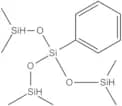
PHENYLTRIS(DIMETHYLSILOXY)SILANE
CAS:Siloxane-Based Silane Reducing Agent
Organosilanes are hydrocarbon-like and possess the ability to serve as both ionic and free-radical reducing agents. These reagents and their reaction by-products are safer and more easily handled and disposed than many other reducing agents. The metallic nature of silicon and its low electronegativity relative to hydrogen lead to polarization of the Si-H bond yielding a hydridic hydrogen and a milder reducing agent compared to aluminum-, boron-, and other metal-based hydrides. A summary of some key silane reductions are presented in Table 1 of the Silicon-Based Reducing Agents brochure.
Phenyltris(dimethylsiloxy)silane; Phenyl hydride cross-linker; 3-[(Dimethylsilyl)oxy]-1,1,5,5-tetramethyl-3-phenyltrisiloxane
High molecular weight silane reducing agentCrosslinker for vinylphenylsilicone 2-component elastomersExtensive review of silicon based reducing agents: Larson, G.; Fry, J. L. "Ionic and Organometallic-Catalyzed Organosilane Reductions", Wipf, P., Ed.; Wiley, 2007Formula:C12H26O3Si4Purity:97%Color and Shape:LiquidMolecular weight:330.68Ref: 3H-SIP6826.0
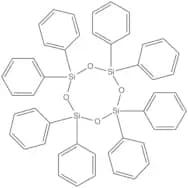
Discontinued productOCTAPHENYLCYCLOTETRASILOXANE, 95%
CAS:Formula:C48H40O4Si4Color and Shape:White SolidMolecular weight:793.18Ref: 3H-SIO6705.0
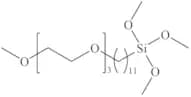
Discontinued productMETHOXY(TRIETHYLENEOXY)UNDECYLTRIMETHOXYSILANE
CAS:Tipped PEG Silane (438.68 g/mol)
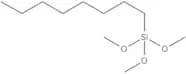
PEG3C11 Silane3,3-Dimethoxy-2,15,18,24-pentaoxa-3-silapentacosanePEO, Trimethoxysilane termination utilized for hydrophilic surface modificationPEGylation reagentHydrogen bonding hydrophilic silaneFormula:C21H46O7SiPurity:97%Color and Shape:Straw LiquidMolecular weight:438.68n-OCTYLTRIMETHOXYSILANE
CAS:Alkyl Silane - Conventional Surface Bonding
Aliphatic, fluorinated aliphatic or substituted aromatic hydrocarbon substituents are the hydrophobic entities which enable silanes to induce surface hydrophobicity. The organic substitution of the silane must be non-polar. The hydrophobic effect of the organic substitution can be related to the free energy of transfer of hydrocarbon molecules from an aqueous phase to a homogeneous hydrocarbon phase. A successful hydrophobic coating must eliminate or mitigate hydrogen bonding and shield polar surfaces from interaction with water by creating a non-polar interphase. Although silane and silicone derived coatings are in general the most hydrophobic, they maintain a high degree of permeability to water vapor. This allows coatings to breathe and reduce deterioration at the coating interface associated with entrapped water. Since ions are not transported through non-polar silane and silicone coatings, they offer protection to composite structures ranging from pigmented coatings to rebar reinforced concrete. A selection guide for hydrophobic silanes can be found on pages 22-31 of the Hydrophobicity, Hydrophilicity and Silane Surface Modification brochure.
n-Octyltrimethoxysilane; Trimethoxysilyloctane
Viscosity: 1.0 cStVapor pressure, 75 °: 0.1 mmTreatment for particles used in non-aqueous liquid dispersionsTrialkoxy silaneFormula:C11H26O3SiPurity:97%Color and Shape:Straw LiquidMolecular weight:234.41Ref: 3H-SIO6715.5
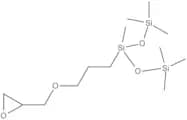
Discontinued product(3-GLYCIDOXYPROPYL)BIS(TRIMETHYLSILOXY)METHYLSILANE
CAS:Formula:C13H32O4Si3Purity:97% including isomersColor and Shape:Straw LiquidMolecular weight:336.65[PERFLUORO(POLYPROPYLENEOXY)]METHOXYPROPYLTRIMETHOXYSILANE, 20% in fluorinated hydrocarbon
CAS:Fluoroalkyl Silane - Conventional Surface Bonding
Aliphatic, fluorinated aliphatic or substituted aromatic hydrocarbon substituents are the hydrophobic entities which enable silanes to induce surface hydrophobicity. The organic substitution of the silane must be non-polar. The hydrophobic effect of the organic substitution can be related to the free energy of transfer of hydrocarbon molecules from an aqueous phase to a homogeneous hydrocarbon phase. A successful hydrophobic coating must eliminate or mitigate hydrogen bonding and shield polar surfaces from interaction with water by creating a non-polar interphase. Although silane and silicone derived coatings are in general the most hydrophobic, they maintain a high degree of permeability to water vapor. This allows coatings to breathe and reduce deterioration at the coating interface associated with entrapped water. Since ions are not transported through non-polar silane and silicone coatings, they offer protection to composite structures ranging from pigmented coatings to rebar reinforced concrete. A selection guide for hydrophobic silanes can be found on pages 22-31 of the Hydrophobicity, Hydrophilicity and Silane Surface Modification brochure.
[Perfluoro(polypropyleneoxy)]methoxypropyltrimethoxysilane; (1H,1H,2H,2H-Perfluorodecyl)trimethoxysilane; Heptadecafluorodecyltrimethoxysilane
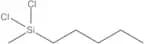
Contact angle, water: 112 ° 20% in fluorinated hydrocarbonTrialkoxy silaneFormula:CF3CF2CF2O(CF2CF2CF2O)nCH2OCH2CH2CH2Si(OCH3)3Color and Shape:Colorless To Light Yellow LiquidMolecular weight:4000-8000PENTYLMETHYLDICHLOROSILANE
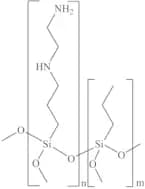
CAS:Formula:C6H14Cl2SiPurity:97%Color and Shape:Straw LiquidMolecular weight:185.17N-(2-AMINOETHYL)-3-AMINOPROPYLTRIMETHOXYSILANE-PROPYLTRIMETHOXYSILANE, oligomeric co-hydrolysate
Diamine Functional Polymeric Silane
Silane coupling agents have the ability to form a durable bond between organic and inorganic materials to generate desired heterogeneous environments or to incorporate the bulk properties of different phases into a uniform composite structure. The general formula has two classes of functionality. The hydrolyzable group forms stable condensation products with siliceous surfaces and other oxides such as those of aluminum, zirconium, tin, titanium, and nickel. The organofunctional group alters the wetting or adhesion characteristics of the substrate, utilizes the substrate to catalyze chemical transformations at the heterogeneous interface, orders the interfacial region, or modifies its partition characteristics, and significantly effects the covalent bond between organic and inorganic materials.
N-(2-Aminoethyl)-3-aminopropyltrimethoxsilane-propyltrimethoxysilane,N-[3-(trimethoxysilyl)propyl]ethylenediamine-(trimethoxysilyl)propane, oligomeric co-hydrolysate
Cohydrolysate of SIA0591.1 and SIP6918.0Color and Shape:Straw LiquidMolecular weight:222.36(CYCLOHEXYLAMINOMETHYL)TRIETHOXYSILANE
CAS:(N-Cyclohexylaminomethyl)triethoxysilane; [(triethoxysilyl)methyl]aminocyclohexane
Secondary amino functional trialkoxy silaneInternal secondary amine coupling agent for UV cure and epoxy systemsUsed in microparticle surface modificationFormula:C13H29NO3SiPurity:95%Color and Shape:Clear To Straw LiquidMolecular weight:275.4611-BROMOUNDECYLTRICHLOROSILANE, 95%
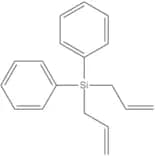
CAS:Formula:C11H22BrCl3SiPurity:95%Color and Shape:Straw LiquidMolecular weight:368.64DIALLYLDIPHENYLSILANE, 92%
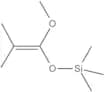
CAS:Formula:C18H20SiPurity:92%Color and Shape:LiquidMolecular weight:264.441-METHOXY-1-(TRIMETHYLSILOXY)-2-METHYL-1-PROPENE
CAS:Trimethylsilyl Blocking Agent
Used as a protecting group for reactive hydrogens in alcohols, amines, thiols, and carboxylic acids. Organosilanes are hydrogen-like, can be introduced in high yield, and can be removed under selective conditions. They are stable over a wide range of reaction conditions and can be removed in the presence of other functional groups, including other protecting groups. The tolerance of silylated alcohols to chemical transformations summary is presented in Table 1 of the Silicon-Based Blocking Agents brochure.
1- Methoxy-1-trimethysiloxy-2-methyl-1-propene; Methyl(trimethylsilyl)dimethylketene acetal; 1-Methoxy-2-methyl-1-(trimethylsiloxy)propene
Used for silylation of acids, alcohols, thiols, amides and ketonesNafion SAC-13 has been shown to be a recyclable catalyst for the trimethylsilylation of primary, secondary, and tertiary alcohols in excellent yields and short reaction timesSummary of selective deprotection conditions is provided in Table 7 through Table 20 of the Silicon-Based Blocking Agents brochureFormula:C8H18O2SiPurity:97%Color and Shape:Straw LiquidMolecular weight:174.31Ref: 3H-SIM6496.0
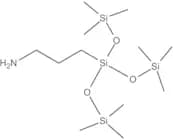
Discontinued product3-AMINOPROPYLTRIS(TRIMETHYLSILOXY)SILANE, 95%
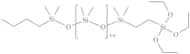
CAS:Formula:C12H35NO3SiPurity:95%Color and Shape:Straw LiquidMolecular weight:353.76Ω-BUTYLPOLY(DIMETHYLSILOXANYL)ETHYLTRIETHOXYSILANE, tech
CAS:Alkyl Silane - Conventional Surface Bonding
Aliphatic, fluorinated aliphatic or substituted aromatic hydrocarbon substituents are the hydrophobic entities which enable silanes to induce surface hydrophobicity. The organic substitution of the silane must be non-polar. The hydrophobic effect of the organic substitution can be related to the free energy of transfer of hydrocarbon molecules from an aqueous phase to a homogeneous hydrocarbon phase. A successful hydrophobic coating must eliminate or mitigate hydrogen bonding and shield polar surfaces from interaction with water by creating a non-polar interphase. Although silane and silicone derived coatings are in general the most hydrophobic, they maintain a high degree of permeability to water vapor. This allows coatings to breathe and reduce deterioration at the coating interface associated with entrapped water. Since ions are not transported through non-polar silane and silicone coatings, they offer protection to composite structures ranging from pigmented coatings to rebar reinforced concrete. A selection guide for hydrophobic silanes can be found on pages 22-31 of the Hydrophobicity, Hydrophilicity and Silane Surface Modification brochure.
ω-Butylpoly(dimethylsiloxanyl)ethyltriethoxysilane; α-Butyl-ω-triethoxysilylethyl terminated polydimethylsiloxane
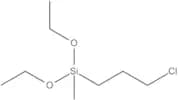
5-8 (Me2SiO)Hydrophobic surface treatmentFormula:C24H52O3SiColor and Shape:Straw LiquidMolecular weight:416.763-CHLOROPROPYLMETHYLDIETHOXYSILANE
CAS:3-Chloropropylmethyldiethoxysilane; methyldiethoxy(chloropropyl)silane; (3- chloropropyl)diethoxymethylsilane; 1-chloro-3-(methyldiethoxysilyl)propane
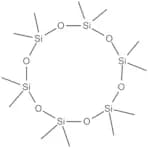
Halogen functional dialkoxy silaneIntermediate for functional silicone polymersFormula:C8H19ClO2SiPurity:97%Color and Shape:LiquidMolecular weight:210.77DODECAMETHYLCYCLOHEXASILOXANE
CAS:Formula:C12H36O6Si6Purity:97%Color and Shape:LiquidMolecular weight:445.93BIS(3-TRIMETHOXYSILYLPROPYL)-N-METHYLAMINE
CAS:bis(3-trimethoxysilylpropyl)-N-methylamine; N-methylaminobis(propyltrimethoxysilane)
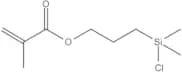
Tertiary amino functional dipodal silaneDipodal analog of SIM6500.0Formula:C13H33NO6Si2Purity:97%Color and Shape:Straw LiquidMolecular weight:355.583-METHACRYLOXYPROPYLDIMETHYLCHLOROSILANE, tech
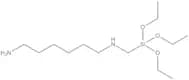
CAS:Formula:C9H17ClO2SiPurity:90%Color and Shape:Straw LiquidMolecular weight:220.77N-(6-AMINOHEXYL)AMINOMETHYLTRIETHOXYSILANE, 92%
CAS:Diamino Functional Trialkoxy Silane
Silane coupling agents have the ability to form a durable bond between organic and inorganic materials to generate desired heterogeneous environments or to incorporate the bulk properties of different phases into a uniform composite structure. The general formula has two classes of functionality. The hydrolyzable group forms stable condensation products with siliceous surfaces and other oxides such as those of aluminum, zirconium, tin, titanium, and nickel. The organofunctional group alters the wetting or adhesion characteristics of the substrate, utilizes the substrate to catalyze chemical transformations at the heterogeneous interface, orders the interfacial region, or modifies its partition characteristics, and significantly effects the covalent bond between organic and inorganic materials.
N-(6-Aminohexyl)aminomethyltriethoxysilane; N-[6-Triethoxysilyl)methyl]hexamethylethylenediamine
Primary amine and an internal secondary amine coupling agent for UV cure and epoxy systemsUsed in microparticle surface modificationFormula:C13H32N2O3SiPurity:92%Color and Shape:Straw LiquidMolecular weight:292.49

![[PERFLUORO(POLYPROPYLENEOXY)]METHOXYPROPYLTRIMETHOXYSILANE, 20% in fluorinated hydrocarbon](/_next/image/?url=https%3A%2Fstatic.cymitquimica.com%2Fproducts%2F3H%2Fthumb-webp%2FSIP6720.72.webp&w=3840&q=75)