Building Blocks
Subcategories of "Building Blocks"
- Boronic Acids & Boronic Acid Derivatives(5,805 products)
- Chiral Building Blocks(1,248 products)
- Hydrocarbon Building Blocks(6,118 products)
- Organic Building Blocks(61,447 products)
Found 208422 products of "Building Blocks"
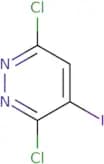
3,6-Dichloro-4-iodopyridazine
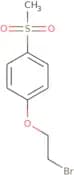
CAS:Versatile small molecule scaffoldFormula:C4HCl2IN2Purity:Min. 95%Molecular weight:274.87 g/mol1-(2-Bromoethoxy)-4-methanesulfonylbenzene
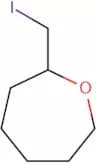
CAS:Versatile small molecule scaffoldFormula:C9H11BrO3SPurity:Min. 95%Molecular weight:279.15 g/mol2-(Iodomethyl)-oxepane
CAS:Versatile small molecule scaffold
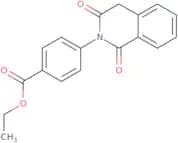
Formula:C7H13IOPurity:Min. 95%Molecular weight:240.08 g/molEthyl 4-(1,3-dioxo-1,2,3,4-tetrahydroisoquinolin-2-yl)benzoate
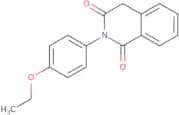
CAS:Versatile small molecule scaffoldFormula:C18H15NO4Purity:Min. 95%Molecular weight:309.3 g/mol2-(4-Ethoxyphenyl)-1,2,3,4-tetrahydroisoquinoline-1,3-dione
CAS:Versatile small molecule scaffold
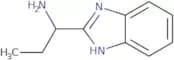
Formula:C17H15NO3Purity:Min. 95%Molecular weight:281.3 g/mol1-(1H-1,3-Benzodiazol-2-yl)propan-1-amine
CAS:Versatile small molecule scaffoldFormula:C10H13N3Purity:Min. 95%Molecular weight:175.23 g/mol3-[(Methylcarbamoyl)amino]propanoic acid
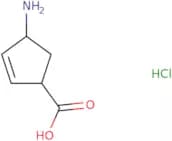
CAS:Versatile small molecule scaffoldFormula:C5H10N2O3Purity:Min. 95%Molecular weight:146.14 g/mol(1R,4S)-4-aminocyclopent-2-enecarboxylic acid hydrochloride
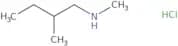
CAS:Versatile small molecule scaffoldFormula:C6H10ClNO2Purity:Min. 95%Molecular weight:163.6 g/molMethyl(2-methylbutyl)amine hydrochloride
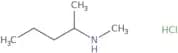
CAS:Versatile small molecule scaffoldFormula:C6H16ClNPurity:Min. 95%Molecular weight:137.65 g/molMethyl(pentan-2-yl)amine hydrochloride
CAS:Versatile small molecule scaffold
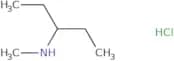
Formula:C6H16ClNPurity:Min. 95%Molecular weight:137.65 g/mol(1-Ethylpropyl)methylamine hydrochloride
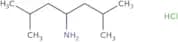
CAS:Versatile small molecule scaffoldFormula:C6H16ClNPurity:Min. 95%Molecular weight:137.65 g/mol2,6-Dimethylheptan-4-amine hydrochloride
CAS:Versatile small molecule scaffoldFormula:C9H22ClNPurity:Min. 95%Molecular weight:179.73 g/mol[2-(Dimethylamino)ethyl][(3-methylphenyl)methyl]amine
CAS:Versatile small molecule scaffoldFormula:C12H20N2Purity:Min. 95%Molecular weight:192.3 g/mol[2-(Dimethylamino)ethyl]({[4-(trifluoromethyl)phenyl]methyl})amine
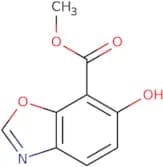
CAS:Versatile small molecule scaffoldFormula:C12H17F3N2Purity:Min. 95%Molecular weight:246.27 g/molmethyl 6-hydroxy-1,3-benzoxazole-7-carboxylate
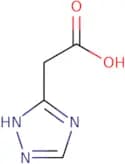
CAS:Versatile small molecule scaffoldFormula:C9H7NO4Purity:Min. 95%Molecular weight:193.16 g/mol2-(1H-1,2,4-Triazol-3-yl)acetic acid hydrochloride
CAS:2-(1H-1,2,4-Triazol-3-yl)acetic acid hydrochloride is the esters of 2-(1H-1,2,4-triazol-3-yl)acetate and hydrochloric acid. It is a white crystalline solid that melts at 212°C. 2-(1H-1,2,4-Triazol-3-yl)acetic acid hydrochloride reacts with methylene chloride to form 2-(methylthio)acetic acid. This compound has been used in condensation reactions and as a reagent for the conversion of carboxylic acids to methylene derivatives.Formula:C4H5N3O2Purity:Min. 95%Molecular weight:127.1 g/molN-[2-(Piperidinylamino)ethyl]-4-iodobenzamide
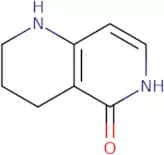
CAS:2-(Piperidinylamino)ethan-1-amine hydrochloride is a potent immunomodulator. It inhibits bacterial translocation from the intestine to the mesenteric lymph nodes and reduces the number of inflammatory cells in the intestine. 2-(Piperidinylamino)ethan-1-amine hydrochloride has also been shown to reduce bacterial translocation in mice with infectious colitis, which is caused by Shigella flexneri or Salmonella typhimurium. 2-(Piperidinylamino)ethan-1-amine hydrochloride binds to bacterial DNA gyrase and inhibits bacterial replication by inhibiting dna synthesis, protein synthesis, and cell division. This drug also binds to an effector protein, which may play a role in its immunomodulatory activities.Formula:C14H19IN2OPurity:Min. 95%Molecular weight:358.22 g/mol1,2,3,4-Tetrahydro-1,6-naphthyridin-5-ol
CAS:Versatile small molecule scaffoldFormula:C8H10N2OPurity:Min. 95%Molecular weight:150.18 g/mol2-[(4-Fluorophenyl)sulfanyl]propanoic acid
CAS:Versatile small molecule scaffoldFormula:C9H9FO2SPurity:Min. 95%Molecular weight:200.23 g/mol2-[4-(Benzyloxy)phenyl]propane-1,3-diol
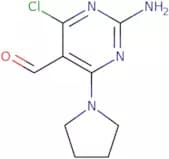
CAS:Versatile small molecule scaffoldFormula:C16H18O3Purity:Min. 95%Molecular weight:258.3 g/mol2-Amino-4-chloro-6-(pyrrolidin-1-yl)pyrimidine-5-carbaldehyde
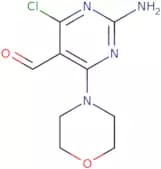
CAS:Versatile small molecule scaffoldFormula:C9H11ClN4OPurity:Min. 95%Molecular weight:226.66 g/mol2-Amino-4-chloro-6-(morpholin-4-yl)pyrimidine-5-carbaldehyde
CAS:Versatile small molecule scaffoldFormula:C9H11ClN4O2Purity:Min. 95%Molecular weight:242.66 g/moltert-Butyl N-[(tert-butoxy)carbonyl]-N-(2-oxoethyl)carbamate
CAS:Versatile small molecule scaffold
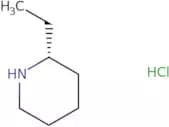
Formula:C12H21NO5Purity:Min. 95%Molecular weight:259.3 g/mol(R)-2-Ethylpiperidine hydrochloride
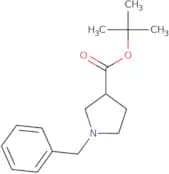
CAS:Versatile small molecule scaffoldFormula:C7H15N·HClPurity:Min. 95%Molecular weight:149.66 g/moltert-Butyl 1-benzylpyrrolidine-3-carboxylate
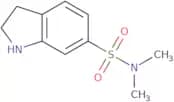
CAS:Versatile small molecule scaffoldFormula:C16H23NO2Purity:Min. 95%Molecular weight:261.36 g/molN,N-Dimethyl-2,3-dihydro-1H-indole-6-sulfonamide
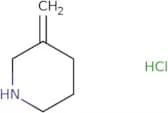
CAS:Versatile small molecule scaffoldFormula:C10H14N2O2SPurity:Min. 95%Molecular weight:226.3 g/mol3-Methylidenepiperidine hydrochloride
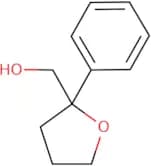
CAS:Versatile small molecule scaffoldFormula:C6H12ClNPurity:Min. 95%Molecular weight:133.62 g/mol(2-Phenyloxolan-2-yl)methanol
CAS:Versatile small molecule scaffoldFormula:C11H14O2Purity:Min. 95%Molecular weight:178.23 g/mol2-(3-Nitrophenyl)ethane-1-thiol
CAS:Versatile small molecule scaffold
Formula:C8H9NO2SPurity:Min. 95%Molecular weight:183.2 g/molMethyl 2-amino-2-(2,3-dihydro-1H-inden-2-yl)acetate hydrochloride
CAS:Versatile small molecule scaffoldFormula:C12H16ClNO2Purity:Min. 95%Molecular weight:241.71 g/mol2-{[(tert-Butoxy)carbonyl]amino}-2-(2,3-dihydro-1H-inden-2-yl)acetic acid
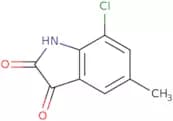
CAS:Versatile small molecule scaffoldFormula:C16H21NO4Purity:Min. 95%Molecular weight:291.34 g/mol7-Chloro-5-methyl-2,3-dihydro-1H-indole-2,3-dione
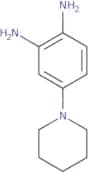
CAS:Versatile small molecule scaffoldFormula:C9H6ClNO2Purity:Min. 95%Molecular weight:195.6 g/mol4-(Piperidin-1-yl)benzene-1,2-diamine
CAS:Versatile small molecule scaffold
Formula:C11H17N3Purity:Min. 95%Molecular weight:191.27 g/mol1,2-Benzoxazol-3-ylmethanamine
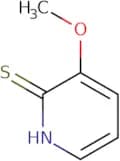
CAS:Versatile small molecule scaffoldFormula:C8H8N2OPurity:Min. 95%Molecular weight:148.16 g/mol3-Methoxypyridine-2-thiol
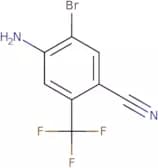
CAS:Versatile small molecule scaffoldFormula:C6H7NOSPurity:Min. 95%Molecular weight:141.19 g/mol4-Amino-5-bromo-2-(trifluoromethyl)benzonitrile
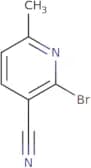
CAS:Versatile small molecule scaffoldFormula:C8H4BrF3N2Purity:Min. 95%Molecular weight:265.3 g/mol2-Bromo-6-methylnicotinonitrile
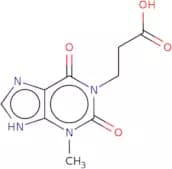
CAS:2-Bromo-6-methylnicotinonitrile is a reactive heterocyclic compound that has been used as a palladium catalyst. It undergoes substitution reactions with halides and polyhalogenated compounds. The yield of this reaction depends on the substituents and functional groups present. 2-Bromo-6-methylnicotinonitrile can also be used to form alkynes, alkynes, and heterocycles. 2-Bromo-6-methylnicotinonitrile is an alkyne that has two functional groups: a nitrile group and a bromine group. It reacts with nucleophiles such as ammonia or amines to form the corresponding amide or amine in good yields.Formula:C7H5BrN2Purity:Min. 95%Molecular weight:197.03 g/mol3-(3-Methyl-2,6-dioxo-2,3,6,9-tetrahydro-1H-purin-1-yl)propanoic acid
CAS:Controlled ProductVersatile small molecule scaffoldFormula:C9H10N4O4Purity:Min. 95%Molecular weight:238.2 g/mol3-(Piperidin-4-yl)propan-1-ol hydrochloride
CAS:Versatile small molecule scaffold
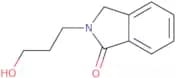
Formula:C8H18ClNOPurity:Min. 95%Molecular weight:179.69 g/mol2-(3-Hydroxypropyl)isoindolin-1-one
CAS:Versatile small molecule scaffold
Formula:C11H13NO2Purity:Min. 95%Molecular weight:191.23 g/mol5-(1,3-Dioxolan-2-yl)thiophene-3-carbaldehyde
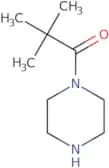
CAS:Versatile small molecule scaffoldFormula:C8H8O3SPurity:Min. 95%Molecular weight:184.21 g/mol1-Pivaloyl-piperazine
CAS:Versatile small molecule scaffold
Formula:C9H18N2OPurity:Min. 95%Molecular weight:170.26 g/mol1-[(tert-Butoxy)carbonyl]-4,4-dimethylpiperidine-2-carboxylic acid
CAS:Versatile small molecule scaffoldFormula:C13H23NO4Purity:Min. 95%Molecular weight:257.33 g/molN-Cyclobutylaniline
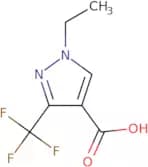
CAS:N-Cyclobutylaniline is an organic compound that contains a hydroxyl group, a hydroxy group, and an alkylthio group. It is mainly used as an intermediate for the production of dyes and pharmaceuticals. N-Cyclobutylaniline has been shown to inhibit viral polymerase activity in vitro and in vivo. This inhibition is due to its ability to react with the chlorine atom on the viral DNA polymerase, which results in termination of the transfer reaction. N-Cyclobutylaniline also inhibits the ns5b polymerase, which is responsible for transcription of viral RNA. N-Cyclobutylaniline binds to the carboxylic acid site on the enzyme and prevents it from functioning properly.Formula:C10H13NPurity:Min. 95%Molecular weight:147.22 g/mol1-Ethyl-3-(trifluoromethyl)-1H-pyrazole-4-carboxylic acid
CAS:Versatile small molecule scaffoldFormula:C7H7F3N2O2Purity:Min. 95%Molecular weight:208.14 g/mol(2E)-3-[4-(Chlorosulfonyl)phenyl]prop-2-enoic acid
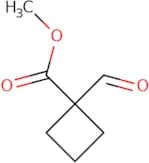
CAS:(2E)-3-[4-(Chlorosulfonyl)phenyl]prop-2-enoic acid is a chemical compound that has been shown to be useful in the synthesis of stereoselectively propanoic acid. The resulting propanoic acid can then be used in the synthesis of amines, which are often precursors to pharmaceuticals. This process was found to be more efficient when done using microwave irradiation.Formula:C9H7ClO4SPurity:Min. 95%Molecular weight:246.67 g/molMethyl 1-formylcyclobutane-1-carboxylate
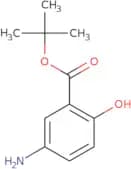
CAS:Versatile small molecule scaffoldFormula:C7H10O3Purity:Min. 95%Molecular weight:142.15 g/moltert-Butyl 5-amino-2-hydroxybenzoate
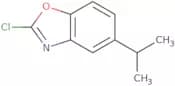
CAS:Versatile small molecule scaffoldFormula:C11H15NO3Purity:Min. 95%Molecular weight:209.24 g/mol2-Chloro-5-(propan-2-yl)-1,3-benzoxazole
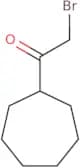
CAS:Versatile small molecule scaffoldFormula:C10H10ClNOPurity:Min. 95%Molecular weight:195.64 g/mol2-Bromo-1-cycloheptylethan-1-one
CAS:2-Bromo-1-cycloheptylethan-1-one is a reagent that has been used to synthesize dialkylamino cyclic compounds. This compound is prepared in high yields by the reaction of cyclohexanone with bromine and ethyl nitrite. 2-Bromo-1-cycloheptylethan-1-one has been used as a bronchodilator for chronic bronchitis and asthma, as well as for nitrobenzene reduction to aniline. This compound also has been shown to be an effective bronchial smooth muscle relaxant, with the potential for use in bronchial asthma. The structural formula can be seen below:Formula:C9H15BrOPurity:Min. 95%Molecular weight:219.12 g/mol1-(4-Methoxyphenyl)-2,3-dihydro-1H-imidazol-2-one
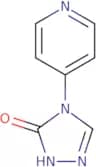
CAS:Versatile small molecule scaffoldFormula:C10H10N2O2Purity:Min. 95%Molecular weight:190.2 g/mol4-(Pyridin-4-yl)-4,5-dihydro-1H-1,2,4-triazol-5-one
CAS:Versatile small molecule scaffoldFormula:C7H6N4OPurity:Min. 95%Molecular weight:162.15 g/mol2,3-Dimethyl-4-furo[3,2-b]pyrrole-5-carbohydrazide
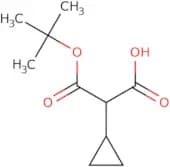
CAS:Versatile small molecule scaffoldFormula:C9H11N3O2Purity:Min. 95%Molecular weight:193.2 g/mol3-(tert-Butoxy)-2-cyclopropyl-3-oxopropanoic acid
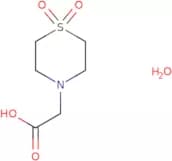
CAS:Versatile small molecule scaffoldFormula:C10H16O4Purity:Min. 95%Molecular weight:200.23 g/mol(1,1-Dioxidothiomorpholin-4-yl)acetic acid
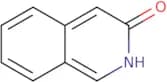
CAS:Versatile small molecule scaffoldFormula:C6H11NO4SPurity:Min. 95%Molecular weight:193.22 g/mol3-Hydroxyisoquinoline
CAS:3-Hydroxyisoquinoline is a non-nucleoside inhibitor of cyclic nucleotide phosphodiesterase (cNMP) that is used in the treatment of nervous system diseases. 3-Hydroxyisoquinoline has been shown to have an inhibitory effect on cyclic nucleotide phosphodiesterase and can be used for the treatment of neurological disorders such as Parkinson’s disease, Alzheimer’s disease, and epilepsy. It also has anti-inflammatory properties and can be used to treat pain. 3-Hydroxyisoquinoline has a photoelectron spectrum that peaks at 5.6 eV, with a strong absorption band at 2.1 eV due to hydrogen bonding. This compound is also able to absorb radiation in the form of light emission with an emission peak at 4.8 eV, with a maximum intensity around 830 nm and a half-life of 0.2 s. 3-Hydroxyisoquinoline is able toFormula:C9H7NOPurity:Min. 95%Color and Shape:Yellow PowderMolecular weight:145.16 g/mol2,2,4,4,6,8,8-Heptamethylnonane
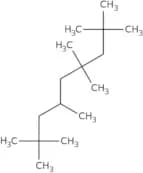
CAS:2,2,4,4,6,8,8-Heptamethylnonane is a hydrogenated form of 2-methylnonane. It is used as a model system for fatty acids in order to study the kinetics of air entrainment and constant pressure distillation. The chemical stability of 2,2,4,4,6,8,8-heptamethylnonane has been shown to be excellent when heated at 200°C under nitrogen. This compound can also be used as an analytical method for ethylene diamine in pharmaceutical preparations of sodium salts and boron nitride. The use of 2-methylnonane as a starting material may lead to the production of chinese herb by reacting with acetic acid or formic acid.
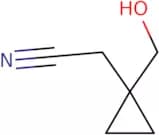
Formula:C16H34Purity:Min. 95%Color and Shape:PowderMolecular weight:226.44 g/mol1-(Hydroxymethyl)cyclopropaneacetonitrile
CAS:1-(Hydroxymethyl)cyclopropaneacetonitrile is a cyclic molecule that can be synthesized from the reaction of sulfite and formaldehyde. It can also be obtained by hydrolysis of 1-hydroxycyclopropanecarboxylic acid. The synthesis of 1-(hydroxymethyl)cyclopropaneacetonitrile involves the oxidation of formaldehyde with sodium metaperiodate, followed by hydrolysis with potassium hydroxide or sodium hydroxide to produce 1-formylcyclopropaneacetonitrile, which reacts with sodium sulfite to yield the desired product. This compound has not been found in nature, but it is used as an intermediate in the synthesis of other compounds.
Formula:C6H9NOPurity:Min. 95%Molecular weight:111.14 g/molDL-6-Hydroxy norleucine
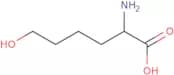
CAS:DL-6-Hydroxy norleucine is a non-essential amino acid that is synthesized by the hydroxylation of leucine. It has been found to be an inhibitor of inflammation, as it can inhibit the production of inflammatory cytokines and prostaglandins. DL-6-Hydroxy norleucine can also activate collagenase, which breaks down connective tissue, and inhibit the formation of lipoprotein particles. This amino acid may be used in the treatment of cancer due to its ability to inhibit cell growth. DL-6-Hydroxy norleucine is toxic when taken orally because it inhibits cytochrome P450 in the liver and increases serum levels of uric acid.Formula:C6H13NO3Purity:Min. 95%Molecular weight:147.17 g/molHydroxypropanedial
CAS:Hydroxypropanedial is a hydroxy group-containing compound that is not found in natural sources. It has antioxidative properties, which may be due to its ability to scavenge reactive oxygen species or donate hydrogen atoms to free radicals. The compound also has cyclohexane ring and carbonyl groups, which are responsible for the hydroxyl and carboxylic acid functionalities respectively. This substance is used as a chromatographic reagent to measure second-order rate constants of reactions involving hydroxyl radicals. Hydroxypropanedial absorbs light strongly at wavelengths shorter than 300 nm, which is the most effective wavelength range for uv absorption in biological systems.
Formula:C3H4O3Purity:Min. 95%Color and Shape:Off-White To Light (Or Pale) Brown SolidMolecular weight:88.06 g/molalpha-Hydroxy-alpha-phenylbenzeneacetic acid (3-endo)-8-azabicyclo[3.2.1]oct-3-yl ester hydrochloride
CAS:Please enquire for more information about alpha-Hydroxy-alpha-phenylbenzeneacetic acid (3-endo)-8-azabicyclo[3.2.1]oct-3-yl ester hydrochloride including the price, delivery time and more detailed product information at the technical inquiry form on this pageFormula:C21H23NO3·HClPurity:Min. 95%Color and Shape:White PowderMolecular weight:373.87 g/mol2-Iodo-1H-imidazole
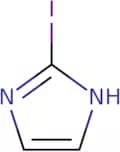
CAS:2-Iodo-1H-imidazole is an asymmetric molecule that is synthesized by a Suzuki coupling reaction between malonic acid and tautomers of 2-iodo-1H-imidazole. This molecule inhibits the activity of inhibitor molecules, such as nitrogen atoms, which are used in pesticide production. It also has pesticidal activity and can be used to treat cancer or autoimmune diseases. 2-Iodo-1H-imidazole is metabolized through a number of metabolic transformations, including hydrolysis by esterases or glucuronidases, oxidation by cytochrome P450 enzymes, reduction by glutathione reductase, or conjugation with glucuronic acid.Formula:C3H3IN2Purity:Min. 95%Color and Shape:White PowderMolecular weight:193.97 g/mol4-Iodo-1-tritylimidazole
CAS:4-Iodo-1-tritylimidazole is an organic molecule that has a chemical stability comparable to that of a nucleophile. It is a molecule with a heterocycle and accepts electrons from carbinol compounds, halides, and other functional groups. 4-Iodo-1-tritylimidazole can be synthesized by the palladium-catalyzed coupling reaction between organometallic reagents and histidine. This compound has been shown to have properties that are similar to those of biomimetic molecules, such as cross-coupling.Formula:C22H17IN2Purity:Min. 95%Color and Shape:PowderMolecular weight:436.29 g/mol2-Isopropoxy-4,4,5,5-tetramethyl-1,3,2-dioxaborolane
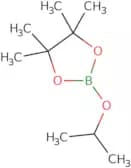
CAS:2-Isopropoxy-4,4,5,5-tetramethyl-1,3,2-dioxaborolane is a synthetic chemical that has been shown to have antiviral activity against influenza virus and inhibit the synthesis of proteins in cancer cells. It inhibits the influenza virus from replicating by binding to the viral RNA polymerase and preventing it from transcribing viral RNA into proteins. 2-Isopropoxy-4,4,5,5-tetramethyl-1,3,2-dioxaborolane also binds to the boronic ester group of enzymes that are involved in plant metabolism and can be used as an herbicide. This chemical is synthesized by reacting boric acid with trimethoxysilane in an acidified water solution. The reaction produces hydrochloric acid which reacts with trimethoxysilane to form silanols. The silanols react with boric acid to produce 2Formula:C9H19BO3Purity:Min. 95%Color and Shape:Colourless LiquidMolecular weight:186.06 g/molImidazole
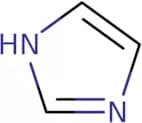
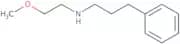
CAS:Imidazole is a highly polar aromatic compound with two annular nitrogen atoms. Imidazole is widely used in the affinity purification of proteins with polyhistidine tags (His-Tag). In the protein purification process, imidazole is used for the elution of His-Tag-fused recombinant proteins from a metal-immobilised resins. In the elution buffers, imidazole is typically used in the 50 â 500 mM concentration range (Bornhorst and Falke, 2000).Formula:C3H4N2Purity:Min 99%Color and Shape:White Off-White PowderMolecular weight:68.08 g/mol(2-Methoxyethyl)(3-phenylpropyl)amine
CAS:Versatile small molecule scaffold
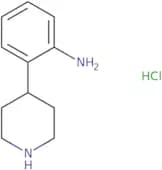
Formula:C12H19NOPurity:Min. 95%Molecular weight:193.28 g/mol2-(Piperidin-4-yl)aniline
CAS:Versatile small molecule scaffold
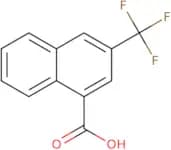
Formula:C11H17ClN2Purity:Min. 95%Molecular weight:212.72 g/mol3-(Trifluoromethyl)naphthalene-1-carboxylic acid
CAS:Versatile small molecule scaffoldFormula:C12H7F3O2Purity:Min. 95%Molecular weight:240.18 g/mol6-Bromo-4-methyl-1H-benzo[d]imidazole
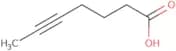
CAS:Versatile small molecule scaffoldFormula:C8H7BrN2Purity:Min. 95%Molecular weight:211.06 g/molHept-5-ynoic acid
CAS:Hept-5-ynoic acid is an organometallic compound that is a perimeter. It has been used in the stereoselective synthesis of epilachnene and macrocyclic compounds, as well as in the preparation of cyclopentenones. Hept-5-ynoic acid also reacts with oxygen to form peroxide, which can be used for the oxidation of alcohols. This compound has been found to be a potent inhibitor of prostaglandin synthesis in lung diseases such as asthma, bronchitis, and emphysema. Hept-5-ynoic acid is an organic compound that contains both amido and carboxyl functionalities.Formula:C7H10O2Purity:Min. 95%Molecular weight:126.15 g/mol7-Amino-2-methylpyrazolo[1,5-a]pyrimidine-6-carbonitrile
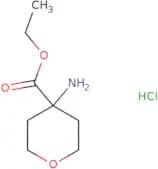
CAS:Versatile small molecule scaffoldFormula:C8H7N5Purity:Min. 95%Molecular weight:173.18 g/molethyl 4-aminotetrahydro-2h-pyran-4-carboxylate hcl
CAS:Versatile small molecule scaffoldFormula:C8H16ClNO3Purity:Min. 95%Molecular weight:209.67 g/mol1H-Indole-4-(1-piperazinyl)dihydrochloride
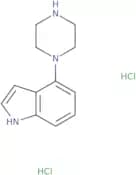
CAS:Versatile small molecule scaffold
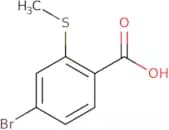
Formula:C12H17Cl2N3Purity:Min. 95%Molecular weight:274.19 g/mol4-Bromo-2-(methylsulfanyl)benzoic acid
CAS:Versatile small molecule scaffoldFormula:C8H7BrO2SPurity:Min. 95%Molecular weight:247.11 g/mol(1R)-1-[4-(Trifluoromethyl)phenyl]ethane-1,2-diol
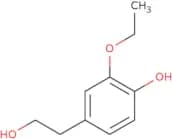
CAS:Versatile small molecule scaffoldFormula:C9H9F3O2Purity:Min. 95%Molecular weight:206.16 g/mol2-Ethoxy-4-(2-hydroxyethyl)phenol
CAS:Versatile small molecule scaffold
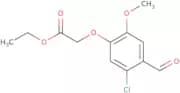
Formula:C10H14O3Purity:Min. 95%Molecular weight:182.22 g/molEthyl (5-chloro-4-formyl-2-methoxyphenoxy)acetate
CAS:Versatile small molecule scaffoldFormula:C12H13ClO5Purity:Min. 95%Molecular weight:272.68 g/molMethyl (2S)-2-{[(benzyloxy)carbonyl]amino}-4-(chlorosulfonyl)butanoate
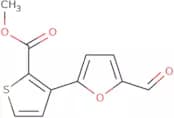
CAS:Versatile small molecule scaffoldFormula:C13H16ClNO6SPurity:Min. 95%Molecular weight:349.79 g/molMethyl 3-(5-Formyl-2-furyl)thiophene-2-carboxylate
CAS:Versatile small molecule scaffold
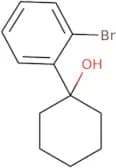
Formula:C11H8O4SPurity:Min. 95%Molecular weight:236.24 g/mol1-(2-Bromophenyl)cyclohexan-1-ol
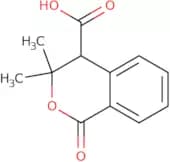
CAS:Versatile small molecule scaffoldFormula:C12H15BrOPurity:Min. 95%Molecular weight:255.15 g/mol3,3-Dimethyl-1-oxo-3,4-dihydro-1H-2-benzopyran-4-carboxylic acid
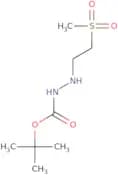
CAS:Versatile small molecule scaffoldFormula:C12H12O4Purity:Min. 95%Molecular weight:220.22 g/molN'-(2-Methanesulfonylethyl)(tert-butoxy)carbohydrazide
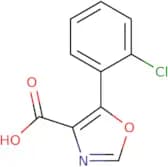
CAS:Versatile small molecule scaffoldFormula:C8H18N2O4SPurity:Min. 95%Molecular weight:238.31 g/mol5-(2-Chlorophenyl)-1,3-oxazole-4-carboxylic acid
CAS:Versatile small molecule scaffoldFormula:C10H6ClNO3Purity:Min. 95%Molecular weight:223.61 g/mol5-[3-(Trifluoromethyl)phenyl]-1,3-oxazole-4-carbonitrile
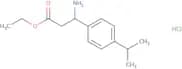
CAS:Versatile small molecule scaffoldFormula:C11H5F3N2OPurity:Min. 95%Molecular weight:238.16 g/molEthyl 3-amino-3-(4-isopropylphenyl)propanoate hydrochloride
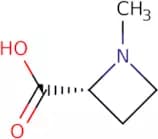
CAS:Versatile small molecule scaffoldFormula:C14H22ClNO2Purity:Min. 95%Molecular weight:271.78 g/mol2-Azetidinecarboxylic acid, 1-methyl-, (2S)-
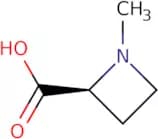
CAS:Versatile small molecule scaffoldFormula:C5H9NO2Purity:Min. 95%Molecular weight:115.13 g/mol2-Azetidinecarboxylic acid, 1-methyl-, (2R)-
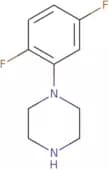
CAS:Versatile small molecule scaffoldFormula:C5H9NO2Purity:Min. 95%Molecular weight:115.13 g/mol1-(2,5-Difluorophenyl)piperazine
CAS:Controlled ProductVersatile small molecule scaffold
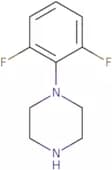
Formula:C10H12F2N2Purity:Min. 95%Molecular weight:198.21 g/mol1-(2,6-Difluorophenyl)piperazine
CAS:Controlled ProductVersatile small molecule scaffoldFormula:C10H12F2N2Purity:Min. 95%Molecular weight:198.21 g/mol3-Amino-4-methyl-6-(trifluoromethyl)thieno[2,3-b]pyridine-2-carboxamide
CAS:Versatile small molecule scaffoldFormula:C10H8F3N3OSPurity:Min. 95%Molecular weight:275.25 g/mol3-Amino-4-methyl-6-(trifluoromethyl)thieno[2,3-b]pyridine-2-carbonitrile
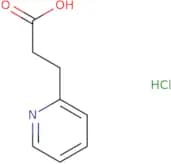
CAS:Versatile small molecule scaffoldFormula:C10H6F3N3SPurity:Min. 95%Molecular weight:257.24 g/mol3-(Pyridin-2-yl)propanoic acid hydrochloride
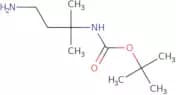
CAS:Versatile small molecule scaffoldFormula:C8H10ClNO2Purity:Min. 95%Molecular weight:187.62 g/moltert-Butyl N-(4-amino-2-methylbutan-2-yl)carbamate
CAS:Versatile small molecule scaffoldFormula:C10H22N2O2Purity:Min. 95%Molecular weight:202.29 g/mol3-Oxetanethiol
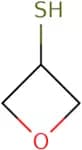
CAS:Versatile small molecule scaffold
Formula:C3H6OSPurity:Min. 95%Molecular weight:90.14 g/molCnt2 inhibitor-1
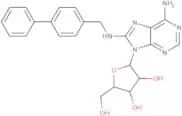
CAS:Cnt2 inhibitor-1 is a research tool that is used in the study of ion channels. It has been shown to inhibit Ligand-gated ion channels, such as nicotinic acetylcholine receptors and serotonin 5-HT3 receptors. Cnt2 inhibitor-1 also binds to peptide neurotransmitter receptors, such as the NMDA receptor. This binding prevents ligands from binding to the receptor and inhibits activation of the receptor. Cnt2 inhibitor-1 can be used in pharmacological studies for identifying drugs that have affinity for a specific type of ligand-gated ion channel or peptide neurotransmitter receptor, as well as for studying protein interactions.Formula:C23H24N6O4Purity:Min. 95%Molecular weight:448.5 g/mol(2-Fluoro-4-phenylphenyl)methanamine
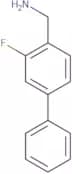
CAS:Versatile small molecule scaffold
Formula:C13H12FNPurity:Min. 95%Molecular weight:201.24 g/mol1-{2-Methyl-[1,1'-biphenyl]-4-yl}methanamine
CAS:Versatile small molecule scaffoldFormula:C14H15NPurity:Min. 95%Molecular weight:197.27 g/mol3-[4-({[(tert-Butoxy)carbonyl]amino}methyl)phenyl]benzoic acid
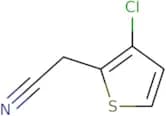
CAS:Versatile small molecule scaffoldFormula:C19H21NO4Purity:Min. 95%Molecular weight:327.4 g/mol2-(3-Chlorothiophen-2-yl)acetonitrile
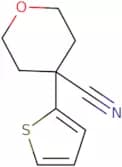
CAS:Versatile small molecule scaffoldFormula:C6H4ClNSPurity:Min. 95%Molecular weight:157.62 g/mol4-(Thiophen-2-yl)oxane-4-carbonitrile
CAS:Versatile small molecule scaffoldFormula:C10H11NOSPurity:Min. 95%Molecular weight:193.27 g/mol

![3-[(Methylcarbamoyl)amino]propanoic acid](/_next/image/?url=https%3A%2Fstatic.cymitquimica.com%2Fproducts%2F3D%2Fthumb-webp%2FFFA91273.webp&w=3840&q=75)
![[2-(Dimethylamino)ethyl][(3-methylphenyl)methyl]amine](/_next/image/?url=https%3A%2Fstatic.cymitquimica.com%2Fproducts%2F3D%2Fthumb-webp%2FFFB00806.webp&w=3840&q=75)
phenyl]methyl})amine](/_next/image/?url=https%3A%2Fstatic.cymitquimica.com%2Fproducts%2F3D%2Fthumb-webp%2FFFB02122.webp&w=3840&q=75)
![N-[2-(Piperidinylamino)ethyl]-4-iodobenzamide](/_next/image/?url=https%3A%2Fstatic.cymitquimica.com%2Fproducts%2F3D%2Fthumb-webp%2FFGA05442.webp&w=3840&q=75)
![2-[(4-Fluorophenyl)sulfanyl]propanoic acid](/_next/image/?url=https%3A%2Fstatic.cymitquimica.com%2Fproducts%2F3D%2Fthumb-webp%2FFGA05910.webp&w=3840&q=75)
![2-[4-(Benzyloxy)phenyl]propane-1,3-diol](/_next/image/?url=https%3A%2Fstatic.cymitquimica.com%2Fproducts%2F3D%2Fthumb-webp%2FFGA06229.webp&w=3840&q=75)
![tert-Butyl N-[(tert-butoxy)carbonyl]-N-(2-oxoethyl)carbamate](/_next/image/?url=https%3A%2Fstatic.cymitquimica.com%2Fproducts%2F3D%2Fthumb-webp%2FFGA08906.webp&w=3840&q=75)

![2-{[(tert-Butoxy)carbonyl]amino}-2-(2,3-dihydro-1H-inden-2-yl)acetic acid](/_next/image/?url=https%3A%2Fstatic.cymitquimica.com%2Fproducts%2F3D%2Fthumb-webp%2FFGA17273.webp&w=3840&q=75)



![1-[(tert-Butoxy)carbonyl]-4,4-dimethylpiperidine-2-carboxylic acid](/_next/image/?url=https%3A%2Fstatic.cymitquimica.com%2Fproducts%2F3D%2Fthumb-webp%2FFGA30206.webp&w=3840&q=75)

![(2E)-3-[4-(Chlorosulfonyl)phenyl]prop-2-enoic acid](/_next/image/?url=https%3A%2Fstatic.cymitquimica.com%2Fproducts%2F3D%2Fthumb-webp%2FFGA37873.webp&w=3840&q=75)
![2,3-Dimethyl-4-furo[3,2-b]pyrrole-5-carbohydrazide](/_next/image/?url=https%3A%2Fstatic.cymitquimica.com%2Fproducts%2F3D%2Fthumb-webp%2FFGA44545.webp&w=3840&q=75)

![alpha-Hydroxy-alpha-phenylbenzeneacetic acid (3-endo)-8-azabicyclo[3.2.1]oct-3-yl ester hydrochlor…](/_next/image/?url=https%3A%2Fstatic.cymitquimica.com%2Fproducts%2F3D%2Fthumb-webp%2FFH55814.webp&w=3840&q=75)

![6-Bromo-4-methyl-1H-benzo[d]imidazole](/_next/image/?url=https%3A%2Fstatic.cymitquimica.com%2Fproducts%2F3D%2Fthumb-webp%2FFKA06410.webp&w=3840&q=75)
![7-Amino-2-methylpyrazolo[1,5-a]pyrimidine-6-carbonitrile](/_next/image/?url=https%3A%2Fstatic.cymitquimica.com%2Fproducts%2F3D%2Fthumb-webp%2FFKA38959.webp&w=3840&q=75)
![(1R)-1-[4-(Trifluoromethyl)phenyl]ethane-1,2-diol](/_next/image/?url=https%3A%2Fstatic.cymitquimica.com%2Fproducts%2F3D%2Fthumb-webp%2FFKA73311.webp&w=3840&q=75)
![Methyl (2S)-2-{[(benzyloxy)carbonyl]amino}-4-(chlorosulfonyl)butanoate](/_next/image/?url=https%3A%2Fstatic.cymitquimica.com%2Fproducts%2F3D%2Fthumb-webp%2FFKA73747.webp&w=3840&q=75)
![5-[3-(Trifluoromethyl)phenyl]-1,3-oxazole-4-carbonitrile](/_next/image/?url=https%3A%2Fstatic.cymitquimica.com%2Fproducts%2F3D%2Fthumb-webp%2FFKA87672.webp&w=3840&q=75)
![3-Amino-4-methyl-6-(trifluoromethyl)thieno[2,3-b]pyridine-2-carboxamide](/_next/image/?url=https%3A%2Fstatic.cymitquimica.com%2Fproducts%2F3D%2Fthumb-webp%2FFKA90924.webp&w=3840&q=75)
![3-Amino-4-methyl-6-(trifluoromethyl)thieno[2,3-b]pyridine-2-carbonitrile](/_next/image/?url=https%3A%2Fstatic.cymitquimica.com%2Fproducts%2F3D%2Fthumb-webp%2FFKA90926.webp&w=3840&q=75)
![1-{2-Methyl-[1,1'-biphenyl]-4-yl}methanamine](/_next/image/?url=https%3A%2Fstatic.cymitquimica.com%2Fproducts%2F3D%2Fthumb-webp%2FFKB15749.webp&w=3840&q=75)
![3-[4-({[(tert-Butoxy)carbonyl]amino}methyl)phenyl]benzoic acid](/_next/image/?url=https%3A%2Fstatic.cymitquimica.com%2Fproducts%2F3D%2Fthumb-webp%2FFKB15856.webp&w=3840&q=75)