Building Blocks
This section contains fundamental products for the synthesis of organic and biological compounds. Building blocks are the essential starting materials used to construct complex molecules through various chemical reactions. They play a critical role in drug discovery, material science, and chemical research. At CymitQuimica, we offer a diverse range of high-quality building blocks to support your innovative research and industrial projects, ensuring you have the essential components for successful synthesis.
Subcategories of "Building Blocks"
- Boronic Acids & Boronic Acid Derivatives(5,780 products)
- Chiral Building Blocks(1,241 products)
- Hydrocarbon Building Blocks(6,100 products)
- Organic Building Blocks(61,023 products)
Found 205289 products of "Building Blocks"
Sort by
Purity (%)
0
100
|
0
|
50
|
90
|
95
|
100
N-[(2,6-Difluorophenyl)methyl]cyclopropanamine
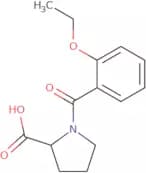
CAS:Versatile small molecule scaffoldFormula:C10H11F2NPurity:Min. 95%Molecular weight:183.2 g/mol1-(2-Ethoxybenzoyl)pyrrolidine-2-carboxylic acid
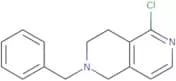
CAS:Versatile small molecule scaffoldFormula:C14H17NO4Purity:Min. 95%Molecular weight:263.29 g/mol2-Benzyl-5-chloro-1,2,3,4-tetrahydro-2,6-naphthyridine
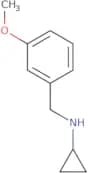
CAS:Versatile small molecule scaffoldFormula:C15H15ClN2Purity:Min. 95%Molecular weight:258.75 g/molCyclopropyl(3-methoxybenzyl)amine
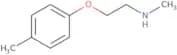
CAS:Versatile small molecule scaffoldFormula:C11H15NOPurity:Min. 95%Molecular weight:177.25 g/molN-Methyl-2-(4-methylphenoxy)-1-ethanamine
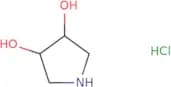
CAS:Versatile small molecule scaffoldFormula:C10H15NOPurity:Min. 95%Molecular weight:165.23 g/mol(3R,4R)-Pyrrolidine-3,4-diol hydrochloride
CAS:Versatile small molecule scaffoldFormula:C4H10ClNO2Purity:Min. 95%Molecular weight:139.58 g/molN-[2-(4-Fluorophenyl)ethyl]cyclopropanamine
CAS:Controlled ProductVersatile small molecule scaffoldFormula:C11H14FNPurity:Min. 95%Molecular weight:179.23 g/mol2-Chloro-6-[(3-chlorophenyl)methoxy]pyrazine
CAS:Versatile small molecule scaffold
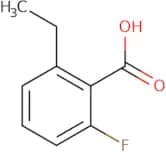
Formula:C11H8Cl2N2OPurity:Min. 95%Molecular weight:255.1 g/mol2-Ethyl-6-fluorobenzoic acid
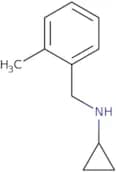
CAS:Versatile small molecule scaffoldFormula:C9H9FO2Purity:Min. 95%Molecular weight:168.16 g/molN-(2-Methylbenzyl)cyclopropanamine
CAS:Versatile small molecule scaffoldFormula:C11H15NPurity:Min. 95%Molecular weight:161.25 g/moltert-Butyl 5-oxo-9-oxa-2-azaspiro[5.5]undecane-2-carboxylate
CAS:Versatile small molecule scaffold
Formula:C14H23NO4Purity:Min. 95%Molecular weight:269.3 g/mol6-Azaspiro[3.5]nonan-9-one hydrochloride
CAS:Versatile small molecule scaffoldFormula:C8H14ClNOPurity:Min. 95%Molecular weight:175.7 g/molEthyl 3-[(tert-butoxy)amino]propanoate
CAS:Versatile small molecule scaffoldFormula:C9H19NO3Purity:Min. 95%Molecular weight:189.25 g/molMethoxy[(5-methylfuran-2-yl)methyl]amine
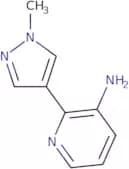
CAS:Versatile small molecule scaffoldFormula:C7H11NO2Purity:Min. 95%Molecular weight:141.17 g/mol2-(1-Methyl-1H-pyrazol-4-yl)pyridin-3-amine
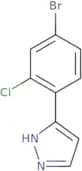
CAS:Versatile small molecule scaffoldFormula:C9H10N4Purity:Min. 95%Molecular weight:174.2 g/mol3-(4-Bromo-2-chlorophenyl)-1H-pyrazole
CAS:Versatile small molecule scaffoldFormula:C9H6BrClN2Purity:Min. 95%Molecular weight:257.51 g/mol3-[2-(1-Aminoethyl)-5-bromophenoxy]propan-1-ol
CAS:Versatile small molecule scaffoldFormula:C11H16BrNO2Purity:Min. 95%Molecular weight:274.15 g/molN-[(3,5-Dimethoxyphenyl)methyl]aniline
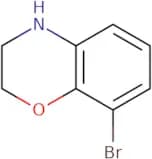
CAS:Versatile small molecule scaffoldFormula:C15H17NO2Purity:Min. 95%Molecular weight:243.3 g/mol8-bromo-3,4-dihydro-2H-1,4-benzoxazine
CAS:8-Bromo-3,4-dihydro-2H-1,4-benzoxazine is a regulatory agent that functions to inhibit protein kinase. It is used in cancer therapy and has been shown to induce antitumor activity. 8-Bromo-3,4-dihydro-2H-1,4-benzoxazine inhibits the proliferation of cancer cells by binding to the regulatory sites on DNA. This binding prevents RNA synthesis and transcription in cancer cells.Formula:C8H8BrNOPurity:Min. 95%Molecular weight:214.1 g/mol6-Bromo-2,8-dimethyl-[1,2,4]triazolo[1,5-a]pyridine
CAS:Versatile small molecule scaffoldFormula:C8H8BrN3Purity:Min. 95%Molecular weight:226.07 g/mol{4-[2-(Dimethylamino)ethyl]phenyl}methanamine
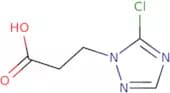
CAS:Versatile small molecule scaffoldFormula:C11H18N2Purity:Min. 95%Molecular weight:178.27 g/mol3-(5-Chloro-1H-1,2,4-triazol-1-yl)propanoic acid
CAS:Versatile small molecule scaffold
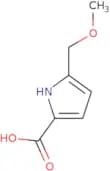
Formula:C5H6ClN3O2Purity:Min. 95%Molecular weight:175.57 g/mol5-(Methoxymethyl)-1H-pyrrole-2-carboxylic acid
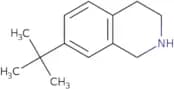
CAS:Versatile small molecule scaffoldFormula:C7H9NO3Purity:Min. 95%Molecular weight:155.15 g/mol7-tert-Butyl-1,2,3,4-tetrahydroisoquinoline
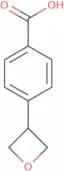
CAS:Versatile small molecule scaffoldFormula:C13H19NPurity:Min. 95%Molecular weight:189.3 g/mol4-(Oxetan-3-yl)benzoic acid
CAS:Versatile small molecule scaffoldFormula:C10H10O3Purity:Min. 95%Molecular weight:178.18 g/mol[1-(2,4-Difluorophenyl)-2,2-dimethylcyclopropyl]methanamine hydrochloride
CAS:Versatile small molecule scaffold
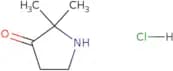
Formula:C12H16ClF2NPurity:Min. 95%Molecular weight:247.7 g/mol2,2-Dimethylpyrrolidin-3-one hydrochloride
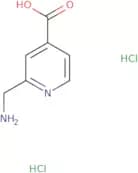
CAS:Versatile small molecule scaffoldFormula:C6H12ClNOPurity:Min. 95%Molecular weight:149.6 g/mol2-(Aminomethyl)pyridine-4-carboxylic acid dihydrochloride
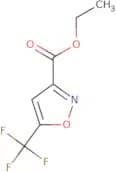
CAS:Versatile small molecule scaffoldFormula:C7H10Cl2N2O2Purity:Min. 95%Molecular weight:225.07 g/molEthyl 5-(trifluoromethyl)-1,2-oxazole-3-carboxylate
CAS:Versatile small molecule scaffoldFormula:C7H6F3NO3Purity:Min. 95%Molecular weight:209.12 g/mol2-[1-(2-Methoxy-2-oxoethyl)cyclopropyl]acetic acid
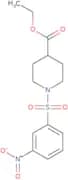
CAS:Versatile small molecule scaffoldFormula:C8H12O4Purity:Min. 95%Molecular weight:172.18 g/mol1-(3-Nitro-benzenesulfonyl)-piperidine-4-carboxylic acid ethyl ester
CAS:Versatile small molecule scaffoldFormula:C14H18N2O6SPurity:Min. 95%Molecular weight:342.37 g/mol1-bromo-5H,6H,7H,8H-imidazo[1,5-a]pyridine
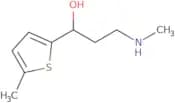
CAS:Versatile small molecule scaffoldFormula:C7H9N2BrPurity:Min. 95%Molecular weight:201.06 g/mol3-(Methylamino)-1-(5-methylthiophen-2-yl)propan-1-ol
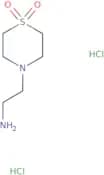
CAS:Versatile small molecule scaffoldFormula:C9H15NOSPurity:Min. 95%Molecular weight:185.3 g/mol4-(2-Aminoethyl)thiomorpholine 1,1-dioxide dihydrochloride
CAS:Versatile small molecule scaffoldFormula:C6H16Cl2N2O2SPurity:Min. 95%Molecular weight:251.17 g/mol4-Hydroxy-7H-pyrrolo[2,3-d]pyrimidine-5-carboxylic acid
CAS:Versatile small molecule scaffoldFormula:C7H5N3O3Purity:Min. 95%Molecular weight:179.13 g/mol2-(2-(Trifluoromethyl)cyclohexyl)acetic acid
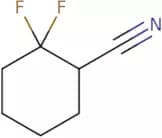
CAS:Versatile small molecule scaffoldFormula:C9H13F3O2Purity:Min. 95%Molecular weight:210.19 g/mol2,2-Difluorocyclohexane-1-carbonitrile
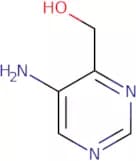
CAS:Versatile small molecule scaffoldFormula:C7H9F2NPurity:Min. 95%Molecular weight:145.15 g/mol(5-Aminopyrimidin-4-yl)methanol
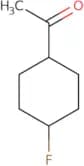
CAS:Versatile small molecule scaffoldFormula:C5H7N3OPurity:Min. 95%Molecular weight:125.13 g/mol1-(4-Fluorocyclohexyl)ethan-1-one
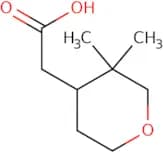
CAS:Versatile small molecule scaffoldFormula:C8H13FOPurity:Min. 95%Molecular weight:144.19 g/mol2-(3,3-Dimethyloxan-4-yl)acetic acid
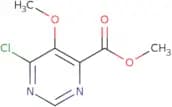
CAS:Versatile small molecule scaffoldFormula:C9H16O3Purity:Min. 95%Molecular weight:172.2 g/molMethyl 6-chloro-5-methoxypyrimidine-4-carboxylate
CAS:Versatile small molecule scaffoldFormula:C7H7ClN2O3Purity:Min. 95%Molecular weight:202.59 g/mol5-Chloro-1-(propan-2-yl)-1H-pyrazole-4-carboxylic acid
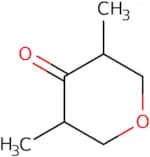
CAS:Versatile small molecule scaffoldFormula:C7H9ClN2O2Purity:Min. 95%Molecular weight:188.61 g/mol3,5-Dimethyloxan-4-one
CAS:Versatile small molecule scaffoldFormula:C7H12O2Purity:Min. 95%Molecular weight:128.17 g/mol7-Methyl-4H,5H,6H,7H-pyrazolo[1,5-a]pyridine-3-carboxylic acid
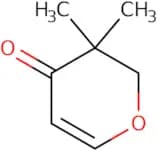
CAS:Versatile small molecule scaffoldFormula:C9H12N2O2Purity:Min. 95%Molecular weight:180.2 g/mol3,3-Dimethyl-3,4-dihydro-2H-pyran-4-one
CAS:Versatile small molecule scaffoldFormula:C7H10O2Purity:Min. 95%Molecular weight:126.15 g/mol1,1-Dioxo-3,5-dihydro-2H-thieno[2,3-c]pyrrole-4-carboxylic acid
CAS:Versatile small molecule scaffoldFormula:C7H7NO4SPurity:Min. 95%Molecular weight:201.2 g/mol{5H,7H,8H-Pyrano[4,3-d]pyrimidin-2-yl}methanamine
CAS:Versatile small molecule scaffold
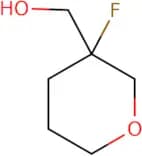
Formula:C8H11N3OPurity:Min. 95%Molecular weight:165.19 g/mol(3-Fluorooxan-3-yl)methanol
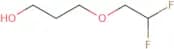
CAS:Versatile small molecule scaffoldFormula:C6H11FO2Purity:Min. 95%Molecular weight:134.15 g/mol3-(2,2-Difluoroethoxy)propan-1-ol
CAS:Versatile small molecule scaffoldFormula:C5H10F2O2Purity:Min. 95%Molecular weight:140.13 g/molBenzo[D]isoxazole-4-carboxylic acid
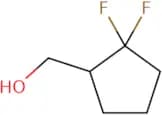
CAS:Versatile small molecule scaffoldFormula:C8H5NO3Purity:Min. 95%Molecular weight:163.13 g/mol(2,2-Difluorocyclopentyl)methanol
CAS:Versatile small molecule scaffold
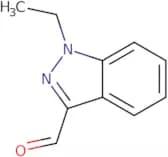
Formula:C6H10F2OPurity:Min. 95%Molecular weight:136.14 g/mol1-Ethyl-1H-indazole-3-carbaldehyde
CAS:Versatile small molecule scaffold
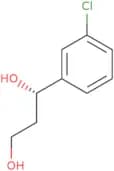
Formula:C10H10N2OPurity:Min. 95%Molecular weight:174.2 g/mol(S)-1-(3-chlorophenyl)propane-1,3-diol
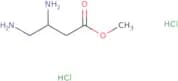
CAS:Versatile small molecule scaffoldFormula:C9H11ClO2Purity:Min. 95%Molecular weight:186.64 g/molMethyl 3,4-diaminobutanoate dihydrochloride
CAS:Versatile small molecule scaffoldFormula:C5H14Cl2N2O2Purity:Min. 95%Molecular weight:205.1 g/mol4-tert-Butyl-1,3-oxazole-2-carbaldehyde
CAS:Versatile small molecule scaffoldFormula:C8H11NO2Purity:Min. 95%Molecular weight:153.18 g/mol4-(2-Oxo-2,3-dihydro-1H-imidazol-1-yl)benzoic acid
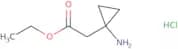
CAS:Versatile small molecule scaffoldFormula:C10H8N2O3Purity:Min. 95%Molecular weight:204.18 g/molEthyl 2-(1-aminocyclopropyl)acetate hydrochloride
CAS:Versatile small molecule scaffold
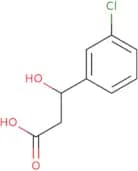
Formula:C7H14ClNO2Purity:Min. 95%Molecular weight:179.6 g/mol(3S)-3-(3-Chlorophenyl)-3-hydroxypropanoic acid
CAS:Versatile small molecule scaffold
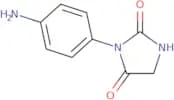
Formula:C9H9ClO3Purity:Min. 95%Molecular weight:200.62 g/mol3-(4-Aminophenyl)imidazolidine-2,4-dione
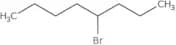
CAS:Versatile small molecule scaffoldFormula:C9H9N3O2Purity:Min. 95%Molecular weight:191.19 g/mol4-Bromooctane
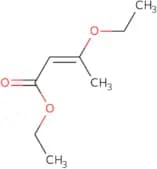
CAS:4-Bromooctane is a nonpolar, hydrophobic compound that has been quantified by gas chromatography. The solute is protonated in the presence of chloride, alkene, or tribromide to give the corresponding cation, which can be detected by gas chromatography. The frequency range for 4-bromobutane is from 0.1 Hz to 10 kHz and the parameters for this compound are halides and dipole.Formula:C8H17BrPurity:Min. 95%Molecular weight:193.12 g/molEthyl 3-ethoxycrotonate
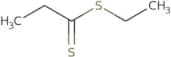
CAS:Ethyl 3-ethoxycrotonate is an organic compound with the molecular formula C5H11O2. It is a colorless liquid that boils at 46°C. The molecule has a pyridine ring and an ethoxy group on the third carbon. This product can be used in enantioselective syntheses, yielding optically pure products. It also has structural analogues that are aliphatic and ketonic.Formula:C8H14O3Purity:Min. 95%Molecular weight:158.2 g/mol1-(Ethylsulfanyl)propane-1-thione
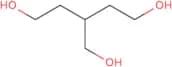
CAS:Versatile small molecule scaffoldFormula:C5H10S2Purity:Min. 95%Molecular weight:134.3 g/mol3-(Hydroxymethyl)pentane-1,5-diol
CAS:Versatile small molecule scaffoldFormula:C6H14O3Purity:Min. 95%Molecular weight:134.17 g/molFasnall benzenesulfonate salt
CAS:Versatile small molecule scaffold
Formula:C19H22N4S·C6H5SO3HPurity:Min. 95%Molecular weight:496.64 g/mol4-({[(9H-Fluoren-9-yl)methoxy]carbonyl}amino)cyclopent-2-ene-1-carboxylic acid
CAS:Versatile small molecule scaffold
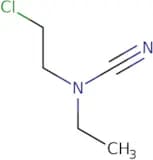
Formula:C21H19NO4Purity:Min. 95%Molecular weight:349.4 g/mol(2-Chloroethyl)(cyano)ethylamine
CAS:Versatile small molecule scaffoldFormula:C5H9ClN2Purity:Min. 95%Molecular weight:132.59 g/mol2-[1-(Difluoromethyl)-1H-1,3-benzodiazol-2-yl]acetonitrile
CAS:Controlled ProductVersatile small molecule scaffoldFormula:C10H7F2N3Purity:Min. 95%Molecular weight:207.18 g/mol1-Ethyl-2,4-dioxo-1H,2H,3H,4H-pyrido[2,3-d]pyrimidine-6-carboxylic acid
CAS:Versatile small molecule scaffoldFormula:C10H9N3O4Purity:Min. 95%Molecular weight:235.2 g/mol1-[(2-Chloropyridin-3-yl)sulfonyl]piperidine-4-carboxylic acid
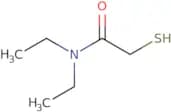
CAS:Versatile small molecule scaffoldFormula:C11H13ClN2O4SPurity:Min. 95%Molecular weight:304.75 g/molN,N-Diethyl-2-sulfanylacetamide
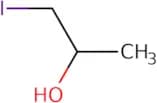
CAS:Versatile small molecule scaffoldFormula:C6H13NOSPurity:Min. 95%Molecular weight:147.24 g/mol1-Iodopropan-2-ol
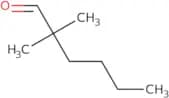
CAS:1-Iodopropan-2-ol is a bifunctional reagent that has been used in epoxide ring opening reactions. It reacts with alkoxides and carbonates to form epoxides. 1-Iodopropan-2-ol also has been shown to react with silicon, forming siloxanes, which are used in the synthesis of polymers. This chemical is catalytic and can be used as a polymerization initiator. It has also been reinvestigated for use in the synthesis of cyclic compounds.Formula:C3H7IOPurity:Min. 95%Molecular weight:186 g/mol2,2-Dimethylhexanal
CAS:Versatile small molecule scaffoldFormula:C8H16OPurity:Min. 95%Molecular weight:128.21 g/mol5-Methyl-1-(3-nitrophenyl)-1H-1,2,3-triazole-4-carboxylic acid
CAS:Versatile small molecule scaffoldFormula:C10H8N4O4Purity:Min. 95%Molecular weight:248.19 g/mol2-[3-(Furan-2-yl)-5-sulfanyl-4H-1,2,4-triazol-4-yl]acetamide
CAS:Versatile small molecule scaffold
Formula:C8H8N4O2SPurity:Min. 95%Molecular weight:224.24 g/mol3-({Imidazo[1,2-a]pyridin-2-ylmethyl}sulfanyl)propanoic acid
CAS:Versatile small molecule scaffoldFormula:C11H12N2O2SPurity:Min. 95%Molecular weight:236.29 g/mol1-(Butan-2-yl)-4-methyl-1H-pyrazolo[3,4-b]pyridin-6-yl 4-methylbenzene-1-sulfonate
CAS:Versatile small molecule scaffoldFormula:C18H21N3O3SPurity:Min. 95%Molecular weight:359.4 g/mol1-{5-Methyl-[1,2,4]triazolo[4,3-a]pyrimidin-6-yl}ethan-1-one
CAS:Versatile small molecule scaffoldFormula:C8H8N4OPurity:Min. 95%Molecular weight:176.18 g/mol5,6-Dimethyl-7-(oxolan-2-ylmethyl)-7H-pyrrolo[2,3-d]pyrimidin-4-amine
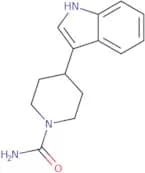
CAS:Versatile small molecule scaffoldFormula:C13H18N4OPurity:Min. 95%Molecular weight:246.31 g/mol4-(1H-Indol-3-yl)piperidine-1-carboxamide
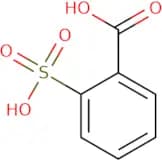
CAS:Versatile small molecule scaffoldFormula:C14H17N3OPurity:Min. 95%Molecular weight:243.3 g/mol2-Sulfobenzoic acid
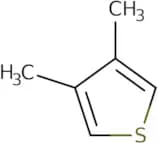
CAS:2-Sulfobenzoic acid is a water soluble, hydrophilic compound. It has a proton NMR spectrum with a single peak at 4.2 ppm. 2-Sulfobenzoic acid is an electron-withdrawing group that forms hydrogen bonding interactions with water molecules and chelate ligands. The disulfide bond in the molecule is important for its structural stability and anticancer activity. The frequency shift of the proton NMR spectrum upon addition of nucleophiles indicates that 2-sulfobenzoic acid can act as a nucleophile itself, as well as react with nucleophiles such as thiols, amines, and alcohols. 2-Sulfobenzoic acid can be used to synthesize covalent linkages between proteins and DNA, which may have applications in cancer research and other fields.Formula:C7H6O5SPurity:Min. 95%Molecular weight:202.19 g/mol3,4-Dimethylthiophene
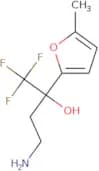
CAS:3,4-Dimethylthiophene is a reactive chemical that has been used in the treatment of acne. It also has been shown to be an effective antimicrobial agent against resistant strains of microorganisms such as methicillin-resistant Staphylococcus aureus and methicillin-resistant Enterococcus faecalis. 3,4-Dimethylthiophene is activated by metal cations and fatty acids in the cell membrane, which leads to bond cleavage and the production of reactive oxygen species. The reaction time for this process varies depending on the type of fatty acid used but can be as short as 10 minutes. 3,4-Dimethylthiophene is synthesized from isoprene with an activation energy of 118 kJ/mol. The functional theory explains how this reaction occurs with an electron transfer from the methyl group to form a radical cation, which reacts with oxygen to form a peroxy radical.Formula:C6H8SPurity:Min. 95%Molecular weight:112.19 g/mol4-Amino-1,1,1-trifluoro-2-(5-methylfuran-2-yl)butan-2-ol
CAS:Versatile small molecule scaffoldFormula:C9H12F3NO2Purity:Min. 95%Molecular weight:223.19 g/mol(2E)-3-[5-(4-Fluorophenyl)thiophen-2-yl]prop-2-enoic acid
CAS:Versatile small molecule scaffold
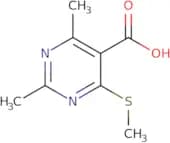
Formula:C13H9FO2SPurity:Min. 95%Molecular weight:248.27 g/mol2,4-Dimethyl-6-(methylsulfanyl)pyrimidine-5-carboxylic acid
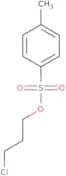
CAS:Versatile small molecule scaffoldFormula:C8H10N2O2SPurity:Min. 95%Molecular weight:198.24 g/mol1-Chloro-3-(tolene-p-sulphonyloxy) propane
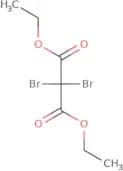
CAS:Versatile small molecule scaffoldFormula:C10H13ClO3SPurity:Min. 95%Molecular weight:248.73 g/mol1,3-diethyl 2,2-dibromopropanedioate
CAS:1,3-diethyl 2,2-dibromopropanedioate is a hydrogen bond donor that is used as an anti-inflammatory compound. It has been shown to inhibit the proliferation of growth factors in vitro and to have antioxidant activity. The synthesis of 1,3-diethyl 2,2-dibromopropanedioate is initiated by the condensation of malonic acid with dimethyl fumarate in the presence of a solid catalyst. This reaction produces a mixture of 1,3-diethyl 2,2-dibromopropanedioate and its corresponding diethyl ester. The diethyl ester can be converted into 1,3-diethyl 2,2-dibromopropanedioate by heating it under vacuum for 24 hours at 250°C. This process also removes any water or other impurities that may be present. The asymmetric synthesis of 1,3-dFormula:C7H10Br2O4Purity:Min. 95%Molecular weight:317.96 g/mol3-[2,5-Dimethyl-3-(2-methyl-1,3-thiazol-4-yl)-1H-pyrrol-1-yl]propanoic acid
CAS:Versatile small molecule scaffoldFormula:C13H16N2O2SPurity:Min. 95%Molecular weight:264.35 g/mol2,2-Diiodopropane
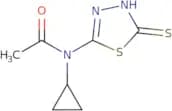
CAS:2,2-Diiodopropane is a chemical compound that is prepared in the laboratory by the reaction of an alcohol with iodine and deuterium. The reactant can be either an alcohol or a deuterated alcohol. The product has been studied using synchrotron radiation and absorption spectroscopy to determine its kinetics. When the reactant is an alcohol, the product has two different isotopes: one with mass number 2 and one with mass number 3. When the reactant is a deuterated alcohol, the product has two different isotopes: one with mass number 2 and one with mass number 3. The kinetic isotope effect refers to the change in rate of reaction due to substitution of atoms by their heavier isotopes (i.e., hydrogen). This effect can be observed when studying reactions involving water molecules as reactants or products.Formula:C3H6I2Purity:Min. 95%Molecular weight:295.89 g/molN-Cyclopropyl-N-(5-sulfanyl-1,3,4-thiadiazol-2-yl)acetamide
CAS:Versatile small molecule scaffoldFormula:C7H9N3OS2Purity:Min. 95%Molecular weight:215.3 g/moltert-Butyl N-[2-(5-amino-4-cyano-1H-1,2,3-triazol-1-yl)ethyl]carbamate
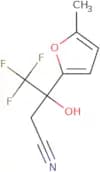
CAS:Versatile small molecule scaffoldFormula:C10H16N6O2Purity:Min. 95%Molecular weight:252.27 g/mol4,4,4-Trifluoro-3-hydroxy-3-(5-methylfuran-2-yl)butanenitrile
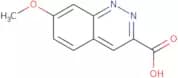
CAS:Versatile small molecule scaffoldFormula:C9H8F3NO2Purity:Min. 95%Molecular weight:219.16 g/mol7-Methoxycinnoline-3-carboxylic acid
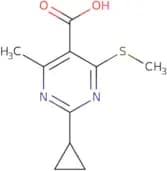
CAS:Versatile small molecule scaffoldFormula:C10H8N2O3Purity:Min. 95%Molecular weight:204.18 g/mol2-Cyclopropyl-4-methyl-6-(methylsulfanyl)pyrimidine-5-carboxylic acid
CAS:Versatile small molecule scaffoldFormula:C10H12N2O2SPurity:Min. 95%Molecular weight:224.28 g/molSuberonitrile
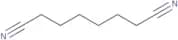
CAS:Suberonitrile is a colorless liquid that is soluble in most organic solvents. It has an odor similar to that of acetic acid and is used as a solvent for paints, varnishes, and lacquers. Suberonitrile is also used as an electrolyte in electrochemical methods such as cyclic voltammetry. Suberonitrile has been shown to produce stable complexes with alkynyl groups and aliphatic hydrocarbons. This property can be exploited for the development of rechargeable batteries using suberonitrile-based electrolytes.Formula:C8H12N2Purity:Min. 95%Molecular weight:136.2 g/mol1,6-Diiodohexane
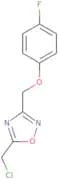
CAS:1,6-Diiodohexane is a monolayer compound that has been shown to emit fluorescence when excited by light. It is also used in the Suzuki coupling reaction as a 1,4-dienophile. This molecule can be synthesized from hexene and iodine or from methyl acrylate and dibromoiodobenzene. The model system for this molecule consists of two molecules of 1,6-diiodohexane joined by an azide bond. The molecules are arranged in a head-to-tail fashion with the proton on one end and the template molecule on the other end. The polymer film consists of alternating layers of polystyrene and poly(methyl methacrylate) with alternating layers of 1,6-diiodohexane.Formula:C6H12I2Purity:Min. 95%Molecular weight:337.97 g/mol5-(Chloromethyl)-3-(4-fluorophenoxymethyl)-1,2,4-oxadiazole
CAS:Versatile small molecule scaffoldFormula:C10H8ClFN2O2Purity:Min. 95%Molecular weight:242.63 g/mol2-({8-Methylimidazo[1,2-a]pyridin-2-yl}methoxy)benzoic acid
CAS:Controlled Product2-({8-Methylimidazo[1,2-a]pyridin-2-yl}methoxy)benzoic acid is a potent and selective inhibitor of the human voltage gated potassium channel Kv1.5. It has been shown to inhibit the function of Kv1.5 channels in cell lines and in animal models. 2-({8-Methylimidazo[1,2-a]pyridin-2-yl}methoxy)benzoic acid may be used as a research tool for studying ion channels and their role in regulating cell proliferation, differentiation, apoptosis, and immune response. This compound binds to a region on the extracellular domain of Kv1.5 that is required for channel activation and has been shown to block both inward rectifier currents and delayed rectifier currents in Xenopus oocytes expressing recombinant Kv1.5 channels.Formula:C16H14N2O3Purity:Min. 95%Molecular weight:282.29 g/mol1-Bromoheptane
CAS:1-Bromoheptane is a reactive compound that is used in the preparation of p-hydroxybenzoic acid, which is an intermediate in the synthesis of many natural compounds. 1-Bromoheptane has been shown to have biological properties and to inhibit mitochondrial membrane potential. It also causes cell lysis and hepatic steatosis in mice. This compound has been shown to inhibit the activity of enzymes such as acetylcholinesterase, butyrylcholinesterase, and carboxylesterase. 1-Bromoheptane can be used as a model for studying the effects on congestive heart failure by increasing cardiac workloads or decreasing myocardial contractility.Formula:C7H15BrPurity:Min. 95%Molecular weight:179.1 g/mol4-({6-Methylimidazo[1,2-a]pyridin-2-yl}methoxy)benzoic acid
CAS:Versatile small molecule scaffoldFormula:C16H14N2O3Purity:Min. 95%Molecular weight:282.29 g/mol3-Bromo-1-chloro-4-methoxy-2,5-dinitrobenzene
CAS:Versatile small molecule scaffoldFormula:C7H4BrClN2O5Purity:Min. 95%Molecular weight:311.5 g/mol
![N-[(2,6-Difluorophenyl)methyl]cyclopropanamine](/_next/image/?url=https%3A%2Fstatic.cymitquimica.com%2Fproducts%2F3D%2Fthumb-webp%2FAAB43737.webp&w=3840&q=75)

![N-[2-(4-Fluorophenyl)ethyl]cyclopropanamine](/_next/image/?url=https%3A%2Fstatic.cymitquimica.com%2Fproducts%2F3D%2Fthumb-webp%2FAAB43516.webp&w=3840&q=75)
![2-Chloro-6-[(3-chlorophenyl)methoxy]pyrazine](/_next/image/?url=https%3A%2Fstatic.cymitquimica.com%2Fproducts%2F3D%2Fthumb-webp%2FEUA68504.webp&w=3840&q=75)
![tert-Butyl 5-oxo-9-oxa-2-azaspiro[5.5]undecane-2-carboxylate](/_next/image/?url=https%3A%2Fstatic.cymitquimica.com%2Fproducts%2F3D%2Fthumb-webp%2FEMD07132.webp&w=3840&q=75)
![6-Azaspiro[3.5]nonan-9-one hydrochloride](/_next/image/?url=https%3A%2Fstatic.cymitquimica.com%2Fproducts%2F3D%2Fthumb-webp%2FEMD07000.webp&w=3840&q=75)
![Ethyl 3-[(tert-butoxy)amino]propanoate](/_next/image/?url=https%3A%2Fstatic.cymitquimica.com%2Fproducts%2F3D%2Fthumb-webp%2FEMC96859.webp&w=3840&q=75)
![Methoxy[(5-methylfuran-2-yl)methyl]amine](/_next/image/?url=https%3A%2Fstatic.cymitquimica.com%2Fproducts%2F3D%2Fthumb-webp%2FEMC86690.webp&w=3840&q=75)
![3-[2-(1-Aminoethyl)-5-bromophenoxy]propan-1-ol](/_next/image/?url=https%3A%2Fstatic.cymitquimica.com%2Fproducts%2F3D%2Fthumb-webp%2FEMC81366.webp&w=3840&q=75)
![N-[(3,5-Dimethoxyphenyl)methyl]aniline](/_next/image/?url=https%3A%2Fstatic.cymitquimica.com%2Fproducts%2F3D%2Fthumb-webp%2FAAB40759.webp&w=3840&q=75)
![6-Bromo-2,8-dimethyl-[1,2,4]triazolo[1,5-a]pyridine](/_next/image/?url=https%3A%2Fstatic.cymitquimica.com%2Fproducts%2F3D%2Fthumb-webp%2FEMC77920.webp&w=3840&q=75)
![{4-[2-(Dimethylamino)ethyl]phenyl}methanamine](/_next/image/?url=https%3A%2Fstatic.cymitquimica.com%2Fproducts%2F3D%2Fthumb-webp%2FEMC66129.webp&w=3840&q=75)
![[1-(2,4-Difluorophenyl)-2,2-dimethylcyclopropyl]methanamine hydrochloride](/_next/image/?url=https%3A%2Fstatic.cymitquimica.com%2Fproducts%2F3D%2Fthumb-webp%2FEMC56138.webp&w=3840&q=75)
![2-[1-(2-Methoxy-2-oxoethyl)cyclopropyl]acetic acid](/_next/image/?url=https%3A%2Fstatic.cymitquimica.com%2Fproducts%2F3D%2Fthumb-webp%2FEMC53500.webp&w=3840&q=75)
![1-bromo-5H,6H,7H,8H-imidazo[1,5-a]pyridine](/_next/image/?url=https%3A%2Fstatic.cymitquimica.com%2Fproducts%2F3D%2Fthumb-webp%2FEMC53402.webp&w=3840&q=75)
![4-Hydroxy-7H-pyrrolo[2,3-d]pyrimidine-5-carboxylic acid](/_next/image/?url=https%3A%2Fstatic.cymitquimica.com%2Fproducts%2F3D%2Fthumb-webp%2FEMC47981.webp&w=3840&q=75)


![7-Methyl-4H,5H,6H,7H-pyrazolo[1,5-a]pyridine-3-carboxylic acid](/_next/image/?url=https%3A%2Fstatic.cymitquimica.com%2Fproducts%2F3D%2Fthumb-webp%2FEMC31681.webp&w=3840&q=75)
![1,1-Dioxo-3,5-dihydro-2H-thieno[2,3-c]pyrrole-4-carboxylic acid](/_next/image/?url=https%3A%2Fstatic.cymitquimica.com%2Fproducts%2F3D%2Fthumb-webp%2FEMC30312.webp&w=3840&q=75)
![{5H,7H,8H-Pyrano[4,3-d]pyrimidin-2-yl}methanamine](/_next/image/?url=https%3A%2Fstatic.cymitquimica.com%2Fproducts%2F3D%2Fthumb-webp%2FEMC23714.webp&w=3840&q=75)
![Benzo[D]isoxazole-4-carboxylic acid](/_next/image/?url=https%3A%2Fstatic.cymitquimica.com%2Fproducts%2F3D%2Fthumb-webp%2FEMC16482.webp&w=3840&q=75)


![4-({[(9H-Fluoren-9-yl)methoxy]carbonyl}amino)cyclopent-2-ene-1-carboxylic acid](/_next/image/?url=https%3A%2Fstatic.cymitquimica.com%2Fproducts%2F3D%2Fthumb-webp%2FEMB97663.webp&w=3840&q=75)
![2-[1-(Difluoromethyl)-1H-1,3-benzodiazol-2-yl]acetonitrile](/_next/image/?url=https%3A%2Fstatic.cymitquimica.com%2Fproducts%2F3D%2Fthumb-webp%2FEMB97581.webp&w=3840&q=75)
![1-Ethyl-2,4-dioxo-1H,2H,3H,4H-pyrido[2,3-d]pyrimidine-6-carboxylic acid](/_next/image/?url=https%3A%2Fstatic.cymitquimica.com%2Fproducts%2F3D%2Fthumb-webp%2FEMB97580.webp&w=3840&q=75)
![1-[(2-Chloropyridin-3-yl)sulfonyl]piperidine-4-carboxylic acid](/_next/image/?url=https%3A%2Fstatic.cymitquimica.com%2Fproducts%2F3D%2Fthumb-webp%2FEMB97576.webp&w=3840&q=75)

![2-[3-(Furan-2-yl)-5-sulfanyl-4H-1,2,4-triazol-4-yl]acetamide](/_next/image/?url=https%3A%2Fstatic.cymitquimica.com%2Fproducts%2F3D%2Fthumb-webp%2FEMB97569.webp&w=3840&q=75)
![3-({Imidazo[1,2-a]pyridin-2-ylmethyl}sulfanyl)propanoic acid](/_next/image/?url=https%3A%2Fstatic.cymitquimica.com%2Fproducts%2F3D%2Fthumb-webp%2FEMB97565.webp&w=3840&q=75)
![1-(Butan-2-yl)-4-methyl-1H-pyrazolo[3,4-b]pyridin-6-yl 4-methylbenzene-1-sulfonate](/_next/image/?url=https%3A%2Fstatic.cymitquimica.com%2Fproducts%2F3D%2Fthumb-webp%2FEMB97561.webp&w=3840&q=75)
![1-{5-Methyl-[1,2,4]triazolo[4,3-a]pyrimidin-6-yl}ethan-1-one](/_next/image/?url=https%3A%2Fstatic.cymitquimica.com%2Fproducts%2F3D%2Fthumb-webp%2FEMB97551.webp&w=3840&q=75)
![5,6-Dimethyl-7-(oxolan-2-ylmethyl)-7H-pyrrolo[2,3-d]pyrimidin-4-amine](/_next/image/?url=https%3A%2Fstatic.cymitquimica.com%2Fproducts%2F3D%2Fthumb-webp%2FEMB97539.webp&w=3840&q=75)
![(2E)-3-[5-(4-Fluorophenyl)thiophen-2-yl]prop-2-enoic acid](/_next/image/?url=https%3A%2Fstatic.cymitquimica.com%2Fproducts%2F3D%2Fthumb-webp%2FEMB97530.webp&w=3840&q=75)
![3-[2,5-Dimethyl-3-(2-methyl-1,3-thiazol-4-yl)-1H-pyrrol-1-yl]propanoic acid](/_next/image/?url=https%3A%2Fstatic.cymitquimica.com%2Fproducts%2F3D%2Fthumb-webp%2FEMB97525.webp&w=3840&q=75)

![tert-Butyl N-[2-(5-amino-4-cyano-1H-1,2,3-triazol-1-yl)ethyl]carbamate](/_next/image/?url=https%3A%2Fstatic.cymitquimica.com%2Fproducts%2F3D%2Fthumb-webp%2FEMB97522.webp&w=3840&q=75)

![2-({8-Methylimidazo[1,2-a]pyridin-2-yl}methoxy)benzoic acid](/_next/image/?url=https%3A%2Fstatic.cymitquimica.com%2Fproducts%2F3D%2Fthumb-webp%2FEMB97505.webp&w=3840&q=75)

![4-({6-Methylimidazo[1,2-a]pyridin-2-yl}methoxy)benzoic acid](/_next/image/?url=https%3A%2Fstatic.cymitquimica.com%2Fproducts%2F3D%2Fthumb-webp%2FEMB97501.webp&w=3840&q=75)