Building Blocks
This section contains fundamental products for the synthesis of organic and biological compounds. Building blocks are the essential starting materials used to construct complex molecules through various chemical reactions. They play a critical role in drug discovery, material science, and chemical research. At CymitQuimica, we offer a diverse range of high-quality building blocks to support your innovative research and industrial projects, ensuring you have the essential components for successful synthesis.
Subcategories of "Building Blocks"
- Boronic Acids & Boronic Acid Derivatives(5,778 products)
- Chiral Building Blocks(1,242 products)
- Hydrocarbon Building Blocks(6,098 products)
- Organic Building Blocks(61,092 products)
Found 199296 products of "Building Blocks"
Sort by
Purity (%)
0
100
|
0
|
50
|
90
|
95
|
100
6-Ethyltetrahydro-2H-pyran-2-one
CAS:<p>6-Ethyltetrahydro-2H-pyran-2-one is a monatomic chemical in the diptera family. It is used as a detection method for host plants, and has been found to be present in fatty acids of coatings and analytical chemistry. 6-Ethyltetrahydro-2H-pyran-2-one can also be found in cuticular hydrocarbons and viscosity. The fluorescence of this compound is an analytical method that can be used to identify it. This chemical has also been shown to have antiviral properties, which are due to its ability to induce the expression of genes involved in the production of aldolases.</p>Formula:C7H12O2Purity:Min. 95%Molecular weight:128.17 g/molPiperacetazine
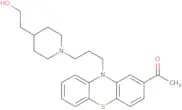
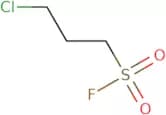
CAS:Controlled Product<p>Piperacetazine is a drug used to treat symptoms of depression and anxiety among the elderly. It has also been studied as a treatment for psychiatric patients who have not responded to other treatments. Piperacetazine belongs to the class of drugs known as CNS depressants, and is often prescribed by doctors in conjunction with other medications. Piperacetazine also has anti-inflammatory properties and can be used in the treatment of inflammatory diseases such as rheumatoid arthritis. The drug is not effective against viral infections, but it may be useful in treating some bacterial infections because it inhibits the growth of bacteria by binding to DNA-dependent RNA polymerase, thereby preventing transcription and replication. Piperacetazine is usually administered orally at doses between 10 mg and 50 mg per day, depending on the severity of symptoms.</p>Formula:C24H30N2O2SPurity:Min. 95%Molecular weight:410.57 g/mol3-Chloropropane-1-sulfonyl fluoride
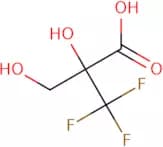
CAS:<p>Versatile small molecule scaffold</p>Formula:C3H6ClFO2SPurity:Min. 95%Molecular weight:160.6 g/mol3,3,3-Trifluoro-2-hydroxy-2-(hydroxymethyl)propanoic acid
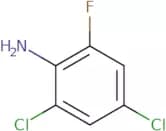
CAS:<p>Versatile small molecule scaffold</p>Formula:C4H5F3O4Purity:Min. 95%Molecular weight:174.08 g/mol2,4-dichloro-6-fluoroaniline
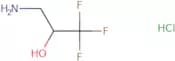
CAS:<p>Versatile small molecule scaffold</p>Formula:C6H4Cl2FNPurity:Min. 95%Molecular weight:180 g/mol3-Amino-1,1,1-trifluoropropan-2-ol hydrochloride
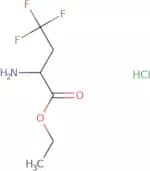
CAS:<p>Versatile small molecule scaffold</p>Formula:C3H7ClF3NOPurity:Min. 95%Molecular weight:165.54 g/molEthyl 2-amino-4,4,4-trifluorobutanoate hydrochloride
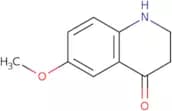
CAS:Versatile small molecule scaffoldFormula:C6H11ClF3NO2Purity:Min. 95%Molecular weight:221.6 g/mol6-Methoxy-2,3-dihydroquinolin-4(1H)-one
CAS:<p>6-Methoxy-2,3-dihydroquinolin-4(1H)-one is a target compound that can be synthesized in an intramolecular condensation process. In this reaction, two molecules of acetone react with each other to form a cyclic six-membered ring. The hydrolysis of the ester bond then releases the desired product. This process is catalyzed by glutathione reductase and requires NADPH as a cofactor.</p>Formula:C10H11NO2Purity:Min. 95%Molecular weight:177.2 g/mol6-Methylimidazo[2,1-b][1,3]thiazole
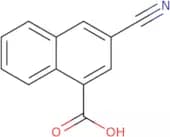
CAS:<p>Versatile small molecule scaffold</p>Formula:C6H6N2SPurity:Min. 95%Molecular weight:138.19 g/mol3-Cyanonaphthalene-1-carboxylic acid
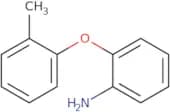
CAS:<p>3-Cyanonaphthalene-1-carboxylic acid is a benzyl compound that can be synthesized by the reaction of benzyne with piperazine. It has been shown to have a low yield in research and complicates the operational skeleton. 3-Cyanonaphthalene-1-carboxylic acid is also a subgroup of compounds called tachykinins, which are peptides that activate tachykinin receptors. This chemical is not currently used for commercial purposes, but it may be useful as a starting material for large-scale production of other compounds.</p>Formula:C12H7NO2Purity:Min. 95%Molecular weight:197.19 g/mol2-Amino-2'-methyldiphenyl Ether
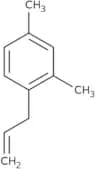
CAS:<p>2-Amino-2'-methyldiphenyl Ether (2-AME) is a hydrosulfide. It is a colorless to pale yellow, oily liquid with an unpleasant odor and low toxicity. 2-AME is soluble in water and polar organic solvents. 2-AME can be used to generate hydrosulfides, such as sodium sulfide, nitro compounds, sulfides, and ethers. These compounds are used in the production of dyes for wool, leather tanning, perfumes and flavors.</p>Formula:C13H13NOPurity:Min. 95%Molecular weight:199.25 g/mol2,4-Dimethyl-1-(prop-2-en-1-yl)benzene
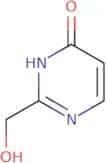
CAS:<p>Versatile small molecule scaffold</p>Formula:C11H14Purity:Min. 95%Molecular weight:146.23 g/mol2-(Hydroxymethyl)-3,4-dihydropyrimidin-4-one
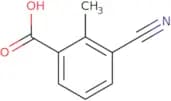
CAS:Versatile small molecule scaffoldFormula:C5H6N2O2Purity:Min. 95%Molecular weight:126.11 g/mol3-Cyano-2-methylbenzoic acid
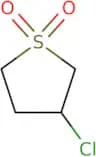
CAS:<p>Versatile small molecule scaffold</p>Formula:C9H7NO2Purity:Min. 95%Molecular weight:161.16 g/mol3-Chloro-tetrahydro-thiophene 1,1-dioxide
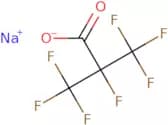
CAS:<p>3-Chloro-tetrahydro-thiophene 1,1-dioxide is a reaction product of aluminum with benzene in the presence of aluminum chloride. This compound is used as an intermediate for the production of sulfonates and homologs. 3-Chloro-tetrahydro-thiophene 1,1-dioxide is also used to produce phenol by reacting with sulfuric acid and chloroform.</p>Formula:C4H7ClO2SPurity:Min. 95%Molecular weight:154.62 g/molSodium 2,3,3,3-tetrafluoro-2-(trifluoromethyl)propanoate
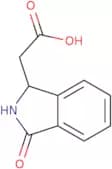
CAS:<p>Versatile small molecule scaffold</p>Formula:C4F7NaO2Purity:Min. 95%Molecular weight:236.02 g/mol(3-Oxo-2,3-dihydro-1H-isoindol-1-yl)-acetic acid
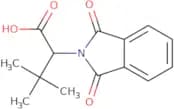
CAS:<p>Versatile small molecule scaffold</p>Formula:C10H9NO3Purity:Min. 95%Molecular weight:191.19 g/mol2-(1,3-Dioxo-2,3-dihydro-1H-isoindol-2-yl)-3,3-dimethylbutanoic acid
CAS:Versatile small molecule scaffoldFormula:C14H15NO4Purity:Min. 95%Molecular weight:261.3 g/mol2-[(tert-butoxycarbonyl)amino]-3-hydroxypropanoic acid
CAS:2-[(tert-Butoxycarbonyl)amino]-3-hydroxypropanoic acid is a chiral, labile tertiary alcohol that has been synthesized from methyl 2-aminoethanol and sodium hydrogen carbonate. This compound acts as a precursor in the synthesis of threonine, which is used to produce amino acids that are essential for life. The reaction between 2-[(tert-butoxycarbonyl)amino]-3-hydroxypropanoic acid and sodium carbonate produces an alkene that reacts with reactive groups, such as hydroxyls or carbonyls. It also inhibits the formation of primary alcohols through its affinity for phenolic compounds.Formula:C8H15NO5Purity:Min. 95%Molecular weight:205.21 g/mol1,1-Dioxo-1,2-thiazinane-3-carboxylic acid
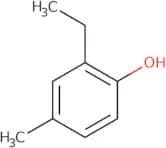
CAS:Versatile small molecule scaffoldFormula:C5H9NO4SPurity:Min. 95%Molecular weight:179.2 g/mol2-Ethyl-p-cresol
CAS:<p>2-Ethyl-p-cresol is an ester compound that is soluble in water. It has a cycloalkyl group and aryl group and a pyrogallol, phloroglucinol, and resorcinol moiety. 2-Ethyl-p-cresol is resistant to heat and acidic conditions. It also has an ester function, which makes it soluble in water.</p>Formula:C9H12OPurity:Min. 95%Molecular weight:136.19 g/mol1-Azido-3-methoxybenzene
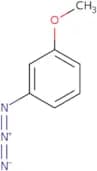
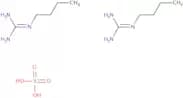
CAS:Versatile small molecule scaffoldFormula:C7H7N3OPurity:Min. 95%Molecular weight:149.15 g/molBis(1-butylguanidine), sulfuric acid
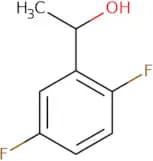
CAS:<p>Bis(1-butylguanidine), sulfuric acid (BBSS) is a disinfectant that belongs to the group of isothiocyanates. It has been shown to be an effective fungicide and bactericide in the treatment of herpesvirus infections. BBSS causes death of cells by reacting with and destroying their DNA, which is important for the production of new cell material. The reaction also results in the formation of hydroxyl radicals, which are highly reactive and destructive molecules that can damage other biomolecules such as proteins and lipids. This chemical also acts as an anesthetic by blocking nerve transmissions in certain regions of the body, such as the brain or spinal cord.</p>Formula:C10H28N6O4SPurity:Min. 95%Molecular weight:328.44 g/mol1-(2,5-difluorophenyl)ethan-1-ol
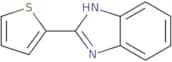
CAS:<p>Versatile small molecule scaffold</p>Formula:C8H8OF2Purity:Min. 95%Molecular weight:158.14 g/mol2-(2-Thienyl)-1H-benzimidazole
CAS:<p>2-(2-Thienyl)-1H-benzimidazole is an antibacterial that has been shown to have a broad spectrum of activity against Gram-positive bacteria. It is a metal cation chelator and forms a tautomeric form with chloride. 2-(2-Thienyl)-1H-benzimidazole has been shown to be effective against Leishmania and inhibits the synthesis of DNA, RNA, and protein in bacteria. This drug also binds to the target site on the enzyme DNA gyrase, which prevents the formation of supercoils in DNA and thereby inhibits bacterial growth.</p>Formula:C11H8N2SPurity:Min. 95%Molecular weight:200.26 g/mol2-(Furan-3-yl)-1H-1,3-benzodiazole
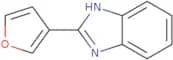
CAS:<p>Versatile small molecule scaffold</p>Formula:C11H8N2OPurity:Min. 95%Molecular weight:184.19 g/mol(2-Nitrophenyl)(pyridin-3-yl)methanol
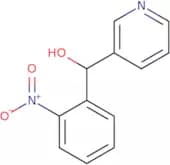
CAS:Versatile small molecule scaffoldFormula:C12H10N2O3Purity:Min. 95%Molecular weight:230.22 g/mol2-Chloro-4-(4-methylphenyl)-1,3-thiazole
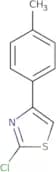
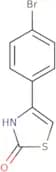
CAS:Versatile small molecule scaffoldFormula:C10H8ClNSPurity:Min. 95%Molecular weight:209.7 g/mol4-(4-Bromophenyl)-2-hydroxythiazole
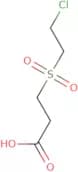
CAS:<p>Versatile small molecule scaffold</p>Formula:C9H6BrNOSPurity:Min. 95%Molecular weight:256.12 g/mol3-(2-Chloroethanesulfonyl)propanoic acid
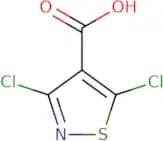
CAS:<p>Versatile small molecule scaffold</p>Formula:C5H9ClO4SPurity:Min. 95%Molecular weight:200.64 g/molDichloro-1,2-thiazole-4-carboxylic acid
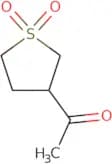
CAS:Versatile small molecule scaffoldFormula:C4HCl2NO2SPurity:Min. 95%Molecular weight:198.03 g/mol1-(Tetrahydro-1,1-dioxido-3-thienyl)-ethanone
CAS:Versatile small molecule scaffoldFormula:C6H10O3SPurity:Min. 95%Molecular weight:162.21 g/mol[(2-Aminobutyl)sulfanyl]benzene
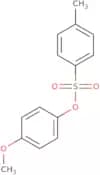
CAS:<p>Versatile small molecule scaffold</p>Formula:C10H15NSPurity:Min. 95%Molecular weight:181.3 g/mol4-Methoxyphenyl 4-methylbenzenesulfonate
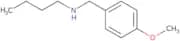
CAS:4-Methoxyphenyl 4-methylbenzenesulfonate is a tosylate that can be used in the cross-coupling reaction of iodides, chlorides, and phosphine, as well as in the synthesis of supramolecular complexes. 4-Methoxyphenyl 4-methylbenzenesulfonate has been shown to react with aryl chlorides and halides, forming reactive intermediates. The use of this compound in cross-coupling reactions allows for the synthesis of unsymmetrical products.Formula:C14H14O4SPurity:Min. 95%Molecular weight:278.33 g/molN-Butyl-p-methoxy-benzylamine
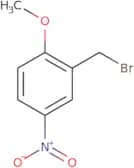
CAS:<p>Versatile small molecule scaffold</p>Formula:C12H19NOPurity:Min. 95%Molecular weight:193.29 g/mol2-(bromomethyl)-1-methoxy-4-nitrobenzene
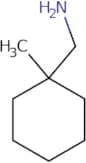
CAS:<p>2-(bromomethyl)-1-methoxy-4-nitrobenzene is a halogenated aromatic compound that binds to the nicotinic acetylcholine receptor in the central nervous system. It has been shown to be a potent and selective antagonist of the neurokinin-1 receptor. 2-(bromomethyl)-1-methoxy-4-nitrobenzene also has anti-inflammatory properties, which may be due to its ability to inhibit prostaglandin synthesis. The drug has been used in vivo for the treatment of inflammation associated with intraocular pressure elevation, as well as for other conditions such as glaucoma and prostate cancer.</p>Formula:C8H8BrNO3Purity:Min. 95%Molecular weight:246.06 g/mol(1-Methylcyclohexyl)methanamine
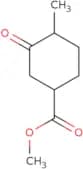
CAS:<p>Versatile small molecule scaffold</p>Formula:C8H17NPurity:Min. 95%Molecular weight:127.23 g/molMethyl 4-methyl-3-oxocyclohexane-1-carboxylate
CAS:Methyl 4-methyl-3-oxocyclohexane-1-carboxylate (MMHCC) is an organic compound that is a member of the group of epoxides. It can be used as a reagent for transesterification reactions, such as the conversion of alcohols to ethers. MMHCC can also be used as a catalyst for hydrocarbon synthesis and as an isomerization agent. This chemical has been shown to catalytically convert alcohols to hydrocarbons and alkoxides, which are useful in the production of plastics.Formula:C9H14O3Purity:Min. 95%Molecular weight:170.21 g/molIsouramil
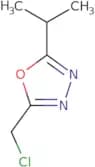
CAS:<p>Isouramil is a natural product that belongs to the class of benzophenanthridines. It was isolated from the Chinese medicinal plant C. chinensis (wolfberry) and has been shown to have antioxidant effects in vitro, as well as inhibitory effects on dehydrogenase and enzymatic inactivation. Isouramil also has an inhibitory effect on the production of active oxygen species, which may be due to its ability to chelate iron ions. However, this compound is not active against Gram-positive bacteria such as Staphylococcus aureus. Isouramil is also structurally similar to other benzophenanthridines, so it can be used as a model organism for these compounds. Animal studies have shown that this compound may promote animal health by reducing weight loss and improving immunity responses. Human studies show that isouramil may help prevent oxidative stress in healthy individuals and reduce inflammation in those with asthma or bronchitis.</p>Formula:C4H5N3O3Purity:Min. 95%Molecular weight:143.1 g/mol2-(Chloromethyl)-5-isopropyl-1,3,4-oxadiazole
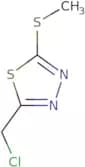
CAS:Versatile small molecule scaffoldFormula:C6H9ClN2OPurity:Min. 95%Molecular weight:160.6 g/mol2-(Chloromethyl)-5-(methylsulfanyl)-1,3,4-thiadiazole
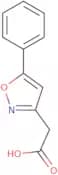
CAS:Versatile small molecule scaffoldFormula:C4H5ClN2S2Purity:Min. 95%Molecular weight:180.7 g/mol2-(5-Phenyl-1,2-oxazol-3-yl)acetic acid
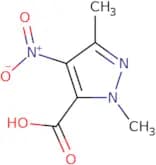
CAS:<p>Versatile small molecule scaffold</p>Formula:C11H9NO3Purity:Min. 95%Molecular weight:203.19 g/mol1,3-dimethyl-4-nitro-1H-pyrazole-5-carboxylic acid
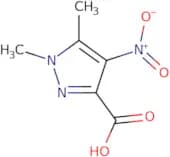
CAS:Versatile small molecule scaffoldFormula:C6H7N3O4Purity:Min. 95%Molecular weight:185.1 g/mol1,5-dimethyl-4-nitro-1H-pyrazole-3-carboxylic acid
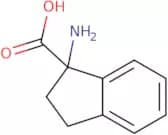
CAS:Versatile small molecule scaffoldFormula:C6H7N3O4Purity:Min. 95%Molecular weight:185.1 g/mol1-Aminoindan-1-carboxylic acid
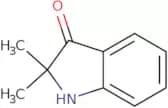
CAS:<p>1-Aminoindan-1-carboxylic acid is a non-competitive inhibitor of the ion channel. It binds to the hydrophobic pocket in the transmembrane domain, where it forms hydrogen bonds with amino acids such as leucine and valine. In vivo studies have shown that 1-aminonindan-1 carboxylic acid can block pentylenetetrazole-, electroshock-, and branched chain induced convulsions in mice. The molecular modeling study showed that 1-aminonindan-1 carboxylic acid binds to the sodium channel, blocking its function by binding to one of two possible sites.</p>Formula:C10H11NO2Purity:Min. 95%Molecular weight:177.2 g/mol2,2-Dimethylindolin-3-one
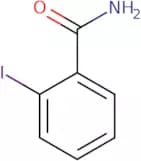
CAS:<p>Versatile small molecule scaffold</p>Formula:C10H11NOPurity:Min. 95%Molecular weight:161.2 g/mol2-Iodobenzamide
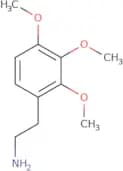
CAS:<p>2-Iodobenzamide is a solvent that is used to produce amides. It can be found in the form of an oily liquid and has a strong, unpleasant odor. 2-Iodobenzamide reacts with oxone (a reagent) to form methyl ketones, which are then cleaved by reaction with primary alcohols to form secondary alcohols. This compound has been shown to have inhibition activity against the uptake of n-dimethylformamide (DMF) by brain tissue in rats. 2-Iodobenzamide also reacts with oxygen radicals by radical coupling and forms resistant, extravascular molecules.</p>Formula:C7H6INOPurity:Min. 95%Molecular weight:247.04 g/mol2-(2,3,4-Trimethoxyphenyl)ethan-1-amine
CAS:Controlled Product<p>2-(2,3,4-Trimethoxyphenyl)ethan-1-amine is a drug with anti-diabetic properties that belongs to the class of drugs called aminoguanidine derivatives. It is an optically active compound and has an asymmetric carbon atom. The active enantiomer is 2-(2,3,4-trimethoxyphenyl)ethanamine and the inactive enantiomer is 2-(2,3,4-trimethoxyphenyl)ethylamine. This drug inhibits the activity of aldose reductase which converts glucose into sorbitol. Sorbitol accumulation then leads to diabetic complications such as cataracts and nerve damage. 2-(2,3,4-Trimethoxyphenyl)ethan-1-amine also inhibits platelet aggregation and thrombus formation by inhibiting the release of serotonin from platelets and preventing platelet adhesion to</p>Formula:C11H17NO3Purity:Min. 95%Molecular weight:211.26 g/mol[(1R,4R)-4-Methylcyclohexyl]methanol
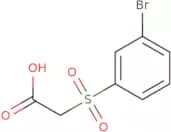
CAS:<p>[(1R,4R)-4-Methylcyclohexyl]methanol is an organic compound that is a glycol ether. It is used as a solvent in the production of polymers, dyes, and pharmaceuticals. [(1R,4R)-4-Methylcyclohexyl]methanol has been shown to have significant interactions with bacteria and may be toxic to humans. It has been found to inhibit the enzyme activity of hydroxy methyl glutaryl coenzyme A (HMG CoA) reductase in vitro. This enzyme catalyzes the conversion of HMG CoA to mevalonic acid and plays an important role in cholesterol synthesis. The inhibition of this enzyme by [(1R,4R)-4-Methylcyclohexyl]methanol may lead to a decrease in cholesterol levels in humans.</p>Formula:C8H16OPurity:Min. 95%Molecular weight:128.21 g/mol2-(3-Bromobenzenesulfonyl)acetic acid
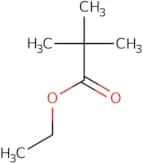
CAS:<p>Versatile small molecule scaffold</p>Formula:C8H7BrO4SPurity:Min. 95%Molecular weight:279.11 g/molEthyl trimethylacetate
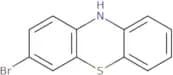
CAS:<p>Ethyl trimethylacetate is a solvent that is used in analytical chemistry. It has been shown to be a strong inhibitor of nerve cells, which may be due to its ability to form hydrogen bonds with the cell membrane or carbonyl groups that disrupt the cell membrane. Ethyl trimethylacetate also inhibits cancer cell growth by inhibiting the production of fatty acids and glycol ethers. The deuterium isotope effect is observed when ethyl trimethylacetate is used as a solvent for chemical structures that contain deuterium atoms.</p>Formula:CH3Purity:Min. 95%Molecular weight:130.18 g/mol3-Bromo-10H-phenothiazine
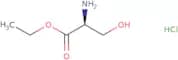
CAS:<p>3-Bromo-10H-phenothiazine is a fluorescence sensor that is sensitive to the presence of aromatic heterocycles. The molecule is an ion-pair, which means that it has two parts: a charged part and a neutral part. The charge can be either positive or negative. When the molecule interacts with polycyclic aromatic hydrocarbons (PAHs), the charge changes from positive to negative, which causes an increase in fluorescence. 3-Bromo-10H-phenothiazine has been used as a sensor for PAHs in air samples and ground water samples. It was also used as a photocurrent generator in solar cells.</p>Formula:C12H8BrNSPurity:Min. 95%Molecular weight:278.17 g/molEthyl 2-amino-3-hydroxypropanoate hydrochloride
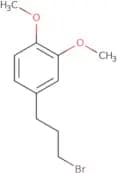
CAS:Ethyl 2-amino-3-hydroxypropanoate hydrochloride is a compound that is found in lichen. It can be synthesized by the ammonolysis of ethyl 3-aminopropanoate, which can be obtained from l-threonine and 3-hydroxypropionic acid. The synthesis of this compound proceeds through an aldol condensation followed by oxidation with sodium azide to form aziridine. Ethyl 2-amino-3-hydroxypropanoate hydrochloride has been used as a chemical intermediate for the synthesis of other compounds, such as oxazolidinones, dihydropyridines, and indole derivatives.Formula:C5H12ClNO3Purity:Min. 95%Molecular weight:169.61 g/mol4-(3-Bromopropyl)-1,2-dimethoxybenzene
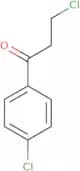
CAS:<p>Versatile small molecule scaffold</p>Formula:C11H15BrO2Purity:Min. 95%Molecular weight:259.14 g/mol3,4'-Dichloropropiophenone
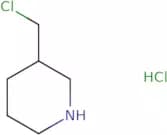
CAS:<p>3,4'-Dichloropropiophenone is a photolysis product of benzyl chloride and trimethyl borate. It is used as a transfer catalyst in Friedel-Crafts reactions, such as the conversion of chloride to dodecyl chloride. 3,4'-Dichloropropiophenone is also used as an intermediate in the synthesis of propiophenone. This compound has been shown to have a strong tendency to form dihedral angles and orientations, which can be helpful for research into new synthetic methods. 3,4'-Dichloropropiophenone is also useful for the production of tetrabutyl ammonium from chloroethane and ammonium chloride.</p>Formula:C9H8Cl2OPurity:Min. 95%Molecular weight:203.06 g/mol3-Chloromethyl-piperidine hydrochloride
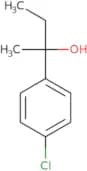
CAS:Versatile small molecule scaffoldFormula:C6H13Cl2NPurity:Min. 95%Molecular weight:170.08 g/mol2-(4-Chlorophenyl)butan-2-ol
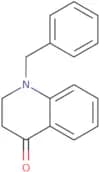
CAS:<p>Versatile small molecule scaffold</p>Formula:C10H13ClOPurity:Min. 95%Molecular weight:184.66 g/mol1-Benzyl-1,2,3,4-tetrahydroquinolin-4-one
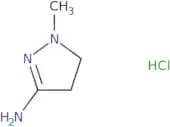
CAS:<p>1-Benzyl-1,2,3,4-tetrahydroquinolin-4-one is a phenolic compound that is stabilized by a benzene ring. It has a carbonyl group and a heterocyclic ring. The crystal structure of 1-Benzyl-1,2,3,4-tetrahydroquinolin-4-one is shown in Figure 1. <br>Figure 1: Crystal Structure of 1-Benzyl-1,2,3,4-tetrahydroquinolin-4-one</p>Formula:C16H15NOPurity:Min. 95%Molecular weight:237.3 g/mol1-Methyl-4,5-dihydro-1H-pyrazol-3-amine hydrochloride
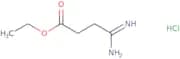
CAS:Versatile small molecule scaffoldFormula:C4H10ClN3Purity:Min. 95%Molecular weight:135.59 g/molEthyl 3-carbamimidoylpropanoate hydrochloride
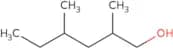
CAS:Versatile small molecule scaffoldFormula:C6H13ClN2O2Purity:Min. 95%Molecular weight:180.6 g/mol2,4-Dimethylhexan-1-ol
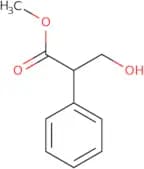
CAS:<p>Versatile small molecule scaffold</p>Formula:C8H18OPurity:Min. 95%Molecular weight:130.23 g/molMethyl 3-hydroxy-2-phenylpropanoate
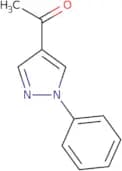
CAS:<p>Methyl 3-hydroxy-2-phenylpropanoate is a synthetic compound that has been shown to have anti-diabetic, anticholinergic, and antibacterial properties. When tested in vitro, Methyl 3-hydroxyphenylpropanoate showed significant cytotoxicity against leukemia cells. The structure of this molecule is an amide with hydroxy groups on the phenyl groups. This molecule also possessed antibacterial activity in vitro. It was found to be active against gram positive and gram negative bacteria such as Staphylococcus aureus, Bacillus cereus, and Pseudomonas aeruginosa. Methyl 3-hydroxyphenylpropanoate was synthesized using an organic solvent that consisted of dichloromethane and ethanol.</p>Formula:C10H12O3Purity:Min. 95%Molecular weight:180.2 g/mol4-Acetyl-1-phenyl-1H-pyrazole
CAS:<p>Versatile small molecule scaffold</p>Formula:C11H10N2OPurity:Min. 95%Molecular weight:186.21 g/mol1-Chloro-3-(chloromethoxy)propane
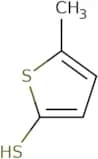
CAS:<p>Versatile small molecule scaffold</p>Formula:C4H8Cl2OPurity:Min. 95%Molecular weight:143.01 g/mol5-Methylthiophene-2-thiol
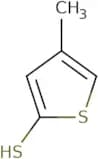
CAS:<p>5-Methylthiophene-2-thiol is a mercaptan with a thiol group at the 5 position. The sulfur atom in the thiol group is electron deficient and can serve as an electron donor. This compound has been used in food chemistry to make a diacetyl-free butter flavor. It has also been studied for its ability to inhibit the expansion of polystyrene foam. Mercaptans are found in fossil fuels, but are also produced synthetically by alkylation of hydrocarbons with hydrogen sulfide. The term "mercaptan" was coined by combining the words "mercury" and "sulfur." <br>Mercaptans are functionally important because they have both an alkylthio group and a mercapto group, which allow them to act as both an acid and an alcohol. 5-Methylthiophene-2-thiol can be used for many applications such as detergents, textile d</p>Formula:C5H6S2Purity:Min. 95%Molecular weight:130.2 g/mol4-Methylthiophene-2-thiol
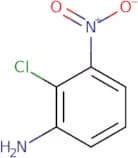
CAS:<p>Versatile small molecule scaffold</p>Formula:C5H6S2Purity:Min. 95%Molecular weight:130.2 g/mol2-Chloro-3-nitroaniline
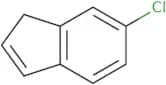
CAS:<p>2-Chloro-3-nitroaniline is a trifluoroacetic acid derivative that has been synthesized from anilines. This chemical is used in the synthesis of quinoline derivatives and other synthetic intermediates. It can be used as a ligand to form metal complexes with metals such as copper, lead, or zinc. 2-Chloro-3-nitroaniline is also used as a chromatographic chiral stationary phase or to generate solutes with specific functional groups for use in chemical interactions.</p>Formula:C6H5ClN2O2Purity:Min. 95%Molecular weight:172.57 g/mol6-Chloro-1H-indene
CAS:<p>6-Chloro-1H-indene is a versatile molecule that can be used as an acceptor for cyclopropanation reactions. It is a monoadduct and the product of a unique reaction that involves carbenes. 6-Chloro-1H-indene has been shown to be selective for alkenes in photovoltaic experiments, with high conversion rates and low levels of polymers. It has also been shown to have potential in organic chemistry as a scalable synthesis.</p>Formula:C9H7ClPurity:Min. 95%Molecular weight:150.6 g/mol4,4-Diethylpiperidine hydrochloride
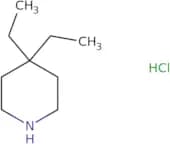
CAS:<p>Versatile small molecule scaffold</p>Formula:C9H20ClNPurity:Min. 95%Molecular weight:177.71 g/mol4-Methoxy-4-methylpiperidine
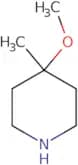
CAS:<p>Versatile small molecule scaffold</p>Formula:C7H15NOPurity:Min. 95%Molecular weight:129.2 g/mol2-Methyl-1,4-dioxa-8-azaspiro[4.5]decane hydrochloride
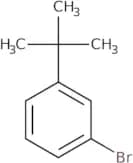
CAS:Controlled ProductVersatile small molecule scaffoldFormula:C8H16ClNO2Purity:Min. 95%Molecular weight:193.7 g/mol1-Bromo-3-tert-butylbenzene
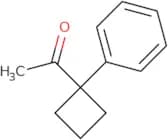
CAS:<p>1-Bromo-3-tert-butylbenzene is a chemical compound that is used in the synthesis of pharmaceuticals, pesticides, and other organic compounds. It has been shown to be an effective inhibitor of NF-κB, which plays a key role in the inflammatory response. 1-Bromo-3-tert-butylbenzene has also been shown to inhibit colon cancer cells and phosphatase activity. The inhibition of these two activities can lead to a decrease in human diseases such as cancer and diabetes. This compound can be synthesized by using solvents such as dichloromethane or chloroform, or by using phosphatase enzymes from bacteria or fungi.</p>Formula:C10H13BrPurity:Min. 95%Molecular weight:213.11 g/mol1-(1-Phenylcyclobutyl)ethanone
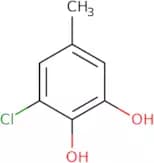
CAS:<p>Versatile small molecule scaffold</p>Formula:C12H14OPurity:Min. 95%Molecular weight:174.24 g/mol3-Chloro-5-methylbenzene-1,2-diol
CAS:<p>3-Chloro-5-methylbenzene-1,2-diol is an organic compound that is used as a substrate in assays to measure the activity of enzymes that oxidize it. This compound has been shown to be mineralized by a number of bacterial strains, and its formation rate has been shown to be dependent on the presence of oxygen. 3-Chloro-5-methylbenzene-1,2-diol can also be dechlorinated by a number of bacterial strains and its gene product (3CMB) has been identified in Bacillus subtilis. Magnetic resonance analysis revealed that 3CMB is produced from 3CMB by a dehydrogenase enzyme in the active site. The enzyme is homologous to the dehydrogenases found in Escherichia coli and Pseudomonas aeruginosa.</p>Formula:C7H7ClO2Purity:Min. 95%Molecular weight:158.58 g/mol1-[(2-Bromoethyl)sulfanyl]-3-methylbenzene
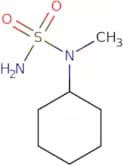
CAS:<p>Versatile small molecule scaffold</p>Formula:C9H11BrSPurity:Min. 95%Molecular weight:231.15 g/molN-Cyclohexyl-N-methylaminosulfonamide
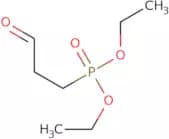
CAS:<p>Versatile small molecule scaffold</p>Formula:C7H16N2O2SPurity:Min. 95%Molecular weight:192.28 g/molDiethyl (3-oxopropyl)phosphonate
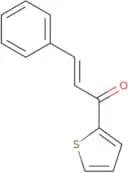
CAS:<p>Diethyl (3-oxopropyl)phosphonate is a synthetic compound that is used as an intermediate in the synthesis of pharmaceuticals. The asymmetric synthesis of diethyl (3-oxopropyl)phosphonate was catalyzed by amide and fluorine. Crystallographic data for this molecule were obtained using n-oxide, which focuses on tuberculosis. This drug is an anti-tuberculosis drug.</p>Formula:C7H15O4PPurity:Min. 95%Molecular weight:194.17 g/mol2-Cinnamoylthiophene
CAS:<p>2-Cinnamoylthiophene is a synthetic compound that has been shown to have an apoptotic effect on cancer cells in culture. It is produced by the reaction of 2-aminothiophenol with acetic anhydride and cinnamic acid. The molecular structure of 2-cinnamoylthiophene has been determined using nuclear magnetic resonance (NMR) spectroscopy and quantum chemical calculations. This molecule is oxidized by hydrogen peroxide to generate reactive intermediates, which then react with DNA bases to form DNA adducts. These adducts are detected by the tetrazolium dye MTT, which is used as a cell viability assay. 2-Cinnamoylthiophene also contains functional groups that can be used for further study.</p>Formula:C13H10OSPurity:Min. 95%Molecular weight:214.28 g/molChroman-2-ylmethanamine
CAS:<p>Chroman-2-ylmethanamine is an indole alkaloid that has been shown to have high affinity for the 5-HT1A receptor. It also has neuroprotective properties and prevents apoptotic cell death in a dose-dependent manner. This drug has also been shown to reduce extracellular glutamate levels in brain tissue and inhibit dopamine release. Chroman-2-ylmethanamine is an agonist at the 5-HT1A receptor, which causes it to inhibit extracellular acidification by hydrochloric acid. It also inhibits glutamate release by binding to the AMPA receptor, which leads to its anti-ischemic effects.</p>Formula:C10H13NOPurity:Min. 95%Molecular weight:163.22 g/mol6-Methoxynaphthalen-2-amine hydrochloride
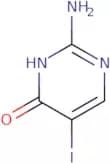
CAS:Versatile small molecule scaffoldFormula:C11H12ClNOPurity:Min. 95%Molecular weight:209.67 g/mol2-Amino-5-iodopyrimidin-4(1H)-one
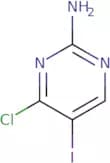
CAS:<p>Versatile small molecule scaffold</p>Formula:C4H4IN3OPurity:Min. 95%Molecular weight:237 g/mol4-chloro-5-iodopyrimidin-2-amine
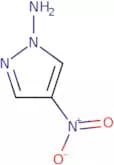
CAS:Versatile small molecule scaffoldFormula:C4H3ClIN3Purity:Min. 95%Molecular weight:255.4 g/mol4-Nitro-1H-pyrazol-1-amine
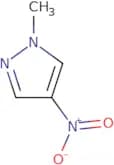
CAS:<p>Versatile small molecule scaffold</p>Formula:C3H4N4O2Purity:Min. 95%Molecular weight:128.09 g/mol1-Methyl-4-nitro-1H-pyrazole
CAS:<p>1-Methyl-4-nitro-1H-pyrazole is a molecule with the chemical formula CH3N2O. It has been used as an activator for the polymerization of acrylonitrile, and as a precursor to pharmaceuticals such as nitroglycerin. 1-Methyl-4-nitro-1H-pyrazole has been shown to be highly reactive toward nucleophiles and bases, but only slightly reactive with oxidizing agents. The compound crystallizes spontaneously from acetonitrile solution at −5 °C. Solubility data shows that 1-methyl-4-nitro-1H pyrazole is soluble in methanol, ethanol, acetone and ethyl acetate. Thermodynamic properties show that the compound exists in equilibrium with its own dimer (CH3N2O2) at 298 K.<br>END></p>Formula:C4H5N3O2Purity:Min. 95%Molecular weight:127.1 g/mol4-Methyl phenyl thioacetic acid
CAS:<p>4-Methyl phenyl thioacetic acid is an organic compound that has been shown to be a competitive inhibitor of the enzyme cinnamate 4-hydroxylase. This enzyme is involved in the production of cinnamic acid derivatives, which are important for the synthesis of many biologically active molecules including peptide hormones and sulfinyl and sulfoxides. 4-Methyl phenyl thioacetic acid binds to the enzyme's active site and prevents it from catalyzing its chemical reaction.</p>Formula:C9H10O2SPurity:Min. 95%Molecular weight:182.24 g/molM-Tolylsulfanyl-acetic acid
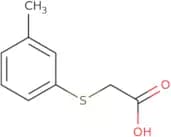
CAS:<p>Versatile small molecule scaffold</p>Formula:C9H10O2SPurity:Min. 95%Molecular weight:182.24 g/mol3-Methoxy-phenylthioacetic acid
CAS:<p>Versatile small molecule scaffold</p>Formula:C9H10O3SPurity:Min. 95%Molecular weight:198.24 g/mol2-[(3-Chlorophenyl)sulfanyl]acetic acid
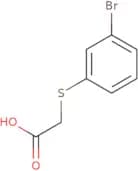
CAS:<p>Versatile small molecule scaffold</p>Formula:C8H7ClO2SPurity:Min. 95%Molecular weight:202.66 g/mol3-Bromo-phenylthioacetic acid
CAS:<p>Versatile small molecule scaffold</p>Formula:C8H7BrO2SPurity:Min. 95%Molecular weight:247.11 g/mol2-(4-Chlorobenzenesulfinyl)acetic acid
CAS:<p>Versatile small molecule scaffold</p>Formula:C8H7ClO3SPurity:Min. 95%Molecular weight:218.66 g/moltert-Butyl N-[(3S,4S)-rel-3-(hydroxymethyl)-4-piperidyl]carbamate
CAS:Versatile small molecule scaffoldFormula:C11H22N2O3Purity:Min. 95%Molecular weight:230.31 g/molrac-Methyl 2-[(1R,2R)-2-{[(tert-butoxy)carbonyl]amino}cyclohexyl]acetate
CAS:<p>Versatile small molecule scaffold</p>Formula:C14H25NO4Purity:Min. 95%Molecular weight:271.4 g/molrac-(3aR,6aS)-Hexahydro-1H-5λ6-thieno[3,4-b]pyrrole-2,5,5-trione
CAS:Versatile small molecule scaffoldFormula:C6H9NO3SPurity:Min. 95%Molecular weight:175.2 g/mol1-Oxo-1,2-dihydroisoquinoline-4-carbonitrile
CAS:Versatile small molecule scaffoldFormula:C10H6N2OPurity:Min. 95%Molecular weight:170.17 g/mol3-(3-Methylbutyl)cyclopentan-1-one
CAS:<p>Versatile small molecule scaffold</p>Formula:C10H18OPurity:Min. 95%Molecular weight:154.25 g/mol3-(2-Methylpropyl)cyclopentan-1-one
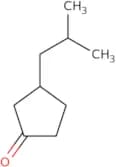
CAS:<p>Versatile small molecule scaffold</p>Formula:C9H16OPurity:Min. 95%Molecular weight:140.22 g/mol2-(6,7-Dimethoxy-1,2,3,4-tetrahydroisoquinolin-1-yl)acetic acid hydrochloride
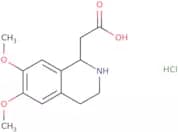
CAS:Versatile small molecule scaffoldFormula:C13H18ClNO4Purity:Min. 95%Molecular weight:287.74 g/mol3-(Bromomethyl)-1,2,5-thiadiazole
CAS:<p>Versatile small molecule scaffold</p>Formula:C3H3BrN2SPurity:Min. 95%Molecular weight:179.04 g/molMethyl 2-formyl-4,5-dimethoxybenzoate
CAS:Versatile small molecule scaffoldFormula:C11H12O5Purity:Min. 95%Molecular weight:224.21 g/mol2-(1,2,3,4-Tetrahydroisoquinolin-1-yl)acetic acid hydrochloride
CAS:Versatile small molecule scaffoldFormula:C11H14ClNO2Purity:Min. 95%Molecular weight:227.69 g/mol

![6-Methylimidazo[2,1-b][1,3]thiazole](/_next/image/?url=https%3A%2Fstatic.cymitquimica.com%2Fproducts%2F3D%2Fthumb-webp%2FDAA83541.webp&w=3840&q=75)
![2-[(tert-butoxycarbonyl)amino]-3-hydroxypropanoic acid](/_next/image/?url=https%3A%2Fstatic.cymitquimica.com%2Fproducts%2F3D%2Fthumb-webp%2FDAA85040.webp&w=3840&q=75)
![[(2-Aminobutyl)sulfanyl]benzene](/_next/image/?url=https%3A%2Fstatic.cymitquimica.com%2Fproducts%2F3D%2Fthumb-webp%2FDAA89825.webp&w=3840&q=75)
![[(1R,4R)-4-Methylcyclohexyl]methanol](/_next/image/?url=https%3A%2Fstatic.cymitquimica.com%2Fproducts%2F3D%2Fthumb-webp%2FDAA93749.webp&w=3840&q=75)

![2-Methyl-1,4-dioxa-8-azaspiro[4.5]decane hydrochloride](/_next/image/?url=https%3A%2Fstatic.cymitquimica.com%2Fproducts%2F3D%2Fthumb-webp%2FDAA97083.webp&w=3840&q=75)
![1-[(2-Bromoethyl)sulfanyl]-3-methylbenzene](/_next/image/?url=https%3A%2Fstatic.cymitquimica.com%2Fproducts%2F3D%2Fthumb-webp%2FDAA98369.webp&w=3840&q=75)



![2-[(3-Chlorophenyl)sulfanyl]acetic acid](/_next/image/?url=https%3A%2Fstatic.cymitquimica.com%2Fproducts%2F3D%2Fthumb-webp%2FDAA99638.webp&w=3840&q=75)

![tert-Butyl N-[(3S,4S)-rel-3-(hydroxymethyl)-4-piperidyl]carbamate](/_next/image/?url=https%3A%2Fstatic.cymitquimica.com%2Fproducts%2F3D%2Fthumb-webp%2FDBD84004.webp&w=3840&q=75)
![rac-Methyl 2-[(1R,2R)-2-{[(tert-butoxy)carbonyl]amino}cyclohexyl]acetate](/_next/image/?url=https%3A%2Fstatic.cymitquimica.com%2Fproducts%2F3D%2Fthumb-webp%2FDBD85721.webp&w=3840&q=75)
![rac-(3aR,6aS)-Hexahydro-1H-5λ6-thieno[3,4-b]pyrrole-2,5,5-trione](/_next/image/?url=https%3A%2Fstatic.cymitquimica.com%2Fproducts%2F3D%2Fthumb-webp%2FDBD87285.webp&w=3840&q=75)