


Building Blocks
This section contains fundamental products for the synthesis of organic and biological compounds. Building blocks are the essential starting materials used to construct complex molecules through various chemical reactions. They play a critical role in drug discovery, material science, and chemical research. At CymitQuimica, we offer a diverse range of high-quality building blocks to support your innovative research and industrial projects, ensuring you have the essential components for successful synthesis.
Subcategories of "Building Blocks"
- Boronic Acids & Boronic Acid Derivatives(5,756 products)
- Chiral Building Blocks(1,242 products)
- Hydrocarbon Building Blocks(6,095 products)
- Organic Building Blocks(61,038 products)
Found 196817 products of "Building Blocks"
Sort by
Purity (%)
0
100
|
0
|
50
|
90
|
95
|
100
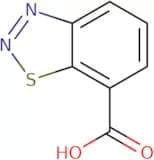
1,2,3-Benzothiadiazole-7-carboxylic acid
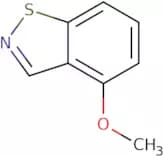
CAS:<p>Benzothiadiazole-7-carboxylic acid (BTHCA) is an activated compound that has been shown to have potent bactericidal activity. It is a member of the benzothiadiazole family of compounds, which are found in the environment and have been detected in human blood. BTHCA inhibits the enzyme hydroxycinnamoyltransferase, which leads to a decrease in shikimate production and folate levels. BTHCA also reversibly inhibits methionine synthase, leading to an accumulation of homocysteine and methionine, which are toxic substances that lead to DNA damage and cell death. This compound has been used as a pesticide for plants by blocking plant protein synthesis. Analysis of BTHCA has shown it is metabolized into p-coumaric acid, which may be responsible for its observed anti-inflammatory effects.</p>Formula:C7H4N2O2SPurity:Min. 95%Molecular weight:180.19 g/mol4-Methoxy-1,2-benzothiazole
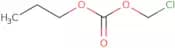
CAS:<p>Versatile small molecule scaffold</p>Formula:C8H7NOSPurity:Min. 95%Molecular weight:165.21 g/molChloromethyl propyl carbonate
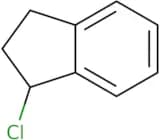
CAS:<p>Chloromethyl propyl carbonate is a pyrimidine compound that has been proposed as a potential cancer drug. It has shown high resistance to the enzymes fatty acid synthase and tenofovir and has shown antiviral properties against HIV, herpes simplex, and hepatitis B. Chloromethyl propyl carbonate inhibits the production of acyclic nucleoside phosphonates. It also inhibits fatty acid synthesis by binding to the enzyme acyl-CoA synthetase 2. Chloromethyl propyl carbonate binds to nitrogen atoms in the active site of the enzyme glutamine synthetase, thereby inhibiting its activity. The pharmacokinetic properties of chloromethyl propyl carbonate have been studied in rats and dogs; it is absorbed orally with rapid distribution into tissues, including fat, liver, kidney, lung, and brain. The drug is metabolized by carboxyesterases in the liver and excreted in urine</p>Formula:C5H9ClO3Purity:Min. 95%Molecular weight:152.57 g/mol1-Chloro-2,3-dihydro-1H-indene
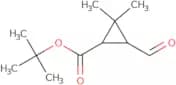
CAS:<p>1-Chloro-2,3-dihydro-1H-indene is a kinetic inhibitor. It has been shown to bind to the enzyme quinoline synthesis and to be reactive towards chloride ions. 1-Chloro-2,3-dihydro-1H-indene is used as an intermediate in the production of styrene. This monomer has high values for constant rate kinetics and exhibits a high affinity for chloride ions, which makes it a good candidate for use in polymerization reactions. The chlorine atom can be substituted with other atoms or groups, such as ethyl groups, halides, or transfer reactions. These derivatives are also known as quinoline derivatives.</p>Formula:C9H9ClPurity:Min. 95%Molecular weight:152.62 g/moltert-Butyl 3-formyl-2,2-dimethylcyclopropane-1-carboxylate
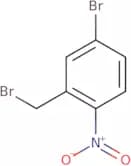
CAS:<p>Versatile small molecule scaffold</p>Formula:C11H18O3Purity:Min. 95%Molecular weight:198.26 g/mol5-Bromo-2-nitrobenzyl bromide
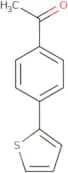
CAS:<p>Versatile small molecule scaffold</p>Formula:C7H5Br2NO2Purity:Min. 95%Molecular weight:294.93 g/mol1-(4-Thiophen-2-yl-phenyl)-ethanone
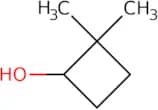
CAS:<p>Versatile small molecule scaffold</p>Formula:C12H10OSPurity:Min. 95%Molecular weight:202.27 g/mol2,2-Dimethylcyclobutan-1-ol
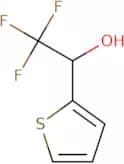
CAS:<p>2,2-Dimethylcyclobutan-1-ol is an organic compound that belongs to the class of cyclopropanes. It is a stereospecific reaction product of 2,2-dimethylcyclopropanecarboxylic acid and sodium ethoxide in ethanol. This compound can be used as a chiral synthon for the synthesis of cyclopropane derivatives. The optical activity of this compound has been shown to be dependent on the configuration at the chiral center.</p>Formula:C6H12OPurity:Min. 95%Molecular weight:100.16 g/mol2,2,2-Trifluoro-1-(thiophen-2-yl)ethanol
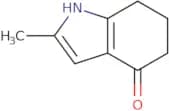
CAS:<p>Versatile small molecule scaffold</p>Formula:C6H5F3OSPurity:Min. 95%Molecular weight:182.16 g/mol1,5,6,7-Tetrahydro-2-methyl-4h-indol-4-one
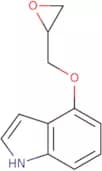
CAS:<p>Versatile small molecule scaffold</p>Formula:C9H11NOPurity:Min. 95%Molecular weight:149.19 g/mol4-(Oxiran-2-ylmethoxy)-1H-indole
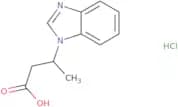
CAS:<p>Versatile small molecule scaffold</p>Formula:C11H11NO2Purity:Min. 95%Molecular weight:189.21 g/mol3-(1H-1,3-Benzodiazol-1-yl)butanoic acid hydrochloride
CAS:<p>Versatile small molecule scaffold</p>Formula:C11H13ClN2O2Purity:Min. 95%Molecular weight:240.68 g/molN-[1-Chloro-3-(hydroxyimino)propan-2-ylidene]hydroxylamine
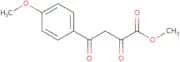
CAS:<p>Versatile small molecule scaffold</p>Formula:C3H5ClN2O2Purity:Min. 95%Molecular weight:136.54 g/molEthyl 4-(4-methoxyphenyl)-2,4-dioxobutanoate
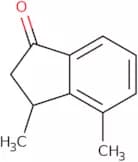
CAS:<p>Versatile small molecule scaffold</p>Formula:C13H14O5Purity:Min. 95%Molecular weight:250.25 g/mol3,4-Dimethyl-2,3-dihydro-1H-inden-1-one
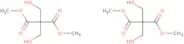
CAS:<p>Versatile small molecule scaffold</p>Formula:C11H12OPurity:Min. 95%Molecular weight:160.21 g/molDimethyl Bis(hydroxymethyl)malonate
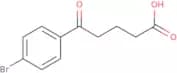
CAS:<p>Versatile small molecule scaffold</p>Formula:C7H12O6Purity:Min. 95%Molecular weight:192.17 g/mol5-(4-Bromophenyl)-5-oxovaleric acid
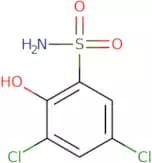
CAS:<p>5-(4-Bromophenyl)-5-oxovaleric acid is a molecule that has been synthesized to be used as a cancer drug. It is an amide derivative of the natural compound valproic acid and is being developed for the treatment of cancers, such as leukemia and melanoma. 5-(4-Bromophenyl)-5-oxovaleric acid has been shown to inhibit the function of integrin, which plays a role in cell adhesion and migration, with potential applications in wound healing. <br>The molecule has also been shown to have chemokine binding properties and may be useful in the treatment of diseases where chemokines are involved, such as HIV or AIDS. This compound also binds to CCR5 receptor and inhibits HIV entry into cells. The molecule has also been shown to antagonize survivin, an antiapoptotic protein that protects cells from undergoing apoptosis and prevents tumor suppression. The affinity of 5-(4-bromophenyl</p>Formula:C11H11BrO3Purity:Min. 95%Molecular weight:271.12 g/mol3,5-Dichloro-2-hydroxybenzene-1-sulfonamide
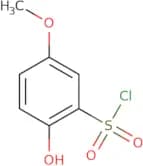
CAS:<p>3,5-Dichloro-2-hydroxybenzene-1-sulfonamide is a defoliant that was first developed in the 1950s. It is a desiccant that damages plants by blocking photosynthesis and causes leaf shedding. 3,5-Dichloro-2-hydroxybenzene-1-sulfonamide is used on cotton plants to control weeds and promote plant growth. This sulfonamide herbicide also has the ability to kill insects, such as potato beetles, which are harmful to crops.</p>Formula:C6H5Cl2NO3SPurity:Min. 95%Molecular weight:242.08 g/mol2-Hydroxy-5-methoxybenzene-1-sulfonyl chloride
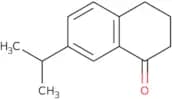
CAS:<p>Versatile small molecule scaffold</p>Formula:C7H7ClO4SPurity:Min. 95%Molecular weight:222.65 g/mol7-(Propan-2-yl)-1,2,3,4-tetrahydronaphthalen-1-one
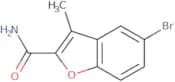
CAS:<p>Versatile small molecule scaffold</p>Formula:C13H16OPurity:Min. 95%Molecular weight:188.26 g/mol5-Bromo-3-methyl-1-benzofuran-2-carboxamide
CAS:<p>Versatile small molecule scaffold</p>Formula:C10H8BrNO2Purity:Min. 95%Molecular weight:254.08 g/mol[4-(Oxolan-3-yloxy)phenyl]boronic acid
CAS:<p>Versatile small molecule scaffold</p>Formula:C10H13BO4Purity:Min. 95%Molecular weight:208.02 g/mol[4-(Morpholin-4-ylmethyl)phenyl]boronic acid hydrochloride
CAS:<p>Versatile small molecule scaffold</p>Formula:C11H16BNO3·ClHPurity:Min. 95%Molecular weight:257.52 g/mol4-[[3-(4,4,5,5-tetramethyl-1,3,2-dioxaborolan-2-yl)phenyl]methyl]-1,4-thiazinane 1,1-dioxide
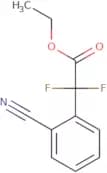
CAS:<p>Versatile small molecule scaffold</p>Formula:C17H26BNO4SPurity:Min. 95%Molecular weight:351.3 g/molEthyl 2-(2-cyanophenyl)-2,2-difluoroacetate
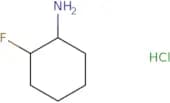
CAS:<p>Versatile small molecule scaffold</p>Formula:C11H9F2NO2Purity:Min. 95%Molecular weight:225.19 g/mol(1S,2R)-2-Fluorocyclohexanamine hydrochloride
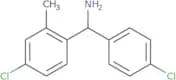
CAS:<p>Versatile small molecule scaffold</p>Formula:C6H13ClFNPurity:Min. 95%Molecular weight:153.62 g/mol(4-Chloro-2-methylphenyl)(4-chlorophenyl)methanamine
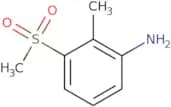
CAS:<p>Versatile small molecule scaffold</p>Formula:C14H13Cl2NPurity:Min. 95%Molecular weight:266.2 g/mol3-Methanesulfonyl-2-methylaniline
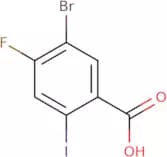
CAS:<p>Versatile small molecule scaffold</p>Formula:C8H11NO2SPurity:Min. 95%Molecular weight:185.25 g/mol5-Bromo-4-fluoro-2-iodobenzoic acid
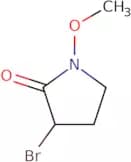
CAS:<p>Versatile small molecule scaffold</p>Formula:C7H3BrFIO2Purity:Min. 95%Molecular weight:344.9 g/mol3-Bromo-1-methoxypyrrolidin-2-one
CAS:<p>3-Bromo-1-methoxypyrrolidin-2-one is a halogenated alkynyl compound that is used as an anti-inflammatory agent. It is a phenylcyclizing agent that reacts with an alkoxy group to form an alkyne and a cyclic ether. The cyclic ether then undergoes nucleophilic attack by an adjacent hydroxyl group, resulting in the formation of an oxetane ring. 3-Bromo-1-methoxypyrrolidin-2-one has been shown to have anti-inflammatory activities in mice and rats by inhibiting the production of inflammatory cytokines such as TNF, IL1β, and IL6.</p>Formula:C5H8BrNO2Purity:Min. 95%Molecular weight:194.03 g/mol3-Bromo-1-ethylpyrrolidin-2-one
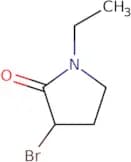
CAS:<p>3-Bromo-1-ethylpyrrolidin-2-one is an enantiomeric, immobilized lipase that is selective for the hydrolysis of cephalosporins. Unlike other immobilized lipases, this enzyme does not require a solvent or detergent to solubilize the substrate and allow it to react with the enzyme. The immobilization of 3-bromo-1-ethylpyrrolidin-2-one onto silica gel allows for the enantioselective synthesis of cephalosporins. This process is chemoenzymatic and is carried out without organic solvents, which increases its safety and environmental friendliness.</p>Formula:C6H10BrNOPurity:Min. 95%Molecular weight:192.05 g/mol4-[(4-Methylbenzenesulfonyl)methyl]benzoic acid
CAS:<p>Versatile small molecule scaffold</p>Formula:C15H14O4SPurity:Min. 95%Molecular weight:290.3 g/mol[(3-bromophenyl)methyl](propan-2-yl)amine
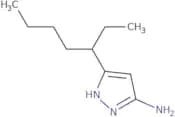
CAS:<p>Versatile small molecule scaffold</p>Formula:C10H14BrNPurity:Min. 95%Molecular weight:228.1 g/mol3-(Heptan-3-yl)-1H-pyrazol-5-amine
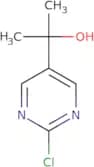
CAS:<p>Versatile small molecule scaffold</p>Formula:C10H19N3Purity:Min. 95%Molecular weight:181.28 g/mol2-(2-Chloropyrimidin-5-yl)propan-2-ol
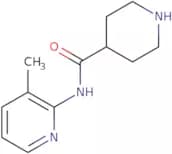
CAS:<p>Versatile small molecule scaffold</p>Formula:C7H9ClN2OPurity:Min. 95%Molecular weight:172.61 g/molN-(3-Methylpyridin-2-yl)piperidine-4-carboxamide
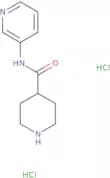
CAS:<p>Versatile small molecule scaffold</p>Formula:C12H17N3OPurity:Min. 95%Molecular weight:219.28 g/molN-(Pyridin-3-yl)piperidine-4-carboxamide dihydrochloride
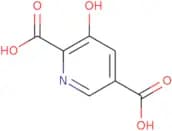
CAS:<p>Versatile small molecule scaffold</p>Formula:C11H17Cl2N3OPurity:Min. 95%Molecular weight:278.18 g/mol3-Hydroxypyridine-2,5-dicarboxylic acid
CAS:<p>Versatile small molecule scaffold</p>Formula:C7H5NO5Purity:Min. 95%Molecular weight:183.12 g/molMethyl 2-[(2-methylprop-2-en-1-yl)oxy]benzoate
CAS:<p>Versatile small molecule scaffold</p>Formula:C12H14O3Purity:Min. 95%Molecular weight:206.24 g/mol2-Bromo-4-methyl-1-[(2-methylprop-2-en-1-yl)oxy]benzene
CAS:<p>Versatile small molecule scaffold</p>Formula:C11H13BrOPurity:Min. 95%Molecular weight:241.12 g/mol[3-(4-tert-Butylphenyl)-2-methylpropyl](methyl)amine
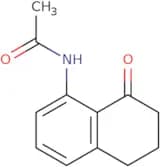
CAS:<p>Versatile small molecule scaffold</p>Formula:C15H25NPurity:Min. 95%Molecular weight:219.37 g/molN-(8-Oxo-5,6,7,8-tetrahydronaphthalen-1-yl)acetamide
CAS:<p>Versatile small molecule scaffold</p>Formula:C12H13NO2Purity:Min. 95%Molecular weight:203.24 g/mol3-[(E)-2-Nitroethenyl]thiophene
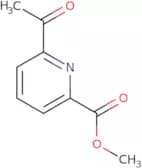
CAS:<p>Versatile small molecule scaffold</p>Formula:C6H5NO2SPurity:Min. 95%Molecular weight:155.18 g/molMethyl 6-acetylpyridine-2-carboxylate
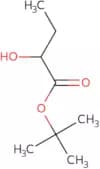
CAS:<p>Versatile small molecule scaffold</p>Formula:C9H9NO3Purity:Min. 95%Molecular weight:179.17 g/moltert-Butyl (3R)-3-hydroxybutanoate
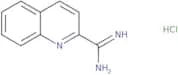
CAS:<p>Versatile small molecule scaffold</p>Formula:C8H16O3Purity:Min. 95%Molecular weight:160.21 g/molQuinoline-2-carboximidamide Hydrochloride
CAS:<p>Versatile small molecule scaffold</p>Formula:C10H10ClN3Purity:Min. 95%Molecular weight:207.66 g/mol2-[2-(4-Chlorophenyl)ethyl]carbamimidamidomethanimidamide hydrochloride
CAS:<p>Versatile small molecule scaffold</p>Formula:C10H15Cl2N5Purity:Min. 95%Molecular weight:276.16 g/mol[3-(Dimethylamino)propyl]urea hydrochloride
CAS:<p>Versatile small molecule scaffold</p>Formula:C6H16ClN3OPurity:Min. 95%Molecular weight:181.66 g/mol4,5-Diodoveratrole
CAS:<p>4,5-Diodoveratrole is a ligand that binds to tylophorine. It has been shown to be an interlinked molecule in electrochemical methods and can be detected by voltammetry. 4,5-Diodoveratrole has been used as a fluorescent sensor for methyl groups and is also able to cross-couple with methoxy groups. This molecule also forms functional groups on the devices of electrochemical biosensors.</p>Formula:C8H8I2O2Purity:Min. 95%Molecular weight:389.96 g/mol1,2,3,4-Tetrahydroisoquinolin-8-ol hydrobromide
CAS:<p>Versatile small molecule scaffold</p>Formula:C9H12BrNOPurity:Min. 95%Molecular weight:230.1 g/mol2-[1-(4-Chlorophenyl)-1-phenylethoxy]-N,N-dimethylethanamine oxide
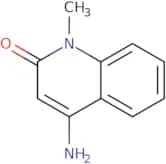
CAS:<p>Versatile small molecule scaffold</p>Formula:C18H22ClNO2Purity:Min. 95%Molecular weight:319.8 g/mol4-Amino-1-methyl-1,2-dihydroquinolin-2-one
CAS:<p>Versatile small molecule scaffold</p>Formula:C10H10N2OPurity:Min. 95%Molecular weight:174.2 g/mol(1S)-2-Fluoro-1-phenylethan-1-ol
CAS:<p>Versatile small molecule scaffold</p>Formula:C8H9FOPurity:Min. 95%Molecular weight:140.15 g/molN-[3-(Trifluoromethyl)-1,2-oxazol-5-yl]acetamide
CAS:<p>N-[3-(Trifluoromethyl)-1,2-oxazol-5-yl]acetamide is a fluorescence resonance energy transfer inhibitor that has been shown to be effective against the papillary muscle in rats. This drug has also been shown to inhibit the production of growth factors and cell proliferation in prostate cancer cells. N-[3-(Trifluoromethyl)-1,2-oxazol-5-yl]acetamide inhibits the enzyme kinase activity of protein tyrosine kinases, which are responsible for cell proliferation and differentiation. This drug is also an organometallic compound with low light fluorescence properties. It has been used as a radiation sensitizer to increase the effectiveness of radiation treatments for cancer.</p>Formula:C6H5F3N2O2Purity:Min. 95%Molecular weight:194.11 g/mol[4-(2-Methylpropyl)phenyl]methanol
CAS:<p>Versatile small molecule scaffold</p>Formula:C11H16OPurity:Min. 95%Molecular weight:164.24 g/mol2,2-Dimethyl-1,2,3,4-tetrahydronaphthalen-1-amine
CAS:<p>Versatile small molecule scaffold</p>Formula:C12H17NPurity:Min. 95%Molecular weight:175.27 g/mol5-Ethyl-4-phenyl-2H-pyrazol-3-ylamine
CAS:<p>Versatile small molecule scaffold</p>Formula:C11H13N3Purity:Min. 95%Molecular weight:187.25 g/mol1-Iodo-2-propylbenzene
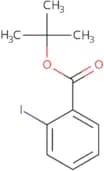
CAS:<p>Versatile small molecule scaffold</p>Formula:C9H11IPurity:Min. 95%Molecular weight:246.09 g/molt-Butyl 2-iodobenzoate
CAS:<p>t-Butyl 2-iodobenzoate is a reagent that can be used to access cyclopentenes. The reaction begins with the lithiation of an alkoxycarbonyl group and the subsequent attachment of an electrophilic cyclopentene. The reaction is completed by adding a tertiary amine, which causes carbopalladation of the alkyl lithium intermediate, forming a new carbon-carbon bond. Cyclopentenes can also be accessed by intramolecular reactions using a palladium catalyst and alkoxycarbonyl groups as substrates. Camptothecin moieties are often functionalized with t-butyl 2-iodobenzoate in order to access camptothecin analogs.</p>Formula:C11H13IO2Purity:Min. 95%Molecular weight:304.12 g/mol2-Furan-2-yl-2-piperidin-1-yl-ethylamine
CAS:<p>Versatile small molecule scaffold</p>Formula:C11H18N2OPurity:Min. 95%Molecular weight:194.28 g/mol1,6,11,16-Tetraoxacycloicosane-2,5,12,15-tetrone
CAS:<p>Versatile small molecule scaffold</p>Formula:C16H24O8Purity:Min. 95%Molecular weight:344.36 g/mol5-(Methoxycarbonyl)bicyclo[3.2.1]octane-1-carboxylic acid
CAS:<p>Versatile small molecule scaffold</p>Formula:C11H16O4Purity:Min. 95%Molecular weight:212.24 g/mol5-(Methoxycarbonyl)bicyclo[3.1.1]heptane-1-carboxylic acid
CAS:<p>Versatile small molecule scaffold</p>Formula:C10H14O4Purity:Min. 95%Molecular weight:198.22 g/mol2-(Chloromethyl)-4-methoxy-6-methylpyridine hydrochloride
CAS:<p>Versatile small molecule scaffold</p>Formula:C8H11Cl2NOPurity:Min. 95%Molecular weight:208.08 g/molN-(2-Iodoethyl)methanesulfonamide
CAS:<p>Versatile small molecule scaffold</p>Formula:C3H8INO2SPurity:Min. 95%Molecular weight:249.07 g/mol1-[2-(Chloromethyl)phenyl]pyrrolidine hydrochloride
CAS:<p>Versatile small molecule scaffold</p>Formula:C11H15Cl2NPurity:Min. 95%Molecular weight:232.15 g/mol2-Chloro-6-(pyrrolidin-1-yl)benzaldehyde
CAS:<p>Versatile small molecule scaffold</p>Formula:C11H12ClNOPurity:Min. 95%Molecular weight:209.67 g/mol3-Hydrazinyl-8-methyl-8-azabicyclo[3.2.1]octane dihydrochloride
CAS:<p>Versatile small molecule scaffold</p>Formula:C8H19Cl2N3Purity:Min. 95%Molecular weight:228.16 g/molDecahydrocyclohepta[C]pyrrole
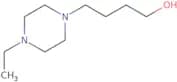
CAS:<p>Decahydrocyclohepta[C]pyrrole is a nitrogen-containing heterocycle that contains 5 hydrogen atoms and 10 carbon atoms. It has been shown to have modulatory effects on the 5-HT receptors, which are involved in the regulation of the nervous system. Decahydrocyclohepta[C]pyrrole binds to these receptors and inhibits their response to serotonin, a neurotransmitter that plays an important role in the modulation of mood, appetite, sleep, memory, learning, and temperature regulation. This drug has also been shown to have a protective effect against nerve cell damage induced by neurotoxins such as quinolinic acid or kainic acid.</p>Formula:C9H17NPurity:Min. 95%Molecular weight:139.24 g/mol4-(4-Ethylpiperazin-1-yl)butan-1-ol
CAS:<p>Versatile small molecule scaffold</p>Formula:C10H22N2OPurity:Min. 95%Molecular weight:186.29 g/mol1-[3-(4-Methylphenyl)-1,2,4-oxadiazol-5-yl]propan-2-one
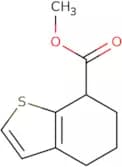
CAS:<p>Versatile small molecule scaffold</p>Formula:C12H12N2O2Purity:Min. 95%Molecular weight:216.24 g/molMethyl 4,5,6,7-tetrahydro-1-benzothiophene-7-carboxylate
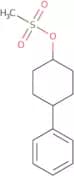
CAS:<p>Versatile small molecule scaffold</p>Formula:C10H12O2SPurity:Min. 95%Molecular weight:196.27 g/mol4-Phenylcyclohexyl methanesulfonate
CAS:<p>Versatile small molecule scaffold</p>Formula:C13H18O3SPurity:Min. 95%Molecular weight:254.35 g/mol2-[2-(Methylamino)ethyl]-2,3-dihydro-1H-isoindole-1,3-dione hydrochloride
CAS:<p>Versatile small molecule scaffold</p>Formula:C11H13ClN2O2Purity:Min. 95%Molecular weight:240.68 g/molEthyl 5,6-dimethyl-3-oxo-2,3-dihydropyridazine-4-carboxylate
CAS:<p>Versatile small molecule scaffold</p>Formula:C9H12N2O3Purity:Min. 95%Molecular weight:196.2 g/mol4-Amino-1-methyl-1H-imidazole-5-carboxamide hydrochloride
CAS:<p>Versatile small molecule scaffold</p>Formula:C5H9ClN4OPurity:Min. 95%Molecular weight:176.6 g/mol4-Piperidin-1-yl-phenylamine hydrochloride
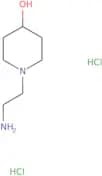
CAS:<p>Versatile small molecule scaffold</p>Formula:C11H17ClN2Purity:Min. 95%Molecular weight:212.72 g/mol1-(2-Amino-ethyl)-piperidin-4-ol dihydrochloride
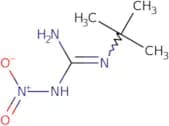
CAS:<p>Versatile small molecule scaffold</p>Formula:C7H18Cl2N2OPurity:Min. 95%Molecular weight:217.14 g/molN'-tert-Butyl-N-nitroguanidine
CAS:<p>Versatile small molecule scaffold</p>Formula:C5H12N4O2Purity:Min. 95%Molecular weight:160.17 g/molMethyl 3-amino-2-fluoropropanoate hydrochloride
CAS:<p>Versatile small molecule scaffold</p>Formula:C4H9ClFNO2Purity:Min. 95%Molecular weight:157.57 g/mol7-(Benzyloxy)-5-hydroxy-2-phenyl-4H-chromen-4-one
CAS:<p>7-(Benzyloxy)-5-hydroxy-2-phenyl-4H-chromen-4-one is a modification of the natural product vinblastine. It has shown anticancer activity in human nasopharyngeal cancer cells, and is thought to be responsible for the antitumor effects of scutellariae extract. The modification is hypothesized to have taken place through nucleophilic attack by a hydroxide ion on the benzyl alcohol group on the 7 position. This mechanism would lead to the formation of an epoxide intermediate, which would then react with another molecule of 7-(benzyloxy)-5-hydroxy-2-phenyl-4H-chromen-4 one to form an acetate ester and a molecule of water.</p>Formula:C22H16O4Purity:Min. 95%Molecular weight:344.4 g/mol4-(2-Methyl-1H-imidazol-1-yl)butanoic acid
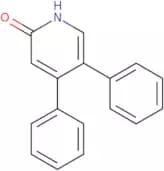
CAS:<p>Versatile small molecule scaffold</p>Formula:C8H12N2O2Purity:Min. 95%Molecular weight:168.19 g/mol4,5-Diphenyl-1,2-dihydropyridin-2-one
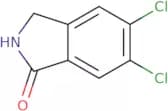
CAS:<p>Versatile small molecule scaffold</p>Formula:C17H13NOPurity:Min. 95%Molecular weight:247.29 g/mol5,6-Dichloro-2,3-dihydro-1H-isoindol-1-one
CAS:<p>Versatile small molecule scaffold</p>Formula:C8H5Cl2NOPurity:Min. 95%Molecular weight:202.03 g/mol4-chloro-5-methyl-1H-pyrazol-3-amine
CAS:<p>Versatile small molecule scaffold</p>Formula:C4H6ClN3Purity:Min. 95%Molecular weight:131.56 g/moltert-Butyl 2-oxa-3-azabicyclo[2.2.2]oct-5-ene-3-carboxylate
CAS:<p>Versatile small molecule scaffold</p>Formula:C11H17NO3Purity:Min. 95%Molecular weight:211.26 g/mol4-(4-Chlorophenyl)-3-methylbutanoic acid
CAS:Versatile small molecule scaffoldFormula:C11H13ClO2Purity:Min. 95%Molecular weight:212.67 g/mol2-(Cyclohexylmethyl)butanoic Acid
CAS:<p>2-(Cyclohexylmethyl)butanoic Acid is a mu-opioid receptor agonist that binds to the opioid receptor. It has been shown to have a solid form, which can be administered orally or intravenously. 2-(Cyclohexylmethyl)butanoic Acid is used in the treatment of acute and chronic pain, as well as post-operative bowel dysfunction. It has an antagonistic effect on the opioid receptors, which prevents it from inducing opioid-induced bowel dysfunction. The hydrochloride salt of this drug is available for oral administration.</p>Formula:C11H20O2Purity:Min. 95%Molecular weight:184.27 g/mol2-[(Chloromethoxy)methyl]oxolane
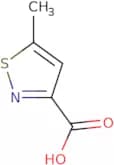
CAS:<p>Versatile small molecule scaffold</p>Formula:C6H11ClO2Purity:Min. 95%Molecular weight:150.6 g/mol5-Methyl-1,2-thiazole-3-carboxylic Acid
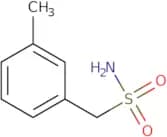
CAS:<p>Versatile small molecule scaffold</p>Formula:C5H5NO2SPurity:Min. 95%Molecular weight:143.16 g/mol(3-Methylphenyl)methanesulfonamide
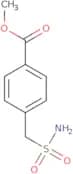
CAS:<p>Versatile small molecule scaffold</p>Formula:C8H11NO2SPurity:Min. 95%Molecular weight:185.25 g/molMethyl 4-(Sulfamoylmethyl)benzoate
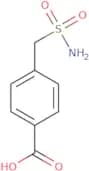
CAS:<p>Versatile small molecule scaffold</p>Formula:C9H11NO4SPurity:Min. 95%Molecular weight:229.25 g/mol4-(Sulfamoylmethyl)benzoic acid
CAS:<p>Versatile small molecule scaffold</p>Formula:C8H9NO4SPurity:Min. 95%Molecular weight:215.23 g/mol(2S)-2,3-Dihydro-1H-indole-2-carboxamide
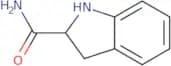
CAS:<p>Versatile small molecule scaffold</p>Formula:C9H10N2OPurity:Min. 95%Molecular weight:162.19 g/mol1-(4-Methylphenyl)butan-2-ol
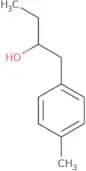
CAS:<p>Versatile small molecule scaffold</p>Formula:C11H16OPurity:Min. 95%Molecular weight:164.24 g/mol2-(Bromomethyl)-6-methoxy-1,3-benzothiazole
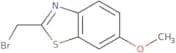
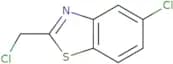
CAS:<p>Versatile small molecule scaffold</p>Formula:C9H8BrNOSPurity:Min. 95%Molecular weight:258.14 g/mol5-Chloro-2-(chloromethyl)-1,3-benzothiazole
CAS:<p>Versatile small molecule scaffold</p>Formula:C8H5Cl2NSPurity:Min. 95%Molecular weight:218.1 g/mol3-(Chloromethyl)-5-(2-chlorophenyl)-[1,2,4]oxadiazole
CAS:<p>Versatile small molecule scaffold</p>Formula:C9H6N2OCl2Purity:Min. 95%Molecular weight:229.06 g/mol2-(Chloromethyl)[1,3]oxazolo[4,5-b]pyridine
CAS:<p>Versatile small molecule scaffold</p>Formula:C7H5ClN2OPurity:Min. 95%Molecular weight:168.58 g/mol2-(Chloromethyl)-[1,3]thiazolo[5,4-b]pyridine
CAS:<p>Versatile small molecule scaffold</p>Formula:C7H5ClN2SPurity:Min. 95%Molecular weight:184.65 g/mol

![N-[1-Chloro-3-(hydroxyimino)propan-2-ylidene]hydroxylamine](/_next/image/?url=https%3A%2Fstatic.cymitquimica.com%2Fproducts%2F3D%2Fthumb-webp%2FKBA32155.webp&w=3840&q=75)
![[4-(Oxolan-3-yloxy)phenyl]boronic acid](/_next/image/?url=https%3A%2Fstatic.cymitquimica.com%2Fproducts%2F3D%2Fthumb-webp%2FKDC23433.webp&w=3840&q=75)
![[4-(Morpholin-4-ylmethyl)phenyl]boronic acid hydrochloride](/_next/image/?url=https%3A%2Fstatic.cymitquimica.com%2Fproducts%2F3D%2Fthumb-webp%2FKDC23436.webp&w=3840&q=75)
![4-[[3-(4,4,5,5-tetramethyl-1,3,2-dioxaborolan-2-yl)phenyl]methyl]-1,4-thiazinane 1,1-dioxide](/_next/image/?url=https%3A%2Fstatic.cymitquimica.com%2Fproducts%2F3D%2Fthumb-webp%2FKDC23437.webp&w=3840&q=75)
![4-[(4-Methylbenzenesulfonyl)methyl]benzoic acid](/_next/image/?url=https%3A%2Fstatic.cymitquimica.com%2Fproducts%2F3D%2Fthumb-webp%2FKEA04636.webp&w=3840&q=75)
amine](/_next/image/?url=https%3A%2Fstatic.cymitquimica.com%2Fproducts%2F3D%2Fthumb-webp%2FKEA07941.webp&w=3840&q=75)
![Methyl 2-[(2-methylprop-2-en-1-yl)oxy]benzoate](/_next/image/?url=https%3A%2Fstatic.cymitquimica.com%2Fproducts%2F3D%2Fthumb-webp%2FKEA12406.webp&w=3840&q=75)
![2-Bromo-4-methyl-1-[(2-methylprop-2-en-1-yl)oxy]benzene](/_next/image/?url=https%3A%2Fstatic.cymitquimica.com%2Fproducts%2F3D%2Fthumb-webp%2FKEA12411.webp&w=3840&q=75)
amine](/_next/image/?url=https%3A%2Fstatic.cymitquimica.com%2Fproducts%2F3D%2Fthumb-webp%2FKEA13501.webp&w=3840&q=75)
![3-[(E)-2-Nitroethenyl]thiophene](/_next/image/?url=https%3A%2Fstatic.cymitquimica.com%2Fproducts%2F3D%2Fthumb-webp%2FKEA14352.webp&w=3840&q=75)
![2-[2-(4-Chlorophenyl)ethyl]carbamimidamidomethanimidamide hydrochloride](/_next/image/?url=https%3A%2Fstatic.cymitquimica.com%2Fproducts%2F3D%2Fthumb-webp%2FKEA18128.webp&w=3840&q=75)
![[3-(Dimethylamino)propyl]urea hydrochloride](/_next/image/?url=https%3A%2Fstatic.cymitquimica.com%2Fproducts%2F3D%2Fthumb-webp%2FKEA18134.webp&w=3840&q=75)


![2-[1-(4-Chlorophenyl)-1-phenylethoxy]-N,N-dimethylethanamine oxide](/_next/image/?url=https%3A%2Fstatic.cymitquimica.com%2Fproducts%2F3D%2Fthumb-webp%2FKEA20391.webp&w=3840&q=75)

![N-[3-(Trifluoromethyl)-1,2-oxazol-5-yl]acetamide](/_next/image/?url=https%3A%2Fstatic.cymitquimica.com%2Fproducts%2F3D%2Fthumb-webp%2FKEA23522.webp&w=3840&q=75)
![[4-(2-Methylpropyl)phenyl]methanol](/_next/image/?url=https%3A%2Fstatic.cymitquimica.com%2Fproducts%2F3D%2Fthumb-webp%2FKEA31985.webp&w=3840&q=75)




![5-(Methoxycarbonyl)bicyclo[3.2.1]octane-1-carboxylic acid](/_next/image/?url=https%3A%2Fstatic.cymitquimica.com%2Fproducts%2F3D%2Fthumb-webp%2FKEA37127.webp&w=3840&q=75)
![5-(Methoxycarbonyl)bicyclo[3.1.1]heptane-1-carboxylic acid](/_next/image/?url=https%3A%2Fstatic.cymitquimica.com%2Fproducts%2F3D%2Fthumb-webp%2FKEA37128.webp&w=3840&q=75)


![1-[2-(Chloromethyl)phenyl]pyrrolidine hydrochloride](/_next/image/?url=https%3A%2Fstatic.cymitquimica.com%2Fproducts%2F3D%2Fthumb-webp%2FKEA40582.webp&w=3840&q=75)

![3-Hydrazinyl-8-methyl-8-azabicyclo[3.2.1]octane dihydrochloride](/_next/image/?url=https%3A%2Fstatic.cymitquimica.com%2Fproducts%2F3D%2Fthumb-webp%2FKEA40691.webp&w=3840&q=75)
![Decahydrocyclohepta[C]pyrrole](/_next/image/?url=https%3A%2Fstatic.cymitquimica.com%2Fproducts%2F3D%2Fthumb-webp%2FKEA42128.webp&w=3840&q=75)
![1-[3-(4-Methylphenyl)-1,2,4-oxadiazol-5-yl]propan-2-one](/_next/image/?url=https%3A%2Fstatic.cymitquimica.com%2Fproducts%2F3D%2Fthumb-webp%2FKEA44927.webp&w=3840&q=75)
![2-[2-(Methylamino)ethyl]-2,3-dihydro-1H-isoindole-1,3-dione hydrochloride](/_next/image/?url=https%3A%2Fstatic.cymitquimica.com%2Fproducts%2F3D%2Fthumb-webp%2FKEA46011.webp&w=3840&q=75)





![tert-Butyl 2-oxa-3-azabicyclo[2.2.2]oct-5-ene-3-carboxylate](/_next/image/?url=https%3A%2Fstatic.cymitquimica.com%2Fproducts%2F3D%2Fthumb-webp%2FKEA59029.webp&w=3840&q=75)


![2-[(Chloromethoxy)methyl]oxolane](/_next/image/?url=https%3A%2Fstatic.cymitquimica.com%2Fproducts%2F3D%2Fthumb-webp%2FKEA62717.webp&w=3840&q=75)
![3-(Chloromethyl)-5-(2-chlorophenyl)-[1,2,4]oxadiazole](/_next/image/?url=https%3A%2Fstatic.cymitquimica.com%2Fproducts%2F3D%2Fthumb-webp%2FKEA70433.webp&w=3840&q=75)
![2-(Chloromethyl)[1,3]oxazolo[4,5-b]pyridine](/_next/image/?url=https%3A%2Fstatic.cymitquimica.com%2Fproducts%2F3D%2Fthumb-webp%2FKEA70434.webp&w=3840&q=75)
![2-(Chloromethyl)-[1,3]thiazolo[5,4-b]pyridine](/_next/image/?url=https%3A%2Fstatic.cymitquimica.com%2Fproducts%2F3D%2Fthumb-webp%2FKEA70435.webp&w=3840&q=75)