Building Blocks
This section contains fundamental products for the synthesis of organic and biological compounds. Building blocks are the essential starting materials used to construct complex molecules through various chemical reactions. They play a critical role in drug discovery, material science, and chemical research. At CymitQuimica, we offer a diverse range of high-quality building blocks to support your innovative research and industrial projects, ensuring you have the essential components for successful synthesis.
Subcategories of "Building Blocks"
- Boronic Acids & Boronic Acid Derivatives(5,756 products)
- Chiral Building Blocks(1,242 products)
- Hydrocarbon Building Blocks(6,095 products)
- Organic Building Blocks(61,051 products)
Found 199813 products of "Building Blocks"
Sort by
Purity (%)
0
100
|
0
|
50
|
90
|
95
|
100
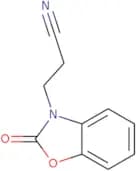
3-(2-Oxo-2,3-dihydro-1,3-benzoxazol-3-yl)propanenitrile
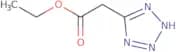
CAS:<p>Versatile small molecule scaffold</p>Formula:C10H8N2O2Purity:Min. 95%Molecular weight:188.18 g/molEthyl 1H-tetrazole-5-acetate
CAS:<p>Ethyl 1H-tetrazole-5-acetate (ETZA) is a ligand that binds to the active site of prolyl hydroxylase, which is an enzyme involved in collagen synthesis. ETZA inhibits the activity of this enzyme by binding to its heme cofactor, leading to a decrease in the production of collagen and thus inhibiting tumor growth. It has been shown that ETZA has no effect on healthy cells or normal tissues. In vitro studies have shown that ETZA can inhibit cancer cell growth and cisplatin resistance in vivo. ETZA also has a structural similarity to chloride ions and thus may be able to inhibit chloride channels such as those found in cancer cells.</p>Formula:C5H8N4O2Purity:Min. 95%Molecular weight:156.14 g/mol3-Bromo-1-methylpiperidine hydrobromide
CAS:<p>Versatile small molecule scaffold</p>Formula:C6H12BrN·HBrPurity:Min. 95%Molecular weight:258.98 g/mol4,5,6,7-Tetrahydro-1H-indole
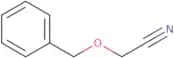
CAS:<p>4,5,6,7-Tetrahydro-1H-indole is a chemical compound that is an intermediate in the synthesis of other compounds. It reacts with halides to produce methyl sulfones and metal hydroxides. Tetrahydro-1H-indole can also react with acyl halides to form thiocyanates. The reaction mechanism has been studied using nmr spectra and chemical study. 4,5,6,7-Tetrahydro-1H-indole is an active substance that has been used in synthetic chemistry.</p>Formula:C8H11NPurity:Min. 95%Molecular weight:121.18 g/molBenzyloxyacetonitrile
CAS:<p>Benzyloxyacetonitrile is a synthetic chemical that reacts with hydrochloric acid to form an acid complex. It has been used in the preparation of ethylene diamine and other amines. In addition, benzyloxyacetonitrile has been shown to react with phosphorus pentoxide to form a reactive chloride, alkylthio group, hydrogen chloride, hydroxy group, nucleophilic, acid complex.</p>Formula:C9H9NOPurity:Min. 95%Molecular weight:147.18 g/mol1-(2,4-Dimethyl-5-nitrophenyl)ethan-1-one
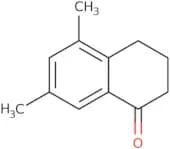
CAS:<p>Versatile small molecule scaffold</p>Formula:C10H11NO3Purity:Min. 95%Molecular weight:193.2 g/mol5,7-Dimethyl-1-tetralone
CAS:<p>5,7-Dimethyl-1-tetralone is a coumarin derivative that is a single-crystal x-ray analysis preparative. It has been found to undergo cross-coupling reaction with a variety of organometallic reagents. 5,7-Dimethyl-1-tetralone can be used as a research chemical in the synthesis of other chemicals and pharmaceuticals. Cross coupling reactions with lithium diisopropylamide have been shown to produce 6-methoxy-1-tetralone which can be saponified to form an intermediate for the synthesis of drugs. The tautomerization process is also mediated by the solvent and the reaction time.</p>Formula:C12H14OPurity:Min. 95%Molecular weight:174.24 g/mol2-(4-Chlorophenyl)-4,5-dihydro-1H-imidazole
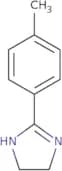
CAS:<p>Versatile small molecule scaffold</p>Formula:C9H9ClN2Purity:Min. 95%Molecular weight:180.63 g/mol2-(4-Methylphenyl)-4,5-dihydro-1H-imidazole
CAS:<p>2-(4-Methylphenyl)-4,5-dihydro-1H-imidazole is a crystalline compound that forms hydrogen bonds with water. It has been shown to form chains and stacks in the crystal structure. The compound has a centroid of 2.8 Å and its dihedral angles are around 120°. Five molecules in the molecule stack on top of each other, stabilized by hydrogen bonds.</p>Formula:C10H12N2Purity:Min. 95%Molecular weight:160.22 g/mol1,3,8-Triaza-spiro[4.5]decane-2,4-dione
CAS:<p>1,3,8-Triaza-spiro[4.5]decane-2,4-dione is a potential anti-cancer drug that inhibits the production of lactate and ammonium ions in lymphocytes. This leads to an increase in the oxidation of glucose and lactic acid to CO2 and H2O. The inhibition of lactate production reduces the accumulation of ammonium ions, which inhibits the activity of hydroxylases. 1,3,8-Triaza-spiro[4.5]decane-2,4-dione also targets hypoxia inducible factor (HIF) and cyclophosphamide resistance protein (CPR), leading to a decrease in the proliferation rate of lymphocytes. Ammonium carbonate is used as a stabilizing agent for this compound during crystallization.</p>Formula:C7H11N3O2Purity:Min. 95%Molecular weight:169.18 g/mol1,3,8-Triaza-spiro[4.5]decane-2,4-dionehydrochloride
CAS:<p>Versatile small molecule scaffold</p>Formula:C7H12ClN3O2Purity:Min. 95%Molecular weight:205.65 g/mol3-Methyl-1,3,8-triazaspiro[4.5]decane-2,4-dione hydrochloride
CAS:<p>Versatile small molecule scaffold</p>Formula:C8H14ClN3O2Purity:Min. 95%Molecular weight:219.67 g/mol4-Methyl-4H-1,2,4-triazole-3,5-dithiol
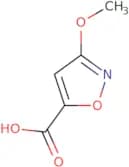
CAS:<p>Versatile small molecule scaffold</p>Formula:C3H5N3S2Purity:Min. 95%Molecular weight:147.2 g/mol3-methoxy-isoxazole-5-carboxylic acid
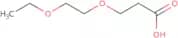
CAS:<p>3-Methoxy-isoxazole-5-carboxylic acid (3MICA) is an amide analog of diborane. 3MICA has been synthesized in the past and is also present in amanita muscaria, a mushroom that contains psychoactive compounds. 3MICA is a potent agonist of the cannabinoid receptor type 1 (CB1), with three times the potency of Δ9-tetrahydrocannabinol. It has also been shown to inhibit acetoacetate decarboxylase, which may be responsible for some side effects associated with CB1 activation.</p>Formula:C5H5NO4Purity:Min. 95%Molecular weight:143.1 g/mol3-(2-Ethoxyethoxy)propanoic acid
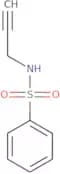
CAS:<p>Versatile small molecule scaffold</p>Formula:C7H14O4Purity:Min. 95%Molecular weight:162.18 g/molN-(Prop-2-yn-1-yl)benzenesulfonamide
CAS:<p>Versatile small molecule scaffold</p>Formula:C9H9NO2SPurity:Min. 95%Molecular weight:195.24 g/mol1,3-Diethyl 2-[2-(2-nitrophenyl)hydrazin-1-ylidene]propanedioate
CAS:<p>Versatile small molecule scaffold</p>Formula:C13H15N3O6Purity:Min. 95%Molecular weight:309.27 g/mol1,3-Diethyl 2-[2-(3-nitrophenyl)hydrazin-1-ylidene]propanedioate
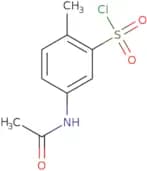
CAS:<p>1,3-Diethyl 2-[2-(3-nitrophenyl)hydrazin-1-ylidene]propanedioate is a halogen that has been used in the production of silver and silver halide. In the presence of light, this compound undergoes a series of reactions to form silver. It can be used as a reducing agent for silver ions or as a precursor for the formation of other silver compounds. This compound also functions as an agent that converts chloride ions to bromide ions by reaction with hydrogen peroxide.</p>Formula:C13H15N3O6Purity:Min. 95%Molecular weight:309.27 g/mol5-Acetylamino-2-methyl-benzenesulfonyl chloride
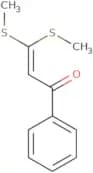
CAS:<p>Versatile small molecule scaffold</p>Formula:C9H10ClNO3SPurity:Min. 95%Molecular weight:247.7 g/mol3,3-Bis(methylsulfanyl)-1-phenylprop-2-en-1-one
CAS:<p>Versatile small molecule scaffold</p>Formula:C11H12OS2Purity:Min. 95%Molecular weight:224.35 g/mol6-Methoxy-1-phenyl-1H,2H,3H,4H,9H-pyrido[3,4-b]indole hydrochloride
CAS:<p>Versatile small molecule scaffold</p>Formula:C18H19ClN2OPurity:Min. 95%Molecular weight:314.8 g/mol2-[(Pyridin-2-yl)methyl]cyclopentan-1-one
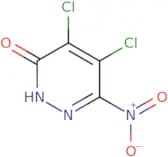
CAS:<p>Versatile small molecule scaffold</p>Formula:C11H13NOPurity:Min. 95%Molecular weight:175.23 g/mol4,5-dichloro-6-nitro-2,3-dihydropyridazin-3-one
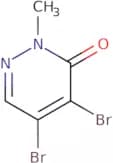
CAS:<p>Versatile small molecule scaffold</p>Formula:C4HCl2N3O3Purity:Min. 95%Molecular weight:210 g/mol4,5-Dibromo-2-methyl-2,3-dihydropyridazin-3-one
CAS:<p>Versatile small molecule scaffold</p>Formula:C5H4Br2N2OPurity:Min. 95%Molecular weight:267.91 g/mol2-(ethanesulfonyl)acetonitrile
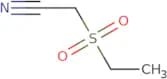
CAS:<p>2-(ethanesulfonyl)acetonitrile is an organic solvent that has a constant boiling point, high reactivity, and low toxicity. It can be used as an acid catalyst in fluorination reactions or to synthesize nitro groups. 2-(ethanesulfonyl)acetonitrile has a reactive functional group and hydrocarbon group that can be substituted with other substituents. The fluorine atom in this compound is replaced with a nitro group when it reacts with oxygen. 2-(ethanesulfonyl)acetonitrile is used in synthetic chemistry to create nitro compounds by the reaction of nitric oxide with the nitro-group on the aromatic ring.</p>Formula:C4H7NO2SPurity:Min. 95%Molecular weight:133.17 g/mol4,5-Dichloro-2-fluorobenzenesulphonyl chloride
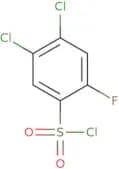
CAS:<p>Versatile small molecule scaffold</p>Formula:C6H2Cl3FO2SPurity:Min. 95%Molecular weight:263.5 g/mol4-(Propan-2-yl)cycloheptan-1-one
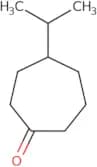
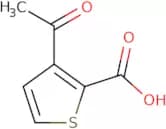
CAS:<p>Versatile small molecule scaffold</p>Formula:C10H18OPurity:Min. 95%Molecular weight:154.25 g/mol3-Acetylthiophene-2-carboxylic acid
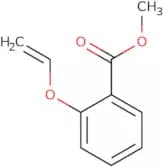
CAS:<p>Versatile small molecule scaffold</p>Formula:C7H6O3SPurity:Min. 95%Molecular weight:170.19 g/molMethyl 2-(ethenyloxy)benzoate
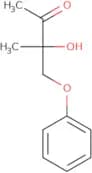
CAS:<p>Versatile small molecule scaffold</p>Formula:C10H10O3Purity:Min. 95%Molecular weight:178.18 g/mol3-Hydroxy-3-methyl-4-phenoxybutan-2-one
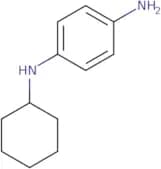
CAS:<p>Versatile small molecule scaffold</p>Formula:C11H14O3Purity:Min. 95%Molecular weight:194.2 g/molN-(4-Aminophenyl)-N-cyclohexylamine
CAS:<p>Versatile small molecule scaffold</p>Formula:C12H18N2Purity:Min. 95%Molecular weight:190.28 g/mol1-(4-Nitrophenyl)azepane
CAS:<p>1-(4-Nitrophenyl)azepane is a potent fxa inhibitor. It inhibits the serine proteases, such as thrombin, and has been shown to have anticoagulant effects in animal models. 1-(4-Nitrophenyl)azepane interacts with the active site of serine protease and competes with the substrate for binding to coagulation proteins. This inhibition leads to a reduction in coagulation and an increase in bleeding time.</p>Formula:C12H16N2O2Purity:Min. 95%Molecular weight:220.27 g/mol1-[(2-Nitrophenyl)methyl]pyridin-1-ium bromide
CAS:<p>Versatile small molecule scaffold</p>Formula:C12H11BrN2O2Purity:Min. 95%Molecular weight:295.13 g/molEthyl 2-[(6-formyl-1,3-dioxaindan-5-yl)oxy]acetate
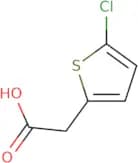
CAS:<p>Versatile small molecule scaffold</p>Formula:C12H12O6Purity:Min. 95%Molecular weight:252.22 g/mol(5-Chloro-2-thienyl)acetic acid
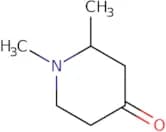
CAS:<p>Versatile small molecule scaffold</p>Formula:C6H5ClO2SPurity:Min. 95%Molecular weight:176.62 g/mol1,2-Dimethylpiperidin-4-one
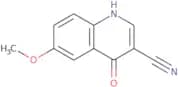
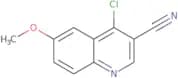
CAS:<p>1,2-Dimethylpiperidin-4-one is a chiral compound that can be used to make optically active compounds. It is an important intermediate in the synthesis of piperidones. The 1,2-dimethylpiperidin-4-one has two diastereomers, which are called cis and trans. The cis configuration has a methyl group in the same plane as the amine group, whereas the trans configuration has the methyl group in a different plane. The cis configuration is more stable than the trans one and this is because it is less sterically hindered by the bulky groups on either side of it. This means that if you want to make an optical pure compound, it will be easier to do so using cis rather than trans 1,2-dimethylpiperidin-4-one.</p>Formula:C7H13NOPurity:Min. 95%Molecular weight:127.18 g/mol4-Hydroxy-6-methoxyquinoline-3-carbonitrile
CAS:<p>Versatile small molecule scaffold</p>Formula:C11H8N2O2Purity:Min. 95%Molecular weight:200.19 g/mol4-Chloro-6-methoxy quinoline-3-carbonitrile
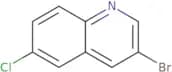
CAS:<p>Versatile small molecule scaffold</p>Formula:C11H7ClN2OPurity:Min. 95%Molecular weight:218.64 g/mol3-bromo-6-chloroquinoline
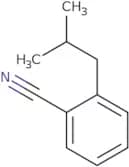
CAS:<p>3-Bromo-6-chloroquinoline is a cisplatin analogue that is used in the treatment of cancer. It has been shown to have cytotoxic effects against human T47D cells, an estrogen receptor positive cell line, by binding to DNA and interfering with DNA replication. 3-Bromo-6-chloroquinoline has also been shown to have significant cytotoxic activity against the Mcf-7 breast cancer cell line. It binds to the proximal region of the human cytochrome P450 1A2 enzyme and blocks its ability to metabolize drugs, which prevents the activation of certain anticancer agents. This drug also inhibits the synthesis of RNA and protein, leading to cancer cell death.</p>Formula:C9H5NClBrPurity:Min. 95%Molecular weight:242.49 g/mol2-(2-Methylpropyl)benzonitrile
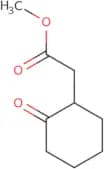
CAS:<p>Versatile small molecule scaffold</p>Formula:C11H13NPurity:Min. 95%Molecular weight:159.23 g/molMethyl 2-(2-oxocyclohexyl)acetate
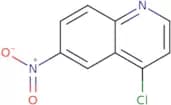
CAS:<p>Methyl 2-(2-oxocyclohexyl)acetate is a chiral, polycyclic organic compound that is an intermediate in the synthesis of tryptamines. It is prepared by reacting cyclohexylamine with methyl chlorocarbonate and then refluxing the mixture to produce the desired product. The yields of this reaction are typically low, but can be increased by using phosphoric acid as a catalyst.</p>Formula:C9H14O3Purity:Min. 95%Molecular weight:170.21 g/mol4-Chloro-6-nitroquinoline
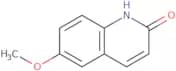
CAS:<p>4-Chloro-6-nitroquinoline is a dopamine receptor antagonist that has been shown to have high affinity and selectivity for the 5-HT6 receptor. This agent inhibits the binding of serotonin to 5-HT6 receptors, which causes an increase in dopamine release in the brain. 4-Chloro-6-nitroquinoline has been used in a study of Parkinson's disease and depression in humans.</p>Formula:C9H5ClN2O2Purity:Min. 95%Molecular weight:208.6 g/mol6-Methoxyquinolin-2-ol
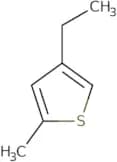
CAS:<p>Versatile small molecule scaffold</p>Formula:C10H9NO2Purity:Min. 95%Molecular weight:175.18 g/mol4-Ethyl-2-methylthiophene
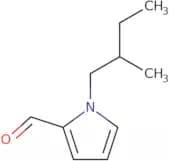
CAS:<p>Versatile small molecule scaffold</p>Formula:C7H10SPurity:Min. 95%Molecular weight:126.22 g/mol1-(2-Methylbutyl)-1H-pyrrole-2-carbaldehyde
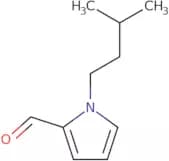
CAS:<p>Versatile small molecule scaffold</p>Formula:C10H15NOPurity:Min. 95%Molecular weight:165.23 g/mol1-(3-Methylbutyl)-1H-pyrrole-2-carbaldehyde
CAS:<p>Versatile small molecule scaffold</p>Formula:C10H15NOPurity:Min. 95%Molecular weight:165.23 g/mol3-Vinylthiophene
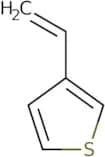
CAS:<p>3-Vinylthiophene is a stabilizer that can be used in the production of polymers and copolymers. It is used in the Suzuki coupling reaction to form vinylidene-3-thiophene, which has been shown to be an effective surface modifier for mesoporous materials. 3-Vinylthiophene has low affinity for both organic ligands and metal ions, making it a reactive compound. The absorption spectroscopy of 3-vinylthiophene shows a strong peak at 290 nm and a weak peak at 320 nm. With a photoelectron spectroscopy, it was found to have an electron affinity of 2.5 eV with a reactive copolymerization with phenylethyl and selenophene being possible reactions.</p>Formula:C6H6SPurity:Min. 95%Molecular weight:110.18 g/mol1-(4-Methyl-1,3-thiazol-2-yl)propan-1-one
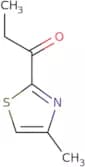
CAS:1-(4-Methyl-1,3-thiazol-2-yl)propan-1-one is a Grignard reagent that has been used in the synthesis of thiazoles. It has been shown to react with propionyl chloride to produce methylthiazole. This compound can also be used as a flavouring agent, which is often found in cinnamon, and as an anhydride for acylation reactions. 1-(4-Methyl-1,3-thiazol-2-yl)propan-1-one is oxidizing and can react with organic chlorides to form chromic acid. This reaction is reversible and when heated will produce the original Grignard reagent and hydrogen chloride gas.Formula:C7H9NOSPurity:Min. 95%Molecular weight:155.22 g/mol2-Methyltetrahydrothiophen-3-one
CAS:<p>2-Methyltetrahydrothiophen-3-one is an organic solvent that is found in the environment as a result of natural processes. It has been shown to inhibit bacterial growth and is used for the analysis of fatty acids. 2-Methyltetrahydrothiophen-3-one inhibits bacterial growth by inhibiting the synthesis of fatty acids, which are needed for cell membrane synthesis.</p>Formula:C5H8OSPurity:Min. 95%Molecular weight:116.18 g/mol2-(3-Nitro-phenyl)-1H-imidazole
CAS:<p>Versatile small molecule scaffold</p>Formula:C9H7N3O2Purity:Min. 95%Molecular weight:189.17 g/mol(2-Bromo-1-methoxyethyl)benzene
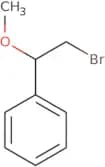
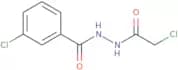
CAS:<p>Versatile small molecule scaffold</p>Formula:C9H11BrOPurity:Min. 95%Molecular weight:215.09 g/mol3-Chloro-N'-(2-chloroacetyl)benzohydrazide
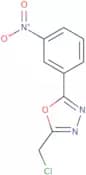
CAS:<p>Versatile small molecule scaffold</p>Formula:C9H8Cl2N2O2Purity:Min. 95%Molecular weight:247.07 g/mol2-(chloromethyl)-5-(3-nitrophenyl)-1,3,4-oxadiazole
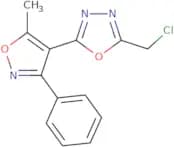
CAS:<p>Versatile small molecule scaffold</p>Formula:C9H6ClN3O3Purity:Min. 95%Molecular weight:239.62 g/mol2-(Chloromethyl)-5-(5-methyl-3-phenyl-1,2-oxazol-4-yl)-1,3,4-oxadiazole
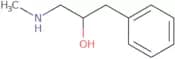
CAS:<p>Versatile small molecule scaffold</p>Formula:C13H10ClN3O2Purity:Min. 95%Molecular weight:275.69 g/mol1-(Methylamino)-3-phenylpropan-2-ol
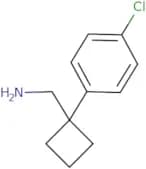
CAS:<p>Versatile small molecule scaffold</p>Formula:C10H15NOPurity:Min. 95%Molecular weight:165.23 g/mol(1-(4-Chlorophenyl)cyclobutyl)methanamine
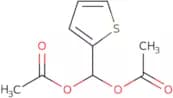
CAS:<p>Versatile small molecule scaffold</p>Formula:C11H14ClNPurity:Min. 95%Molecular weight:195.69 g/mol(Acetyloxy)(thiophen-2-yl)methyl acetate
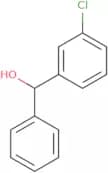
CAS:<p>Versatile small molecule scaffold</p>Formula:C9H10O4SPurity:Min. 95%Molecular weight:214.24 g/mol(3-Chlorophenyl)(phenyl)methanol
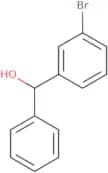
CAS:<p>(3-Chlorophenyl)(phenyl)methanol is a chiral, optically active aldehyde that is used as a reagent in the synthesis of cellulose triacetate. The optical isomers of this compound are separated by densitometric analysis and the yields are determined by measuring the amount of solutes that elute from plates. The functional groups on this compound have been shown to react with dinitrophenyl and form an intermediate that can be identified as an alcohol.</p>Formula:C13H11ClOPurity:Min. 95%Molecular weight:218.68 g/mol(3-Bromophenyl)(phenyl)methanol
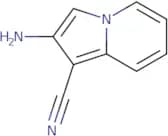
CAS:<p>Versatile small molecule scaffold</p>Formula:C13H11BrOPurity:Min. 95%Molecular weight:263.13 g/mol2-Aminoindolizine-1-carbonitrile
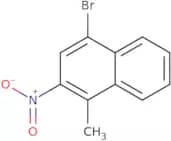
CAS:<p>2-Aminoindolizine-1-carbonitrile is an experimental substance that can form a bispyridinium ion in the presence of halides. It reacts with elemental analysis reagents and formylation agents to produce spectra, which can be used for screening purposes. This compound has been shown to react with electrophilic reagents and dimerize in the presence of a base. 2-Aminoindolizine-1-carbonitrile has antimicrobial activity against Gram negative bacteria, but not Gram positive bacteria. This antibiotic is active against Mycobacterium tuberculosis, but not against Mycobacterium avium complex.</p>Formula:C9H7N3Purity:Min. 95%Molecular weight:157.17 g/mol4-Bromo-1-methyl-2-nitronaphthalene
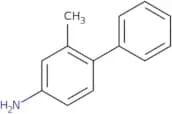
CAS:<p>Versatile small molecule scaffold</p>Formula:C11H8BrNO2Purity:Min. 95%Molecular weight:266.09 g/mol3-Methyl-4-phenylaniline
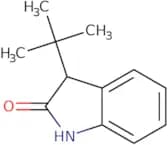
CAS:<p>Versatile small molecule scaffold</p>Formula:C13H13NPurity:Min. 95%Molecular weight:183.25 g/mol3-tert-Butyl-2,3-dihydro-1H-indol-2-one
CAS:<p>Versatile small molecule scaffold</p>Formula:C12H15NOPurity:Min. 95%Molecular weight:189.25 g/mol2-Acetamido-3-{1H-pyrrolo[2,3-b]pyridin-3-yl}propanoic acid
CAS:<p>Versatile small molecule scaffold</p>Formula:C12H13N3O3Purity:Min. 95%Molecular weight:247.25 g/molL-4-Chlorophenylalanine methyl ester hydrochloride
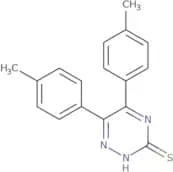
CAS:<p>Versatile small molecule scaffold</p>Formula:C14H15NO2·ClHPurity:Min. 95%Molecular weight:250.12 g/molBis(4-methylphenyl)-1,2,4-triazine-3-thiol
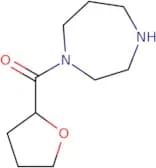
CAS:<p>Versatile small molecule scaffold</p>Formula:C17H15N3SPurity:Min. 95%Molecular weight:293.4 g/mol1-(Oxolane-2-carbonyl)-1,4-diazepane
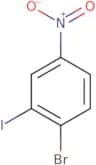
CAS:<p>Versatile small molecule scaffold</p>Formula:C10H18N2O2Purity:Min. 95%Molecular weight:198.26 g/mol4-Bromo-3-iodonitrobenzene
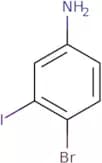
CAS:<p>4-Bromo-3-iodonitrobenzene is a pyrrole derivative that yields 4-bromo-3-iodobenzene upon treatment with palladium. It is a precursor to other products, such as 3-iodo-4-(pyrrolidinomethyl)benzoic acid and 4-(pyrrolidinomethyl)benzoic acid. This compound can be used in the synthesis of biomolecules, such as nucleosides, nucleotides, amino acids, peptides, and proteins. The synthesis of this compound involves deuterium exchange between the bromine and the hydrogen on the nitrogen atom. For example, if 4-bromo-3-iodonitrobenzene reacts with sodium methoxide in methanol it will produce 4-(methylamino)-3-(iodomethyl)aniline hydrochloride. The reaction yield of this</p>Formula:C6H3BrINO2Purity:Min. 95%Molecular weight:327.9 g/mol4-bromo-3-iodoaniline
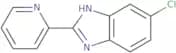
CAS:<p>4-Bromo-3-iodoaniline is a compound that can be used in cancer diagnosis. This substance has been shown to have high fluorescence properties and to emit light when exposed to radiation. The trifluoroacetic acid group makes this compound soluble in water, which is useful for medical purposes. 4-Bromo-3-iodoaniline has been shown to bind selectively to DNA and RNA, making it a potential diagnostic tool for cancer. It also shows great promise for use as a nanomaterial in biomedical imaging applications, such as optical imaging and magnetic resonance imaging (MRI).</p>Formula:C6H5BrINPurity:Min. 95%Molecular weight:297.9 g/mol6-Chloro-2-(pyridin-2-yl)-1H-1,3-benzodiazole
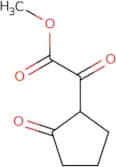
CAS:<p>Versatile small molecule scaffold</p>Formula:C12H8ClN3Purity:Min. 95%Molecular weight:229.66 g/molMethyl 2-oxo-2-(2-oxocyclopentyl)acetate
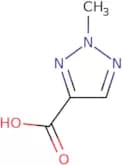
CAS:<p>Versatile small molecule scaffold</p>Formula:C8H10O4Purity:Min. 95%Molecular weight:170.16 g/mol2-Methyl-2H-1,2,3-triazole-4-carboxylic acid
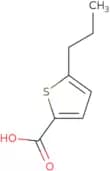
CAS:<p>Versatile small molecule scaffold</p>Formula:C4H5N3O2Purity:Min. 95%Molecular weight:127.1 g/mol5-Propyl-thiophene-2-carboxylic acid
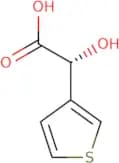
CAS:<p>5-Propyl-thiophene-2-carboxylic acid is a cyclic hydrocarbon that has been synthesized in an asymmetric synthesis. It has a monosubstituted hydrocarbon group and a heterocyclic group. The 5-propyl-thiophene-2-carboxylic acid is a liquid crystal, which means it can form three different phases, including the isotropic phase, the nematic phase, and the smectic phase. 5-Propyl-thiophene-2-carboxylic acid is also a cyclic compound and can be classified as being a heterocyclic.</p>Formula:C8H10O2SPurity:Min. 95%Molecular weight:170.23 g/mol(2R)-2-Hydroxy-2-(thiophen-3-yl)acetic acid
CAS:<p>Versatile small molecule scaffold</p>Formula:C6H6O3SPurity:Min. 95%Molecular weight:158.2 g/molN-{2-[4-(2-Chloroacetyl)phenyl]ethyl}acetamide
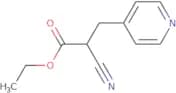
CAS:<p>Versatile small molecule scaffold</p>Formula:C12H14ClNO2Purity:Min. 95%Molecular weight:239.7 g/molEthyl 2-cyano-3-(pyridin-4-yl)propanoate
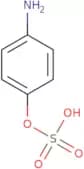
CAS:<p>Versatile small molecule scaffold</p>Formula:C11H12N2O2Purity:Min. 95%Molecular weight:204.22 g/mol4-Aminophenol sulfate(2:1)
CAS:<p>Versatile small molecule scaffold</p>Formula:C12H16N2O6SPurity:Min. 95%Color and Shape:PowderMolecular weight:316.33 g/mol2-{[(Pyridin-2-yl)methyl]amino}acetonitrile
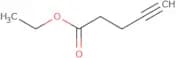
CAS:Versatile small molecule scaffoldFormula:C8H9N3Purity:Min. 95%Molecular weight:147.18 g/mol4-Pentynoic Acid Ethyl Ester
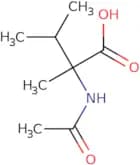
CAS:<p>4-Pentynoic acid ethyl ester (4PE) is a hematological agent that can be used to treat cancer. 4PE inhibits the growth of cancer cells by binding to the histone deacetylase enzyme, which is required for the transcription of genes that are involved in cell division and differentiation. The binding of 4PE to the enzyme causes it to become inactive, leading to inhibition of gene transcription and alteration of cellular metabolism. This results in decreased cell proliferation and an increase in apoptosis.</p>Formula:C7H10O2Purity:Min. 95%Molecular weight:126.15 g/mol2-Acetamido-2,3-dimethylbutanoic acid
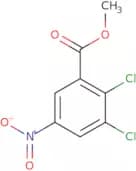
CAS:<p>Versatile small molecule scaffold</p>Formula:C8H15NO3Purity:Min. 95%Molecular weight:173.21 g/molMethyl 2,3-dichloro-5-nitrobenzoate
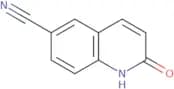
CAS:<p>Versatile small molecule scaffold</p>Formula:C8H5Cl2NO4Purity:Min. 95%Molecular weight:250.03 g/mol2-Oxo-1,2-dihydroquinoline-6-carbonitrile
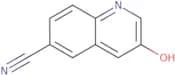
CAS:<p>Versatile small molecule scaffold</p>Formula:C10H6N2OPurity:Min. 95%Molecular weight:170.17 g/mol3-Hydroxyquinoline-6-carbonitrile
CAS:<p>Versatile small molecule scaffold</p>Formula:C10H6N2OPurity:Min. 95%Molecular weight:170.17 g/molEthyl 2-(5-hydroxy-3-methyl-1H-pyrazol-1-yl)acetate
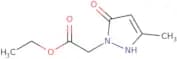
CAS:<p>Versatile small molecule scaffold</p>Formula:C8H12N2O3Purity:Min. 95%Molecular weight:184.19 g/mol1,2,3,4-Tetrahydronaphthalene-1,7-diamine
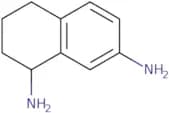
CAS:<p>Versatile small molecule scaffold</p>Formula:C10H14N2Purity:Min. 95%Molecular weight:162.23 g/molN-(3-Bromopropyl)methanesulfonamide
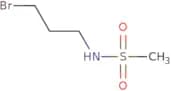
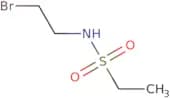
CAS:<p>Versatile small molecule scaffold</p>Formula:C4H10BrNO2SPurity:Min. 95%Molecular weight:216.1 g/molN-(2-Bromoethyl)ethane-1-sulfonamide
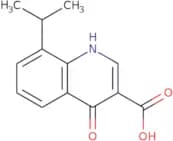
CAS:<p>Versatile small molecule scaffold</p>Formula:C4H10BrNO2SPurity:Min. 95%Molecular weight:216.1 g/mol4-Hydroxy-8-(propan-2-yl)quinoline-3-carboxylic acid
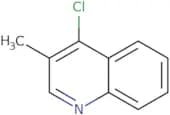
CAS:<p>4-Hydroxy-8-(propan-2-yl)quinoline-3-carboxylic acid (4HPCA) is a small molecule that binds to the epidermal growth factor receptor (EGFR). EGFR is a transmembrane protein that is found on the surface of cells. 4HPCA enhances EGFR signaling and induces cellular responses, such as cell proliferation, differentiation, and migration. Binding of 4HPCA to EGFR causes a conformational change in the receptor that activates downstream signaling pathways. This leads to the activation of genes involved in cell proliferation, differentiation, and migration. 4HPCA has been shown to inhibit tumor growth and reduce cancer markers in preclinical models of cancer.</p>Formula:C13H13NO3Purity:Min. 95%Molecular weight:231.25 g/mol4-Chloro-3-methylquinoline
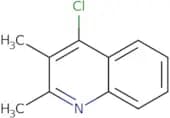
CAS:<p>4-Chloro-3-methylquinoline is an intramolecular reaction that is catalyzed by a strong base. It is a reagent that reacts with azide to form the cyclized product. The mechanism of this reaction proceeds in two steps. In the first step, the methyleniminium cation intermediate is formed by intramolecular cyclization. This intermediate then reacts with the azide ion to form the desired product. 4-Chloro-3-methylquinoline can also be used as a sterically demanding methylene group when it undergoes electrophilic substitution reactions with alkyl halides and other nucleophiles.</p>Formula:C10H8ClNPurity:Min. 95%Molecular weight:177.63 g/mol4-Chloro-2,3-dimethylquinoline
CAS:<p>Versatile small molecule scaffold</p>Formula:C11H10ClNPurity:Min. 95%Molecular weight:191.65 g/molMethyl[(2-methyl-1,3-thiazol-5-yl)methyl]amine
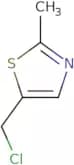
CAS:<p>Versatile small molecule scaffold</p>Formula:C6H10N2SPurity:Min. 95%Molecular weight:142.22 g/mol5-(Chloromethyl)-2-methyl-1,3-thiazole
CAS:<p>Versatile small molecule scaffold</p>Formula:C5H6ClNSPurity:Min. 95%Molecular weight:147.62 g/mol5-Bromo-3-fluoropentan-2-one
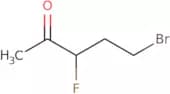
CAS:<p>Versatile small molecule scaffold</p>Formula:C5H8BrFOPurity:Min. 95%Molecular weight:183.02 g/mol3,5-Dibromopentan-2-one
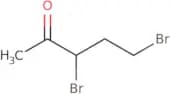
CAS:<p>Versatile small molecule scaffold</p>Formula:C5H8Br2OPurity:Min. 95%Molecular weight:243.92 g/mol1-(1-Bromocyclopropyl)ethanone
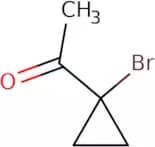
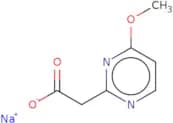
CAS:<p>Versatile small molecule scaffold</p>Formula:C5H7OBrPurity:Min. 95%Molecular weight:163.01 g/molSodium 2-(4-methoxypyrimidin-2-yl)acetate
CAS:<p>Versatile small molecule scaffold</p>Formula:C7H7N2NaO3Purity:Min. 95%Molecular weight:190.1 g/mol4-Phenyl-3-(trifluoromethyl)-1H-pyrazol-5-amine
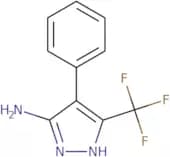
CAS:<p>Versatile small molecule scaffold</p>Formula:C10H8F3N3Purity:Min. 95%Molecular weight:227.19 g/mol4-(4-Chlorophenyl)-3-(trifluoromethyl)-1H-pyrazol-5-amine
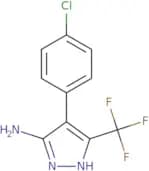
CAS:Versatile small molecule scaffoldFormula:C10H7N3F3ClPurity:Min. 95%Molecular weight:261.63 g/mol1H-Indol-2-ylmethyl acetate
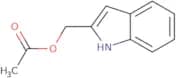
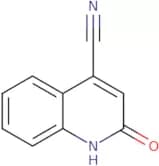
CAS:<p>Versatile small molecule scaffold</p>Formula:C11H11NO2Purity:Min. 95%Molecular weight:189.21 g/mol2-Oxo-1,2-dihydroquinoline-4-carbonitrile
CAS:<p>Versatile small molecule scaffold</p>Formula:C10H6N2OPurity:Min. 95%Molecular weight:170.17 g/mol





![1,3,8-Triaza-spiro[4.5]decane-2,4-dione](/_next/image/?url=https%3A%2Fstatic.cymitquimica.com%2Fproducts%2F3D%2Fthumb-webp%2FNAA62539.webp&w=3840&q=75)
![1,3,8-Triaza-spiro[4.5]decane-2,4-dionehydrochloride](/_next/image/?url=https%3A%2Fstatic.cymitquimica.com%2Fproducts%2F3D%2Fthumb-webp%2FNAA62548.webp&w=3840&q=75)
![3-Methyl-1,3,8-triazaspiro[4.5]decane-2,4-dione hydrochloride](/_next/image/?url=https%3A%2Fstatic.cymitquimica.com%2Fproducts%2F3D%2Fthumb-webp%2FNAA62549.webp&w=3840&q=75)

![1,3-Diethyl 2-[2-(2-nitrophenyl)hydrazin-1-ylidene]propanedioate](/_next/image/?url=https%3A%2Fstatic.cymitquimica.com%2Fproducts%2F3D%2Fthumb-webp%2FNAA63192.webp&w=3840&q=75)
![1,3-Diethyl 2-[2-(3-nitrophenyl)hydrazin-1-ylidene]propanedioate](/_next/image/?url=https%3A%2Fstatic.cymitquimica.com%2Fproducts%2F3D%2Fthumb-webp%2FNAA63194.webp&w=3840&q=75)
![6-Methoxy-1-phenyl-1H,2H,3H,4H,9H-pyrido[3,4-b]indole hydrochloride](/_next/image/?url=https%3A%2Fstatic.cymitquimica.com%2Fproducts%2F3D%2Fthumb-webp%2FNAA63747.webp&w=3840&q=75)
![2-[(Pyridin-2-yl)methyl]cyclopentan-1-one](/_next/image/?url=https%3A%2Fstatic.cymitquimica.com%2Fproducts%2F3D%2Fthumb-webp%2FNAA64055.webp&w=3840&q=75)
![1-[(2-Nitrophenyl)methyl]pyridin-1-ium bromide](/_next/image/?url=https%3A%2Fstatic.cymitquimica.com%2Fproducts%2F3D%2Fthumb-webp%2FNAA66480.webp&w=3840&q=75)
![Ethyl 2-[(6-formyl-1,3-dioxaindan-5-yl)oxy]acetate](/_next/image/?url=https%3A%2Fstatic.cymitquimica.com%2Fproducts%2F3D%2Fthumb-webp%2FNAA66886.webp&w=3840&q=75)


![2-Acetamido-3-{1H-pyrrolo[2,3-b]pyridin-3-yl}propanoic acid](/_next/image/?url=https%3A%2Fstatic.cymitquimica.com%2Fproducts%2F3D%2Fthumb-webp%2FNCA02418.webp&w=3840&q=75)
![N-{2-[4-(2-Chloroacetyl)phenyl]ethyl}acetamide](/_next/image/?url=https%3A%2Fstatic.cymitquimica.com%2Fproducts%2F3D%2Fthumb-webp%2FNCA07741.webp&w=3840&q=75)
![2-{[(Pyridin-2-yl)methyl]amino}acetonitrile](/_next/image/?url=https%3A%2Fstatic.cymitquimica.com%2Fproducts%2F3D%2Fthumb-webp%2FNCA08629.webp&w=3840&q=75)
![Methyl[(2-methyl-1,3-thiazol-5-yl)methyl]amine](/_next/image/?url=https%3A%2Fstatic.cymitquimica.com%2Fproducts%2F3D%2Fthumb-webp%2FNCA13999.webp&w=3840&q=75)