


Building Blocks
Subcategories of "Building Blocks"
- Boronic Acids & Boronic Acid Derivatives(5,778 products)
- Chiral Building Blocks(1,243 products)
- Hydrocarbon Building Blocks(6,099 products)
- Organic Building Blocks(61,038 products)
Found 205376 products of "Building Blocks"
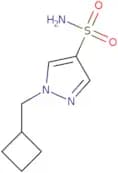
1-(Cyclobutylmethyl)-1H-pyrazole-4-sulfonamide
CAS:Versatile small molecule scaffoldFormula:C8H13N3O2SPurity:Min. 95%Molecular weight:215.28 g/molRef: 3D-ULC80520
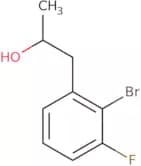
Discontinued product1-(2-Bromo-3-fluorophenyl)propan-2-ol
CAS:Versatile small molecule scaffoldFormula:C9H10BrFOPurity:Min. 95%Molecular weight:233.08 g/molRef: 3D-UFC04202
Discontinued productMethyl[2-(prop-2-yn-1-yloxy)ethyl]amine hydrochloride
CAS:Versatile small molecule scaffoldFormula:C6H12ClNOPurity:Min. 95%Molecular weight:149.62 g/mol1-(1H-Imidazol-2-yl)propan-2-ol hydrochloride
CAS:Versatile small molecule scaffoldFormula:C6H11ClN2OPurity:Min. 95%Molecular weight:162.62 g/molRef: 3D-UFC04093
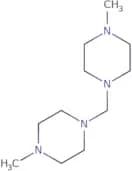
Discontinued productBis(4-methylpiperazin-1-yl)methane
CAS:Versatile small molecule scaffold
Formula:C11H24N4Purity:Min. 95%Molecular weight:212.34 g/molRef: 3D-TAA73933
Discontinued product2-[(4-Bromophenyl)sulfanyl]-2-methylpropanoic acid
CAS:Versatile small molecule scaffold
Formula:C10H11BrO2SPurity:Min. 95%Molecular weight:275.16 g/molRef: 3D-TAA52716
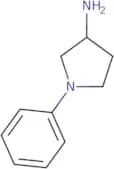
Discontinued product3-Pyrrolidinamine, 1-phenyl-
CAS:Versatile small molecule scaffold
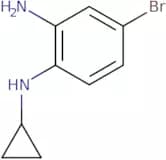
Formula:C10H14N2Purity:Min. 95%Molecular weight:162.23 g/mol4-Bromo-1-N-cyclopropylbenzene-1,2-diamine
CAS:Versatile small molecule scaffoldFormula:C9H11BrN2Purity:Min. 95%Molecular weight:227.1 g/molRef: 3D-STB29141
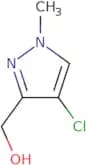
Discontinued product(4-Chloro-1-methyl-1H-pyrazol-3-yl)methanol
CAS:Versatile small molecule scaffold
Formula:C5H7ClN2OPurity:Min. 95%Molecular weight:146.57 g/molRef: 3D-SQB78329
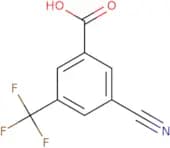
Discontinued product3-Cyano-5-(trifluoromethyl)benzoic Acid
CAS:Versatile small molecule scaffold
Formula:C9H4NO2F3Purity:Min. 95%Molecular weight:215.12 g/mol1-(2,5-Dimethylfuran-3-yl)ethan-1-amine
CAS:Versatile small molecule scaffold
Formula:C8H13NOPurity:Min. 95%Molecular weight:139.19 g/molRef: 3D-SMA83020
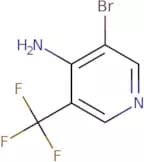
Discontinued product3-Bromo-5-(trifluoromethyl)pyridin-4-amine
CAS:Versatile small molecule scaffold
Formula:C6H4BrF3N2Purity:Min. 95%Molecular weight:241.01 g/molRef: 3D-SGC62288
Discontinued producttert-Butyl N-{4-ethynylbicyclo[2.2.2]octan-1-yl}carbamate
CAS:Versatile small molecule scaffoldFormula:C15H23NO2Purity:Min. 95%Molecular weight:249.35 g/molRef: 3D-SGC55140
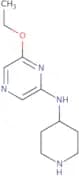
Discontinued product6-Ethoxy-N-(piperidin-4-yl)pyrazin-2-amine
CAS:Versatile small molecule scaffold
Formula:C11H18N4OPurity:Min. 95%Molecular weight:222.29 g/molRef: 3D-SDC05900
Discontinued product6-(1-Pyrrolidinyl)-3-pyridinamine
CAS:Versatile small molecule scaffold
Formula:C9H13N3Purity:(%) Min. 95%Color and Shape:PowderMolecular weight:163.22 g/mol4-[(Chlorosulfonyl)methyl]benzoic acid
CAS:Versatile small molecule scaffold
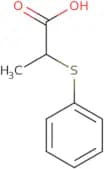
Formula:C8H7ClO4SPurity:Min. 95%Molecular weight:234.66 g/mol2-(Phenylsulfanyl)propanoic acid
CAS:Versatile small molecule scaffold
Formula:C9H10O2SPurity:Min. 95%Molecular weight:182.24 g/molRef: 3D-SAA43194
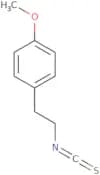
Discontinued product1-(2-Isothiocyanatoethyl)-4-methoxybenzene
CAS:Versatile small molecule scaffold
Formula:C10H11NOSPurity:Min. 95%Molecular weight:193.27 g/molRef: 3D-SAA42737
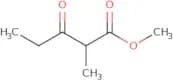
Discontinued product2-Methyl-3-oxo-pentanoicacid methyl ester
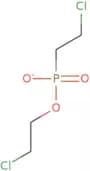
CAS:The synthesis of 2-methyl-3-oxo-pentanoic acid methyl ester is accomplished by a three step process. The first step is the intramolecular condensation of 2,2-dimethylpropionic acid with acetone to form a 1:1 mixture of 3,4-dihydroxybutyl and 4,4-dihydroxybutyl esters. The second step is the selective transesterification of the 3,4-dihydroxybutyl ester with benzaldehyde. This reaction provides an optically pure 2-methyl-3-oxo-pentanoic acid methyl ester as the major product. The third step is an aldol condensation between the ketone from the second step and acetone to produce another optically pure 2,2 dimethylpropionic acid methyl ester.Formula:C7H12O3Purity:Min. 95%Molecular weight:144.17 g/mol(2-Chloroethoxy)(2-chloroethyl)phosphinic acid
CAS:Versatile small molecule scaffold
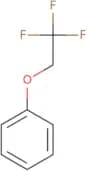
Formula:C4H8Cl2O3PPurity:Min. 95%Molecular weight:205.98 g/mol2,2,2-Trifluoroethoxybenzene
CAS:2,2,2-Trifluoroethoxybenzene is an acid catalyst that is used in the production of chlorobenzene. This organic compound has been shown to produce a number of products when heated with dihydroxybenzene. These products include acid chlorides and benzoyl chloride that can be used as intermediates in other chemical reactions. 2,2,2-Trifluoroethoxybenzene has also been shown to react with alkali metals to produce inorganic acids. In addition to acting as an acid catalyst, this compound may be used in the synthesis of flecainide, which is an antiarrhythmic drug. This product also reacts with carbonyl groups and acidic molecules such as halogens to form alkali metal carboxylates and alkanes.
Formula:C8H7F3OPurity:Min. 95%Molecular weight:176.14 g/mol4-(chloromethyl)-1-methyl-1H-imidazole hydrochloride
CAS:Controlled ProductVersatile small molecule scaffold
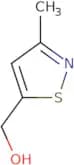
Formula:C5H8Cl2N2Purity:Min. 95%Molecular weight:167.03 g/mol(3-Methyl-1,2-thiazol-5-yl)methanol
CAS:Versatile small molecule scaffold
Formula:C5H7NOSPurity:Min. 95%Molecular weight:129.18 g/molRef: 3D-SAA26560
Discontinued product2-Chloro-3,4-dihydronaphthalen-1(2H)-one
CAS:2-Chloro-3,4-dihydronaphthalen-1(2H)-one is a sulfoxide with significant antifungal activity. It has been shown to be effective against Candida albicans and other fungi, including Aspergillus niger and Mucor racemosus. It is commonly used as an electrolyte in electroluminescent devices, such as light emitting diodes (LEDs). The reaction time for the formation of 2-chloro-3,4-dihydronaphthalen-1(2H)-one from potassium sulfate is dependent on the acid catalyst used. Organic chemists have shown that the use of 2-chloro-3,4-dihydronaphthalen-1(2H)-one can inhibit leukotriene synthesis.
Formula:C10H9OClPurity:Min. 95%Molecular weight:180.63 g/molRef: 3D-SAA21580
Discontinued productN-(3-Methoxyphenyl)prop-2-enamide
CAS:Versatile small molecule scaffold
Formula:C10H11NO2Purity:Min. 95%Molecular weight:177.2 g/molRef: 3D-SAA20899
Discontinued productEthyl spiro[2.3]hexane-1-carboxylate
CAS:Versatile small molecule scaffold
Formula:C9H14O2Purity:Min. 95%Molecular weight:154.21 g/molRef: 3D-SAA20257
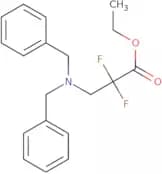
Discontinued productethyl 3-(dibenzylaMino)-2,2-difluoropropanoate
CAS:Versatile small molecule scaffold
Formula:C19H21F2NO2Purity:Min. 95%Molecular weight:333.37 g/molRef: 3D-RWA54736
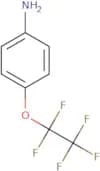
Discontinued product4-(Perfluoroethoxy)aniline
CAS:Versatile small molecule scaffold
Formula:C8H6F5NOPurity:Min. 95%Molecular weight:227.13 g/molRef: 3D-AAA71785
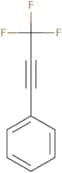
Discontinued product(3,3,3-Trifluoroprop-1-yn-1-yl)benzene
CAS:(3,3,3-Trifluoroprop-1-yn-1-yl)benzene is a reaction product that can be used to inhibit the activity of metalloprotease and as an anti-cancer agent. This compound inhibits the enzyme that causes chronic kidney disease and degenerative diseases. It is a potent inhibitor of metalloprotease, which is involved in cancer progression, fatty acid synthesis and bone formation. The effective dose for this drug is between 1 and 10mg/kg body weight. It has been shown to have an asymmetric synthesis with the use of amido groups. (3,3,3-Trifluoroprop-1-yn-1-yl)benzene also has antirheumatic properties due to its ability to inhibit proteases such as matrix metalloproteinases and cathepsins.
Formula:C9H5F3Purity:Min. 95%Molecular weight:170.13 g/molRef: 3D-AAA77262
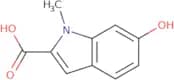
Discontinued product6-Hydroxy-1-methyl-1H-indole-2-carboxylic acid
CAS:Versatile small molecule scaffoldFormula:C10H9NO3Purity:Min. 95%Molecular weight:191.18 g/molRef: 3D-RWA52289
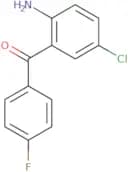
Discontinued product4-Chloro-2-(4-fluorobenzoyl)aniline
CAS:Versatile small molecule scaffold
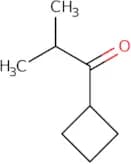
Formula:C13H9ClFNOPurity:Min. 95%Molecular weight:249.67 g/mol1-Cyclobutyl-2-methylpropan-1-one
CAS:Versatile small molecule scaffold
Formula:C8H14OPurity:Min. 95%Molecular weight:126.2 g/molRef: 3D-ABA11133
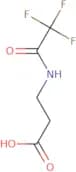
Discontinued product3-(Trifluoroacetamido)propanoic acid
CAS:Versatile small molecule scaffold
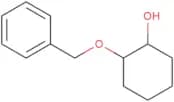
Formula:C5H6F3NO3Purity:Min. 95%Molecular weight:185.1 g/molrac-(1R,2R)-2-(Benzyloxy)cyclohexan-1-ol
CAS:Versatile small molecule scaffold
Formula:C13H18O2Purity:Min. 95%Molecular weight:206.28 g/molRef: 3D-BCA32929
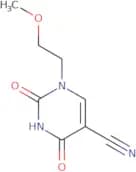
Discontinued product1-(2-Methoxyethyl)-2,4-dioxo-1,2,3,4-tetrahydropyrimidine-5-carbonitrile
CAS:Versatile small molecule scaffoldFormula:C8H9N3O3Purity:Min. 95%Molecular weight:195.18 g/molRef: 3D-RNA96614
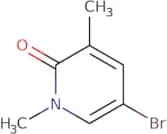
Discontinued product5-Bromo-1,3-dimethylpyridin-2(1H)-one
CAS:Benzyne is a reactive intermediate that is formed by the tautomerization of 5-bromo-1,3-dimethylpyridin-2(1H)-one. It is an adduct between a bromine atom and a benzene ring. This compound has been shown to react with electron-rich olefins to form bicyclic compounds called diels-alder adducts. These reactions are often catalyzed by metals, such as palladium or nickel. Benzyne also reacts with triple bonds or other electron rich centers to form benzyne adducts, which are highly reactive and can be used as chemical probes for electron density in molecules.
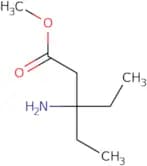
Formula:C7H8BrNOPurity:Min. 95%Molecular weight:202.05 g/molMethyl 3-amino-3-ethylpentanoate
CAS:Versatile small molecule scaffold
Formula:C8H17NO2Purity:Min. 95%Molecular weight:159.23 g/molRef: 3D-BFC28653
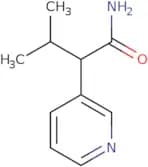
Discontinued product3-Methyl-2-(pyridin-3-yl)butanamide
CAS:Versatile small molecule scaffold
Formula:C10H14N2OPurity:Min. 95%Molecular weight:178.23 g/molRef: 3D-BFC36176
Discontinued product3-Bromo-5-chloro-1H-pyrrolo[2,3-b]pyridine
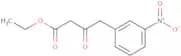
CAS:Versatile small molecule scaffoldFormula:C7H4BrClN2Purity:Min. 95%Molecular weight:231.48 g/molEthyl 4-(3-nitrophenyl)-3-oxobutanoate
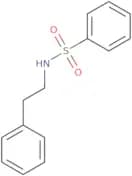
CAS:Versatile small molecule scaffoldFormula:C12H13NO5Purity:Min. 95%Molecular weight:251.23 g/molN-(2-Phenylethyl)benzenesulfonamide
CAS:N-(2-Phenylethyl)benzenesulfonamide is a biodegradable and aerobic catalyst that is used in the production of nitrates. It can be recycled and has a high solubility, which allows for efficient extraction from wastewater effluents. The reactor system can be operated at an aerobic or anaerobic conditions. N-(2-Phenylethyl)benzenesulfonamide is soluble in water and can be hydrolyzed by acids or bases to release ammonia gas. The process can also be sustainable due to the use of renewable energy sources such as solar, wind, tidal, or biomass power.
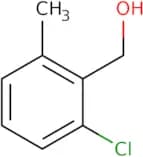
Formula:C14H15NO2SPurity:Min. 95%Molecular weight:261.34 g/mol(2-Chloro-6-methylphenyl)methanol
CAS:Versatile small molecule scaffold
Formula:C8H9ClOPurity:Min. 95%Molecular weight:156.61 g/mol3-Chloro-N-[2-(4-methyl-1,3-thiazol-5-yl)-2-oxoethyl]propanamide
CAS:Versatile small molecule scaffoldFormula:C9H11ClN2O2SPurity:Min. 95%Molecular weight:246.71 g/molRef: 3D-CHC38015
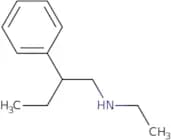
Discontinued productEthyl(2-phenylbutyl)amine
CAS:Controlled ProductVersatile small molecule scaffold
Formula:C12H19NPurity:Min. 95%Molecular weight:177.29 g/molRef: 3D-CRA92083
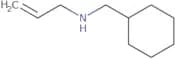
Discontinued product(Cyclohexylmethyl)(prop-2-en-1-yl)amine
CAS:Versatile small molecule scaffold
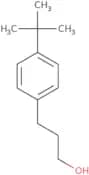
Formula:C10H19NPurity:Min. 95%Molecular weight:153.26 g/mol3-(4-tert-Butylphenyl)propan-1-ol
CAS:Versatile small molecule scaffold
Formula:C13H20OPurity:Min. 95%Molecular weight:192.3 g/molRef: 3D-DDA57408
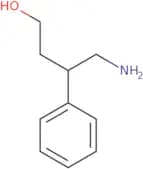
Discontinued product4-Amino-3-phenylbutan-1-ol
CAS:Versatile small molecule scaffold
Formula:C10H15NOPurity:Min. 95%Molecular weight:165.23 g/molRef: 3D-RBA17540
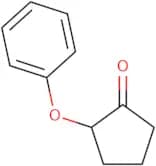
Discontinued product2-Phenoxycyclopentan-1-one
CAS:Versatile small molecule scaffold
Formula:C11H12O2Purity:Min. 95%Molecular weight:176.21 g/molRef: 3D-DDA72616
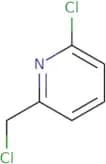
Discontinued product2-Chloro-6-(chloromethyl)pyridine
CAS:2-Chloro-6-(chloromethyl)pyridine (2C6CP) is a chloride precursor that can be used for the synthesis of metal chlorides, such as copper chlorides. 2C6CP is synthesized by reacting thionyl chloride with the substituted pyridine under anhydrous conditions at -78°C. The resultant 2C6CP is then hydrolyzed to produce the desired chloride.
2C6CP has been shown to act as a ligand in coordination chemistry. It was first synthesized by reacting 3-chloropyridine with thionyl chloride and then hydrolyzing it to 2-chloropyridine. This method was later modified to use 4-chlorobenzoyl chloride instead of 3-chloropyridine, producing 2,4-dichloropyridine.Formula:C6H5Cl2NPurity:Min. 95%Molecular weight:162.02 g/molRef: 3D-DDA84688
Discontinued product5-Methyl-2-sulfanyl-4H,7H-[1,2,4]triazolo[1,5-a]pyrimidin-7-one
CAS:Versatile small molecule scaffold
Formula:C6H6N4OSPurity:Min. 95%Molecular weight:182.2 g/molRef: 3D-RBA12281
Discontinued product1',2'-Dihydrospiro[cyclopentane-1,3'-indole]-2'-one
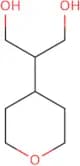
CAS:1',2'-Dihydrospiro[cyclopentane-1,3'-indole]-2'-one is a bromodomain inhibitor that inhibits the function of the bromodomain and prevents it from binding to acetylated lysine residues in the N-terminal domain of histones. This drug has been shown to inhibit the growth and proliferation of cancer cells in vitro. 1',2'-Dihydrospiro[cyclopentane-1,3'-indole]-2'-one is used as an excipient or diluent in pharmaceutical formulations. The drug is also used therapeutically as bromodomain inhibitors for cancers including breast, prostate, and colorectal cancers.Formula:C12H13NOPurity:Min. 95%Molecular weight:187.24 g/mol2-(Oxan-4-yl)propane-1,3-diol
CAS:Versatile small molecule scaffold
Formula:C8H16O3Purity:Min. 95%Molecular weight:160.21 g/molRef: 3D-RAD15754
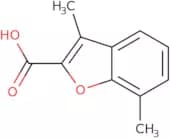
Discontinued product3,7-Dimethyl-1-benzofuran-2-carboxylic acid
CAS:Versatile small molecule scaffold
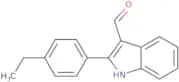
Formula:C11H10O3Purity:Min. 95%Molecular weight:190.19 g/mol2-(4-Ethylphenyl)-1H-indole-3-carbaldehyde
CAS:Versatile small molecule scaffoldFormula:C17H15NOPurity:Min. 95%Molecular weight:249.31 g/molRef: 3D-QYA39103
Discontinued product2-(2,4-Dimethylphenyl)-1H-indole-3-carbaldehyde
CAS:Versatile small molecule scaffoldFormula:C17H15NOPurity:Min. 95%Molecular weight:249.31 g/molRef: 3D-QYA39099
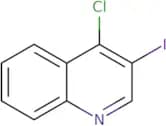
Discontinued product4-Chloro-3-iodo-quinoline
CAS:4-Chloro-3-iodo-quinoline is a ligand that has been shown to have agonistic activity with the immune system. It has been demonstrated to be an adjuvant in vaccines, and has been shown to be effective against furan, chlorine, and azide. 4-Chloro-3-iodo-quinoline is structurally related to 3-(trifluoromethyl)quinoline, which is a pharmacological agent used for the treatment of rheumatoid arthritis. The pharmacological effects of 4-chloro-3-iodo quinoline may be due to its ability to bind with toll like receptor.
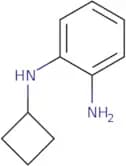
Formula:C9H5ClINPurity:Min. 95%Molecular weight:289.5 g/molN1-Cyclobutylbenzene-1,2-diamine
CAS:Versatile small molecule scaffold
Formula:C10H14N2Purity:Min. 95%Molecular weight:162.23 g/molMethyl 5,5,5-trifluoro-3-oxopentanoate
CAS:Versatile small molecule scaffold
Formula:C6H7F3O3Purity:Min. 95%Molecular weight:184.11 g/mol6-Chloro-1H-pyrrolo[2,3-b]pyridine-3-carboxylic acid
CAS:Versatile small molecule scaffold
Formula:C8H5ClN2O2Purity:Min. 95%Molecular weight:196.59 g/molRef: 3D-QLB14096
Discontinued product4,5,6,7-Tetrahydropyrazolo[1,5-a]pyrazine dihydrochloride
CAS:Versatile small molecule scaffoldFormula:C6H11Cl2N3Purity:Min. 95%Molecular weight:196.08 g/mol6-bromoimidazo[1,2-a]pyrazin-2-amine
CAS:Versatile small molecule scaffold
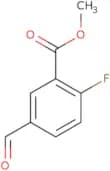
Formula:C6H5BrN4Purity:Min. 95%Molecular weight:213 g/molMethyl 2-fluoro-5-formylbenzoate
CAS:Versatile small molecule scaffold
Formula:C9H7FO3Purity:Min. 95%Molecular weight:182.15 g/molRef: 3D-QGA80394
Discontinued product8-chloro-3-(propan-2-yl)-[1,2,4]triazolo[4,3-a]pyrazine
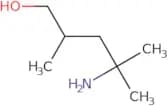
CAS:Versatile small molecule scaffoldFormula:C8H9ClN4Purity:Min. 95%Molecular weight:196.64 g/mol4-Amino-2,4-dimethylpentan-1-ol
CAS:Versatile small molecule scaffold
Formula:C7H17NOPurity:Min. 95%Molecular weight:131.22 g/molRef: 3D-EEC95245
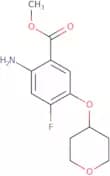
Discontinued productMethyl 2-amino-4-fluoro-5-(oxan-4-yloxy)benzoate
CAS:Versatile small molecule scaffold
Formula:C13H16FNO4Purity:Min. 95%Molecular weight:269.27 g/molRef: 3D-EEC95382
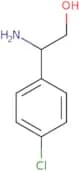
Discontinued productb-Amino-4-chlorobenzeneethanol
CAS:Versatile small molecule scaffold
Formula:C8H10ClNOPurity:Min. 95%Molecular weight:171.62 g/molN-(1-Benzyl-3-phenylpyrrolidin-3-yl)acetamide
CAS:Versatile small molecule scaffoldFormula:C19H22N2OPurity:Min. 95%Molecular weight:294.4 g/molRef: 3D-PZC01626
Discontinued producttert-Butyl (2,2-difluoro-3-hydroxypropyl)carbamate
CAS:Versatile small molecule scaffoldFormula:C10H13NO4Purity:Min. 95%Molecular weight:211.21 g/mol4,5-Dihydro-1H-imidazol-2-amine hydrochloride
CAS:Please enquire for more information about 4,5-Dihydro-1H-imidazol-2-amine hydrochloride including the price, delivery time and more detailed product information at the technical inquiry form on this page
Formula:C3H7N3•HClPurity:Min. 95%Molecular weight:121.57 g/molRef: 3D-FD183639
Discontinued product8-Bromo-2-methylimidazo[1,2-a]pyridine
CAS:Versatile small molecule scaffold
Formula:C8H7N2BrPurity:Min. 95%Molecular weight:211.05 g/mol1-Hydroxycyclopentane-1-carbonitrile
CAS:1-Hydroxycyclopentane-1-carbonitrile is a monomer that is hydrolyzed to form benzoin and cyanohydrins. It can be used in the production of scifinder as a monomer or dimerizer.
Formula:C6H9NOPurity:Min. 95%Molecular weight:111.14 g/mol4-Chloro-2-hydroxy-6-methylphenylboronic acid
CAS:Versatile small molecule scaffoldFormula:C7H8BClO3Purity:Min. 95%Molecular weight:186.4 g/mol2-Bromo-3,3,3-trifluoro-1-propene
CAS:Controlled Product2-Bromo-3,3,3-trifluoro-1-propene is a chemical compound that has been synthesized in an asymmetric reaction. The reactant is bromopropane and the product is 2,2,2-trifluoropropene. The methylene group on the propene molecule is activated by the nucleophilic attack of a fluoride ion from hydrogen fluoride to form a cavity with a highly strained bond. The kinetic study of this reaction revealed that the activation energy for the reaction is 42 kJ/mol. Palladium-catalyzed coupling reactions are catalyzed by palladium and require nonpolar solvents such as toluene or dichloromethane. This type of reaction has been shown to be exothermic with an isolated yield of 1%.
Formula:C3H2BrF3Purity:Min. 95%Color and Shape:Colorless PowderMolecular weight:174.95 g/mol3-Hydroxy-5-methylpyridine
CAS:3-Hydroxy-5-methylpyridine (3HMP) is a chemical substance that has been classified as an amine. It is a product of the metabolism of purines, which are nitrogenous bases found in DNA and RNA. 3HMP is produced by aerogenic bacteria (such as Enterobacter), and can be used to estimate the number of these bacteria present in water samples. 3HMP has been shown to have antiviral properties against influenza virus, and can be used as a biomarker for the presence of other viruses in animals. 3HMP also has mineralization properties, which have been studied extensively, particularly with regards to pancreatic disease.
Formula:C6H7NOPurity:Min. 95%Color and Shape:PowderMolecular weight:109.13 g/molRef: 3D-FH16174
Discontinued product4,5-Dihydroxy-2,3-Pentanedione
CAS:4,5-Dihydroxy-2,3-pentanedione is a carbonyl compound that is the product of the oxidation of ascorbic acid. It is used in wastewater treatment and has antimicrobial properties against infectious diseases. This compound has been shown to inhibit protein synthesis by binding to the ribosome and preventing the formation of peptide bonds between amino acids. 4,5-Dihydroxy-2,3-pentanedione has also been shown to bind to plasma proteins, which may be due to its acyl chain structure. 4,5-Dihydroxy-2,3-pentanedione can be synthesized in a catalytic mechanism that involves dehydroascorbic acid and molecular oxygen.
Formula:C5H8O4Purity:Min. 95%Color and Shape:PowderMolecular weight:132.11 g/molRef: 3D-FD180770
Discontinued productPiperyline
CAS:Piperyline is an alkanoic acid that has shown to be effective against skin cancer. It also has antimicrobial properties, which may be due to its ability to bind metal ions and form polymeric compounds. Piperyline inhibits microbial growth by inhibiting the synthesis of proteins and nucleic acids. The antimicrobial activity is related to its cationic polymerization with hydroxyl groups, which forms a structure that can inhibit microbial enzymes and disrupt microbial cell membranes. This compound also interacts with the skin's natural lipids, making it difficult for microorganisms to attach and grow on the skin. Piperyline is synthesized in organic chemistry laboratories as an amide precursor of other pharmaceuticals such as penicillin.
Formula:C16H17NO3Purity:Min. 95%Molecular weight:271.31 g/mol

![Methyl[2-(prop-2-yn-1-yloxy)ethyl]amine hydrochloride](/_next/image/?url=https%3A%2Fstatic.cymitquimica.com%2Fproducts%2F3D%2Fthumb-webp%2FUFC04155.webp&w=3840&q=75)

![2-[(4-Bromophenyl)sulfanyl]-2-methylpropanoic acid](/_next/image/?url=https%3A%2Fstatic.cymitquimica.com%2Fproducts%2F3D%2Fthumb-webp%2FTAA52716.webp&w=3840&q=75)

![tert-Butyl N-{4-ethynylbicyclo[2.2.2]octan-1-yl}carbamate](/_next/image/?url=https%3A%2Fstatic.cymitquimica.com%2Fproducts%2F3D%2Fthumb-webp%2FSGC55140.webp&w=3840&q=75)

![4-[(Chlorosulfonyl)methyl]benzoic acid](/_next/image/?url=https%3A%2Fstatic.cymitquimica.com%2Fproducts%2F3D%2Fthumb-webp%2FSDA61457.webp&w=3840&q=75)



![Ethyl spiro[2.3]hexane-1-carboxylate](/_next/image/?url=https%3A%2Fstatic.cymitquimica.com%2Fproducts%2F3D%2Fthumb-webp%2FSAA20257.webp&w=3840&q=75)
![3-Bromo-5-chloro-1H-pyrrolo[2,3-b]pyridine](/_next/image/?url=https%3A%2Fstatic.cymitquimica.com%2Fproducts%2F3D%2Fthumb-webp%2FRJB54609.webp&w=3840&q=75)
![3-Chloro-N-[2-(4-methyl-1,3-thiazol-5-yl)-2-oxoethyl]propanamide](/_next/image/?url=https%3A%2Fstatic.cymitquimica.com%2Fproducts%2F3D%2Fthumb-webp%2FCHC38015.webp&w=3840&q=75)
![5-Methyl-2-sulfanyl-4H,7H-[1,2,4]triazolo[1,5-a]pyrimidin-7-one](/_next/image/?url=https%3A%2Fstatic.cymitquimica.com%2Fproducts%2F3D%2Fthumb-webp%2FRBA12281.webp&w=3840&q=75)
![1',2'-Dihydrospiro[cyclopentane-1,3'-indole]-2'-one](/_next/image/?url=https%3A%2Fstatic.cymitquimica.com%2Fproducts%2F3D%2Fthumb-webp%2FRBA05867.webp&w=3840&q=75)


![6-Chloro-1H-pyrrolo[2,3-b]pyridine-3-carboxylic acid](/_next/image/?url=https%3A%2Fstatic.cymitquimica.com%2Fproducts%2F3D%2Fthumb-webp%2FQLB14096.webp&w=3840&q=75)
![4,5,6,7-Tetrahydropyrazolo[1,5-a]pyrazine dihydrochloride](/_next/image/?url=https%3A%2Fstatic.cymitquimica.com%2Fproducts%2F3D%2Fthumb-webp%2FQGA89407.webp&w=3840&q=75)
![6-bromoimidazo[1,2-a]pyrazin-2-amine](/_next/image/?url=https%3A%2Fstatic.cymitquimica.com%2Fproducts%2F3D%2Fthumb-webp%2FDUB86138.webp&w=3840&q=75)
![8-chloro-3-(propan-2-yl)-[1,2,4]triazolo[4,3-a]pyrazine](/_next/image/?url=https%3A%2Fstatic.cymitquimica.com%2Fproducts%2F3D%2Fthumb-webp%2FQFA91091.webp&w=3840&q=75)



![8-Bromo-2-methylimidazo[1,2-a]pyridine](/_next/image/?url=https%3A%2Fstatic.cymitquimica.com%2Fproducts%2F3D%2Fthumb-webp%2FUXB37475.webp&w=3840&q=75)




