Building Blocks
Subcategories of "Building Blocks"
- Boronic Acids & Boronic Acid Derivatives(5,778 products)
- Chiral Building Blocks(1,243 products)
- Hydrocarbon Building Blocks(6,098 products)
- Organic Building Blocks(61,036 products)
Found 205240 products of "Building Blocks"
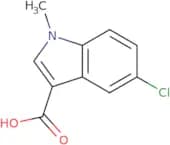
5-Chloro-1-methyl-1H-indole-3-carboxylic acid
CAS:Controlled ProductVersatile small molecule scaffoldFormula:C10H8ClNO2Purity:Min. 95%Molecular weight:209.63 g/molRef: 3D-XGA59662
Discontinued producttert-Butyl N-[(2R)-4-chloro-3-oxobutan-2-yl]carbamate
CAS:Versatile small molecule scaffold
Formula:C9H16ClNO3Purity:Min. 95%Color and Shape:PowderMolecular weight:221.68 g/molRef: 3D-XKC24150
Discontinued product2-Chloro-5,8-difluoroquinoline
CAS:Versatile small molecule scaffold
Formula:C9H4ClF2NPurity:Min. 95%Molecular weight:199.58 g/mol4-oxo-2-spiro(N-Boc-piperidine-4-yl)-benzopyran
CAS:Versatile small molecule scaffold
Formula:C18H23NO4Purity:Min. 95%Molecular weight:317.39 g/molRef: 3D-ZIB92822
Discontinued product5-Methoxybicyclo[2.2.1]heptan-2-amine hydrochloride
CAS:Versatile small molecule scaffoldFormula:C8H16ClNOPurity:Min. 95%Molecular weight:177.7 g/molRef: 3D-FSD25240
Discontinued product1,5,5-Trimethylpyrrolidin-3-amine dihydrochloride
CAS:Versatile small molecule scaffoldFormula:C7H18Cl2N2Purity:Min. 95%Molecular weight:201.1 g/molRef: 3D-FSD25271
Discontinued product3-Azabicyclo[3.2.1]octan-6-ol hydrochlorides
CAS:Versatile small molecule scaffoldFormula:C7H14ClNOPurity:Min. 95%Molecular weight:163.6 g/molRef: 3D-FSD25297
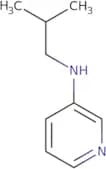
Discontinued productN-(2-Methylpropyl)pyridin-3-amine
CAS:Versatile small molecule scaffold
Formula:C9H14N2Purity:Min. 95%Molecular weight:150.22 g/molRef: 3D-ABA56010
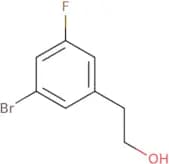
Discontinued product2-(3-Bromo-5-fluorophenyl)ethanol
CAS:Versatile small molecule scaffold
Formula:C8H8BrFOPurity:Min. 95%Molecular weight:219.05 g/molRef: 3D-HLC47552
Discontinued productrac-[(2R,5S)-5-Phenyloxolan-2-yl]methanamine hydrochloride
CAS:Versatile small molecule scaffold
Formula:C11H16ClNOPurity:Min. 95%Molecular weight:213.7 g/molRef: 3D-HXC89108
Discontinued product(1R)-1-(1H-Imidazol-2-yl)ethan-1-amine dihydrochloride
CAS:Versatile small molecule scaffold
Formula:C5H11Cl2N3Purity:Min. 95%Molecular weight:184.06 g/molRef: 3D-HXC91437
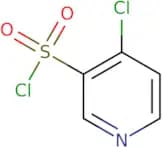
Discontinued product4-chloropyridine-3-sulfonyl chloride
CAS:4-Chloropyridine-3-sulfonyl chloride is a thrombin inhibitor that has been discovered through the use of in vitro screening methods. It is a small molecule with lipophilic properties and oral bioavailability. This compound inhibits thrombin by binding to the active site of the enzyme, which prevents the formation of an enzyme-thrombin complex. The discovery was made using a pharmacophore-based approach and further modifications were made to improve its potency and increase its lipophilicity. This compound also exhibits an acceptable level of bioavailability in vivo, which may be due to its high solubility in water.Formula:C5H3Cl2NO2SPurity:Min. 95%Molecular weight:212.1 g/molRef: 3D-IBA26344
Discontinued product2-[2-(Furan-3-yl)-1,3-thiazol-4-yl]acetic acid
CAS:Versatile small molecule scaffold
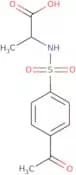
Formula:C9H7NO3SPurity:Min. 95%Molecular weight:209.22 g/mol2-(4-Acetylbenzenesulfonamido)propanoic acid
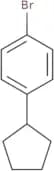
CAS:Versatile small molecule scaffoldFormula:C11H13NO5SPurity:Min. 95%Molecular weight:271.29 g/mol1-Bromo-4-cyclopentylbenzene
CAS:1-Bromo-4-cyclopentylbenzene (1-BCPB) is a chlorinated aromatic compound that can be synthesized by reacting 1-bromo-4-chlorobenzene and cyclopentylmagnesium bromide. The reaction sequence begins with the addition of hydrochloric acid to the first reactant, followed by magnesium chloride and ether. The mixture is heated to produce a liquid solution of ethylhexyloxy pyridine, which reacts with the second reactant in a sequence that leads to the desired product. 1-BCPB is used as an intermediate in organic synthesis. It has been shown to have moderate interaction with paraldehyde and pyridinium salts at room temperature, but it does not react with cycloalkyls or pyridinium salts at elevated temperatures.
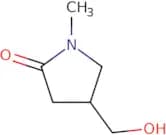
Formula:C11H13BrPurity:Min. 95%Molecular weight:225.13 g/mol4-(Hydroxymethyl)-1-methylpyrrolidin-2-one
CAS:Versatile small molecule scaffold
Formula:C6H11NO2Purity:Min. 95%Molecular weight:129.16 g/molRef: 3D-JCA88720
Discontinued product1-(Propan-2-yl)-N-[1-(propan-2-yl)-4,5,6,7-tetrahydro-1H-indazol-5-yl]-4,5,6,7-tetrahydro-1H-indazol-5-amine
CAS:Versatile small molecule scaffold
Formula:C20H31N5Purity:Min. 95%Molecular weight:341.5 g/molRef: 3D-JDC14931
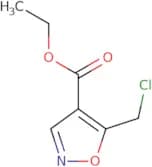
Discontinued productEthyl 5-(chloromethyl)-1,2-oxazole-4-carboxylate
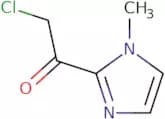
CAS:Versatile small molecule scaffoldFormula:C7H8ClNO3Purity:Min. 95%Molecular weight:189.59 g/mol2-Chloro-1-(1-methyl-1H-imidazol-2-yl)ethan-1-one
CAS:Versatile small molecule scaffold
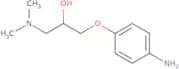
Formula:C6H7ClN2OPurity:Min. 95%Molecular weight:158.58 g/mol1-(4-Aminophenoxy)-3-(dimethylamino)propan-2-ol
CAS:Versatile small molecule scaffold
Formula:C11H18N2O2Purity:Min. 95%Molecular weight:210.27 g/molRef: 3D-KKA04560
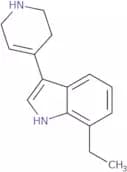
Discontinued product7-Ethyl-3-(1,2,3,6-tetrahydropyridin-4-yl)-1H-indole
CAS:Versatile small molecule scaffoldFormula:C15H18N2Purity:Min. 95%Molecular weight:226.32 g/molRef: 3D-KTA35413
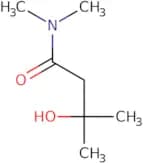
Discontinued product3-Hydroxy-N,N,3-trimethylbutanamide
CAS:3-Hydroxy-N,N,3-trimethylbutanamide is a liquid at room temperature. It is an additive that can be used in the production of nitrocellulose and as a preservative for nitrate film. 3-Hydroxy-N,N,3-trimethylbutanamide decomposes on exposure to UV light to form nitric oxide. It is also used as a photoinitiator in the synthesis of polymers by free radical polymerization reactions. The liquid composition can be thermally treated to produce stable silver nanoparticles.
Formula:C7H15NO2Purity:Min. 95%Molecular weight:145.2 g/molRef: 3D-LCA66547
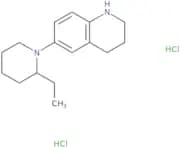
Discontinued product6-(2-Ethylpiperidin-1-yl)-1,2,3,4-tetrahydroquinoline dihydrochloride
CAS:Versatile small molecule scaffoldFormula:C16H26Cl2N2Purity:Min. 95%Molecular weight:317.3 g/molRef: 3D-LIC71538
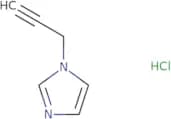
Discontinued product1-(Prop-2-yn-1-yl)-1H-imidazole hydrochloride
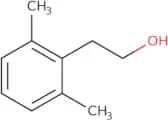
CAS:Versatile small molecule scaffoldFormula:C6H7ClN2Purity:Min. 95%Molecular weight:142.58 g/mol2-(2,6-Dimethylphenyl)ethan-1-ol
CAS:2-(2,6-Dimethylphenyl)ethan-1-ol is a racemic mixture of two compounds with the same molecular formula. The two enantiomers have different chemical properties and can be separated by specific techniques such as chromatography. 2-(2,6-Dimethylphenyl)ethan-1-ol is an ether that is made from methylmalonic acid and ethylene oxide. It is hydrolysed to release methylmalonyl chloride or demethylated to produce methyl ether acetate. This compound has been used in the synthesis of various esters and sesquiterpenoids.
Formula:C10H14OPurity:Min. 95%Molecular weight:150.22 g/molRef: 3D-FBA59580
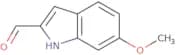
Discontinued product6-Methoxy-1H-indole-2-carbaldehyde
CAS:Versatile small molecule scaffold
Formula:C10H9NO2Purity:Min. 95%Molecular weight:175.18 g/molRef: 3D-FBA46493
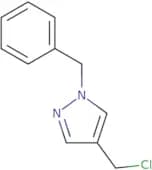
Discontinued product1-Benzyl-4-(chloromethyl)-1H-pyrazole
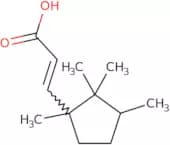
CAS:Controlled ProductVersatile small molecule scaffoldFormula:C11H11ClN2Purity:Min. 95%Molecular weight:206.67 g/mol3-(1,2,2,3-Tetramethylcyclopentyl)prop-2-enoic acid
CAS:Versatile small molecule scaffold
Formula:C12H20O2Purity:Min. 95%Molecular weight:196.29 g/molRef: 3D-LJB31686
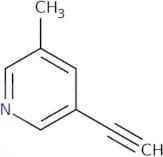
Discontinued product3-Ethynyl-5-methylpyridine
CAS:Versatile small molecule scaffold
Formula:C8H7NPurity:Min. 95%Molecular weight:117.15 g/molRef: 3D-FBA41353
Discontinued product({2-[(5-Methylisoxazol-3-yl)amino]-2-oxoethyl}thio)acetic acid
CAS:The peptide is a research tool that can be used to activate certain antibodies and ion channels. It has also been shown to inhibit protein interactions. The peptide is soluble in DMSO, ethanol, and acetonitrile. It has a molecular weight of 438.4 g/mol and an empirical formula of C14H20N2O3S. The CAS number for the peptide is 436091-57-5. The chemical name of the peptide is ({2-[(5-methylisoxazol-3-yl)amino]-2-oxoethyl}thio)acetic acid.
Formula:C8H10N2O4SPurity:Min. 95%Molecular weight:230.24 g/mol4-Chloro-5H,6H,7H-pyrimido[4,5-b][1,4]oxazin-6-one
CAS:Versatile small molecule scaffoldFormula:C6H4ClN3O2Purity:Min. 95%Molecular weight:185.57 g/molRef: 3D-LYB52467
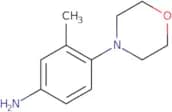
Discontinued product3-Methyl-4-(4-morpholinyl)aniline
CAS:Versatile small molecule scaffold
Formula:C11H16N2OPurity:Min. 95%Molecular weight:192.26 g/molRef: 3D-MEA90082
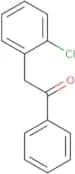
Discontinued product2-(2-Chlorophenyl)-1-phenylethan-1-one
CAS:Versatile small molecule scaffold
Formula:C14H11ClOPurity:Min. 95%Molecular weight:230.69 g/molRef: 3D-HCA47960
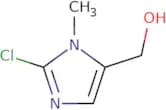
Discontinued product(2-Chloro-1-methyl-1H-imidazol-5-yl)methanol
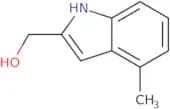
CAS:Versatile small molecule scaffoldFormula:C5H7ClN2OPurity:Min. 95%Molecular weight:146.57 g/mol(4-Methyl-1H-indol-2-yl)methanol
CAS:Versatile small molecule scaffold
Formula:C10H11NOPurity:Min. 95%Molecular weight:161.2 g/molRef: 3D-HCA35242
Discontinued product2-Bromo-3,3,3-trifluoro-1-propene
CAS:Controlled Product2-Bromo-3,3,3-trifluoro-1-propene is a chemical compound that has been synthesized in an asymmetric reaction. The reactant is bromopropane and the product is 2,2,2-trifluoropropene. The methylene group on the propene molecule is activated by the nucleophilic attack of a fluoride ion from hydrogen fluoride to form a cavity with a highly strained bond. The kinetic study of this reaction revealed that the activation energy for the reaction is 42 kJ/mol. Palladium-catalyzed coupling reactions are catalyzed by palladium and require nonpolar solvents such as toluene or dichloromethane. This type of reaction has been shown to be exothermic with an isolated yield of 1%.
Formula:C3H2BrF3Purity:Min. 95%Color and Shape:Colorless PowderMolecular weight:174.95 g/mol3-Hydroxy-5-methylpyridine
CAS:3-Hydroxy-5-methylpyridine (3HMP) is a chemical substance that has been classified as an amine. It is a product of the metabolism of purines, which are nitrogenous bases found in DNA and RNA. 3HMP is produced by aerogenic bacteria (such as Enterobacter), and can be used to estimate the number of these bacteria present in water samples. 3HMP has been shown to have antiviral properties against influenza virus, and can be used as a biomarker for the presence of other viruses in animals. 3HMP also has mineralization properties, which have been studied extensively, particularly with regards to pancreatic disease.
Formula:C6H7NOPurity:Min. 95%Color and Shape:PowderMolecular weight:109.13 g/molRef: 3D-FH16174
Discontinued product4-Chloro-2-hydroxy-6-methylphenylboronic acid
CAS:Versatile small molecule scaffoldFormula:C7H8BClO3Purity:Min. 95%Molecular weight:186.4 g/mol4,5-Dihydroxy-2,3-Pentanedione
CAS:4,5-Dihydroxy-2,3-pentanedione is a carbonyl compound that is the product of the oxidation of ascorbic acid. It is used in wastewater treatment and has antimicrobial properties against infectious diseases. This compound has been shown to inhibit protein synthesis by binding to the ribosome and preventing the formation of peptide bonds between amino acids. 4,5-Dihydroxy-2,3-pentanedione has also been shown to bind to plasma proteins, which may be due to its acyl chain structure. 4,5-Dihydroxy-2,3-pentanedione can be synthesized in a catalytic mechanism that involves dehydroascorbic acid and molecular oxygen.
Formula:C5H8O4Purity:Min. 95%Color and Shape:PowderMolecular weight:132.11 g/molRef: 3D-FD180770
Discontinued productPiperyline
CAS:Piperyline is an alkanoic acid that has shown to be effective against skin cancer. It also has antimicrobial properties, which may be due to its ability to bind metal ions and form polymeric compounds. Piperyline inhibits microbial growth by inhibiting the synthesis of proteins and nucleic acids. The antimicrobial activity is related to its cationic polymerization with hydroxyl groups, which forms a structure that can inhibit microbial enzymes and disrupt microbial cell membranes. This compound also interacts with the skin's natural lipids, making it difficult for microorganisms to attach and grow on the skin. Piperyline is synthesized in organic chemistry laboratories as an amide precursor of other pharmaceuticals such as penicillin.
Formula:C16H17NO3Purity:Min. 95%Molecular weight:271.31 g/mol

![tert-Butyl N-[(2R)-4-chloro-3-oxobutan-2-yl]carbamate](/_next/image/?url=https%3A%2Fstatic.cymitquimica.com%2Fproducts%2F3D%2Fthumb-webp%2FXKC24150.webp&w=3840&q=75)
![5-Methoxybicyclo[2.2.1]heptan-2-amine hydrochloride](/_next/image/?url=https%3A%2Fstatic.cymitquimica.com%2Fproducts%2F3D%2Fthumb-webp%2FFSD25240.webp&w=3840&q=75)
![3-Azabicyclo[3.2.1]octan-6-ol hydrochlorides](/_next/image/?url=https%3A%2Fstatic.cymitquimica.com%2Fproducts%2F3D%2Fthumb-webp%2FFSD25297.webp&w=3840&q=75)
![rac-[(2R,5S)-5-Phenyloxolan-2-yl]methanamine hydrochloride](/_next/image/?url=https%3A%2Fstatic.cymitquimica.com%2Fproducts%2F3D%2Fthumb-webp%2FHXC89108.webp&w=3840&q=75)

![2-[2-(Furan-3-yl)-1,3-thiazol-4-yl]acetic acid](/_next/image/?url=https%3A%2Fstatic.cymitquimica.com%2Fproducts%2F3D%2Fthumb-webp%2FIDC97860.webp&w=3840&q=75)
![1-(Propan-2-yl)-N-[1-(propan-2-yl)-4,5,6,7-tetrahydro-1H-indazol-5-yl]-4,5,6,7-tetrahydro-1H-indaz…](/_next/image/?url=https%3A%2Fstatic.cymitquimica.com%2Fproducts%2F3D%2Fthumb-webp%2FJDC14931.webp&w=3840&q=75)
![({2-[(5-Methylisoxazol-3-yl)amino]-2-oxoethyl}thio)acetic acid](/_next/image/?url=https%3A%2Fstatic.cymitquimica.com%2Fproducts%2F3D%2Fthumb-webp%2FLSA09157.webp&w=3840&q=75)
![4-Chloro-5H,6H,7H-pyrimido[4,5-b][1,4]oxazin-6-one](/_next/image/?url=https%3A%2Fstatic.cymitquimica.com%2Fproducts%2F3D%2Fthumb-webp%2FLYB52467.webp&w=3840&q=75)