Building Blocks
Subcategories of "Building Blocks"
- Boronic Acids & Boronic Acid Derivatives(5,778 products)
- Chiral Building Blocks(1,243 products)
- Hydrocarbon Building Blocks(6,099 products)
- Organic Building Blocks(61,038 products)
Found 205373 products of "Building Blocks"
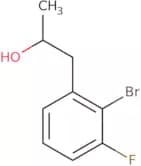
1-(2-Bromo-3-fluorophenyl)propan-2-ol
CAS:Versatile small molecule scaffoldFormula:C9H10BrFOPurity:Min. 95%Molecular weight:233.08 g/molRef: 3D-UFC04202
Discontinued product[1-(2-Methylphenyl)ethyl](2-methylpropyl)amine
CAS:Versatile small molecule scaffold
Formula:C13H21NPurity:Min. 95%Molecular weight:191.31 g/mol1-[2-Fluoro-6-(1-phenylethoxy)phenyl]ethan-1-one
CAS:Versatile small molecule scaffoldFormula:C16H15FO2Purity:Min. 95%Molecular weight:258.29 g/molRef: 3D-UQB62498
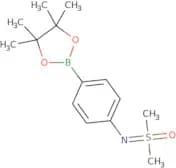
Discontinued productN-(dimethyloxido-λ4-sulfanylidene)-4-(4,4,5,5-tetramethyl-1,3,2-dioxaborolan-2-yl)-benzenamine
CAS:Versatile small molecule scaffold
Formula:C14H22BNO3SPurity:Min. 95%Molecular weight:295.2 g/molRef: 3D-UQC49993
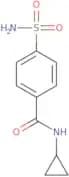
Discontinued productN-Cyclopropyl-4-sulfamoylbenzamide
CAS:N-Cyclopropyl-4-sulfamoylbenzamide is a sulfonamide antibiotic that inhibits the growth of bacteria by blocking the synthesis of folic acid. It has been shown to be effective against Escherichia coli, Salmonella enterica, and Staphylococcus aureus. N-Cyclopropyl-4-sulfamoylbenzamide is metabolized in the liver by cytochrome P450 enzymes and excreted in the urine. The rate of metabolism is determined by mutant enzyme activity. This drug has been shown to inhibit detoxification enzymes such as Triticum aestivum desmethylase and acetolactate synthase, which may be responsible for its toxic effects on plants.Formula:C10H12N2O3SPurity:Min. 95%Molecular weight:240.28 g/molRef: 3D-URB13516
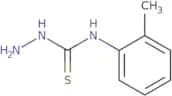
Discontinued product4-(2-Methylphenyl)-3-thiosemicarbazide
CAS:4-(2-Methylphenyl)-3-thiosemicarbazide is a crystalline solid that belongs to the group of benzoic acid derivatives. It has an orthorhombic crystal structure, with a yellow color. The crystals are measured at room temperature, and it has an atomic weight of 197.11 g/mol. 4-(2-Methylphenyl)-3-thiosemicarbazide is stable in air and in solution, but decomposes at temperatures above 250°C. This compound has been studied by using X-ray diffraction measurements and Bruker parameters. Its isotropic radiation is recorded at the following wavelength: 1.5418 Å (1).
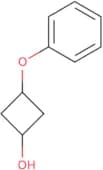
Formula:C8H11N3SPurity:Min. 95%Molecular weight:181.26 g/mol(1R,3R)-3-Phenoxycyclobutan-1-ol
CAS:Versatile small molecule scaffold
Formula:C10H12O2Purity:Min. 95%Molecular weight:164.2 g/mol2-Methyl-1-phenylbut-3-yn-2-ol
CAS:Versatile small molecule scaffold
Formula:C11H12OPurity:Min. 95%Molecular weight:160.21 g/molRef: 3D-FCA37374
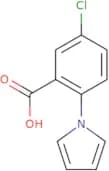
Discontinued product5-Chloro-2-(1H-pyrrol-1-yl)benzoic acid
CAS:Versatile small molecule scaffoldFormula:C11H8ClNO2Purity:Min. 95%Color and Shape:PowderMolecular weight:221.64 g/molRef: 3D-FCA54033
Discontinued product2-[(3-Nitrophenyl)formamido]acetic acid
CAS:2-[(3-Nitrophenyl)formamido]acetic acid (2NPA) is a modifying agent that has been used in the modification of carboxyl groups. It can react with nucleophiles to form adducts and with carbodiimides to form ureas. 2NPA reacts with amino acids, peptides, and other nitrogenous compounds at their carboxyl groups to form ester or amide bonds. The nature of the residues after modification varies depending on the nature of the carboxyl group that was modified.
Formula:C9H8N2O5Purity:Min. 95%Molecular weight:224.17 g/molRef: 3D-AAA61710
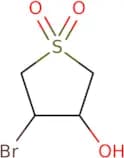
Discontinued product(3R,4S)-rel-4-Bromotetrahydro-thiophene-3-ol 1,1-dioxide
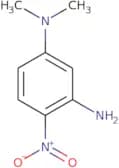
CAS:Versatile small molecule scaffoldFormula:C4H7BrO3SPurity:Min. 95%Molecular weight:215.07 g/mol3-Amino-N,N-dimethyl-4-nitroaniline
CAS:Versatile small molecule scaffold
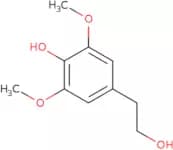
Formula:C8H11N3O2Purity:Min. 95%Molecular weight:181.19 g/mol4-(2-Hydroxyethyl)-2,6-dimethoxyphenol
CAS:Controlled Product4-(2-Hydroxyethyl)-2,6-dimethoxyphenol is a phenolic compound that can be extracted from the bark of the Indian tree Terminalia arjuna. The extract has been used in traditional medicine for centuries to treat diabetes and cancer. In vitro studies have shown that this extract inhibits the activity of viruses, including HIV, with a mechanism of action similar to that of indinavir. 4-(2-Hydroxyethyl)-2,6-dimethoxyphenol also has an antioxidant effect and stimulates the production of glutathione reductase and superoxide dismutase by cells in culture. 4-(2-Hydroxyethyl)-2,6-dimethoxyphenol is used as an herbal drug in India and research has found it to be hepatoprotective when administered orally to rats.
Formula:C10H14O4Purity:Min. 95%Color and Shape:PowderMolecular weight:198.22 g/mol6-[3-(3-Chlorophenyl)-1,2,4-oxadiazol-5-yl]-2,3-dihydropyridazin-3-one
CAS:Versatile small molecule scaffold
Formula:C12H7ClN4O2Purity:Min. 95%Molecular weight:274.66 g/molRef: 3D-VEC59761
Discontinued productEthyl 1-amino-1-cyclobutanecarboxylate monohydrochloride
CAS:Ethyl 1-amino-1-cyclobutanecarboxylate monohydrochloride is a cyclic carbonyl compound that is used as a building block in organic synthesis. It has been used to synthesize a number of natural products, such as piperarborenine and cyclobutanes. This compound can be synthesized by reacting ethyl chloroformate with cyclobutanecarbaldehyde in the presence of an acid or base catalyst. The steric and geometric properties of this molecule are highlighted below.
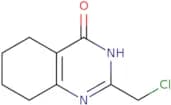
Formula:C2H5O2CC4H6NH2·HClPurity:Min. 95%Molecular weight:179.64 g/mol2-(Chloromethyl)-5,6,7,8-tetrahydroquinazolin-4(3H)-one
CAS:Versatile small molecule scaffold
Formula:C9H11ClN2OPurity:Min. 95%Molecular weight:198.65 g/mol2-Cyclopentyloxy-benzaldehyde
CAS:2-Cyclopentyloxy-benzaldehyde has potent inhibitory activity against inflammatory diseases. It is a chemical compound that contains an amido group and two cyclopentyloxy groups. 2-Cyclopentyloxy-benzaldehyde inhibits the activation of glycogen synthase kinase-3, which is a protein that regulates inflammation in the body. This substance can be used to inhibit the spread of HIV or viral infections by inhibiting protein synthesis in these viruses. 2-Cyclopentyloxy-benzaldehyde also has an inhibitory effect on cachexia, which is a condition characterized by weight loss, muscle wasting, and fatigue.
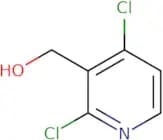
Formula:C12H14O2Purity:Min. 95%Molecular weight:190.24 g/mol2,4-Dichloropyridine-3-methanol
CAS:Versatile small molecule scaffold
Formula:C6H5NOCl2Purity:Min. 95%Molecular weight:178.02 g/molRef: 3D-VMB54324
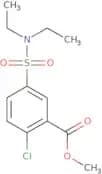
Discontinued productMethyl 2-chloro-5-(diethylsulfamoyl)benzoate
CAS:Versatile small molecule scaffold
Formula:C12H16ClNO4SPurity:Min. 95%Molecular weight:305.78 g/molRef: 3D-VNA62482
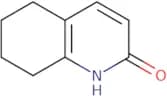
Discontinued product5,6,7,8-Tetrahydroquinolin-2(1H)-one
CAS:Tetrahydroquinolin-2(1H)-one is a hydrobromide that has been found in the environment as an environmental pollutant. Tetrahydroquinolin-2(1H)-one is used to synthesize amides and has been studied by single-crystal x-ray diffraction. The molecule is centrosymmetric, with a molecular weight of 244.06 g/mol. Tetrahydroquinolin-2(1H)-one can be used as a ligand for metals such as chlorine and magnesium. It does not dissolve in water but does dissolve in organic solvents such as ethers, chloroform, or benzene.
Formula:C9H11NOPurity:Min. 95%Molecular weight:149.19 g/mol4-[(Benzylamino)methyl]thian-4-ol
CAS:Versatile small molecule scaffold
Formula:C13H19NOSPurity:Min. 95%Molecular weight:237.4 g/molRef: 3D-VNC88729
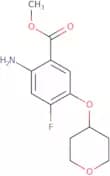
Discontinued productMethyl 2-amino-4-fluoro-5-(oxan-4-yloxy)benzoate
CAS:Versatile small molecule scaffold
Formula:C13H16FNO4Purity:Min. 95%Molecular weight:269.27 g/molRef: 3D-EEC95382
Discontinued product3-{[3-(Methoxycarbonyl)-5-methylthiophen-2-yl]carbamoyl}propanoic acid
CAS:Versatile small molecule scaffold
Formula:C11H13NO5SPurity:Min. 95%Molecular weight:271.29 g/molRef: 3D-VUA37557
Discontinued product4-[(4-Methoxyphenyl)methyl]azetidin-2-one
CAS:Versatile small molecule scaffoldFormula:C11H13NO2Purity:Min. 95%Molecular weight:191.23 g/molRef: 3D-EFC81230
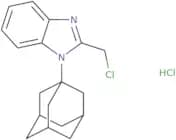
Discontinued product1-(Adamantan-1-yl)-2-(chloromethyl)-1H-1,3-benzodiazole hydrochloride
CAS:Versatile small molecule scaffoldFormula:C18H22Cl2N2Purity:Min. 95%Molecular weight:337.3 g/molRef: 3D-VWB21715
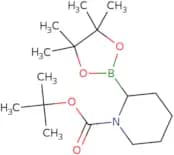
Discontinued product1-Boc-piperidine-2-boronic Acid Pinacol Ester
CAS:Versatile small molecule scaffoldFormula:C16H30BNO4Purity:Min. 95%Molecular weight:311.23 g/molRef: 3D-WHD19258
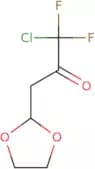
Discontinued product1-Chloro-3-(1,3-dioxolan-2-yl)-1,1-difluoropropan-2-one
CAS:Versatile small molecule scaffold
Formula:C6H7ClF2O3Purity:Min. 95%Molecular weight:200.57 g/molRef: 3D-WMB07899
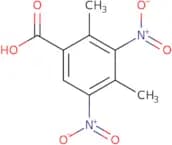
Discontinued product2,4-Dimethyl-3,5-dinitrobenzoic acid
CAS:Versatile small molecule scaffold
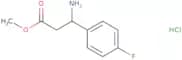
Formula:C9H8N2O6Purity:Min. 95%Molecular weight:240.17 g/molMethyl (S)-3-amino-3-(4-fluorophenyl)propanoate hydrochloride
CAS:Versatile small molecule scaffoldFormula:C10H13ClFNO2Purity:Min. 95%Molecular weight:233.67 g/molRef: 3D-WZB17474
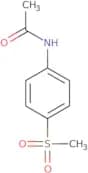
Discontinued product4'-(Methylsulfonyl)acetanilide
CAS:4'-(Methylsulfonyl)acetanilide is an organic compound that has been shown to have antibacterial and antiviral activity. It targets the benzene nucleus, and inhibits the synthesis of nucleic acids by inhibiting the enzyme ribonucleotide reductase. 4'-(Methylsulfonyl)acetanilide also inhibits viral replication, by binding to the active site of a viral protein (a DNA polymerase), which blocks the incorporation of nucleotides into the virus's DNA. In addition, 4'-(methylsulfonyl)acetanilide is an anti-helminthic agent, as it can inhibit worm motility and kill larvae in vitro. The structure-activity relationships between this molecule and other benzimidazole derivatives were analysed in order to identify new potential drugs for treating diseases caused by viruses or parasites.
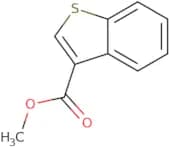
Formula:C9H11NO3SPurity:Min. 95%Molecular weight:213.26 g/molMethyl benzothiophene-3-carboxylate
CAS:Versatile small molecule scaffold
Formula:C10H8O2SPurity:Min. 95%Molecular weight:192.23 g/mol1,8-Dioxa-4-azaspiro[4.5]decane
CAS:Versatile small molecule scaffold
Formula:C7H13NO2Purity:Min. 95%Molecular weight:143.18 g/molRef: 3D-XEA82412
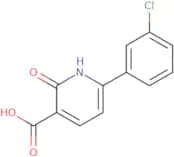
Discontinued product6-(3-Chlorophenyl)-2-oxo-1,2-dihydropyridine-3-carboxylic Acid
CAS:Versatile small molecule scaffoldFormula:C12H8ClNO3Purity:Min. 95%Molecular weight:249.65 g/molRef: 3D-XFA26919
Discontinued producttert-Butyl N-[(2R)-4-chloro-3-oxobutan-2-yl]carbamate
CAS:Versatile small molecule scaffold
Formula:C9H16ClNO3Purity:Min. 95%Color and Shape:PowderMolecular weight:221.68 g/molRef: 3D-XKC24150
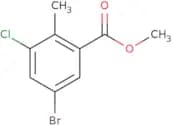
Discontinued productMethyl 5-bromo-3-chloro-2-methylbenzoate
CAS:Versatile small molecule scaffold
Formula:C9H8BrClO2Purity:Min. 95%Molecular weight:263.51 g/mol2-[(3,5-Dimethylphenyl)formamido]acetic acid
CAS:2-[(3,5-Dimethylphenyl)formamido]acetic acid is a compound with diverse applications and characteristics. It is a diphenyl ether that can be used as an electrode material in various electronic devices. Additionally, it has cholinergic properties, meaning it affects the neurotransmitter acetylcholine in the nervous system.
Formula:C11H13NO3Purity:Min. 95%Molecular weight:207.23 g/molRef: 3D-YAA08214
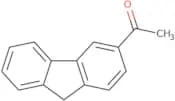
Discontinued product1-(9H-Fluoren-3-yl)ethan-1-one
CAS:Versatile small molecule scaffold
Formula:C15H12OPurity:Min. 95%Molecular weight:208.25 g/molRef: 3D-FCA71848
Discontinued product5-(Chloromethyl)-3-methyl-1-phenyl-1H-pyrazole-4-carbonitrile
CAS:Versatile small molecule scaffold
Formula:C12H10ClN3Purity:Min. 95%Molecular weight:231.68 g/mol4-Chloro-2-iodo-5-methylaniline
CAS:Versatile small molecule scaffold
Formula:C7H7ClINPurity:Min. 95%Molecular weight:267.49 g/molRef: 3D-YEC23350
Discontinued product1-{[1-(Bromomethyl)cyclopropyl]methoxy}-3-(methoxymethyl)benzene
CAS:Versatile small molecule scaffold
Formula:C13H17BrO2Purity:Min. 95%Molecular weight:285.18 g/molRef: 3D-YGC03501
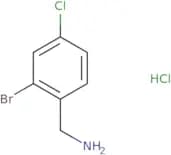
Discontinued product(2-Bromo-4-chlorophenyl)methanamine hydrochloride
CAS:Versatile small molecule scaffold
Formula:C7H8BrCl2NPurity:Min. 95%Molecular weight:256.95 g/molRef: 3D-YGD27370
Discontinued product(R)-2-[(Phenylmethyl)amino]-1-propanol
CAS:Versatile small molecule scaffold
Formula:C10H15NOPurity:Min. 95%Molecular weight:165.23 g/molRef: 3D-ZCA60949
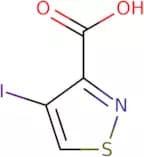
Discontinued product4-Iodo-1,2-thiazole-3-carboxylic acid
CAS:Versatile small molecule scaffoldFormula:C4H2INO2SPurity:Min. 95%Molecular weight:255.04 g/molRef: 3D-JBD31882
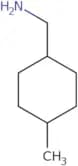
Discontinued product4-Methyl-cyclohexanemethanamine
CAS:Versatile small molecule scaffold
Formula:C8H17NPurity:Min. 95%Molecular weight:127.23 g/mol(4-Chlorophenyl)({8-methyl-8-azabicyclo[3.2.1]octan-3-yl})methanamine
CAS:Versatile small molecule scaffold
Formula:C15H21ClN2Purity:Min. 95%Molecular weight:264.79 g/molRef: 3D-ITC29319
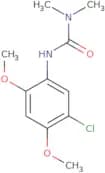
Discontinued product1-(5-Chloro-2,4-dimethoxyphenyl)-3,3-dimethylurea
CAS:Versatile small molecule scaffold
Formula:C11H15ClN2O3Purity:Min. 95%Molecular weight:258.7 g/molRef: 3D-ITC19526
Discontinued product4-(Piperazin-1-yl)isoquinoline dihydrochloride
CAS:Versatile small molecule scaffold
Formula:C13H17Cl2N3Purity:Min. 95%Molecular weight:286.2 g/molRef: 3D-ILB29289
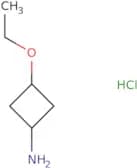
Discontinued productrac-(1R,3R)-3-Ethoxycyclobutan-1-amine hydrochloride
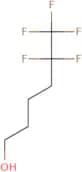
CAS:Versatile small molecule scaffoldFormula:C6H14ClNOPurity:Min. 95%Molecular weight:151.63 g/mol5,5,6,6,6-Pentafluorohexan-1-ol
CAS:Versatile small molecule scaffold
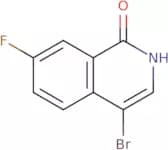
Formula:C6H9F5OPurity:Min. 95%Molecular weight:192.13 g/mol4-Bromo-7-fluoroisoquinolin-1-ol
CAS:Versatile small molecule scaffold
Formula:C9H5BrFNOPurity:Min. 95%Molecular weight:242.04 g/molRef: 3D-HYB44847
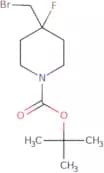
Discontinued productTert-Butyl 4-(Bromomethyl)-4-Fluoropiperidine-1-Carboxylate
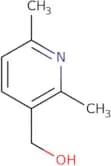
CAS:Versatile small molecule scaffoldFormula:C11H19BrFNO2Purity:Min. 95%Molecular weight:296.18 g/mol(2,6-Dimethylpyridin-3-yl)methanol
CAS:Versatile small molecule scaffold
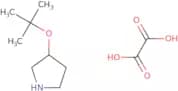
Formula:C8H11NOPurity:Min. 95%Molecular weight:137.18 g/mol(3S)-3-(tert-Butoxy)pyrrolidine, oxalic acid
CAS:Versatile small molecule scaffold
Formula:C10H19NO5Purity:Min. 95%Molecular weight:233.26 g/molRef: 3D-HXC94005
Discontinued product(7S,8aS)-7-Fluoro-octahydropyrrolo[1,2-a]pyrazine dihydrochloride
CAS:Versatile small molecule scaffold
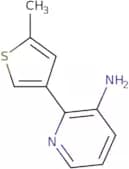
Formula:C7H15Cl2FN2Purity:Min. 95%Molecular weight:217.11 g/mol2-(5-Methylthiophen-3-yl)pyridin-3-amine
CAS:Versatile small molecule scaffold
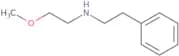
Formula:C10H10N2SPurity:Min. 95%Molecular weight:190.27 g/mol(2-Methoxyethyl)(2-phenylethyl)amine
CAS:Controlled ProductVersatile small molecule scaffold
Formula:C11H17NOPurity:Min. 95%Molecular weight:179.26 g/molRef: 3D-HMB00572
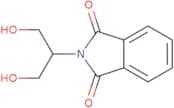
Discontinued product2-(1,3-Dihydroxypropan-2-yl)isoindoline-1,3-dione
CAS:Versatile small molecule scaffold
Formula:C11H11NO4Purity:Min. 95%Molecular weight:221.21 g/molRef: 3D-HIB73058
Discontinued product3'-Methyl-[1,1'-biphenyl]-2-carboxylic acid
CAS:Versatile small molecule scaffold
Formula:C14H12O2Purity:Min. 95%Molecular weight:212.24 g/molRef: 3D-HEA41271
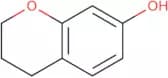
Discontinued product3,4-dihydro-2H-1-benzopyran-7-ol
CAS:3,4-Dihydro-2H-1-benzopyran-7-ol is a monomer that is used to synthesize medicines. It has the formula CH3COCH=CH(OH)CH3 and belongs to the group of flavonoids. 3,4-Dihydro-2H-1-benzopyran-7-ol has acidic properties, which are due to its isoflavones. It can be used as an acid catalyst in organic synthesis reactions and is a reaction product of chloropropane. 3,4-Dihydro-2H-1-benzopyran-7-ol also has high yield and can act as a bioisostere for other compounds such as chromene.
Formula:C9H10O2Purity:Min. 95%Molecular weight:150.18 g/molRef: 3D-HCA05272
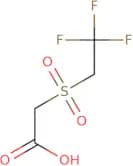
Discontinued product2-(2,2,2-Trifluoroethanesulfonyl)acetic acid
CAS:Trifloxacin is a broad-spectrum antibacterial drug that belongs to the class of formyloxy compounds and the cephalosporin family. It has been shown to be active against both Gram-positive and Gram-negative bacteria, with activity against strains resistant to penicillin, ampicillin, erythromycin, and chloramphenicol. Trifloxacin binds to the bacterial ribosome by displacement of a pyridyl group in the ribosomal RNA, inhibiting protein synthesis. This binding inhibits cell growth by preventing the production of proteins that are vital for cell division.
br>
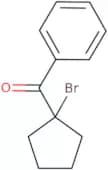
Trifloxacin has also been found to inhibit DNA gyrase and topoisomerase IV in vitro. Trifloxacin's mechanism of action is similar to that of other quinolones such as norfloxacin and ciprofloxacin.Formula:C4H5F3O4SPurity:Min. 95%Molecular weight:206.14 g/mol(1-Bromocyclopentyl)(phenyl)methanone
CAS:Versatile small molecule scaffold
Formula:C12H13BrOPurity:Min. 95%Molecular weight:253.13 g/molRef: 3D-GAA74066
Discontinued product4-(2-Amino-4-methylpentanoyl)piperazin-2-one
CAS:Versatile small molecule scaffold
Formula:C10H19N3O2Purity:Min. 95%Molecular weight:213.28 g/molRef: 3D-FUB68342
Discontinued product1-(Butane-1-sulfonyl)piperidine-2-carboxylic acid
CAS:Versatile small molecule scaffoldFormula:C10H19NO4SPurity:Min. 95%Molecular weight:249.33 g/mol2-chloro-5,6,7,8-tetrahydroquinazolin-8-one
CAS:Versatile small molecule scaffold
Formula:C8H7ClN2OPurity:Min. 95%Molecular weight:182.61 g/molRef: 3D-FUB66458
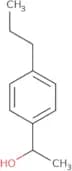
Discontinued product(1R)-1-(4-Propylphenyl)ethan-1-ol
CAS:Versatile small molecule scaffold
Formula:C11H16OPurity:Min. 95%Molecular weight:164.24 g/molRef: 3D-FEA36441
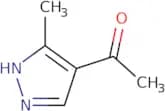
Discontinued product1-(5-Methyl-1H-Pyrazol-4-Yl)Ethanone
CAS:Phenylhydrazine is a white crystalline solid with a molecular weight of 150.25, and the molecular formula C6H5NHN. It is soluble in water, alcohol, ether and chloroform. Phenylhydrazine can react with an acid chloride to form a hydrazone; this reaction is used in the synthesis of some pharmaceuticals. The most common use of phenylhydrazine is as a precursor to various pharmaceuticals, such as antipyretics and anti-inflammatory agents. Phenylhydrazine reacts with zinc chloride to form 1-(5-methyl-1H-pyrazol-4-yl)ethanone.
Formula:C6H8N2OPurity:Min. 95%Molecular weight:124.14 g/molRef: 3D-FEA22404
Discontinued product8-Bromo-2-methylimidazo[1,2-a]pyridine
CAS:Versatile small molecule scaffold
Formula:C8H7N2BrPurity:Min. 95%Molecular weight:211.05 g/mol2-Bromo-3,3,3-trifluoro-1-propene
CAS:Controlled Product2-Bromo-3,3,3-trifluoro-1-propene is a chemical compound that has been synthesized in an asymmetric reaction. The reactant is bromopropane and the product is 2,2,2-trifluoropropene. The methylene group on the propene molecule is activated by the nucleophilic attack of a fluoride ion from hydrogen fluoride to form a cavity with a highly strained bond. The kinetic study of this reaction revealed that the activation energy for the reaction is 42 kJ/mol. Palladium-catalyzed coupling reactions are catalyzed by palladium and require nonpolar solvents such as toluene or dichloromethane. This type of reaction has been shown to be exothermic with an isolated yield of 1%.
Formula:C3H2BrF3Purity:Min. 95%Color and Shape:Colorless PowderMolecular weight:174.95 g/mol1-Hydroxycyclopentane-1-carbonitrile
CAS:1-Hydroxycyclopentane-1-carbonitrile is a monomer that is hydrolyzed to form benzoin and cyanohydrins. It can be used in the production of scifinder as a monomer or dimerizer.
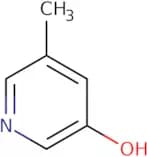
Formula:C6H9NOPurity:Min. 95%Molecular weight:111.14 g/mol3-Hydroxy-5-methylpyridine
CAS:3-Hydroxy-5-methylpyridine (3HMP) is a chemical substance that has been classified as an amine. It is a product of the metabolism of purines, which are nitrogenous bases found in DNA and RNA. 3HMP is produced by aerogenic bacteria (such as Enterobacter), and can be used to estimate the number of these bacteria present in water samples. 3HMP has been shown to have antiviral properties against influenza virus, and can be used as a biomarker for the presence of other viruses in animals. 3HMP also has mineralization properties, which have been studied extensively, particularly with regards to pancreatic disease.
Formula:C6H7NOPurity:Min. 95%Color and Shape:PowderMolecular weight:109.13 g/molRef: 3D-FH16174
Discontinued product4-Chloro-2-hydroxy-6-methylphenylboronic acid
CAS:Versatile small molecule scaffoldFormula:C7H8BClO3Purity:Min. 95%Molecular weight:186.4 g/mol4,5-Dihydroxy-2,3-Pentanedione
CAS:4,5-Dihydroxy-2,3-pentanedione is a carbonyl compound that is the product of the oxidation of ascorbic acid. It is used in wastewater treatment and has antimicrobial properties against infectious diseases. This compound has been shown to inhibit protein synthesis by binding to the ribosome and preventing the formation of peptide bonds between amino acids. 4,5-Dihydroxy-2,3-pentanedione has also been shown to bind to plasma proteins, which may be due to its acyl chain structure. 4,5-Dihydroxy-2,3-pentanedione can be synthesized in a catalytic mechanism that involves dehydroascorbic acid and molecular oxygen.
Formula:C5H8O4Purity:Min. 95%Color and Shape:PowderMolecular weight:132.11 g/molRef: 3D-FD180770
Discontinued productPiperyline
CAS:Piperyline is an alkanoic acid that has shown to be effective against skin cancer. It also has antimicrobial properties, which may be due to its ability to bind metal ions and form polymeric compounds. Piperyline inhibits microbial growth by inhibiting the synthesis of proteins and nucleic acids. The antimicrobial activity is related to its cationic polymerization with hydroxyl groups, which forms a structure that can inhibit microbial enzymes and disrupt microbial cell membranes. This compound also interacts with the skin's natural lipids, making it difficult for microorganisms to attach and grow on the skin. Piperyline is synthesized in organic chemistry laboratories as an amide precursor of other pharmaceuticals such as penicillin.
Formula:C16H17NO3Purity:Min. 95%Molecular weight:271.31 g/mol

amine](/_next/image/?url=https%3A%2Fstatic.cymitquimica.com%2Fproducts%2F3D%2Fthumb-webp%2FUQB57925.webp&w=3840&q=75)
![1-[2-Fluoro-6-(1-phenylethoxy)phenyl]ethan-1-one](/_next/image/?url=https%3A%2Fstatic.cymitquimica.com%2Fproducts%2F3D%2Fthumb-webp%2FUQB62498.webp&w=3840&q=75)

![2-[(3-Nitrophenyl)formamido]acetic acid](/_next/image/?url=https%3A%2Fstatic.cymitquimica.com%2Fproducts%2F3D%2Fthumb-webp%2FAAA61710.webp&w=3840&q=75)
![6-[3-(3-Chlorophenyl)-1,2,4-oxadiazol-5-yl]-2,3-dihydropyridazin-3-one](/_next/image/?url=https%3A%2Fstatic.cymitquimica.com%2Fproducts%2F3D%2Fthumb-webp%2FVEC59761.webp&w=3840&q=75)


![4-[(Benzylamino)methyl]thian-4-ol](/_next/image/?url=https%3A%2Fstatic.cymitquimica.com%2Fproducts%2F3D%2Fthumb-webp%2FVNC88729.webp&w=3840&q=75)
![3-{[3-(Methoxycarbonyl)-5-methylthiophen-2-yl]carbamoyl}propanoic acid](/_next/image/?url=https%3A%2Fstatic.cymitquimica.com%2Fproducts%2F3D%2Fthumb-webp%2FVUA37557.webp&w=3840&q=75)
![4-[(4-Methoxyphenyl)methyl]azetidin-2-one](/_next/image/?url=https%3A%2Fstatic.cymitquimica.com%2Fproducts%2F3D%2Fthumb-webp%2FEFC81230.webp&w=3840&q=75)
![1,8-Dioxa-4-azaspiro[4.5]decane](/_next/image/?url=https%3A%2Fstatic.cymitquimica.com%2Fproducts%2F3D%2Fthumb-webp%2FXEA82412.webp&w=3840&q=75)
![tert-Butyl N-[(2R)-4-chloro-3-oxobutan-2-yl]carbamate](/_next/image/?url=https%3A%2Fstatic.cymitquimica.com%2Fproducts%2F3D%2Fthumb-webp%2FXKC24150.webp&w=3840&q=75)
![2-[(3,5-Dimethylphenyl)formamido]acetic acid](/_next/image/?url=https%3A%2Fstatic.cymitquimica.com%2Fproducts%2F3D%2Fthumb-webp%2FYAA08214.webp&w=3840&q=75)

![1-{[1-(Bromomethyl)cyclopropyl]methoxy}-3-(methoxymethyl)benzene](/_next/image/?url=https%3A%2Fstatic.cymitquimica.com%2Fproducts%2F3D%2Fthumb-webp%2FYGC03501.webp&w=3840&q=75)
![(R)-2-[(Phenylmethyl)amino]-1-propanol](/_next/image/?url=https%3A%2Fstatic.cymitquimica.com%2Fproducts%2F3D%2Fthumb-webp%2FZCA60949.webp&w=3840&q=75)
![(4-Chlorophenyl)({8-methyl-8-azabicyclo[3.2.1]octan-3-yl})methanamine](/_next/image/?url=https%3A%2Fstatic.cymitquimica.com%2Fproducts%2F3D%2Fthumb-webp%2FITC29319.webp&w=3840&q=75)

![(7S,8aS)-7-Fluoro-octahydropyrrolo[1,2-a]pyrazine dihydrochloride](/_next/image/?url=https%3A%2Fstatic.cymitquimica.com%2Fproducts%2F3D%2Fthumb-webp%2FHXC93968.webp&w=3840&q=75)
![3'-Methyl-[1,1'-biphenyl]-2-carboxylic acid](/_next/image/?url=https%3A%2Fstatic.cymitquimica.com%2Fproducts%2F3D%2Fthumb-webp%2FHEA41271.webp&w=3840&q=75)


![8-Bromo-2-methylimidazo[1,2-a]pyridine](/_next/image/?url=https%3A%2Fstatic.cymitquimica.com%2Fproducts%2F3D%2Fthumb-webp%2FUXB37475.webp&w=3840&q=75)