Building Blocks
This section contains fundamental products for the synthesis of organic and biological compounds. Building blocks are the essential starting materials used to construct complex molecules through various chemical reactions. They play a critical role in drug discovery, material science, and chemical research. At CymitQuimica, we offer a diverse range of high-quality building blocks to support your innovative research and industrial projects, ensuring you have the essential components for successful synthesis.
Subcategories of "Building Blocks"
- Boronic Acids & Boronic Acid Derivatives(5,778 products)
- Chiral Building Blocks(1,242 products)
- Hydrocarbon Building Blocks(6,098 products)
- Organic Building Blocks(61,092 products)
Found 199296 products of "Building Blocks"
Sort by
Purity (%)
0
100
|
0
|
50
|
90
|
95
|
100
2-[4-(1,3-Dioxaindan-5-yl)-4-methyl-2,5-dioxoimidazolidin-1-yl]acetic acid
CAS:<p>Versatile small molecule scaffold</p>Formula:C13H12N2O6Purity:Min. 95%Molecular weight:292.24 g/molRef: 3D-CWB51377
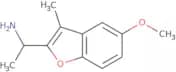
Discontinued product1-(5-Methoxy-3-methyl-1-benzofuran-2-yl)ethan-1-amine
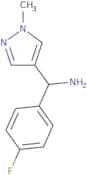
CAS:<p>Versatile small molecule scaffold</p>Formula:C12H15NO2Purity:Min. 95%Molecular weight:205.25 g/mol(4-Fluorophenyl)(1-methyl-1H-pyrazol-4-yl)methanamine
CAS:<p>Versatile small molecule scaffold</p>Formula:C11H12FN3Purity:Min. 95%Molecular weight:205.23 g/molRef: 3D-CWB54849
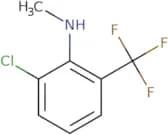
Discontinued product2-Chloro-N-methyl-6-(trifluoromethyl)aniline
CAS:<p>Versatile small molecule scaffold</p>Formula:C8H7ClF3NPurity:Min. 95%Molecular weight:209.59 g/molRef: 3D-CWB55027
Discontinued product4-[(2-Aminopyridin-3-yl)oxy]butanenitrile
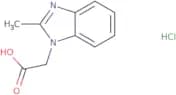
CAS:<p>Versatile small molecule scaffold</p>Formula:C9H11N3OPurity:Min. 95%Molecular weight:177.2 g/mol2-(2-Methyl-1H-1,3-benzodiazol-1-yl)acetic acid hydrochloride
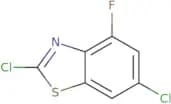
CAS:<p>Versatile small molecule scaffold</p>Formula:C10H11ClN2O2Purity:Min. 95%Molecular weight:226.66 g/mol2,6-Dichloro-4-fluoro-1,3-benzothiazole
CAS:<p>Versatile small molecule scaffold</p>Formula:C7H2Cl2FNSPurity:Min. 95%Molecular weight:222.07 g/molRef: 3D-CXB35078
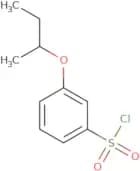
Discontinued product3-(Butan-2-yloxy)benzene-1-sulfonyl chloride
CAS:<p>Versatile small molecule scaffold</p>Formula:C10H13ClO3SPurity:Min. 95%Molecular weight:248.73 g/mol{2-[(1,3-Benzothiazol-2-yl)amino]ethyl}dimethylamine hydrochloride
CAS:<p>Versatile small molecule scaffold</p>Formula:C11H16ClN3SPurity:Min. 95%Molecular weight:257.78 g/molRef: 3D-CXB36200
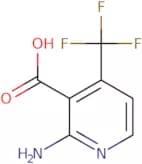
Discontinued product2-Amino-4-(trifluoromethyl)nicotinic acid
CAS:<p>Versatile small molecule scaffold</p>Formula:C7H5F3N2O2Purity:Min. 95%Molecular weight:206.12 g/molRef: 3D-CZB48968
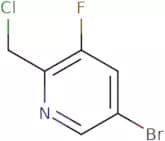
Discontinued product5-Bromo-2-(chloromethyl)-3-fluoropyridine
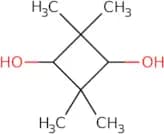
CAS:<p>Versatile small molecule scaffold</p>Formula:C6H4BrClFNPurity:Min. 95%Molecular weight:224.46 g/mol2,2,4,4-Tetramethyl-1,3-cyclobutanediol, mixture of isomers
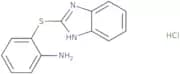
CAS:<p>Tetramethyl-1,3-cyclobutanediol is a diacid that can be used as a monomer for the production of polyesters. It has conformational properties that are different from other diols. Tetramethyl-1,3-cyclobutanediol is soluble in hydrochloric acid and reacts with coatings containing dibutyltin oxide to produce residues. This chemical also reacts with copper oxide, resulting in the formation of copper cyclohexanol and dibutyltin oxide. Tetramethyl-1,3-cyclobutanediol is able to react with carboxylic acids to form esters. This compound has been shown to be employed in the synthesis of polycarboxylic acids such as adipic acid and sebacic acid. Tetramethyl-1,3-cyclobutanediol has been used in the production of polyester resins by reacting with ethylene glycol and tere</p>Formula:C8H16O2Purity:Min. 95%Molecular weight:144.21 g/mol2-(1H-1,3-Benzodiazol-2-ylsulfanyl)aniline
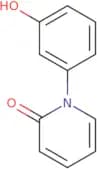
CAS:<p>Versatile small molecule scaffold</p>Formula:C13H12ClN3SPurity:Min. 95%Molecular weight:277.77 g/mol1-(3-Hydroxyphenyl)-1,2-dihydropyridin-2-one
CAS:<p>Versatile small molecule scaffold</p>Formula:C11H9NO2Purity:Min. 95%Molecular weight:187.19 g/molRef: 3D-DAA53460
Discontinued product1-[(tert-Butyldimethylsilyl)oxy]-1-cyclopropylbut-3-en-2-one
CAS:<p>Versatile small molecule scaffold</p>Formula:C13H24O2SiPurity:Min. 95%Molecular weight:240.41 g/molRef: 3D-SLD11633
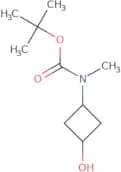
Discontinued producttert-Butyl N-(3-hydroxycyclobutyl)-N-methylcarbamate
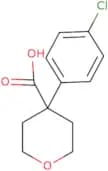
CAS:<p>Versatile small molecule scaffold</p>Formula:C10H19NO3Purity:Min. 95%Molecular weight:201.26 g/mol4-(4-Chloro-phenyl)-tetrahydro-pyran-4-carboxylic acid
CAS:<p>Versatile small molecule scaffold</p>Formula:C12H13ClO3Purity:Min. 95%Molecular weight:240.68 g/molRef: 3D-DAA64857
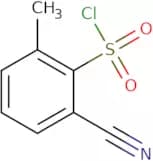
Discontinued product2-Cyano-6-methylbenzene-1-sulfonyl chloride
CAS:<p>Versatile small molecule scaffold</p>Formula:C8H6ClNO2SPurity:Min. 95%Molecular weight:215.66 g/molRef: 3D-LAC82469
Discontinued product3-{4-Chloro-5,6-dimethylthieno[2,3-d]pyrimidin-2-yl}pyridine
CAS:<p>Versatile small molecule scaffold</p>Formula:C13H10ClN3SPurity:Min. 95%Molecular weight:275.76 g/mol6-Cyanospiro[3.3]heptane-2-carboxylic acid
CAS:<p>Versatile small molecule scaffold</p>Formula:C9H11NO2Purity:Min. 95%Molecular weight:165.19 g/molRef: 3D-DBA11489
Discontinued product2,4-Dimethyl-5-[4-(trifluoromethyl)phenyl]pyrimidine
CAS:<p>Versatile small molecule scaffold</p>Formula:C13H11F3N2Purity:Min. 95%Molecular weight:252.23 g/molRef: 3D-LAC75867
Discontinued product6-Bromo-5-methyl-1H-imidazo[4,5-b]pyridine
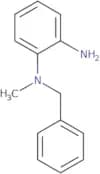
CAS:<p>6-Bromo-5-methyl-1H-imidazo[4,5-b]pyridine is a stabilizer that is used to protect polymers from degradation by light or heat. It can also be used to give plastics a yellow color.</p>Formula:C7H6BrN3Purity:Min. 95%Molecular weight:212.05 g/mol1-N-benzyl-1-N-methylbenzene-1,2-diamine
CAS:<p>Versatile small molecule scaffold</p>Formula:C14H16N2Purity:90%MinMolecular weight:212.3 g/molRef: 3D-DBA45869
Discontinued productEthyl 3-(2-aminoethyl)-1H-indole-2-carboxylate hydrochloride
CAS:<p>Versatile small molecule scaffold</p>Formula:C13H17ClN2O2Purity:Min. 95%Molecular weight:268.7 g/molRef: 3D-DCA59032
Discontinued product4-Fluorobicyclo[2.2.2]octane-1-carboxylic acid
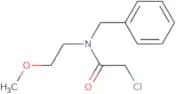
CAS:<p>Versatile small molecule scaffold</p>Formula:C9H13FO2Purity:Min. 95%Molecular weight:172.2 g/molN-Benzyl-2-chloro-N-(2-methoxyethyl)acetamide
CAS:<p>Versatile small molecule scaffold</p>Formula:C12H16ClNO2Purity:Min. 95%Molecular weight:241.71 g/molRef: 3D-DEA46305
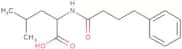
Discontinued product(2S)-4-Methyl-2-(4-phenylbutanamido)pentanoic acid
CAS:<p>Versatile small molecule scaffold</p>Formula:C16H23NO3Purity:Min. 95%Molecular weight:277.36 g/molRef: 3D-SEA61145
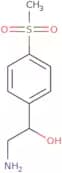
Discontinued product2-Amino-1-(4-methanesulfonylphenyl)ethan-1-ol
CAS:<p>Versatile small molecule scaffold</p>Formula:C9H13NO3SPurity:Min. 95%Molecular weight:215.27 g/molRef: 3D-SDA53610
Discontinued productEthyl[1-(oxolan-2-yl)-2-phenylethyl]amine hydrochloride
CAS:<p>Versatile small molecule scaffold</p>Formula:C14H22ClNOPurity:Min. 95%Molecular weight:255.8 g/molRef: 3D-SDA32173
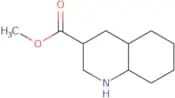
Discontinued productMethyl decahydroquinoline-3-carboxylates
CAS:<p>Versatile small molecule scaffold</p>Formula:C11H19NO2Purity:Min. 95%Molecular weight:197.3 g/molRef: 3D-SDA24469
Discontinued product1-(Cyclohex-1-en-1-yl)propan-2-amine hydrochloride
CAS:<p>Versatile small molecule scaffold</p>Formula:C9H18ClNPurity:Min. 95%Molecular weight:175.7 g/molRef: 3D-SDA14555
Discontinued product3-[5-(2,2-Dimethylpropyl)-1,2,4-oxadiazol-3-yl]benzoic acid
CAS:<p>Versatile small molecule scaffold</p>Formula:C14H16N2O3Purity:Min. 95%Molecular weight:260.29 g/molRef: 3D-SBC01836
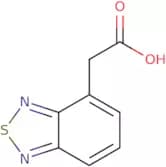
Discontinued product2-(2,1,3-Benzothiadiazol-4-yl)acetic acid
CAS:<p>Versatile small molecule scaffold</p>Formula:C8H6N2O2SPurity:Min. 95%Molecular weight:194.21 g/molRef: 3D-SBA81677
Discontinued product[4-(tert-Butoxycarbonylamino-methyl)-piperidin-1-yl]-acetic acid
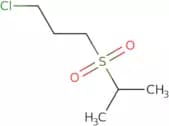
CAS:<p>Versatile small molecule scaffold</p>Formula:C13H24N2O4Purity:Min. 95%Molecular weight:272.34 g/mol1-Chloro-3-(propane-2-sulfonyl)propane
CAS:<p>Versatile small molecule scaffold</p>Formula:C6H13ClO2SPurity:Min. 95%Molecular weight:184.69 g/molRef: 3D-DFA14727
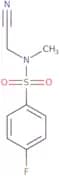
Discontinued product1-Cyano-S-(4-fluorophenyl)-N-methylmethanesulfonamido
CAS:<p>Versatile small molecule scaffold</p>Formula:C9H9FN2O2SPurity:Min. 95%Molecular weight:228.25 g/molRef: 3D-SAC04753
Discontinued product1-[4-(4-Chlorophenyl)-5-methyl-1,3-thiazol-2-yl]ethan-1-amine
CAS:<p>Versatile small molecule scaffold</p>Formula:C12H13ClN2SPurity:Min. 95%Molecular weight:252.76 g/molRef: 3D-SAB92946
Discontinued product4-{7-Methyl-[1,2,4]triazolo[4,3-a]pyridin-3-yl}piperidine
CAS:<p>Versatile small molecule scaffold</p>Formula:C12H16N4Purity:Min. 95%Molecular weight:216.28 g/molRef: 3D-RYB29874
Discontinued product1-[3-Methoxy-4-(3-methylbutoxy)phenyl]ethan-1-one
CAS:<p>Versatile small molecule scaffold</p>Formula:C14H20O3Purity:Min. 95%Molecular weight:236.31 g/mol[(3,5-Dichloropyridin-2-yl)methyl](methyl)amine hydrochloride
CAS:<p>Versatile small molecule scaffold</p>Formula:C7H9Cl3N2Purity:Min. 95%Molecular weight:227.5 g/molRef: 3D-RPD13109
Discontinued product{9-Methyl-3,9-diazaspiro[5.5]undecan-1-yl}methanol
CAS:<p>Versatile small molecule scaffold</p>Formula:C11H22N2OPurity:Min. 95%Molecular weight:198.3 g/molRef: 3D-RPD12909
Discontinued productrac-[(1R,2R)-2-Amino-1-methylcyclopentyl]methanol
CAS:<p>Versatile small molecule scaffold</p>Formula:C7H15NOPurity:Min. 95%Molecular weight:129.2 g/molRef: 3D-RPD12849
Discontinued productEthyl 1-[(oxiran-2-yl)methyl]-1H-pyrazole-4-carboxylate
CAS:<p>Versatile small molecule scaffold</p>Formula:C9H12N2O3Purity:Min. 95%Molecular weight:196.2 g/molRef: 3D-RLD57770
Discontinued product2-Methyl-3-(1H-pyrazol-1-yl)butanoic acid
CAS:<p>Versatile small molecule scaffold</p>Formula:C8H12N2O2Purity:Min. 95%Molecular weight:168.2 g/molRef: 3D-RLC39608
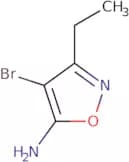
Discontinued product4-Bromo-3-ethyl-1,2-oxazol-5-amine
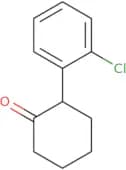
CAS:<p>Versatile small molecule scaffold</p>Formula:C5H7BrN2OPurity:Min. 95%Molecular weight:191.03 g/mol2-(2-Chlorophenyl)cyclohexan-1-one
CAS:<p>Versatile small molecule scaffold</p>Formula:C12H13ClOPurity:Min. 95%Molecular weight:208.68 g/molRef: 3D-RDA39349
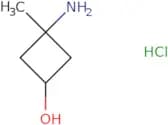
Discontinued productcis-3-amino-3-methylcyclobutanol hcl
CAS:<p>Versatile small molecule scaffold</p>Formula:C5H12ClNOPurity:Min. 95%Molecular weight:137.61 g/molRef: 3D-DGC76732
Discontinued product7-(Bromomethyl)-6-oxaspiro[3.5]nonane
CAS:<p>Versatile small molecule scaffold</p>Formula:C9H15BrOPurity:Min. 95%Molecular weight:219.12 g/molRef: 3D-QID71156
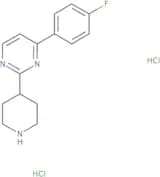
Discontinued product4-(4-Fluorophenyl)-2-(piperidin-4-yl)pyrimidine dihydrochloride
CAS:<p>Versatile small molecule scaffold</p>Formula:C15H18Cl2FN3Purity:Min. 95%Molecular weight:330.2 g/molRef: 3D-DZB45721
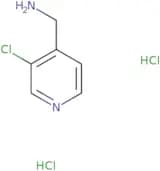
Discontinued product(3-Chloropyridin-4-yl)methanamine dihydrochloride
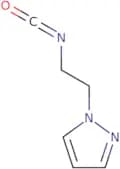
CAS:<p>Versatile small molecule scaffold</p>Formula:C6H9Cl3N2Purity:Min. 95%Molecular weight:215.51 g/mol1-(2-Isocyanatoethyl)-1H-pyrazole
CAS:<p>Versatile small molecule scaffold</p>Formula:C6H7N3OPurity:Min. 95%Molecular weight:137.14 g/molRef: 3D-QDC55874
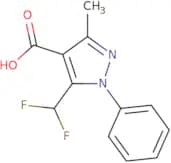
Discontinued product5-(Difluoromethyl)-3-methyl-1-phenyl-1H-pyrazole-4-carboxylic acid
CAS:<p>Versatile small molecule scaffold</p>Formula:C12H10F2N2O2Purity:Min. 95%Molecular weight:252.22 g/molRef: 3D-AFC47355
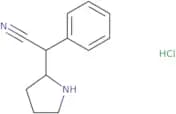
Discontinued product2-Phenyl-2-(pyrrolidin-2-yl)acetonitrile hydrochloride
CAS:<p>Versatile small molecule scaffold</p>Formula:C12H15ClN2Purity:Min. 95%Molecular weight:222.71 g/molRef: 3D-AFC47353
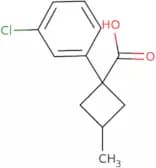
Discontinued product1-(3-Chlorophenyl)-3-methylcyclobutane-1-carboxylic acid, somers
CAS:<p>Versatile small molecule scaffold</p>Formula:C12H13ClO2Purity:Min. 95%Molecular weight:224.68 g/molRef: 3D-QDC52186
Discontinued product2-(2-Amino-2-cyclopropylethyl)-1λ⁶,2-thiazolidine-1,1-dione
CAS:<p>Versatile small molecule scaffold</p>Formula:C8H16N2O2SPurity:Min. 95%Molecular weight:204.29 g/molRef: 3D-QDC04429
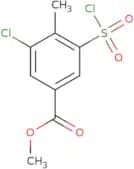
Discontinued productMethyl 3-chloro-5-(chlorosulfonyl)-4-methylbenzoate
CAS:<p>Versatile small molecule scaffold</p>Formula:C9H8Cl2O4SPurity:Min. 95%Molecular weight:283.13 g/molRef: 3D-QDC04346
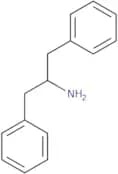
Discontinued product1,3-Diphenylpropan-2-amine
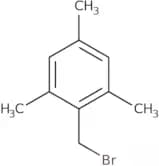
CAS:Controlled Product<p>1,3-Diphenylpropan-2-amine is a molecule with a hydrophobic nature. It has been shown to activate the enzyme monoamine oxidase in the brain, leading to an increase in the production of heat and causing hyperthermia. 1,3-Diphenylpropan-2-amine is metabolized by isozymes in different tissues and organs. 1,3-Diphenylpropan-2-amine interacts with pethidine (meperidine) to produce meperidine analogues, which are active at opioid receptors. These meperidine analogues have been shown to cause respiratory depression and hypotension when administered intravenously. The benzyl groups on this molecule have also been shown to interact with imidazoles such as ketoconazole and clotrimazole.</p>Formula:C15H17NPurity:Min. 95%Molecular weight:211.3 g/mol2-Bromomethyl-1,3,5-trimethylbenzene
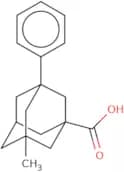
CAS:<p>2-Bromomethyl-1,3,5-trimethylbenzene is a semivolatile organic compound with a bromophenol functional group. It has been shown to react with malic acid and pyridine ring to form two isomers. The reaction rate of this compound is higher at lower temperatures than at higher temperatures. It has been shown to be a ligand that binds metal ions and reacts with them electrochemically. 2-Bromomethyl-1,3,5-trimethylbenzene has also been used as an intermediate in the synthesis of trisaccharide ligands for coordination chemistry studies.</p>Formula:C10H13BrPurity:Min. 95%Molecular weight:213.11 g/mol3-Methyl-5-phenyladamantane-1-carboxylic acid
CAS:<p>Versatile small molecule scaffold</p>Formula:C18H22O2Purity:Min. 95%Molecular weight:270.4 g/molRef: 3D-EBA83536
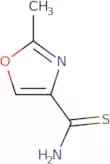
Discontinued product2-Methyl-1,3-oxazole-4-carbothioamide
CAS:<p>Versatile small molecule scaffold</p>Formula:C5H6N2OSPurity:Min. 95%Molecular weight:142.18 g/molRef: 3D-QDA98010
Discontinued product9-Chloro-7,10-diazatricyclo[6.4.0.0,2,6]dodeca-1(12),2(6),8,10-tetraene
CAS:<p>Versatile small molecule scaffold</p>Formula:C10H9ClN2Purity:Min. 95%Molecular weight:192.64 g/molRef: 3D-EBC71710
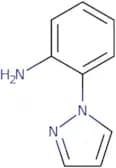
Discontinued product1-(2-Aminophenyl)-1H-pyrazole
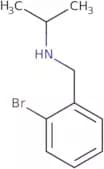
CAS:<p>1-(2-Aminophenyl)-1H-pyrazole is a chemical compound that is used in the synthesis of other compounds. It can be produced by various reactions from benzyl chloride and ammonia. The reactivity of 1-(2-aminophenyl)-1H-pyrazole has been studied using single crystal X-ray diffraction. This technique was used to determine the structure and reaction pathway of this molecule as well as to study its catalytic properties. 1-(2-Aminophenyl)-1H-pyrazole is a ligand that binds to metal ions, such as aluminium, in order to form complexes with different functional groups.</p>Formula:C9H9N3Purity:Min. 95%Molecular weight:159.19 g/molN-(2-Bromobenzyl)propan-2-amine
CAS:<p>Versatile small molecule scaffold</p>Formula:C10H14BrNPurity:Min. 95%Molecular weight:228.13 g/molRef: 3D-QDA94451
Discontinued product1-(4-Methylphenyl)-1H,4H,5H-pyrazolo[3,4-d]pyrimidin-4-one
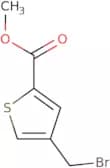
CAS:<p>Versatile small molecule scaffold</p>Formula:C12H10N4OPurity:Min. 95%Molecular weight:226.23 g/molMethyl 4-(bromomethyl)thiophene-2-carboxylate
CAS:<p>Versatile small molecule scaffold</p>Formula:C7H7BrO2SPurity:Min. 95%Molecular weight:235.1 g/mol1-[2-(4-Bromophenoxy)ethyl]-4-methylpiperazine dihydrochloride
CAS:<p>Versatile small molecule scaffold</p>Formula:C13H21BrCl2N2OPurity:Min. 95%Molecular weight:372.1 g/molRef: 3D-QDA23668
Discontinued producttert-Butyl 6-chloro-1H,2H,3H-pyrrolo[2,3-b]pyridine-1-carboxylate
CAS:<p>Versatile small molecule scaffold</p>Formula:C12H15ClN2O2Purity:Min. 95%Molecular weight:254.71 g/molRef: 3D-ECB39222
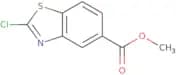
Discontinued productMethyl 2-chloro-1,3-benzothiazole-5-carboxylate
CAS:<p>Versatile small molecule scaffold</p>Formula:C9H6ClNO2SPurity:Min. 95%Molecular weight:227.67 g/molRef: 3D-QDA22503
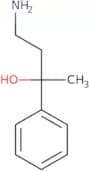
Discontinued product4-Amino-2-phenylbutan-2-ol
CAS:<p>Versatile small molecule scaffold</p>Formula:C10H15NOPurity:Min. 95%Molecular weight:165.23 g/molRef: 3D-EEA29460
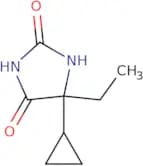
Discontinued product5-Cyclopropyl-5-ethylimidazolidine-2,4-dione
CAS:<p>Versatile small molecule scaffold</p>Formula:C8H12N2O2Purity:Min. 95%Molecular weight:168.19 g/molRef: 3D-QDA19734
Discontinued productMethyl 2-[4-(2-aminoethyl)phenoxy]acetate hydrochloride
CAS:<p>Versatile small molecule scaffold</p>Formula:C11H16ClNO3Purity:Min. 95%Molecular weight:245.7 g/molrac-(1R,2S)-2-[(tert-Butoxy)carbonyl]cyclobutane-1-carboxylic acid
CAS:<p>Versatile small molecule scaffold</p>Formula:C10H16O4Purity:Min. 95%Molecular weight:200.2 g/molRef: 3D-MKD63070
Discontinued productMethyl 6-oxobicyclo[3.2.0]heptane-3-carboxylate
CAS:<p>Versatile small molecule scaffold</p>Formula:C9H12O3Purity:Min. 95%Molecular weight:168.19 g/molRef: 3D-MKD61320
Discontinued product(Pyridazin-3-yl)methanamine dihydrochloride
CAS:<p>Versatile small molecule scaffold</p>Formula:C5H9Cl2N3Purity:Min. 95%Molecular weight:182.05 g/mol5-Methanesulfonylfuran-2-carbaldehyde
CAS:<p>Versatile small molecule scaffold</p>Formula:C6H6O4SPurity:Min. 95%Molecular weight:174.18 g/molRef: 3D-HAA13240
Discontinued productMethyl 2-bromo-3-(4-chlorophenyl)propanoate
CAS:<p>Versatile small molecule scaffold</p>Formula:C10H10BrClO2Purity:Min. 95%Molecular weight:277.54 g/molRef: 3D-HAA14189
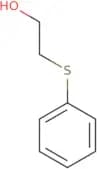
Discontinued product2-(Phenylthio)ethanol
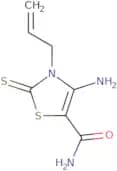
CAS:<p>2-Phenylthioethanol is a monomer that is used in the synthesis of silver trifluoromethanesulfonate. 2-Phenylthioethanol reacts with hydroxyl groups to form an ether linkage, which is the basis for its use as a monomer. 2-Phenylthioethanol has been shown to react with orthophosphate to form an ester linkage. This reaction is catalyzed by a nucleophile (e.g., chloride) and occurs at neutral pH in the presence of aluminium powder. The rate of this reaction increases with temperature and can be accelerated by diphenyl sulfoxide. The coatings industry uses 2-phenylthioethanol as a solvent for polyvinylchloride and polyurethane coatings, due to its ability to dissolve these materials without degrading them.</p>Formula:C8H10OSPurity:Min. 95%Molecular weight:154.23 g/mol3-Allyl-4-amino-2-thioxo-2,3-dihydro-thiazole-5-carboxylic acid amide
CAS:<p>Versatile small molecule scaffold</p>Formula:C7H9N3OS2Purity:Min. 95%Molecular weight:215.3 g/molRef: 3D-HAA15791
Discontinued product4-(3-Methoxypropyl)-4H-1,2,4-triazole-3-thiol
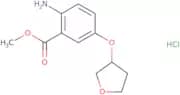
CAS:<p>4-(3-Methoxypropyl)-4H-1,2,4-triazole-3-thiol is a sulfuric acid derivative of 4H-1,2,4-triazole-3-thiol. It is an efficient and potentiodynamic polarizer that can be used to measure the concentration of copper ions in solution. This agent has been shown to have synergistic effects with copper ions and can be used as an analytical tool for cyclic voltammetry.</p>Formula:C6H11N3OSPurity:Min. 95%Molecular weight:173.24 g/molMethyl 2-amino-5-(oxolan-3-yloxy)benzoate hydrochloride
CAS:<p>Versatile small molecule scaffold</p>Formula:C12H16ClNO4Purity:Min. 95%Molecular weight:273.71 g/mol2-Methyl-[1,2,4]triazolo[1,5-a]pyridin-6-amine
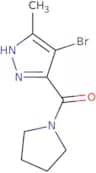
CAS:<p>Versatile small molecule scaffold</p>Formula:C7H8N4Purity:Min. 95%Molecular weight:148.17 g/mol(4-Bromo-5-methyl-1H-pyrazol-3-yl)(pyrrolidin-1-yl)methanone
CAS:Controlled Product<p>Versatile small molecule scaffold</p>Formula:C9H12BrN3OPurity:Min. 95%Molecular weight:258.12 g/molRef: 3D-HAC84481
Discontinued product2-Bromo-4-(4-fluorophenyl)-1,3-thiazole
CAS:<p>Versatile small molecule scaffold</p>Formula:C9H5NFSBrPurity:Min. 95%Molecular weight:258.11 g/mol3-Methylbenzo[b]thiophene-2-carboxylic acid
CAS:<p>3-Methylbenzo[b]thiophene-2-carboxylic acid (MBTCA) is a heterocyclic compound that is an intermediate in the synthesis of 3-methylthiophene-2-carboxylic acid, a precursor to other drugs. MBTCA is an aerobic, nonpolar compound that has shown antimicrobial activity against some bacteria and fungi. It also has been shown to have practicality as a biomolecular probe for methyl groups in organic solvents. MBTCA can be synthesized by nitration of benzene in the presence of sulfur and sulfoxides. This reaction produces nitrobenzene, which can then be oxidized by potassium permanganate or hydrogen peroxide to produce MBTCA. The most common isomer of MBTCA is 2-(3,5-dimethoxybenzylidene)tetrahydrofuran, with three methyl groups on the</p>Formula:C10H8O2SPurity:Min. 95%Molecular weight:192.23 g/mol3-[5-(Aminomethyl)-1-oxo-2,3-dihydro-1H-isoindol-2-yl]piperidine-2,6-dione hydrochloride
CAS:<p>Versatile small molecule scaffold</p>Formula:C14H16ClN3O3Purity:Min. 95%Molecular weight:309.75 g/mol3-Boc-3-azabicyclo[3.2.1]octan-8-amine
CAS:<p>Versatile small molecule scaffold</p>Formula:C12H22N2O2Purity:Min. 95%Molecular weight:226.32 g/mol(2S,3R)-2-((((9H-Fluoren-9-yl)methoxy)carbonyl)amino)-3-methoxybutanoic acid
CAS:<p>Versatile small molecule scaffold</p>Formula:C20H21NO5Purity:Min. 95%Molecular weight:355.4 g/mol3-(Methoxycarbonyl)pyridine-4-carboxylic acid
CAS:<p>Versatile small molecule scaffold</p>Formula:C8H7NO4Purity:Min. 95%Molecular weight:181.15 g/moltert-Butyl 5-bromo-3,4-dihydro-2,7-naphthyridine-2(1H)-carboxylate
CAS:<p>Versatile small molecule scaffold</p>Formula:C13H17BrN2O2Purity:Min. 95%Molecular weight:313.19 g/mol2-Acetylbenzoic acid
CAS:<p>2-Acetylbenzoic acid is a functional molecule that contains an acetyl group. It can form hydrogen bonds with other molecules and has been shown to induce apoptosis in cells. The reaction products of 2-acetylbenzoic acid are malonic acid, acetylsalicylic acid, and 2-benzoylbenzoic acid. These three compounds are made by the addition of hydrogen or hydroxide to the molecule 2-acetylbenzoic acid. The molecule has two functional groups: a carbonyl group and an acetyl group. The chemical structure of this molecule can be seen in the figure below.<br>2-Acetylbenzoic Acid</p>Formula:C9H8O3Purity:Min. 95%Color and Shape:PowderMolecular weight:164.16 g/molRef: 3D-FA05086
Discontinued product1-[3-(Dimethylamino)propyl]-1-(4-fluorophenyl)-1,3-dihydro-3-oxo-5-isobenzofurancarbonitrile
CAS:<p>Please enquire for more information about 1-[3-(Dimethylamino)propyl]-1-(4-fluorophenyl)-1,3-dihydro-3-oxo-5-isobenzofurancarbonitrile including the price, delivery time and more detailed product information at the technical inquiry form on this page</p>Formula:C20H19FN2O2Purity:Min. 95%Molecular weight:338.38 g/molRef: 3D-FD184085
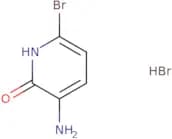
Discontinued product3-amino-6-bromopyridin-2-ol hydrobromide
CAS:<p>Versatile small molecule scaffold</p>Formula:C5H6Br2N2OPurity:Min. 95%Molecular weight:269.9 g/mol2-Bromo-3,3,3-trifluoro-1-propene
CAS:Controlled Product<p>2-Bromo-3,3,3-trifluoro-1-propene is a chemical compound that has been synthesized in an asymmetric reaction. The reactant is bromopropane and the product is 2,2,2-trifluoropropene. The methylene group on the propene molecule is activated by the nucleophilic attack of a fluoride ion from hydrogen fluoride to form a cavity with a highly strained bond. The kinetic study of this reaction revealed that the activation energy for the reaction is 42 kJ/mol. Palladium-catalyzed coupling reactions are catalyzed by palladium and require nonpolar solvents such as toluene or dichloromethane. This type of reaction has been shown to be exothermic with an isolated yield of 1%.</p>Formula:C3H2BrF3Purity:Min. 95%Color and Shape:Colorless PowderMolecular weight:174.95 g/mol6,6-Difluorospiro[3.3]heptan-2-amine Hydrochloride
CAS:<p>Versatile small molecule scaffold</p>Formula:C7H11F2N·HClPurity:Min. 95%Molecular weight:147.17 g/molH-Ser-Ala-Glu-Glu-Tyr-Glu-Tyr-Pro-Ser OH trifluoroacetate
CAS:<p>Please enquire for more information about H-Ser-Ala-Glu-Glu-Tyr-Glu-Tyr-Pro-Ser OH trifluoroacetate including the price, delivery time and more detailed product information at the technical inquiry form on this page</p>Formula:C47H63N9O20•(C2HF3O2)xPurity:Min. 95%Ref: 3D-FS183525
Discontinued productGivinostat hydrochloride
CAS:<p>Givinostat hydrochloride is a research chemical that has shown potential in various fields. It is a molybdenum-based compound that has been studied for its effects on dopamine release and hydrogen evolution. Givinostat hydrochloride has also been investigated as an osteoclast inhibitor, which may be beneficial in the treatment of bone-related disorders such as osteoporosis. Additionally, it has shown promise as a retinoid and calpain inhibitor, suggesting its potential use in dermatological conditions and neurodegenerative diseases. The compound contains fluorine atoms, making it suitable for imaging studies using fluorine MRI techniques. Givinostat hydrochloride has been tested on MDA-MB-231 cells and has shown inhibitory effects on their growth, indicating its potential as an anticancer agent.</p>Formula:C24H27N3O4·HClPurity:Min. 95%Molecular weight:457.95 g/mol
![2-[4-(1,3-Dioxaindan-5-yl)-4-methyl-2,5-dioxoimidazolidin-1-yl]acetic acid](/_next/image/?url=https%3A%2Fstatic.cymitquimica.com%2Fproducts%2F3D%2Fthumb-webp%2FCWB51377.webp&w=3840&q=75)

![4-[(2-Aminopyridin-3-yl)oxy]butanenitrile](/_next/image/?url=https%3A%2Fstatic.cymitquimica.com%2Fproducts%2F3D%2Fthumb-webp%2FCWB56149.webp&w=3840&q=75)
![{2-[(1,3-Benzothiazol-2-yl)amino]ethyl}dimethylamine hydrochloride](/_next/image/?url=https%3A%2Fstatic.cymitquimica.com%2Fproducts%2F3D%2Fthumb-webp%2FCXB36200.webp&w=3840&q=75)
![1-[(tert-Butyldimethylsilyl)oxy]-1-cyclopropylbut-3-en-2-one](/_next/image/?url=https%3A%2Fstatic.cymitquimica.com%2Fproducts%2F3D%2Fthumb-webp%2FSLD11633.webp&w=3840&q=75)
![3-{4-Chloro-5,6-dimethylthieno[2,3-d]pyrimidin-2-yl}pyridine](/_next/image/?url=https%3A%2Fstatic.cymitquimica.com%2Fproducts%2F3D%2Fthumb-webp%2FSEB09464.webp&w=3840&q=75)
![6-Cyanospiro[3.3]heptane-2-carboxylic acid](/_next/image/?url=https%3A%2Fstatic.cymitquimica.com%2Fproducts%2F3D%2Fthumb-webp%2FDBA11489.webp&w=3840&q=75)
![2,4-Dimethyl-5-[4-(trifluoromethyl)phenyl]pyrimidine](/_next/image/?url=https%3A%2Fstatic.cymitquimica.com%2Fproducts%2F3D%2Fthumb-webp%2FLAC75867.webp&w=3840&q=75)
![6-Bromo-5-methyl-1H-imidazo[4,5-b]pyridine](/_next/image/?url=https%3A%2Fstatic.cymitquimica.com%2Fproducts%2F3D%2Fthumb-webp%2FDBA27941.webp&w=3840&q=75)

![4-Fluorobicyclo[2.2.2]octane-1-carboxylic acid](/_next/image/?url=https%3A%2Fstatic.cymitquimica.com%2Fproducts%2F3D%2Fthumb-webp%2FDDA38584.webp&w=3840&q=75)
![Ethyl[1-(oxolan-2-yl)-2-phenylethyl]amine hydrochloride](/_next/image/?url=https%3A%2Fstatic.cymitquimica.com%2Fproducts%2F3D%2Fthumb-webp%2FSDA32173.webp&w=3840&q=75)
![3-[5-(2,2-Dimethylpropyl)-1,2,4-oxadiazol-3-yl]benzoic acid](/_next/image/?url=https%3A%2Fstatic.cymitquimica.com%2Fproducts%2F3D%2Fthumb-webp%2FSBC01836.webp&w=3840&q=75)
![[4-(tert-Butoxycarbonylamino-methyl)-piperidin-1-yl]-acetic acid](/_next/image/?url=https%3A%2Fstatic.cymitquimica.com%2Fproducts%2F3D%2Fthumb-webp%2FDEC98441.webp&w=3840&q=75)
![1-[4-(4-Chlorophenyl)-5-methyl-1,3-thiazol-2-yl]ethan-1-amine](/_next/image/?url=https%3A%2Fstatic.cymitquimica.com%2Fproducts%2F3D%2Fthumb-webp%2FSAB92946.webp&w=3840&q=75)
![4-{7-Methyl-[1,2,4]triazolo[4,3-a]pyridin-3-yl}piperidine](/_next/image/?url=https%3A%2Fstatic.cymitquimica.com%2Fproducts%2F3D%2Fthumb-webp%2FRYB29874.webp&w=3840&q=75)
![1-[3-Methoxy-4-(3-methylbutoxy)phenyl]ethan-1-one](/_next/image/?url=https%3A%2Fstatic.cymitquimica.com%2Fproducts%2F3D%2Fthumb-webp%2FRQB88051.webp&w=3840&q=75)
amine hydrochloride](/_next/image/?url=https%3A%2Fstatic.cymitquimica.com%2Fproducts%2F3D%2Fthumb-webp%2FRPD13109.webp&w=3840&q=75)
![{9-Methyl-3,9-diazaspiro[5.5]undecan-1-yl}methanol](/_next/image/?url=https%3A%2Fstatic.cymitquimica.com%2Fproducts%2F3D%2Fthumb-webp%2FRPD12909.webp&w=3840&q=75)
![rac-[(1R,2R)-2-Amino-1-methylcyclopentyl]methanol](/_next/image/?url=https%3A%2Fstatic.cymitquimica.com%2Fproducts%2F3D%2Fthumb-webp%2FRPD12849.webp&w=3840&q=75)
![Ethyl 1-[(oxiran-2-yl)methyl]-1H-pyrazole-4-carboxylate](/_next/image/?url=https%3A%2Fstatic.cymitquimica.com%2Fproducts%2F3D%2Fthumb-webp%2FRLD57770.webp&w=3840&q=75)

![7-(Bromomethyl)-6-oxaspiro[3.5]nonane](/_next/image/?url=https%3A%2Fstatic.cymitquimica.com%2Fproducts%2F3D%2Fthumb-webp%2FQID71156.webp&w=3840&q=75)

![9-Chloro-7,10-diazatricyclo[6.4.0.0,2,6]dodeca-1(12),2(6),8,10-tetraene](/_next/image/?url=https%3A%2Fstatic.cymitquimica.com%2Fproducts%2F3D%2Fthumb-webp%2FEBC71710.webp&w=3840&q=75)
![1-(4-Methylphenyl)-1H,4H,5H-pyrazolo[3,4-d]pyrimidin-4-one](/_next/image/?url=https%3A%2Fstatic.cymitquimica.com%2Fproducts%2F3D%2Fthumb-webp%2FECA73875.webp&w=3840&q=75)
![1-[2-(4-Bromophenoxy)ethyl]-4-methylpiperazine dihydrochloride](/_next/image/?url=https%3A%2Fstatic.cymitquimica.com%2Fproducts%2F3D%2Fthumb-webp%2FQDA23668.webp&w=3840&q=75)
![tert-Butyl 6-chloro-1H,2H,3H-pyrrolo[2,3-b]pyridine-1-carboxylate](/_next/image/?url=https%3A%2Fstatic.cymitquimica.com%2Fproducts%2F3D%2Fthumb-webp%2FECB39222.webp&w=3840&q=75)
![Methyl 2-[4-(2-aminoethyl)phenoxy]acetate hydrochloride](/_next/image/?url=https%3A%2Fstatic.cymitquimica.com%2Fproducts%2F3D%2Fthumb-webp%2FHFA22482.webp&w=3840&q=75)
![rac-(1R,2S)-2-[(tert-Butoxy)carbonyl]cyclobutane-1-carboxylic acid](/_next/image/?url=https%3A%2Fstatic.cymitquimica.com%2Fproducts%2F3D%2Fthumb-webp%2FMKD63070.webp&w=3840&q=75)
![Methyl 6-oxobicyclo[3.2.0]heptane-3-carboxylate](/_next/image/?url=https%3A%2Fstatic.cymitquimica.com%2Fproducts%2F3D%2Fthumb-webp%2FMKD61320.webp&w=3840&q=75)



![2-Methyl-[1,2,4]triazolo[1,5-a]pyridin-6-amine](/_next/image/?url=https%3A%2Fstatic.cymitquimica.com%2Fproducts%2F3D%2Fthumb-webp%2FHAA16994.webp&w=3840&q=75)

![3-Methylbenzo[b]thiophene-2-carboxylic acid](/_next/image/?url=https%3A%2Fstatic.cymitquimica.com%2Fproducts%2F3D%2Fthumb-webp%2FDAA13378.webp&w=3840&q=75)
![3-[5-(Aminomethyl)-1-oxo-2,3-dihydro-1H-isoindol-2-yl]piperidine-2,6-dione hydrochloride](/_next/image/?url=https%3A%2Fstatic.cymitquimica.com%2Fproducts%2F3D%2Fthumb-webp%2FIWB26469.webp&w=3840&q=75)
![3-Boc-3-azabicyclo[3.2.1]octan-8-amine](/_next/image/?url=https%3A%2Fstatic.cymitquimica.com%2Fproducts%2F3D%2Fthumb-webp%2FFDC76351.webp&w=3840&q=75)


![1-[3-(Dimethylamino)propyl]-1-(4-fluorophenyl)-1,3-dihydro-3-oxo-5-isobenzofurancarbonitrile](/_next/image/?url=https%3A%2Fstatic.cymitquimica.com%2Fproducts%2F3D%2Fthumb-webp%2FFD184085.webp&w=3840&q=75)

![6,6-Difluorospiro[3.3]heptan-2-amine Hydrochloride](/_next/image/?url=https%3A%2Fstatic.cymitquimica.com%2Fproducts%2F3D%2Fthumb-webp%2FYGC03271.webp&w=3840&q=75)