Building Blocks
This section contains fundamental products for the synthesis of organic and biological compounds. Building blocks are the essential starting materials used to construct complex molecules through various chemical reactions. They play a critical role in drug discovery, material science, and chemical research. At CymitQuimica, we offer a diverse range of high-quality building blocks to support your innovative research and industrial projects, ensuring you have the essential components for successful synthesis.
Subcategories of "Building Blocks"
- Boronic Acids & Boronic Acid Derivatives(5,756 products)
- Chiral Building Blocks(1,242 products)
- Hydrocarbon Building Blocks(6,095 products)
- Organic Building Blocks(61,037 products)
Found 196139 products of "Building Blocks"
Sort by
Purity (%)
0
100
|
0
|
50
|
90
|
95
|
100
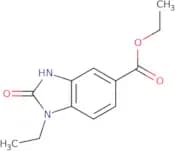
Ethyl 1-ethyl-2-oxo-2,3-dihydro-1H-1,3-benzodiazole-5-carboxylate
CAS:<p>Versatile small molecule scaffold</p>Formula:C12H14N2O3Purity:Min. 95%Molecular weight:234.25 g/mol1-(2-Methylpyrimidin-4-yl)ethan-1-amine
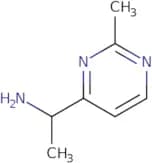
CAS:<p>Versatile small molecule scaffold</p>Formula:C7H11N3Purity:Min. 95%Molecular weight:137.18 g/molRef: 3D-JJC20141
Discontinued product4-(Benzyloxy)-3-chloro-5-methoxybenzaldehyde
CAS:<p>Versatile small molecule scaffold</p>Formula:C15H13ClO3Purity:Min. 95%Molecular weight:276.71 g/molRef: 3D-MBA68767
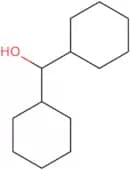
Discontinued productDicyclohexylmethanol
CAS:<p>Dicyclohexylmethanol is a trifunctional compound that contains a hydroxyl group, and can be used as a hydrogen bond donor or acceptor. The chemical structure of dicyclohexylmethanol can be seen in the figure below. Dicyclohexylmethanol has been used for sample preparation for hydrogen chloride gas. It has also been used to determine the concentration of blood ethanol levels and to measure blood pH in humans. Dicyclohexylmethanol is an important reactant in asymmetric synthesis reactions due to its ability to form hydrogen bonds with both reactants.</p>Formula:C13H24OPurity:Min. 95%Molecular weight:196.33 g/mol2-Amino-3-methyl-2-(propan-2-yl)butanoic acid hydrochloride
CAS:<p>Versatile small molecule scaffold</p>Formula:C8H18ClNO2Purity:Min. 95%Molecular weight:195.7 g/molRef: 3D-LLB46207
Discontinued productN-(Cyclohexylmethyl)-N-methylcarbamoyl chloride
CAS:<p>Versatile small molecule scaffold</p>Formula:C9H16ClNOPurity:Min. 95%Molecular weight:189.68 g/molRef: 3D-LLB11489
Discontinued product(3-Chlorophenyl)(cyclohexyl)methanone
CAS:<p>Versatile small molecule scaffold</p>Formula:C13H15ClOPurity:Min. 95%Molecular weight:222.71 g/mol2-Ethynyl-4-methylthiazole
CAS:<p>2-Ethynyl-4-methylthiazole is a cell-based kinase inhibitor that binds to the ATP binding site on the enzyme and inhibits phosphorylation. It was shown to inhibit cell growth in vitro by interfering with the production of TGF-β, activin, and other growth factors. The inhibitory activity of 2-Ethynyl-4-methylthiazole is selective for receptor kinases and is not effective against alk5 kinase. This drug has been shown to be an inhibitor of cellular growth in vitro and may be useful for the treatment of cancer.</p>Formula:C6H5NSPurity:Min. 95%Molecular weight:123.17 g/molRef: 3D-LIA94025
Discontinued product2-Chloro-3-cyclopropylpyrazine
CAS:<p>Versatile small molecule scaffold</p>Formula:C7H7ClN2Purity:Min. 95%Molecular weight:154.6 g/molRef: 3D-LFA81911
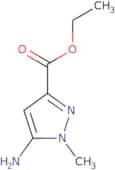
Discontinued productethyl 5-amino-1-methyl-1h-pyrazole-3-carboxylate
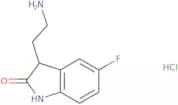
CAS:<p>Versatile small molecule scaffold</p>Formula:C7H11N3O2Purity:Min. 95%Molecular weight:169.18 g/mol3-(2-Aminoethyl)-5-fluoro-2,3-dihydro-1H-indol-2-one hydrochloride
CAS:<p>Versatile small molecule scaffold</p>Formula:C10H12ClFN2OPurity:Min. 95%Molecular weight:230.66 g/mol[(2-Bromo-5-chlorophenyl)methyl](2-methylpropyl)amine
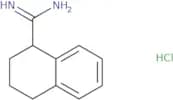
CAS:<p>Versatile small molecule scaffold</p>Formula:C11H15BrClNPurity:Min. 95%Molecular weight:276.6 g/mol1,2,3,4-Tetrahydronaphthalene-1-carboximidamide hydrochloride
CAS:<p>Versatile small molecule scaffold</p>Formula:C11H15ClN2Purity:Min. 95%Molecular weight:210.7 g/molRef: 3D-AFC99689
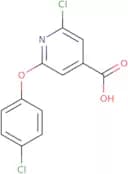
Discontinued product2-Chloro-6-(4-chlorophenoxy)pyridine-4-carboxylic acid
CAS:<p>Versatile small molecule scaffold</p>Formula:C12H7Cl2NO3Purity:Min. 95%Molecular weight:284.09 g/molRef: 3D-SBA52119
Discontinued productEthyl 2-amino-4-(5-methyl-2-thienyl)thiophene-3-carboxylate
CAS:<p>Versatile small molecule scaffold</p>Formula:C12H13NO2S2Purity:Min. 95%Molecular weight:267.37 g/molLithium 2-{[(tert-butoxy)carbonyl]amino}-2-cyanoacetate
CAS:<p>Versatile small molecule scaffold</p>Formula:C8H11LiN2O4Purity:Min. 95%Molecular weight:206.1 g/mol4-Benzyl-5-methylmorpholine-2-carbonitrile
CAS:<p>Versatile small molecule scaffold</p>Formula:C13H16N2OPurity:Min. 95%Molecular weight:216.28 g/molRef: 3D-YXC63780
Discontinued product2-[(Cyclopropylmethyl)[(9H-fluoren-9-ylmethoxy)carbonyl]amino]acetic acid
CAS:<p>Versatile small molecule scaffold</p>Formula:C21H21NO4Purity:Min. 95%Molecular weight:351.4 g/mol4-({[(9H-Fluoren-9-yl)methoxy]carbonyl}amino)cyclopent-2-ene-1-carboxylic acid
CAS:<p>Versatile small molecule scaffold</p>Formula:C21H19NO4Purity:Min. 95%Molecular weight:349.4 g/molN-Methyl-N-phenylpiperidin-4-amine dihydrochloride
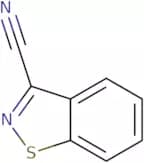
CAS:<p>Versatile small molecule scaffold</p>Formula:C12H20Cl2N2Purity:Min. 95%Molecular weight:263.2 g/mol1,2-Benzothiazole-3-carbonitrile
CAS:<p>Versatile small molecule scaffold</p>Formula:C8H4N2SPurity:Min. 95%Molecular weight:160.2 g/molRef: 3D-RAA80720
Discontinued productrac-(1R,3R,5S)-8-Oxobicyclo[3.2.1]octane-3-carboxylic acid, exo
CAS:<p>Versatile small molecule scaffold</p>Formula:C9H12O3Purity:Min. 95%Molecular weight:168.19 g/mol4-Bromo-N-[(4-hydroxyphenyl)methyl]-N-methyl-1H-pyrrole-2-carboxamide
CAS:<p>Versatile small molecule scaffold</p>Formula:C13H13BrN2O2Purity:Min. 95%Molecular weight:309.16 g/molRef: 3D-IXB45477
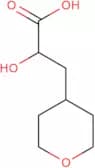
Discontinued product2-Hydroxy-3-(oxan-4-yl)propanoic acid
CAS:<p>Versatile small molecule scaffold</p>Formula:C8H14O4Purity:Min. 95%Molecular weight:174.19 g/molRef: 3D-PCC90160
Discontinued product[2-(Piperidin-1-yl)pyridin-3-yl]methanamine dihydrochloride
CAS:<p>Versatile small molecule scaffold</p>Formula:C11H19Cl2N3Purity:Min. 95%Molecular weight:264.19 g/molRef: 3D-FDD50657
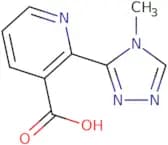
Discontinued product2-(4-Methyl-4H-1,2,4-triazol-3-yl)pyridine-3-carboxylic acid
CAS:<p>Versatile small molecule scaffold</p>Formula:C9H8N4O2Purity:Min. 95%Molecular weight:204.2 g/molRef: 3D-CVD03521
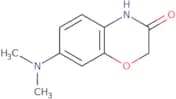
Discontinued product7-(Dimethylamino)-3,4-dihydro-2H-1,4-benzoxazin-3-one
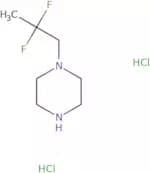
CAS:<p>Versatile small molecule scaffold</p>Formula:C10H12N2O2Purity:Min. 95%Molecular weight:192.21 g/mol1-(2,2-Difluoropropyl)piperazine dihydrochloride
CAS:<p>Versatile small molecule scaffold</p>Formula:C7H16Cl2F2N2Purity:Min. 95%Molecular weight:237.12 g/molRef: 3D-MKD60013
Discontinued product8-tert-Butyl 4-methyl 2,8-diazaspiro[4.5]decane-4,8-dicarboxylate
CAS:<p>Versatile small molecule scaffold</p>Formula:C15H26N2O4Purity:Min. 95%Molecular weight:298.38 g/molRef: 3D-MKD58134
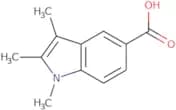
Discontinued product1,2,3-Trimethyl-1H-indole-5-carboxylic acid
CAS:<p>Versatile small molecule scaffold</p>Formula:C12H13NO2Purity:Min. 95%Molecular weight:203.24 g/molEthyl 2-[4-formyl-3-(4-methoxyphenyl)-1H-pyrazol-1-yl]acetate
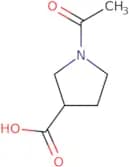
CAS:<p>Versatile small molecule scaffold</p>Formula:C15H16N2O4Purity:Min. 95%Molecular weight:288.3 g/mol1-Acetyl-pyrrolidine-3-carboxylic acid
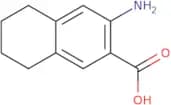
CAS:<p>Versatile small molecule scaffold</p>Formula:C7H11NO3Purity:Min. 95%Molecular weight:157.17 g/mol3-Amino-5,6,7,8-tetrahydronaphthalene-2-carboxylic acid
CAS:<p>Versatile small molecule scaffold</p>Formula:C11H13NO2Purity:Min. 95%Molecular weight:191.23 g/molRef: 3D-EEA87713
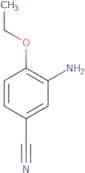
Discontinued product3-Amino-4-ethoxybenzonitrile
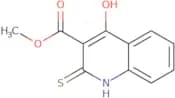
CAS:<p>Versatile small molecule scaffold</p>Formula:C9H10N2OPurity:Min. 95%Molecular weight:162.19 g/molMethyl 4-hydroxy-2-sulfanylquinoline-3-carboxylate
CAS:<p>Methyl 4-hydroxy-2-sulfanylquinoline-3-carboxylate (MSQ) is a synthetic molecule that has shown to have antiviral activity against the hepatitis B virus. This compound is a competitive inhibitor of the virus and prevents it from infecting cells. MSQ has also been shown to inhibit other viruses, such as herpes simplex virus, influenza A and C, rotavirus, and human immunodeficiency virus type 1 (HIV-1). The high inhibition of MSQ can be attributed to its ability to form hydrogen bonds with the amino acid residues in viral proteins. Additionally, MSQ interacts with anions in the active site of the enzymes that are necessary for viral replication through alkylation reactions.<br>MSQ has been found to be selective for influenza A and C by binding at different sites on the enzyme compared to other compounds like zanamivir and oseltamivir. The single-crystal x</p>Formula:C11H9NO3SPurity:Min. 95%Molecular weight:235.26 g/molRef: 3D-SKB29434
Discontinued product2-Cyano-5-fluorophenol
CAS:<p>2-Cyano-5-fluorophenol is an organic compound that is used as a precursor to medicines and other chemicals. It reacts with calcium hydroxide in water to form 2-cyano-5-hydroxyfluorobenzene, which can be hydrolyzed to form 2-cyano-5-chlorofluorobenzene. This compound can also react with sodium hydroxide to produce sodium cyanate, which can be hydrolyzed to form sodium chloride and hydrogen cyanide gas. The alkali metal ions are needed for this reaction, which is why the product should not be exposed to water or moisture. 2-Cyano-5-fluorophenol has been shown to have liquid crystal properties and is used in the production of certain types of polymers. 2Cyano-5Fluorophenol crystals are also used in some medicines such as acetaminophen (paracetamol).</p>Formula:C7H4FNOPurity:Min. 95%Molecular weight:137.11 g/mol2-Oxa-spiro[3.3]heptan-6-ol
CAS:<p>Versatile small molecule scaffold</p>Formula:C6H10O2Purity:Min. 95%Molecular weight:114.14 g/mol2-Bromo-3,3,3-trifluoro-1-propene
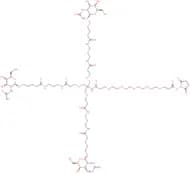
CAS:Controlled Product<p>2-Bromo-3,3,3-trifluoro-1-propene is a chemical compound that has been synthesized in an asymmetric reaction. The reactant is bromopropane and the product is 2,2,2-trifluoropropene. The methylene group on the propene molecule is activated by the nucleophilic attack of a fluoride ion from hydrogen fluoride to form a cavity with a highly strained bond. The kinetic study of this reaction revealed that the activation energy for the reaction is 42 kJ/mol. Palladium-catalyzed coupling reactions are catalyzed by palladium and require nonpolar solvents such as toluene or dichloromethane. This type of reaction has been shown to be exothermic with an isolated yield of 1%.</p>Formula:C3H2BrF3Purity:Min. 95%Color and Shape:Colorless PowderMolecular weight:174.95 g/molTri-b-GalNAc-PEG5-NHS ester
CAS:<p>Tri-GalNAc-NHS ester is a multivalent molecule composed of three GalNAc cluster arms. It is a protein degrader and a ligand of the asialoglycoprotein receptor (ASGPR) used for the development of targeted therapies for liver diseases. The GalNAc arms enable high-affinity binding to the ASGPR on hepatocyte surfaces. The crucial functional group, N-hydroxysuccinimide (NHS) ester, is known for its ease of conjugation with various biomolecules possessing amine (NH2) groups. This biocompatible reaction strategy allows the design and development of targeted conjugates such as drug-GalNAc conjugates, siRNA delivery vehicles, or probes for ASGPR imaging in the liver.</p>Formula:C79H137N11O37Purity:Min. 95%Color and Shape:PowderMolecular weight:1,832.99 g/molRef: 3D-FT183733
Discontinued product




amine](/_next/image/?url=https%3A%2Fstatic.cymitquimica.com%2Fproducts%2F3D%2Fthumb-webp%2FSJC31753.webp&w=3840&q=75)
![Lithium 2-{[(tert-butoxy)carbonyl]amino}-2-cyanoacetate](/_next/image/?url=https%3A%2Fstatic.cymitquimica.com%2Fproducts%2F3D%2Fthumb-webp%2FGGD25857.webp&w=3840&q=75)
![2-[(Cyclopropylmethyl)[(9H-fluoren-9-ylmethoxy)carbonyl]amino]acetic acid](/_next/image/?url=https%3A%2Fstatic.cymitquimica.com%2Fproducts%2F3D%2Fthumb-webp%2FRDC30632.webp&w=3840&q=75)
![4-({[(9H-Fluoren-9-yl)methoxy]carbonyl}amino)cyclopent-2-ene-1-carboxylic acid](/_next/image/?url=https%3A%2Fstatic.cymitquimica.com%2Fproducts%2F3D%2Fthumb-webp%2FEMB97663.webp&w=3840&q=75)

![rac-(1R,3R,5S)-8-Oxobicyclo[3.2.1]octane-3-carboxylic acid, exo](/_next/image/?url=https%3A%2Fstatic.cymitquimica.com%2Fproducts%2F3D%2Fthumb-webp%2FQNA16419.webp&w=3840&q=75)
![4-Bromo-N-[(4-hydroxyphenyl)methyl]-N-methyl-1H-pyrrole-2-carboxamide](/_next/image/?url=https%3A%2Fstatic.cymitquimica.com%2Fproducts%2F3D%2Fthumb-webp%2FIXB45477.webp&w=3840&q=75)
![[2-(Piperidin-1-yl)pyridin-3-yl]methanamine dihydrochloride](/_next/image/?url=https%3A%2Fstatic.cymitquimica.com%2Fproducts%2F3D%2Fthumb-webp%2FFDD50657.webp&w=3840&q=75)
![8-tert-Butyl 4-methyl 2,8-diazaspiro[4.5]decane-4,8-dicarboxylate](/_next/image/?url=https%3A%2Fstatic.cymitquimica.com%2Fproducts%2F3D%2Fthumb-webp%2FMKD58134.webp&w=3840&q=75)
![Ethyl 2-[4-formyl-3-(4-methoxyphenyl)-1H-pyrazol-1-yl]acetate](/_next/image/?url=https%3A%2Fstatic.cymitquimica.com%2Fproducts%2F3D%2Fthumb-webp%2FMKB40803.webp&w=3840&q=75)

![2-Oxa-spiro[3.3]heptan-6-ol](/_next/image/?url=https%3A%2Fstatic.cymitquimica.com%2Fproducts%2F3D%2Fthumb-webp%2FNEC38108.webp&w=3840&q=75)