Building Blocks
Subcategories of "Building Blocks"
- Boronic Acids & Boronic Acid Derivatives(5,778 products)
- Chiral Building Blocks(1,243 products)
- Hydrocarbon Building Blocks(6,099 products)
- Organic Building Blocks(61,038 products)
Found 205376 products of "Building Blocks"
2-(5-Chloro-1-methyl-1H-imidazol-2-yl)-2,2-difluoroacetic acid hydrochloride
CAS:Versatile small molecule scaffoldFormula:C6H6Cl2F2N2O2Purity:Min. 95%Molecular weight:247 g/molRef: 3D-YGC02390
Discontinued product4-Acetyl-5-methyl-3-(propan-2-yl)-1H-pyrrole-2-carboxylic acid
CAS:Versatile small molecule scaffold
Formula:C11H15NO3Purity:Min. 95%Molecular weight:209.24 g/molRef: 3D-YGC02414
Discontinued product1-(4-{[4-(Ethylamino)pyridin-2-yl]methyl}piperazin-1-yl)ethan-1-one
CAS:Versatile small molecule scaffold
Formula:C14H22N4OPurity:Min. 95%Molecular weight:262.35 g/molRef: 3D-YGC03202
Discontinued product1-Benzenesulfonyl-piperidine-4-carboxylic acid ethyl ester
CAS:1-Benzenesulfonyl-piperidine-4-carboxylic acid ethyl ester is an inhibitor of acetylcholinesterase. It is a white solid that can be synthesized in two steps from commercially available starting materials. Inhibition of this enzyme leads to the accumulation of acetylcholine, which causes increased stimulation of nicotinic and muscarinic receptors. This drug has been shown to have IC50 values that are similar to those of the reference inhibitor donepezil. 1-Benzenesulfonyl-piperidine-4-carboxylic acid ethyl ester also interacts with sulfonyl chlorides, butyrylcholinesterase, and other proteins in a manner similar to donepezil. The molecular docking studies suggest that this compound binds competitively with the active site of acetylcholinesterase.
Formula:C14H19NO4SPurity:Min. 95%Molecular weight:297.37 g/molRef: 3D-LEA62726
Discontinued product4-Chloro-5H,6H,7H-pyrimido[4,5-b][1,4]oxazin-6-one
CAS:Versatile small molecule scaffoldFormula:C6H4ClN3O2Purity:Min. 95%Molecular weight:185.57 g/molRef: 3D-LYB52467
Discontinued product[3-(Cyclohexyloxy)phenyl]methanamine hydrochloride
CAS:Versatile small molecule scaffoldFormula:C13H20ClNOPurity:Min. 95%Molecular weight:241.76 g/molRef: 3D-LCC31568
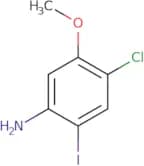
Discontinued product4-Chloro-2-iodo-5-methoxyaniline
CAS:Versatile small molecule scaffold
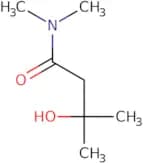
Formula:C7H7ClINOPurity:Min. 95%Molecular weight:283.49 g/mol3-Hydroxy-N,N,3-trimethylbutanamide
CAS:3-Hydroxy-N,N,3-trimethylbutanamide is a liquid at room temperature. It is an additive that can be used in the production of nitrocellulose and as a preservative for nitrate film. 3-Hydroxy-N,N,3-trimethylbutanamide decomposes on exposure to UV light to form nitric oxide. It is also used as a photoinitiator in the synthesis of polymers by free radical polymerization reactions. The liquid composition can be thermally treated to produce stable silver nanoparticles.
Formula:C7H15NO2Purity:Min. 95%Molecular weight:145.2 g/molRef: 3D-LCA66547
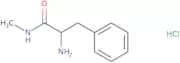
Discontinued product2-Amino-N-methyl-3-phenylpropanamide hydrochloride
CAS:Versatile small molecule scaffold
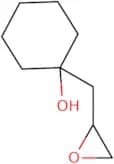
Formula:C10H15ClN2OPurity:Min. 95%Molecular weight:214.7 g/mol1-(Oxiran-2-ylmethyl)cyclohexan-1-ol
CAS:Versatile small molecule scaffold
Formula:C9H16O2Purity:Min. 95%Molecular weight:156.22 g/molRef: 3D-LBA39924
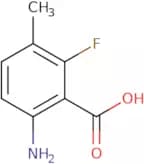
Discontinued product6-Amino-2-fluoro-3-methylbenzoic acid
CAS:Versatile small molecule scaffold
Formula:C8H8FNO2Purity:Min. 95%Molecular weight:169.15 g/molRef: 3D-MAB34784
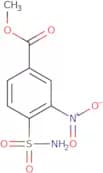
Discontinued productMethyl 3-nitro-4-sulfamoylbenzoate
CAS:Versatile small molecule scaffold
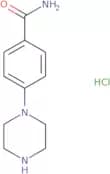
Formula:C8H8N2O6SPurity:Min. 95%Molecular weight:260.23 g/mol4-(Piperazin-1-yl)benzamide hydrochloride
CAS:Versatile small molecule scaffoldFormula:C11H16ClN3OPurity:Min. 95%Molecular weight:241.72 g/mol1-Ethyl-1,3-dihydro-2,1,3-benzothiadiazole 2,2-dioxide
CAS:Versatile small molecule scaffold
Formula:C8H10N2O2SPurity:Min. 95%Molecular weight:198.24 g/molRef: 3D-KYC67060
Discontinued product2-{3-Cyclopropyl-5-methyl-1H-pyrazolo[3,4-b]pyridin-1-yl}acetic acid
CAS:Versatile small molecule scaffoldFormula:C12H13N3O2Purity:Min. 95%Molecular weight:231.25 g/molRef: 3D-MMB60570
Discontinued product2-[6-(Furan-2-yl)-3-methyl-4-(trifluoromethyl)-1H-pyrazolo[3,4-b]pyridin-1-yl]acetic acid
CAS:Versatile small molecule scaffoldFormula:C14H10F3N3O3Purity:Min. 95%Molecular weight:325.24 g/molRef: 3D-MMB60578
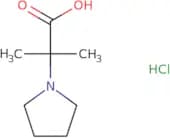
Discontinued product2-Methyl-2-(pyrrolidin-1-yl)propanoic acid hydrochloride
CAS:Versatile small molecule scaffold
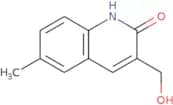
Formula:C8H16ClNO2Purity:Min. 95%Molecular weight:193.67 g/mol3-(Hydroxymethyl)-6-methyl-2(1H)-quinolinone
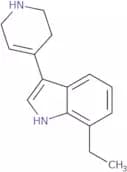
CAS:Versatile small molecule scaffoldFormula:C11H11NO2Purity:Min. 95%Molecular weight:189.21 g/mol7-Ethyl-3-(1,2,3,6-tetrahydropyridin-4-yl)-1H-indole
CAS:Versatile small molecule scaffoldFormula:C15H18N2Purity:Min. 95%Molecular weight:226.32 g/molRef: 3D-KTA35413
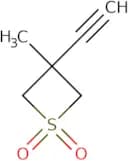
Discontinued product3-Ethynyl-3-methylthietane 1,1-dioxide
CAS:Versatile small molecule scaffold
Formula:C6H8O2SPurity:Min. 95%Molecular weight:144.2 g/molRef: 3D-KQD93720
Discontinued product6-Bromo-1,4-dihydro-2H-pyrido-[2,3-d][1,3]oxazin-2-one
CAS:Versatile small molecule scaffold
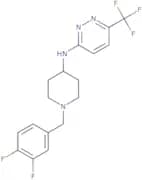
Formula:C7H5BrN2O2Purity:Min. 95%Molecular weight:229.04 g/molJNJ 37822681 dihydrochloride
CAS:JNJ 37822681 is a novel, potent, and selective small molecule inhibitor of the enzyme fatty acid amide hydrolase (FAAH), which is involved in the degradation of anandamide, a cannabinoid receptor ligand. The compound has been shown to be efficacious in animal models predictive of antipsychotic activity.
Formula:C17H17F5N4Purity:Min. 95%Molecular weight:372.34 g/molRef: 3D-KMB77674
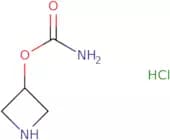
Discontinued productAzetidin-3-yl carbamate hydrochloride
CAS:Versatile small molecule scaffold
Formula:C4H9ClN2O2Purity:Min. 95%Molecular weight:152.58 g/molRef: 3D-KMB66838
Discontinued product4-[(2-Amino-1,3-thiazol-5-yl)methyl]-3-(trifluoromethyl)benzonitrile
CAS:Versatile small molecule scaffold
Formula:C12H8F3N3SPurity:Min. 95%Molecular weight:283.27 g/molRef: 3D-MMB62900
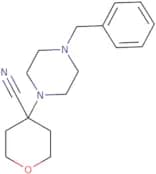
Discontinued product4-(4-Benzylpiperazin-1-yl)oxane-4-carbonitrile
CAS:Versatile small molecule scaffoldFormula:C17H23N3OPurity:Min. 95%Molecular weight:285.4 g/molRef: 3D-KLB57537
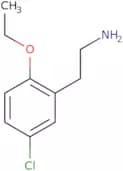
Discontinued product2-(5-Chloro-2-ethoxyphenyl)ethan-1-amine
CAS:Controlled ProductVersatile small molecule scaffoldFormula:C10H14ClNOPurity:Min. 95%Molecular weight:199.68 g/molRef: 3D-KLB38095
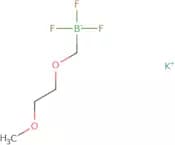
Discontinued productPotassium 2-methoxyethoxymethyltrifluoroborate
CAS:Versatile small molecule scaffold
Formula:C4H9BF3KO2Purity:Min. 95%Molecular weight:196.02 g/molRef: 3D-KLB25113
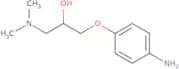
Discontinued product1-(4-Aminophenoxy)-3-(dimethylamino)propan-2-ol
CAS:Versatile small molecule scaffold
Formula:C11H18N2O2Purity:Min. 95%Molecular weight:210.27 g/molRef: 3D-KKA04560
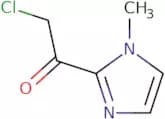
Discontinued product2-Chloro-1-(1-methyl-1H-imidazol-2-yl)ethan-1-one
CAS:Versatile small molecule scaffold
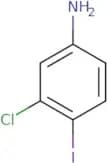
Formula:C6H7ClN2OPurity:Min. 95%Molecular weight:158.58 g/mol3-Chloro-4-iodoaniline
CAS:3-Chloro-4-iodoaniline is an activated, synthetic chemical that is used in the preparation of a variety of chemicals. 3-Chloro-4-iodoaniline can be prepared by the reaction of chloroacetic acid with nitrobenzene and hydrochloric acid. The compound may be purified by vacuum filtration and recrystallization from water. It is also a precursor to other chemicals that are used in the production of polyhalogenated aromatic compounds. 3-Chloro-4-iodoaniline has been found to react with amines and form the corresponding amides, which may be useful for chemical synthesis.
Formula:C6H5ClINPurity:Min. 95%Molecular weight:253.47 g/mol6-Ethyl-3-methyl-1-phenyl-1H-pyrazolo[3,4-b]pyridine-4-carboxylic acid
CAS:Versatile small molecule scaffold
Formula:C16H15N3O2Purity:Min. 95%Molecular weight:281.31 g/molRef: 3D-MMB69138
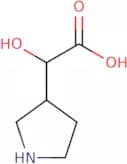
Discontinued product2-Hydroxy-2-(pyrrolidin-3-yl)acetic acid
CAS:Versatile small molecule scaffold
Formula:C6H11NO3Purity:Min. 95%Molecular weight:145.16 g/mol4-[(tert-Butoxy)methyl]piperidine hydrochloride
CAS:Versatile small molecule scaffold
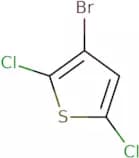
Formula:C10H22ClNOPurity:Min. 95%Molecular weight:207.74 g/mol3-Bromo-2,5-dichlorothiophene
CAS:Versatile small molecule scaffold
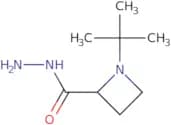
Formula:C4HBrCl2SPurity:Min. 95%Molecular weight:231.93 g/mol1-tert-Butylazetidine-2-carbohydrazide
CAS:Versatile small molecule scaffoldFormula:C8H17N3OPurity:Min. 95%Molecular weight:171.24 g/molRef: 3D-KCA16934
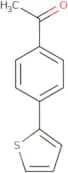
Discontinued product1-(4-Thiophen-2-yl-phenyl)-ethanone
CAS:Versatile small molecule scaffold
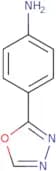
Formula:C12H10OSPurity:Min. 95%Molecular weight:202.27 g/mol4-(1,3,4-Oxadiazol-2-yl)aniline
CAS:Versatile small molecule scaffold
Formula:C8H7N3OPurity:Min. 95%Molecular weight:161.16 g/molRef: 3D-KBA21913
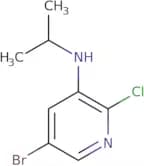
Discontinued product5-Bromo-2-chloro-N-(propan-2-yl)pyridin-3-amine
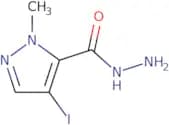
CAS:Versatile small molecule scaffoldFormula:C8H10BrClN2Purity:Min. 95%Molecular weight:249.53 g/mol4-Iodo-1-methyl-1H-pyrazole-5-carbohydrazide
CAS:Versatile small molecule scaffold
Formula:C5H7IN4OPurity:Min. 95%Molecular weight:266.04 g/molRef: 3D-MVA81000
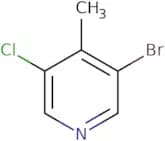
Discontinued product3-Bromo-5-chloro-4-methylpyridine
CAS:Versatile small molecule scaffold
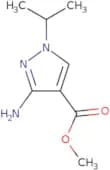
Formula:C6H5BrClNPurity:Min. 95%Molecular weight:206.47 g/molMethyl 3-amino-1-(propan-2-yl)-1H-pyrazole-4-carboxylate
CAS:Versatile small molecule scaffold
Formula:C8H13N3O2Purity:Min. 95%Molecular weight:183.21 g/molRef: 3D-MWC97411
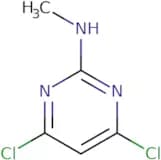
Discontinued product4,6-Dichloro-N-methylpyrimidin-2-amine
CAS:4,6-Dichloro-N-methylpyrimidin-2-amine is an analog of pyrimidine that has been used in the synthesis of a number of drugs. The compound was first synthesized by condensation of 2,4,6-trichloropyrimidine with formaldehyde and sodium hydroxide. 4,6-Dichloro-N-methylpyrimidin-2-amine can be converted to the corresponding hydrochloride salt by treatment with hydrochloric acid. The compound reacts with methanol to produce methylamine. It also undergoes acid hydrolysis to produce methyl chloride and formaldehyde.Formula:C5H5Cl2N3Purity:Min. 95%Molecular weight:178.02 g/mol(1S)-1-(2,3-Dihydro-1H-inden-5-yl)ethan-1-ol
CAS:Versatile small molecule scaffoldFormula:C11H14OPurity:Min. 95%Molecular weight:162.23 g/molRef: 3D-MYB25242
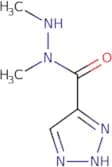
Discontinued productDimethyl-1H-1,2,3-triazole-4-carbohydrazide
CAS:Versatile small molecule scaffold
Formula:C5H9N5OPurity:Min. 95%Molecular weight:155.16 g/molRef: 3D-MZC90811
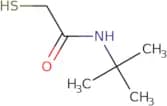
Discontinued productN-tert-Butyl-2-sulfanylacetamide
CAS:Versatile small molecule scaffold
Formula:C6H13NOSPurity:Min. 95%Molecular weight:147.2 g/mol[(1,4-Dioxan-2-yl)methyl]urea
CAS:Versatile small molecule scaffold
Formula:C6H12N2O3Purity:Min. 95%Molecular weight:160.17 g/molRef: 3D-JXB82665
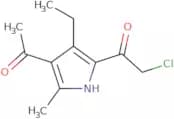
Discontinued product1-(4-Acetyl-3-ethyl-5-methyl-1H-pyrrol-2-yl)-2-chloroethan-1-one
CAS:Versatile small molecule scaffold
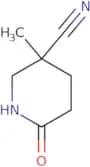
Formula:C11H14ClNO2Purity:Min. 95%Molecular weight:227.69 g/mol3-Methyl-6-oxopiperidine-3-carbonitrile
CAS:Versatile small molecule scaffoldFormula:C7H10N2OPurity:Min. 95%Molecular weight:138.17 g/molRef: 3D-LCD60619
Discontinued product4-(4H-1,2,4-Triazol-3-ylmethyl)benzoic acid
CAS:Versatile small molecule scaffold
Formula:C10H9N3O2Purity:Min. 95%Molecular weight:203.2 g/molRef: 3D-YGC03363
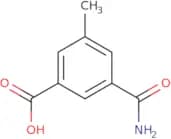
Discontinued product3-Carbamoyl-5-methylbenzoic acid
CAS:Versatile small molecule scaffold
Formula:C9H9NO3Purity:Min. 95%Molecular weight:179.17 g/molRef: 3D-YGC03374
Discontinued product4-Methyl-2-[(piperidin-4-yl)methyl]-1,3-thiazole-5-carboxylic acid dihydrochloride
CAS:Versatile small molecule scaffoldFormula:C11H18Cl2N2O2SPurity:Min. 95%Molecular weight:313.2 g/molRef: 3D-YPD34523
Discontinued product5-Bromo-1-benzofuran-3-carboxylic acid
CAS:Versatile small molecule scaffold
Formula:C9H5BrO3Purity:Min. 95%Molecular weight:241.04 g/molN-[3-Oxo-3-(pyrrolidin-1-yl)propyl]-4H,5H,6H,7H,8H-cyclohepta[b]thiophene-2-carboxamide
CAS:Versatile small molecule scaffoldFormula:C17H24N2O2SPurity:Min. 95%Molecular weight:320.5 g/molRef: 3D-LSB50378
Discontinued product({2-[(5-Methylisoxazol-3-yl)amino]-2-oxoethyl}thio)acetic acid
CAS:The peptide is a research tool that can be used to activate certain antibodies and ion channels. It has also been shown to inhibit protein interactions. The peptide is soluble in DMSO, ethanol, and acetonitrile. It has a molecular weight of 438.4 g/mol and an empirical formula of C14H20N2O3S. The CAS number for the peptide is 436091-57-5. The chemical name of the peptide is ({2-[(5-methylisoxazol-3-yl)amino]-2-oxoethyl}thio)acetic acid.
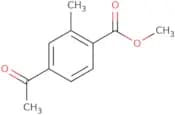
Formula:C8H10N2O4SPurity:Min. 95%Molecular weight:230.24 g/molMethyl 4-acetyl-2-methylbenzoate
CAS:Versatile small molecule scaffold
Formula:C11H12O3Purity:Min. 95%Molecular weight:192.21 g/mol3-(Morpholin-4-yl)pyridin-2-amine
CAS:3-(Morpholin-4-yl)pyridin-2-amine is a heterocycle that has been shown to be an efficient, regioselective, and nitrogen-containing aliphatic amine. It is a synlett that can be used as an aliphatic amine in the synthesis of nitrogen-containing compounds. 3-(Morpholin-4-yl)pyridin-2-amine has been shown to have efficient methods for the preparation of carbonyl compounds.
Formula:C9H13N3OPurity:Min. 95%Molecular weight:179.22 g/molRef: 3D-LRB64586
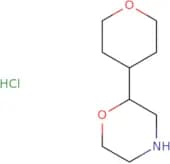
Discontinued product2-(Oxan-4-yl)morpholine hydrochloride
CAS:Versatile small molecule scaffold
Formula:C9H18ClNO2Purity:Min. 95%Molecular weight:207.7 g/molRef: 3D-LUD64089
Discontinued product3-(Aminomethyl)-2,2-difluoropentane hydrochloride
CAS:Versatile small molecule scaffoldFormula:C6H14ClF2NPurity:Min. 95%Molecular weight:173.6 g/molRef: 3D-LUD64101
Discontinued product1-[(1-Aminopropan-2-yl)oxy]-2-bromobenzene
CAS:Versatile small molecule scaffold
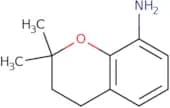
Formula:C9H12BrNOPurity:Min. 95%Molecular weight:230.1 g/mol2,2-Dimethyl-3,4-dihydro-2H-1-benzopyran-8-amine
CAS:Versatile small molecule scaffoldFormula:C11H15NOPurity:Min. 95%Molecular weight:177.24 g/molRef: 3D-LJC87188
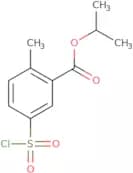
Discontinued productPropan-2-yl 5-(chlorosulfonyl)-2-methylbenzoate
CAS:Versatile small molecule scaffold
Formula:C11H13ClO4SPurity:Min. 95%Molecular weight:276.74 g/molRef: 3D-LJC80463
Discontinued productN-[(Quinolin-8-yl)methyl]methanesulfonamide
CAS:Versatile small molecule scaffold
Formula:C11H12N2O2SPurity:Min. 95%Molecular weight:236.29 g/molRef: 3D-LJC51797
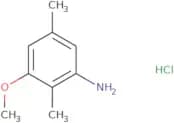
Discontinued product3-Methoxy-2,5-dimethylaniline hydrochloride
CAS:Versatile small molecule scaffold
Formula:C9H14ClNOPurity:Min. 95%Molecular weight:187.66 g/molRef: 3D-LJB55559
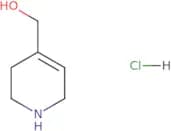
Discontinued product(1,2,3,6-Tetrahydropyridin-4-yl)methanol hydrochloride
CAS:Versatile small molecule scaffold
Formula:C6H12ClNOPurity:Min. 95%Molecular weight:149.6 g/molRef: 3D-LUD67665
Discontinued product[1-(4-Aminophenyl)cyclopropyl]methanol hydrochloride
CAS:Versatile small molecule scaffoldFormula:C10H14ClNOPurity:Min. 95%Molecular weight:199.7 g/molRef: 3D-LUD67881
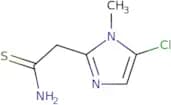
Discontinued product2-(5-Chloro-1-methyl-1H-imidazol-2-yl)ethanethioamide
CAS:Versatile small molecule scaffoldFormula:C6H8ClN3SPurity:Min. 95%Molecular weight:189.67 g/molRef: 3D-LYB34915
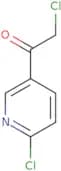
Discontinued product2-Chloro-1-(6-chloropyridin-3-yl)ethanone
CAS:Versatile small molecule scaffold
Formula:C7H5Cl2NOPurity:Min. 95%Molecular weight:190.02 g/molRef: 3D-LFA59200
Discontinued product1-Hydroxycyclopentane-1-carbonitrile
CAS:1-Hydroxycyclopentane-1-carbonitrile is a monomer that is hydrolyzed to form benzoin and cyanohydrins. It can be used in the production of scifinder as a monomer or dimerizer.
Formula:C6H9NOPurity:Min. 95%Molecular weight:111.14 g/mol4,5-Dihydro-1H-imidazol-2-amine hydrochloride
CAS:Please enquire for more information about 4,5-Dihydro-1H-imidazol-2-amine hydrochloride including the price, delivery time and more detailed product information at the technical inquiry form on this page
Formula:C3H7N3•HClPurity:Min. 95%Molecular weight:121.57 g/molRef: 3D-FD183639
Discontinued product4-Chloro-2-hydroxy-6-methylphenylboronic acid
CAS:Versatile small molecule scaffoldFormula:C7H8BClO3Purity:Min. 95%Molecular weight:186.4 g/mol8-Bromo-2-methylimidazo[1,2-a]pyridine
CAS:Versatile small molecule scaffold
Formula:C8H7N2BrPurity:Min. 95%Molecular weight:211.05 g/mol2-Bromo-3,3,3-trifluoro-1-propene
CAS:Controlled Product2-Bromo-3,3,3-trifluoro-1-propene is a chemical compound that has been synthesized in an asymmetric reaction. The reactant is bromopropane and the product is 2,2,2-trifluoropropene. The methylene group on the propene molecule is activated by the nucleophilic attack of a fluoride ion from hydrogen fluoride to form a cavity with a highly strained bond. The kinetic study of this reaction revealed that the activation energy for the reaction is 42 kJ/mol. Palladium-catalyzed coupling reactions are catalyzed by palladium and require nonpolar solvents such as toluene or dichloromethane. This type of reaction has been shown to be exothermic with an isolated yield of 1%.
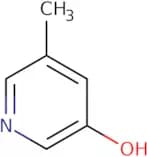
Formula:C3H2BrF3Purity:Min. 95%Color and Shape:Colorless PowderMolecular weight:174.95 g/mol3-Hydroxy-5-methylpyridine
CAS:3-Hydroxy-5-methylpyridine (3HMP) is a chemical substance that has been classified as an amine. It is a product of the metabolism of purines, which are nitrogenous bases found in DNA and RNA. 3HMP is produced by aerogenic bacteria (such as Enterobacter), and can be used to estimate the number of these bacteria present in water samples. 3HMP has been shown to have antiviral properties against influenza virus, and can be used as a biomarker for the presence of other viruses in animals. 3HMP also has mineralization properties, which have been studied extensively, particularly with regards to pancreatic disease.
Formula:C6H7NOPurity:Min. 95%Color and Shape:PowderMolecular weight:109.13 g/molRef: 3D-FH16174
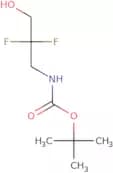
Discontinued producttert-Butyl (2,2-difluoro-3-hydroxypropyl)carbamate
CAS:Versatile small molecule scaffoldFormula:C10H13NO4Purity:Min. 95%Molecular weight:211.21 g/mol4,5-Dihydroxy-2,3-Pentanedione
CAS:4,5-Dihydroxy-2,3-pentanedione is a carbonyl compound that is the product of the oxidation of ascorbic acid. It is used in wastewater treatment and has antimicrobial properties against infectious diseases. This compound has been shown to inhibit protein synthesis by binding to the ribosome and preventing the formation of peptide bonds between amino acids. 4,5-Dihydroxy-2,3-pentanedione has also been shown to bind to plasma proteins, which may be due to its acyl chain structure. 4,5-Dihydroxy-2,3-pentanedione can be synthesized in a catalytic mechanism that involves dehydroascorbic acid and molecular oxygen.
Formula:C5H8O4Purity:Min. 95%Color and Shape:PowderMolecular weight:132.11 g/molRef: 3D-FD180770
Discontinued productPiperyline
CAS:Piperyline is an alkanoic acid that has shown to be effective against skin cancer. It also has antimicrobial properties, which may be due to its ability to bind metal ions and form polymeric compounds. Piperyline inhibits microbial growth by inhibiting the synthesis of proteins and nucleic acids. The antimicrobial activity is related to its cationic polymerization with hydroxyl groups, which forms a structure that can inhibit microbial enzymes and disrupt microbial cell membranes. This compound also interacts with the skin's natural lipids, making it difficult for microorganisms to attach and grow on the skin. Piperyline is synthesized in organic chemistry laboratories as an amide precursor of other pharmaceuticals such as penicillin.
Formula:C16H17NO3Purity:Min. 95%Molecular weight:271.31 g/mol


![1-(4-{[4-(Ethylamino)pyridin-2-yl]methyl}piperazin-1-yl)ethan-1-one](/_next/image/?url=https%3A%2Fstatic.cymitquimica.com%2Fproducts%2F3D%2Fthumb-webp%2FYGC03202.webp&w=3840&q=75)

![4-Chloro-5H,6H,7H-pyrimido[4,5-b][1,4]oxazin-6-one](/_next/image/?url=https%3A%2Fstatic.cymitquimica.com%2Fproducts%2F3D%2Fthumb-webp%2FLYB52467.webp&w=3840&q=75)
![[3-(Cyclohexyloxy)phenyl]methanamine hydrochloride](/_next/image/?url=https%3A%2Fstatic.cymitquimica.com%2Fproducts%2F3D%2Fthumb-webp%2FLCC31568.webp&w=3840&q=75)

![2-{3-Cyclopropyl-5-methyl-1H-pyrazolo[3,4-b]pyridin-1-yl}acetic acid](/_next/image/?url=https%3A%2Fstatic.cymitquimica.com%2Fproducts%2F3D%2Fthumb-webp%2FMMB60570.webp&w=3840&q=75)
![2-[6-(Furan-2-yl)-3-methyl-4-(trifluoromethyl)-1H-pyrazolo[3,4-b]pyridin-1-yl]acetic acid](/_next/image/?url=https%3A%2Fstatic.cymitquimica.com%2Fproducts%2F3D%2Fthumb-webp%2FMMB60578.webp&w=3840&q=75)
![6-Bromo-1,4-dihydro-2H-pyrido-[2,3-d][1,3]oxazin-2-one](/_next/image/?url=https%3A%2Fstatic.cymitquimica.com%2Fproducts%2F3D%2Fthumb-webp%2FKNA03238.webp&w=3840&q=75)
![4-[(2-Amino-1,3-thiazol-5-yl)methyl]-3-(trifluoromethyl)benzonitrile](/_next/image/?url=https%3A%2Fstatic.cymitquimica.com%2Fproducts%2F3D%2Fthumb-webp%2FMMB62900.webp&w=3840&q=75)
![6-Ethyl-3-methyl-1-phenyl-1H-pyrazolo[3,4-b]pyridine-4-carboxylic acid](/_next/image/?url=https%3A%2Fstatic.cymitquimica.com%2Fproducts%2F3D%2Fthumb-webp%2FMMB69138.webp&w=3840&q=75)
![4-[(tert-Butoxy)methyl]piperidine hydrochloride](/_next/image/?url=https%3A%2Fstatic.cymitquimica.com%2Fproducts%2F3D%2Fthumb-webp%2FMRD31454.webp&w=3840&q=75)

![[(1,4-Dioxan-2-yl)methyl]urea](/_next/image/?url=https%3A%2Fstatic.cymitquimica.com%2Fproducts%2F3D%2Fthumb-webp%2FJXB82665.webp&w=3840&q=75)

![4-Methyl-2-[(piperidin-4-yl)methyl]-1,3-thiazole-5-carboxylic acid dihydrochloride](/_next/image/?url=https%3A%2Fstatic.cymitquimica.com%2Fproducts%2F3D%2Fthumb-webp%2FYPD34523.webp&w=3840&q=75)

![N-[3-Oxo-3-(pyrrolidin-1-yl)propyl]-4H,5H,6H,7H,8H-cyclohepta[b]thiophene-2-carboxamide](/_next/image/?url=https%3A%2Fstatic.cymitquimica.com%2Fproducts%2F3D%2Fthumb-webp%2FLSB50378.webp&w=3840&q=75)
![({2-[(5-Methylisoxazol-3-yl)amino]-2-oxoethyl}thio)acetic acid](/_next/image/?url=https%3A%2Fstatic.cymitquimica.com%2Fproducts%2F3D%2Fthumb-webp%2FLSA09157.webp&w=3840&q=75)


![1-[(1-Aminopropan-2-yl)oxy]-2-bromobenzene](/_next/image/?url=https%3A%2Fstatic.cymitquimica.com%2Fproducts%2F3D%2Fthumb-webp%2FLKB76331.webp&w=3840&q=75)
![N-[(Quinolin-8-yl)methyl]methanesulfonamide](/_next/image/?url=https%3A%2Fstatic.cymitquimica.com%2Fproducts%2F3D%2Fthumb-webp%2FLJC51797.webp&w=3840&q=75)
![[1-(4-Aminophenyl)cyclopropyl]methanol hydrochloride](/_next/image/?url=https%3A%2Fstatic.cymitquimica.com%2Fproducts%2F3D%2Fthumb-webp%2FLUD67881.webp&w=3840&q=75)


![8-Bromo-2-methylimidazo[1,2-a]pyridine](/_next/image/?url=https%3A%2Fstatic.cymitquimica.com%2Fproducts%2F3D%2Fthumb-webp%2FUXB37475.webp&w=3840&q=75)