Building Blocks
This section contains fundamental products for the synthesis of organic and biological compounds. Building blocks are the essential starting materials used to construct complex molecules through various chemical reactions. They play a critical role in drug discovery, material science, and chemical research. At CymitQuimica, we offer a diverse range of high-quality building blocks to support your innovative research and industrial projects, ensuring you have the essential components for successful synthesis.
Subcategories of "Building Blocks"
- Boronic Acids & Boronic Acid Derivatives(5,778 products)
- Chiral Building Blocks(1,243 products)
- Hydrocarbon Building Blocks(6,098 products)
- Organic Building Blocks(61,046 products)
Found 203857 products of "Building Blocks"
Sort by
Purity (%)
0
100
|
0
|
50
|
90
|
95
|
100
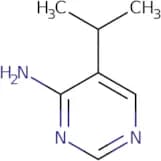
5-(Propan-2-yl)pyrimidin-4-amine
CAS:<p>Versatile small molecule scaffold</p>Formula:C7H11N3Purity:Min. 95%Molecular weight:137.18 g/molRef: 3D-FAA00030
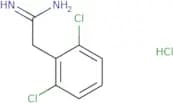
Discontinued product2-(2,6-Dichlorophenyl)ethanimidamide hydrochloride
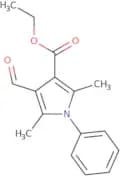
CAS:<p>Covid-19 is a drug that has been developed to help prevent and treat pandemics. Covid-19 is a resonance compound, which can be accessed by magnetic resonance. Covid-19 has two chemical shifts, which are related to the coupling constants between the nuclear spins in the molecule. The covid-19 molecule is made up of five different heterocycles and it has a constant magnetic resonance signal at 1H NMR. Covid-19 may be used for prevention and treatment of pandemic influenza A (H5N1) virus infection.</p>Formula:C8H9Cl3N2Purity:Min. 95%Molecular weight:239.53 g/mol4-Formyl-2,5-dimethyl-1-phenyl-1H-pyrrole-3-carboxylic acid ethyl ester
CAS:<p>Versatile small molecule scaffold</p>Formula:C16H17NO3Purity:Min. 95%Molecular weight:271.31 g/mol2-Oxaspiro[4.4]nonane-1,3-dione
CAS:<p>2-Oxaspiro[4.4]nonane-1,3-dione is a heterocycle that has been developed as a lead molecule for the treatment of cancer. It was discovered by researchers at the University of Illinois who were investigating the use of Friedel-Crafts reaction to synthesize triazoles. 2-Oxaspiro[4.4]nonane-1,3-dione has physicochemical parameters that make it ideal for pharmaceutical research and development. This molecule has been shown to have anti-inflammatory properties and can be used to focus on carbon bond synthesis in order to synthesize pyridazines and ketocarboxylic acid derivatives.</p>Formula:C8H10O3Purity:Min. 95%Molecular weight:154.16 g/molRef: 3D-FAA62390
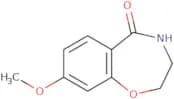
Discontinued product8-Methoxy-2,3,4,5-tetrahydro-1,4-benzoxazepin-5-one
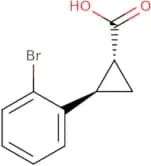
CAS:<p>Versatile small molecule scaffold</p>Formula:C10H11NO3Purity:Min. 95%Molecular weight:193.2 g/molrel-(1R,2R)-2-(2-Bromophenyl)cyclopropane-1-carboxylic acid
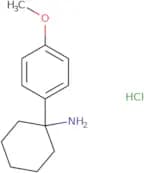
CAS:<p>Versatile small molecule scaffold</p>Formula:C10H9BrO2Purity:Min. 95%Molecular weight:241.08 g/mol1-(4-Methoxyphenyl)cyclohexan-1-amine hydrochloride
CAS:Controlled Product<p>Versatile small molecule scaffold</p>Formula:C13H20ClNOPurity:Min. 95%Molecular weight:241.8 g/mol1-(2-Methylpropyl)cyclopropan-1-amine hydrochloride
CAS:<p>Versatile small molecule scaffold</p>Formula:C7H16ClNPurity:Min. 95%Molecular weight:149.66 g/mol2-Phenylpyrazolo[1,5-a]pyrazin-4(5H)-one
CAS:<p>Versatile small molecule scaffold</p>Formula:C12H9N3OPurity:Min. 95%Molecular weight:211.22 g/mol5-Methyl-5H,6H,7H-pyrrolo[1,2-a]imidazol-7-amine
CAS:<p>Versatile small molecule scaffold</p>Formula:C7H11N3Purity:Min. 95%Molecular weight:137.18 g/molRef: 3D-FAD45710
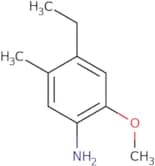
Discontinued product4-Ethyl-2-methoxy-5-methylaniline
CAS:<p>Versatile small molecule scaffold</p>Formula:C10H15NOPurity:Min. 95%Molecular weight:165.23 g/molRef: 3D-FAD88076
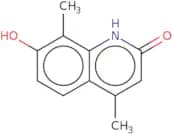
Discontinued product7-Hydroxy-4,8-dimethyl-1,2-dihydroquinolin-2-one
CAS:<p>Versatile small molecule scaffold</p>Formula:C11H11NO2Purity:Min. 95%Molecular weight:189.2 g/molRef: 3D-AFA70998
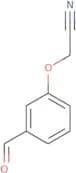
Discontinued product2-(3-Formylphenoxy)acetonitrile
CAS:<p>Versatile small molecule scaffold</p>Formula:C9H7NO2Purity:Min. 95%Molecular weight:161.16 g/molRef: 3D-AFA41890
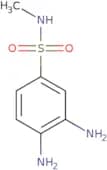
Discontinued product3,4-Diamino-N-methylbenzene-1-sulfonamide
CAS:Versatile small molecule scaffoldFormula:C7H11N3O2SPurity:Min. 95%Molecular weight:201.25 g/molRef: 3D-AFA10642
Discontinued product3-[(4-Aminopiperidin-1-yl)methyl]benzonitrile
CAS:<p>Versatile small molecule scaffold</p>Formula:C13H17N3Purity:Min. 95%Molecular weight:215.29 g/molRef: 3D-AEB21223
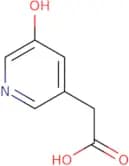
Discontinued product2-(5-Hydroxypyridin-3-yl)acetic acid
CAS:<p>Versatile small molecule scaffold</p>Formula:C7H7NO3Purity:Min. 95%Molecular weight:153.14 g/molRef: 3D-AEA95868
Discontinued product2-[4-(4-Methoxyphenoxy)phenyl]ethan-1-amine hydrochloride
CAS:<p>Versatile small molecule scaffold</p>Formula:C15H18ClNO2Purity:Min. 95%Molecular weight:279.76 g/molRef: 3D-AEA95600
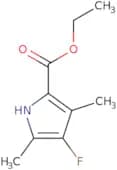
Discontinued product4-Fluoro-3,5-dimethyl-1H-pyrrole-2-carboxylic acid ethyl ester
CAS:<p>Versatile small molecule scaffold</p>Formula:C9H12FNO2Purity:Min. 95%Molecular weight:185.2 g/molRef: 3D-AEA81858
Discontinued product1a,2,3a,5b-Tetrachlorohexahydro-3,3-dimethoxy-1,2,4-ethanylylidene-1H-cyclobuta[cd]pentalene-5,7(1aH)-dione
CAS:<p>Versatile small molecule scaffold</p>Formula:C13H10Cl4O4Purity:Min. 95%Molecular weight:372 g/moltert-Butyl 5-nitroisoindoline-2-carboxylate
CAS:<p>tert-Butyl 5-nitroisoindoline-2-carboxylate is a platelet inhibitor that belongs to the group of antagonists. It has been shown to inhibit human platelets and inhibit the aggregation of fibrinogen. Tert-butyl 5-nitroisoindoline-2-carboxylate has also been shown to have high potency in animal models, but it is not yet known whether it will be effective in humans. The drug has been shown to be a potent antagonist at the platelet P2Y12 receptor, which mediates platelet aggregation and activation, as well as inhibiting ADP-, collagen-, thrombin-, and epinephrine-induced aggregation. Tert-butyl 5-nitroisoindoline-2-carboxylate may also act as a surrogate for agonists or mimetics of the P2Y12 receptor.</p>Formula:C13H16N2O4Purity:Min. 95%Molecular weight:264.28 g/molRef: 3D-ARA72763
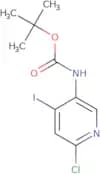
Discontinued product(6-Chloro-4-iodopyridin-3-yl)carbamic acid tert-butyl ester
CAS:<p>Versatile small molecule scaffold</p>Formula:C10H12ClIN2O2Purity:Min. 95%Molecular weight:354.57 g/mol4-[(4-Methylpyridin-2-yl)oxy]benzoic acid
CAS:<p>Versatile small molecule scaffold</p>Formula:C13H11NO3Purity:Min. 95%Molecular weight:229.2 g/molRef: 3D-ICA83587
Discontinued product2-(Dimethylamino)-2-phenylacetic acid hydrochloride
CAS:<p>Versatile small molecule scaffold</p>Formula:C10H14ClNO2Purity:Min. 95%Molecular weight:215.67 g/mol2-Chloro-1-ethyl-1H-benzo[d]imidazole
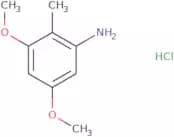
CAS:<p>2-Chloro-1-ethyl-1H-benzo[d]imidazole (2C1EB) is an experimental benzimidazole derivative that has shown antitumor activity in vitro and in vivo. 2C1EB inhibits the growth of cancer cells by inducing cell cycle arrest and apoptosis. It also inhibits the production of reactive oxygen species, which may be a potential mechanism for its anticancer activity. 2C1EB has been shown to inhibit tumor growth in mice models and to have cytotoxic effects against human lung adenocarcinoma A549 cells.</p>Formula:C9H9ClN2Purity:Min. 95%Molecular weight:180.64 g/mol3,5-Dimethoxy-2-methylaniline hydrochloride
CAS:<p>Versatile small molecule scaffold</p>Formula:C9H14ClNO2Purity:Min. 95%Molecular weight:203.66 g/molRef: 3D-IBA58040
Discontinued productN-[2-(3-Methoxyphenyl)ethyl]-N-methylamine
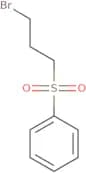
CAS:Controlled Product<p>Versatile small molecule scaffold</p>Formula:C10H15NOPurity:Min. 95%Molecular weight:165.23 g/mol(3-Bromopropanesulfonyl)benzene
CAS:<p>Versatile small molecule scaffold</p>Formula:C9H11BrO2SPurity:Min. 95%Molecular weight:263.15 g/molRef: 3D-IBA45105
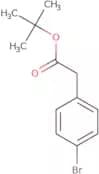
Discontinued producttert-Butyl 2-(4-bromophenyl)acetate
CAS:<p>Versatile small molecule scaffold</p>Formula:C12H15BrO2Purity:Min. 95%Molecular weight:271.15 g/molRef: 3D-IBA15558
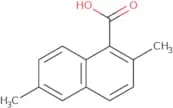
Discontinued product2,6-Dimethylnaphthalene-1-carboxylic acid
CAS:<p>Versatile small molecule scaffold</p>Formula:C13H12O2Purity:Min. 95%Molecular weight:200.23 g/molRef: 3D-IBA12171
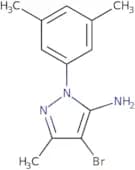
Discontinued product4-Bromo-1-(3,5-dimethylphenyl)-3-methyl-1H-pyrazol-5-amine
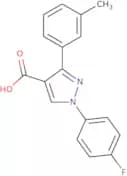
CAS:<p>Versatile small molecule scaffold</p>Formula:C12H14BrN3Purity:Min. 95%Molecular weight:280.16 g/mol1-(4-Fluorophenyl)-3-(3-methylphenyl)-1H-pyrazole-4-carboxylic acid
CAS:<p>Versatile small molecule scaffold</p>Formula:C17H13FN2O2Purity:Min. 95%Molecular weight:296.29 g/molEthyl 6-oxospiro[2.4]heptane-5-carboxylate
CAS:<p>Versatile small molecule scaffold</p>Formula:C10H14O3Purity:Min. 95%Molecular weight:182.2 g/molRef: 3D-GNB08814
Discontinued product4-[4-(Thiophene-2-carbonyl)piperazin-1-yl]-1H-indole
CAS:<p>Versatile small molecule scaffold</p>Formula:C17H17N3OSPurity:Min. 95%Molecular weight:311.4 g/molRef: 3D-GKA45854
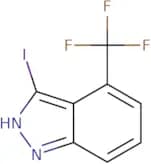
Discontinued product3-Iodo-4-(trifluoromethyl)-1H-indazole
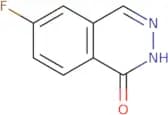
CAS:<p>Versatile small molecule scaffold</p>Formula:C8H4F3IN2Purity:Min. 95%Molecular weight:312.03 g/mol6-fluoro-1,2-dihydrophthalazin-1-one
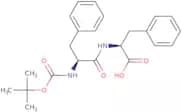
CAS:<p>Versatile small molecule scaffold</p>Formula:C8H5FN2OPurity:Min. 95%Molecular weight:164.14 g/molBoc-Phe-Phe-OH
CAS:<p>Boc-Phe-Phe-OH is a linker that is used to create homologues. It has been shown to be able to form supramolecular structures and encapsulate biomolecules, such as amino acids. The ester linkage of Boc-Phe-Phe-OH can be modified by the addition of a carboxylic acid, which can lead to changes in its fluorescence and magnetic properties. Boc-Phe-Phe-OH is primarily used as an intermediate for fluorescent probes or other molecules.</p>Formula:C23H28N2O5Purity:Min. 95%Molecular weight:412.48 g/mol1-[3-(Dimethylamino)propyl]-1-(4-fluorophenyl)-1,3-dihydro-3-oxo-5-isobenzofurancarbonitrile
CAS:<p>Please enquire for more information about 1-[3-(Dimethylamino)propyl]-1-(4-fluorophenyl)-1,3-dihydro-3-oxo-5-isobenzofurancarbonitrile including the price, delivery time and more detailed product information at the technical inquiry form on this page</p>Formula:C20H19FN2O2Purity:Min. 95%Molecular weight:338.38 g/molRef: 3D-FD184085
Discontinued producttrans-1,2-Dichloroethylene
CAS:<p>Trans-1,2-Dichloroethylene is a chlorinated hydrocarbon that is used in the production of polyvinyl chloride plastics. When ingested at dietary concentrations, trans-1,2-Dichloroethylene may cause liver damage and death in CD-1 mice. Trans-1,2-Dichloroethylene has been shown to react with nucleophilic substitutions and produce toxic reaction products. This chemical also causes polymerase chain reactions that can lead to cell death. The effective dose for this chemical is unknown because it has not been tested in clinical trials.</p>Formula:C2H2Cl2Purity:Min. 95%Molecular weight:96.94 g/molIsononyl alcohol
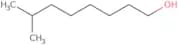
CAS:<p>Isononyl alcohol is a polycarboxylic acid that has been used in the treatment of skin conditions, such as atopic dermatitis and psoriasis. It has been shown to penetrate the skin and stimulate the production of sebum. Isononyl alcohol is also used as a plasticizer for polyvinyl chloride (PVC) and other plastics, which increases their flexibility. This chemical also has a hydrophobic effect, which may be due to its hydroxyl group. The unsaturated alkyl chain on this chemical also makes it susceptible to oxidation by ozone in air and water vapor in air. Isononyl alcohol is metabolized by humans through conjugation with glucuronic acid or sulfate esters.</p>Formula:C9H20OPurity:Min. 95%Color and Shape:Clear LiquidMolecular weight:144.25 g/molRef: 3D-FI146181
Discontinued product3-(Methoxycarbonyl)pyridine-4-carboxylic acid
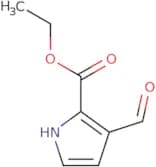
CAS:<p>Versatile small molecule scaffold</p>Formula:C8H7NO4Purity:Min. 95%Molecular weight:181.15 g/molethyl 3-formyl-1H-pyrrole-2-carboxylate
CAS:<p>Ethyl 3-formyl-1H-pyrrole-2-carboxylate is a formyl compound with the molecular formula C8H8O3. It is a colorless liquid that has a strong odor. The compound can be obtained by the reaction of ethyl acetoacetate and pyrrole in the presence of aluminum chloride. The compound has been studied for its nuclear magnetic resonance (NMR) properties. It has two conformers, which are distinguished by their different chemical shifts, and this difference can be used to study coupling between the carbonyl group and other groups in the molecule.</p>Formula:C8H9NO3Purity:Min. 95%Molecular weight:167.2 g/moltert-Butyl 3-(trifluoromethyl)piperazine-1-carboxylate
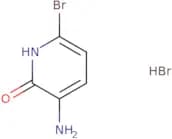
CAS:<p>Versatile small molecule scaffold</p>Formula:C10H17F3N2O2Purity:Min. 95%Molecular weight:254.25 g/mol3-amino-6-bromopyridin-2-ol hydrobromide
CAS:<p>Versatile small molecule scaffold</p>Formula:C5H6Br2N2OPurity:Min. 95%Molecular weight:269.9 g/molN-Boc Palbociclib-d4
CAS:<p>Versatile small molecule scaffold</p>Formula:C29H33D4N7O4Purity:Min. 95%Molecular weight:551.67 g/mol2-Bromo-3,3,3-trifluoro-1-propene
CAS:Controlled Product<p>2-Bromo-3,3,3-trifluoro-1-propene is a chemical compound that has been synthesized in an asymmetric reaction. The reactant is bromopropane and the product is 2,2,2-trifluoropropene. The methylene group on the propene molecule is activated by the nucleophilic attack of a fluoride ion from hydrogen fluoride to form a cavity with a highly strained bond. The kinetic study of this reaction revealed that the activation energy for the reaction is 42 kJ/mol. Palladium-catalyzed coupling reactions are catalyzed by palladium and require nonpolar solvents such as toluene or dichloromethane. This type of reaction has been shown to be exothermic with an isolated yield of 1%.</p>Formula:C3H2BrF3Purity:Min. 95%Color and Shape:Colorless PowderMolecular weight:174.95 g/mol4-Formylbenzoic acid
CAS:<p>4-Formylbenzoic acid is an organic compound with the molecular formula CH2=C(O)CH=CHCO2H. It is a white solid that is soluble in water and has a strong, unpleasant odor. 4-Formylbenzoic acid has been shown to have affinity for binding to odorous molecules such as sulfur compounds, amines, and mercaptans. The binding of these molecules to the 4-formylbenzoic acid leads to a decrease in their odor concentration. This process can be done using electrochemical impedance spectroscopy or optical sensors. The oxidation of 4-formylbenzoic acid by trifluoroacetic acid produces 2-formylphenol and formaldehyde, which are themselves volatile compounds with an unpleasant odor. These reactions may be used as wastewater treatment methods. Langmuir adsorption isotherm may be used as an analytical method for measuring the concentration of 4-formylbenzoic acid</p>Formula:C8H6O3Purity:Min. 98 Area-%Color and Shape:White Yellow PowderMolecular weight:150.13 g/molRef: 3D-FF23577
Discontinued product4-(Methylamino)benzene-1-sulfonamide
CAS:<p>Versatile small molecule scaffold</p>Formula:C7H10N2O2SPurity:Min. 95%Molecular weight:186.23 g/moltert-Butyl 5-bromo-3,4-dihydro-2,7-naphthyridine-2(1H)-carboxylate
CAS:<p>Versatile small molecule scaffold</p>Formula:C13H17BrN2O2Purity:Min. 95%Molecular weight:313.19 g/mol3-Methylbenzo[b]thiophene-2-carboxylic acid
CAS:<p>3-Methylbenzo[b]thiophene-2-carboxylic acid (MBTCA) is a heterocyclic compound that is an intermediate in the synthesis of 3-methylthiophene-2-carboxylic acid, a precursor to other drugs. MBTCA is an aerobic, nonpolar compound that has shown antimicrobial activity against some bacteria and fungi. It also has been shown to have practicality as a biomolecular probe for methyl groups in organic solvents. MBTCA can be synthesized by nitration of benzene in the presence of sulfur and sulfoxides. This reaction produces nitrobenzene, which can then be oxidized by potassium permanganate or hydrogen peroxide to produce MBTCA. The most common isomer of MBTCA is 2-(3,5-dimethoxybenzylidene)tetrahydrofuran, with three methyl groups on the</p>Formula:C10H8O2SPurity:Min. 95%Molecular weight:192.23 g/mol2-Acetylbenzoic acid
CAS:<p>2-Acetylbenzoic acid is a functional molecule that contains an acetyl group. It can form hydrogen bonds with other molecules and has been shown to induce apoptosis in cells. The reaction products of 2-acetylbenzoic acid are malonic acid, acetylsalicylic acid, and 2-benzoylbenzoic acid. These three compounds are made by the addition of hydrogen or hydroxide to the molecule 2-acetylbenzoic acid. The molecule has two functional groups: a carbonyl group and an acetyl group. The chemical structure of this molecule can be seen in the figure below.<br>2-Acetylbenzoic Acid</p>Formula:C9H8O3Purity:Min. 95%Color and Shape:PowderMolecular weight:164.16 g/molRef: 3D-FA05086
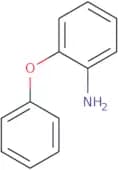
Discontinued product2-Phenoxyaniline
CAS:<p>2-Phenoxyaniline is a nitro compound that can be converted to the corresponding palladium complexes. It is an inhibitor of the acylation reaction, which is a type of chemical reaction in which an organic molecule reacts with an acid. The inhibition of this reaction has been shown to have an effect on heart disease, specifically by lowering cholesterol levels and reducing atherosclerosis. 2-Phenoxyaniline has also been shown to inhibit the activation energy for electron transfer reactions, making it useful as a catalyst in analytical methods. 2-Phenoxyaniline also undergoes vibrational spectroscopy when exposed to liquid chromatography and other analytical methods.</p>Formula:C12H11NOPurity:Min. 95%Color and Shape:Brown PowderMolecular weight:185.22 g/mol2,2',4,4'-tetrahydroxybenzophenone
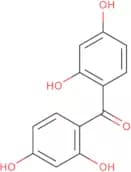
CAS:<p>2,2',4,4'-tetrahydroxybenzophenone is a hydroxylated benzophenone that has immunomodulatory effects. It binds to the receptor in the immune system and can cause an increase in cytokine production. 2,2',4,4'-tetrahydroxybenzophenone is cytotoxic and has significant toxicity in vitro. The molecule has been shown to disrupt mitochondrial membrane potential. This may be due to its ability to form hydrogen bonds with molecules on the mitochondrial membrane. 2,2',4,4'-tetrahydroxybenzophenone also modulates transcriptional regulation of genes involved in cell proliferation and apoptosis. The drug is detectable at low levels by mass spectrometry and is not known to have any toxicological effects.END>></p>Formula:C13H10O5Purity:Min. 95%Color and Shape:Green PowderMolecular weight:246.22 g/molRef: 3D-FT55663
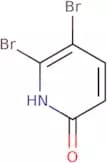
Discontinued product5,6-Dibromopyridin-2-ol
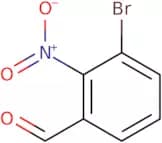
CAS:<p>Versatile small molecule scaffold</p>Formula:C5H3Br2NOPurity:Min. 95%Molecular weight:252.89 g/mol3-Bromo-2-nitrobenzaldehyde
CAS:<p>3-Bromo-2-nitrobenzaldehyde is an organic chemical compound used in the synthesis of other chemical compounds. It is a colorless liquid that can be easily synthesized using potassium permanganate, tetrahydrofuran, acetone and hydrochloric acid. The chemical reaction is carried out by reacting potassium permanganate with hydrochloric acid to form potassium chloride and manganese dioxide. The manganese dioxide then reacts with acetone to produce 3-bromo-2-nitrobenzaldehyde. This synthetic method for producing 3-bromo-2-nitrobenzaldehyde uses less hazardous chemicals than the traditional method.</p>Formula:C7H4BrNO3Purity:Min. 95%Molecular weight:230.02 g/molH-Ser-Ala-Glu-Glu-Tyr-Glu-Tyr-Pro-Ser OH trifluoroacetate
CAS:<p>Please enquire for more information about H-Ser-Ala-Glu-Glu-Tyr-Glu-Tyr-Pro-Ser OH trifluoroacetate including the price, delivery time and more detailed product information at the technical inquiry form on this page</p>Formula:C47H63N9O20•(C2HF3O2)xPurity:Min. 95%Ref: 3D-FS183525
Discontinued productGivinostat hydrochloride
CAS:<p>Givinostat hydrochloride is a research chemical that has shown potential in various fields. It is a molybdenum-based compound that has been studied for its effects on dopamine release and hydrogen evolution. Givinostat hydrochloride has also been investigated as an osteoclast inhibitor, which may be beneficial in the treatment of bone-related disorders such as osteoporosis. Additionally, it has shown promise as a retinoid and calpain inhibitor, suggesting its potential use in dermatological conditions and neurodegenerative diseases. The compound contains fluorine atoms, making it suitable for imaging studies using fluorine MRI techniques. Givinostat hydrochloride has been tested on MDA-MB-231 cells and has shown inhibitory effects on their growth, indicating its potential as an anticancer agent.</p>Formula:C24H27N3O4·HClPurity:Min. 95%Molecular weight:457.95 g/mol4-Benzylphenylacetonitrile
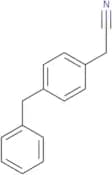
CAS:<p>Versatile small molecule scaffold</p>Formula:C15H13NPurity:Min. 95%Molecular weight:207.28 g/mol

![2-Oxaspiro[4.4]nonane-1,3-dione](/_next/image/?url=https%3A%2Fstatic.cymitquimica.com%2Fproducts%2F3D%2Fthumb-webp%2FFAA62390.webp&w=3840&q=75)

![2-Phenylpyrazolo[1,5-a]pyrazin-4(5H)-one](/_next/image/?url=https%3A%2Fstatic.cymitquimica.com%2Fproducts%2F3D%2Fthumb-webp%2FFAC78404.webp&w=3840&q=75)
![5-Methyl-5H,6H,7H-pyrrolo[1,2-a]imidazol-7-amine](/_next/image/?url=https%3A%2Fstatic.cymitquimica.com%2Fproducts%2F3D%2Fthumb-webp%2FFAD45710.webp&w=3840&q=75)
![3-[(4-Aminopiperidin-1-yl)methyl]benzonitrile](/_next/image/?url=https%3A%2Fstatic.cymitquimica.com%2Fproducts%2F3D%2Fthumb-webp%2FAEB21223.webp&w=3840&q=75)
![2-[4-(4-Methoxyphenoxy)phenyl]ethan-1-amine hydrochloride](/_next/image/?url=https%3A%2Fstatic.cymitquimica.com%2Fproducts%2F3D%2Fthumb-webp%2FAEA95600.webp&w=3840&q=75)
![1a,2,3a,5b-Tetrachlorohexahydro-3,3-dimethoxy-1,2,4-ethanylylidene-1H-cyclobuta[cd]p…](/_next/image/?url=https%3A%2Fstatic.cymitquimica.com%2Fproducts%2F3D%2Fthumb-webp%2FACA87439.webp&w=3840&q=75)

![4-[(4-Methylpyridin-2-yl)oxy]benzoic acid](/_next/image/?url=https%3A%2Fstatic.cymitquimica.com%2Fproducts%2F3D%2Fthumb-webp%2FICA83587.webp&w=3840&q=75)

![2-Chloro-1-ethyl-1H-benzo[d]imidazole](/_next/image/?url=https%3A%2Fstatic.cymitquimica.com%2Fproducts%2F3D%2Fthumb-webp%2FICA53315.webp&w=3840&q=75)
![N-[2-(3-Methoxyphenyl)ethyl]-N-methylamine](/_next/image/?url=https%3A%2Fstatic.cymitquimica.com%2Fproducts%2F3D%2Fthumb-webp%2FIBA54362.webp&w=3840&q=75)
![Ethyl 6-oxospiro[2.4]heptane-5-carboxylate](/_next/image/?url=https%3A%2Fstatic.cymitquimica.com%2Fproducts%2F3D%2Fthumb-webp%2FGNB08814.webp&w=3840&q=75)
![4-[4-(Thiophene-2-carbonyl)piperazin-1-yl]-1H-indole](/_next/image/?url=https%3A%2Fstatic.cymitquimica.com%2Fproducts%2F3D%2Fthumb-webp%2FGKA45854.webp&w=3840&q=75)
![1-[3-(Dimethylamino)propyl]-1-(4-fluorophenyl)-1,3-dihydro-3-oxo-5-isobenzofurancarbonitrile](/_next/image/?url=https%3A%2Fstatic.cymitquimica.com%2Fproducts%2F3D%2Fthumb-webp%2FFD184085.webp&w=3840&q=75)





![3-Methylbenzo[b]thiophene-2-carboxylic acid](/_next/image/?url=https%3A%2Fstatic.cymitquimica.com%2Fproducts%2F3D%2Fthumb-webp%2FDAA13378.webp&w=3840&q=75)