Building Blocks
This section contains fundamental products for the synthesis of organic and biological compounds. Building blocks are the essential starting materials used to construct complex molecules through various chemical reactions. They play a critical role in drug discovery, material science, and chemical research. At CymitQuimica, we offer a diverse range of high-quality building blocks to support your innovative research and industrial projects, ensuring you have the essential components for successful synthesis.
Subcategories of "Building Blocks"
- Boronic Acids & Boronic Acid Derivatives(5,778 products)
- Chiral Building Blocks(1,243 products)
- Hydrocarbon Building Blocks(6,097 products)
- Organic Building Blocks(61,052 products)
Found 201390 products of "Building Blocks"
Sort by
Purity (%)
0
100
|
0
|
50
|
90
|
95
|
100
Ethyl imidazo[1,5-a]pyrimidine-8-carboxylate
CAS:<p>Versatile small molecule scaffold</p>Formula:C9H9N3O2Purity:Min. 95%Molecular weight:191.19 g/molRef: 3D-HBA70460
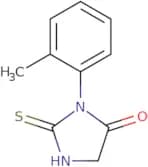
Discontinued product1-(2-Methylphenyl)-2-sulfanyl-4,5-dihydro-1H-imidazol-5-one
CAS:<p>1-(2-Methylphenyl)-2-sulfanyl-4,5-dihydro-1H-imidazol-5-one is a cross linking agent that is used in the production of polyurethanes. It is derived from 2,2'-oxydiethanol and can be used as a polymerization catalyst for polyurethane resins. 1-(2-Methylphenyl)-2-sulfanyl-4,5-dihydro-1H-imidazol-5 -one has been shown to have antibacterial properties against gram positive bacteria such as Staphylococcus aureus and Streptococcus pneumoniae. The antibacterial activity was attributed to its ability to form covalent bonds with carboxylic acid groups on the bacterial cell wall.</p>Formula:C10H10N2OSPurity:Min. 95%Molecular weight:206.27 g/moltrans-2,3-Dimethoxycinnamic Acid
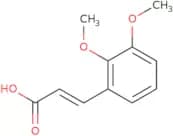
CAS:<p>Trans-2,3-dimethoxycinnamic acid is a dicarboxylic acid that is formed through the condensation of phenylacetic acid and methanol. This compound has been used in the synthesis of pharmaceuticals, such as antihistamines. Trans-2,3-dimethoxycinnamic acid has also been shown to have antioxidant properties by scavenging free radicals produced during lipid peroxidation.</p>Formula:C11H12O4Purity:Min. 95%Molecular weight:208.21 g/mol5,5-Dicyclopropylimidazolidine-2,4-dione
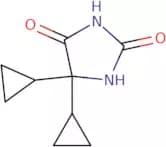
CAS:<p>5,5-Dicyclopropylimidazolidine-2,4-dione is an ammonium salt that has a strong antispasmodic effect. It is used to treat muscle spasms and other types of spasticity. 5,5-Dicyclopropylimidazolidine-2,4-dione also has an alkali metal (e.g., sodium) or alkali earth metal (e.g., magnesium) salt form that can be used for the treatment of cystitis, pyelonephritis, and other urinary tract infections. This compound is converted to the corresponding hydantoin derivative in vivo by hydrolysis of the ethoxide group. Hydantoins are related to the hydantoin class of nonsteroidal anti-inflammatory drugs (NSAIDs).</p>Formula:C9H12N2O2Purity:Min. 95%Molecular weight:180.2 g/molRef: 3D-HAA25075
Discontinued product3,5-Dimethyl-1-(2,2,2-trifluoroethyl)-1H-pyrazole-4-sulfonyl chloride
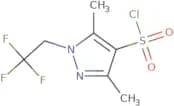
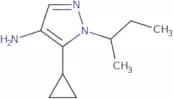
CAS:<p>Versatile small molecule scaffold</p>Formula:C7H8ClF3N2O2SPurity:Min. 95%Molecular weight:276.66 g/mol1-(Butan-2-yl)-5-cyclopropyl-1H-pyrazol-4-amine
CAS:<p>Versatile small molecule scaffold</p>Formula:C10H17N3Purity:Min. 95%Molecular weight:179.26 g/molRef: 3D-GQB45453
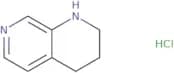
Discontinued product1,2,3,4-Tetrahydro-1,7-naphthyridine hydrochloride
CAS:<p>Versatile small molecule scaffold</p>Formula:C8H11ClN2Purity:Min. 95%Molecular weight:170.6 g/molRef: 3D-GDD37006
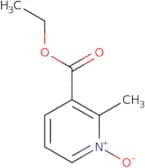
Discontinued product3-(Ethoxycarbonyl)-2-methylpyridin-1-ium-1-olate
CAS:<p>Versatile small molecule scaffold</p>Formula:C9H11NO3Purity:Min. 95%Molecular weight:181.19 g/molRef: 3D-GBA18161
Discontinued product4-Bromobutan-2-ol
CAS:<p>Versatile small molecule scaffold</p>Formula:C4H9BrOPurity:Min. 95%Molecular weight:153.02 g/mol3-(Phenylamino)benzoic acid
CAS:<p>Versatile small molecule scaffold</p>Formula:C13H11NO2Purity:Min. 95%Molecular weight:213.23 g/molBenzyl[(1-ethyl-1H-pyrazol-5-yl)methyl]amine
CAS:<p>Versatile small molecule scaffold</p>Formula:C13H17N3Purity:Min. 95%Molecular weight:215.29 g/molN-Methoxy-N,2-dimethylbenzamide
CAS:<p>Versatile small molecule scaffold</p>Formula:C10H13NO2Purity:Min. 95%Molecular weight:179.22 g/molRef: 3D-FFA25061
Discontinued product3,6-Dimethylimidazo[2,1-b]thiazole-5-carbaldehyde
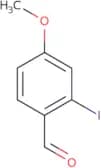
CAS:<p>Versatile small molecule scaffold</p>Formula:C8H8N2OSPurity:Min. 95%Molecular weight:180.23 g/mol2-Iodo-4-methoxybenzaldehyde
CAS:<p>2-Iodo-4-methoxybenzaldehyde is a chiral compound that can be synthesized through an intramolecular, stereoselective cyclic annulation reaction. The key step in this process is the arylation of 2-iodo-4-methoxybenzaldehyde with ethyl bromide. This compound can also be synthesized by reacting 2-iodobenzoic acid with formaldehyde in the presence of a base. In addition, 2-Iodo-4-methoxybenzaldehyde can be produced by the sequence of nitrogen substitution and tricyclic annulation.</p>Formula:C8H7IO2Purity:Min. 95%Molecular weight:262.04 g/molRef: 3D-FEA46913
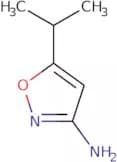
Discontinued product5-(Propan-2-yl)-1,2-oxazol-3-amine
CAS:<p>Versatile small molecule scaffold</p>Formula:C6H10N2OPurity:Min. 95%Molecular weight:126.16 g/moltert-Butyl (4aS,7aS)-octahydro-1H-pyrrolo[3,4-b]pyridine-6-carboxylate
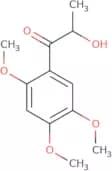
CAS:<p>Versatile small molecule scaffold</p>Formula:C12H22N2O2Purity:Min. 95%Molecular weight:226.32 g/mol(2R)-2-Hydroxy-1-(2,4,5-trimethoxyphenyl)propan-1-one
CAS:<p>(2R)-2-Hydroxy-1-(2,4,5-trimethoxyphenyl)propan-1-one is an efficient method for the synthesis of adenosine. This method is based on a cyclic reaction with trimethoxybenzene and yields 2 moles of adenosine per mole of trimethoxybenzene. The reaction time is short and the yield is high. This synthetic route has been used to produce large quantities of adenosine for use in pharmacological studies. (2R)-2-Hydroxy-1-(2,4,5-trimethoxyphenyl)propan-1-one can be used as an enantiomer for the synthesis of other compounds. It was also shown that nitrite mediates this reaction</p>Formula:C12H16O5Purity:Min. 95%Molecular weight:240.25 g/molRef: 3D-EZB00535
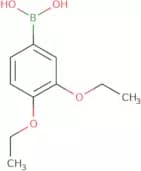
Discontinued product(3,4-Diethoxyphenyl)boronic acid
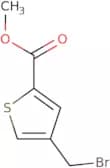
CAS:<p>Versatile small molecule scaffold</p>Formula:C10H15BO4Purity:Min. 95%Molecular weight:210.04 g/molMethyl 4-(bromomethyl)thiophene-2-carboxylate
CAS:<p>Versatile small molecule scaffold</p>Formula:C7H7BrO2SPurity:Min. 95%Molecular weight:235.1 g/mol1-(4-Methylphenyl)-1H,4H,5H-pyrazolo[3,4-d]pyrimidin-4-one
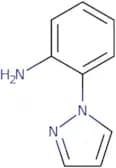
CAS:<p>Versatile small molecule scaffold</p>Formula:C12H10N4OPurity:Min. 95%Molecular weight:226.23 g/mol1-(2-Aminophenyl)-1H-pyrazole
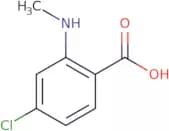
CAS:<p>1-(2-Aminophenyl)-1H-pyrazole is a chemical compound that is used in the synthesis of other compounds. It can be produced by various reactions from benzyl chloride and ammonia. The reactivity of 1-(2-aminophenyl)-1H-pyrazole has been studied using single crystal X-ray diffraction. This technique was used to determine the structure and reaction pathway of this molecule as well as to study its catalytic properties. 1-(2-Aminophenyl)-1H-pyrazole is a ligand that binds to metal ions, such as aluminium, in order to form complexes with different functional groups.</p>Formula:C9H9N3Purity:Min. 95%Molecular weight:159.19 g/mol4-Chloro-2-(methylamino)benzoic acid
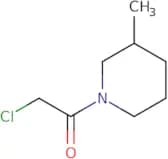
CAS:<p>Versatile small molecule scaffold</p>Formula:C8H8ClNO2Purity:Min. 95%Molecular weight:185.61 g/mol2-Chloro-1-(3-methyl-piperidin-1-yl)-ethanone
CAS:<p>Versatile small molecule scaffold</p>Formula:C8H14ClNOPurity:Min. 95%Molecular weight:175.66 g/mol1,7-Dibromoheptane
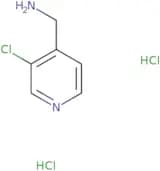
CAS:<p>1,7-Dibromoheptane is an α2-adrenergic receptor antagonist that prevents the activation of these receptors by blocking the binding of endogenous noradrenaline and adrenaline. It has been shown to inhibit hydrochloric acid-induced gastric ulceration in rats. 1,7-Dibromoheptane also has a high detection sensitivity and can be used for the qualitative identification of fatty acids. The compound's viscosity is affected by changes in temperature and it forms dipoles due to its structure. This compound has been used as a covid-19 pandemic flu vaccine adjuvant.</p>Formula:C7H14Br2Purity:Min. 95%Molecular weight:258 g/mol(3-Chloropyridin-4-yl)methanamine dihydrochloride
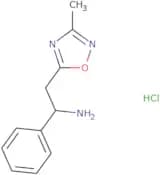
CAS:<p>Versatile small molecule scaffold</p>Formula:C6H9Cl3N2Purity:Min. 95%Molecular weight:215.51 g/mol2-(3-Methyl-1,2,4-oxadiazol-5-yl)-1-phenylethan-1-amine hydrochloride
CAS:<p>Versatile small molecule scaffold</p>Formula:C11H14ClN3OPurity:Min. 95%Molecular weight:239.7 g/molRef: 3D-DXC59055
Discontinued product2-{[(1-Ethyl-1H-pyrazol-4-yl)methyl]amino}ethan-1-ol hydrochloride
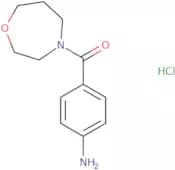
CAS:<p>Versatile small molecule scaffold</p>Formula:C8H16ClN3OPurity:Min. 95%Molecular weight:205.68 g/mol4-(1,4-Oxazepane-4-carbonyl)aniline hydrochloride
CAS:<p>Versatile small molecule scaffold</p>Formula:C12H17ClN2O2Purity:Min. 95%Molecular weight:256.73 g/molRef: 3D-DXC58966
Discontinued product{[1-(3-Bromophenyl)-1H-1,2,3-triazol-4-yl]methyl}(methyl)amine hydrochloride
CAS:<p>Versatile small molecule scaffold</p>Formula:C10H12BrClN4Purity:Min. 95%Molecular weight:303.58 g/molRef: 3D-DXC58896
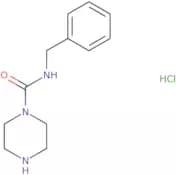
Discontinued productN-Benzylpiperazine-1-carboxamide hydrochloride
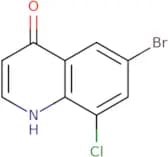
CAS:<p>Versatile small molecule scaffold</p>Formula:C12H18ClN3OPurity:Min. 95%Molecular weight:255.74 g/mol6-Bromo-8-chloro-1,4-dihydroquinolin-4-one
CAS:<p>Versatile small molecule scaffold</p>Formula:C9H5BrClNOPurity:Min. 95%Molecular weight:258.5 g/molRef: 3D-DWB08425
Discontinued productN-[(1-Aminocyclohexyl)methyl]-1-methyl-1H-pyrrole-3-sulfonamide
CAS:<p>Versatile small molecule scaffold</p>Formula:C12H21N3O2SPurity:Min. 95%Molecular weight:271.38 g/molRef: 3D-DWB05657
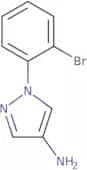
Discontinued product1-(2-Bromophenyl)-1H-pyrazol-4-amine
CAS:<p>Versatile small molecule scaffold</p>Formula:C9H8BrN3Purity:Min. 95%Molecular weight:238.08 g/molRef: 3D-DWB03945
Discontinued product6-Bromo-2-ethyl-1,4-dihydroquinolin-4-one
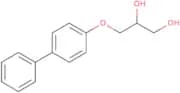
CAS:<p>Versatile small molecule scaffold</p>Formula:C11H10BrNOPurity:Min. 95%Molecular weight:252.11 g/mol(2S)-3-(4-Phenylphenoxy)propane-1,2-diol
CAS:<p>Versatile small molecule scaffold</p>Formula:C15H16O3Purity:Min. 95%Molecular weight:244.3 g/molRef: 3D-DHA86611
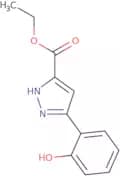
Discontinued productEthyl 5-(2-hydroxyphenyl)-1H-pyrazole-3-carboxylate
CAS:<p>Versatile small molecule scaffold</p>Formula:C12H12N2O3Purity:Min. 95%Molecular weight:232.23 g/molRef: 3D-DHA11425
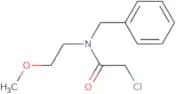
Discontinued productN-Benzyl-2-chloro-N-(2-methoxyethyl)acetamide
CAS:<p>Versatile small molecule scaffold</p>Formula:C12H16ClNO2Purity:Min. 95%Molecular weight:241.71 g/molRef: 3D-DEA46305
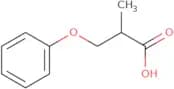
Discontinued product2-Methyl-3-phenoxypropanoic acid
CAS:<p>2-Methyl-3-phenoxypropanoic acid is a blocker that inhibits the activity of voltage-gated sodium channels. It is a stereogenic, stereoselective molecule that also blocks muscle voltage-gated Na+ channels. 2-Methyl-3-phenoxypropanoic acid has been shown to be useful in introducing congeners into phenoxy chlorine molecules. This compound can be used as an analytical reagent for the determination of chlorine and phenyl groups in organic compounds.</p>Formula:C10H12O3Purity:Min. 95%Molecular weight:180.2 g/molRef: 3D-DEA32393
Discontinued product2-[(Tetrahydro-2H-pyran-2-yl)oxy]-cyclopentanemethanol
CAS:<p>Versatile small molecule scaffold</p>Formula:C11H20O3Purity:Min. 95%Molecular weight:200.27 g/molRef: 3D-DCA22974
Discontinued product7-Hydroxy-3,4-dimethyl-2,3-dihydro-1H-inden-1-one
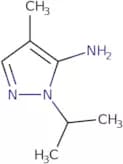
CAS:<p>Versatile small molecule scaffold</p>Formula:C11H12O2Purity:Min. 95%Molecular weight:176.21 g/mol2-Isopropyl-4-methyl-2H-pyrazol-3-ylamine
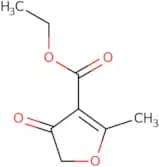
CAS:<p>Versatile small molecule scaffold</p>Formula:C7H13N3Purity:Min. 95%Molecular weight:139.2 g/molEthyl 2-Methyl-4-oxo-4,5-dihydro-3-furancarboxylate
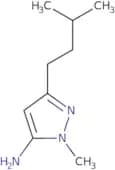
CAS:<p>Versatile small molecule scaffold</p>Formula:C8H10O4Purity:Min. 95%Molecular weight:170.16 g/mol1-Methyl-3-(3-methylbutyl)-1H-pyrazol-5-amine
CAS:<p>Versatile small molecule scaffold</p>Formula:C9H17N3Purity:Min. 95%Molecular weight:167.25 g/molRef: 3D-CWB70775
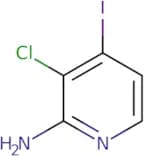
Discontinued product3-Chloro-4-iodopyridin-2-amine
CAS:<p>3-Chloro-4-iodopyridin-2-amine is a chemical compound with the formula CHI. It is a white solid that can be used in evaluating cross-coupling reactions, such as the coupling of an alkyne with a chlorine atom. This chemical has been shown to react well with chlorination reagents and to form substituted cyanides. The nature of the substituent on the chlorine atom determines its regioselectivity and reactivity, making this compound useful for regiocontrolled synthesis.</p>Formula:C5H4ClIN2Purity:Min. 95%Molecular weight:254.46 g/mol3-Ethyl-3-(4-methylphenyl)pyrrolidine-2,5-dione
CAS:<p>Versatile small molecule scaffold</p>Formula:C13H15NO2Purity:Min. 95%Molecular weight:217.26 g/molRef: 3D-CWB58411
Discontinued product1-[(4-Bromo-2-chlorophenyl)methyl]-1H-pyrazol-4-amine
CAS:<p>Versatile small molecule scaffold</p>Formula:C10H9BrClN3Purity:Min. 95%Molecular weight:286.55 g/molRef: 3D-CPC18522
Discontinued product(1R,2R,6S,7S)-4,9-Diazatricyclo[5.3.0.0,2,6]decane dihydrochloride
CAS:<p>Versatile small molecule scaffold</p>Formula:C8H16Cl2N2Purity:Min. 95%Molecular weight:211.1 g/molRef: 3D-CND73121
Discontinued productEthyl 3-(methoxymethyl)-1H-pyrrole-2-carboxylate
CAS:<p>Versatile small molecule scaffold</p>Formula:C9H13NO3Purity:Min. 95%Molecular weight:183.2 g/molRef: 3D-CGA40127
Discontinued productEthyl 2-(4-hydroxyphenyl)-2-methylpropanoate
CAS:<p>Versatile small molecule scaffold</p>Formula:C12H16O3Purity:Min. 95%Molecular weight:208.25 g/molRef: 3D-CGA27053
Discontinued productMethyl 2-(aminooxy)-3-phenylpropanoate hydrochloride
CAS:Versatile small molecule scaffoldFormula:C10H14ClNO3Purity:Min. 95%Molecular weight:231.67 g/mol2-[(3-Methoxyphenyl)sulfanyl]benzaldehyde
CAS:<p>Versatile small molecule scaffold</p>Formula:C14H12O2SPurity:Min. 95%Molecular weight:244.31 g/molRef: 3D-CFA90537
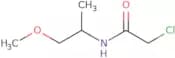
Discontinued product2-Chloro-N-(1-methoxypropan-2-yl)acetamide
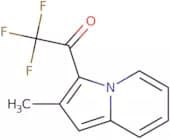
CAS:<p>Versatile small molecule scaffold</p>Formula:C6H12ClNO2Purity:Min. 95%Molecular weight:165.62 g/mol2,2,2-Trifluoro-1-(2-methylindolizin-3-yl)ethan-1-one
CAS:<p>Versatile small molecule scaffold</p>Formula:C11H8F3NOPurity:Min. 95%Molecular weight:227.18 g/molRef: 3D-CFA53247
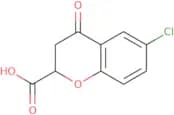
Discontinued product6-Chloro-4-oxo-3,4-dihydro-2H-1-benzopyran-2-carboxylic acid
CAS:<p>Versatile small molecule scaffold</p>Formula:C10H7ClO4Purity:Min. 95%Molecular weight:226.61 g/molRef: 3D-CCA01176
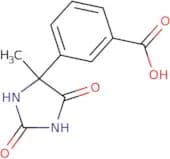
Discontinued product3-(4-Methyl-2,5-dioxoimidazolidin-4-yl)benzoic acid
CAS:<p>Versatile small molecule scaffold</p>Formula:C11H10N2O4Purity:Min. 95%Molecular weight:234.21 g/molRef: 3D-CBB99247
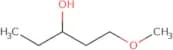
Discontinued product1-Methoxypentan-3-ol
CAS:<p>Versatile small molecule scaffold</p>Formula:C6H14O2Purity:Min. 95%Molecular weight:118.17 g/molRef: 3D-CBA99999
Discontinued product2-Amino-1-(5-hydroxypyridin-3-yl)ethan-1-one dihydrochloride
CAS:<p>Versatile small molecule scaffold</p>Formula:C7H10Cl2N2O2Purity:Min. 95%Molecular weight:225.1 g/molRef: 3D-BKD16320
Discontinued productMethyl 1-(chlorosulfonyl)imidazo[1,5-a]pyridine-6-carboxylate
CAS:Versatile small molecule scaffoldFormula:C9H7ClN2O4SPurity:Min. 95%Molecular weight:274.68 g/molRef: 3D-BKD16195
Discontinued product1-Hydroxypropan-2-yl 2-(3-benzoylphenyl)propanoate
CAS:<p>Versatile small molecule scaffold</p>Formula:C19H20O4Purity:Min. 95%Molecular weight:312.4 g/molRef: 3D-BKD16179
Discontinued product3-[(Pyrrolidin-3-yloxy)methyl]pyridine dihydrochloride
CAS:<p>Versatile small molecule scaffold</p>Formula:C10H16Cl2N2OPurity:Min. 95%Molecular weight:251.15 g/molRef: 3D-BFC31581
Discontinued producttert-Butyl N-[3-(piperidin-4-yloxy)propyl]carbamate
CAS:<p>Versatile small molecule scaffold</p>Formula:C13H26N2O3Purity:Min. 95%Molecular weight:258.36 g/molRef: 3D-BFC13481
Discontinued productrac-(1R,2S,4S)-7-Oxabicyclo[2.2.1]heptane-2-carbonitrile, endo
CAS:<p>Versatile small molecule scaffold</p>Formula:C7H9NOPurity:Min. 95%Molecular weight:123.15 g/molRef: 3D-BAA72796
Discontinued producttert-Butyl N-[1-(1-imino-1-oxo-1λ⁶-thian-4-yl)cyclopropyl]carbamate
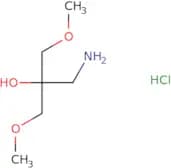
CAS:<p>Versatile small molecule scaffold</p>Formula:C13H24N2O3SPurity:Min. 95%Molecular weight:288.4 g/mol1-Amino-3-methoxy-2-(methoxymethyl)propan-2-ol hydrochloride
CAS:<p>Versatile small molecule scaffold</p>Formula:C6H16ClNO3Purity:Min. 95%Molecular weight:185.6 g/molRef: 3D-AVD27431
Discontinued producttert-Butyl N-[1-(thietan-3-yl)azetidin-3-yl]carbamate
CAS:<p>Versatile small molecule scaffold</p>Formula:C11H20N2O2SPurity:Min. 95%Molecular weight:244.4 g/molRef: 3D-AVD27394
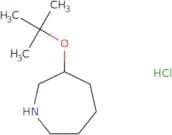
Discontinued product3-(tert-Butoxy)azepane hydrochloride
CAS:<p>Versatile small molecule scaffold</p>Formula:C10H22ClNOPurity:Min. 95%Molecular weight:207.7 g/molRef: 3D-AVD27322
Discontinued product(Pyridazin-3-yl)methanamine dihydrochloride
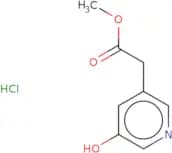
CAS:<p>Versatile small molecule scaffold</p>Formula:C5H9Cl2N3Purity:Min. 95%Molecular weight:182.05 g/molMethyl 2-(5-hydroxypyridin-3-yl)acetate hydrochloride
CAS:<p>Versatile small molecule scaffold</p>Formula:C8H10ClNO3Purity:Min. 95%Molecular weight:203.6 g/molRef: 3D-AVD26894
Discontinued product2-[(5-Methyl-1,3-thiazol-2-yl)sulfanyl]-1-(thiophen-2-yl)ethan-1-one
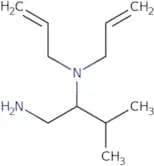
CAS:<p>Versatile small molecule scaffold</p>Formula:C10H9NOS3Purity:Min. 95%Molecular weight:255.4 g/mol(1-Amino-3-methylbutan-2-yl)bis(prop-2-en-1-yl)amine
CAS:<p>Versatile small molecule scaffold</p>Formula:C11H22N2Purity:Min. 95%Molecular weight:182.31 g/molRef: 3D-AQB93194
Discontinued product3-Cyclopropyl-3-azabicyclo[3.3.1]nonan-9-one
CAS:<p>Versatile small molecule scaffold</p>Formula:C11H17NOPurity:Min. 95%Molecular weight:179.26 g/molRef: 3D-AQB93118
Discontinued productMethyl 4-cyclopropanecarbonyl-1H-pyrrole-2-carboxylate
CAS:<p>Versatile small molecule scaffold</p>Formula:C10H11NO3Purity:Min. 95%Molecular weight:193.2 g/molRef: 3D-ALB01950
Discontinued product7-Chloro-1-methyl-1H-pyrrolo[2,3-c]pyridine
CAS:<p>Versatile small molecule scaffold</p>Formula:C8H7ClN2Purity:Min. 95%Molecular weight:166.61 g/molRef: 3D-AKB34057
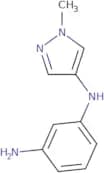
Discontinued product1-N-(1-Methyl-1H-pyrazol-4-yl)benzene-1,3-diamine
CAS:<p>Versatile small molecule scaffold</p>Formula:C10H12N4Purity:Min. 95%Molecular weight:188.23 g/molRef: 3D-AFC16556
Discontinued product2-[4-(Aminomethyl)oxan-4-yl]ethan-1-ol
CAS:<p>Versatile small molecule scaffold</p>Formula:C8H17NO2Purity:Min. 95%Molecular weight:159.23 g/molRef: 3D-AFC16351
Discontinued product2-{[4-(4-Ethoxyphenyl)-5-(2-methoxyphenyl)-4H-1,2,4-triazol-3-yl]sulfanyl}acetic acid
CAS:<p>Versatile small molecule scaffold</p>Formula:C19H19N3O4SPurity:Min. 95%Molecular weight:385.4 g/mol4-Methoxy-3-[(pyridin-4-ylmethyl)sulfamoyl]benzoic acid
CAS:<p>Versatile small molecule scaffold</p>Formula:C14H14N2O5SPurity:Min. 95%Molecular weight:322.34 g/mol2-Bromo-3,3,3-trifluoro-1-propene
CAS:Controlled Product<p>2-Bromo-3,3,3-trifluoro-1-propene is a chemical compound that has been synthesized in an asymmetric reaction. The reactant is bromopropane and the product is 2,2,2-trifluoropropene. The methylene group on the propene molecule is activated by the nucleophilic attack of a fluoride ion from hydrogen fluoride to form a cavity with a highly strained bond. The kinetic study of this reaction revealed that the activation energy for the reaction is 42 kJ/mol. Palladium-catalyzed coupling reactions are catalyzed by palladium and require nonpolar solvents such as toluene or dichloromethane. This type of reaction has been shown to be exothermic with an isolated yield of 1%.</p>Formula:C3H2BrF3Purity:Min. 95%Color and Shape:Colorless PowderMolecular weight:174.95 g/moltert-Butyl 5-bromo-3,4-dihydro-2,7-naphthyridine-2(1H)-carboxylate
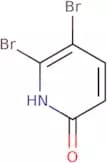
CAS:<p>Versatile small molecule scaffold</p>Formula:C13H17BrN2O2Purity:Min. 95%Molecular weight:313.19 g/mol5,6-Dibromopyridin-2-ol
CAS:<p>Versatile small molecule scaffold</p>Formula:C5H3Br2NOPurity:Min. 95%Molecular weight:252.89 g/mol3-Methylbenzo[b]thiophene-2-carboxylic acid
CAS:<p>3-Methylbenzo[b]thiophene-2-carboxylic acid (MBTCA) is a heterocyclic compound that is an intermediate in the synthesis of 3-methylthiophene-2-carboxylic acid, a precursor to other drugs. MBTCA is an aerobic, nonpolar compound that has shown antimicrobial activity against some bacteria and fungi. It also has been shown to have practicality as a biomolecular probe for methyl groups in organic solvents. MBTCA can be synthesized by nitration of benzene in the presence of sulfur and sulfoxides. This reaction produces nitrobenzene, which can then be oxidized by potassium permanganate or hydrogen peroxide to produce MBTCA. The most common isomer of MBTCA is 2-(3,5-dimethoxybenzylidene)tetrahydrofuran, with three methyl groups on the</p>Formula:C10H8O2SPurity:Min. 95%Molecular weight:192.23 g/mol1-[3-(Dimethylamino)propyl]-1-(4-fluorophenyl)-1,3-dihydro-3-oxo-5-isobenzofurancarbonitrile
CAS:<p>Please enquire for more information about 1-[3-(Dimethylamino)propyl]-1-(4-fluorophenyl)-1,3-dihydro-3-oxo-5-isobenzofurancarbonitrile including the price, delivery time and more detailed product information at the technical inquiry form on this page</p>Formula:C20H19FN2O2Purity:Min. 95%Molecular weight:338.38 g/molRef: 3D-FD184085
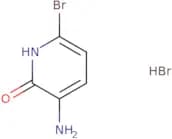
Discontinued product3-amino-6-bromopyridin-2-ol hydrobromide
CAS:<p>Versatile small molecule scaffold</p>Formula:C5H6Br2N2OPurity:Min. 95%Molecular weight:269.9 g/mol3-(Methoxycarbonyl)pyridine-4-carboxylic acid
CAS:<p>Versatile small molecule scaffold</p>Formula:C8H7NO4Purity:Min. 95%Molecular weight:181.15 g/mol4-(Methylamino)benzene-1-sulfonamide
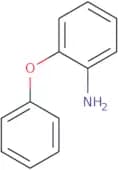
CAS:<p>Versatile small molecule scaffold</p>Formula:C7H10N2O2SPurity:Min. 95%Molecular weight:186.23 g/mol2-Phenoxyaniline
CAS:<p>2-Phenoxyaniline is a nitro compound that can be converted to the corresponding palladium complexes. It is an inhibitor of the acylation reaction, which is a type of chemical reaction in which an organic molecule reacts with an acid. The inhibition of this reaction has been shown to have an effect on heart disease, specifically by lowering cholesterol levels and reducing atherosclerosis. 2-Phenoxyaniline has also been shown to inhibit the activation energy for electron transfer reactions, making it useful as a catalyst in analytical methods. 2-Phenoxyaniline also undergoes vibrational spectroscopy when exposed to liquid chromatography and other analytical methods.</p>Formula:C12H11NOPurity:Min. 95%Color and Shape:Brown PowderMolecular weight:185.22 g/mol2-Acetylbenzoic acid
CAS:<p>2-Acetylbenzoic acid is a functional molecule that contains an acetyl group. It can form hydrogen bonds with other molecules and has been shown to induce apoptosis in cells. The reaction products of 2-acetylbenzoic acid are malonic acid, acetylsalicylic acid, and 2-benzoylbenzoic acid. These three compounds are made by the addition of hydrogen or hydroxide to the molecule 2-acetylbenzoic acid. The molecule has two functional groups: a carbonyl group and an acetyl group. The chemical structure of this molecule can be seen in the figure below.<br>2-Acetylbenzoic Acid</p>Formula:C9H8O3Purity:Min. 95%Color and Shape:PowderMolecular weight:164.16 g/molRef: 3D-FA05086
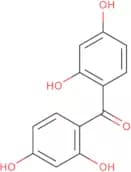
Discontinued product2,2',4,4'-tetrahydroxybenzophenone
CAS:<p>2,2',4,4'-tetrahydroxybenzophenone is a hydroxylated benzophenone that has immunomodulatory effects. It binds to the receptor in the immune system and can cause an increase in cytokine production. 2,2',4,4'-tetrahydroxybenzophenone is cytotoxic and has significant toxicity in vitro. The molecule has been shown to disrupt mitochondrial membrane potential. This may be due to its ability to form hydrogen bonds with molecules on the mitochondrial membrane. 2,2',4,4'-tetrahydroxybenzophenone also modulates transcriptional regulation of genes involved in cell proliferation and apoptosis. The drug is detectable at low levels by mass spectrometry and is not known to have any toxicological effects.END>></p>Formula:C13H10O5Purity:Min. 95%Color and Shape:Green PowderMolecular weight:246.22 g/molRef: 3D-FT55663
Discontinued productH-Ser-Ala-Glu-Glu-Tyr-Glu-Tyr-Pro-Ser OH trifluoroacetate
CAS:<p>Please enquire for more information about H-Ser-Ala-Glu-Glu-Tyr-Glu-Tyr-Pro-Ser OH trifluoroacetate including the price, delivery time and more detailed product information at the technical inquiry form on this page</p>Formula:C47H63N9O20•(C2HF3O2)xPurity:Min. 95%Ref: 3D-FS183525
Discontinued productGivinostat hydrochloride
CAS:<p>Givinostat hydrochloride is a research chemical that has shown potential in various fields. It is a molybdenum-based compound that has been studied for its effects on dopamine release and hydrogen evolution. Givinostat hydrochloride has also been investigated as an osteoclast inhibitor, which may be beneficial in the treatment of bone-related disorders such as osteoporosis. Additionally, it has shown promise as a retinoid and calpain inhibitor, suggesting its potential use in dermatological conditions and neurodegenerative diseases. The compound contains fluorine atoms, making it suitable for imaging studies using fluorine MRI techniques. Givinostat hydrochloride has been tested on MDA-MB-231 cells and has shown inhibitory effects on their growth, indicating its potential as an anticancer agent.</p>Formula:C24H27N3O4·HClPurity:Min. 95%Molecular weight:457.95 g/mol
![Ethyl imidazo[1,5-a]pyrimidine-8-carboxylate](/_next/image/?url=https%3A%2Fstatic.cymitquimica.com%2Fproducts%2F3D%2Fthumb-webp%2FHBA70460.webp&w=3840&q=75)



![Benzyl[(1-ethyl-1H-pyrazol-5-yl)methyl]amine](/_next/image/?url=https%3A%2Fstatic.cymitquimica.com%2Fproducts%2F3D%2Fthumb-webp%2FFQB63126.webp&w=3840&q=75)

![3,6-Dimethylimidazo[2,1-b]thiazole-5-carbaldehyde](/_next/image/?url=https%3A%2Fstatic.cymitquimica.com%2Fproducts%2F3D%2Fthumb-webp%2FFFA18230.webp&w=3840&q=75)
![tert-Butyl (4aS,7aS)-octahydro-1H-pyrrolo[3,4-b]pyridine-6-carboxylate](/_next/image/?url=https%3A%2Fstatic.cymitquimica.com%2Fproducts%2F3D%2Fthumb-webp%2FEZB42851.webp&w=3840&q=75)
![1-(4-Methylphenyl)-1H,4H,5H-pyrazolo[3,4-d]pyrimidin-4-one](/_next/image/?url=https%3A%2Fstatic.cymitquimica.com%2Fproducts%2F3D%2Fthumb-webp%2FECA73875.webp&w=3840&q=75)

![2-{[(1-Ethyl-1H-pyrazol-4-yl)methyl]amino}ethan-1-ol hydrochloride](/_next/image/?url=https%3A%2Fstatic.cymitquimica.com%2Fproducts%2F3D%2Fthumb-webp%2FDXC59027.webp&w=3840&q=75)
![{[1-(3-Bromophenyl)-1H-1,2,3-triazol-4-yl]methyl}(methyl)amine hydrochloride](/_next/image/?url=https%3A%2Fstatic.cymitquimica.com%2Fproducts%2F3D%2Fthumb-webp%2FDXC58896.webp&w=3840&q=75)
![N-[(1-Aminocyclohexyl)methyl]-1-methyl-1H-pyrrole-3-sulfonamide](/_next/image/?url=https%3A%2Fstatic.cymitquimica.com%2Fproducts%2F3D%2Fthumb-webp%2FDWB05657.webp&w=3840&q=75)
![2-[(Tetrahydro-2H-pyran-2-yl)oxy]-cyclopentanemethanol](/_next/image/?url=https%3A%2Fstatic.cymitquimica.com%2Fproducts%2F3D%2Fthumb-webp%2FDCA22974.webp&w=3840&q=75)


![1-[(4-Bromo-2-chlorophenyl)methyl]-1H-pyrazol-4-amine](/_next/image/?url=https%3A%2Fstatic.cymitquimica.com%2Fproducts%2F3D%2Fthumb-webp%2FCPC18522.webp&w=3840&q=75)
![(1R,2R,6S,7S)-4,9-Diazatricyclo[5.3.0.0,2,6]decane dihydrochloride](/_next/image/?url=https%3A%2Fstatic.cymitquimica.com%2Fproducts%2F3D%2Fthumb-webp%2FCND73121.webp&w=3840&q=75)


![2-[(3-Methoxyphenyl)sulfanyl]benzaldehyde](/_next/image/?url=https%3A%2Fstatic.cymitquimica.com%2Fproducts%2F3D%2Fthumb-webp%2FCFA90537.webp&w=3840&q=75)
![Methyl 1-(chlorosulfonyl)imidazo[1,5-a]pyridine-6-carboxylate](/_next/image/?url=https%3A%2Fstatic.cymitquimica.com%2Fproducts%2F3D%2Fthumb-webp%2FBKD16195.webp&w=3840&q=75)
![3-[(Pyrrolidin-3-yloxy)methyl]pyridine dihydrochloride](/_next/image/?url=https%3A%2Fstatic.cymitquimica.com%2Fproducts%2F3D%2Fthumb-webp%2FBFC31581.webp&w=3840&q=75)
![tert-Butyl N-[3-(piperidin-4-yloxy)propyl]carbamate](/_next/image/?url=https%3A%2Fstatic.cymitquimica.com%2Fproducts%2F3D%2Fthumb-webp%2FBFC13481.webp&w=3840&q=75)
![rac-(1R,2S,4S)-7-Oxabicyclo[2.2.1]heptane-2-carbonitrile, endo](/_next/image/?url=https%3A%2Fstatic.cymitquimica.com%2Fproducts%2F3D%2Fthumb-webp%2FBAA72796.webp&w=3840&q=75)
![tert-Butyl N-[1-(1-imino-1-oxo-1λ⁶-thian-4-yl)cyclopropyl]carbamate](/_next/image/?url=https%3A%2Fstatic.cymitquimica.com%2Fproducts%2F3D%2Fthumb-webp%2FAVD27462.webp&w=3840&q=75)
![tert-Butyl N-[1-(thietan-3-yl)azetidin-3-yl]carbamate](/_next/image/?url=https%3A%2Fstatic.cymitquimica.com%2Fproducts%2F3D%2Fthumb-webp%2FAVD27394.webp&w=3840&q=75)

![2-[(5-Methyl-1,3-thiazol-2-yl)sulfanyl]-1-(thiophen-2-yl)ethan-1-one](/_next/image/?url=https%3A%2Fstatic.cymitquimica.com%2Fproducts%2F3D%2Fthumb-webp%2FAQB93225.webp&w=3840&q=75)
![3-Cyclopropyl-3-azabicyclo[3.3.1]nonan-9-one](/_next/image/?url=https%3A%2Fstatic.cymitquimica.com%2Fproducts%2F3D%2Fthumb-webp%2FAQB93118.webp&w=3840&q=75)

![7-Chloro-1-methyl-1H-pyrrolo[2,3-c]pyridine](/_next/image/?url=https%3A%2Fstatic.cymitquimica.com%2Fproducts%2F3D%2Fthumb-webp%2FAKB34057.webp&w=3840&q=75)
![2-[4-(Aminomethyl)oxan-4-yl]ethan-1-ol](/_next/image/?url=https%3A%2Fstatic.cymitquimica.com%2Fproducts%2F3D%2Fthumb-webp%2FAFC16351.webp&w=3840&q=75)
![2-{[4-(4-Ethoxyphenyl)-5-(2-methoxyphenyl)-4H-1,2,4-triazol-3-yl]sulfanyl}acetic acid](/_next/image/?url=https%3A%2Fstatic.cymitquimica.com%2Fproducts%2F3D%2Fthumb-webp%2FAFB60725.webp&w=3840&q=75)
![4-Methoxy-3-[(pyridin-4-ylmethyl)sulfamoyl]benzoic acid](/_next/image/?url=https%3A%2Fstatic.cymitquimica.com%2Fproducts%2F3D%2Fthumb-webp%2FAFB60124.webp&w=3840&q=75)


![3-Methylbenzo[b]thiophene-2-carboxylic acid](/_next/image/?url=https%3A%2Fstatic.cymitquimica.com%2Fproducts%2F3D%2Fthumb-webp%2FDAA13378.webp&w=3840&q=75)
![1-[3-(Dimethylamino)propyl]-1-(4-fluorophenyl)-1,3-dihydro-3-oxo-5-isobenzofurancarbonitrile](/_next/image/?url=https%3A%2Fstatic.cymitquimica.com%2Fproducts%2F3D%2Fthumb-webp%2FFD184085.webp&w=3840&q=75)