


Building Blocks
This section contains fundamental products for the synthesis of organic and biological compounds. Building blocks are the essential starting materials used to construct complex molecules through various chemical reactions. They play a critical role in drug discovery, material science, and chemical research. At CymitQuimica, we offer a diverse range of high-quality building blocks to support your innovative research and industrial projects, ensuring you have the essential components for successful synthesis.
Subcategories of "Building Blocks"
- Boronic Acids & Boronic Acid Derivatives(5,756 products)
- Chiral Building Blocks(1,242 products)
- Hydrocarbon Building Blocks(6,095 products)
- Organic Building Blocks(61,055 products)
Found 199650 products of "Building Blocks"
Sort by
Purity (%)
0
100
|
0
|
50
|
90
|
95
|
100
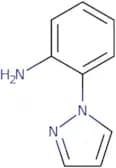
1-(2-Aminophenyl)-1H-pyrazole
CAS:<p>1-(2-Aminophenyl)-1H-pyrazole is a chemical compound that is used in the synthesis of other compounds. It can be produced by various reactions from benzyl chloride and ammonia. The reactivity of 1-(2-aminophenyl)-1H-pyrazole has been studied using single crystal X-ray diffraction. This technique was used to determine the structure and reaction pathway of this molecule as well as to study its catalytic properties. 1-(2-Aminophenyl)-1H-pyrazole is a ligand that binds to metal ions, such as aluminium, in order to form complexes with different functional groups.</p>Formula:C9H9N3Purity:Min. 95%Molecular weight:159.19 g/mol3-[(4-Methylphenyl)methyl]azetidine hydrochloride
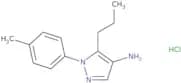
CAS:<p>Versatile small molecule scaffold</p>Formula:C11H16ClNPurity:Min. 95%Molecular weight:197.7 g/mol1-(4-Methylphenyl)-5-propyl-1H-pyrazol-4-amine hydrochloride
CAS:<p>Versatile small molecule scaffold</p>Formula:C13H18ClN3Purity:Min. 95%Molecular weight:251.75 g/molRef: 3D-DXC60792
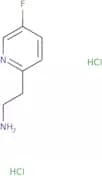
Discontinued product2-(5-Fluoropyridin-2-yl)ethan-1-amine dihydrochloride
CAS:<p>Versatile small molecule scaffold</p>Formula:C7H11Cl2FN2Purity:Min. 95%Molecular weight:213.08 g/molRef: 3D-DXC58935
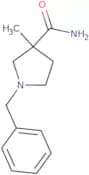
Discontinued product1-Benzyl-3-methylpyrrolidine-3-carboxamide
CAS:<p>Versatile small molecule scaffold</p>Formula:C13H18N2OPurity:Min. 95%Molecular weight:218.29 g/molRef: 3D-DXC58898
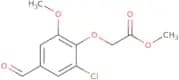
Discontinued productMethyl (2-chloro-4-formyl-6-methoxyphenoxy)acetate
CAS:<p>Versatile small molecule scaffold</p>Formula:C11H11ClO5Purity:Min. 95%Molecular weight:258.65 g/mol[(1-Amino-2-methylpropan-2-yl)oxy]benzene hydrochloride
CAS:<p>Versatile small molecule scaffold</p>Formula:C10H16ClNOPurity:Min. 95%Molecular weight:201.69 g/molRef: 3D-LCC31526
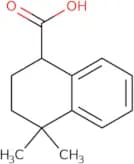
Discontinued product4,4-Dimethyl-1,2,3,4-tetrahydronaphthalene-1-carboxylic acid
CAS:<p>Versatile small molecule scaffold</p>Formula:C13H16O2Purity:Min. 95%Molecular weight:204.26 g/molRef: 3D-DDA10380
Discontinued product4-{4-[(2S)-2,3-Dihydroxypropyl]piperazin-1-yl}benzoic acid
CAS:<p>Versatile small molecule scaffold</p>Formula:C14H20N2O4Purity:Min. 95%Molecular weight:280.3 g/molRef: 3D-RPD10760
Discontinued product1-(1-{[(9H-Fluoren-9-yl)methoxy]carbonyl}-1,2,3,6-tetrahydropyridin-4-yl)cyclobutane-1-carboxylic acid
CAS:<p>Versatile small molecule scaffold</p>Formula:C25H25NO4Purity:Min. 95%Molecular weight:403.5 g/molRef: 3D-RPD12850
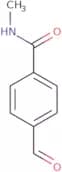
Discontinued product4-Formyl-N-methyl-benzamide
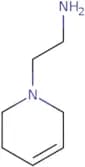
CAS:<p>Versatile small molecule scaffold</p>Formula:C9H9NO2Purity:Min. 95%Molecular weight:163.18 g/mol2-(1,2,3,6-Tetrahydropyridin-1-yl)ethan-1-amine
CAS:<p>Versatile small molecule scaffold</p>Formula:C7H14N2Purity:Min. 95%Molecular weight:126.2 g/molRef: 3D-CBA57863
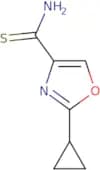
Discontinued product2-Cyclopropyl-1,3-oxazole-4-carbothioamide
CAS:<p>Versatile small molecule scaffold</p>Formula:C7H8N2OSPurity:Min. 95%Molecular weight:168.22 g/molRef: 3D-BKD17844
Discontinued product2-[2-(Furan-2-yl)-2-oxoethylidene]-3-methyl-1,3-thiazolidin-4-one
CAS:<p>Versatile small molecule scaffold</p>Formula:C10H9NO3SPurity:Min. 95%Molecular weight:223.25 g/molRef: 3D-AQB93221
Discontinued product(2-Bromo-5-chlorophenyl)methanesulfonyl chloride
CAS:<p>Versatile small molecule scaffold</p>Formula:C7H5BrCl2O2SPurity:Min. 95%Molecular weight:303.99 g/molRef: 3D-AKC85158
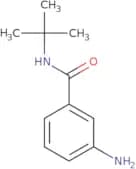
Discontinued product3-Amino-N-(tert-butyl)benzamide
CAS:<p>Versatile small molecule scaffold</p>Formula:C11H16N2OPurity:Min. 95%Molecular weight:192.26 g/molRef: 3D-ABA90062
Discontinued product1-(4-Methylphenyl)-1H,4H,5H-pyrazolo[3,4-d]pyrimidin-4-one
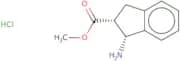
CAS:<p>Versatile small molecule scaffold</p>Formula:C12H10N4OPurity:Min. 95%Molecular weight:226.23 g/molrac-Methyl (1R,2R)-1-amino-2,3-dihydro-1H-indene-2-carboxylate hydrochloride
CAS:<p>Versatile small molecule scaffold</p>Formula:C11H14ClNO2Purity:Min. 95%Molecular weight:227.7 g/molRef: 3D-FCA27000
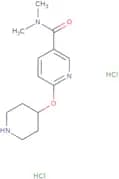
Discontinued productN,N-Dimethyl-6-(piperidin-4-yloxy)pyridine-3-carboxamide dihydrochloride
CAS:<p>Versatile small molecule scaffold</p>Formula:C13H21Cl2N3O2Purity:Min. 95%Molecular weight:322.2 g/molRef: 3D-FDD53991
Discontinued product2-Chloro-1-[4-(furan-2-carbonyl)piperazin-1-yl]ethan-1-one
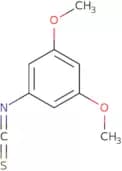
CAS:<p>Versatile small molecule scaffold</p>Formula:C11H13ClN2O3Purity:Min. 95%Molecular weight:256.68 g/mol3,5-dimethoxyphenyl isothiocyanate
CAS:<p>3,5-dimethoxyphenyl isothiocyanate (3,5-DMPIC) is a benzimidazole derivative that has been shown to be a potent and selective antagonist of the gonadotropin-releasing hormone (GnRH). 3,5-DMPIC has been shown to desensitize GnRH receptors on the pituitary gland and may have applications in the treatment of prostate cancer. It also inhibits the release of luteinizing hormone and follicle stimulating hormone from the pituitary gland.</p>Formula:C9H9NO2SPurity:Min. 95%Molecular weight:195.24 g/molRef: 3D-EEA96858
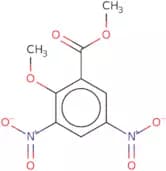
Discontinued productMethyl 2-methoxy-3,5-dinitrobenzoate
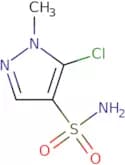
CAS:<p>Versatile small molecule scaffold</p>Formula:C9H8N2O7Purity:Min. 95%Molecular weight:256.2 g/mol5-Chloro-1-methyl-1H-pyrazole-4-sulfonamide
CAS:<p>Versatile small molecule scaffold</p>Formula:C4H6ClN3O2SPurity:Min. 95%Molecular weight:195.63 g/molRef: 3D-NDA39850
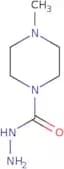
Discontinued product4-Methylpiperazine-1-carbohydrazide
CAS:<p>Versatile small molecule scaffold</p>Formula:C6H14N4OPurity:Min. 95%Molecular weight:158.2 g/molRef: 3D-NDA70165
Discontinued product4-[(tert-Butoxy)methyl]aniline
CAS:<p>Versatile small molecule scaffold</p>Formula:C11H17NOPurity:Min. 95%Molecular weight:179.26 g/molRef: 3D-PRB31145
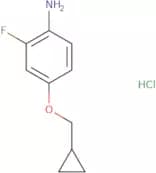
Discontinued product4-(Cyclopropylmethoxy)-2-fluoroaniline hydrochloride
CAS:<p>Versatile small molecule scaffold</p>Formula:C10H13ClFNOPurity:Min. 95%Molecular weight:217.67 g/molrac-(1R,4R)-4-{[(2-Fluorophenyl)methyl]amino}cyclohexan-1-ol hydrochloride
CAS:<p>Versatile small molecule scaffold</p>Formula:C13H19ClFNOPurity:Min. 95%Molecular weight:259.7 g/molRef: 3D-TMD05176
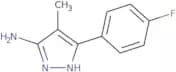
Discontinued product5-(4-Fluoro-phenyl)-4-methyl-2H-pyrazol-3-ylamine
CAS:<p>Versatile small molecule scaffold</p>Formula:C10H10FN3Purity:Min. 95%Molecular weight:191.2 g/molRef: 3D-TTB06047
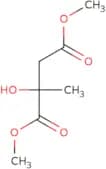
Discontinued product1,4-Dimethyl 2-hydroxy-2-methylbutanedioate
CAS:<p>1,4-Dimethyl 2-hydroxy-2-methylbutanedioate is an allylating agent that modifies the amino acid lysine residues in proteins. It has been shown to be effective in the treatment of skin lesions caused by Staphylococcus aureus and other bacteria because it inhibits bacterial growth through an antimicrobial effect. 1,4-Dimethyl 2-hydroxy-2-methylbutanedioate also has been used as a precursor for the synthesis of vitamin D3. This compound is metabolized in mammalian cells to form cysteamine, which is further converted to S-(1,4-dimethylpentadienoyl)cysteamine (DMPE). The resulting product can be used as a functional group on collagen or malic acid. 1,4-Dimethyl 2-hydroxy-2-methylbutanedioate also is used for modifications of mucocutaneous tissues such as skin and oral muc</p>Formula:C7H12O5Purity:Min. 95%Molecular weight:176.17 g/molRef: 3D-UAA02062
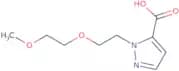
Discontinued product1-(2-(2-Methoxyethoxy)ethyl)-1H-pyrazole-5-carboxylic acid
CAS:<p>Versatile small molecule scaffold</p>Formula:C9H14N2O4Purity:Min. 95%Molecular weight:214.22 g/molRef: 3D-UDC29241
Discontinued product1-(4H,6H,7H-Pyrano[4,3-d][1,3]thiazol-2-yl)ethan-1-ol
CAS:<p>Versatile small molecule scaffold</p>Formula:C8H11NO2SPurity:Min. 95%Molecular weight:185.25 g/molRef: 3D-UDC36735
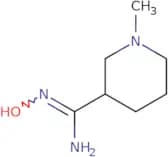
Discontinued productN'-Hydroxy-1-methylpiperidine-3-carboximidamide
CAS:<p>Versatile small molecule scaffold</p>Formula:C7H15N3OPurity:Min. 95%Molecular weight:157.21 g/molRef: 3D-UDC81574
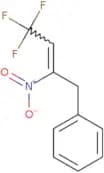
Discontinued product(4,4,4-Trifluoro-2-nitrobut-2-en-1-yl)benzene
CAS:<p>Versatile small molecule scaffold</p>Formula:C10H8F3NO2Purity:Min. 95%Molecular weight:231.17 g/molRef: 3D-UDC84298
Discontinued product(2S,5S)-1-{[(9H-Fluoren-9-yl)methoxy]carbonyl}-5-phenylpyrrolidine-2-carboxylic acid
CAS:<p>Versatile small molecule scaffold</p>Formula:C26H23NO4Purity:Min. 95%Molecular weight:413.5 g/molRef: 3D-UYB95360
Discontinued productThieno[2,3-b]pyridine-5-carbonitrile
CAS:<p>Thienopyridine analogs are a class of chemical compounds that function as agonists of the receptor α. These compounds have been shown to inhibit fatty acid oxidation and ATP production in rat liver cells, which may be due to their ability to activate AMP-activated protein kinase (AMPK). Thienopyridine analogs are being investigated for use as anti-inflammatory agents and cancer treatments.</p>Formula:C8H4N2SPurity:Min. 95%Molecular weight:160.2 g/molRef: 3D-WAA34431
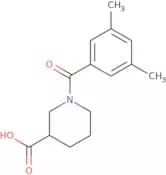
Discontinued product1-(3,5-Dimethylbenzoyl)piperidine-3-carboxylic acid
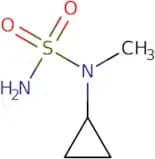
CAS:<p>Versatile small molecule scaffold</p>Formula:C15H19NO3Purity:Min. 95%Molecular weight:261.32 g/molN-Cyclopropyl-N-methylaminosulfonamide
CAS:<p>Versatile small molecule scaffold</p>Formula:C4H10N2O2SPurity:Min. 95%Molecular weight:150.2 g/molRef: 3D-XPA13681
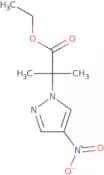
Discontinued product2-Methyl-2-(4-nitro-pyrazol-1-yl)-propionic acid ethyl ester
CAS:<p>Versatile small molecule scaffold</p>Formula:C9H13N3O4Purity:Min. 95%Molecular weight:227.22 g/molRef: 3D-CQB24373
Discontinued product1-(2,4-Dimethylphenyl)-1H,4H,5H,6H-cyclopenta[C]pyrazole-3-carboxylic acid
CAS:<p>Versatile small molecule scaffold</p>Formula:C15H16N2O2Purity:Min. 95%Molecular weight:256.3 g/molRef: 3D-CWB53585
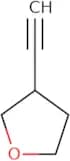
Discontinued product3-Ethynyltetrahydrofuran
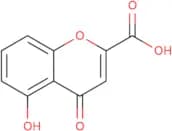
CAS:<p>Versatile small molecule scaffold</p>Formula:C6H8OPurity:Min. 95%Molecular weight:96.13 g/mol5-Hydroxy-4-oxo-4H-chromene-2-carboxylic acid
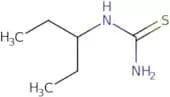
CAS:<p>Versatile small molecule scaffold</p>Formula:C10H6O5Purity:Min. 95%Molecular weight:206.15 g/mol(Pentan-3-yl)thiourea
CAS:<p>Versatile small molecule scaffold</p>Formula:C6H14N2SPurity:Min. 95%Molecular weight:146.26 g/molRef: 3D-EJB65468
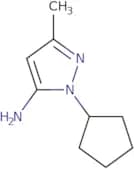
Discontinued product2-Cyclopentyl-5-methyl-2H-pyrazol-3-ylamine
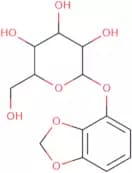
CAS:<p>Versatile small molecule scaffold</p>Formula:C9H15N3Purity:Min. 95%Molecular weight:165.24 g/mol(2S,3R,4S,5S,6R)-2-(1,3-Dioxaindan-4-yloxy)-6-(hydroxymethyl)oxane-3,4,5-triol
CAS:<p>Versatile small molecule scaffold</p>Formula:C13H16O8Purity:Min. 95%Molecular weight:300.26 g/molRef: 3D-FDD47456
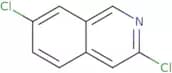
Discontinued product3,7-Dichloroisoquinoline
CAS:<p>Versatile small molecule scaffold</p>Formula:C9H5Cl2NPurity:Min. 95%Molecular weight:198.05 g/molRef: 3D-HDA11722
Discontinued productQuinoline-5-carbonitrile
CAS:<p>Quinoline-5-carbonitrile is a cyanide compound that can be used in the synthesis of heterocyclic compounds. The reaction between quinoline and 5-cyanovaleric acid produces 6-nitroquinoline, which is then converted to dimethyl sulfoxide by alcoholysis. This reaction product can then be used to synthesize an amide or nucleophile. Quinoline-5-carbonitrile reacts with potassium in the presence of bifunctional hydrazide to produce a cyanide ion, which can be hydrolyzed by an acid to release hydrogen cyanide gas. This experiment has been shown as a model for reactions involving cyano compounds.</p>Formula:C10H6N2Purity:Min. 95%Molecular weight:154.17 g/molRef: 3D-JCA55102
Discontinued product2-Amino-4H,5H-naphtho[2,1-b]thiophene-1-carbonitrile
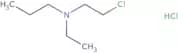
CAS:<p>2-Amino-4H,5H-naphtho[2,1-b]thiophene-1-carbonitrile is a dihydronaphthalene compound that has been shown to be active against influenza viruses. It inhibits the virus by binding to the pyrimidine ring of the virus's RNA polymerase. This inhibits viral replication and reduces plaque formation. 2-Amino-4H,5H-naphtho[2,1-b]thiophene-1-carbonitrile has antiviral activity against influenza A and is effective in inhibiting h5n1 virus replication.</p>Formula:C13H10N2SPurity:Min. 95%Molecular weight:226.3 g/molN-(2-Chloroethyl)-N-ethylpropan-1-amine hydrochloride
CAS:Controlled Product<p>Versatile small molecule scaffold</p>Formula:C7H17Cl2NPurity:Min. 95%Molecular weight:186.12 g/molRef: 3D-NAA10593
Discontinued product3-Boc-3-azabicyclo[3.2.1]octan-8-amine
CAS:<p>Versatile small molecule scaffold</p>Formula:C12H22N2O2Purity:Min. 95%Molecular weight:226.32 g/mol2-Bromo-3,3,3-trifluoro-1-propene
CAS:Controlled Product<p>2-Bromo-3,3,3-trifluoro-1-propene is a chemical compound that has been synthesized in an asymmetric reaction. The reactant is bromopropane and the product is 2,2,2-trifluoropropene. The methylene group on the propene molecule is activated by the nucleophilic attack of a fluoride ion from hydrogen fluoride to form a cavity with a highly strained bond. The kinetic study of this reaction revealed that the activation energy for the reaction is 42 kJ/mol. Palladium-catalyzed coupling reactions are catalyzed by palladium and require nonpolar solvents such as toluene or dichloromethane. This type of reaction has been shown to be exothermic with an isolated yield of 1%.</p>Formula:C3H2BrF3Purity:Min. 95%Color and Shape:Colorless PowderMolecular weight:174.95 g/mol

![3-[(4-Methylphenyl)methyl]azetidine hydrochloride](/_next/image/?url=https%3A%2Fstatic.cymitquimica.com%2Fproducts%2F3D%2Fthumb-webp%2FFDD54017.webp&w=3840&q=75)
![[(1-Amino-2-methylpropan-2-yl)oxy]benzene hydrochloride](/_next/image/?url=https%3A%2Fstatic.cymitquimica.com%2Fproducts%2F3D%2Fthumb-webp%2FLCC31526.webp&w=3840&q=75)
![4-{4-[(2S)-2,3-Dihydroxypropyl]piperazin-1-yl}benzoic acid](/_next/image/?url=https%3A%2Fstatic.cymitquimica.com%2Fproducts%2F3D%2Fthumb-webp%2FRPD10760.webp&w=3840&q=75)
![1-(1-{[(9H-Fluoren-9-yl)methoxy]carbonyl}-1,2,3,6-tetrahydropyridin-4-yl)cyclobutane-1-carboxylic …](/_next/image/?url=https%3A%2Fstatic.cymitquimica.com%2Fproducts%2F3D%2Fthumb-webp%2FRPD12850.webp&w=3840&q=75)
![2-[2-(Furan-2-yl)-2-oxoethylidene]-3-methyl-1,3-thiazolidin-4-one](/_next/image/?url=https%3A%2Fstatic.cymitquimica.com%2Fproducts%2F3D%2Fthumb-webp%2FAQB93221.webp&w=3840&q=75)

![1-(4-Methylphenyl)-1H,4H,5H-pyrazolo[3,4-d]pyrimidin-4-one](/_next/image/?url=https%3A%2Fstatic.cymitquimica.com%2Fproducts%2F3D%2Fthumb-webp%2FECA73875.webp&w=3840&q=75)
![2-Chloro-1-[4-(furan-2-carbonyl)piperazin-1-yl]ethan-1-one](/_next/image/?url=https%3A%2Fstatic.cymitquimica.com%2Fproducts%2F3D%2Fthumb-webp%2FEEB57887.webp&w=3840&q=75)
![4-[(tert-Butoxy)methyl]aniline](/_next/image/?url=https%3A%2Fstatic.cymitquimica.com%2Fproducts%2F3D%2Fthumb-webp%2FPRB31145.webp&w=3840&q=75)
![rac-(1R,4R)-4-{[(2-Fluorophenyl)methyl]amino}cyclohexan-1-ol hydrochloride](/_next/image/?url=https%3A%2Fstatic.cymitquimica.com%2Fproducts%2F3D%2Fthumb-webp%2FTMD05176.webp&w=3840&q=75)
![1-(4H,6H,7H-Pyrano[4,3-d][1,3]thiazol-2-yl)ethan-1-ol](/_next/image/?url=https%3A%2Fstatic.cymitquimica.com%2Fproducts%2F3D%2Fthumb-webp%2FUDC36735.webp&w=3840&q=75)
![(2S,5S)-1-{[(9H-Fluoren-9-yl)methoxy]carbonyl}-5-phenylpyrrolidine-2-carboxylic acid](/_next/image/?url=https%3A%2Fstatic.cymitquimica.com%2Fproducts%2F3D%2Fthumb-webp%2FUYB95360.webp&w=3840&q=75)
![Thieno[2,3-b]pyridine-5-carbonitrile](/_next/image/?url=https%3A%2Fstatic.cymitquimica.com%2Fproducts%2F3D%2Fthumb-webp%2FWAA34431.webp&w=3840&q=75)
![1-(2,4-Dimethylphenyl)-1H,4H,5H,6H-cyclopenta[C]pyrazole-3-carboxylic acid](/_next/image/?url=https%3A%2Fstatic.cymitquimica.com%2Fproducts%2F3D%2Fthumb-webp%2FCWB53585.webp&w=3840&q=75)
![2-Amino-4H,5H-naphtho[2,1-b]thiophene-1-carbonitrile](/_next/image/?url=https%3A%2Fstatic.cymitquimica.com%2Fproducts%2F3D%2Fthumb-webp%2FMBA07120.webp&w=3840&q=75)
![3-Boc-3-azabicyclo[3.2.1]octan-8-amine](/_next/image/?url=https%3A%2Fstatic.cymitquimica.com%2Fproducts%2F3D%2Fthumb-webp%2FFDC76351.webp&w=3840&q=75)
