


Building Blocks
This section contains fundamental products for the synthesis of organic and biological compounds. Building blocks are the essential starting materials used to construct complex molecules through various chemical reactions. They play a critical role in drug discovery, material science, and chemical research. At CymitQuimica, we offer a diverse range of high-quality building blocks to support your innovative research and industrial projects, ensuring you have the essential components for successful synthesis.
Subcategories of "Building Blocks"
- Boronic Acids & Boronic Acid Derivatives(5,756 products)
- Chiral Building Blocks(1,242 products)
- Hydrocarbon Building Blocks(6,095 products)
- Organic Building Blocks(61,051 products)
Found 199813 products of "Building Blocks"
Sort by
Purity (%)
0
100
|
0
|
50
|
90
|
95
|
100
7-Hydroxy-3,4-dimethyl-2,3-dihydro-1H-inden-1-one
CAS:<p>Versatile small molecule scaffold</p>Formula:C11H12O2Purity:Min. 95%Molecular weight:176.21 g/mol5-Ethyl-1,3,4-thiadiazole-2-thiol
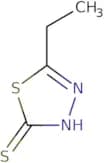
CAS:<p>Versatile small molecule scaffold</p>Formula:C4H6N2S2Purity:Min. 95%Molecular weight:146.2 g/molRef: 3D-MBA66351
Discontinued product5-Vinylnicotinic acid methyl ester
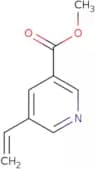
CAS:<p>5-Vinylnicotinic acid methyl ester belongs to the group of antimicrobial agents. It is a chemical compound that has been shown to be effective against cervical cancer and may have potential as an anticancer drug. 5-Vinylnicotinic acid methyl ester inhibits the growth of human chorionic gonadotropin (HCG) in women, which is a hormone necessary for ovulation and pregnancy. This compound also inhibits the growth of viruses, such as herpes simplex virus type 1 (HSV-1), and bacteria, such as dittrichia sp., which causes inflammation of the throat. 5-Vinylnicotinic acid methyl ester has also been shown to inhibit protein synthesis in human osteosarcoma cells at low concentrations, but not at high concentrations.</p>Formula:C9H9NO2Purity:Min. 95%Molecular weight:163.17 g/molRef: 3D-NBA94067
Discontinued productMethyl 3-cyano-2-hydroxypropanoate
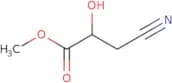
CAS:<p>Versatile small molecule scaffold</p>Formula:C5H7NO3Purity:Min. 95%Molecular weight:129.11 g/molRef: 3D-QAA05576
Discontinued productMethyl 2-amino-3,3-dimethylbutanoate hydrochloride
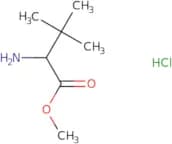
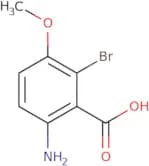
CAS:<p>Versatile small molecule scaffold</p>Formula:C7H16ClNO2Purity:Min. 95%Molecular weight:181.66 g/mol6-Amino-2-bromo-3-methoxybenzoic acid
CAS:<p>Versatile small molecule scaffold</p>Formula:C8H8BrNO3Purity:Min. 95%Molecular weight:246.06 g/molRef: 3D-CGA94638
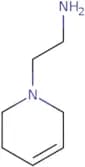
Discontinued product2-(1,2,3,6-Tetrahydropyridin-1-yl)ethan-1-amine
CAS:<p>Versatile small molecule scaffold</p>Formula:C7H14N2Purity:Min. 95%Molecular weight:126.2 g/molRef: 3D-CBA57863
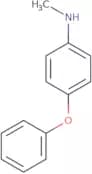
Discontinued productN-Methyl-4-phenoxyaniline
CAS:<p>N-Methyl-4-phenoxyaniline is a molecule that inhibits chitinase, an enzyme that catalyzes the hydrolysis of chitin, and molting. N-Methyl-4-phenoxyaniline has been shown to be potent inhibitor of the enzyme amide in vitro. It also inhibits onchocerca volvulus and in vivo, which may be due to its ability to inhibit the synthesis of fatty acids. This drug has not been tested against other parasites or mammals, but it is an anthelmintic drug.</p>Formula:C13H13NOPurity:Min. 95%Molecular weight:199.25 g/mol[1-(1H-Pyrazole-4-sulfonyl)piperidin-3-yl]methanamine
CAS:<p>Versatile small molecule scaffold</p>Formula:C9H16N4O2SPurity:Min. 95%Molecular weight:244.32 g/molRef: 3D-XZB14507
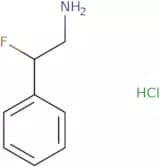
Discontinued product(2S)-2-Fluoro-2-phenylethan-1-amine hydrochloride
CAS:<p>Versatile small molecule scaffold</p>Formula:C8H11ClFNPurity:Min. 95%Molecular weight:175.63 g/molRef: 3D-XZB16372
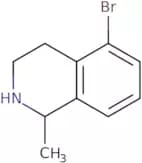
Discontinued product5-Bromo-1-methyl-1,2,3,4-tetrahydroisoquinoline
CAS:<p>Versatile small molecule scaffold</p>Formula:C10H12BrNPurity:Min. 95%Molecular weight:226.11 g/mol3-Boc-3-azabicyclo[3.2.1]octan-8-amine
CAS:<p>Versatile small molecule scaffold</p>Formula:C12H22N2O2Purity:Min. 95%Molecular weight:226.32 g/mol2-Bromo-3,3,3-trifluoro-1-propene
CAS:Controlled Product<p>2-Bromo-3,3,3-trifluoro-1-propene is a chemical compound that has been synthesized in an asymmetric reaction. The reactant is bromopropane and the product is 2,2,2-trifluoropropene. The methylene group on the propene molecule is activated by the nucleophilic attack of a fluoride ion from hydrogen fluoride to form a cavity with a highly strained bond. The kinetic study of this reaction revealed that the activation energy for the reaction is 42 kJ/mol. Palladium-catalyzed coupling reactions are catalyzed by palladium and require nonpolar solvents such as toluene or dichloromethane. This type of reaction has been shown to be exothermic with an isolated yield of 1%.</p>Formula:C3H2BrF3Purity:Min. 95%Color and Shape:Colorless PowderMolecular weight:174.95 g/mol


![[1-(1H-Pyrazole-4-sulfonyl)piperidin-3-yl]methanamine](/_next/image/?url=https%3A%2Fstatic.cymitquimica.com%2Fproducts%2F3D%2Fthumb-webp%2FXZB14507.webp&w=3840&q=75)
![3-Boc-3-azabicyclo[3.2.1]octan-8-amine](/_next/image/?url=https%3A%2Fstatic.cymitquimica.com%2Fproducts%2F3D%2Fthumb-webp%2FFDC76351.webp&w=3840&q=75)
