


Building Blocks
Subcategories of "Building Blocks"
- Boronic Acids & Boronic Acid Derivatives(5,778 products)
- Chiral Building Blocks(1,243 products)
- Hydrocarbon Building Blocks(6,099 products)
- Organic Building Blocks(61,038 products)
Found 205373 products of "Building Blocks"
3-Amino-3-[3-(trifluoromethoxy)phenyl]propan-1-ol
CAS:Versatile small molecule scaffold
Formula:C10H12F3NO2Purity:Min. 95%Molecular weight:235.2 g/molRef: 3D-VAC40236
Discontinued product2-{Imidazo[1,2-a]pyridin-2-yl}-1H-imidazole
CAS:Versatile small molecule scaffoldFormula:C10H8N4Purity:Min. 95%Molecular weight:184.2 g/molRef: 3D-FDD52429
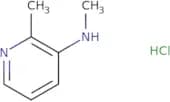
Discontinued productN,2-Dimethylpyridin-3-amine hydrochloride
CAS:Versatile small molecule scaffoldFormula:C7H11ClN2Purity:Min. 95%Molecular weight:158.63 g/molRef: 3D-FDD51851
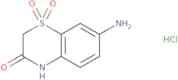
Discontinued product7-amino-2H-1,4-benzothiazin-3(4H)-one 1,1-dioxide hydrochloride
CAS:Versatile small molecule scaffold
Formula:C8H9ClN2O3SPurity:Min. 95%Molecular weight:248.69 g/molRef: 3D-VID40915
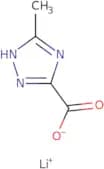
Discontinued productLithium 5-methyl-1H-1,2,4-triazole-3-carboxylate
CAS:Versatile small molecule scaffold
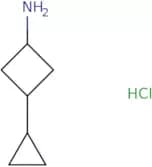
Formula:C4H4LiN3O2Purity:Min. 95%Molecular weight:133.1 g/mol3-Cyclopropylcyclobutan-1-amine hydrochloride, somers
CAS:Versatile small molecule scaffold
Formula:C7H14ClNPurity:Min. 95%Molecular weight:147.64 g/mol(4-Hydroxy-5-methoxypent-1-yn-1-yl)trimethylsilane
CAS:Versatile small molecule scaffoldFormula:C9H18O2SiPurity:Min. 95%Molecular weight:186.32 g/molRef: 3D-VID40976
Discontinued product(1,2-Thiazol-5-yl)methanamine hydrochloride
CAS:Versatile small molecule scaffold
Formula:C4H7ClN2SPurity:Min. 95%Molecular weight:150.63 g/molRef: 3D-VID41014
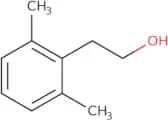
Discontinued product2-(2,6-Dimethylphenyl)ethan-1-ol
CAS:2-(2,6-Dimethylphenyl)ethan-1-ol is a racemic mixture of two compounds with the same molecular formula. The two enantiomers have different chemical properties and can be separated by specific techniques such as chromatography. 2-(2,6-Dimethylphenyl)ethan-1-ol is an ether that is made from methylmalonic acid and ethylene oxide. It is hydrolysed to release methylmalonyl chloride or demethylated to produce methyl ether acetate. This compound has been used in the synthesis of various esters and sesquiterpenoids.
Formula:C10H14OPurity:Min. 95%Molecular weight:150.22 g/molRef: 3D-FBA59580
Discontinued productrac-(3aR,6aS)-Hexahydropyrrolo[3,4-c]pyrrol-1(2H)-one hydrochloride
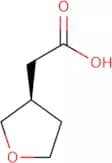
CAS:Versatile small molecule scaffoldFormula:C6H11ClN2OPurity:Min. 95%Molecular weight:162.62 g/mol(R)-2-(Tetrahydrofuran-3-yl)acetic Acid
CAS:Versatile small molecule scaffold
Formula:C6H10O3Purity:Min. 95%Molecular weight:130.14 g/molRef: 3D-WFA25525
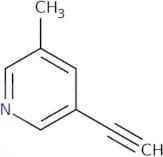
Discontinued product3-Ethynyl-5-methylpyridine
CAS:Versatile small molecule scaffold
Formula:C8H7NPurity:Min. 95%Molecular weight:117.15 g/molRef: 3D-FBA41353
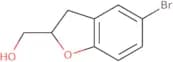
Discontinued product(5-Bromo-2,3-dihydro-1-benzofuran-2-yl)methanol
CAS:Versatile small molecule scaffold
Formula:C9H9O2BrPurity:Min. 95%Molecular weight:229.07 g/molRef: 3D-XHA57735
Discontinued product3-([(tert-Butoxy)carbonyl]amino)-2-(cyclopentylmethyl)propanoic acid
CAS:Versatile small molecule scaffold
Formula:C14H25NO4Purity:Min. 95%Molecular weight:271.35 g/molRef: 3D-XXC61525
Discontinued product5-(Chloromethyl)-3-methyl-1-phenyl-1H-pyrazole-4-carbonitrile
CAS:Versatile small molecule scaffold
Formula:C12H10ClN3Purity:Min. 95%Molecular weight:231.68 g/mol1-(1-Methylpiperidin-4-yl)-1H-pyrazol-4-amine hydrochloride
CAS:Versatile small molecule scaffold
Formula:C9H17ClN4Purity:Min. 95%Molecular weight:216.71 g/mol(3,4-Dihydro-2H-chromen-6-ylmethyl)ae hydrochloride
CAS:Versatile small molecule scaffold
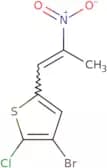
Formula:C10H14ClNOPurity:Min. 95%Molecular weight:199.68 g/mol3-Bromo-2-chloro-5-(2-nitroprop-1-en-1-yl)thiophene
CAS:Versatile small molecule scaffoldFormula:C7H5BrClNO2SPurity:Min. 95%Molecular weight:282.54 g/molRef: 3D-EPC01906
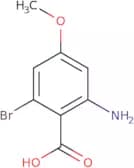
Discontinued product2-Amino-6-bromo-4-methoxybenzoic acid
CAS:Versatile small molecule scaffold
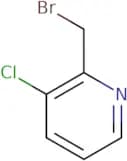
Formula:C8H8BrNO3Purity:Min. 95%Molecular weight:246.06 g/mol2-(bromomethyl)-3-chloropyridine
CAS:Versatile small molecule scaffold
Formula:C6H5BrClNPurity:Min. 95%Molecular weight:206.47 g/molRef: 3D-CZB51576
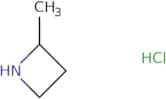
Discontinued product2-Methylazetidine hydrochloride
CAS:Versatile small molecule scaffold
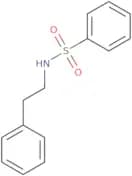
Formula:C4H10ClNPurity:Min. 95%Molecular weight:107.58 g/molN-(2-Phenylethyl)benzenesulfonamide
CAS:N-(2-Phenylethyl)benzenesulfonamide is a biodegradable and aerobic catalyst that is used in the production of nitrates. It can be recycled and has a high solubility, which allows for efficient extraction from wastewater effluents. The reactor system can be operated at an aerobic or anaerobic conditions. N-(2-Phenylethyl)benzenesulfonamide is soluble in water and can be hydrolyzed by acids or bases to release ammonia gas. The process can also be sustainable due to the use of renewable energy sources such as solar, wind, tidal, or biomass power.
Formula:C14H15NO2SPurity:Min. 95%Molecular weight:261.34 g/mol2-[Benzyl(methyl)ao]propanoic acid
CAS:2-[Benzyl(methyl)ao]propanoic acid is a glycine analogue that has been synthesized and characterized. It is an α-amino acid with the chemical formula C5H11NO2. The molecule has a chiral carbon atom at the center of the propanoic acid group and contains two asymmetric carbon atoms on the benzene ring, which enable it to exist in two stereoisomers. The compound has been shown to exhibit interligand interactions with copper as well as stereoselectivity in its interactions with l-amino acids. 2-[Benzyl(methyl)ao]propanoic acid also exhibits dichroism spectra, which are unique to these types of molecules.
Formula:C11H15NO2Purity:Min. 95%Molecular weight:193.24 g/molRef: 3D-BEA69294
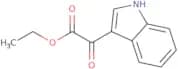
Discontinued productEthyl 2-(indol-3-yl)-2-oxoacetate
CAS:Ethyl 2-(indol-3-yl)-2-oxoacetate is a hydroxy derivative of the amino acid tyrosine. It inhibits the enzyme tyrosine hydroxylase, which catalyzes the conversion of tyrosine to L-DOPA. This in turn affects dopamine synthesis and has an inhibitory effect on rat brain. Ethyl 2-(indol-3-yl)-2-oxoacetate also inhibits methylmagnesium borohydride in vitro, which is a reagent that breaks down esters, amides, and nitriles. Tyrosine hydroxylase is inhibited by the presence of two hydroxy groups on the ethyl side chain and one hydroxy group on the indole ring. It can be used as a structural analogue for other drugs that are used to treat Parkinson's disease or depression.
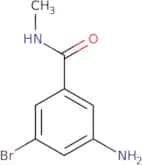
Formula:C12H11NO3Purity:Min. 95%Molecular weight:217.22 g/mol3-Amino-5-bromo-N-methylbenzamide
CAS:Versatile small molecule scaffold
Formula:C8H9BrN2OPurity:Min. 95%Molecular weight:229.07 g/molRef: 3D-AFC06914
Discontinued product[2-(2-Ethoxyethoxy)ethyl](methyl)amine
CAS:Versatile small molecule scaffold
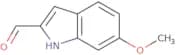
Formula:C7H17NO2Purity:Min. 95%Molecular weight:147.22 g/mol6-Methoxy-1H-indole-2-carbaldehyde
CAS:Versatile small molecule scaffold
Formula:C10H9NO2Purity:Min. 95%Molecular weight:175.18 g/molRef: 3D-FBA46493
Discontinued producttert-Butyl 3-amino-2-(oxan-4-yl)propanoate
CAS:Versatile small molecule scaffoldFormula:C12H23NO3Purity:Min. 95%Molecular weight:229.3 g/mol2-(1-Methylazetidin-3-yl)ethan-1-amine dihydrochloride
CAS:Versatile small molecule scaffold
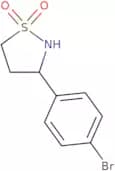
Formula:C6H16Cl2N2Purity:Min. 95%Molecular weight:187.11 g/mol3-(4-Bromophenyl)-isothiazolidine 1,1-dioxide
CAS:Versatile small molecule scaffold
Formula:C9H10BrNO2SPurity:Min. 95%Molecular weight:276.15 g/mol3-(3-Amino-1H-pyrazol-1-yl)pyrrolidin-2-one
CAS:Versatile small molecule scaffold
Formula:C7H10N4OPurity:Min. 95%Molecular weight:166.18 g/molRef: 3D-NKD27328
Discontinued product2-[2-({[(9H-Fluoren-9-yl)methoxy]carbonyl}amino)-1,2,3,4-tetrahydronaphthalen-2-yl]acetic acid
CAS:Versatile small molecule scaffold
Formula:C27H25NO4Purity:Min. 95%Molecular weight:427.5 g/molRef: 3D-NKD27275
Discontinued product4-[(tert-Butoxy)methyl]piperidine hydrochloride
CAS:Versatile small molecule scaffold
Formula:C10H22ClNOPurity:Min. 95%Molecular weight:207.74 g/mol3-(Chloromethyl)-5-phenylisoxazole
CAS:3-(Chloromethyl)-5-phenylisoxazole is a water soluble moiety that is used in the synthesis of conjugates with antitumor activity. 3-(Chloromethyl)-5-phenylisoxazole has been shown to inhibit the growth of brain tumors by binding to DNA, inhibiting transcription and replication. The drug also inhibits protein synthesis and cell division. This compound can be esterified and isothiazole substituted to form an antitumor drug that has a strong antiproliferative effect on human leukemia cells. The biological activity of 3-(chloromethyl)-5-phenylisoxazole can be enhanced by catalytic hydrogenation with methanol in acidic conditions.
Formula:C10H8ClNOPurity:Min. 95%Molecular weight:193.63 g/molRef: 3D-PAA73110
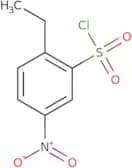
Discontinued product2-Ethyl-5-nitrobenzene-1-sulfonyl chloride
CAS:Versatile small molecule scaffold
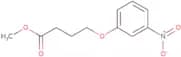
Formula:C8H8ClNO4SPurity:Min. 95%Molecular weight:249.67 g/molMethyl 4-(3-nitrophenoxy)butanoate
CAS:Controlled ProductVersatile small molecule scaffold
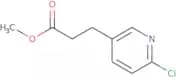
Formula:C11H13NO5Purity:Min. 95%Molecular weight:239.22 g/molMethyl 3-(6-chloropyridin-3-yl)propanoate
CAS:Versatile small molecule scaffold
Formula:C9H10ClNO2Purity:Min. 95%Molecular weight:199.63 g/molRef: 3D-KWC37717
Discontinued producttert-Butyl N-{4-[1-(4-bromophenoxy)ethyl]phenyl}carbamate
CAS:Versatile small molecule scaffold
Formula:C19H22BrNO3Purity:Min. 95%Molecular weight:392.3 g/molRef: 3D-PZC05838
Discontinued producttert-Butyl N-({8-oxa-2-azaspiro[4.5]decan-4-yl}methyl)carbamate
CAS:Versatile small molecule scaffoldFormula:C14H26N2O3Purity:Min. 95%Molecular weight:270.37 g/molRef: 3D-PZC05858
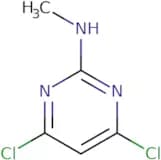
Discontinued product4,6-Dichloro-N-methylpyrimidin-2-amine
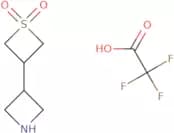
CAS:4,6-Dichloro-N-methylpyrimidin-2-amine is an analog of pyrimidine that has been used in the synthesis of a number of drugs. The compound was first synthesized by condensation of 2,4,6-trichloropyrimidine with formaldehyde and sodium hydroxide. 4,6-Dichloro-N-methylpyrimidin-2-amine can be converted to the corresponding hydrochloride salt by treatment with hydrochloric acid. The compound reacts with methanol to produce methylamine. It also undergoes acid hydrolysis to produce methyl chloride and formaldehyde.Formula:C5H5Cl2N3Purity:Min. 95%Molecular weight:178.02 g/mol3-(1,1-dioxido-3-thietanyl)-azetidine 2,2,2-trifluoroacetate
CAS:Versatile small molecule scaffold
Formula:C8H12F3NO4SPurity:Min. 95%Molecular weight:275.25 g/molRef: 3D-PZC06126
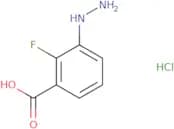
Discontinued product2-Fluoro-3-hydrazinylbenzoic acid hydrochloride
CAS:Versatile small molecule scaffold
Formula:C7H8ClFN2O2Purity:Min. 95%Molecular weight:206.6 g/molRef: 3D-PZC06413
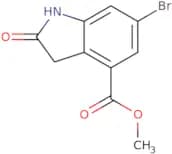
Discontinued productMethyl 6-Bromo-2-oxo-2,3-dihydro-1H-indole-4-carboxylate
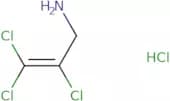
CAS:Versatile small molecule scaffoldFormula:C10H8NO3BrPurity:Min. 95%Molecular weight:270.07 g/mol2,3,3-Trichloroprop-2-en-1-amine hydrochloride
CAS:Versatile small molecule scaffold
Formula:C3H5Cl4NPurity:Min. 95%Molecular weight:196.9 g/molRef: 3D-KAA27429
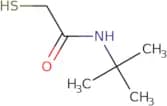
Discontinued productN-tert-Butyl-2-sulfanylacetamide
CAS:Versatile small molecule scaffold
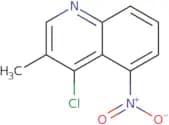
Formula:C6H13NOSPurity:Min. 95%Molecular weight:147.2 g/mol4-Chloro-3-methyl-5-nitroquinoline
CAS:Versatile small molecule scaffold
Formula:C10H7ClN2O2Purity:Min. 95%Molecular weight:222.63 g/molRef: 3D-JFA99233
Discontinued productEthyl 1-(4-chloro-2-fluorophenyl)-1H,4H,5H,6H-cyclopenta[C]pyrazole-3-carboxylate
CAS:Versatile small molecule scaffold
Formula:C15H14ClFN2O2Purity:Min. 95%Molecular weight:308.73 g/molRef: 3D-JBD31705
Discontinued product2-(2-{[(9H-Fluoren-9-yl)methoxy]carbonyl}-1,2,3,4-tetrahydroisoquinolin-1-yl)acetic acid
CAS:Versatile small molecule scaffoldFormula:C26H23NO4Purity:Min. 95%Molecular weight:413.5 g/molRef: 3D-QWA48355
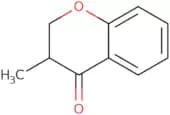
Discontinued product3-Methyl-3,4-dihydro-2H-1-benzopyran-4-one
CAS:Versatile small molecule scaffoldFormula:C10H10O2Purity:Min. 95%Molecular weight:162.18 g/mol5-bromo-4-chloro-7-methyl-7H-pyrrolo[2,3-d]pyrimidine
CAS:Versatile small molecule scaffold
Formula:C7H5BrClN3Purity:Min. 95%Molecular weight:246.5 g/molRef: 3D-RAC34330
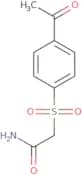
Discontinued product2-(4-Acetylbenzenesulfonyl)acetamide
CAS:Versatile small molecule scaffold
Formula:C10H11NO4SPurity:Min. 95%Molecular weight:241.27 g/molRef: 3D-RAC85436
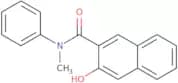
Discontinued product3-Hydroxy-N-methyl-N-phenylnaphthalene-2-carboxamide
CAS:Versatile small molecule scaffold
Formula:C18H15NO2Purity:Min. 95%Molecular weight:277.3 g/molRef: 3D-IDA03839
Discontinued productCyclopentyloxybenzene
CAS:Cyclopentyloxybenzene is a bidentate ligand that binds to the active site of cyclic AMP phosphodiesterase, inhibiting the enzyme's ability to break down cyclic AMP. Cyclopentyloxybenzene also has an antioxidant effect, which may be due to its ability to prevent the production of reactive oxygen species. This compound emits light when it reacts with deuterium atoms. When deuterated, cyclopentyloxybenzene does not react as quickly and has a higher yield than non-deuterated compounds. It also has transport properties that make it ideal for reactions in organic solvents. The reaction time is slower than other bidentate ligands, but the energy efficiency is greater due to the reduced activation energy required for chemical reactions.
Formula:C11H14OPurity:Min. 95%Molecular weight:162.23 g/molRef: 3D-IBA18668
Discontinued productCyclopropyl[3-(trifluoromethoxy)phenyl]methanone
CAS:Versatile small molecule scaffold
Formula:C11H9F3O2Purity:Min. 95%Molecular weight:230.18 g/molRef: 3D-RDC06596
Discontinued product[1-(1-Ethyl-3-methyl-1H-pyrazol-4-yl)propyl]amine
CAS:Versatile small molecule scaffold
Formula:C9H17N3Purity:Min. 95%Molecular weight:167.25 g/molRef: 3D-HQB46021
Discontinued product4H-pyrrolo[2,3-D]thiazole-5-carboxylic acid
CAS:Versatile small molecule scaffold
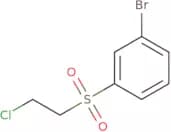
Formula:C6H4N2O2SPurity:Min. 95%Molecular weight:168.17 g/mol1-Bromo-3-(2-chloroethanesulfonyl)benzene
CAS:Versatile small molecule scaffold
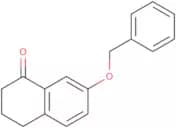
Formula:C8H8BrClO2SPurity:Min. 95%Molecular weight:283.57 g/mol7-(Benzyloxy)-3,4-dihydronaphthalen-1(2H)-one
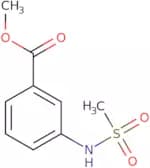
CAS:7-(Benzyloxy)-3,4-dihydronaphthalen-1(2H)-one is a tricyclic carboxamide that belongs to the carboxylic acid group. It has a constant boiling point and an acidic pH. 7-(Benzyloxy)-3,4-dihydronaphthalen-1(2H)-one is soluble in water and dilute acids. It has been shown that the melting point of 7-(Benzyloxy)-3,4-dihydronaphthalen-1(2H)-one is not affected by dilution or experiments. The chemical compounds are made up of benzoic acid and carboxylic acid groups that form a six-membered ring with two heterocycles on either side of the molecule.Formula:C17H16O2Purity:Min. 95%Molecular weight:252.31 g/molMethyl 3-methanesulfonamidobenzoate
CAS:Methyl 3-methanesulfonamidobenzoate is an organic compound that is used as a reagent in organic synthesis. It has the chemical formula CH3O2C(CH2)2SO2CH=NOH. Methyl 3-methanesulfonamidobenzoate is a methyl ester of benzoic acid, which is also known as methyl benzoate. This compound has been shown to react with DNA, forming adducts with guanine and cytosine bases.
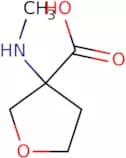
Formula:C9H11NO4SPurity:Min. 95%Molecular weight:229.26 g/mol3-(Methylamino)oxolane-3-carboxylic acid
CAS:Versatile small molecule scaffold
Formula:C6H11NO3Purity:Min. 95%Molecular weight:145.16 g/molRef: 3D-RDC12146
Discontinued product4-Methyl-1,1,3-trioxothieno[3,2-d][1,2]thiazole-5-carboxylic acid
CAS:Versatile small molecule scaffoldFormula:C7H5NO5S2Purity:Min. 95%Molecular weight:247.3 g/molRef: 3D-GEB80217
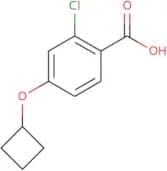
Discontinued product2-Chloro-4-cyclobutoxybenzoic acid
CAS:Versatile small molecule scaffoldFormula:C11H11ClO3Purity:Min. 95%Molecular weight:226.65 g/molRef: 3D-RDC28603
Discontinued product3-Bromo-5-chloro-1H-pyrrolo[2,3-b]pyridine
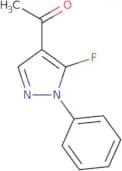
CAS:Versatile small molecule scaffoldFormula:C7H4BrClN2Purity:Min. 95%Molecular weight:231.48 g/mol1-(5-Fluoro-1-phenyl-1H-pyrazol-4-yl)ethan-1-one
CAS:Versatile small molecule scaffold
Formula:C11H9FN2OPurity:Min. 95%Molecular weight:204.2 g/molRef: 3D-RSC00051
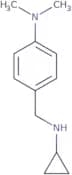
Discontinued productN-(4-Dimethylaminobenzyl)cyclopropanamine
CAS:Versatile small molecule scaffold
Formula:C12H18N2Purity:Min. 95%Molecular weight:190.3 g/molRef: 3D-SKB59362
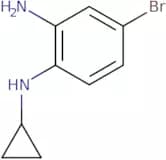
Discontinued product4-Bromo-1-N-cyclopropylbenzene-1,2-diamine
CAS:Versatile small molecule scaffoldFormula:C9H11BrN2Purity:Min. 95%Molecular weight:227.1 g/molRef: 3D-STB29141
Discontinued product3-Hydroxy-5-methylpyridine
CAS:3-Hydroxy-5-methylpyridine (3HMP) is a chemical substance that has been classified as an amine. It is a product of the metabolism of purines, which are nitrogenous bases found in DNA and RNA. 3HMP is produced by aerogenic bacteria (such as Enterobacter), and can be used to estimate the number of these bacteria present in water samples. 3HMP has been shown to have antiviral properties against influenza virus, and can be used as a biomarker for the presence of other viruses in animals. 3HMP also has mineralization properties, which have been studied extensively, particularly with regards to pancreatic disease.
Formula:C6H7NOPurity:Min. 95%Color and Shape:PowderMolecular weight:109.13 g/molRef: 3D-FH16174
Discontinued product8-Bromo-2-methylimidazo[1,2-a]pyridine
CAS:Versatile small molecule scaffold
Formula:C8H7N2BrPurity:Min. 95%Molecular weight:211.05 g/mol4-Chloro-2-hydroxy-6-methylphenylboronic acid
CAS:Versatile small molecule scaffoldFormula:C7H8BClO3Purity:Min. 95%Molecular weight:186.4 g/mol2-Bromo-3,3,3-trifluoro-1-propene
CAS:Controlled Product2-Bromo-3,3,3-trifluoro-1-propene is a chemical compound that has been synthesized in an asymmetric reaction. The reactant is bromopropane and the product is 2,2,2-trifluoropropene. The methylene group on the propene molecule is activated by the nucleophilic attack of a fluoride ion from hydrogen fluoride to form a cavity with a highly strained bond. The kinetic study of this reaction revealed that the activation energy for the reaction is 42 kJ/mol. Palladium-catalyzed coupling reactions are catalyzed by palladium and require nonpolar solvents such as toluene or dichloromethane. This type of reaction has been shown to be exothermic with an isolated yield of 1%.
Formula:C3H2BrF3Purity:Min. 95%Color and Shape:Colorless PowderMolecular weight:174.95 g/mol1-Hydroxycyclopentane-1-carbonitrile
CAS:1-Hydroxycyclopentane-1-carbonitrile is a monomer that is hydrolyzed to form benzoin and cyanohydrins. It can be used in the production of scifinder as a monomer or dimerizer.
Formula:C6H9NOPurity:Min. 95%Molecular weight:111.14 g/mol4,5-Dihydroxy-2,3-Pentanedione
CAS:4,5-Dihydroxy-2,3-pentanedione is a carbonyl compound that is the product of the oxidation of ascorbic acid. It is used in wastewater treatment and has antimicrobial properties against infectious diseases. This compound has been shown to inhibit protein synthesis by binding to the ribosome and preventing the formation of peptide bonds between amino acids. 4,5-Dihydroxy-2,3-pentanedione has also been shown to bind to plasma proteins, which may be due to its acyl chain structure. 4,5-Dihydroxy-2,3-pentanedione can be synthesized in a catalytic mechanism that involves dehydroascorbic acid and molecular oxygen.
Formula:C5H8O4Purity:Min. 95%Color and Shape:PowderMolecular weight:132.11 g/molRef: 3D-FD180770
Discontinued productPiperyline
CAS:Piperyline is an alkanoic acid that has shown to be effective against skin cancer. It also has antimicrobial properties, which may be due to its ability to bind metal ions and form polymeric compounds. Piperyline inhibits microbial growth by inhibiting the synthesis of proteins and nucleic acids. The antimicrobial activity is related to its cationic polymerization with hydroxyl groups, which forms a structure that can inhibit microbial enzymes and disrupt microbial cell membranes. This compound also interacts with the skin's natural lipids, making it difficult for microorganisms to attach and grow on the skin. Piperyline is synthesized in organic chemistry laboratories as an amide precursor of other pharmaceuticals such as penicillin.
Formula:C16H17NO3Purity:Min. 95%Molecular weight:271.31 g/mol
![3-Amino-3-[3-(trifluoromethoxy)phenyl]propan-1-ol](/_next/image/?url=https%3A%2Fstatic.cymitquimica.com%2Fproducts%2F3D%2Fthumb-webp%2FVAC40236.webp&w=3840&q=75)

![2-{Imidazo[1,2-a]pyridin-2-yl}-1H-imidazole](/_next/image/?url=https%3A%2Fstatic.cymitquimica.com%2Fproducts%2F3D%2Fthumb-webp%2FFDD52429.webp&w=3840&q=75)

![rac-(3aR,6aS)-Hexahydropyrrolo[3,4-c]pyrrol-1(2H)-one hydrochloride](/_next/image/?url=https%3A%2Fstatic.cymitquimica.com%2Fproducts%2F3D%2Fthumb-webp%2FVXC58134.webp&w=3840&q=75)
![3-([(tert-Butoxy)carbonyl]amino)-2-(cyclopentylmethyl)propanoic acid](/_next/image/?url=https%3A%2Fstatic.cymitquimica.com%2Fproducts%2F3D%2Fthumb-webp%2FXXC61525.webp&w=3840&q=75)


![2-[Benzyl(methyl)ao]propanoic acid](/_next/image/?url=https%3A%2Fstatic.cymitquimica.com%2Fproducts%2F3D%2Fthumb-webp%2FBEA69294.webp&w=3840&q=75)
amine](/_next/image/?url=https%3A%2Fstatic.cymitquimica.com%2Fproducts%2F3D%2Fthumb-webp%2FAAC06291.webp&w=3840&q=75)



![2-[2-({[(9H-Fluoren-9-yl)methoxy]carbonyl}amino)-1,2,3,4-tetrahydronaphthalen-2-yl]acetic acid](/_next/image/?url=https%3A%2Fstatic.cymitquimica.com%2Fproducts%2F3D%2Fthumb-webp%2FNKD27275.webp&w=3840&q=75)
![4-[(tert-Butoxy)methyl]piperidine hydrochloride](/_next/image/?url=https%3A%2Fstatic.cymitquimica.com%2Fproducts%2F3D%2Fthumb-webp%2FMRD31454.webp&w=3840&q=75)

![tert-Butyl N-{4-[1-(4-bromophenoxy)ethyl]phenyl}carbamate](/_next/image/?url=https%3A%2Fstatic.cymitquimica.com%2Fproducts%2F3D%2Fthumb-webp%2FPZC05838.webp&w=3840&q=75)
![tert-Butyl N-({8-oxa-2-azaspiro[4.5]decan-4-yl}methyl)carbamate](/_next/image/?url=https%3A%2Fstatic.cymitquimica.com%2Fproducts%2F3D%2Fthumb-webp%2FPZC05858.webp&w=3840&q=75)
![Ethyl 1-(4-chloro-2-fluorophenyl)-1H,4H,5H,6H-cyclopenta[C]pyrazole-3-carboxylate](/_next/image/?url=https%3A%2Fstatic.cymitquimica.com%2Fproducts%2F3D%2Fthumb-webp%2FJBD31705.webp&w=3840&q=75)
![2-(2-{[(9H-Fluoren-9-yl)methoxy]carbonyl}-1,2,3,4-tetrahydroisoquinolin-1-yl)acetic acid](/_next/image/?url=https%3A%2Fstatic.cymitquimica.com%2Fproducts%2F3D%2Fthumb-webp%2FQWA48355.webp&w=3840&q=75)
![5-bromo-4-chloro-7-methyl-7H-pyrrolo[2,3-d]pyrimidine](/_next/image/?url=https%3A%2Fstatic.cymitquimica.com%2Fproducts%2F3D%2Fthumb-webp%2FRAC34330.webp&w=3840&q=75)

![Cyclopropyl[3-(trifluoromethoxy)phenyl]methanone](/_next/image/?url=https%3A%2Fstatic.cymitquimica.com%2Fproducts%2F3D%2Fthumb-webp%2FRDC06596.webp&w=3840&q=75)
![[1-(1-Ethyl-3-methyl-1H-pyrazol-4-yl)propyl]amine](/_next/image/?url=https%3A%2Fstatic.cymitquimica.com%2Fproducts%2F3D%2Fthumb-webp%2FHQB46021.webp&w=3840&q=75)
![4H-pyrrolo[2,3-D]thiazole-5-carboxylic acid](/_next/image/?url=https%3A%2Fstatic.cymitquimica.com%2Fproducts%2F3D%2Fthumb-webp%2FHQB38672.webp&w=3840&q=75)
![4-Methyl-1,1,3-trioxothieno[3,2-d][1,2]thiazole-5-carboxylic acid](/_next/image/?url=https%3A%2Fstatic.cymitquimica.com%2Fproducts%2F3D%2Fthumb-webp%2FGEB80217.webp&w=3840&q=75)
![3-Bromo-5-chloro-1H-pyrrolo[2,3-b]pyridine](/_next/image/?url=https%3A%2Fstatic.cymitquimica.com%2Fproducts%2F3D%2Fthumb-webp%2FRJB54609.webp&w=3840&q=75)

![8-Bromo-2-methylimidazo[1,2-a]pyridine](/_next/image/?url=https%3A%2Fstatic.cymitquimica.com%2Fproducts%2F3D%2Fthumb-webp%2FUXB37475.webp&w=3840&q=75)



