


Building Blocks
Subcategories of "Building Blocks"
- Boronic Acids & Boronic Acid Derivatives(5,778 products)
- Chiral Building Blocks(1,243 products)
- Hydrocarbon Building Blocks(6,099 products)
- Organic Building Blocks(61,038 products)
Found 205376 products of "Building Blocks"
2-Azido-1-(piperidin-1-yl)ethan-1-one
CAS:Versatile small molecule scaffold
Formula:C7H12N4OPurity:Min. 95%Molecular weight:168.2 g/molRef: 3D-HVB64739
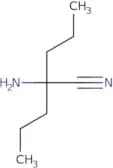
Discontinued product2-Amino-2-propylpentanenitrile
CAS:Versatile small molecule scaffold
Formula:C8H16N2Purity:Min. 95%Molecular weight:140.23 g/mol3-Bromo-5H,6H,8H-[1,2,4]triazolo[3,4-c][1,4]oxazine
CAS:Versatile small molecule scaffoldFormula:C5H6BrN3OPurity:Min. 95%Molecular weight:204.02 g/molRef: 3D-HWC64136
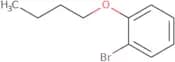
Discontinued product1-Bromo-2-butoxybenzene
CAS:1-Bromo-2-butoxybenzene is a chemical compound that is used in the manufacture of zinc oxide. It is also used as an electrolyte in dye-sensitized solar cells. In these cells, 1-bromo-2-butoxybenzene acts as an electron donor, which provides electrons to the redox dye on the surface of the semiconductor. This process leads to recombination, where electrons and holes recombine to produce electricity. The introduction of alkoxy groups into 1-bromo-2-butoxybenzene molecules allows for increased stability and efficiency in dye-sensitized solar cells.
Formula:C10H13BrOPurity:Min. 95%Molecular weight:229.11 g/molRef: 3D-ECA51430
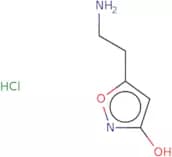
Discontinued product5-(2-Aminoethyl)-1,2-oxazol-3-ol hydrochloride
CAS:Versatile small molecule scaffold
Formula:C5H9ClN2O2Purity:Min. 95%Molecular weight:164.6 g/molRef: 3D-UND40740
Discontinued product3-Azabicyclo[3.2.1]octan-6-ol hydrochlorides
CAS:Versatile small molecule scaffoldFormula:C7H14ClNOPurity:Min. 95%Molecular weight:163.6 g/molRef: 3D-FSD25297
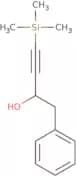
Discontinued product1-Phenyl-4-(trimethylsilyl)but-3-yn-2-ol
CAS:Versatile small molecule scaffoldFormula:C13H18OSiPurity:Min. 95%Molecular weight:218.37 g/molRef: 3D-LCA07769
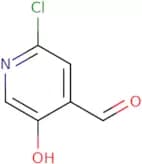
Discontinued product2-Chloro-5-hydroxyisonicotinaldehyde
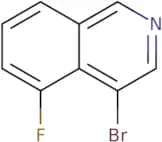
CAS:Versatile small molecule scaffoldFormula:C6H4ClNO2Purity:Min. 95%Molecular weight:157.55 g/mol4-Bromo-5-fluoro-isoquinoline
CAS:Versatile small molecule scaffold
Formula:C9H5BrFNPurity:Min. 95%Molecular weight:226.04 g/molRef: 3D-BPA45758
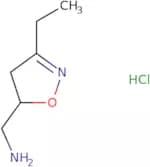
Discontinued product(3-Ethyl-4,5-dihydro-1,2-oxazol-5-yl)methanamine hydrochloride
CAS:Versatile small molecule scaffold
Formula:C6H13ClN2OPurity:Min. 95%Molecular weight:164.63 g/molRef: 3D-KXB29497
Discontinued product2-Phenyl-2-[(propan-2-yl)amino]acetic acid
CAS:Versatile small molecule scaffold
Formula:C11H15NO2Purity:Min. 95%Molecular weight:193.24 g/molRef: 3D-HXA09010
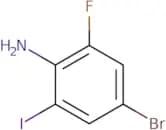
Discontinued product4-Bromo-2-fluoro-6-iodoaniline
CAS:Versatile small molecule scaffold
Formula:C6H4BrFINPurity:Min. 95%Molecular weight:315.91 g/mol2-[Ethyl(propan-2-yl)amino]ethan-1-ol
CAS:Controlled ProductVersatile small molecule scaffold
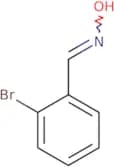
Formula:C7H17NOPurity:Min. 95%Molecular weight:131.22 g/mol2-Bromobenzaldoxime
CAS:2-Bromobenzaldoxime is a biologically active molecule that has been shown to have significant physiological activities. It is an aldehyde, which is metabolized by the liver or kidneys into the corresponding alcohol, 2-bromoethanol. 2-Bromobenzaldoxime has been shown to be synthesized from diethyl ether and potassium phosphate in the presence of amino acids. The reaction proceeds with dehydration of the intermediate bromohydrin to form an aldoxime. This molecule can be used as a pharmaceutical drug for various diseases such as diabetes mellitus, hypertension, and inflammation.
Formula:C7H6BrNOPurity:Min. 95%Molecular weight:200.03 g/mol(5-Chloro-1H-benzo[d]imidazol-2-yl)methanamine dihydrochloride
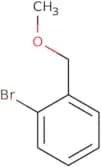
CAS:Versatile small molecule scaffoldFormula:C8H10Cl3N3Purity:Min. 95%Molecular weight:254.54 g/mol1-Bromo-2-(methoxymethyl)benzene
CAS:1-Bromo-2-(methoxymethyl)benzene is a boronic acid that is used in the synthesis of palladium complexes. It is synthesized by reacting 1-bromobenzene with methanol and methoxymethyl chloride. The 1-bromo-2-(methoxymethyl)benzene has been used as a ligand for palladium complexes, which are often used to catalyze organic reactions, such as the metathesis reaction. Synthetic methods have been developed to produce the compound and NMR spectra have been obtained to provide kinetic data on these reactions.
Formula:C8H9BrOPurity:Min. 95%Molecular weight:201.06 g/mol1-(Pyridin-3-yl)-1H-pyrazole-4-carboxylic acid hydrochloride
CAS:Versatile small molecule scaffold
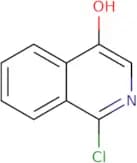
Formula:C9H8ClN3O2Purity:Min. 95%Molecular weight:225.63 g/mol1-Chloroisoquinolin-4-ol
CAS:1-Chloroisoquinolin-4-ol is a phenylpyrimidine with anti-inflammatory properties. It is used in the treatment of sensitivity and mediated diseases, such as osteoarthritis, rheumatoid arthritis, and ankylosing spondylitis. 1-Chloroisoquinolin-4-ol inhibits the enzymatic activity of matrix metalloproteinases (MMPs), which are enzymes that break down collagen and other proteins in the body. The inhibition of MMPs by 1-chloroisoquinolin-4-ol leads to reduced inflammation and pain. This compound is also an effective inhibitor of the activities of chloride channels involved in acid secretion by cells in the stomach lining, thus inhibiting acid production. 1-Chloroisoquinolin-4-ol has been shown to have anticholesterolemic effects on liver cells due to its ability to inhibit cholesterol synthesis through inhibition of HMG CoA
Formula:C9H6ClNOPurity:Min. 95%Molecular weight:179.6 g/molRef: 3D-DAA33643
Discontinued product1-(4-Fluoro-benzyl)-3,5-dimethyl-1H-pyrazol-4-ylamine hydrochloride
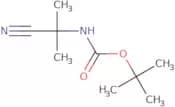
CAS:Versatile small molecule scaffoldFormula:C12H15ClFN3Purity:Min. 95%Molecular weight:255.72 g/moltert-Butyl N-(1-cyano-1-methylethyl)carbamate
CAS:Versatile small molecule scaffold
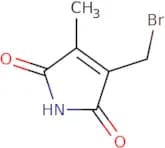
Formula:C9H16N2O2Purity:Min. 95%Molecular weight:184.24 g/mol3-(Bromomethyl)-4-methyl-2,5-dihydro-1H-pyrrole-2,5-dione
CAS:Versatile small molecule scaffold
Formula:C6H6BrNO2Purity:Min. 95%Molecular weight:204.02 g/molRef: 3D-IIA33370
Discontinued product[2-(1H-1,3-Benzodiazol-1-yl)phenyl]methanamine dihydrochloride
CAS:Versatile small molecule scaffold
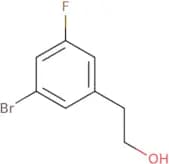
Formula:C14H15Cl2N3Purity:Min. 95%Molecular weight:296.2 g/mol2-(3-Bromo-5-fluorophenyl)ethanol
CAS:Versatile small molecule scaffold
Formula:C8H8BrFOPurity:Min. 95%Molecular weight:219.05 g/molRef: 3D-HLC47552
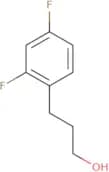
Discontinued product3-(2,4-Difluorophenyl)propan-1-ol
CAS:Versatile small molecule scaffold
Formula:C9H10F2OPurity:Min. 95%Molecular weight:172.17 g/molRef: 3D-HNB20467
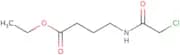
Discontinued productEthyl 4-(2-chloroacetamido)butanoate
CAS:Versatile small molecule scaffold
Formula:C8H14ClNO3Purity:Min. 95%Molecular weight:207.65 g/molRef: 3D-TMA27137
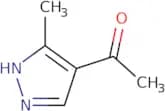
Discontinued product1-(5-Methyl-1H-Pyrazol-4-Yl)Ethanone
CAS:Phenylhydrazine is a white crystalline solid with a molecular weight of 150.25, and the molecular formula C6H5NHN. It is soluble in water, alcohol, ether and chloroform. Phenylhydrazine can react with an acid chloride to form a hydrazone; this reaction is used in the synthesis of some pharmaceuticals. The most common use of phenylhydrazine is as a precursor to various pharmaceuticals, such as antipyretics and anti-inflammatory agents. Phenylhydrazine reacts with zinc chloride to form 1-(5-methyl-1H-pyrazol-4-yl)ethanone.
Formula:C6H8N2OPurity:Min. 95%Molecular weight:124.14 g/molRef: 3D-FEA22404
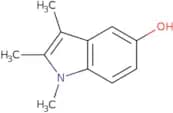
Discontinued product1,2,3-Trimethyl-1H-indol-5-ol
CAS:Versatile small molecule scaffold
Formula:C11H13NOPurity:Min. 95%Molecular weight:175.23 g/molRef: 3D-IJB19354
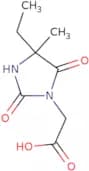
Discontinued product(4-Ethyl-4-methyl-2,5-dioxo-imidazolidin-1-yl)-acetic acid
CAS:Versatile small molecule scaffold
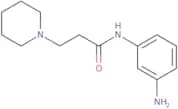
Formula:C8H12N2O4Purity:Min. 95%Molecular weight:200.2 g/molN-(3-Aminophenyl)-3-(piperidin-1-yl)propanamide
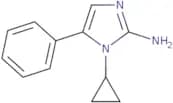
CAS:Versatile small molecule scaffoldFormula:C14H21N3OPurity:Min. 95%Molecular weight:247.34 g/mol1-Cyclopropyl-5-phenyl-1H-imidazol-2-amine
CAS:Versatile small molecule scaffold
Formula:C12H13N3Purity:Min. 95%Molecular weight:199.25 g/molRef: 3D-TLB80162
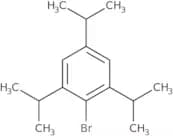
Discontinued product2-Bromo-1,3,5-triisopropylbenzene
CAS:2-Bromo-1,3,5-triisopropylbenzene is an ethylene acetal that is prepared by the catalyzed reaction of aryl chlorides and anhydrous zinc bromide in the presence of triethylamine. The selectivities of this method are high because it can produce mainly a single isomer. The stereoselectivity is also high because the reaction proceeds with the formation of only one stereoisomer. The mechanism for this reaction involves a nucleophilic substitution of the halogenated aryl chloride with the trialkylborane, which generates two different products. This product has been used in the synthesis of biphenyls and nitro compounds.
Formula:C15H23BrPurity:Min. 95%Color and Shape:Colorless Clear LiquidMolecular weight:283.25 g/molRef: 3D-FB33867
Discontinued product1-(6-Chloro-4-pyrimidinyl)indoline
CAS:Versatile small molecule scaffold
Formula:C12H10ClN3Purity:Min. 95%Molecular weight:231.69 g/molRef: 3D-TLA29233
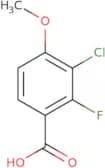
Discontinued product3-Chloro-2-fluoro-4-methoxybenzoic acid
CAS:Versatile small molecule scaffold
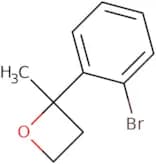
Formula:C8H6ClFO3Purity:Min. 95%Molecular weight:204.58 g/mol2-(2-Bromophenyl)-2-methyloxetane
CAS:Versatile small molecule scaffold
Formula:C10H11BrOPurity:Min. 95%Molecular weight:227.1 g/molRef: 3D-CGC24401
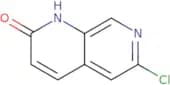
Discontinued product6-Chloro-1,2-dihydro-1,7-naphthyridin-2-one
CAS:Versatile small molecule scaffold
Formula:C8H5ClN2OPurity:Min. 95%Molecular weight:180.59 g/molRef: 3D-TDA49368
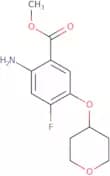
Discontinued productMethyl 2-amino-4-fluoro-5-(oxan-4-yloxy)benzoate
CAS:Versatile small molecule scaffold
Formula:C13H16FNO4Purity:Min. 95%Molecular weight:269.27 g/molRef: 3D-EEC95382
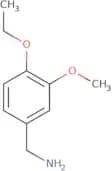
Discontinued product(4-Ethoxy-3-methoxybenzyl)amine
CAS:Research has shown that (4-Ethoxy-3-methoxybenzyl)amine (EMBA) is a potent inhibitor of bacterial growth. The alkylation of EMBA with methylamine and benzene leads to the formation of aureus, which is an antibiotic that can be used to treat staphylococcus infections. In addition, EMBA can also be methylated with hydroxylamine to form benzylamine, a compound that inhibits the synthesis of the cell wall in bacteria. These properties make EMBA an effective antimicrobial agent.
Formula:C10H15NO2Purity:Min. 95%Molecular weight:181.23 g/molRef: 3D-TDA48914
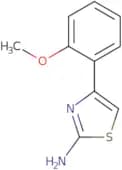
Discontinued product4-(2-Methoxy-phenyl)-thiazol-2-ylamine
CAS:4-(2-Methoxy-phenyl)-thiazol-2-ylamine is a flavonoid that is synthesized by the condensation of luteolin with salicylaldehyde. It has been shown to have antibacterial activity against strains of P. aeruginosa and S. aureus, with MIC values of 12.5 µg/mL and 25 µg/mL, respectively. The MIC value for 4-(2-Methoxy-phenyl)-thiazol-2-ylamine against E. coli was found to be 100 µg/mL. 4-(2-Methoxy-phenyl)-thiazol-2-ylamine has been shown to inhibit the growth of organisms such as Escherichia coli, Streptococcus pneumoniae and Staphylococcus aureus in vitro. This compound is not active against Gram positive bacteria such as Bacillus subtilis or GramFormula:C10H10N2OSPurity:Min. 95%Molecular weight:206.27 g/molRef: 3D-TDA20995
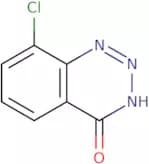
Discontinued product8-Chloro-3,4-dihydro-1,2,3-benzotriazin-4-one
CAS:Versatile small molecule scaffold
Formula:C7H4ClN3OPurity:Min. 95%Molecular weight:181.58 g/molRef: 3D-TAA34345
Discontinued productrac-(1R,2S,6R,7S)-2-Methyl-4-oxatricyclo[5.2.1.0,2,6]dec-8-ene-3,5-dione
CAS:Rac-2,2'-Methylenebis(4-oxatricyclo[5.2.1.0,2,6]dec-8-ene)-3,5-dione is a polyvalent anhydride that has been used as a crosslinking agent in epoxy resin systems and as a viscosity modifier in polymerizable systems. It is also used as an additive to improve the properties of powder coatings and to produce polycarboxylic acid dispersions for use in alkyd resins and oil field chemical additives. The material is supplied as a colloidal suspension in water with a particle size of less than 1 micron. Racemic 2,2'-Methylenebis(4-oxatricyclo[5.2.1.0,2,6]dec-8-ene)-3,5-dione (rac-(1R,2S,6R,7S)-
Formula:C10H10O3Purity:Min. 95%Molecular weight:178.18 g/molRef: 3D-TAA31060
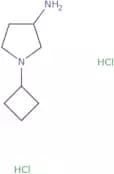
Discontinued product(R)-1-Cyclobutylpyrrolidin-3-amine dihydrochloride
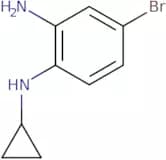
CAS:Versatile small molecule scaffoldFormula:C8H18Cl2N2Purity:Min. 95%Molecular weight:213.15 g/mol4-Bromo-1-N-cyclopropylbenzene-1,2-diamine
CAS:Versatile small molecule scaffoldFormula:C9H11BrN2Purity:Min. 95%Molecular weight:227.1 g/molRef: 3D-STB29141
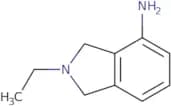
Discontinued product2-Ethyl-2,3-dihydro-1H-isoindol-4-amine
CAS:Versatile small molecule scaffoldFormula:C10H14N2Purity:Min. 95%Molecular weight:162.23 g/molRef: 3D-SQB38828
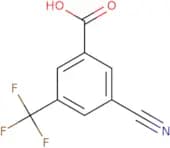
Discontinued product3-Cyano-5-(trifluoromethyl)benzoic Acid
CAS:Versatile small molecule scaffold
Formula:C9H4NO2F3Purity:Min. 95%Molecular weight:215.12 g/mol1-(2,5-Dimethylfuran-3-yl)ethan-1-amine
CAS:Versatile small molecule scaffold
Formula:C8H13NOPurity:Min. 95%Molecular weight:139.19 g/molRef: 3D-SMA83020
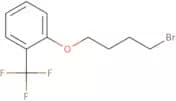
Discontinued product1-(4-Bromobutoxy)-2-(trifluoromethyl)benzene
CAS:Versatile small molecule scaffold
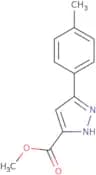
Formula:C11H12BrF3OPurity:Min. 95%Molecular weight:297.11 g/molMethyl 3-p-tolyl-1H-pyrazole-5-carboxylate
CAS:Versatile small molecule scaffold
Formula:C12H12N2O2Purity:Min. 95%Molecular weight:216.24 g/mol2-(4-Cyanophenyl)-2-hydroxyacetic acid
CAS:Versatile small molecule scaffold
Formula:C9H7NO3Purity:Min. 95%Molecular weight:177.16 g/molRef: 3D-GAB89716
Discontinued product2-Methylsulfonylthiophene
CAS:2-Methylsulfonylthiophene is a modulating agent that can inhibit the activity of carbonic anhydrase, adenosine receptors and 5-membered heteroaryl. It has been shown to have affinity for CB1 receptor antagonists and is used to treat cardiovascular diseases. 2-Methylsulfonylthiophene also inhibits the enzymatic activity of anhydrase in the eye, which leads to suppression of intraocular pressure (IOP). The drug also has anti-glaucoma effects by reducing the production of aqueous humour. 2-Methylsulfonylthiophene is used as a dyestuff intermediate and as an organic solvent.
Formula:C5H6O2S2Purity:Min. 95%Molecular weight:162.23 g/mol5-Methoxybicyclo[2.2.1]heptan-2-amine hydrochloride
CAS:Versatile small molecule scaffoldFormula:C8H16ClNOPurity:Min. 95%Molecular weight:177.7 g/molRef: 3D-FSD25240
Discontinued product3'-Methyl-[1,1'-biphenyl]-2-carboxylic acid
CAS:Versatile small molecule scaffold
Formula:C14H12O2Purity:Min. 95%Molecular weight:212.24 g/molRef: 3D-HEA41271
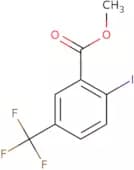
Discontinued productMethyl 2-iodo-5-(trifluoromethyl)benzoate
CAS:Versatile small molecule scaffold
Formula:C9H6F3IO2Purity:Min. 95%Molecular weight:330.04 g/mol3-[(4-Bromo-1H-pyrazol-1-yl)methyl]aniline hydrochloride
CAS:Versatile small molecule scaffold
Formula:C10H11BrClN3Purity:Min. 95%Molecular weight:288.57 g/molRef: 3D-KXB48392
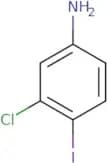
Discontinued product3-Chloro-4-iodoaniline
CAS:3-Chloro-4-iodoaniline is an activated, synthetic chemical that is used in the preparation of a variety of chemicals. 3-Chloro-4-iodoaniline can be prepared by the reaction of chloroacetic acid with nitrobenzene and hydrochloric acid. The compound may be purified by vacuum filtration and recrystallization from water. It is also a precursor to other chemicals that are used in the production of polyhalogenated aromatic compounds. 3-Chloro-4-iodoaniline has been found to react with amines and form the corresponding amides, which may be useful for chemical synthesis.
Formula:C6H5ClINPurity:Min. 95%Molecular weight:253.47 g/molCyclopropyl(3,4-dimethylphenyl)methanone
CAS:Cyclopropyl(3,4-dimethylphenyl)methanone (CPM) is a synthetic cannabinoid that has been shown to have similar effects to the natural cannabinoids found in cannabis. CPM binds to and activates the CB2 receptor, which is found on cells of the immune system, brain, and other organs. It has been studied for its ability to reduce glioma tumor growth in mice by inhibiting glutamate release. The molecular modeling study showed that CPM binds to the receptor with a geometry similar to other CB2 agonists like JWH-133. In addition, CPM inhibits locomotor activity in rats and has been shown to produce some symptoms of anxiety in mice. A receptor knockout study with mice showed that CPM can bind to CB2 receptors without activating them. X-ray diffraction data indicated that CPM is an achiral molecule with an idealized molecular geometry of "s".
Formula:C12H14OPurity:Min. 95%Molecular weight:174.24 g/mol1,9,10,11,12,12-Hexachloro-5-oxatetracyclo[7.2.1.0²,⁸.0⁴,⁶]dodec-10-ene-3,7-dione
CAS:Versatile small molecule scaffoldFormula:C11H4Cl6O3Purity:Min. 95%Molecular weight:396.9 g/molN-[3-(Dimethylamino)propyl]-2-hydroxybenzamide
CAS:Versatile small molecule scaffoldFormula:C12H18N2O2Purity:Min. 95%Molecular weight:222.28 g/molRef: 3D-NBA39443
Discontinued product2-(3-Nitro-phenyl)-1H-imidazole
CAS:Versatile small molecule scaffold
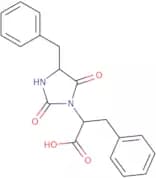
Formula:C9H7N3O2Purity:Min. 95%Molecular weight:189.17 g/mol2-(4-Benzyl-2,5-dioxoimidazolidin-1-yl)-3-phenylpropanoic acid
CAS:Versatile small molecule scaffoldFormula:C19H18N2O4Purity:Min. 95%Molecular weight:338.4 g/molRef: 3D-NAA58909
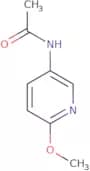
Discontinued productN-(6-Methoxypyridin-3-yl)acetamide
CAS:Versatile small molecule scaffold
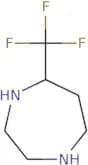
Formula:C8H10N2O2Purity:Min. 95%Molecular weight:166.18 g/mol5-(Trifluoromethyl)-1,4-diazepane
CAS:Versatile small molecule scaffold
Formula:C6H11F3N2Purity:Min. 95%Molecular weight:168.16 g/molRef: 3D-MTB80067
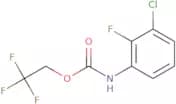
Discontinued product2,2,2-Trifluoroethyl N-(3-chloro-2-fluorophenyl)carbamate
CAS:Versatile small molecule scaffold
Formula:C9H6ClF4NO2Purity:Min. 95%Molecular weight:271.59 g/molRef: 3D-MTB79810
Discontinued product2-[(1-Methyl-5-phenyl-1H-imidazol-2-yl)sulfanyl]acetic acid
CAS:Versatile small molecule scaffoldFormula:C12H12N2O2SPurity:Min. 95%Molecular weight:248.3 g/molRef: 3D-MTA06714
Discontinued product(2-{6-[(Oxan-4-yl)amino]imidazo[1,2-b]pyridazin-3-yl}phenyl)methanol
CAS:Versatile small molecule scaffold
Formula:C18H20N4O2Purity:Min. 95%Molecular weight:324.4 g/molRef: 3D-MQB34443
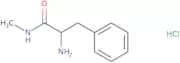
Discontinued product2-Amino-N-methyl-3-phenylpropanamide hydrochloride
CAS:Versatile small molecule scaffold
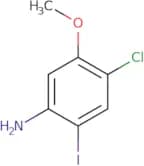
Formula:C10H15ClN2OPurity:Min. 95%Molecular weight:214.7 g/mol4-Chloro-2-iodo-5-methoxyaniline
CAS:Versatile small molecule scaffold
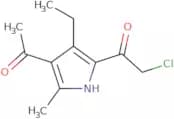
Formula:C7H7ClINOPurity:Min. 95%Molecular weight:283.49 g/mol1-(4-Acetyl-3-ethyl-5-methyl-1H-pyrrol-2-yl)-2-chloroethan-1-one
CAS:Versatile small molecule scaffold
Formula:C11H14ClNO2Purity:Min. 95%Molecular weight:227.69 g/mol2-Bromo-3,3,3-trifluoro-1-propene
CAS:Controlled Product2-Bromo-3,3,3-trifluoro-1-propene is a chemical compound that has been synthesized in an asymmetric reaction. The reactant is bromopropane and the product is 2,2,2-trifluoropropene. The methylene group on the propene molecule is activated by the nucleophilic attack of a fluoride ion from hydrogen fluoride to form a cavity with a highly strained bond. The kinetic study of this reaction revealed that the activation energy for the reaction is 42 kJ/mol. Palladium-catalyzed coupling reactions are catalyzed by palladium and require nonpolar solvents such as toluene or dichloromethane. This type of reaction has been shown to be exothermic with an isolated yield of 1%.
Formula:C3H2BrF3Purity:Min. 95%Color and Shape:Colorless PowderMolecular weight:174.95 g/mol4-Chloro-2-hydroxy-6-methylphenylboronic acid
CAS:Versatile small molecule scaffoldFormula:C7H8BClO3Purity:Min. 95%Molecular weight:186.4 g/mol3-Hydroxy-5-methylpyridine
CAS:3-Hydroxy-5-methylpyridine (3HMP) is a chemical substance that has been classified as an amine. It is a product of the metabolism of purines, which are nitrogenous bases found in DNA and RNA. 3HMP is produced by aerogenic bacteria (such as Enterobacter), and can be used to estimate the number of these bacteria present in water samples. 3HMP has been shown to have antiviral properties against influenza virus, and can be used as a biomarker for the presence of other viruses in animals. 3HMP also has mineralization properties, which have been studied extensively, particularly with regards to pancreatic disease.
Formula:C6H7NOPurity:Min. 95%Color and Shape:PowderMolecular weight:109.13 g/molRef: 3D-FH16174
Discontinued product1-Hydroxycyclopentane-1-carbonitrile
CAS:1-Hydroxycyclopentane-1-carbonitrile is a monomer that is hydrolyzed to form benzoin and cyanohydrins. It can be used in the production of scifinder as a monomer or dimerizer.
Formula:C6H9NOPurity:Min. 95%Molecular weight:111.14 g/mol8-Bromo-2-methylimidazo[1,2-a]pyridine
CAS:Versatile small molecule scaffold
Formula:C8H7N2BrPurity:Min. 95%Molecular weight:211.05 g/mol4,5-Dihydro-1H-imidazol-2-amine hydrochloride
CAS:Please enquire for more information about 4,5-Dihydro-1H-imidazol-2-amine hydrochloride including the price, delivery time and more detailed product information at the technical inquiry form on this page
Formula:C3H7N3•HClPurity:Min. 95%Molecular weight:121.57 g/molRef: 3D-FD183639
Discontinued producttert-Butyl (2,2-difluoro-3-hydroxypropyl)carbamate
CAS:Versatile small molecule scaffoldFormula:C10H13NO4Purity:Min. 95%Molecular weight:211.21 g/mol4,5-Dihydroxy-2,3-Pentanedione
CAS:4,5-Dihydroxy-2,3-pentanedione is a carbonyl compound that is the product of the oxidation of ascorbic acid. It is used in wastewater treatment and has antimicrobial properties against infectious diseases. This compound has been shown to inhibit protein synthesis by binding to the ribosome and preventing the formation of peptide bonds between amino acids. 4,5-Dihydroxy-2,3-pentanedione has also been shown to bind to plasma proteins, which may be due to its acyl chain structure. 4,5-Dihydroxy-2,3-pentanedione can be synthesized in a catalytic mechanism that involves dehydroascorbic acid and molecular oxygen.
Formula:C5H8O4Purity:Min. 95%Color and Shape:PowderMolecular weight:132.11 g/molRef: 3D-FD180770
Discontinued productPiperyline
CAS:Piperyline is an alkanoic acid that has shown to be effective against skin cancer. It also has antimicrobial properties, which may be due to its ability to bind metal ions and form polymeric compounds. Piperyline inhibits microbial growth by inhibiting the synthesis of proteins and nucleic acids. The antimicrobial activity is related to its cationic polymerization with hydroxyl groups, which forms a structure that can inhibit microbial enzymes and disrupt microbial cell membranes. This compound also interacts with the skin's natural lipids, making it difficult for microorganisms to attach and grow on the skin. Piperyline is synthesized in organic chemistry laboratories as an amide precursor of other pharmaceuticals such as penicillin.
Formula:C16H17NO3Purity:Min. 95%Molecular weight:271.31 g/mol


![3-Bromo-5H,6H,8H-[1,2,4]triazolo[3,4-c][1,4]oxazine](/_next/image/?url=https%3A%2Fstatic.cymitquimica.com%2Fproducts%2F3D%2Fthumb-webp%2FHWC64136.webp&w=3840&q=75)
![3-Azabicyclo[3.2.1]octan-6-ol hydrochlorides](/_next/image/?url=https%3A%2Fstatic.cymitquimica.com%2Fproducts%2F3D%2Fthumb-webp%2FFSD25297.webp&w=3840&q=75)
![2-Phenyl-2-[(propan-2-yl)amino]acetic acid](/_next/image/?url=https%3A%2Fstatic.cymitquimica.com%2Fproducts%2F3D%2Fthumb-webp%2FHXA09010.webp&w=3840&q=75)
![2-[Ethyl(propan-2-yl)amino]ethan-1-ol](/_next/image/?url=https%3A%2Fstatic.cymitquimica.com%2Fproducts%2F3D%2Fthumb-webp%2FCAA89361.webp&w=3840&q=75)
![(5-Chloro-1H-benzo[d]imidazol-2-yl)methanamine dihydrochloride](/_next/image/?url=https%3A%2Fstatic.cymitquimica.com%2Fproducts%2F3D%2Fthumb-webp%2FKXB29700.webp&w=3840&q=75)


![[2-(1H-1,3-Benzodiazol-1-yl)phenyl]methanamine dihydrochloride](/_next/image/?url=https%3A%2Fstatic.cymitquimica.com%2Fproducts%2F3D%2Fthumb-webp%2FIIC59359.webp&w=3840&q=75)

![rac-(1R,2S,6R,7S)-2-Methyl-4-oxatricyclo[5.2.1.0,2,6]dec-8-ene-3,5-dione](/_next/image/?url=https%3A%2Fstatic.cymitquimica.com%2Fproducts%2F3D%2Fthumb-webp%2FTAA31060.webp&w=3840&q=75)



![5-Methoxybicyclo[2.2.1]heptan-2-amine hydrochloride](/_next/image/?url=https%3A%2Fstatic.cymitquimica.com%2Fproducts%2F3D%2Fthumb-webp%2FFSD25240.webp&w=3840&q=75)
![3'-Methyl-[1,1'-biphenyl]-2-carboxylic acid](/_next/image/?url=https%3A%2Fstatic.cymitquimica.com%2Fproducts%2F3D%2Fthumb-webp%2FHEA41271.webp&w=3840&q=75)
![3-[(4-Bromo-1H-pyrazol-1-yl)methyl]aniline hydrochloride](/_next/image/?url=https%3A%2Fstatic.cymitquimica.com%2Fproducts%2F3D%2Fthumb-webp%2FKXB48392.webp&w=3840&q=75)

![1,9,10,11,12,12-Hexachloro-5-oxatetracyclo[7.2.1.0²,⁸.0⁴,⁶]dodec-10-ene-3,7-dione](/_next/image/?url=https%3A%2Fstatic.cymitquimica.com%2Fproducts%2F3D%2Fthumb-webp%2FNBA66780.webp&w=3840&q=75)
![N-[3-(Dimethylamino)propyl]-2-hydroxybenzamide](/_next/image/?url=https%3A%2Fstatic.cymitquimica.com%2Fproducts%2F3D%2Fthumb-webp%2FNBA39443.webp&w=3840&q=75)

![2-[(1-Methyl-5-phenyl-1H-imidazol-2-yl)sulfanyl]acetic acid](/_next/image/?url=https%3A%2Fstatic.cymitquimica.com%2Fproducts%2F3D%2Fthumb-webp%2FMTA06714.webp&w=3840&q=75)
![(2-{6-[(Oxan-4-yl)amino]imidazo[1,2-b]pyridazin-3-yl}phenyl)methanol](/_next/image/?url=https%3A%2Fstatic.cymitquimica.com%2Fproducts%2F3D%2Fthumb-webp%2FMQB34443.webp&w=3840&q=75)




![8-Bromo-2-methylimidazo[1,2-a]pyridine](/_next/image/?url=https%3A%2Fstatic.cymitquimica.com%2Fproducts%2F3D%2Fthumb-webp%2FUXB37475.webp&w=3840&q=75)



