


Building Blocks
This section contains fundamental products for the synthesis of organic and biological compounds. Building blocks are the essential starting materials used to construct complex molecules through various chemical reactions. They play a critical role in drug discovery, material science, and chemical research. At CymitQuimica, we offer a diverse range of high-quality building blocks to support your innovative research and industrial projects, ensuring you have the essential components for successful synthesis.
Subcategories of "Building Blocks"
- Boronic Acids & Boronic Acid Derivatives(5,756 products)
- Chiral Building Blocks(1,242 products)
- Hydrocarbon Building Blocks(6,095 products)
- Organic Building Blocks(61,051 products)
Found 199813 products of "Building Blocks"
Sort by
Purity (%)
0
100
|
0
|
50
|
90
|
95
|
100
(Diphenylmethyl)(ethyl)amine
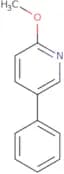
CAS:<p>Versatile small molecule scaffold</p>Formula:C15H17NPurity:Min. 95%Molecular weight:211.3 g/mol2-Methoxy-5-phenylpyridine
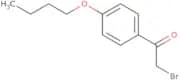
CAS:<p>2-Methoxy-5-phenylpyridine is a carbamate inhibitor that has been shown to be a potent and selective inhibitor of the enzyme acetylcholinesterase (AChE). It has been used for labeling, optimization, and identification of new AChE inhibitors. 2-Methoxy-5-phenylpyridine has also shown activity against the enzyme butyrylcholinesterase. This compound can be used as a test compound in tissues, such as the nervous system, or in cell cultures.</p>Formula:C12H11NOPurity:Min. 95%Molecular weight:185.22 g/mol2-Bromo-1-(4-butoxyphenyl)ethan-1-one
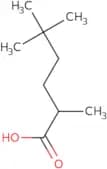
CAS:<p>Versatile small molecule scaffold</p>Formula:C12H15BrO2Purity:Min. 95%Molecular weight:271.15 g/mol2,5,5-Trimethylhexanoic acid
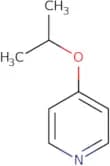
CAS:<p>2,5,5-Trimethylhexanoic acid is a fatty acid that is used as an additive for lubrication, plasticizers, and esterifying agents. It is a mixture of 2-ethylhexanoic acid (2EHA) and 2-methylpentanoic acid (2MP). The chain length of the molecule ranges from C10 to C22 with a majority of the chains being in the range of C14 to C18. The alkyl group has two carbon atoms. This fatty acid can be found in natural sources such as animals and plants or it can be produced synthetically.</p>Formula:C9H18O2Purity:Min. 95%Molecular weight:158.24 g/mol4-(Propan-2-yloxy)pyridine
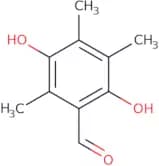
CAS:<p>4-(Propan-2-yloxy)pyridine is an isomer of pyridine, a heterocyclic organic compound with the chemical formula C5H7N. It contains a benzene ring fused to a pyridine ring. The compound is of interest as a model system for studying asymmetric synthesis because it can be synthesized in two forms that are mirror images of each other. The molecule has been shown to be metastable and deuterium can be used as a shift reagent to reveal its chirality. 4-(Propan-2-yloxy)pyridine has also been shown to have antimicrobial properties against bacteria such as methicillin-resistant Staphylococcus aureus (MRSA).</p>Formula:C8H11NOPurity:Min. 95%Molecular weight:137.18 g/mol2,5-Dihydroxy-3,4,6-trimethylbenzaldehyde
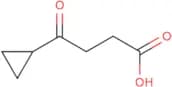
CAS:Versatile small molecule scaffoldFormula:C10H12O3Purity:Min. 95%Molecular weight:180.2 g/mol4-Cyclopropyl-4-oxobutyric acid
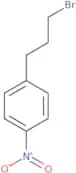
CAS:<p>4-Cyclopropyl-4-oxobutyric acid is a methanolic glutamic alkylation lactone that has been shown to be an asymmetric sodium salt. The nitriles of 4-cyclopropyl-4-oxobutyric acid are hydrolyzed to form the corresponding acids, which are then debenzylated to form the corresponding alcohols. This process is catalyzed by nitrile hydratase and oxidized by alcohol dehydrogenase. The bicyclic structure of 4-cyclopropyl-4-oxobutyric acid can be formed by condensation of two molecules of acetaldehyde and one molecule of malonic acid.</p>Formula:C7H10O3Purity:Min. 95%Molecular weight:142.15 g/mol3-(4-Nitrophenyl)propyl bromide
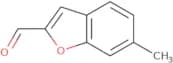
CAS:<p>3-(4-Nitrophenyl)propyl bromide (3NPPB) is a bifunctional ligand with antiproliferative activity. It is able to bind to the alpha subunit of human hepatocellular carcinoma (HCC) receptors, inhibiting the growth of cancer cells. 3NPPB has been shown to be effective in animal models for HCC and other cancers. 3NPPB is a metal chelator with a high binding affinity for copper, and it has been shown to reduce the level of copper in liver tissue.</p>Formula:C9H10BrNO2Purity:Min. 95%Molecular weight:244.09 g/mol6-Methyl-1-benzofuran-2-carbaldehyde
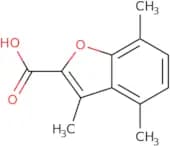
CAS:<p>Versatile small molecule scaffold</p>Formula:C10H8O2Purity:Min. 95%Molecular weight:160.17 g/mol3,4,7-Trimethyl-1-benzofuran-2-carboxylic acid
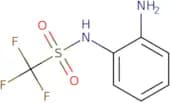
CAS:<p>Versatile small molecule scaffold</p>Formula:C12H12O3Purity:Min. 95%Molecular weight:204.22 g/molN-(2-Aminophenyl)-1,1,1-trifluoromethanesulfonamide
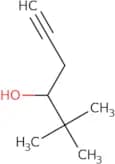
CAS:<p>Versatile small molecule scaffold</p>Formula:C7H7F3N2O2SPurity:Min. 95%Molecular weight:240.21 g/mol2,2-Dimethylhex-5-yn-3-ol
CAS:<p>Versatile small molecule scaffold</p>Formula:C8H14OPurity:Min. 95%Molecular weight:126.2 g/mol2-[(5-Mercapto-1,3,4-thiadiazol-2-yl)thio]acetic acid
CAS:<p>2-[(5-Mercapto-1,3,4-thiadiazol-2-yl)thio]acetic acid (MTTSA) is a fluorescent probe that emits light at a wavelength of 590 nm when irradiated with light. MTTSA has been synthesized using gold nanoclusters as the catalyst. The average diameter of the nanoclusters was determined to be in the range of 2.0 - 3.0 nm, and their average quantum yield was found to be 0.097%. The emission wavelengths can be tuned by varying the size of the nanoclusters. When MTTSA is irradiated with UV radiation, it undergoes photocatalysis and converts organic matter into water and carbon dioxide gas.</p>Formula:C4H4N2O2S3Purity:Min. 95%Molecular weight:208.29 g/mol2-Iodobenzene-1-sulfonamide
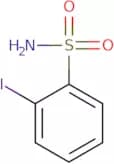
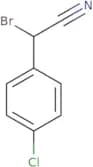
CAS:<p>2-Iodobenzene-1-sulfonamide is a benzothiazine derivative that has been synthesized and its characteristics have been studied by molecular modeling. It has shown potential as an anti-inflammatory drug candidate. The pharmacophore of 2-iodobenzene-1-sulfonamide is composed of two amines, terminal alkynes, and a ligand. This molecule also showed activity against Cox-1 and Cox-2 enzymes, which are responsible for the production of prostaglandins and thromboxanes in the body. This study revealed that 2IBS is an efficient method to inhibit COX enzymes.</p>Formula:C6H6INO2SPurity:Min. 95%Molecular weight:283.09 g/mol2-Bromo-2-(4-chlorophenyl)acetonitrile
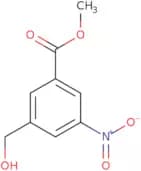
CAS:<p>Versatile small molecule scaffold</p>Formula:C8H5BrClNPurity:Min. 95%Molecular weight:230.49 g/molMethyl 3-(Hydroxymethyl)-5-nitrobenzoate
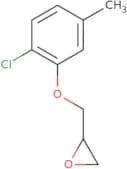
CAS:<p>Methyl 3-(Hydroxymethyl)-5-nitrobenzoate (HMB) is a maleimide that is used in the synthesis of amino-substituted azides. It was expressed as a recombinant protein in Escherichia coli and purified by solid-phase synthesis. The protein has been shown to bind to markers expressed at high levels in Mycobacterium tuberculosis strains (e.g., ESX-1 secretion system protein) and inhibit cell growth in culture.</p>Formula:C9H9NO5Purity:Min. 95%Molecular weight:211.17 g/mol2-(2-Chloro-5-methylphenoxymethyl)oxirane
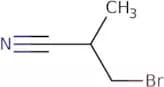
CAS:2-(2-Chloro-5-methylphenoxymethyl)oxirane is an enantiopure chemical compound. It is racemic and has two possible configurations: (R)-2-(2-chloro-5-methylphenoxymethyl)oxirane and (S)-2-(2-chloro-5-methylphenoxymethyl)oxirane. The enantiopence of 2-(2-chloro-5-methylphenoxymethyl)oxirane can be determined by recrystallization, crystallization, xray diffraction, or by entrainment methods.Formula:C10H11ClO2Purity:Min. 95%Molecular weight:198.64 g/mol3-Bromo-2-methylpropanenitrile
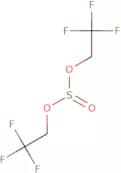
CAS:<p>Versatile small molecule scaffold</p>Formula:C4H6BrNPurity:Min. 95%Molecular weight:148 g/molBis(2,2,2-trifluoroethyl) sulfite
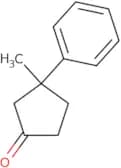
CAS:Bis(2,2,2-trifluoroethyl) sulfite is an additive that enhances the performance of water-based inks and coatings. It is a colorless liquid with a low viscosity and high volatility. Bis(2,2,2-trifluoroethyl) sulfite is used as an additive to increase the solubility of other additives in water-based ink and coatings formulations. It has been shown to enhance the performance of these formulations by improving wetting properties. This additive also has been shown to reduce surface tension and improve gloss. The mechanism of action for this compound is not well understood but may be due to its ability to form hydrogen bonds and/or ionic interactions with molecules on the substrate surface.Formula:C4H4F6O3SPurity:Min. 95%Molecular weight:246.13 g/mol3-Methyl-3-phenylcyclopentan-1-one
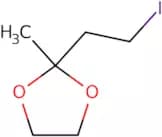
CAS:<p>Versatile small molecule scaffold</p>Formula:C12H14OPurity:Min. 95%Molecular weight:174.24 g/mol2-(2-Iodoethyl)-2-methyl-1,3-dioxolane
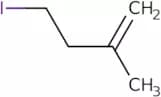
CAS:<p>Versatile small molecule scaffold</p>Formula:C6H11IO2Purity:Min. 95%Molecular weight:242.05 g/mol4-Iodo-2-methylbut-1-ene
CAS:<p>4-Iodo-2-methylbut-1-ene is an alkylating agent that forms a covalent bond with DNA. It can be synthesized by the reaction of an electrophile, such as methyl iodide, with an enone. This process is stereoselective and stereoselectively mediated. The compound is used in the synthesis of pheromones and has been shown to have cytotoxic effects on tumor cells. 4-Iodo-2-methylbut-1-ene can be synthesized by the catalysis of trifluoromethanesulphonate. When this reagent reacts with an organic molecule containing a reactive group, it forms a covalent bond with DNA and inhibits protein synthesis.</p>Formula:C5H9IPurity:Min. 95%Molecular weight:196.03 g/mol7,7-Dimethyl-6,7,8,9-tetrahydro-5H-benzo[7]annulen-5-one
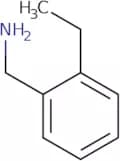
CAS:<p>Versatile small molecule scaffold</p>Formula:C13H16OPurity:Min. 95%Molecular weight:188.26 g/mol(2-Ethylphenyl)methanamine
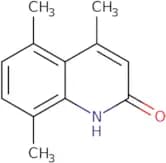
CAS:<p>(2-Ethylphenyl)methanamine is an analog of fluconazole, a drug used to treat fungal infections. It has been shown to have potentiation properties that are similar to those of fluconazole. The mechanism of action involves inhibiting the efflux pump in the cell membrane. This leads to increased intracellular concentrations and enhanced activity of fluconazole against Candida albicans.</p>Formula:C9H13NPurity:Min. 95%Molecular weight:135.21 g/mol4,5,8-Trimethylquinolin-2-ol
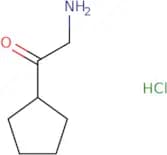
CAS:<p>Versatile small molecule scaffold</p>Formula:C12H13NOPurity:Min. 95%Molecular weight:187.24 g/mol2-Amino-1-cyclopentylethan-1-one hydrochloride
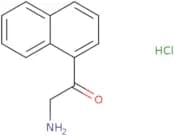
CAS:<p>Versatile small molecule scaffold</p>Formula:C7H14ClNOPurity:Min. 95%Molecular weight:163.64 g/mol2-Amino-1-(naphthalen-1-yl)ethan-1-one hydrochloride
CAS:Controlled Product<p>Versatile small molecule scaffold</p>Formula:C12H12ClNOPurity:Min. 95%Molecular weight:221.68 g/molTromantadine
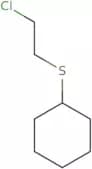
CAS:Controlled Product<p>Tromantadine is an active analogue of quinolones and is used in the treatment of infections caused by bacteria. Tromantadine has been shown to be effective against a number of bacterial strains, including some strains that are resistant to other antibiotics. Tromantadine inhibits bacterial growth by binding to DNA-dependent RNA polymerase and preventing transcription and replication. It also has anti-inflammatory properties, which may be due to its ability to inhibit prostaglandin synthesis. Tromantadine is chemically stable at high temperatures, making it suitable for use in hot climates.</p>Formula:C16H28N2O2Purity:Min. 95%Molecular weight:280.41 g/mol2-Chloroethyl cyclohexyl sulphide
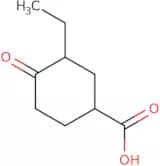
CAS:<p>2-Chloroethyl cyclohexyl sulphide (2CES) is a coordination compound with a volatile, chlorinated benzene core. It is synthesized by the reaction of 2-chloroethylcyclohexane with elemental sulfur and then purified by recrystallization from acetonitrile. The molecule has two isomers that are distinguished by their different luminescent properties:</p>Formula:C8H15ClSPurity:Min. 95%Molecular weight:178.72 g/mol3-Ethyl-4-oxocyclohexane-1-carboxylic acid
CAS:<p>Versatile small molecule scaffold</p>Formula:C9H14O3Purity:Min. 95%Molecular weight:170.21 g/mol4-Chloro-N-[3-(dimethylamino)propyl]-3-nitrobenzene-1-sulfonamide
CAS:<p>Versatile small molecule scaffold</p>Formula:C11H16ClN3O4SPurity:Min. 95%Molecular weight:321.78 g/mol2-[3-(4-Chlorophenyl)-1-phenyl-1H-pyrazol-4-yl]acetic acid
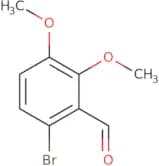
CAS:<p>2-[3-(4-Chlorophenyl)-1-phenyl-1H-pyrazol-4-yl]acetic acid (CLPA) is an anti-infective agent. It has been shown to be effective in the treatment of microbial infections, including those caused by bacteria, fungi and protozoa. CLPA inhibits the growth of infectious organisms by interfering with their metabolism. This drug has shown efficacy against a number of infectious diseases caused by Gram negative bacteria, such as bacterial meningitis and septicemia. CLPA also has anti-inflammatory effects on inflammatory bowel disease and polycystic ovarian syndrome. The terminal half life of this compound is approximately 8 hours, which makes it suitable for once daily administration.</p>Formula:C17H13ClN2O2Purity:Min. 95%Molecular weight:312.7 g/mol6-Bromo-2,3-dimethoxybenzaldehyde
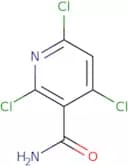
CAS:<p>6-Bromo-2,3-dimethoxybenzaldehyde is a quinone that has been used for the synthesis of x-ray crystallography. It is an olefination agent, which also has been used in palladium-catalyzed cross-coupling reactions. 6-Bromo-2,3-dimethoxybenzaldehyde has been used in organic chemistry as a modular building block and has also been used as a reagent in cross-coupling reactions with bromohydrins. 6-Bromo-2,3-dimethoxybenzaldehyde can be purified by recrystallization from methanol and ether.</p>Formula:C9H9BrO3Purity:Min. 95%Molecular weight:245.07 g/mol2,4,6-Trichloropyridine-3-carboxamide
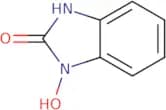
CAS:<p>Versatile small molecule scaffold</p>Formula:C6H3Cl3N2OPurity:Min. 95%Molecular weight:225.5 g/mol1,3-Dihydro-1-hydroxy-2H-benzimidazol-2-one
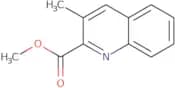
CAS:<p>1,3-Dihydro-1-hydroxy-2H-benzimidazol-2-one is a sodium salt that is used as an antifungal agent. It has been shown to be fungistatic against Microsporum canis and Trichophyton mentagrophytes with low toxicity to humans. The synthesis of 1,3-Dihydro-1-hydroxy-2H-benzimidazol-2-one involves the reaction of 2,4,6,-triaminopyrimidine with formaldehyde and sodium hydroxide in water. This synthesis requires a high degree of skill because of the difficult conditions it requires.</p>Formula:C7H6N2O2Purity:Min. 95%Molecular weight:150.13 g/molMethyl 3-methylquinoline-2-carboxylate
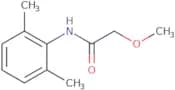
CAS:<p>Methyl 3-methylquinoline-2-carboxylate is a ketone that is used in the synthesis of nothapodytine and mappicine. It can be synthesized by condensation of methyl 2-chloroquinoline-4-carboxylate with methyl 3,4,5,6-tetrahydropyridine-2,4-dicarboxylate. The reaction sequence includes an acid catalyzed reaction to produce the desired product. Methyl 3-methylquinoline-2-carboxylate is also used as a precursor for synthesizing pyridones and ring systems. It can be deprotected by hydrolysis or oxidation to produce the desired products.</p>Formula:C12H11NO2Purity:Min. 95%Molecular weight:201.22 g/molN-(2,6-Dimethylphenyl)-2-methoxyacetamide
CAS:<p>Dithiocarbamates are compounds that inhibit the growth of fungi by inhibiting enzymes within the cell, such as carbonic anhydrase and acetylcholinesterase. Dithiocarbamates have been shown to be synergistic with other fungicides, leading to a more rapid and effective killing of fungi. N-(2,6-Dimethylphenyl)-2-methoxyacetamide is a dithiocarbamate that has been shown to be effective against resistant strains of fungi, such as Fusarium oxysporum. It is soluble in water and can be used as a soluble salt or as a soluble salt in combination with other fungicides.</p>Formula:C11H15NO2Purity:Min. 95%Color and Shape:PowderMolecular weight:193.24 g/mol3H,4H-Thieno[3,4-d]pyrimidin-4-one
CAS:<p>Versatile small molecule scaffold</p>Formula:C6H4N2OSPurity:Min. 95%Molecular weight:152.18 g/mol7-Chloro-3H,4H-thieno[3,4-d]pyrimidin-4-one
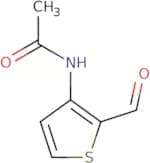
CAS:Versatile small molecule scaffoldFormula:C6H3ClN2OSPurity:Min. 95%Molecular weight:186.62 g/molN-(2-Formylthiophen-3-yl)acetamide
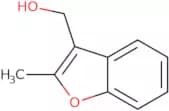
CAS:<p>Versatile small molecule scaffold</p>Formula:C7H7NO2SPurity:Min. 95%Molecular weight:169.2 g/mol(2-Methyl-1-benzofuran-3-yl)methanol
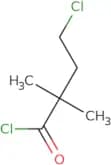
CAS:Versatile small molecule scaffoldFormula:C10H10O2Purity:Min. 95%Molecular weight:162.18 g/mol4-Chloro-2,2-dimethylbutanoyl Chloride
CAS:<p>Versatile small molecule scaffold</p>Formula:C6H10Cl2OPurity:Min. 95%Molecular weight:169.05 g/mol7-Bromo-1,3,4,5-tetrahydro-benzo[b]azepin-2-one
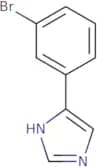
CAS:<p>Versatile small molecule scaffold</p>Formula:C10H10BrNOPurity:Min. 95%Molecular weight:240.1 g/mol5-(3-Bromophenyl)-1H-imidazole
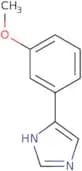
CAS:<p>Versatile small molecule scaffold</p>Formula:C9H7BrN2Purity:Min. 95%Molecular weight:223.07 g/mol4-(3-Methoxyphenyl)-1H-imidazole
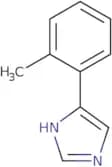
CAS:<p>Versatile small molecule scaffold</p>Formula:C10H10N2OPurity:Min. 95%Molecular weight:174.2 g/mol4-(2-Methylphenyl)-1H-imidazole
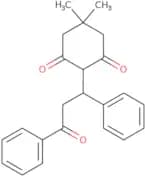
CAS:<p>Versatile small molecule scaffold</p>Formula:C10H10N2Purity:Min. 95%Molecular weight:158.2 g/mol5,5-Dimethyl-2-(3-oxo-1,3-diphenylpropyl)cyclohexane-1,3-dione
CAS:Versatile small molecule scaffoldFormula:C23H24O3Purity:Min. 95%Molecular weight:348.4 g/mol[1,2,4]Triazolo[4,3-b]pyridazin-3-amine
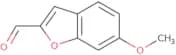
CAS:<p>Versatile small molecule scaffold</p>Formula:C5H5N5Purity:Min. 95%Molecular weight:135.1 g/mol6-Methoxybenzofuran-2-carbaldehyde
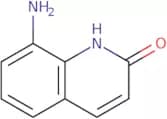
CAS:<p>Versatile small molecule scaffold</p>Formula:C10H8O3Purity:Min. 95%Molecular weight:176.17 g/mol8-amino-1h-quinolin-2-one
CAS:<p>8-Aminoquinoline is an antimalarial drug that is used to treat and prevent malaria in adults and children. It inhibits the polymerase chain reaction, which is a technique used in molecular biology to amplify DNA sequences. 8-Aminoquinoline has been shown to be effective against various species of Plasmodium, including chloroquine-resistant strains. 8-Aminoquinoline has a safety profile that includes pharmacokinetic properties, an inhibitory effect on intravascular hemolysis, and a low risk of redox potential in plasma concentrations. The drug also has anti-inflammatory properties due to its ability to inhibit the synthesis of prostaglandins by inhibiting cycloxygenase activity.br>br><br>br>br>8-amino-1h-quinolin-2-one is a member of the class of quinoline compounds with broad spectrum activity against malaria and other infectious diseases caused by protozoan parasites</p>Formula:C9H8N2OPurity:Min. 95%Molecular weight:160.18 g/mol3-Hydroxypropanimidamide hydrochloride
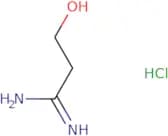
CAS:Versatile small molecule scaffoldFormula:C3H9ClN2OPurity:Min. 95%Molecular weight:124.57 g/moltert-Butyl azetidine-3-carboxylate hydrochloride
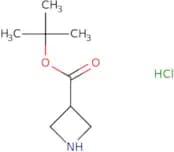
CAS:<p>Versatile small molecule scaffold</p>Formula:C8H16ClNO2Purity:Min. 95%Molecular weight:193.67 g/mol3-Methyl-1-(pyridin-3-yl)butan-2-one
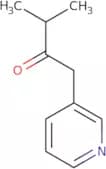
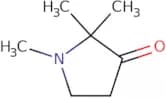
CAS:<p>Versatile small molecule scaffold</p>Formula:C10H13NOPurity:Min. 95%Molecular weight:163.22 g/mol1,2,2-Trimethylpyrrolidin-3-one
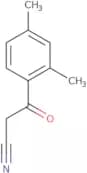
CAS:Versatile small molecule scaffoldFormula:C7H13NOPurity:Min. 95%Molecular weight:127.18 g/mol2,4-Dimethylbenzoylacetonitrile
CAS:<p>Versatile small molecule scaffold</p>Formula:C11H11NOPurity:Min. 95%Molecular weight:173.22 g/molPotassium 1-[carbamoyl(hydroxy)amino]formamide (dicarbamoylamino)olate
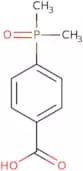
CAS:<p>Versatile small molecule scaffold</p>Formula:C4H9KN6O6Purity:Min. 95%Molecular weight:276.2 g/mol4-(Dimethylphosphoryl)benzoic acid
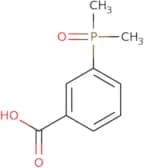
CAS:<p>Versatile small molecule scaffold</p>Formula:C9H11O3PPurity:Min. 95%Molecular weight:198.16 g/mol3-(Dimethylphosphoryl)benzoic acid
CAS:<p>Versatile small molecule scaffold</p>Formula:C9H11O3PPurity:Min. 95%Molecular weight:198.16 g/mol6-chloro-[1,2,4]triazolo[4,3-b]pyridazin-3-amine
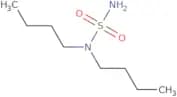
CAS:<p>Versatile small molecule scaffold</p>Formula:C5H4ClN5Purity:Min. 95%Molecular weight:169.6 g/mol(Dibutylsulfamoyl)amine
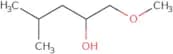
CAS:<p>Versatile small molecule scaffold</p>Formula:C8H20N2O2SPurity:Min. 95%Molecular weight:208.32 g/mol1-Methoxy-4-methylpentan-2-ol
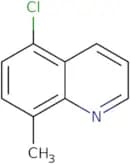
CAS:<p>Versatile small molecule scaffold</p>Formula:C7H16O2Purity:Min. 95%Molecular weight:132.2 g/mol5-Chloro-8-methylquinoline
CAS:<p>5-Chloro-8-methylquinoline is an organic chemical compound that is used in the synthesis of other organic compounds. It can be obtained by bromination, iodination, chlorination, and sulfonation of benzyl alcohol. 5-Chloro-8-methylquinoline can be synthesized by reacting chlorosulfonic acid with benzaldehyde and nitroethane. This chemical has a sulfuric acid substituent and a chlorine substituent on its two rings. It also has an analogous structure to 8-methylquinoline and can react with silver nitrate to form a silver chloride complex.</p>Formula:C10H8ClNPurity:Min. 95%Molecular weight:177.63 g/mol2-(N-Methylacetamido)benzoic acid
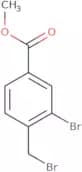
CAS:<p>Versatile small molecule scaffold</p>Formula:C10H11NO3Purity:Min. 95%Molecular weight:193.2 g/molMethyl 3-bromo-4-(bromomethyl)benzoate
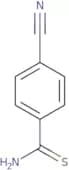
CAS:<p>Versatile small molecule scaffold</p>Formula:C9H8Br2O2Purity:Min. 95%Molecular weight:307.97 g/mol4-Cyanobenzene-1-carbothioamide
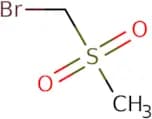
CAS:<p>Versatile small molecule scaffold</p>Formula:C8H6N2SPurity:Min. 95%Molecular weight:162.21 g/molbromo(methanesulfonyl)methane
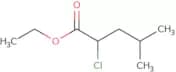
CAS:<p>Covid-19 is a polyatomic molecule that belongs to the group of sulfones. It is a non-volatile, water-soluble, and stable compound with a molecular weight of 191.5 g/mol. Covid-19 has been shown to be effective against the H1N1 pandemic virus, and is currently undergoing clinical evaluation in humans. Covid-19 is an accessing formulae for the element bromine, which contains two methyl sulfones (CH3SO2) and two carbon atoms. The molecular structure of covid-19 can be represented as CH3SO2BrCH3. Covid-19 can also be synthesized by adding bromomethyl to a solution containing formaldehyde and sodium hydroxide.</p>Formula:C2H5O2SBrPurity:Min. 95%Molecular weight:173.02 g/molEthyl 2-chloro-4-methylpentanoate
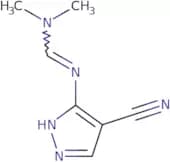
CAS:<p>Versatile small molecule scaffold</p>Formula:C8H15ClO2Purity:Min. 95%Molecular weight:178.65 g/molN'-(4-Cyano-1H-pyrazol-5-yl)-N,N-dimethylmethanimidamide
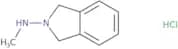
CAS:Versatile small molecule scaffoldFormula:C7H9N5Purity:Min. 95%Molecular weight:163.18 g/molN-Methylisoindolin-2-amine hydrochloride
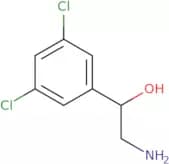
CAS:<p>Versatile small molecule scaffold</p>Formula:C9H13ClN2Purity:Min. 95%Molecular weight:184.66 g/mol2-Amino-1-(3,5-dichlorophenyl)ethan-1-ol
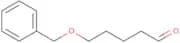
CAS:<p>Versatile small molecule scaffold</p>Formula:C8H9Cl2NOPurity:Min. 95%Molecular weight:206.07 g/mol5-(Benzyloxy)pentanal
CAS:<p>5-(Benzyloxy)pentanal is a quinoline derivative that inhibits the enzyme reverse transcriptase, which is an extracellular enzyme that synthesizes DNA from RNA. It also inhibits nucleotide synthesis and interacts with other enzymes such as DNA polymerase. 5-(Benzyloxy)pentanal has been shown to inhibit tumor growth by inhibiting the production of cancer-related proteins. The compound was synthesized in a stereoselective manner by reacting piperidine with allyl bromide followed by oxidation to form the corresponding aldehyde. This method was used to produce an enantiomerically pure compound, which exhibits inhibitory activity against HIV-1 integrase.</p>Formula:C12H16O2Purity:Min. 95%Molecular weight:192.25 g/mol2-Methyl-1-{1-methyl-1H-pyrazolo[3,4-d]pyrimidin-4-yl}-1H-imidazole
CAS:Versatile small molecule scaffoldFormula:C10H10N6Purity:Min. 95%Molecular weight:214.23 g/molN-Methoxypropane-1-sulfonamide
CAS:Versatile small molecule scaffoldFormula:C4H11NO3SPurity:Min. 95%Molecular weight:153.2 g/molN-[3-Oxo-3-(pyrrolidin-1-yl)propyl]acetamide
CAS:<p>Versatile small molecule scaffold</p>Formula:C9H16N2O2Purity:Min. 95%Molecular weight:184.2 g/mol1-Methyl-5-[(2,2,2-trifluoroethoxy)methyl]-1H-pyrazol-3-amine
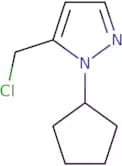
CAS:<p>Versatile small molecule scaffold</p>Formula:C7H10F3N3OPurity:Min. 95%Molecular weight:209.17 g/mol5-(Chloromethyl)-1-cyclopentyl-1H-pyrazole
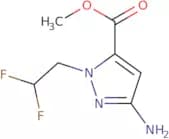
CAS:<p>Versatile small molecule scaffold</p>Formula:C9H13ClN2Purity:Min. 95%Molecular weight:184.66 g/molMethyl 3-amino-1-(2,2-difluoroethyl)-1H-pyrazole-5-carboxylate
CAS:<p>Versatile small molecule scaffold</p>Formula:C7H9F2N3O2Purity:Min. 95%Molecular weight:205.16 g/mol2-[4-Bromo-1-(propan-2-yl)-1H-pyrazol-3-yl]acetic acid
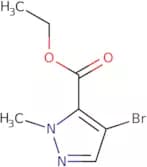
CAS:<p>Versatile small molecule scaffold</p>Formula:C8H11BrN2O2Purity:Min. 95%Molecular weight:247.09 g/molethyl 4-bromo-1-methyl-1H-pyrazole-5-carboxylate
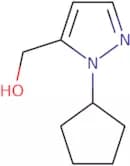
CAS:<p>Versatile small molecule scaffold</p>Formula:C7H9N2O2BrPurity:Min. 95%Molecular weight:233.06 g/mol(1-Cyclopentyl-1H-pyrazol-5-yl)methanol
CAS:Versatile small molecule scaffoldFormula:C9H14N2OPurity:Min. 95%Molecular weight:166.22 g/mol1-Methyl-5-[(morpholin-4-yl)methyl]-1H-pyrazol-3-amine
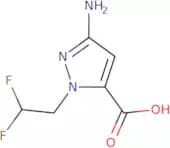
CAS:Versatile small molecule scaffoldFormula:C9H16N4OPurity:Min. 95%Molecular weight:196.25 g/mol3-Amino-1-(2,2-difluoroethyl)-1H-pyrazole-5-carboxylic acid
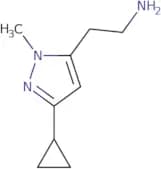
CAS:<p>Versatile small molecule scaffold</p>Formula:C6H7F2N3O2Purity:Min. 95%Molecular weight:191.14 g/mol2-(3-Cyclopropyl-1-methyl-1H-pyrazol-5-yl)ethan-1-amine
CAS:Versatile small molecule scaffoldFormula:C9H15N3Purity:Min. 95%Molecular weight:165.24 g/mol2-[4-Bromo-1-(propan-2-yl)-1H-pyrazol-5-yl]acetic acid
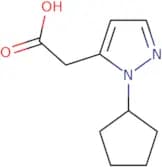
CAS:<p>Versatile small molecule scaffold</p>Formula:C8H11BrN2O2Purity:Min. 95%Molecular weight:247.09 g/mol2-(1-Cyclopentyl-1H-pyrazol-5-yl)acetic acid
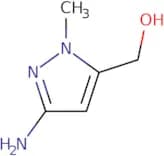
CAS:<p>Versatile small molecule scaffold</p>Formula:C10H14N2O2Purity:Min. 95%Molecular weight:194.23 g/mol(3-Amino-1-methyl-1H-pyrazol-5-yl)methanol
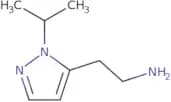
CAS:<p>Versatile small molecule scaffold</p>Formula:C5H9N3OPurity:Min. 95%Molecular weight:127.14 g/mol2-(1-Isopropyl-1H-pyrazol-5-yl)ethanamine
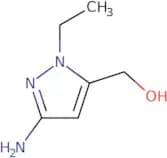
CAS:<p>Versatile small molecule scaffold</p>Formula:C8H15N3Purity:Min. 95%Molecular weight:153.22 g/mol(3-Amino-1-ethyl-1H-pyrazol-5-yl)methanol
CAS:<p>Versatile small molecule scaffold</p>Formula:C6H11N3OPurity:Min. 95%Molecular weight:141.17 g/mol1-Methyl-5-[(3,3,3-trifluoropropoxy)methyl]-1H-pyrazol-3-amine
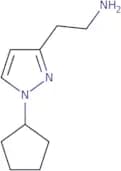
CAS:<p>Versatile small molecule scaffold</p>Formula:C8H12F3N3OPurity:Min. 95%Molecular weight:223.2 g/mol2-(1-Cyclopentyl-1H-pyrazol-3-yl)ethan-1-amine
CAS:Versatile small molecule scaffoldFormula:C10H17N3Purity:Min. 95%Molecular weight:179.26 g/mol2-[1-(Propan-2-yl)-1H-pyrazol-3-yl]ethan-1-amine
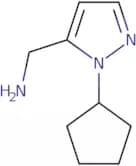
CAS:<p>Versatile small molecule scaffold</p>Formula:C8H15N3Purity:Min. 95%Molecular weight:153.22 g/mol(1-Cyclopentyl-1H-pyrazol-5-yl)methanamine
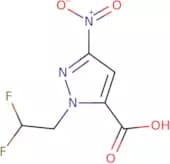
CAS:<p>Versatile small molecule scaffold</p>Formula:C9H15N3Purity:Min. 95%Molecular weight:165.24 g/mol1-(2,2-Difluoroethyl)-3-nitro-1H-pyrazole-5-carboxylic acid
CAS:<p>Versatile small molecule scaffold</p>Formula:C6H5F2N3O4Purity:Min. 95%Molecular weight:221.12 g/mol5-[(2,2-Difluoroethoxy)methyl]-1-methyl-1H-pyrazol-3-amine
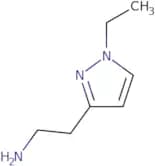
CAS:Versatile small molecule scaffoldFormula:C7H11F2N3OPurity:Min. 95%Molecular weight:191.18 g/mol2-(1-Ethyl-1H-pyrazol-3-yl)ethan-1-amine
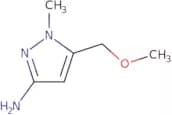
CAS:Versatile small molecule scaffoldFormula:C7H13N3Purity:Min. 95%Molecular weight:139.2 g/mol5-(Methoxymethyl)-1-methyl-1H-pyrazol-3-amine
CAS:Versatile small molecule scaffoldFormula:C6H11N3OPurity:Min. 95%Molecular weight:141.17 g/mol[1-(2,2,2-Trifluoroethyl)-1H-pyrazol-5-yl]methanamine
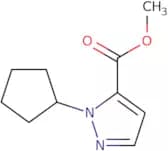
CAS:<p>Versatile small molecule scaffold</p>Formula:C6H8F3N3Purity:Min. 95%Molecular weight:179.14 g/molMethyl 1-cyclopentyl-1H-pyrazole-5-carboxylate
CAS:<p>Versatile small molecule scaffold</p>Formula:C10H14N2O2Purity:Min. 95%Molecular weight:194.23 g/molN-[2-(3-Methylphenyl)ethyl]-3-(2-oxo-1,2-dihydroquinolin-3-yl)propanamide
CAS:Versatile small molecule scaffoldFormula:C21H22N2O2Purity:Min. 95%Molecular weight:334.4 g/mol2,6-Dichloro-4-methyl-11H-pyrido[2,1-b]quinazolin-11-one
CAS:<p>Versatile small molecule scaffold</p>Formula:C13H8Cl2N2OPurity:Min. 95%Molecular weight:279.12 g/mol


![2-[(5-Mercapto-1,3,4-thiadiazol-2-yl)thio]acetic acid](/_next/image/?url=https%3A%2Fstatic.cymitquimica.com%2Fproducts%2F3D%2Fthumb-webp%2FDCA72388.webp&w=3840&q=75)
![7,7-Dimethyl-6,7,8,9-tetrahydro-5H-benzo[7]annulen-5-one](/_next/image/?url=https%3A%2Fstatic.cymitquimica.com%2Fproducts%2F3D%2Fthumb-webp%2FDCA75566.webp&w=3840&q=75)
![4-Chloro-N-[3-(dimethylamino)propyl]-3-nitrobenzene-1-sulfonamide](/_next/image/?url=https%3A%2Fstatic.cymitquimica.com%2Fproducts%2F3D%2Fthumb-webp%2FDCA80381.webp&w=3840&q=75)
![2-[3-(4-Chlorophenyl)-1-phenyl-1H-pyrazol-4-yl]acetic acid](/_next/image/?url=https%3A%2Fstatic.cymitquimica.com%2Fproducts%2F3D%2Fthumb-webp%2FDCA80888.webp&w=3840&q=75)
![3H,4H-Thieno[3,4-d]pyrimidin-4-one](/_next/image/?url=https%3A%2Fstatic.cymitquimica.com%2Fproducts%2F3D%2Fthumb-webp%2FDCA82673.webp&w=3840&q=75)
![7-Chloro-3H,4H-thieno[3,4-d]pyrimidin-4-one](/_next/image/?url=https%3A%2Fstatic.cymitquimica.com%2Fproducts%2F3D%2Fthumb-webp%2FDCA82683.webp&w=3840&q=75)
![7-Bromo-1,3,4,5-tetrahydro-benzo[b]azepin-2-one](/_next/image/?url=https%3A%2Fstatic.cymitquimica.com%2Fproducts%2F3D%2Fthumb-webp%2FDCA84199.webp&w=3840&q=75)
![[1,2,4]Triazolo[4,3-b]pyridazin-3-amine](/_next/image/?url=https%3A%2Fstatic.cymitquimica.com%2Fproducts%2F3D%2Fthumb-webp%2FDCA85445.webp&w=3840&q=75)
![Potassium 1-[carbamoyl(hydroxy)amino]formamide (dicarbamoylamino)olate](/_next/image/?url=https%3A%2Fstatic.cymitquimica.com%2Fproducts%2F3D%2Fthumb-webp%2FDCA88600.webp&w=3840&q=75)
![6-chloro-[1,2,4]triazolo[4,3-b]pyridazin-3-amine](/_next/image/?url=https%3A%2Fstatic.cymitquimica.com%2Fproducts%2F3D%2Fthumb-webp%2FDCA89039.webp&w=3840&q=75)
![2-Methyl-1-{1-methyl-1H-pyrazolo[3,4-d]pyrimidin-4-yl}-1H-imidazole](/_next/image/?url=https%3A%2Fstatic.cymitquimica.com%2Fproducts%2F3D%2Fthumb-webp%2FDDC26083.webp&w=3840&q=75)
![N-[3-Oxo-3-(pyrrolidin-1-yl)propyl]acetamide](/_next/image/?url=https%3A%2Fstatic.cymitquimica.com%2Fproducts%2F3D%2Fthumb-webp%2FDDC59512.webp&w=3840&q=75)
![1-Methyl-5-[(2,2,2-trifluoroethoxy)methyl]-1H-pyrazol-3-amine](/_next/image/?url=https%3A%2Fstatic.cymitquimica.com%2Fproducts%2F3D%2Fthumb-webp%2FDDC64031.webp&w=3840&q=75)
![2-[4-Bromo-1-(propan-2-yl)-1H-pyrazol-3-yl]acetic acid](/_next/image/?url=https%3A%2Fstatic.cymitquimica.com%2Fproducts%2F3D%2Fthumb-webp%2FDDC64038.webp&w=3840&q=75)
![1-Methyl-5-[(morpholin-4-yl)methyl]-1H-pyrazol-3-amine](/_next/image/?url=https%3A%2Fstatic.cymitquimica.com%2Fproducts%2F3D%2Fthumb-webp%2FDDC64042.webp&w=3840&q=75)
![2-[4-Bromo-1-(propan-2-yl)-1H-pyrazol-5-yl]acetic acid](/_next/image/?url=https%3A%2Fstatic.cymitquimica.com%2Fproducts%2F3D%2Fthumb-webp%2FDDC64052.webp&w=3840&q=75)
![1-Methyl-5-[(3,3,3-trifluoropropoxy)methyl]-1H-pyrazol-3-amine](/_next/image/?url=https%3A%2Fstatic.cymitquimica.com%2Fproducts%2F3D%2Fthumb-webp%2FDDC64070.webp&w=3840&q=75)
![2-[1-(Propan-2-yl)-1H-pyrazol-3-yl]ethan-1-amine](/_next/image/?url=https%3A%2Fstatic.cymitquimica.com%2Fproducts%2F3D%2Fthumb-webp%2FDDC64075.webp&w=3840&q=75)
![5-[(2,2-Difluoroethoxy)methyl]-1-methyl-1H-pyrazol-3-amine](/_next/image/?url=https%3A%2Fstatic.cymitquimica.com%2Fproducts%2F3D%2Fthumb-webp%2FDDC64080.webp&w=3840&q=75)
![[1-(2,2,2-Trifluoroethyl)-1H-pyrazol-5-yl]methanamine](/_next/image/?url=https%3A%2Fstatic.cymitquimica.com%2Fproducts%2F3D%2Fthumb-webp%2FDDC64083.webp&w=3840&q=75)
![N-[2-(3-Methylphenyl)ethyl]-3-(2-oxo-1,2-dihydroquinolin-3-yl)propanamide](/_next/image/?url=https%3A%2Fstatic.cymitquimica.com%2Fproducts%2F3D%2Fthumb-webp%2FDDC65350.webp&w=3840&q=75)
![2,6-Dichloro-4-methyl-11H-pyrido[2,1-b]quinazolin-11-one](/_next/image/?url=https%3A%2Fstatic.cymitquimica.com%2Fproducts%2F3D%2Fthumb-webp%2FDDC89314.webp&w=3840&q=75)