


Building Blocks
This section contains fundamental products for the synthesis of organic and biological compounds. Building blocks are the essential starting materials used to construct complex molecules through various chemical reactions. They play a critical role in drug discovery, material science, and chemical research. At CymitQuimica, we offer a diverse range of high-quality building blocks to support your innovative research and industrial projects, ensuring you have the essential components for successful synthesis.
Subcategories of "Building Blocks"
- Boronic Acids & Boronic Acid Derivatives(5,756 products)
- Chiral Building Blocks(1,242 products)
- Hydrocarbon Building Blocks(6,093 products)
- Organic Building Blocks(60,534 products)
Found 195534 products of "Building Blocks"
Sort by
Purity (%)
0
100
|
0
|
50
|
90
|
95
|
100
Benzyl Cyanoformate
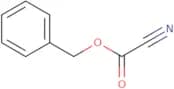
CAS:<p>Benzyl Cyanoformate is a diagnostic agent that is used in the synthesis of amide compounds. It has a structure that includes an active methylene and nitrogen atoms. Benzyl Cyanoformate is synthesized through asymmetric synthesis, which encompasses the use of amines, inhibitors, and solid-phase synthesis. This compound has been shown to inhibit the activity of some receptor proteins by binding to them and preventing their activation, thus acting as an antagonist. Benzyl Cyanoformate binds to the enzyme carboxy with hydrochloric acid as a catalyst. The v600e mutation in K-ras can lead to increased sensitivity to this inhibitor; however, it is not known if this mutation confers sensitivity or resistance to other inhibitors of K-ras.</p>Formula:C9H7NO2Purity:Min. 95%Molecular weight:161.16 g/mol1-tert-Butyl-4-(ethenesulfonyl)benzene
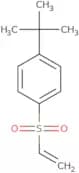
CAS:<p>Versatile small molecule scaffold</p>Formula:C12H16O2SPurity:Min. 95%Molecular weight:224.32 g/mol1-(Ethenesulfonyl)-4-nitrobenzene
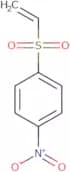
CAS:<p>1-(Ethenesulfonyl)-4-nitrobenzene (1ESNB) is a pyrazoline that has been used as an oxidant in cyclic aliphatic and heterocyclic syntheses. 1ESNB is also used to form phosphate derivatives, which are important in the pharmaceutical industry. 1ESNB can be prepared by the organocatalytic coupling of ethyl sulfone with nitrobenzene. The azomethine ylide can be generated from 1ESNB through oxidation with potassium permanganate or ozone, followed by addition of an aliphatic amine. This reaction gives a quinolinium salt that can be converted to a sulfone using thionyl chloride or oxalyl chloride. A cycloaddition reaction can then convert the sulfone into a biologically active molecule such as methotrexate or daunorubicin.</p>Formula:C8H7NO4SPurity:Min. 95%Molecular weight:213.21 g/mol(4-Hydroxy-2,6-dimethylpyrimidin-5-yl)acetic acid
CAS:<p>Versatile small molecule scaffold</p>Formula:C8H10N2O3Purity:Min. 95%Molecular weight:182.18 g/mol3-Amino-5-methyl-1-phenylpyrrolidin-2-one
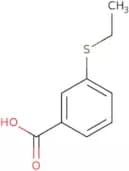
CAS:<p>Versatile small molecule scaffold</p>Formula:C11H14N2OPurity:Min. 95%Molecular weight:190.24 g/mol3-(Ethylsulfanyl)benzoic acid
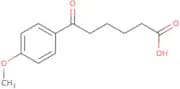
CAS:<p>Versatile small molecule scaffold</p>Formula:C9H10O2SPurity:Min. 95%Molecular weight:182.24 g/mol6-(4-Methoxyphenyl)-6-oxohexanoic acid
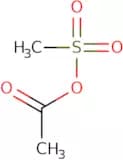
CAS:<p>Versatile small molecule scaffold</p>Formula:C13H16O4Purity:Min. 95%Molecular weight:236.26 g/molMethanesulfonyl acetate
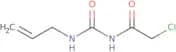
CAS:<p>Methanesulfonyl acetate is a chemical that is used in the chemical industry as a solvent and as a conditioner for polymers. Methanesulfonyl acetate has been shown to have effects on blood pressure and cancer cells, where it inhibits the growth of cancer cells by inhibiting DNA synthesis. Methanesulfonyl acetate also binds strongly to chlorine atoms and is soluble in nonpolar solvents. The molecular weight of methanesulfonyl acetate is 164.19 g/mol and its melting point is -13°C. <br>Methanesulfonyl Acetate Chemical Formula: CH3SO2COCH3<br>Molecular Weight: 164.19 g/mol<br>Melting Point: -13°C<br>Boiling Point: 210°C<br>Density: 1.07 g/cm3 <br>Solubility in Water: Insoluble <br>Appearance: Pale yellow liquid</p>Formula:C3H6O4SPurity:Min. 95%Molecular weight:138.14 g/mol1-(2-Chloroacetyl)-3-(prop-2-en-1-yl)urea
CAS:<p>Versatile small molecule scaffold</p>Formula:C6H9ClN2O2Purity:Min. 95%Molecular weight:176.6 g/mol(3-Chloropropanoyl)urea
CAS:<p>3-Chloropropanoyl)urea is a urea derivative. It has been used as an intermediate in the synthesis of tranquilizers and reaction products. 3-Chloropropanoyl)urea has been shown to react with aliphatic hydrocarbons, cycloaliphatic compounds, piperidine, or acylurea. The resulting products are chlorinated or carboxylic acid derivatives.</p>Formula:C4H7ClN2O2Purity:Min. 95%Molecular weight:150.56 g/molEthyl 2-(3-methylpyridin-2-yl)acetate
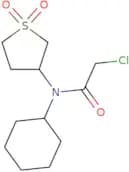
CAS:<p>Versatile small molecule scaffold</p>Formula:C10H13NO2Purity:Min. 95%Molecular weight:179.2 g/mol2-Chloro-N-cyclohexyl-N-(1,1-dioxothiolan-3-yl)acetamide
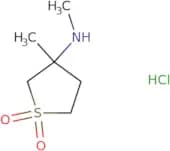
CAS:<p>Versatile small molecule scaffold</p>Formula:C12H20ClNO3SPurity:Min. 95%Molecular weight:293.81 g/molMethyl-(3-methyl-1,1-dioxo-tetrahydro-1λ*6*-thiophen-3-yl)-amine hydrochloride
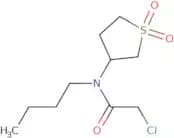
CAS:<p>Versatile small molecule scaffold</p>Formula:C6H14ClNO2SPurity:Min. 95%Molecular weight:199.7 g/molN-Butyl-2-chloro-N-(tetrahydro-1,1-dioxido-3-thienyl)-acetamide
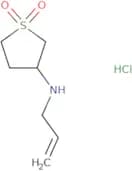
CAS:<p>Versatile small molecule scaffold</p>Formula:C10H18ClNO3SPurity:Min. 95%Molecular weight:267.77 g/molTetrahydro-N-2-propen-1-yl-3-thiophenamine 1,1-dioxide hydrochloride
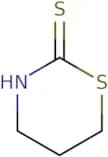
CAS:<p>Versatile small molecule scaffold</p>Formula:C7H14ClNO2SPurity:Min. 95%Molecular weight:211.71 g/mol1,3-Thiazinane-2-Thione
CAS:<p>1,3-Thiazinane-2-thione is an allylamine that can be used in the synthesis of a variety of compounds. 1,3-Thiazinane-2-thione is also an activator for carbon-carbon bond formation. This compound can be synthesized from an alkyl halide and an aldehyde by reaction with sulfur and heat. The stereoselectivity of this reaction has been shown using x-ray crystallography.</p>Formula:C4H7NS2Purity:Min. 95%Molecular weight:133.23 g/mol3-Dimethylamino-1-phenyl-1-propanol
CAS:<p>3-Dimethylamino-1-phenyl-1-propanol is a chiral phenoxy propylamine optical isomer with a residue of carbonyl. It is a racemic mixture of two optical isomers and has the ability to form diastereoisomeric salts. 3-Dimethylamino-1-phenyl-1-propanol is an intermediate in the synthesis of fluoxetine, which is used to treat depression. This substance also has antihistamine and sedative properties, as well as other pharmacological effects that have not been studied extensively.</p>Formula:C11H17NOPurity:Min. 95%Molecular weight:179.26 g/molo-[(4-Chlorophenyl)methyl]hydroxylamine
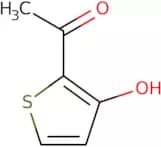
CAS:<p>Versatile small molecule scaffold</p>Formula:C7H8ClNOPurity:Min. 95%Molecular weight:157.6 g/mol1-(3-Hydroxythiophen-2-yl)ethan-1-one
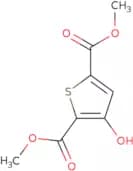
CAS:<p>1-(3-Hydroxythiophen-2-yl)ethan-1-one is a hydrolyzable compound that has been shown to have microbicidal activity against food spoilage bacteria such as Bacillus cereus and Clostridium perfringens. It inhibits the growth of these bacteria by inhibiting the synthesis of bacterial cell walls, which leads to cell death.</p>Formula:C6H6O2SPurity:Min. 95%Molecular weight:142.18 g/mol2,5-Dimethyl 3-hydroxythiophene-2,5-dicarboxylate
CAS:<p>Versatile small molecule scaffold</p>Formula:C8H8O5SPurity:Min. 95%Molecular weight:216.21 g/mol2,3,5-Trimethoxybenzaldehyde
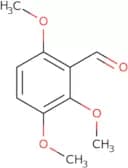
CAS:<p>2,3,5-Trimethoxybenzaldehyde is the hydrolysis product of coumarin. It can be synthesized from 2,3-dimethoxybenzaldehyde and acetyl chloride. 2,3,5-Trimethoxybenzaldehyde can also be obtained by hydrolysis of coumarin with aqueous sodium hydroxide or potassium hydroxide. This compound is used as a natural flavoring agent in food products.</p>Formula:C10H12O4Purity:Min. 95%Molecular weight:196.2 g/mol2,3,6-Trimethoxybenzaldehyde
CAS:<p>Versatile small molecule scaffold</p>Formula:C10H12O4Purity:Min. 95%Molecular weight:196.2 g/molBenzyl 2-aopropanoate hydrochloride
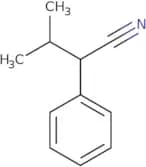
CAS:<p>Versatile small molecule scaffold</p>Formula:C10H14ClNO2Purity:Min. 95%Molecular weight:215.67 g/mol3-Methyl-2-phenylbutanenitrile
CAS:<p>3-Methyl-2-phenylbutanenitrile is a synthetic, nucleophilic blocker that binds to the active site of the enzyme and inhibits its function. 3-Methyl-2-phenylbutanenitrile is able to bind to calcium antagonist sites on the enzyme and inhibit their function. This product has been shown to be efficient in multigram amounts. The synthesis of this product has been optimized by using a cavitation reaction rate efficient method that is not limited by the solubility of reactants or products. Crystallography revealed that this product contains an amine group, which can act as a nucleophile in reactions with alkylthio groups, such as those found in proteins. 3-Methyl-2-phenylbutanenitrile is immobilized through dioxolane chemistry, which prevents it from interacting with other chemical species.</p>Formula:C11H13NPurity:Min. 95%Molecular weight:159.23 g/mol1-(Bicyclo[2.2.2]oct-1-yl)methanamine hydrochloride
CAS:<p>Versatile small molecule scaffold</p>Formula:C9H17N·ClHPurity:Min. 95%Molecular weight:175.7 g/moltert-Butyl azetidine-3-carboxylate
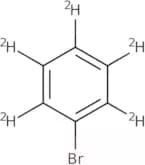
CAS:<p>Please enquire for more information about tert-Butyl azetidine-3-carboxylate including the price, delivery time and more detailed product information at the technical inquiry form on this page</p>Formula:C8H15NO2Purity:Min. 95%Molecular weight:157.21 g/molBromobenzene-d5
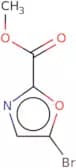
CAS:Controlled Product<p>Bromobenzene-d5 is a chemical compound that can be used as a chemical reagent for the production of other chemicals. It has a molecular weight of 188.21 and a melting point of -100°C. Bromobenzene-d5 has shown to be reactive with chloride and tert-butyl isocyanate, which are both strong bases. The molecule has an amorphous nature and exhibits vibrational properties at high frequencies. Bromobenzene-d5 also shows polarizability in the intramolecular hydrogen bond region, which is evident by an NMR spectrum of heterocycle bromobenzene-d5.</p>Formula:C6BrD5Purity:Min. 95%Molecular weight:162.04 g/mol5-Bromo-oxazole-2-carboxylic acid methyl ester
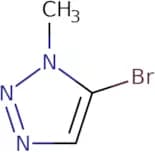
CAS:<p>Please enquire for more information about 5-Bromo-oxazole-2-carboxylic acid methyl ester including the price, delivery time and more detailed product information at the technical inquiry form on this page</p>Formula:C5H4BrNO3Purity:Min. 95%Molecular weight:205.99 g/mol5-Bromo-1-methyl-1H-1,2,3-triazole
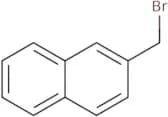
CAS:<p>Please enquire for more information about 5-Bromo-1-methyl-1H-1,2,3-triazole including the price, delivery time and more detailed product information at the technical inquiry form on this page</p>Formula:C3H4BrN3Purity:Min. 95%Molecular weight:162 g/mol2-(Bromomethyl)naphthalene
CAS:<p>2-(Bromomethyl)naphthalene is a chemical that has been studied extensively for its ability to inhibit the growth of cancer cells. It binds with high affinity to the mitochondrial membrane potential and inhibits the production of ATP, leading to cell death. 2-(Bromomethyl)naphthalene has also been shown to produce reactive oxygen species (ROS), which can also induce tumor cell death. This compound has been used in a variety of biological samples, including urine samples, which have shown promising results. A potential target for this drug is an enzyme called hydrolysis, which may be found at higher concentrations in tumor cells. The proposed reaction mechanism is shown below: 2- (bromomethyl) naphthalene + H 2 O → bromide ion + 2- (hydroxymethyl) naphthalene The kinetic data and diphenyl sulfoxide are unknown at this time.</p>Formula:C11H9BrPurity:Min. 98 Area-%Color and Shape:Off-White PowderMolecular weight:221.09 g/mol(+/-)-BOC-a-phosphonoglycine tri-methyl ester
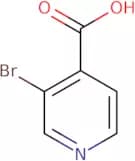
CAS:<p>Reagent in the chemical synthesis</p>Formula:C10H20NO7PPurity:Min. 95%Color and Shape:White PowderMolecular weight:297.24 g/mol3-Bromo-4-pyridinecarboxylic acid
CAS:<p>3-Bromo-4-pyridinecarboxylic acid is a naphthyridine derivative that is used in drug development. It is a crystalline solid that can be dissolved in organic solvents. 3-Bromo-4-pyridinecarboxylic acid has been shown to have antiinflammatory properties and can be used as an oxidant. 3-Bromo-4-pyridinecarboxylic acid is being investigated as a receptor subtype for inflammatory diseases, and it has also been used to study the mechanism of chronic inflammatory diseases.</p>Formula:C6H4BrNO2Purity:Min. 95%Molecular weight:202.01 g/mol4-Bromo-4,4-difluoro-1-butanol
CAS:<p>Please enquire for more information about 4-Bromo-4,4-difluoro-1-butanol including the price, delivery time and more detailed product information at the technical inquiry form on this page</p>Formula:C4H7BrF2OPurity:Min. 95%Molecular weight:189 g/molCyanogen bromide
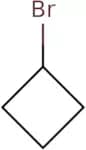
CAS:<p>Used as a condensing agent during chemical ligation of oligodeoxyribonucleotides, for peptide cleavage and in protein immobilization procedures. Other applications include inorganic synthesis to prepare cyanamides, dicyanamides, cyanuric bromide, guanidines and hydroxylguanidines.</p>Formula:CNBrPurity:Min. 95%Color and Shape:PowderMolecular weight:105.92 g/molCyclobutyl bromide
CAS:<p>Cyclobutyl bromide is a cyclopentyl compound that has an hydroxyl group. It is a potent inhibitor of the CB2 receptor, which is primarily expressed on cells of the immune system. Cyclobutyl bromide has been shown to inhibit the uptake of uv light and also has anti-inflammatory properties. Studies have confirmed that this drug inhibits the production of cytokines and chemokines in chronic bronchitis patients, as well as other inflammatory diseases such as rheumatoid arthritis.</p>Formula:C4H7BrPurity:Min. 95%Color and Shape:Clear LiquidMolecular weight:135 g/mol3-Chloro-2-methylaniline
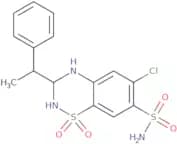
CAS:<p>3-Chloro-2-methylaniline is an organic chemical that is used as a raw material in the production of pesticides and pharmaceuticals. 3-Chloro-2-methylaniline is generated by the reaction of hydrochloric acid with isobutyl chloride, which produces a mixture of chloroalkylcarbinols. This product can be activated to form chloromethylketones or chloromethylcarbonyls by reacting it with sodium hypochlorite or hydrogen peroxide. The impurities found in 3-Chloro-2-methylaniline are mainly carbon sources and inorganic compounds such as chloride and strain. It can be synthesized from other chemicals and also through chromatographic science.</p>Formula:C7H8ClNPurity:Min. 95%Color and Shape:Clear LiquidMolecular weight:141.6 g/mol6-Chloro-3,4-dihydro-3-(a-methylbenzyl)-2H-1,2,4-benzothiadiazine-7-sulfonamide 1,1-dioxide
CAS:<p>6-Chloro-3,4-dihydro-3-(a-methylbenzyl)-2H-1,2,4-benzothiadiazine-7-sulfonamide 1,1-dioxide is an active metabolite of the drug benzbromarone. It is primarily administered as a diuretic to treat high blood pressure and congestive heart failure. The pharmacodynamics of this drug are related to its ability to inhibit the activity of sodium channels in vascular smooth muscle cells and thereby reduce the force of contraction and relax the vessel wall. 6CBDMTD has shown an increase in glomerular filtration rate in patients with congestive heart failure. This drug also decreases the plasma concentration of fatty acids by inhibiting the formation of lipoprotein particles. 6CBDMTD has been shown to be effective at lowering diastolic and systolic blood pressure levels in patients with hypertension.</p>Formula:C15H16ClN3O4S2Purity:Min. 95%Molecular weight:401.89 g/molChlorobutanol
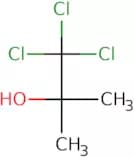
CAS:<p>Chlorobutanol is an antimicrobial agent that is used in the preservation of pharmaceuticals, cosmetics, and other products. It has been shown to be effective against a variety of bacterial and fungal organisms. Chlorobutanol is also used as a preservative in topical ophthalmic preparations. In addition, chlorobutanol has been found to be a potent inhibitor of histone deacetylase (HDAC) activity, which may be due to its ability to bind to the active site of HDACs. This binding prevents acetylation of lysine residues on histones, thereby preventing transcriptional activation.</p>Formula:C4H7OCl3Purity:Min. 95%Color and Shape:White To Off-White SolidMolecular weight:177.46 g/mol2-Cyanobenzaldehyde
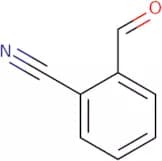
CAS:<p>2-Cyanobenzaldehyde is an aldehyde that reacts with nucleophiles such as trifluoromethanesulfonic acid to form a molecule. 2-Cyanobenzaldehyde has potent inhibitory activity against the kinase glycogen synthase kinase 3 (GSK3) and can be used to treat autoimmune diseases. It also reacts with hydrochloric acid in solution to form an intermediate, which is then reacted with glycine and ATP to produce a chiral compound. The product of this reaction has been shown to be active methylene, which was synthesized by asymmetric synthesis.</p>Formula:C8H5NOPurity:Min. 95%Color and Shape:PowderMolecular weight:131.13 g/molCyclopropanecarboxylic acid chloride
CAS:<p>Cyclopropanecarboxylic acid chloride is an organic compound with a molecular formula of C3H6Cl2O. It belongs to the group of carboxylic acids and has a pyrazole ring, which is a potential drug target. Cyclopropanecarboxylic acid chloride has been found to be active against infectious diseases such as herpes, influenza, and Ebola. The mechanism of action for this compound is not yet fully understood but it has been shown to have an effect on growth factors and kinetic data.</p>Formula:C4H5ClOPurity:Min. 95%Molecular weight:104.53 g/mol4-Chloro-2-nitrotoluene
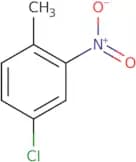
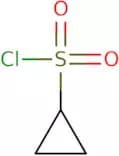
CAS:<p>4-Chloro-2-nitrotoluene is a chemical compound that is a nitro derivative of toluene. It is a white crystalline solid with the formula CHClNO. 4-Chloro-2-nitrotoluene has been shown to have constant boiling point, vibrational frequency and zirconium content at constant pressure. The thermodynamic properties of this compound are also constant, with values for free energy and entropy being -28.5 and 115.5 respectively. The molecule can be described by the functional theory, which states that it contains one nitro group and one monocarboxylic acid group in its molecular structure. 4-Chloro-2-nitrotoluene can be optimised using computational methods such as databases or molecular modeling software where it can be introduced into other molecules to form new compounds.BR>BR> 4-Chloro-2-nitrotoluene (CH</p>Formula:C7H6ClNO2Purity:Min. 95%Molecular weight:171.58 g/molCyclopropanesulfonyl chloride
CAS:<p>Cyclopropanesulfonyl chloride (CPSC) is a bicyclic heterocycle that has been shown to have potent inhibitory activity against the human pathogens hepatitis B virus, dengue virus, and influenza A virus. CPSC inhibits the NS3 protease of these viruses by forming hydrogen bonding interactions with the nucleophilic nitrogen atom of the enzyme and also by competing with a chloride ion for binding to the chlorine atom on the enzyme. It also inhibits HIV-1 infection in cell culture experiments. CPSC has been found to be effective in preventing inflammation caused by cytokines, such as interleukin-1β, tumor necrosis factor-α, and prostaglandin E2. The inhibition of inflammatory cytokines may be due to its ability to bind glucocorticoid receptors.</p>Formula:C3H5ClO2SPurity:Min. 99.0%Color and Shape:Clear LiquidMolecular weight:140.59 g/molCyanomethylenetributylphosphorane
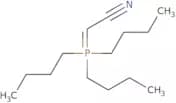
CAS:<p>Cyanomethylenetributylphosphorane (CMTP) is an agent used for the diagnosis of body formation. It is a chemical compound that can be used to produce images of tissue and organs by detecting apoptosis, or programmed cell death. CMTP binds to the glucose-dependent insulinotropic polypeptide receptor (GIPR), stimulating the release of insulin in the pancreas. CMTP also has therapeutic potential for metabolic disorders, as it has been shown to reduce triglycerides and increase HDL cholesterol levels in human serum. CMTP is synthesized from trifluoroacetic acid, which is then reacted with a cyclic peptide containing an amino acid derivative and 1-methyl-2-pyrrolidinone. This reaction produces a molecule with one free amino group at one end and two free carboxylic acid groups at the other end. The molecule can be reacted with epidermal growth factor (EGF) or insulin to</p>Formula:C14H28NPPurity:Min. 95%Color and Shape:Yellow To Dark Brown Clear LiquidMolecular weight:241.35 g/mol1,4-Dichloro-2-butyne
CAS:<p>1,4-Dichloro-2-butyne is a colorless liquid with a sweet odor. It is used as an intermediate in organic synthesis. 1,4-Dichloro-2-butyne can be prepared by the reaction of ethylene diamine and benzyl chloride in the presence of xylenes to form the corresponding ethyl diazoacetate. The ethyl diazoacetate is then reacted with chlorosulfonic acid to produce 1,4-dichlorobutane. This compound can be converted into other compounds such as amides, ethers, and esters using ethyl diazoacetate.</p>Formula:C4H4Cl2Purity:Min. 95%Color and Shape:Colorless Clear LiquidMolecular weight:122.98 g/mol2,3-Diaminobenzoic acid
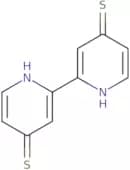
CAS:<p>2,3-Diaminobenzoic acid is a benzimidazole derivative that is used in the treatment of microbial infections. It has been shown to inhibit the growth of bacteria by binding to their ribosomes and inhibiting protein synthesis. The reaction solution of 2,3-diaminobenzoic acid has fluorescence properties that can be used to detect contaminating substances. The conjugates formed with p-hydroxyphenylacetic acid are more soluble than those formed with hydroxybenzoic acid. 2,3-Diaminobenzoic acid is not very toxic and does not cause any detectable changes in enzyme activities or other biochemical parameters in short term exposure. It can be easily decomposed by sodium chloride into chlorine gas and hydrochloric acid, which are both highly reactive with water.</p>Formula:C7H8N2O2Purity:Min. 95%Color and Shape:PowderMolecular weight:152.15 g/mol4,4'-Dithio-2,2'-bipyridine
CAS:<p>Please enquire for more information about 4,4'-Dithio-2,2'-bipyridine including the price, delivery time and more detailed product information at the technical inquiry form on this page</p>Formula:C10H8N2S2Purity:Min. 95%Color and Shape:PowderMolecular weight:220.32 g/mol3,6-Dichloropyridazine
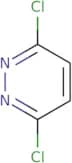
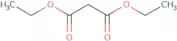
CAS:<p>3,6-Dichloropyridazine is a chemical compound that belongs to the group of heterocycles. It is used as an intermediate for the production of other chemicals such as pharmaceuticals and pesticides. 3,6-Dichloropyridazine can be used in the treatment of inflammatory diseases by inhibiting cyclic nucleotide phosphodiesterase and preventing the accumulation of cyclic nucleotides. 3,6-Dichloropyridazine has been shown to inhibit cancer cells by binding to α7 nicotinic acetylcholine receptors in the cell membrane. The chlorine atom at position 3 on the pyridine ring is responsible for this effect. In addition, 3,6-dichloropyridazine has been shown to react with both nucleophilic and electrophilic groups. This chemical also displays a wide range of chemical diversity due to its three chlorine atoms.</p>Formula:C4H2Cl2N2Purity:Min. 95%Color and Shape:Red PowderMolecular weight:148.98 g/molDiethyl malonate
CAS:<p>Diethyl malonate is a bioactive phytochemical that is one of the glycol ethers. It is an organic compound with a reactive nature, which can undergo reactions with other compounds to form new compounds. Diethyl malonate has been shown to be effective for reducing metabolic disorders in rats, such as diabetes mellitus and hypercholesterolemia. This compound is also used for the treatment of conditions related to coumarin derivatives and glycoside derivatives. Diethyl malonate may react with other molecules by using an oxidation process called a Michael addition. The x-ray diffraction data indicated that the diethylmalonic acid molecule had two rings: one ring was six-membered and the other was five-membered.</p>Formula:C7H12O4Purity:Min. 95%Color and Shape:Colourless Clear LiquidMolecular weight:160.17 g/mol1-Docosanol
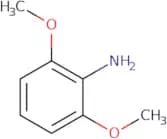
CAS:<p>Docosanol is a drug that is used for the treatment of various skin disorders, including psoriasis, eczema, and ichthyosis. It is also used as an adjuvant in the treatment of chronic obstructive pulmonary disease. Docosanol is a lipid molecule that has been shown to have antiviral, antibacterial, antifungal, and antiprotozoal properties. It can be used as a carrier for topical medications and has been shown to have anti-inflammatory effects. The mechanism of action for docosanol is not well understood but may involve its ability to bind to Toll-like receptors on macrophages and neutrophils in the skin. This binding inhibits the synthesis of inflammatory mediators such as prostaglandins and leukotrienes. Docosanol also has physiological effects on water balance by acting as a surfactant in the lungs and preventing water vapor from escaping through respiratory membranes in the nose or mouth. Docosanol</p>Formula:C22H46OPurity:Min. 95%Color and Shape:PowderMolecular weight:326.6 g/mol2,6-Dimethoxyaniline
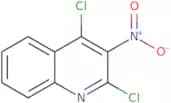
CAS:<p>2,6-Dimethoxyaniline is a synthetic compound that has been used in the past as an antibacterial agent. It has been shown to be effective against Staphylococcus aureus and Escherichia coli, but not against Pseudomonas aeruginosa. 2,6-Dimethoxyaniline forms nanowires with an average diameter of 100 nm and lengths up to 1 micron when exposed to radiation (e.g., gamma rays). The reaction rate is dependent on the architecture and morphology of the azobenzene moiety. The chloride anion coordinates with the nitrogen atom in the molecule, which leads to a phase transition temperature of about 230 K.</p>Formula:C8H11NO2Purity:Min. 95%Color and Shape:White PowderMolecular weight:153.18 g/mol2,4-Dichloro-3-nitroquinoline
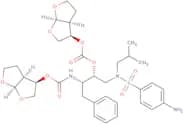
CAS:<p>2,4-Dichloro-3-nitroquinoline is a chemotherapeutic drug that belongs to the class of epidermal growth factor receptor (EGFR) inhibitors. This agent has anticancer activity against cells in the G1 phase of the cell cycle and may also have some antiproliferative effects on tumor cells. 2,4-Dichloro-3-nitroquinoline binds to EGFR and inhibits the binding of epidermal growth factor (EGF) to its receptor. This binding causes the activation of downstream signaling pathways that regulate cell proliferation. Computer modeling has been used to determine how this compound interacts with other molecules such as hydrogen bonds, nucleophilic substitution, and organic solvents.</p>Formula:C9H4Cl2N2O2Purity:Min. 95%Molecular weight:243.05 g/molDarunavir difuranyl
CAS:<p>Please enquire for more information about Darunavir difuranyl including the price, delivery time and more detailed product information at the technical inquiry form on this page</p>Formula:C34H45N3O11SPurity:Min. 95%Molecular weight:703.8 g/mol[4-(3,6-Dimethyl-9H-carbazol-9-yl)butyl]phosphonic acid
CAS:<p>Please enquire for more information about [4-(3,6-Dimethyl-9H-carbazol-9-yl)butyl]phosphonic acid including the price, delivery time and more detailed product information at the technical inquiry form on this page</p>Formula:C18H22NO3PPurity:Min. 95%Color and Shape:PowderMolecular weight:331.35 g/mol2-(3,5-Dichlorophenyl)-4,4-dimethyl-5-methylidene-4,5-dihydro-1,3-oxazole
CAS:<p>Please enquire for more information about 2-(3,5-Dichlorophenyl)-4,4-dimethyl-5-methylidene-4,5-dihydro-1,3-oxazole including the price, delivery time and more detailed product information at the technical inquiry form on this page</p>Formula:C12H11Cl2NOPurity:Min. 95%Molecular weight:256.13 g/molDasatinib-d8
CAS:Controlled Product<p>Please enquire for more information about Dasatinib-d8 including the price, delivery time and more detailed product information at the technical inquiry form on this page</p>Formula:C22H18D8ClN7O2SPurity:Min. 95%Molecular weight:496.05 g/mol1,5-Dihydro-1-(2-methylpropyl)-4H-imidazo[4,5-c]quinolin-4-one
CAS:<p>Please enquire for more information about 1,5-Dihydro-1-(2-methylpropyl)-4H-imidazo[4,5-c]quinolin-4-one including the price, delivery time and more detailed product information at the technical inquiry form on this page</p>Formula:C14H15N3OPurity:Min. 95%Molecular weight:241.29 g/mol1,8-Dioxaspiro[5.5]undecan-4-amine hydrochloride
CAS:<p>Please enquire for more information about 1,8-Dioxaspiro[5.5]undecan-4-amine hydrochloride including the price, delivery time and more detailed product information at the technical inquiry form on this page</p>Formula:C9H17NO2•HCLPurity:Min. 95%Molecular weight:207.7 g/molDibenzo[b,f][1,4]thiazepin-11(10H)-one 5-oxide
CAS:<p>Please enquire for more information about Dibenzo[b,f][1,4]thiazepin-11(10H)-one 5-oxide including the price, delivery time and more detailed product information at the technical inquiry form on this page</p>Formula:C13H9NO2SPurity:90%Molecular weight:243.28 g/molN,N-Dimethyl-2-(1-(1-(pyridin-2-yl)ethyl)-1H-inden-2-yl)ethan-1-amine hydrochloride
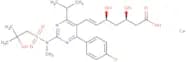
CAS:<p>Please enquire for more information about N,N-Dimethyl-2-(1-(1-(pyridin-2-yl)ethyl)-1H-inden-2-yl)ethan-1-amine hydrochloride including the price, delivery time and more detailed product information at the technical inquiry form on this page</p>Formula:C20H24N2•(HCl)2Purity:Min. 95%Molecular weight:365.34 g/molS-Desmethyl-S-(2-hydroxy-2-methylpropyl) rosuvastatin calcium
CAS:<p>Please enquire for more information about S-Desmethyl-S-(2-hydroxy-2-methylpropyl) rosuvastatin calcium including the price, delivery time and more detailed product information at the technical inquiry form on this page</p>Formula:(C25H34FN3O7S)2•CaPurity:Min. 95%Molecular weight:1,119.24 g/mol1,1-Dimethylethyl 4-(5-amino-2-pyrimidinyl)-1-piperidinecarboxylate
CAS:<p>Please enquire for more information about 1,1-Dimethylethyl 4-(5-amino-2-pyrimidinyl)-1-piperidinecarboxylate including the price, delivery time and more detailed product information at the technical inquiry form on this page</p>Formula:C14H22N4O2Purity:Min. 95%Molecular weight:278.35 g/mol5,7-Dichloro-8-hydroxyquinoline
CAS:<p>5,7-Dichloro-8-hydroxyquinoline (5,7-DC8HQ) is a mitochondrial drug that inhibits mitochondrial functions by binding to the ATP synthase. It has been shown to be effective against bacteria resistant to antimicrobial agents in vivo and also showed genotoxic activity in vitro. 5,7-DC8HQ binds to the magnesium site of the ATP synthase protein and prevents the formation of an intramolecular hydrogen bond, which leads to inhibition of ATP synthesis. This drug has also been shown to cause membrane potential depolarization in mitochondria.</p>Formula:C9H5Cl2NOPurity:Min. 98.5 Area-%Color and Shape:White PowderMolecular weight:214.05 g/molDiethyl bromomalonate
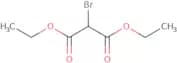
CAS:<p>Diethyl bromomalonate is a chemical compound with the formula CHBrOOCCH=COOCH. It is a kinetic data that has been used as a preparative hplc. Coumarin derivatives have been synthesized by its use. This reaction is an example of nucleophilic substitution of diethyl bromomalonate with an alkyl halide and hydrochloric acid in methyl ketones, which are hepg2 cell substrates. The mechanism for this reaction involves formation of an enolate from the carboxylic acid moiety followed by attack of the nucleophile on the electrophilic bromine atom to form the substituted product.</p>Formula:C7H11BrO4Purity:Min. 95%Color and Shape:Clear LiquidMolecular weight:239.06 g/mol4,6-Dichloroisatin
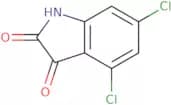
CAS:<p>4,6-Dichloroisatin is a pro-apoptotic compound that is synthesized from amino acids. It has been shown to have anticancer activity in human liver cancer cells, which may be due to its ability to induce apoptosis. 4,6-Dichloroisatin has also been shown to inhibit the production of electron transport chain proteins in the mitochondria by binding to their regulatory sites and inhibiting their phosphorylation. This inhibition of electron transport chain proteins leads to an accumulation of electrons that can react with molecular oxygen and produce reactive oxygen species (ROS). ROS are known for their ability to cause DNA damage and cell death through oxidative stress.</p>Formula:C8H3Cl2NO2Purity:Min. 95%Molecular weight:216.02 g/mol1-(4-Fluorophenyl)-5-methyl-1H-1,2,3-triazol-4-amine hydrochloride
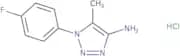
CAS:<p>Versatile small molecule scaffold</p>Formula:C9H10ClFN4Purity:Min. 95%Molecular weight:228.65 g/mol{[1,2,4]Triazolo[4,3-a]pyridin-6-yl}methanamine dihydrochloride
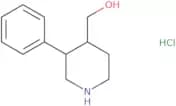
CAS:<p>Versatile small molecule scaffold</p>Formula:C7H10Cl2N4Purity:Min. 95%Molecular weight:221.08 g/mol(3-Phenylpiperidin-4-yl)methanol hydrochloride
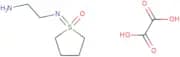
CAS:<p>Versatile small molecule scaffold</p>Formula:C12H18ClNOPurity:Min. 95%Molecular weight:227.73 g/molN1-(Tetrahydro-1-oxido-1-thienylidene)-1,2-ethanediamine ethanedioate
CAS:<p>Versatile small molecule scaffold</p>Formula:C8H16N2O5SPurity:Min. 95%Molecular weight:252.29 g/mol{1-[(4-Bromophenyl)methyl]cyclopropyl}methanamine hydrochloride
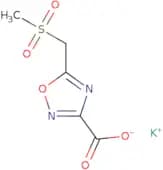
CAS:<p>Versatile small molecule scaffold</p>Formula:C11H15BrClNPurity:Min. 95%Molecular weight:276.6 g/molPotassium 5-(methanesulfonylmethyl)-1,2,4-oxadiazole-3-carboxylate
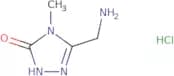
CAS:<p>Versatile small molecule scaffold</p>Formula:C5H5KN2O5SPurity:Min. 95%Molecular weight:244.27 g/mol3-(Aminomethyl)-4-methyl-4,5-dihydro-1H-1,2,4-triazol-5-one hydrochloride
CAS:<p>Versatile small molecule scaffold</p>Formula:C4H9ClN4OPurity:Min. 95%Molecular weight:164.59 g/mol4-({7-Cyclopentyl-5,6-dimethyl-7H-pyrrolo[2,3-d]pyrimidin-4-yl}oxy)piperidine dihydrochloride
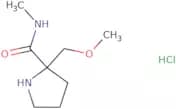
CAS:<p>Versatile small molecule scaffold</p>Formula:C18H28Cl2N4OPurity:Min. 95%Molecular weight:387.3 g/mol2-(Methoxymethyl)-N-methylpyrrolidine-2-carboxamide hydrochloride
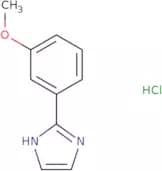
CAS:<p>Versatile small molecule scaffold</p>Formula:C8H17ClN2O2Purity:Min. 95%Molecular weight:208.68 g/mol2-(3-Methoxyphenyl)-1H-imidazole hydrochloride
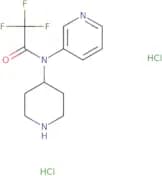
CAS:<p>Versatile small molecule scaffold</p>Formula:C10H11ClN2OPurity:Min. 95%Molecular weight:210.66 g/mol2,2,2-Trifluoro-N-(piperidin-4-yl)-N-(pyridin-3-yl)acetamide dihydrochloride
CAS:<p>Versatile small molecule scaffold</p>Formula:C12H16Cl2F3N3OPurity:Min. 95%Molecular weight:346.17 g/mol(4-Bromo-3-methoxy-1,2-thiazol-5-yl)methanol
CAS:<p>Versatile small molecule scaffold</p>Formula:C5H6BrNO2SPurity:Min. 95%Molecular weight:224.08 g/mol5-{[(Naphthalen-1-yl)methyl]amino}-2-phenyl-1,3-oxazole-4-carbonitrile
CAS:<p>Versatile small molecule scaffold</p>Formula:C21H15N3OPurity:Min. 95%Molecular weight:325.4 g/mol1-tert-Butyl-6-chloro-4-methoxy-1H-pyrazolo[3,4-d]pyrimidine
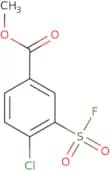
CAS:<p>Versatile small molecule scaffold</p>Formula:C10H13ClN4OPurity:Min. 95%Molecular weight:240.69 g/molMethyl 4-chloro-3-(fluorosulfonyl)benzoate
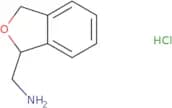
CAS:<p>Versatile small molecule scaffold</p>Formula:C8H6ClFO4SPurity:Min. 95%Molecular weight:252.65 g/mol(1,3-Dihydro-2-benzofuran-1-yl)methanamine hydrochloride
CAS:<p>Versatile small molecule scaffold</p>Formula:C9H12ClNOPurity:Min. 95%Molecular weight:185.65 g/molrac-tert-Butyl N-{[(2R,4S)-4-methylpiperidin-2-yl]methyl}carbamate
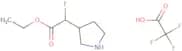
CAS:<p>Versatile small molecule scaffold</p>Formula:C12H24N2O2Purity:Min. 95%Molecular weight:228.33 g/molEthyl 2-fluoro-2-(pyrrolidin-3-yl)acetate, trifluoroacetic acid
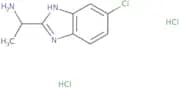
CAS:<p>Versatile small molecule scaffold</p>Formula:C10H15F4NO4Purity:Min. 95%Molecular weight:289.22 g/mol1-(5-Chloro-1H-1,3-benzodiazol-2-yl)ethan-1-amine dihydrochloride
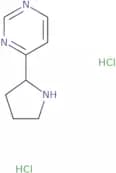
CAS:<p>Versatile small molecule scaffold</p>Formula:C9H12Cl3N3Purity:Min. 95%Molecular weight:268.6 g/mol4-(Pyrrolidin-2-yl)pyrimidine dihydrochloride
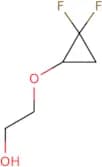
CAS:<p>Versatile small molecule scaffold</p>Formula:C8H13Cl2N3Purity:Min. 95%Molecular weight:222.11 g/mol2-(2,2-Difluorocyclopropoxy)ethan-1-ol
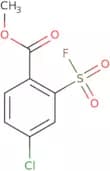
CAS:<p>Versatile small molecule scaffold</p>Formula:C5H8F2O2Purity:Min. 95%Molecular weight:138.11 g/molMethyl 4-chloro-2-(fluorosulfonyl)benzoate
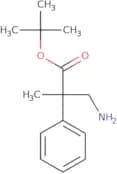
CAS:<p>Versatile small molecule scaffold</p>Formula:C8H6ClFO4SPurity:Min. 95%Molecular weight:252.65 g/moltert-Butyl 3-amino-2-methyl-2-phenylpropanoate
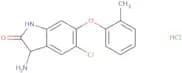
CAS:<p>Versatile small molecule scaffold</p>Formula:C14H21NO2Purity:Min. 95%Molecular weight:235.32 g/mol3-Amino-5-chloro-6-(2-methylphenoxy)-2,3-dihydro-1H-indol-2-one hydrochloride
CAS:<p>Versatile small molecule scaffold</p>Formula:C15H14Cl2N2O2Purity:Min. 95%Molecular weight:325.2 g/mol7-Oxa-2,5-diazaspiro[3.5]nonan-6-one hydrochloride
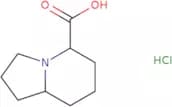
CAS:<p>Versatile small molecule scaffold</p>Formula:C6H11ClN2O2Purity:Min. 95%Molecular weight:178.62 g/molOctahydroindolizine-5-carboxylic acid hydrochloride
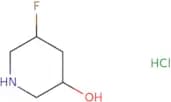
CAS:<p>Versatile small molecule scaffold</p>Formula:C9H16ClNO2Purity:Min. 95%Molecular weight:205.68 g/molrac-(3R,5S)-5-Fluoropiperidin-3-ol hydrochloride
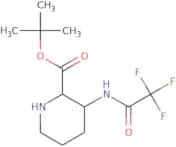
CAS:<p>Versatile small molecule scaffold</p>Formula:C5H11ClFNOPurity:Min. 95%Molecular weight:155.6 g/moltert-Butyl 3-(trifluoroacetamido)piperidine-2-carboxylate
CAS:<p>Versatile small molecule scaffold</p>Formula:C12H19F3N2O3Purity:Min. 95%Molecular weight:296.29 g/mol1-(2-Methylphenyl)-1H,2H,4H-pyrazolo[3,4-d]pyrimidin-4-one
CAS:<p>Versatile small molecule scaffold</p>Formula:C12H10N4OPurity:Min. 95%Molecular weight:226.23 g/molEthyl 3-[1-(methylamino)ethyl]-1H-1,2,4-triazole-5-carboxylate hydrochloride
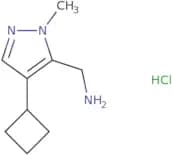
CAS:<p>Versatile small molecule scaffold</p>Formula:C8H15ClN4O2Purity:Min. 95%Molecular weight:234.68 g/mol(4-Cyclobutyl-1-methyl-1H-pyrazol-5-yl)methanamine hydrochloride
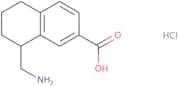
CAS:<p>Versatile small molecule scaffold</p>Formula:C9H16ClN3Purity:Min. 95%Molecular weight:201.7 g/mol8-(Aminomethyl)-5,6,7,8-tetrahydronaphthalene-2-carboxylic acid hydrochloride
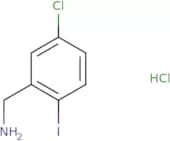
CAS:<p>Versatile small molecule scaffold</p>Formula:C12H16ClNO2Purity:Min. 95%Molecular weight:241.71 g/mol(5-chloro-2-iodophenyl)methanamine hydrochloride
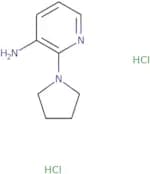
CAS:<p>Versatile small molecule scaffold</p>Formula:C7H8Cl2INPurity:Min. 95%Molecular weight:304 g/mol2-(Pyrrolidin-1-yl)pyridin-3-amine dihydrochloride
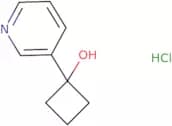
CAS:<p>Versatile small molecule scaffold</p>Formula:C9H15Cl2N3Purity:Min. 95%Molecular weight:236.14 g/mol1-(Pyridin-3-yl)cyclobutan-1-ol hydrochloride
CAS:<p>Versatile small molecule scaffold</p>Formula:C9H12ClNOPurity:Min. 95%Molecular weight:185.65 g/mol[(4-Methoxyphenyl)methyl](2,2,2-trifluoroethyl)amine hydrochloride
CAS:<p>Versatile small molecule scaffold</p>Formula:C10H13ClF3NOPurity:Min. 95%Molecular weight:255.66 g/mol





![o-[(4-Chlorophenyl)methyl]hydroxylamine](/_next/image/?url=https%3A%2Fstatic.cymitquimica.com%2Fproducts%2F3D%2Fthumb-webp%2FFAA55551.webp&w=3840&q=75)

![1-(Bicyclo[2.2.2]oct-1-yl)methanamine hydrochloride](/_next/image/?url=https%3A%2Fstatic.cymitquimica.com%2Fproducts%2F3D%2Fthumb-webp%2FFAA56174.webp&w=3840&q=75)









![[4-(3,6-Dimethyl-9H-carbazol-9-yl)butyl]phosphonic acid](/_next/image/?url=https%3A%2Fstatic.cymitquimica.com%2Fproducts%2F3D%2Fthumb-webp%2FFD183062.webp&w=3840&q=75)
![1,5-Dihydro-1-(2-methylpropyl)-4H-imidazo[4,5-c]quinolin-4-one](/_next/image/?url=https%3A%2Fstatic.cymitquimica.com%2Fproducts%2F3D%2Fthumb-webp%2FFD183443.webp&w=3840&q=75)
![1,8-Dioxaspiro[5.5]undecan-4-amine hydrochloride](/_next/image/?url=https%3A%2Fstatic.cymitquimica.com%2Fproducts%2F3D%2Fthumb-webp%2FFD183472.webp&w=3840&q=75)
![Dibenzo[b,f][1,4]thiazepin-11(10H)-one 5-oxide](/_next/image/?url=https%3A%2Fstatic.cymitquimica.com%2Fproducts%2F3D%2Fthumb-webp%2FFD183523.webp&w=3840&q=75)

![{[1,2,4]Triazolo[4,3-a]pyridin-6-yl}methanamine dihydrochloride](/_next/image/?url=https%3A%2Fstatic.cymitquimica.com%2Fproducts%2F3D%2Fthumb-webp%2FFDD49911.webp&w=3840&q=75)
![{1-[(4-Bromophenyl)methyl]cyclopropyl}methanamine hydrochloride](/_next/image/?url=https%3A%2Fstatic.cymitquimica.com%2Fproducts%2F3D%2Fthumb-webp%2FFDD49924.webp&w=3840&q=75)
![4-({7-Cyclopentyl-5,6-dimethyl-7H-pyrrolo[2,3-d]pyrimidin-4-yl}oxy)piperidine dihydrochloride](/_next/image/?url=https%3A%2Fstatic.cymitquimica.com%2Fproducts%2F3D%2Fthumb-webp%2FFDD49934.webp&w=3840&q=75)

![5-{[(Naphthalen-1-yl)methyl]amino}-2-phenyl-1,3-oxazole-4-carbonitrile](/_next/image/?url=https%3A%2Fstatic.cymitquimica.com%2Fproducts%2F3D%2Fthumb-webp%2FFDD49965.webp&w=3840&q=75)
![1-tert-Butyl-6-chloro-4-methoxy-1H-pyrazolo[3,4-d]pyrimidine](/_next/image/?url=https%3A%2Fstatic.cymitquimica.com%2Fproducts%2F3D%2Fthumb-webp%2FFDD49967.webp&w=3840&q=75)
![rac-tert-Butyl N-{[(2R,4S)-4-methylpiperidin-2-yl]methyl}carbamate](/_next/image/?url=https%3A%2Fstatic.cymitquimica.com%2Fproducts%2F3D%2Fthumb-webp%2FFDD49971.webp&w=3840&q=75)
![7-Oxa-2,5-diazaspiro[3.5]nonan-6-one hydrochloride](/_next/image/?url=https%3A%2Fstatic.cymitquimica.com%2Fproducts%2F3D%2Fthumb-webp%2FFDD50570.webp&w=3840&q=75)
![1-(2-Methylphenyl)-1H,2H,4H-pyrazolo[3,4-d]pyrimidin-4-one](/_next/image/?url=https%3A%2Fstatic.cymitquimica.com%2Fproducts%2F3D%2Fthumb-webp%2FFDD50585.webp&w=3840&q=75)
![Ethyl 3-[1-(methylamino)ethyl]-1H-1,2,4-triazole-5-carboxylate hydrochloride](/_next/image/?url=https%3A%2Fstatic.cymitquimica.com%2Fproducts%2F3D%2Fthumb-webp%2FFDD50590.webp&w=3840&q=75)
amine hydrochloride](/_next/image/?url=https%3A%2Fstatic.cymitquimica.com%2Fproducts%2F3D%2Fthumb-webp%2FFDD50623.webp&w=3840&q=75)