Building Blocks
This section contains fundamental products for the synthesis of organic and biological compounds. Building blocks are the essential starting materials used to construct complex molecules through various chemical reactions. They play a critical role in drug discovery, material science, and chemical research. At CymitQuimica, we offer a diverse range of high-quality building blocks to support your innovative research and industrial projects, ensuring you have the essential components for successful synthesis.
Subcategories of "Building Blocks"
- Boronic Acids & Boronic Acid Derivatives(5,756 products)
- Chiral Building Blocks(1,242 products)
- Hydrocarbon Building Blocks(6,093 products)
- Organic Building Blocks(60,534 products)
Found 195534 products of "Building Blocks"
Sort by
Purity (%)
0
100
|
0
|
50
|
90
|
95
|
100
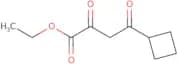
Ethyl 4-cyclobutyl-2,4-dioxobutanoate
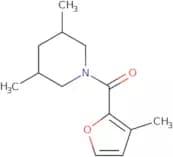
CAS:<p>Versatile small molecule scaffold</p>Formula:C10H14O4Purity:Min. 95%Molecular weight:198.22 g/mol3,5-Dimethyl-1-(3-methylfuran-2-carbonyl)piperidine
CAS:<p>Versatile small molecule scaffold</p>Formula:C13H19NO2Purity:Min. 95%Molecular weight:221.29 g/mol4-[(2S,4R)-4-Fluoropyrrolidine-2-carbonyl]morpholine hydrochloride
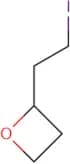
CAS:<p>Versatile small molecule scaffold</p>Formula:C9H16ClFN2O2Purity:Min. 95%Molecular weight:238.69 g/mol2-(2-Iodoethyl)oxetane
CAS:<p>Versatile small molecule scaffold</p>Formula:C5H9IOPurity:Min. 95%Molecular weight:212.03 g/mol1-[(Oxiran-2-yl)methyl]cyclobutan-1-ol
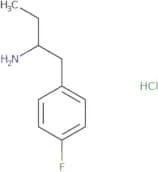
CAS:<p>Versatile small molecule scaffold</p>Formula:C7H12O2Purity:Min. 95%Molecular weight:128.17 g/mol1-(4-Fluorophenyl)butan-2-amine hydrochloride
CAS:Controlled Product<p>Versatile small molecule scaffold</p>Formula:C10H15ClFNPurity:Min. 95%Molecular weight:203.68 g/mol4-Cyclohexyl-5-(2-methoxyphenyl)-4H-1,2,4-triazole-3-thiol
CAS:<p>Versatile small molecule scaffold</p>Formula:C15H19N3OSPurity:Min. 95%Molecular weight:289.4 g/mol3-(4-Chlorophenyl)-4H-1,2,4-triazole
CAS:<p>Versatile small molecule scaffold</p>Formula:C8H6ClN3Purity:Min. 95%Molecular weight:179.6 g/mol(2Z)-Cyclooct-2-en-1-one
CAS:<p>Versatile small molecule scaffold</p>Formula:C8H12OPurity:Min. 95%Molecular weight:124.18 g/mol4-Hydroxy-2-methylbenzene-1-sulfonamide
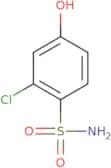
CAS:<p>Versatile small molecule scaffold</p>Formula:C7H9NO3SPurity:Min. 95%Molecular weight:187.22 g/mol2-Chloro-4-hydroxybenzene-1-sulfonamide
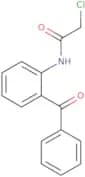
CAS:<p>Versatile small molecule scaffold</p>Formula:C6H6ClNO3SPurity:Min. 95%Molecular weight:207.64 g/molN-(2-Benzoylphenyl)-2-chloroacetamide
CAS:<p>Versatile small molecule scaffold</p>Formula:C15H12ClNO2Purity:Min. 95%Molecular weight:273.71 g/molMethyl-(1-methyl-pyrrolidin-2-ylmethyl)-amine
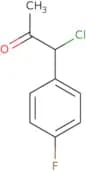
CAS:<p>Versatile small molecule scaffold</p>Formula:C7H16N2Purity:Min. 95%Molecular weight:128.22 g/mol1-Chloro-1-(4-fluorophenyl)propan-2-one
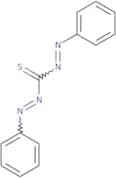
CAS:<p>Versatile small molecule scaffold</p>Formula:C9H8ClFOPurity:Min. 95%Molecular weight:186.61 g/mol1,3-Bis(phenylimino)thiourea
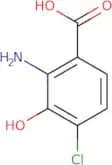
CAS:<p>Versatile small molecule scaffold</p>Formula:C13H10N4SPurity:Min. 95%Molecular weight:254.31 g/mol2-Amino-4-chloro-3-hydroxybenzoic acid
CAS:<p>2-Amino-4-chloro-3-hydroxybenzoic acid is a compound that contains hydrogen fluoride and fluorine. It is commonly used in research chemicals and has various applications. This compound has been found to have antioxidant properties, which can help reduce lipid peroxidation and protect cells from oxidative damage. Additionally, it has been shown to have potential health benefits such as promoting the production of vitamin D3 and supporting the metabolism of fatty acids. 2-Amino-4-chloro-3-hydroxybenzoic acid can be found in certain plant extracts, including pterostilbene and caffeine, as well as in chloride, tyrosine, l-lysine, and oligosaccharides. Its unique characteristics make it a valuable ingredient in various industries.</p>Formula:C7H6ClNO3Purity:Min. 95%Molecular weight:187.58 g/mol1-(Thiophen-2-yl)propan-1-ol
CAS:<p>1-(Thiophen-2-yl)propan-1-ol is a versatile compound with various applications. It can be used as an electrode in electrochemical experiments due to its unique properties. Additionally, it has antimuscarinic effects, making it potentially useful in the treatment of certain medical conditions. This compound is also a triamide and has been studied for its potential health benefits, such as its role in inhibiting nitrification and reducing emissions. Furthermore, it has been used in research chemicals for its ability to interact with hydrogen fluoride and carnitine. Its properties make it a valuable compound for various industries, including pharmaceuticals, research, and manufacturing.</p>Formula:C7H10OSPurity:Min. 95%Molecular weight:142.22 g/mol2-Methyl-2-(methylamino)propanamide hydrochloride
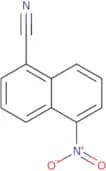
CAS:<p>Versatile small molecule scaffold</p>Formula:C5H13ClN2OPurity:Min. 95%Molecular weight:152.62 g/mol5-Nitronaphthalene-1-carbonitrile
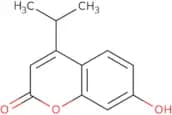
CAS:<p>Versatile small molecule scaffold</p>Formula:C11H6N2O2Purity:Min. 95%Molecular weight:198.18 g/mol7-Hydroxy-4-(propan-2-yl)-2H-chromen-2-one
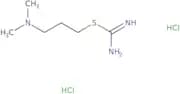
CAS:<p>Versatile small molecule scaffold</p>Formula:C12H12O3Purity:Min. 95%Molecular weight:204.22 g/molDimaprit dihydrochloride
CAS:<p>Dimaprit dihydrochloride is a versatile compound that has various applications in different fields. It is commonly used as a research chemical and can also be found in electrophotographic photosensitive materials, catalysts, and fatty acids. Dimaprit dihydrochloride is synthesized from calcium pantothenate, levulinic acid, adenine, creatine, gabexate, and N-diacetic acid levulinate. This compound is known for its acidic properties and is often used as an additive in sevoflurane anesthesia formulations. Its unique characteristics make it a valuable ingredient in many industries.</p>Formula:C6H15N3S·2HClPurity:Min. 95%Molecular weight:234.19 g/molBicyclo[3.2.1]octan-3-amine Hydrochloride
CAS:<p>Versatile small molecule scaffold</p>Formula:C8H15N·HClPurity:Min. 95%Molecular weight:161.67 g/molBicyclo[3.2.1]octan-8-amine hydrochloride
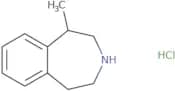
CAS:<p>Versatile small molecule scaffold</p>Formula:C8H16ClNPurity:Min. 95%Molecular weight:161.7 g/mol1-Methyl-2,3,4,5-tetrahydro-1H-3-benzazepine-d4
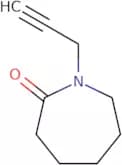
CAS:<p>1-Methyl-2,3,4,5-tetrahydro-1H-3-benzazepine-d4 is a versatile compound with various applications. It has been found to have a role in glycan metabolism and iron absorption in the body. Additionally, it is used as a steroid electrode for analyzing different substances. This compound also plays a part in cellulose production and the formation of disinfection by-products. It has been studied for its effects on serum phosphorus levels and its potential use in research chemicals like venetoclax. Furthermore, it has implications in androgen regulation and particulate matter analysis. This compound has also been examined for its interactions with dibromoacetonitrile, biomass, citrate, and leucovorin. With its wide range of applications, 1-Methyl-2,3,4,5-tetrahydro-1H-3-benzazepine-d4 is an important compound in various fields of study</p>Formula:C11H11D4NPurity:Min. 95%Molecular weight:165.27 g/mol1-(Prop-2-yn-1-yl)azepan-2-one
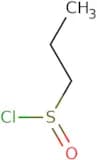
CAS:<p>Versatile small molecule scaffold</p>Formula:C9H13NOPurity:Min. 95%Molecular weight:151.21 g/molPropane-1-sulfinyl chloride
CAS:<p>Versatile small molecule scaffold</p>Formula:C3H7ClOSPurity:Min. 95%Molecular weight:126.61 g/mol4-Methoxy-2-methyl-4-oxobutanoic acid
CAS:<p>Versatile small molecule scaffold</p>Formula:C6H9O4Purity:Min. 95%Molecular weight:145.13 g/molMethyl 3-(bromomethyl)furan-2-carboxylate
CAS:<p>Versatile small molecule scaffold</p>Formula:C7H7BrO3Purity:Min. 95%Molecular weight:219.03 g/molMethyl 5-bromo-3-(bromomethyl)furan-2-carboxylate
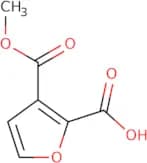
CAS:<p>Versatile small molecule scaffold</p>Formula:C7H6Br2O3Purity:Min. 95%Molecular weight:297.93 g/mol3-(Methoxycarbonyl)furan-2-carboxylic acid
CAS:<p>Versatile small molecule scaffold</p>Formula:C7H6O5Purity:Min. 95%Molecular weight:170.12 g/mol3,3-Bis(2-hydroxyethyl)urea
CAS:<p>Versatile small molecule scaffold</p>Formula:C5H12N2O3Purity:Min. 95%Molecular weight:148.16 g/mol5-Chloro-3-(4-methylphenyl)-1,2,4-oxadiazole
CAS:<p>Versatile small molecule scaffold</p>Formula:C9H7ClN2OPurity:Min. 95%Molecular weight:194.62 g/mol3-(4-Nitrophenyl)-1,2,4-oxadiazol-5-amine
CAS:<p>Versatile small molecule scaffold</p>Formula:C8H6N4O3Purity:Min. 95%Molecular weight:206.16 g/mol5-(4-Nitrophenyl)-1,2,4-oxadiazol-3-amine
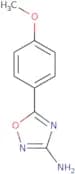
CAS:<p>Versatile small molecule scaffold</p>Formula:C8H6N4O3Purity:Min. 95%Molecular weight:206.16 g/mol5-(4-Methoxyphenyl)-1,2,4-oxadiazol-3-amine
CAS:<p>Versatile small molecule scaffold</p>Formula:C9H9N3O2Purity:Min. 95%Molecular weight:191.19 g/mol5-(4-Chlorophenyl)-1,2,4-oxadiazol-3-amine
CAS:<p>Versatile small molecule scaffold</p>Formula:C8H6ClN3OPurity:Min. 95%Molecular weight:195.6 g/molN-[2-(4-Acetylphenyl)ethyl]acetamide
CAS:<p>Versatile small molecule scaffold</p>Formula:C12H15NO2Purity:Min. 95%Molecular weight:205.25 g/mol1-[4-(2-Aminoethyl)phenyl]ethan-1-one hydrochloride
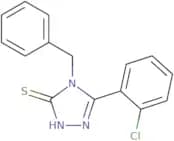
CAS:<p>Versatile small molecule scaffold</p>Formula:C10H14ClNOPurity:Min. 95%Molecular weight:199.68 g/mol4-Benzyl-5-(2-chlorophenyl)-4H-1,2,4-triazole-3-thiol
CAS:<p>Versatile small molecule scaffold</p>Formula:C15H12ClN3SPurity:Min. 95%Molecular weight:301.8 g/molMethyl 5-amino-3-methyl-1,2-oxazole-4-carboxylate
CAS:<p>Versatile small molecule scaffold</p>Formula:C6H8N2O3Purity:Min. 95%Molecular weight:156.14 g/mol5-Benzyl-1,3,4-oxadiazole-2-thiol
CAS:<p>Versatile small molecule scaffold</p>Formula:C9H8N2OSPurity:Min. 95%Molecular weight:192.24 g/mol2-(4-Chlorophenyl)-1,3,4-oxadiazole
CAS:<p>2-(4-Chlorophenyl)-1,3,4-oxadiazole is a versatile compound that has various applications. It can be used as a eutectic solvent for fatty acids, collagen, and cellulose. Additionally, it can serve as a catalyst in the production of levulinic acid and triparanol from biomass. This compound is commonly used in research laboratories as a reagent for chemical reactions. It can also be utilized in analytical techniques such as sodium dodecyl sulfate-polyacrylamide gel electrophoresis (SDS-PAGE) to separate and analyze proteins. Furthermore, 2-(4-Chlorophenyl)-1,3,4-oxadiazole has potential applications in the field of ophthalmology due to its intraocular properties.</p>Formula:C8H5ClN2OPurity:Min. 95%Molecular weight:180.59 g/mol2-Oxo-2-phenylethane-1-sulfonyl chloride
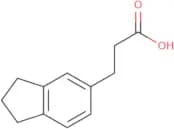
CAS:<p>Versatile small molecule scaffold</p>Formula:C8H7ClO3SPurity:Min. 95%Molecular weight:218.66 g/mol3-(2,3-Dihydro-1H-inden-5-yl)propanoic acid
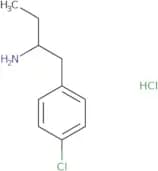
CAS:<p>Versatile small molecule scaffold</p>Formula:C12H14O2Purity:Min. 95%Molecular weight:190.24 g/mol1-(4-Chlorophenyl)butan-2-amine hydrochloride
CAS:Controlled Product<p>Versatile small molecule scaffold</p>Formula:C10H15Cl2NPurity:Min. 95%Molecular weight:220.14 g/mol5-Bromo-3-methyl-1,2-thiazole-4-carboxylic acid
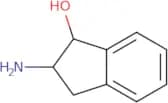
CAS:<p>Versatile small molecule scaffold</p>Formula:C5H4BrNO2SPurity:Min. 95%Molecular weight:222.06 g/molrac-(1R,2S)-2-Amino-2,3-dihydro-1H-inden-1-ol
CAS:<p>Versatile small molecule scaffold</p>Formula:C9H11NOPurity:Min. 95%Molecular weight:149.19 g/mol1,2,5-Thiadiazole-3,4-dicarbonitrile
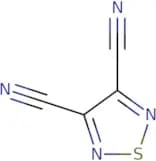
CAS:<p>Versatile small molecule scaffold</p>Formula:C4N4SPurity:Min. 95%Molecular weight:136.14 g/mol2-[2-(Naphthalen-1-yl)-1,3-thiazol-4-yl]acetic acid
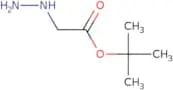
CAS:<p>Versatile small molecule scaffold</p>Formula:C15H11NO2SPurity:Min. 95%Molecular weight:269.3 g/moltert-Butyl 2-hydrazinylacetate
CAS:<p>Versatile small molecule scaffold</p>Formula:C6H14N2O2Purity:Min. 95%Molecular weight:146.19 g/mol(R)-1,2,3,4-Tetrahydro-1-naphthoic Acid
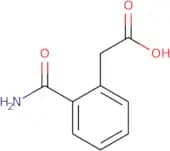
CAS:Controlled Product<p>Versatile small molecule scaffold</p>Formula:C11H12O2Purity:Min. 95%Molecular weight:176.21 g/mol2-(2-Carbamoylphenyl)acetic acid
CAS:<p>Versatile small molecule scaffold</p>Formula:C9H9NO3Purity:Min. 95%Molecular weight:179.17 g/mol3-[(2-Methoxy-5-methylphenyl)amino]propanoic acid
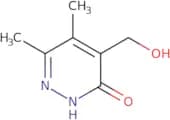
CAS:<p>Versatile small molecule scaffold</p>Formula:C11H15NO3Purity:Min. 95%Molecular weight:209.24 g/mol4-(Hydroxymethyl)-5,6-dimethylpyridazin-3-ol
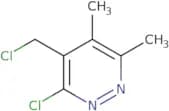
CAS:<p>Versatile small molecule scaffold</p>Formula:C7H10N2O2Purity:Min. 95%Molecular weight:154.17 g/mol3-Chloro-4-(chloromethyl)-5,6-dimethylpyridazine
CAS:<p>Versatile small molecule scaffold</p>Formula:C7H8Cl2N2Purity:Min. 95%Molecular weight:191.05 g/molN-(4-Aminophenyl)-1,1,1-trifluoromethanesulfonamide
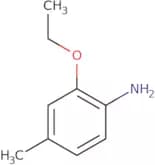
CAS:<p>Versatile small molecule scaffold</p>Formula:C7H7F3N2O2SPurity:Min. 95%Molecular weight:240.21 g/mol2-Ethoxy-4-methylaniline
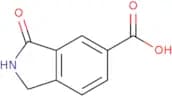
CAS:<p>Versatile small molecule scaffold</p>Formula:C9H13NOPurity:Min. 95%Molecular weight:151.21 g/mol3-Oxoisoindoline-5-carboxylic acid
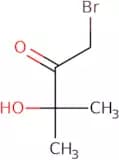
CAS:<p>Versatile small molecule scaffold</p>Formula:C9H7NO3Purity:Min. 95%Molecular weight:177.16 g/mol1-Bromo-3-hydroxy-3-methylbutan-2-one
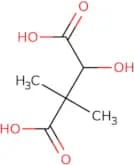
CAS:<p>Versatile small molecule scaffold</p>Formula:C5H9BrO2Purity:Min. 95%Molecular weight:181.03 g/mol3-Hydroxy-2,2-dimethyl-succinic acid
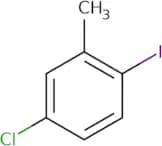
CAS:<p>Versatile small molecule scaffold</p>Formula:C6H10O5Purity:Min. 95%Molecular weight:162.14 g/mol5-Chloro-2-iodotoluene
CAS:<p>5-Chloro-2-iodotoluene is a versatile compound that finds applications in various industries. It is commonly used in pharmaceutical preparations, zeolite synthesis, and as a catalyst in organic synthesis. This compound has been found to exhibit carbonic anhydrase inhibitory activity, making it potentially useful in the development of medicaments for conditions related to this enzyme. Additionally, 5-Chloro-2-iodotoluene has shown potential as a growth factor for certain cell types. Its unique properties make it an essential component in research chemicals and industrial processes. With its wide range of applications, this compound plays a crucial role in diverse fields.</p>Formula:C7H6ClIPurity:Min. 95%Molecular weight:252.48 g/mol5-Chloro-2-iodobenzotrifluoride
CAS:<p>Versatile small molecule scaffold</p>Formula:C7H3ClF3IPurity:Min. 95%Molecular weight:306.45 g/molN-(5-Sulfanyl-3H-1,2,4-dithiazol-3-ylidene)acetamide
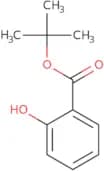
CAS:<p>Versatile small molecule scaffold</p>Formula:C4H4N2OS3Purity:Min. 95%Molecular weight:192.3 g/moltert-Butyl 2-hydroxybenzoate
CAS:<p>Versatile small molecule scaffold</p>Formula:C11H14O3Purity:Min. 95%Molecular weight:194.23 g/mol3-Amino-4-methyl-N-[3-(trifluoromethyl)phenyl]benzamide
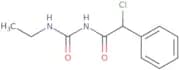
CAS:<p>Versatile small molecule scaffold</p>Formula:C15H13F3N2OPurity:Min. 95%Molecular weight:294.27 g/mol1-(2-Chloro-2-phenylacetyl)-3-ethylurea
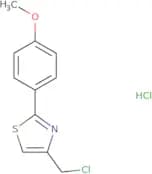
CAS:<p>Versatile small molecule scaffold</p>Formula:C11H13ClN2O2Purity:Min. 95%Molecular weight:240.68 g/mol4-(Chloromethyl)-2-(4-methoxyphenyl)-1,3-thiazole
CAS:<p>Versatile small molecule scaffold</p>Formula:C11H11Cl2NOSPurity:Min. 95%Molecular weight:276.2 g/mol5-Methanesulfonylfuran-2-carboxylic acid
CAS:<p>Versatile small molecule scaffold</p>Formula:C6H6O5SPurity:Min. 95%Molecular weight:190.18 g/mol(5-Chloro-2-ethoxyphenyl)methanol
CAS:<p>Versatile small molecule scaffold</p>Formula:C9H11ClO2Purity:Min. 95%Molecular weight:186.63 g/mol[5-Chloro-2-(2-methylpropoxy)phenyl]methanol
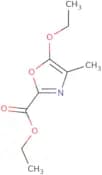
CAS:<p>Versatile small molecule scaffold</p>Formula:C11H15ClO2Purity:Min. 95%Molecular weight:214.69 g/molEthyl 5-ethoxy-4-methyl-1,3-oxazole-2-carboxylate
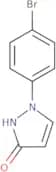
CAS:<p>Versatile small molecule scaffold</p>Formula:C9H13NO4Purity:Min. 95%Molecular weight:199.2 g/mol1-(4-Bromophenyl)-1H-pyrazol-3-ol
CAS:<p>Versatile small molecule scaffold</p>Formula:C9H7BrN2OPurity:Min. 95%Molecular weight:239.07 g/mol4-Hydroxy-6-nitroquinoline
CAS:<p>4-Hydroxy-6-nitroquinoline is an amide compound that has shown potential in interferon research. It is a solute with an acid reaction and is commonly spray-dried for ease of use. This compound can be synthesized through a pyrazole-based method and is often found in hydrocarbon mixtures. Its cyano and phenoxy groups make it suitable for applications in semisolid formulations, while its phosphite moiety allows it to be incorporated into matrix composites. 4-Hydroxy-6-nitroquinoline is commonly used in the field of Research Chemicals and has been studied for its interactions with uridine.</p>Formula:C9H6N2O3Purity:Min. 95%Molecular weight:190.16 g/mol1,3-Octanediol
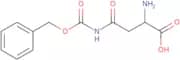
CAS:<p>1,3-Octanediol is an acidic compound that is commonly used in polymers and research chemicals. It can be synthesized by the reaction of methanol with 1,6-hexanediol or by the hydrogenation of phenol. 1,3-Octanediol has a hydroxyl group at each end of its molecular structure, which makes it a versatile compound for various applications.</p>Formula:C8H18O2Purity:Min. 95%Molecular weight:146.22 g/mol7-{[(benzyloxy)carbonyl]amino}heptanoic acid
CAS:<p>Versatile small molecule scaffold</p>Formula:C15H21NO4Purity:Min. 95%Molecular weight:279.3 g/mol3-(4-Chlorophenyl)-2-hydroxypropionic acid
CAS:<p>Versatile small molecule scaffold</p>Formula:C9H9ClO3Purity:Min. 95%Molecular weight:200.62 g/mol4-Phenylquinazolin-2(1H)-One
CAS:<p>4-Phenylquinazolin-2(1H)-One is a chemical compound that is related to tylosin tartrate. It is a water-soluble substance that contains a 1-6 carbon atom chain with an alkoxy group. This compound has an acidic nature and is commonly used in research studies as a reference standard or for ion extraction purposes. Its chemical name is derived from its structure, and it shares similarities with erythromycin, a well-known antibiotic.</p>Formula:C14H10N2OPurity:Min. 95%Molecular weight:222.24 g/mol4H-Pyrido[1,2-a]pyrimidin-4-one
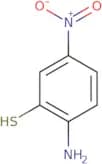
CAS:<p>4H-Pyrido[1,2-a]pyrimidin-4-one is a sulfonated compound that has various applications. It is commonly used as a preservative in cosmetic and personal care products. Additionally, it has been found to have potential therapeutic effects on iron homeostasis and collagen synthesis. Research suggests that 4H-Pyrido[1,2-a]pyrimidin-4-one can enhance the production of siderophores, which are molecules involved in iron uptake and storage. This compound also exhibits antiplatelet activity, making it a promising candidate for the development of cardiovascular drugs. Furthermore, it has been studied for its role in activating collagen hydrolysate and promoting wound healing. With its versatile properties, 4H-Pyrido[1,2-a]pyrimidin-4-one holds great potential for various scientific and industrial applications.</p>Formula:C8H6N2OPurity:Min. 95%Molecular weight:146.15 g/mol2-amino-5-nitrobenzenethiol
CAS:<p>2-Amino-5-nitrobenzenethiol is a versatile compound that has various applications in different industries. It is commonly used as a research chemical and is also utilized in the production of pioglitazone, a medication used to treat diabetes. Additionally, 2-Amino-5-nitrobenzenethiol can serve as an intermediate in the synthesis of other compounds such as diterpenes, triazines, pyrazoles, and pyrazolines.</p>Formula:C6H6N2O2SPurity:Min. 95%Molecular weight:170.19 g/mol5-Chloro-2-methyl-4-nitrobenzene-1-sulfonyl chloride
CAS:<p>Versatile small molecule scaffold</p>Formula:C7H5Cl2NO4SPurity:Min. 95%Molecular weight:270.09 g/mol5-Chloro-2-methyl-4-nitrobenzene-1-sulfonamide
CAS:<p>Versatile small molecule scaffold</p>Formula:C7H7ClN2O4SPurity:Min. 95%Molecular weight:250.66 g/mol5-Methoxy-1-benzofuran-3-carboxylic acid
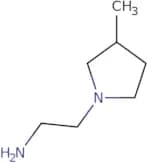
CAS:<p>Versatile small molecule scaffold</p>Formula:C10H8O4Purity:Min. 95%Molecular weight:192.17 g/mol2-(3-Methylpyrrolidin-1-yl)ethan-1-amine
CAS:<p>Versatile small molecule scaffold</p>Formula:C7H16N2Purity:Min. 95%Molecular weight:128.22 g/mol5,6-dihydro-1h-indol-7(4h)-one
CAS:<p>Versatile small molecule scaffold</p>Formula:C8H9NOPurity:Min. 95%Molecular weight:135.17 g/molCyclopentyl(phenyl)methanamine
CAS:<p>Cyclopentyl(phenyl)methanamine is a versatile compound that has various applications. It is commonly used in the production of research chemicals and as a solid catalyst. Cyclopentyl(phenyl)methanamine is also known for its use in microbial consortia, where it aids in the growth and development of microorganisms. Additionally, it can be utilized as a plasticizer and is often found in products such as cellulose and phosphoric acid. With its wide range of uses, Cyclopentyl(phenyl)methanamine is an essential component in many industries.</p>Formula:C12H17NPurity:Min. 95%Molecular weight:175.27 g/mol2-Chloro-N-[cyclohexyl(phenyl)methyl]acetamide
CAS:<p>Versatile small molecule scaffold</p>Formula:C15H20ClNOPurity:Min. 95%Molecular weight:265.78 g/mol2-Chloro-N-[cyclopentyl(phenyl)methyl]acetamide
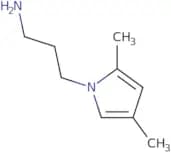
CAS:<p>Versatile small molecule scaffold</p>Formula:C14H18ClNOPurity:Min. 95%Molecular weight:251.75 g/mol2-Chloro-N-[cyclopropyl(phenyl)methyl]acetamide
CAS:<p>Versatile small molecule scaffold</p>Formula:C12H14ClNOPurity:Min. 95%Molecular weight:223.7 g/mol3-(2,4-Dimethyl-1H-pyrrol-1-yl)propan-1-amine
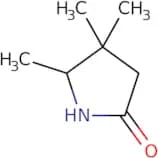
CAS:<p>Versatile small molecule scaffold</p>Formula:C9H16N2Purity:Min. 95%Molecular weight:152.24 g/mol4,4,5-Trimethylpyrrolidin-2-one
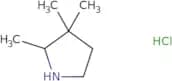
CAS:<p>Versatile small molecule scaffold</p>Formula:C7H13NOPurity:Min. 95%Molecular weight:127.18 g/mol2,3,3-Trimethylpyrrolidine hydrochloride
CAS:<p>Versatile small molecule scaffold</p>Formula:C7H16ClNPurity:Min. 95%Molecular weight:149.66 g/mol3-[5-(4-Chloro-phenyl)-oxazol-2-yl]-propionic acid
CAS:<p>Versatile small molecule scaffold</p>Formula:C12H10ClNO3Purity:Min. 95%Molecular weight:251.67 g/molrac-(1R,2R)-1,2-Dimethylcyclobutane-1,2-dicarboxylic acid
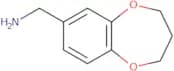
CAS:<p>Versatile small molecule scaffold</p>Formula:C8H12O4Purity:Min. 95%Molecular weight:172.2 g/mol3,4-Dihydro-2H-1,5-benzodioxepin-7-ylmethylamine
CAS:<p>Versatile small molecule scaffold</p>Formula:C10H13NO2Purity:Min. 95%Molecular weight:179.22 g/mol1-(2,2,3,3-Tetrafluoropropyl)piperazine
CAS:<p>Versatile small molecule scaffold</p>Formula:C7H12F4N2Purity:Min. 95%Molecular weight:200.18 g/mol3-[(Propan-2-yl)amino]phenol
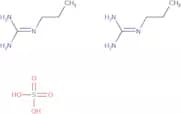
CAS:<p>Versatile small molecule scaffold</p>Formula:C9H13NOPurity:Min. 95%Molecular weight:151.21 g/molBis(1-propylguanidine), sulfuric acid
CAS:<p>Versatile small molecule scaffold</p>Formula:C8H24N6O4SPurity:Min. 95%Molecular weight:300.38 g/mol((1S,9aR)-Octahydro-1H-quinolizin-1-yl)methanamine dihydrochloride
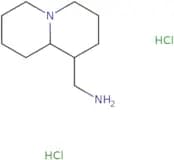
CAS:<p>Versatile small molecule scaffold</p>Formula:C10H22Cl2N2Purity:Min. 95%Molecular weight:241.2 g/mol1-(4-Nitrophenyl)piperidin-4-one
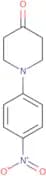
CAS:<p>Versatile small molecule scaffold</p>Formula:C11H12N2O3Purity:Min. 95%Molecular weight:220.23 g/mol1-Butanoylpyrrolidine-2-carboxylic acid
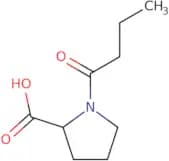
CAS:<p>1-Butanoylpyrrolidine-2-carboxylic acid is a versatile compound with various applications. It has been used in research as a reactive intermediate for the synthesis of different compounds, including piperonyl butoxide, d-psicose, and polymersomes. This compound has also shown potential in the field of medicine and pharmacology. Studies have suggested that it may have an impact on dopamine and monoamine levels, which could potentially be beneficial for certain neurological conditions. Additionally, 1-Butanoylpyrrolidine-2-carboxylic acid has been investigated for its antioxidant properties and its ability to scavenge superoxide radicals. Its unique chemical structure makes it a valuable tool for researchers exploring the synthesis of copolymers and other complex molecules.</p>Formula:C9H15NO3Purity:Min. 95%Molecular weight:185.22 g/mol

![4-[(2S,4R)-4-Fluoropyrrolidine-2-carbonyl]morpholine hydrochloride](/_next/image/?url=https%3A%2Fstatic.cymitquimica.com%2Fproducts%2F3D%2Fthumb-webp%2FXYC39865.webp&w=3840&q=75)
![1-[(Oxiran-2-yl)methyl]cyclobutan-1-ol](/_next/image/?url=https%3A%2Fstatic.cymitquimica.com%2Fproducts%2F3D%2Fthumb-webp%2FXYC45286.webp&w=3840&q=75)


![Bicyclo[3.2.1]octan-3-amine Hydrochloride](/_next/image/?url=https%3A%2Fstatic.cymitquimica.com%2Fproducts%2F3D%2Fthumb-webp%2FYAA26348.webp&w=3840&q=75)
![Bicyclo[3.2.1]octan-8-amine hydrochloride](/_next/image/?url=https%3A%2Fstatic.cymitquimica.com%2Fproducts%2F3D%2Fthumb-webp%2FYAA26350.webp&w=3840&q=75)


![N-[2-(4-Acetylphenyl)ethyl]acetamide](/_next/image/?url=https%3A%2Fstatic.cymitquimica.com%2Fproducts%2F3D%2Fthumb-webp%2FYAA27964.webp&w=3840&q=75)
![1-[4-(2-Aminoethyl)phenyl]ethan-1-one hydrochloride](/_next/image/?url=https%3A%2Fstatic.cymitquimica.com%2Fproducts%2F3D%2Fthumb-webp%2FYAA27967.webp&w=3840&q=75)


![2-[2-(Naphthalen-1-yl)-1,3-thiazol-4-yl]acetic acid](/_next/image/?url=https%3A%2Fstatic.cymitquimica.com%2Fproducts%2F3D%2Fthumb-webp%2FYAA35315.webp&w=3840&q=75)
![3-[(2-Methoxy-5-methylphenyl)amino]propanoic acid](/_next/image/?url=https%3A%2Fstatic.cymitquimica.com%2Fproducts%2F3D%2Fthumb-webp%2FYAA36380.webp&w=3840&q=75)
![3-Amino-4-methyl-N-[3-(trifluoromethyl)phenyl]benzamide](/_next/image/?url=https%3A%2Fstatic.cymitquimica.com%2Fproducts%2F3D%2Fthumb-webp%2FYAA41019.webp&w=3840&q=75)

![[5-Chloro-2-(2-methylpropoxy)phenyl]methanol](/_next/image/?url=https%3A%2Fstatic.cymitquimica.com%2Fproducts%2F3D%2Fthumb-webp%2FYAA42637.webp&w=3840&q=75)
![7-{[(benzyloxy)carbonyl]amino}heptanoic acid](/_next/image/?url=https%3A%2Fstatic.cymitquimica.com%2Fproducts%2F3D%2Fthumb-webp%2FYAA43437.webp&w=3840&q=75)
![4H-Pyrido[1,2-a]pyrimidin-4-one](/_next/image/?url=https%3A%2Fstatic.cymitquimica.com%2Fproducts%2F3D%2Fthumb-webp%2FYAA44310.webp&w=3840&q=75)

![2-Chloro-N-[cyclohexyl(phenyl)methyl]acetamide](/_next/image/?url=https%3A%2Fstatic.cymitquimica.com%2Fproducts%2F3D%2Fthumb-webp%2FYAA45941.webp&w=3840&q=75)
![2-Chloro-N-[cyclopentyl(phenyl)methyl]acetamide](/_next/image/?url=https%3A%2Fstatic.cymitquimica.com%2Fproducts%2F3D%2Fthumb-webp%2FYAA45943.webp&w=3840&q=75)
![2-Chloro-N-[cyclopropyl(phenyl)methyl]acetamide](/_next/image/?url=https%3A%2Fstatic.cymitquimica.com%2Fproducts%2F3D%2Fthumb-webp%2FYAA45947.webp&w=3840&q=75)
![3-[5-(4-Chloro-phenyl)-oxazol-2-yl]-propionic acid](/_next/image/?url=https%3A%2Fstatic.cymitquimica.com%2Fproducts%2F3D%2Fthumb-webp%2FYAA46495.webp&w=3840&q=75)

![3-[(Propan-2-yl)amino]phenol](/_next/image/?url=https%3A%2Fstatic.cymitquimica.com%2Fproducts%2F3D%2Fthumb-webp%2FYAA47816.webp&w=3840&q=75)