Building Blocks
This section contains fundamental products for the synthesis of organic and biological compounds. Building blocks are the essential starting materials used to construct complex molecules through various chemical reactions. They play a critical role in drug discovery, material science, and chemical research. At CymitQuimica, we offer a diverse range of high-quality building blocks to support your innovative research and industrial projects, ensuring you have the essential components for successful synthesis.
Subcategories of "Building Blocks"
- Boronic Acids & Boronic Acid Derivatives(5,756 products)
- Chiral Building Blocks(1,242 products)
- Hydrocarbon Building Blocks(6,095 products)
- Organic Building Blocks(61,038 products)
Found 196817 products of "Building Blocks"
Sort by
Purity (%)
0
100
|
0
|
50
|
90
|
95
|
100
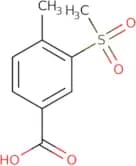
3-Methanesulfonyl-4-methylbenzoic acid
CAS:<p>Versatile small molecule scaffold</p>Formula:C9H10O4SPurity:Min. 95%Molecular weight:214.24 g/mol2,4,6-Trichlorobenzenesulfonyl chloride
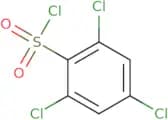
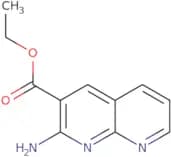
CAS:<p>2,4,6-Trichlorobenzenesulfonyl chloride is a sulfonylating agent that is used to treat metabolic disorders and iron metabolism. It is also used as an x-ray contrast agent for the detection of certain types of cancers. In addition, 2,4,6-trichlorobenzenesulfonyl chloride has been shown to have anti-inflammatory properties in chronic inflammatory diseases. This drug can be used to inhibit the synthesis of hepcidin by blocking the catalytic activity of ferrochelatase. 2,4,6-trichlorobenzenesulfonyl chloride may also be able to reduce inflammation by its ability to form reactive chlorides that react with alcohols and aldehydes. This can lead to deficiency symptoms such as chronic inflammatory disease or alcohol intolerance.</p>Formula:Cl3C6H2SO2ClPurity:Min. 95%Molecular weight:279.96 g/molEthyl 2-amino-1,8-naphthyridine-3-carboxylate
CAS:<p>Versatile small molecule scaffold</p>Formula:C11H11N3O2Purity:Min. 95%Molecular weight:217.22 g/molThiophene-3-carboximidamide hydrochloride
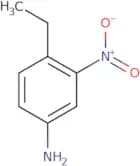
CAS:<p>Versatile small molecule scaffold</p>Formula:C5H7ClN2SPurity:Min. 95%Molecular weight:162.64 g/mol4-Ethyl-3-nitroaniline
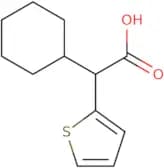
CAS:<p>Versatile small molecule scaffold</p>Formula:C8H10N2O2Purity:Min. 95%Molecular weight:166.18 g/mol2-Cyclohexyl-2-(thiophen-2-yl)acetic acid
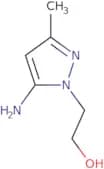
CAS:<p>Versatile small molecule scaffold</p>Formula:C12H16O2SPurity:Min. 95%Molecular weight:224.32 g/mol2-(5-Amino-3-methyl-1H-pyrazol-1-yl)ethanol
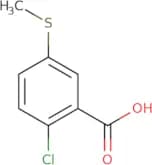
CAS:<p>Versatile small molecule scaffold</p>Formula:C6H11N3OPurity:Min. 95%Molecular weight:141.17 g/mol2-Chloro-5-(methylthio)benzoic acid
CAS:<p>Versatile small molecule scaffold</p>Formula:C8H7ClO2SPurity:Min. 95%Molecular weight:202.66 g/mol3-(Prop-2-en-1-yl)-2-sulfanyl-3H,4H-thieno[2,3-d]pyrimidin-4-one
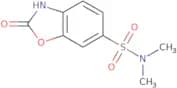
CAS:<p>Versatile small molecule scaffold</p>Formula:C9H8N2OS2Purity:Min. 95%Molecular weight:224.3 g/molN,N-Dimethyl-2-oxo-2,3-dihydro-1,3-benzoxazole-6-sulfonamide
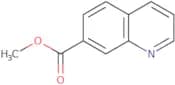
CAS:<p>Versatile small molecule scaffold</p>Formula:C9H10N2O4SPurity:Min. 95%Molecular weight:242.25 g/molMethyl quinoline-7-carboxylate
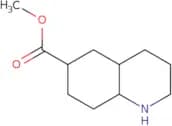
CAS:<p>Methyl quinoline-7-carboxylate is a molecule that inhibits angiotensin-converting enzyme (ACE) and prevents the conversion of angiotensin I to angiotensin II. It also has antihypertensive activity in mice, as well as an antihypertensive effect in transgenic mice with hypertension. Methyl quinoline-7-carboxylate is a nonpeptide inhibitor that has been shown to be effective in treating hypertension in transgenic mouse models. This drug was discovered by scientists at Eli Lilly and Company, who used a mouse model to study the effects of the drug on blood pressure. Methyl quinoline-7-carboxylate is an enantiomeric mixture of two molecules, which are mirror images of each other. The two molecules have identical chemical structures but different spatial arrangements. One of the two molecules is more potent than the other, but both are active inhibitors of ACE and have anti</p>Formula:C11H9NO2Purity:Min. 95%Molecular weight:187.19 g/molMethyl decahydroquinoline-6-carboxylate
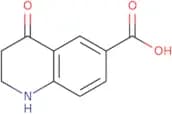
CAS:<p>Versatile small molecule scaffold</p>Formula:C11H19NO2Purity:Min. 95%Molecular weight:197.27 g/mol4-Oxo-1,2,3,4-tetrahydroquinoline-6-carboxylic acid
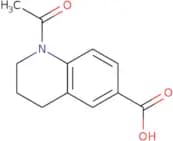
CAS:<p>Versatile small molecule scaffold</p>Formula:C10H9NO3Purity:Min. 95%Molecular weight:191.18 g/mol1-Acetyl-1,2,3,4-tetrahydroquinoline-6-carboxylic acid
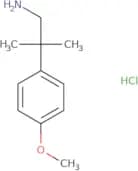
CAS:<p>Versatile small molecule scaffold</p>Formula:C12H13NO3Purity:Min. 95%Molecular weight:219.24 g/mol2-(4-Methoxyphenyl)-2-methylpropan-1-amine hydrochloride
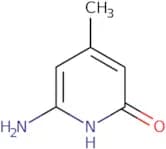
CAS:<p>Versatile small molecule scaffold</p>Formula:C11H18ClNOPurity:Min. 95%Molecular weight:215.72 g/mol6-Amino-4-methyl-1,2-dihydropyridin-2-one
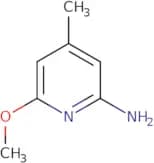
CAS:<p>Versatile small molecule scaffold</p>Formula:C6H8N2OPurity:Min. 95%Molecular weight:124.14 g/mol6-Methoxy-4-methylpyridin-2-amine
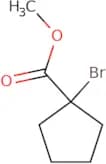
CAS:<p>Versatile small molecule scaffold</p>Formula:C7H10N2OPurity:Min. 95%Molecular weight:138.17 g/molMethyl 1-Bromocyclopentane-1-Carboxylate
CAS:<p>Methyl 1-bromocyclopentane-1-carboxylate is an isomer of the methyl ester of cyclopentanecarboxylic acid. It has been shown to undergo nucleophilic attack by a nucleophile, such as ammonia, methylamine, or water. The reaction mechanism involves a carbonyl group with an adjacent amide that can be protonated to form a carbanion intermediate. This intermediate then reacts with a nucleophile to form the desired product and regenerates the carbonyl group. Methyl 1-bromocyclopentane-1-carboxylate was not able to be crystallized in x-ray diffraction studies due to its high melting point.</p>Formula:C7H11BrO2Purity:Min. 95%Molecular weight:207.06 g/mol1-[(Aminooxy)methyl]-4-fluorobenzene hydrochloride
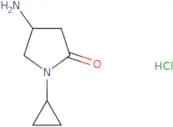
CAS:<p>Versatile small molecule scaffold</p>Formula:C7H9ClFNOPurity:Min. 95%Molecular weight:177.61 g/mol4-Amino-1-cyclopropylpyrrolidin-2-one hydrochloride
CAS:<p>Versatile small molecule scaffold</p>Formula:C7H13ClN2OPurity:Min. 95%Molecular weight:176.64 g/mol[5-(2,3-Dihydro-1,4-benzodioxin-6-yl)-1,2-oxazol-3-yl]methanamine hydrochloride
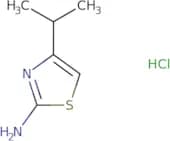
CAS:<p>Versatile small molecule scaffold</p>Formula:C12H13ClN2O3Purity:Min. 95%Molecular weight:268.69 g/mol4-(Propan-2-yl)-1,3-thiazol-2-amine hydrochloride
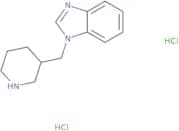
CAS:<p>Versatile small molecule scaffold</p>Formula:C6H11ClN2SPurity:Min. 95%Molecular weight:178.68 g/mol1-(Piperidin-3-ylmethyl)-1H-1,3-benzodiazole dihydrochloride
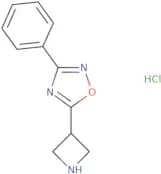
CAS:<p>Versatile small molecule scaffold</p>Formula:C13H19Cl2N3Purity:Min. 95%Molecular weight:288.21 g/mol5-(Azetidin-3-yl)-3-phenyl-1,2,4-oxadiazole hydrochloride
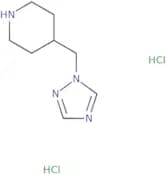
CAS:<p>Versatile small molecule scaffold</p>Formula:C11H12ClN3OPurity:Min. 95%Molecular weight:237.68 g/mol4-(1H-1,2,4-Triazol-1-ylmethyl)piperidine dihydrochloride
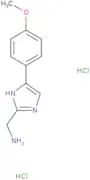
CAS:<p>Versatile small molecule scaffold</p>Formula:C8H16Cl2N4Purity:Min. 95%Molecular weight:239.14 g/mol(4-(4-Methoxyphenyl)-1H-imidazol-2-yl)methanamine dihydrochloride
CAS:<p>Versatile small molecule scaffold</p>Formula:C11H15Cl2N3OPurity:Min. 95%Molecular weight:276.16 g/mol[4-[[5-Chloro-4-(methylamino)-2-pyrimidinyl]amino]-3-methoxyphenyl]-4-morpholinylmethanone
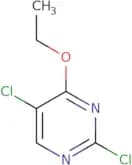
CAS:<p>The drug, AZD1480, is a small molecule that binds to the toll-like receptor TLR4 and inhibits its function. This drug has been shown to inhibit microglia activation and reduce the production of pro-inflammatory cytokines in cell culture studies. The effects of AZD1480 are mediated by inhibiting autophagy, which is a process that cells use to degrade damaged proteins and organelles. This drug also inhibits the activity of polymerase chain reaction (PCR) enzymes, which prevents DNA replication in bacteria. The chemical structure of AZD1480 consists of a 4-morpholinyl group attached to a 4-[[5-chloro-4-(methylamino)-2-pyrimidinyl]amino]-3-methoxyphenyl group. It is classified as a synthetic compound with an unknown pharmacokinetic profile.</p>Formula:C17H20ClN5O3Purity:Min. 95%Molecular weight:377.83 g/mol2,5-Dichloro-4-ethoxypyrimidine
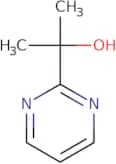
CAS:<p>Versatile small molecule scaffold</p>Formula:C6H6Cl2N2OPurity:Min. 95%Molecular weight:193.03 g/mol2-(Pyrimidin-2-yl)propan-2-ol
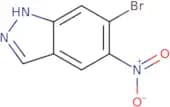
CAS:<p>Versatile small molecule scaffold</p>Formula:C7H10N2OPurity:Min. 95%Molecular weight:138.17 g/mol6-bromo-5-nitro-1h-indazole
CAS:<p>Versatile small molecule scaffold</p>Formula:C7H4BrN3O2Purity:Min. 95%Molecular weight:242.03 g/mol7-Bromo-5-chloro-1H-pyrazolo[4,3-b]pyridine
CAS:<p>Versatile small molecule scaffold</p>Formula:C6H3BrClN3Purity:Min. 95%Molecular weight:232.46 g/mol1-[(2,4-Difluorophenyl)methyl]-5-methyl-1H-1,2,3-triazole-4-carboxylic acid
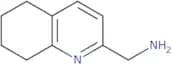
CAS:<p>Versatile small molecule scaffold</p>Formula:C11H9F2N3O2Purity:Min. 95%Molecular weight:253.2 g/mol5,6,7,8-Tetrahydroquinolin-2-ylmethanamine
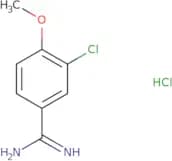
CAS:<p>Versatile small molecule scaffold</p>Formula:C10H14N2Purity:Min. 95%Molecular weight:162.23 g/mol3-Chloro-4-methoxybenzene-1-carboximidamide hydrochloride
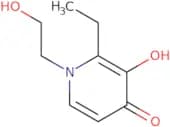
CAS:<p>Versatile small molecule scaffold</p>Formula:C8H10Cl2N2OPurity:Min. 95%Molecular weight:221.08 g/mol2-Ethyl-3-hydroxy-1-(2-hydroxyethyl)-1,4-dihydropyridin-4-one
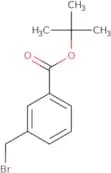
CAS:<p>2-Ethyl-3-hydroxy-1-(2-hydroxyethyl)-1,4-dihydropyridin-4-one (MAH) is a monoclonal antibody that is used to detect IgG and IgA in human serum. MAH binds to the Fc region of human immunoglobulin G (IgG) antibodies, which are found in the blood of humans and other mammals. The Fc region is an important part of the antibody molecule because it contains an antigen binding site that recognizes specific antigens. MAH has been shown to bind to a variety of animal tissues, including liver, kidney, spleen, brain, heart, muscle, and bone marrow cells. MAH also binds to crystalline cellulose and Pichia pastoris cells. This compound has minimal toxicity when administered orally and was shown to be effective against Coccidioides glabrata in mice. The structure of this compound</p>Formula:C9H13NO3Purity:Min. 95%Molecular weight:183.2 g/moltert-Butyl 3-(bromomethyl)benzoate
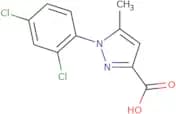
CAS:<p>Versatile small molecule scaffold</p>Formula:C12H15BrO2Purity:Min. 95%Molecular weight:271.15 g/mol1-(2,4-Dichlorophenyl)-5-methyl-1H-pyrazole-3-carboxylic acid
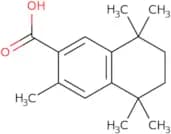
CAS:<p>Versatile small molecule scaffold</p>Formula:C11H8Cl2N2O2Purity:Min. 95%Molecular weight:271.1 g/mol5,6,7,8-Tetrahydro-3,5,5,8,8-pentamethyl-2-naphthoic acid
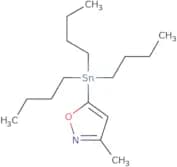
CAS:<p>Versatile small molecule scaffold</p>Formula:C16H22O2Purity:Min. 95%Molecular weight:246.34 g/mol3-Methyl-5-(tributylstannyl)isoxazole
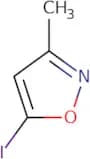
CAS:Controlled Product<p>3-Methyl-5-(tributylstannyl)isoxazole is a palladium-catalyzed, three-component reaction that yields nitrile and 1,3-dipolar cycloaddition products. It is an example of a cycloaddition reaction involving the coupling of two unsaturated functional groups. The 1,3-dipolar cycloaddition product can be converted to a corresponding oxides in the presence of copper(I) chloride. This process has been used to convert nitriles into oxides with a variety of functional groups.</p>Formula:C16H31NOSnPurity:Min. 95%Molecular weight:372.13 g/mol5-Iodo-3-methyl-isoxazole
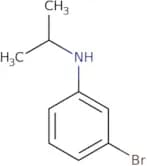
CAS:<p>5-Iodo-3-methyl-isoxazole is a synthetic compound that has been found to have high antioxidant properties. It can be used as an additive in a variety of industries, including the production of synthetic antioxidants and catalytic converters for vehicles. The compound is synthesized by the palladium-catalyzed cross-coupling reaction between 5-iodo-3,4-dimethoxybenzene and 3,5-dimethylisoxazole. This process yields a mixture of diastereomers. 5-Iodo-3-methylisoxazole has also been shown to be an effective chelator when it reacts with metal ions such as copper and zinc.</p>Formula:C4H4INOPurity:Min. 95%Molecular weight:208.99 g/mol3-Bromo-N-(propan-2-yl)aniline
CAS:<p>Versatile small molecule scaffold</p>Formula:C9H12BrNPurity:Min. 95%Molecular weight:214.1 g/mol5H,6H,7H,8H,9H,10H-Cyclohepta[b]indol-2-amine
CAS:<p>Versatile small molecule scaffold</p>Formula:C13H16N2Purity:Min. 95%Molecular weight:200.28 g/mol4-Propyl-5-sulfanyl-8-thia-4,6-diazatricyclo[7.4.0.0,2,7]trideca-1(9),2(7),5-trien-3-one
CAS:<p>Versatile small molecule scaffold</p>Formula:C13H16N2OS2Purity:Min. 95%Molecular weight:280.4 g/mol3-(4-Chlorophenyl)-5,6-dimethyl-2-sulfanyl-3H,4H-thieno[2,3-d]pyrimidin-4-one
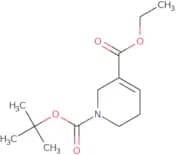
CAS:<p>Versatile small molecule scaffold</p>Formula:C14H11ClN2OS2Purity:Min. 95%Molecular weight:322.8 g/mol1-tert-Butyl 3-ethyl 1,2,5,6-tetrahydropyridine-1,3-dicarboxylate
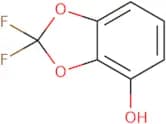
CAS:<p>Versatile small molecule scaffold</p>Formula:C13H21NO4Purity:Min. 95%Molecular weight:255.31 g/mol2,2-Difluoro-1,3-benzodioxol-4-ol
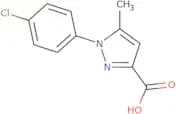
CAS:<p>Versatile small molecule scaffold</p>Formula:C7H4F2O3Purity:Min. 95%Molecular weight:174.1 g/mol1-(4-Chlorophenyl)-5-methyl-1H-pyrazole-3-carboxylic acid
CAS:<p>Versatile small molecule scaffold</p>Formula:C11H9ClN2O2Purity:Min. 95%Molecular weight:236.65 g/mol4-(4-Bromobenzenesulfonamido)benzoic acid
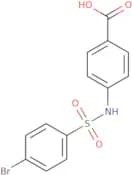
CAS:<p>4-(4-Bromobenzenesulfonamido)benzoic acid is a chemical compound that belongs to the class of benzene sulfonamides. It has been shown to stabilize benzene dimers, which are formed when benzene molecules are next to each other in space. The carboxylic acid group on this molecule is substituted by a 4-bromobenzenesulfonamide group, and 4-(4-bromobenzenesulfonamido)benzoic acid can be found in crystal form with hydrogen bonds between the molecules. This chemical compound has a carboxylic acid substituent and is also classified as a carboxyl group. It has been shown to have an inhibitory effect on bacterial growth and is used for the treatment of infections caused by erythromycin-resistant Mycobacterium tuberculosis and Mycobacterium avium complex.</p>Formula:C13H10BrNO4SPurity:Min. 95%Molecular weight:356.19 g/mol2-Propyldodecan-1-ol
CAS:<p>Versatile small molecule scaffold</p>Formula:C15H32OPurity:Min. 95%Molecular weight:228.41 g/mol(S)-1,1-Diethoxy-2-propanamine
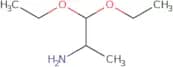
CAS:<p>Versatile small molecule scaffold</p>Formula:C7H17NO2Purity:Min. 95%Molecular weight:147.22 g/molN,2-Dimethyl-5-nitrobenzene-1-sulfonamide
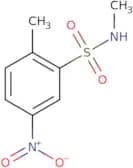
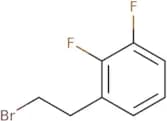
CAS:<p>Versatile small molecule scaffold</p>Formula:C8H10N2O4SPurity:Min. 95%Molecular weight:230.24 g/mol1-(2-Bromoethyl)-2,3-difluorobenzene
CAS:<p>Versatile small molecule scaffold</p>Formula:C8H7BrF2Purity:Min. 95%Molecular weight:221.04 g/mol5-Iodo-1H-benzo[D]imidazole-2(3H)-thione
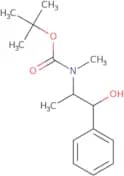
CAS:<p>Versatile small molecule scaffold</p>Formula:C7H5IN2SPurity:Min. 95%Molecular weight:276.1 g/moltert-Butyl N-(1-hydroxy-1-phenylpropan-2-yl)-N-methylcarbamate
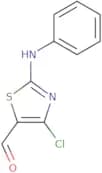
CAS:<p>Versatile small molecule scaffold</p>Formula:C15H23NO3Purity:Min. 95%Molecular weight:265.35 g/mol4-Chloro-2-(phenylamino)-1,3-thiazole-5-carbaldehyde
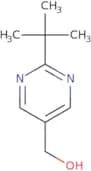
CAS:<p>Versatile small molecule scaffold</p>Formula:C10H7ClN2OSPurity:Min. 95%Molecular weight:238.69 g/mol(2-tert-Butylpyrimidin-5-yl)methanol
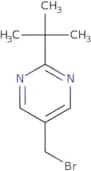
CAS:<p>Versatile small molecule scaffold</p>Formula:C9H14N2OPurity:Min. 95%Molecular weight:166.22 g/mol5-(Bromomethyl)-2-tert-butylpyrimidine
CAS:<p>Versatile small molecule scaffold</p>Formula:C9H13BrN2Purity:Min. 95%Molecular weight:229.12 g/mol6-(Benzyloxy)hex-1-en-3-ol
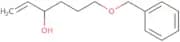
CAS:<p>Versatile small molecule scaffold</p>Formula:C13H18O2Purity:Min. 95%Molecular weight:206.28 g/mol1-{[(2-Phenyl-1,3-oxazol-4-yl)methyl]sulfanyl}ethan-1-one
CAS:<p>Versatile small molecule scaffold</p>Formula:C12H11NO2SPurity:Min. 95%Molecular weight:233.29 g/mol1-[2-Amino-5-(propan-2-yl)phenyl]ethan-1-one
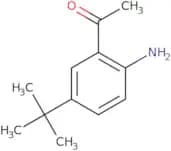
CAS:<p>Versatile small molecule scaffold</p>Formula:C11H15NOPurity:Min. 95%Molecular weight:177.2 g/mol1-(2-Amino-5-tert-butylphenyl)ethan-1-one
CAS:<p>Versatile small molecule scaffold</p>Formula:C12H17NOPurity:Min. 95%Molecular weight:191.27 g/mol1-Acetyl-piperidine-4-carboxylic acid methyl ester
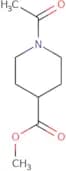
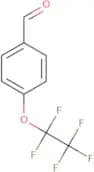
CAS:<p>Versatile small molecule scaffold</p>Formula:C9H15NO3Purity:Min. 95%Molecular weight:185.22 g/mol4-(1,1,2,2,2-Pentafluoroethoxy)benzaldehyde
CAS:Versatile small molecule scaffoldFormula:C9H5F5O2Purity:Min. 95%Molecular weight:240.13 g/mol1-(2-Methoxyethyl)-1H-imidazole
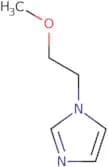
CAS:<p>Versatile small molecule scaffold</p>Formula:C6H10N2OPurity:Min. 95%Molecular weight:126.16 g/mol3-{5,7-Dioxo-5H,6H,7H-pyrrolo[3,4-b]pyrazin-6-yl}propanoic acid
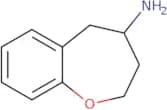
CAS:<p>Versatile small molecule scaffold</p>Formula:C9H7N3O4Purity:Min. 95%Molecular weight:221.17 g/mol2,3,4,5-Tetrahydro-1-benzoxepin-4-amine
CAS:<p>Versatile small molecule scaffold</p>Formula:C10H13NOPurity:Min. 95%Molecular weight:163.22 g/molEthyl (2E)-2-methyl-4-oxopent-2-enoate
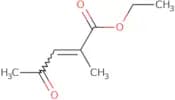
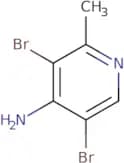
CAS:<p>Versatile small molecule scaffold</p>Formula:C8H12O3Purity:Min. 95%Molecular weight:156.18 g/mol3,5-Dibromo-2-methylpyridin-4-amine
CAS:<p>Versatile small molecule scaffold</p>Formula:C6H6Br2N2Purity:Min. 95%Molecular weight:265.94 g/molBicyclo[1.1.1]pentane-1-carbonitrile
CAS:<p>Versatile small molecule scaffold</p>Formula:C6H7NPurity:Min. 95%Molecular weight:93.13 g/molEthyl 5-amino-1-[2-(methanesulfonyloxy)ethyl]-1H-pyrazole-4-carboxylate
CAS:<p>Versatile small molecule scaffold</p>Formula:C9H15N3O5SPurity:Min. 95%Molecular weight:277.3 g/mol1H,2H,3H-Pyrazolo[1,5-a]imidazole-7-carboxylic acid
CAS:<p>Versatile small molecule scaffold</p>Formula:C6H7N3O2Purity:Min. 95%Molecular weight:153.14 g/molDimethyl [(2-chloroethoxy)methyl]phosphonate
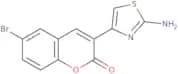
CAS:<p>Versatile small molecule scaffold</p>Formula:C5H12ClO4PPurity:Min. 95%Molecular weight:202.57 g/mol3-(2-Amino-1,3-thiazol-4-yl)-6-bromo-2H-chromen-2-one
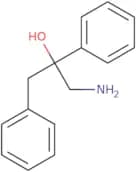
CAS:<p>3-(2-Amino-1,3-thiazol-4-yl)-6-bromo-2H-chromen-2-one is a coumarin derivative that contains a five membered ring structure. The molecule has a planar shape and is directional. It has two hydrogen bonds with the carbonyl group and the amine group of the adjacent amino acid.</p>Formula:C12H7BrN2O2SPurity:Min. 95%Molecular weight:323.17 g/mol1-Amino-2,3-diphenylpropan-2-ol
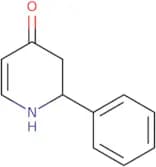
CAS:<p>Versatile small molecule scaffold</p>Formula:C15H17NOPurity:Min. 95%Molecular weight:227.3 g/mol2-Phenyl-1,2,3,4-tetrahydropyridin-4-one
CAS:<p>Versatile small molecule scaffold</p>Formula:C11H11NOPurity:Min. 95%Molecular weight:173.21 g/mol[2-Hydroxy-2-(4-methoxy-phenyl)-ethyl]-carbamic acid tert-butyl ester
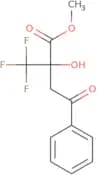
CAS:<p>Versatile small molecule scaffold</p>Formula:C14H21NO4Purity:Min. 95%Molecular weight:267.32 g/molMethyl 2-hydroxy-4-oxo-4-phenyl-2-(trifluoromethyl)butanoate
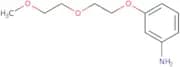
CAS:<p>Versatile small molecule scaffold</p>Formula:C12H11F3O4Purity:Min. 95%Molecular weight:276.21 g/mol3-(2-(2-Methoxyethoxy)ethoxy)aniline
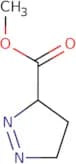
CAS:<p>Versatile small molecule scaffold</p>Formula:C11H17NO3Purity:Min. 95%Molecular weight:211.26 g/molMethyl 4,5-dihydro-3H-pyrazole-3-carboxylate
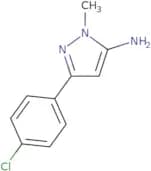
CAS:<p>Versatile small molecule scaffold</p>Formula:C5H8N2O2Purity:Min. 95%Molecular weight:128.13 g/mol3-(4-Chlorophenyl)-1-methyl-1H-pyrazol-5-amine
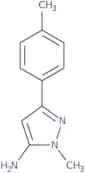
CAS:<p>Versatile small molecule scaffold</p>Formula:C10H10ClN3Purity:Min. 95%Molecular weight:207.66 g/mol2-Methyl-5-(4-methylphenyl)pyrazol-3-amine
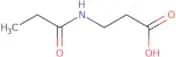
CAS:<p>Versatile small molecule scaffold</p>Formula:C11H13N3Purity:Min. 95%Molecular weight:187.24 g/mol3-Propanamidopropanoic acid
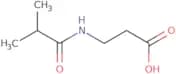
CAS:<p>Versatile small molecule scaffold</p>Formula:C6H11NO3Purity:Min. 95%Molecular weight:145.16 g/mol3-(2-Methylpropanamido)propanoic acid
CAS:<p>Versatile small molecule scaffold</p>Formula:C7H13NO3Purity:Min. 95%Molecular weight:159.18 g/mol5H,6H,8H-Pyrano[3,4-b]pyridine
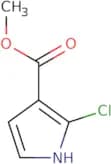
CAS:<p>Versatile small molecule scaffold</p>Formula:C8H9NOPurity:Min. 95%Molecular weight:135.16 g/molMethyl 2-chloro-1H-pyrrole-3-carboxylate
CAS:<p>Versatile small molecule scaffold</p>Formula:C6H6ClNO2Purity:Min. 95%Molecular weight:159.57 g/mol1-(2-bromophenyl)-2-methylpropan-2-ol
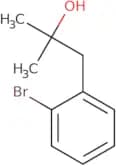
CAS:<p>Versatile small molecule scaffold</p>Formula:C10H13OBrPurity:Min. 95%Molecular weight:229.11 g/molN-Adamantan-2-yl-2-chloro-nicotinamide
CAS:<p>Versatile small molecule scaffold</p>Formula:C16H19ClN2OPurity:Min. 95%Molecular weight:290.79 g/mol2-(Chloromethyl)-5-methylpyrimidine
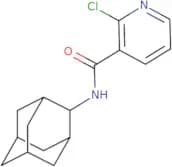
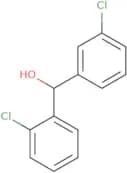
CAS:<p>Versatile small molecule scaffold</p>Formula:C6H7ClN2Purity:Min. 95%Molecular weight:142.59 g/mol(2-Chlorophenyl)(3-chlorophenyl)methanol
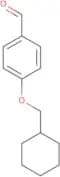
CAS:<p>Versatile small molecule scaffold</p>Formula:C13H10Cl2OPurity:Min. 95%Molecular weight:253.12 g/mol4-(Cyclohexylmethoxy)benzaldehyde
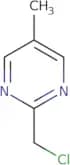
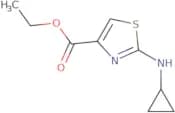
CAS:<p>Versatile small molecule scaffold</p>Formula:C14H18O2Purity:Min. 95%Molecular weight:218.29 g/molEthyl 2-(cyclopropylamino)-1,3-thiazole-4-carboxylate
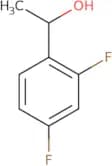
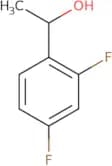
CAS:<p>Versatile small molecule scaffold</p>Formula:C9H12N2O2SPurity:Min. 95%Molecular weight:212.27 g/mol(1S)-1-(2,4-Difluorophenyl)ethan-1-ol
CAS:<p>Versatile small molecule scaffold</p>Formula:C8H8F2OPurity:Min. 95%Molecular weight:158.14 g/mol(1R)-1-(2,4-Difluorophenyl)ethan-1-ol
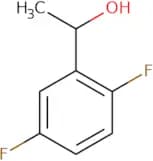
CAS:<p>Versatile small molecule scaffold</p>Formula:C8H8F2OPurity:Min. 95%Molecular weight:158.14 g/mol(1S)-1-(2,5-Difluorophenyl)ethan-1-ol
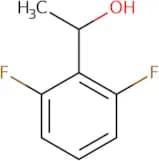
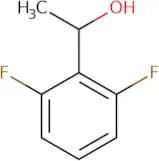
CAS:<p>Versatile small molecule scaffold</p>Formula:C8H8F2OPurity:Min. 95%Molecular weight:158.14 g/mol(1S)-1-(2,6-Difluorophenyl)ethan-1-ol
CAS:<p>Versatile small molecule scaffold</p>Formula:C8H8F2OPurity:Min. 95%Molecular weight:158.14 g/mol(1R)-1-(2,6-Difluorophenyl)ethan-1-ol
CAS:<p>Versatile small molecule scaffold</p>Formula:C8H8F2OPurity:Min. 95%Molecular weight:158.14 g/mol(1R)-1-(3,4-Difluorophenyl)ethan-1-ol
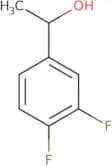
CAS:<p>Versatile small molecule scaffold</p>Formula:C8H8F2OPurity:Min. 95%Molecular weight:158.14 g/mol2-(benzylamino)-3,3,3-trifluoropropan-1-ol
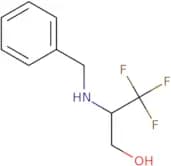
CAS:<p>Versatile small molecule scaffold</p>Formula:C10H12F3NOPurity:Min. 95%Molecular weight:219.21 g/molN-(Cyclohexylmethyl)aniline hydrochloride
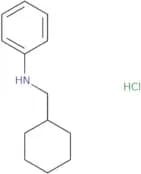
CAS:<p>Versatile small molecule scaffold</p>Formula:C13H20ClNPurity:Min. 95%Molecular weight:225.76 g/molN-(Cyclohexylmethyl)(phenyl)-methanaminehydrochloride
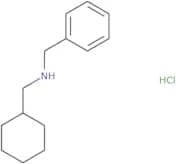
CAS:<p>Versatile small molecule scaffold</p>Formula:C14H22ClNPurity:Min. 95%Molecular weight:239.79 g/mol


![3-(Prop-2-en-1-yl)-2-sulfanyl-3H,4H-thieno[2,3-d]pyrimidin-4-one](/_next/image/?url=https%3A%2Fstatic.cymitquimica.com%2Fproducts%2F3D%2Fthumb-webp%2FBCA55004.webp&w=3840&q=75)
![1-[(Aminooxy)methyl]-4-fluorobenzene hydrochloride](/_next/image/?url=https%3A%2Fstatic.cymitquimica.com%2Fproducts%2F3D%2Fthumb-webp%2FBCA57289.webp&w=3840&q=75)
![[5-(2,3-Dihydro-1,4-benzodioxin-6-yl)-1,2-oxazol-3-yl]methanamine hydrochloride](/_next/image/?url=https%3A%2Fstatic.cymitquimica.com%2Fproducts%2F3D%2Fthumb-webp%2FBEC64781.webp&w=3840&q=75)
![[4-[[5-Chloro-4-(methylamino)-2-pyrimidinyl]amino]-3-methoxyphenyl]-4-morpholinylmethanone](/_next/image/?url=https%3A%2Fstatic.cymitquimica.com%2Fproducts%2F3D%2Fthumb-webp%2FBEC75881.webp&w=3840&q=75)
![7-Bromo-5-chloro-1H-pyrazolo[4,3-b]pyridine](/_next/image/?url=https%3A%2Fstatic.cymitquimica.com%2Fproducts%2F3D%2Fthumb-webp%2FBEC81370.webp&w=3840&q=75)
![1-[(2,4-Difluorophenyl)methyl]-5-methyl-1H-1,2,3-triazole-4-carboxylic acid](/_next/image/?url=https%3A%2Fstatic.cymitquimica.com%2Fproducts%2F3D%2Fthumb-webp%2FBEC84763.webp&w=3840&q=75)
![5H,6H,7H,8H,9H,10H-Cyclohepta[b]indol-2-amine](/_next/image/?url=https%3A%2Fstatic.cymitquimica.com%2Fproducts%2F3D%2Fthumb-webp%2FBFA08749.webp&w=3840&q=75)
![4-Propyl-5-sulfanyl-8-thia-4,6-diazatricyclo[7.4.0.0,2,7]trideca-1(9),2(7),5-trien-3-one](/_next/image/?url=https%3A%2Fstatic.cymitquimica.com%2Fproducts%2F3D%2Fthumb-webp%2FBFA10595.webp&w=3840&q=75)
![3-(4-Chlorophenyl)-5,6-dimethyl-2-sulfanyl-3H,4H-thieno[2,3-d]pyrimidin-4-one](/_next/image/?url=https%3A%2Fstatic.cymitquimica.com%2Fproducts%2F3D%2Fthumb-webp%2FBFA10597.webp&w=3840&q=75)

![5-Iodo-1H-benzo[D]imidazole-2(3H)-thione](/_next/image/?url=https%3A%2Fstatic.cymitquimica.com%2Fproducts%2F3D%2Fthumb-webp%2FBFA17481.webp&w=3840&q=75)
![1-{[(2-Phenyl-1,3-oxazol-4-yl)methyl]sulfanyl}ethan-1-one](/_next/image/?url=https%3A%2Fstatic.cymitquimica.com%2Fproducts%2F3D%2Fthumb-webp%2FBFA27150.webp&w=3840&q=75)
![1-[2-Amino-5-(propan-2-yl)phenyl]ethan-1-one](/_next/image/?url=https%3A%2Fstatic.cymitquimica.com%2Fproducts%2F3D%2Fthumb-webp%2FBFA27290.webp&w=3840&q=75)
![3-{5,7-Dioxo-5H,6H,7H-pyrrolo[3,4-b]pyrazin-6-yl}propanoic acid](/_next/image/?url=https%3A%2Fstatic.cymitquimica.com%2Fproducts%2F3D%2Fthumb-webp%2FBFA31028.webp&w=3840&q=75)
![Bicyclo[1.1.1]pentane-1-carbonitrile](/_next/image/?url=https%3A%2Fstatic.cymitquimica.com%2Fproducts%2F3D%2Fthumb-webp%2FBFA33244.webp&w=3840&q=75)
![Ethyl 5-amino-1-[2-(methanesulfonyloxy)ethyl]-1H-pyrazole-4-carboxylate](/_next/image/?url=https%3A%2Fstatic.cymitquimica.com%2Fproducts%2F3D%2Fthumb-webp%2FBFA35283.webp&w=3840&q=75)
![1H,2H,3H-Pyrazolo[1,5-a]imidazole-7-carboxylic acid](/_next/image/?url=https%3A%2Fstatic.cymitquimica.com%2Fproducts%2F3D%2Fthumb-webp%2FBFA35285.webp&w=3840&q=75)
![Dimethyl [(2-chloroethoxy)methyl]phosphonate](/_next/image/?url=https%3A%2Fstatic.cymitquimica.com%2Fproducts%2F3D%2Fthumb-webp%2FBFA35431.webp&w=3840&q=75)
![[2-Hydroxy-2-(4-methoxy-phenyl)-ethyl]-carbamic acid tert-butyl ester](/_next/image/?url=https%3A%2Fstatic.cymitquimica.com%2Fproducts%2F3D%2Fthumb-webp%2FBFA39530.webp&w=3840&q=75)
![5H,6H,8H-Pyrano[3,4-b]pyridine](/_next/image/?url=https%3A%2Fstatic.cymitquimica.com%2Fproducts%2F3D%2Fthumb-webp%2FBFA47399.webp&w=3840&q=75)