Building Blocks
This section contains fundamental products for the synthesis of organic and biological compounds. Building blocks are the essential starting materials used to construct complex molecules through various chemical reactions. They play a critical role in drug discovery, material science, and chemical research. At CymitQuimica, we offer a diverse range of high-quality building blocks to support your innovative research and industrial projects, ensuring you have the essential components for successful synthesis.
Subcategories of "Building Blocks"
- Boronic Acids & Boronic Acid Derivatives(5,756 products)
- Chiral Building Blocks(1,242 products)
- Hydrocarbon Building Blocks(6,095 products)
- Organic Building Blocks(61,037 products)
Found 196200 products of "Building Blocks"
Sort by
Purity (%)
0
100
|
0
|
50
|
90
|
95
|
100
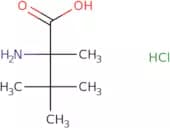
2-Amino-2-t-butylpropanoic acid HCl
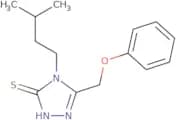
CAS:<p>Versatile small molecule scaffold</p>Formula:C7H15NO2·HClPurity:Min. 95%Molecular weight:181.66 g/mol4-(3-Methylbutyl)-5-(phenoxymethyl)-4H-1,2,4-triazole-3-thiol
CAS:<p>Versatile small molecule scaffold</p>Formula:C14H19N3OSPurity:Min. 95%Molecular weight:277.39 g/molMethyl 2-chloro-5-(chlorosulfonyl)-4-fluorobenzoate
CAS:<p>Versatile small molecule scaffold</p>Formula:C8H5Cl2FO4SPurity:Min. 95%Molecular weight:287.09 g/molrac-(1R,3R,5S)-8-Oxobicyclo[3.2.1]octane-3-carboxylic acid, exo
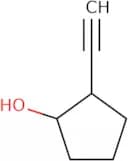
CAS:<p>Versatile small molecule scaffold</p>Formula:C9H12O3Purity:Min. 95%Molecular weight:168.19 g/molCis-2-ethynylcyclopentanol
CAS:<p>Versatile small molecule scaffold</p>Formula:C7H10OPurity:Min. 95%Molecular weight:110.15 g/molRef: 3D-LCA96760
Discontinued product2-(adamantan-1-yl)ethan-1-amine hydrochloride
CAS:<p>Versatile small molecule scaffold</p>Formula:C12H22ClNPurity:Min. 95%Molecular weight:215.76 g/mol3-{[3-(Trifluoromethyl)phenyl]methyl}azetidine hydrochloride
CAS:<p>Versatile small molecule scaffold</p>Formula:C11H13ClF3NPurity:Min. 95%Molecular weight:251.67 g/molRef: 3D-GXB45823
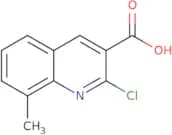
Discontinued product2-Chloro-8-methylquinoline-3-carboxylic acid
CAS:<p>Versatile small molecule scaffold</p>Formula:C11H8ClNO2Purity:Min. 95%Molecular weight:221.64 g/mol4-(4-Fluorophenyl)-1-methyl-3-(pyridin-2-yl)-1H-pyrazol-5-amine
CAS:<p>Versatile small molecule scaffold</p>Formula:C15H13FN4Purity:Min. 95%Molecular weight:268.29 g/molRef: 3D-ZWB30633
Discontinued product[2-(3-Methyl-1H-pyrazol-1-yl)pyridin-4-yl]methanol
CAS:<p>Versatile small molecule scaffold</p>Formula:C10H11N3OPurity:Min. 95%Molecular weight:189.21 g/molRef: 3D-ZZB36394
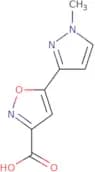
Discontinued product5-(1-Methyl-1H-pyrazol-3-yl)-1,2-oxazole-3-carboxylic acid
CAS:<p>Versatile small molecule scaffold</p>Formula:C8H7N3O3Purity:Min. 95%Molecular weight:193.16 g/moltert-Butyl 5-formyl-1,2,3,4-tetrahydropyridine-1-carboxylate
CAS:<p>Versatile small molecule scaffold</p>Formula:C11H17NO3Purity:Min. 95%Molecular weight:211.26 g/molRef: 3D-ZEC65403
Discontinued product2-Amino-4-methanesulfonyl-N-methyl-N-(pyridin-3-ylmethyl)butanamide dihydrochloride
CAS:<p>Versatile small molecule scaffold</p>Formula:C12H21Cl2N3O3SPurity:Min. 95%Molecular weight:358.3 g/molRef: 3D-HHC67773
Discontinued product6-Acetyl-1-methyl-1H-indazole
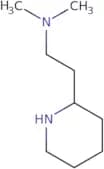
CAS:<p>Versatile small molecule scaffold</p>Formula:C10H10N2OPurity:Min. 95%Molecular weight:174.2 g/molN,N-Dimethyl-2-(2-piperidinyl)-1-ethanaminedihydrochloride
CAS:<p>Versatile small molecule scaffold</p>Formula:C9H22Cl2N2Purity:Min. 95%Molecular weight:229.2 g/mol2-Chloro-3-cyclopropylpyrazine
CAS:<p>Versatile small molecule scaffold</p>Formula:C7H7ClN2Purity:Min. 95%Molecular weight:154.6 g/molRef: 3D-LFA81911
Discontinued productN-(Cyclohexylmethyl)-N-methylcarbamoyl chloride
CAS:<p>Versatile small molecule scaffold</p>Formula:C9H16ClNOPurity:Min. 95%Molecular weight:189.68 g/molRef: 3D-LLB11489
Discontinued product2-Amino-3-methyl-2-(propan-2-yl)butanoic acid hydrochloride
CAS:<p>Versatile small molecule scaffold</p>Formula:C8H18ClNO2Purity:Min. 95%Molecular weight:195.7 g/molRef: 3D-LLB46207
Discontinued producttert-Butyl 1-oxa-8-azadispiro[2.1.2{5}.3{3}]decane-8-carboxylate
CAS:<p>Versatile small molecule scaffold</p>Formula:C13H21NO3Purity:Min. 95%Molecular weight:239.3 g/molRef: 3D-LUD63570
Discontinued product5-Azaspiro[3.5]nonan-7-ol
CAS:<p>Versatile small molecule scaffold</p>Formula:C8H15NOPurity:Min. 95%Molecular weight:141.2 g/molRef: 3D-LUD63572
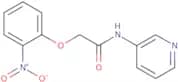
Discontinued product2-(2-Nitrophenoxy)-N-(pyridin-3-yl)acetamide
CAS:<p>Versatile small molecule scaffold</p>Formula:C13H11N3O4Purity:Min. 95%Molecular weight:273.24 g/mol4-Chloro-3,3-dimethylbutan-2-one
CAS:<p>Versatile small molecule scaffold</p>Formula:C6H11ClOPurity:Min. 95%Molecular weight:134.6 g/molRef: 3D-NAA10453
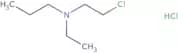
Discontinued productN-(2-Chloroethyl)-N-ethylpropan-1-amine hydrochloride
CAS:Controlled Product<p>Versatile small molecule scaffold</p>Formula:C7H17Cl2NPurity:Min. 95%Molecular weight:186.12 g/molRef: 3D-NAA10593
Discontinued product[2-(1-Bromocyclopropyl)ethynyl]trimethylsilane
CAS:<p>Versatile small molecule scaffold</p>Formula:C8H13BrSiPurity:Min. 95%Molecular weight:217.18 g/molRef: 3D-NKD37975
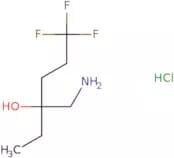
Discontinued product3-(Aminomethyl)-6,6,6-trifluorohexan-3-ol hydrochloride
CAS:<p>Versatile small molecule scaffold</p>Formula:C7H15ClF3NOPurity:Min. 95%Molecular weight:221.65 g/molRef: 3D-NKD41479
Discontinued product2-[(4-bromophenyl)sulfanyl]ethan-1-ol
CAS:<p>Versatile small molecule scaffold</p>Formula:C8H9OSBrPurity:Min. 95%Molecular weight:233.12 g/molRef: 3D-PAA70392
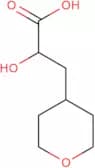
Discontinued product2-Hydroxy-3-(oxan-4-yl)propanoic acid
CAS:<p>Versatile small molecule scaffold</p>Formula:C8H14O4Purity:Min. 95%Molecular weight:174.19 g/molRef: 3D-PCC90160
Discontinued product2-(2-Bromoethyl)-1,4-dichlorobenzene
CAS:<p>Versatile small molecule scaffold</p>Formula:C8H7BrCl2Purity:Min. 95%Molecular weight:253.95 g/mol2-Boc-8-amino-5-thia-2-azaspiro[3.4]octane 5,5-dioxide
CAS:<p>Versatile small molecule scaffold</p>Formula:C11H20N2O4SPurity:Min. 95%Molecular weight:276.35 g/molRef: 3D-QDC48183
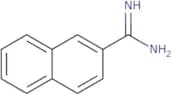
Discontinued productNaphthalene-2-carboximidamide
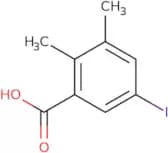
CAS:<p>Naphthalene-2-carboximidamide is a benzamidine derivative that interacts with the active site of serine proteases. It was shown to have potent inhibitory potency against a number of proteinases, including urokinase-type plasminogen activator (uPA), matrix metalloproteinase-9 (MMP-9), and cathepsin G. The interaction of naphthalene-2-carboximidamide with uPA was specific and led to inhibition of its catalytic activity. Naphthalene-2-carboximidamide has been tested in clinical trials for the treatment of influenza.</p>Formula:C11H10N2Purity:Min. 95%Molecular weight:170.21 g/mol5-Iodo-2,3-dimethylbenzoic acid
CAS:<p>Versatile small molecule scaffold</p>Formula:C9H9IO2Purity:Min. 95%Molecular weight:276.07 g/molRef: 3D-FAA61333
Discontinued productN-Methyl-N-phenylpiperidin-4-amine dihydrochloride
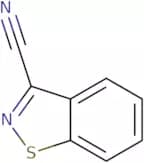
CAS:<p>Versatile small molecule scaffold</p>Formula:C12H20Cl2N2Purity:Min. 95%Molecular weight:263.2 g/mol1,2-Benzothiazole-3-carbonitrile
CAS:<p>Versatile small molecule scaffold</p>Formula:C8H4N2SPurity:Min. 95%Molecular weight:160.2 g/molRef: 3D-RAA80720
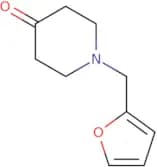
Discontinued product1-(2-Furylmethyl)-4-piperidinone
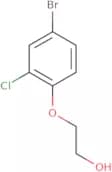
CAS:<p>Versatile small molecule scaffold</p>Formula:C10H13NO2Purity:Min. 95%Molecular weight:179.22 g/mol2-(4-Bromo-2-chlorophenoxy)ethanol
CAS:<p>Versatile small molecule scaffold</p>Formula:C8H8BrClO2Purity:Min. 95%Molecular weight:251.5 g/molRef: 3D-REB69921
Discontinued product6-Bromo-8-methylimidazo[1,2-a]pyridine-2-carbothioamide
CAS:<p>Versatile small molecule scaffold</p>Formula:C9H8BrN3SPurity:Min. 95%Molecular weight:270.15 g/molRef: 3D-RYB13882
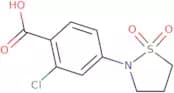
Discontinued product2-Chloro-4-(1,1-dioxo-1,2-thiazolidin-2-yl)benzoic acid
CAS:<p>Versatile small molecule scaffold</p>Formula:C10H10ClNO4SPurity:Min. 95%Molecular weight:275.71 g/molRef: 3D-SBC62071
Discontinued producttert-Butyl N-(3-amino-2-methylbutan-2-yl)carbamate
CAS:<p>Versatile small molecule scaffold</p>Formula:C10H22N2O2Purity:Min. 95%Molecular weight:202.3 g/molRef: 3D-SLC84728
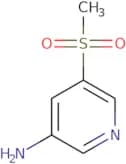
Discontinued product5-(methylsulfonyl)pyridin-3-amine
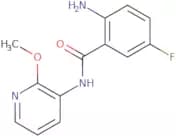
CAS:<p>Versatile small molecule scaffold</p>Formula:C6H8N2O2SPurity:Min. 95%Molecular weight:172.21 g/mol2-Amino-5-fluoro-N-(2-methoxypyridin-3-yl)benzamide
CAS:<p>Versatile small molecule scaffold</p>Formula:C13H12FN3O2Purity:Min. 95%Molecular weight:261.25 g/molRef: 3D-DWB18561
Discontinued product2-[2-(3-Fluorophenyl)ethoxy]acetic acid
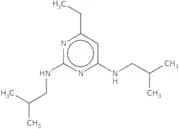
CAS:<p>Versatile small molecule scaffold</p>Formula:C10H11FO3Purity:Min. 95%Molecular weight:198.19 g/mol6-Ethyl-2-N,4-N-bis(2-methylpropyl)pyrimidine-2,4-diamine
CAS:<p>Versatile small molecule scaffold</p>Formula:C14H26N4Purity:Min. 95%Molecular weight:250.4 g/molRef: 3D-SSB67952
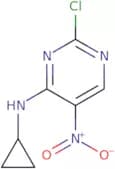
Discontinued product2-Chloro-N-cyclopropyl-5-nitropyrimidin-4-amine
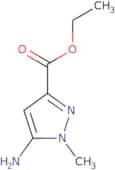
CAS:<p>Versatile small molecule scaffold</p>Formula:C7H7ClN4O2Purity:Min. 95%Molecular weight:214.61 g/molethyl 5-amino-1-methyl-1h-pyrazole-3-carboxylate
CAS:<p>Versatile small molecule scaffold</p>Formula:C7H11N3O2Purity:Min. 95%Molecular weight:169.18 g/mol1-[(tert-butoxy)carbonyl]-1,2,3,6-tetrahydropyridine-4-carboxylic acid
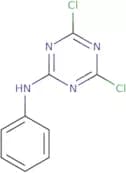
CAS:<p>Versatile small molecule scaffold</p>Formula:C11H17NO4Purity:Min. 95%Molecular weight:227.3 g/mol4,6-Dichloro-N-phenyl-1,3,5-triazin-2-amine
CAS:<p>4,6-Dichloro-N-phenyl-1,3,5-triazin-2-amine is a reactive and labile compound that has been shown to inhibit the nuclear factor kappa B (NF-κB). It is an analog of 2,4,6,-trichlorophenyl-1,3,5-triazine. 4,6-Dichloro-N-phenylsulfonyl triazin-2 amine is a chlorinated derivative of 4,6 dichloro triazin 2 amine. The chlorine atom in the molecule may be replaced with a cyanuric or chloride group. This chemical compound is used in dyestuffs and as a precursor for other chemicals. The effect varies depending on the dose administered.</p>Formula:C9H6Cl2N4Purity:Min. 95%Molecular weight:241.08 g/mol3-(Trifluoromethyl)-1,4,5,7-tetrahydropyrano[3,4-c]pyrazole
CAS:<p>Versatile small molecule scaffold</p>Formula:C7H7F3N2OPurity:Min. 95%Molecular weight:192.14 g/mol3-Bromo-5-tert-butylphenol
CAS:<p>Versatile small molecule scaffold</p>Formula:C10H13BrOPurity:Min. 95%Molecular weight:229.11 g/molRef: 3D-XRB66126
Discontinued product1-Methoxy-4,4-dimethylcycloheptane-1-carboxylic acid
CAS:<p>Versatile small molecule scaffold</p>Formula:C11H20O3Purity:Min. 95%Molecular weight:200.3 g/molRef: 3D-BPC90017
Discontinued product4-Methyl-3-(1H-1,2,3,4-tetrazol-1-yl)aniline
CAS:<p>Versatile small molecule scaffold</p>Formula:C8H9N5Purity:Min. 95%Molecular weight:175.19 g/mol[2-(Piperidin-1-yl)pyridin-3-yl]methanamine dihydrochloride
CAS:<p>Versatile small molecule scaffold</p>Formula:C11H19Cl2N3Purity:Min. 95%Molecular weight:264.19 g/molRef: 3D-FDD50657
Discontinued product6-Amino-[1,2,4]triazolo[1,5-a]pyridine
CAS:<p>6-Amino-[1,2,4]triazolo[1,5-a]pyridine is a drug that binds to the acetylcholine receptor and blocks the action of acetylcholine. It is used in psychiatry to treat dysfunction. 6-Amino-[1,2,4]triazolo[1,5-a]pyridine may also be used as an adjunct treatment for psychiatric disorders such as schizophrenia or depression. The drug has been shown to have allosteric properties in the muscarinic acetylcholine receptor and has been demonstrated to be a modulator at this site. 6-Amino-[1,2,4]triazolo[1,5-a]pyridine may also act on the muscarinic acetylcholine receptors in the central nervous system by blocking acetylcholine binding.</p>Formula:C6H6N4Purity:Min. 95%Molecular weight:134.14 g/molRef: 3D-GBA05294
Discontinued product2-Oxatricyclo[3.3.1.1,3,7]decane-1-carboxylic acid
CAS:<p>Versatile small molecule scaffold</p>Formula:C10H14O3Purity:Min. 95%Molecular weight:182.22 g/molRef: 3D-GEA23717
Discontinued product2-(5-Methoxy-2-methyl-4-oxo-1,4-dihydropyridin-1-yl)acetic acid
CAS:<p>Versatile small molecule scaffold</p>Formula:C9H11NO4Purity:Min. 95%Molecular weight:197.19 g/molRef: 3D-GJB85743
Discontinued productMethyl 2-[4-(2-aminoethyl)phenoxy]acetate hydrochloride
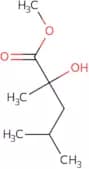
CAS:<p>Versatile small molecule scaffold</p>Formula:C11H16ClNO3Purity:Min. 95%Molecular weight:245.7 g/molMethyl 2-hydroxy-2,4-dimethylpentanoate
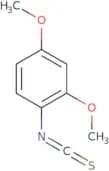
CAS:<p>Versatile small molecule scaffold</p>Formula:C8H16O3Purity:Min. 95%Molecular weight:160.2 g/mol2,4-Dimethoxyphenyl isothiocyanate
CAS:<p>2,4-Dimethoxyphenyl isothiocyanate (DMITC) is a molecule that has been shown to have pro-apoptotic activity against human colorectal carcinoma cells. It also inhibits the growth of the colon cancer cells by inducing apoptosis. DMITC has been shown to inhibit the synthesis of DNA and RNA in a dose-dependent manner. This molecule is efficiently synthesized by reacting an imine with an isothiocyanate. DMITC has cytometric analysis for mechanistic studies and can be used as a chemotherapeutic agent for cancer treatment.</p>Formula:C9H9NO2SPurity:Min. 95%Molecular weight:195.24 g/mol1-Bromo-3-(2,4-difluorophenyl)propan-2-one
CAS:<p>Versatile small molecule scaffold</p>Formula:C9H7BrF2OPurity:Min. 95%Molecular weight:249.05 g/molRef: 3D-IBC18016
Discontinued product3-(Hydroxymethyl)cyclobutan-1-one
CAS:<p>3-(Hydroxymethyl)cyclobutan-1-one is a synthetic piperazine derivative that has been shown to have antitumor and antimycobacterial activities. It is a selective inhibitor of the enzyme purine nucleoside phosphorylase (PNP), which catalyzes the conversion of inosine monophosphate (IMP) to xanthosine monophosphate (XMP). This inhibition results in an accumulation of IMP and deoxyinosine monophosphate (dIMP) in tumor cells. 3-(Hydroxymethyl)cyclobutan-1-one also inhibits Mycobacterium tuberculosis, but not other bacteria such as Escherichia coli or Staphylococcus aureus. The product is synthetically produced by reacting cyclobutanone with hydroxylamine.</p>Formula:C5H8O2Purity:Min. 95%Molecular weight:100.12 g/molRef: 3D-IHA61618
Discontinued product2-Cyclohexyl-1,3-thiazole-5-carbaldehyde
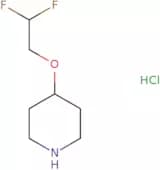
CAS:<p>Versatile small molecule scaffold</p>Formula:C10H13NOSPurity:Min. 95%Molecular weight:195.28 g/mol4-(2,2-Difluoroethoxy)piperidine
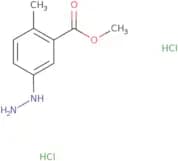
CAS:<p>Versatile small molecule scaffold</p>Formula:C7H14ClF2NOPurity:Min. 95%Molecular weight:201.64 g/molMethyl 5-hydrazinyl-2-methylbenzoate dihydrochloride
CAS:<p>Versatile small molecule scaffold</p>Formula:C9H14Cl2N2O2Purity:Min. 95%Molecular weight:253.12 g/mol1-(4-Fluorophenyl)-5-methyl-1H-pyrazol-4-amine hydrochloride
CAS:<p>Versatile small molecule scaffold</p>Formula:C10H11ClFN3Purity:Min. 95%Molecular weight:227.66 g/molRef: 3D-JBD31681
Discontinued product2-Bromo-5H,6H,7H-pyrrolo[1,2-a]imidazole-3-carboxylic acid
CAS:<p>Versatile small molecule scaffold</p>Formula:C7H7BrN2O2Purity:Min. 95%Molecular weight:231.05 g/molRef: 3D-JWC40097
Discontinued product4-(Cyclobutylmethyl)-1H-pyrrole-2-carboxylic acid
CAS:<p>Versatile small molecule scaffold</p>Formula:C10H13NO2Purity:Min. 95%Molecular weight:179.2 g/molRef: 3D-JWC80161
Discontinued product5-Amino-3-methyl-4-isoxazolecarboxamide
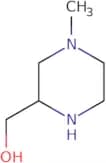
CAS:<p>Versatile small molecule scaffold</p>Formula:C5H7N3O2Purity:Min. 95%Molecular weight:141.13 g/mol(4-Methyl-2-piperazinyl)methanol
CAS:<p>Versatile small molecule scaffold</p>Formula:C6H14N2OPurity:Min. 95%Molecular weight:130.19 g/molRef: 3D-KDA15583
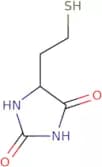
Discontinued product5-(2-Sulfanylethyl)imidazolidine-2,4-dione
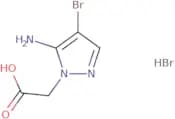
CAS:<p>Versatile small molecule scaffold</p>Formula:C5H8N2O2SPurity:Min. 95%Molecular weight:160.2 g/mol2-(5-Amino-4-bromo-1H-pyrazol-1-yl)acetic acid hydrobromide
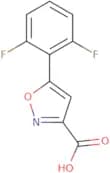
CAS:<p>Versatile small molecule scaffold</p>Formula:C5H7Br2N3O2Purity:Min. 95%Molecular weight:300.94 g/mol5-(2,6-Difluorophenyl)-1,2-oxazole-3-carboxylic acid
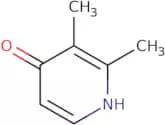
CAS:<p>Versatile small molecule scaffold</p>Formula:C10H5F2NO3Purity:Min. 95%Molecular weight:225.15 g/mol2,3-Dimethyl-1,4-dihydropyridin-4-one
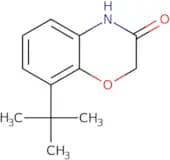
CAS:<p>Versatile small molecule scaffold</p>Formula:C7H9NOPurity:Min. 95%Molecular weight:123.15 g/mol8-tert-Butyl-3,4-dihydro-2H-1,4-benzoxazin-3-one
CAS:<p>Versatile small molecule scaffold</p>Formula:C12H15NO2Purity:Min. 95%Molecular weight:205.25 g/molRef: 3D-RAC91566
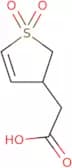
Discontinued product2,3-Dihydro-3-thiopheneacetic acid 1,1-dioxide
CAS:<p>2,3-Dihydro-3-thiopheneacetic acid 1,1-dioxide is a nucleophilic reagent that can be used to synthesize amides. It reacts with amines to form 2,3-dihydro-3-thiophenecarboxylic acid 1,1-diamide. Reactions of this compound with heterocycles such as pyridine and quinoline result in the formation of heterocyclic amines.</p>Formula:C6H8O4SPurity:Min. 95%Molecular weight:176.19 g/mol[(2-Bromo-5-chlorophenyl)methyl](2-methylpropyl)amine
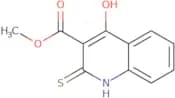
CAS:<p>Versatile small molecule scaffold</p>Formula:C11H15BrClNPurity:Min. 95%Molecular weight:276.6 g/molMethyl 4-hydroxy-2-sulfanylquinoline-3-carboxylate
CAS:<p>Methyl 4-hydroxy-2-sulfanylquinoline-3-carboxylate (MSQ) is a synthetic molecule that has shown to have antiviral activity against the hepatitis B virus. This compound is a competitive inhibitor of the virus and prevents it from infecting cells. MSQ has also been shown to inhibit other viruses, such as herpes simplex virus, influenza A and C, rotavirus, and human immunodeficiency virus type 1 (HIV-1). The high inhibition of MSQ can be attributed to its ability to form hydrogen bonds with the amino acid residues in viral proteins. Additionally, MSQ interacts with anions in the active site of the enzymes that are necessary for viral replication through alkylation reactions.<br>MSQ has been found to be selective for influenza A and C by binding at different sites on the enzyme compared to other compounds like zanamivir and oseltamivir. The single-crystal x</p>Formula:C11H9NO3SPurity:Min. 95%Molecular weight:235.26 g/molRef: 3D-SKB29434
Discontinued product3a-Phenyl-hexahydro-1H-2λ6-thieno[3,4-c]pyrrole-2,2-dione hydrochloride
CAS:<p>Versatile small molecule scaffold</p>Formula:C12H16ClNO2SPurity:Min. 95%Molecular weight:273.8 g/molRef: 3D-TPD50501
Discontinued product3-{[(Pyridin-2-yl)methyl]amino}benzoic acid
CAS:<p>Versatile small molecule scaffold</p>Formula:C13H12N2O2Purity:Min. 95%Molecular weight:228.25 g/molRef: 3D-UTB34707
Discontinued product2-Cyclopropylbenzaldehyde
CAS:<p>Versatile small molecule scaffold</p>Formula:C10H10OPurity:Min. 95%Molecular weight:146.19 g/molMethyl 2-(pyrrolidin-3-yloxy)acetate hydrochloride
CAS:<p>Versatile small molecule scaffold</p>Formula:C7H14ClNO3Purity:Min. 95%Molecular weight:195.64 g/molRef: 3D-YEC22323
Discontinued product3-{1-[(tert-Butoxy)carbonyl]piperidin-3-yl}prop-2-ynoic acid
CAS:<p>Versatile small molecule scaffold</p>Formula:C13H19NO4Purity:Min. 95%Molecular weight:253.29 g/mol1-(Thiophen-2-yl)cyclohexane-1-carbonitrile
CAS:<p>Versatile small molecule scaffold</p>Formula:C11H13NSPurity:Min. 95%Molecular weight:191.29 g/molRef: 3D-ZDA85675
Discontinued productmethyl 4-amino-2-(morpholin-4-yl)-1,3-thiazole-5-carboxylate
CAS:<p>Versatile small molecule scaffold</p>Formula:C9H13N3O3SPurity:Min. 95%Molecular weight:243.3 g/mol4-({[(9H-Fluoren-9-yl)methoxy]carbonyl}amino)cyclopent-2-ene-1-carboxylic acid
CAS:<p>Versatile small molecule scaffold</p>Formula:C21H19NO4Purity:Min. 95%Molecular weight:349.4 g/mol4-Bromo-5-chloro-2-fluorobenzonitrile
CAS:<p>Versatile small molecule scaffold</p>Formula:C7H2BrClFNPurity:Min. 95%Molecular weight:234.45 g/moltert-Butyl 2-carbamothioyl-4,4-difluoropyrrolidine-1-carboxylate
CAS:<p>Versatile small molecule scaffold</p>Formula:C10H16F2N2O2SPurity:Min. 95%Molecular weight:266.31 g/molRef: 3D-ZXC33269
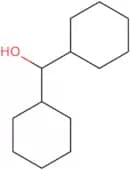
Discontinued productDicyclohexylmethanol
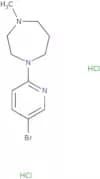
CAS:<p>Dicyclohexylmethanol is a trifunctional compound that contains a hydroxyl group, and can be used as a hydrogen bond donor or acceptor. The chemical structure of dicyclohexylmethanol can be seen in the figure below. Dicyclohexylmethanol has been used for sample preparation for hydrogen chloride gas. It has also been used to determine the concentration of blood ethanol levels and to measure blood pH in humans. Dicyclohexylmethanol is an important reactant in asymmetric synthesis reactions due to its ability to form hydrogen bonds with both reactants.</p>Formula:C13H24OPurity:Min. 95%Molecular weight:196.33 g/mol1-(5-Bromopyridin-2-yl)-4-methyl-1,4-diazepane dihydrochloride
CAS:<p>Versatile small molecule scaffold</p>Formula:C11H18BrCl2N3Purity:Min. 95%Molecular weight:343.09 g/molRef: 3D-DXC59486
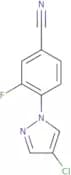
Discontinued product4-(4-Chloro-1H-pyrazol-1-yl)-3-fluorobenzonitrile
CAS:<p>Versatile small molecule scaffold</p>Formula:C10H5ClFN3Purity:Min. 95%Molecular weight:221.62 g/molRef: 3D-DXB19757
Discontinued product3-[3-(Trifluoromethyl)phenyl]-1,2,4-thiadiazol-5-amine
CAS:<p>Versatile small molecule scaffold</p>Formula:C9H6F3N3SPurity:Min. 95%Molecular weight:245.23 g/molRef: 3D-DWB97759
Discontinued product2-{[2-Formyl-4-(trifluoromethyl)phenyl](methyl)amino}acetic acid
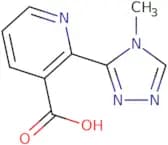
CAS:<p>Versatile small molecule scaffold</p>Formula:C11H10F3NO3Purity:Min. 95%Molecular weight:261.2 g/mol2-(4-Methyl-4H-1,2,4-triazol-3-yl)pyridine-3-carboxylic acid
CAS:<p>Versatile small molecule scaffold</p>Formula:C9H8N4O2Purity:Min. 95%Molecular weight:204.2 g/molRef: 3D-CVD03521
Discontinued product5-{[1-(Propan-2-yl)-1H-1,2,3-triazol-4-yl]methyl}imidazolidine-2,4-dione
CAS:<p>Versatile small molecule scaffold</p>Formula:C9H13N5O2Purity:Min. 95%Molecular weight:223.23 g/molRef: 3D-BTC57887
Discontinued product4H,5H,6H,7H-[1,2,4]Triazolo[1,5-a]pyrimidine-6-carboxylic acid
CAS:<p>Versatile small molecule scaffold</p>Formula:C6H8N4O2Purity:Min. 95%Molecular weight:168.2 g/molRef: 3D-BMC49356
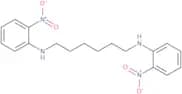
Discontinued productN(1),N(6)-Bis(2-nitrophenyl)-1,6-hexanediamine
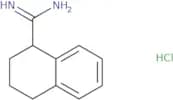
CAS:<p>Versatile small molecule scaffold</p>Formula:C18H22N4O4Purity:Min. 95%Molecular weight:358.4 g/mol1,2,3,4-Tetrahydronaphthalene-1-carboximidamide hydrochloride
CAS:<p>Versatile small molecule scaffold</p>Formula:C11H15ClN2Purity:Min. 95%Molecular weight:210.7 g/molRef: 3D-AFC99689
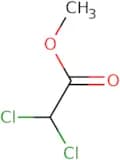
Discontinued productDichloroacetic Acid Methyl Ester
CAS:<p>Dichloroacetic acid methyl ester (DCA) is a metabolic disorder agent that belongs to the group of detergent compositions. It is an important intermediate in the synthesis of sodium salts and hiv infection inhibitors, such as hydrochloric acid and covalent linkages. DCA reacts with water molecules to form hydroxyl groups and then reacts with metal carbonyls to produce anhydrous sodium. This product also reacts with fatty acids to produce alcohol residue and can be used in the reaction solution. The product has a pyrazole ring with a hydroxyl group at one end and an alcohol residue at the other end.</p>Formula:C3H4Cl2O2Purity:Min. 95%Molecular weight:142.97 g/mol2-Cyano-5-fluorophenol
CAS:<p>2-Cyano-5-fluorophenol is an organic compound that is used as a precursor to medicines and other chemicals. It reacts with calcium hydroxide in water to form 2-cyano-5-hydroxyfluorobenzene, which can be hydrolyzed to form 2-cyano-5-chlorofluorobenzene. This compound can also react with sodium hydroxide to produce sodium cyanate, which can be hydrolyzed to form sodium chloride and hydrogen cyanide gas. The alkali metal ions are needed for this reaction, which is why the product should not be exposed to water or moisture. 2-Cyano-5-fluorophenol has been shown to have liquid crystal properties and is used in the production of certain types of polymers. 2Cyano-5Fluorophenol crystals are also used in some medicines such as acetaminophen (paracetamol).</p>Formula:C7H4FNOPurity:Min. 95%Molecular weight:137.11 g/mol2-Oxa-spiro[3.3]heptan-6-ol
CAS:<p>Versatile small molecule scaffold</p>Formula:C6H10O2Purity:Min. 95%Molecular weight:114.14 g/mol2-Bromo-3,3,3-trifluoro-1-propene
CAS:Controlled Product<p>2-Bromo-3,3,3-trifluoro-1-propene is a chemical compound that has been synthesized in an asymmetric reaction. The reactant is bromopropane and the product is 2,2,2-trifluoropropene. The methylene group on the propene molecule is activated by the nucleophilic attack of a fluoride ion from hydrogen fluoride to form a cavity with a highly strained bond. The kinetic study of this reaction revealed that the activation energy for the reaction is 42 kJ/mol. Palladium-catalyzed coupling reactions are catalyzed by palladium and require nonpolar solvents such as toluene or dichloromethane. This type of reaction has been shown to be exothermic with an isolated yield of 1%.</p>Formula:C3H2BrF3Purity:Min. 95%Color and Shape:Colorless PowderMolecular weight:174.95 g/molTri-b-GalNAc-PEG5-NHS ester
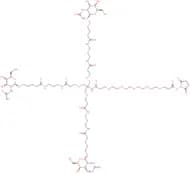
CAS:<p>Tri-GalNAc-NHS ester is a multivalent molecule composed of three GalNAc cluster arms. It is a protein degrader and a ligand of the asialoglycoprotein receptor (ASGPR) used for the development of targeted therapies for liver diseases. The GalNAc arms enable high-affinity binding to the ASGPR on hepatocyte surfaces. The crucial functional group, N-hydroxysuccinimide (NHS) ester, is known for its ease of conjugation with various biomolecules possessing amine (NH2) groups. This biocompatible reaction strategy allows the design and development of targeted conjugates such as drug-GalNAc conjugates, siRNA delivery vehicles, or probes for ASGPR imaging in the liver.</p>Formula:C79H137N11O37Purity:Min. 95%Color and Shape:PowderMolecular weight:1,832.99 g/molRef: 3D-FT183733
Discontinued product


![rac-(1R,3R,5S)-8-Oxobicyclo[3.2.1]octane-3-carboxylic acid, exo](/_next/image/?url=https%3A%2Fstatic.cymitquimica.com%2Fproducts%2F3D%2Fthumb-webp%2FQNA16419.webp&w=3840&q=75)
![3-{[3-(Trifluoromethyl)phenyl]methyl}azetidine hydrochloride](/_next/image/?url=https%3A%2Fstatic.cymitquimica.com%2Fproducts%2F3D%2Fthumb-webp%2FGXB45823.webp&w=3840&q=75)
![[2-(3-Methyl-1H-pyrazol-1-yl)pyridin-4-yl]methanol](/_next/image/?url=https%3A%2Fstatic.cymitquimica.com%2Fproducts%2F3D%2Fthumb-webp%2FZZB36394.webp&w=3840&q=75)




![tert-Butyl 1-oxa-8-azadispiro[2.1.2{5}.3{3}]decane-8-carboxylate](/_next/image/?url=https%3A%2Fstatic.cymitquimica.com%2Fproducts%2F3D%2Fthumb-webp%2FLUD63570.webp&w=3840&q=75)
![5-Azaspiro[3.5]nonan-7-ol](/_next/image/?url=https%3A%2Fstatic.cymitquimica.com%2Fproducts%2F3D%2Fthumb-webp%2FLUD63572.webp&w=3840&q=75)

![[2-(1-Bromocyclopropyl)ethynyl]trimethylsilane](/_next/image/?url=https%3A%2Fstatic.cymitquimica.com%2Fproducts%2F3D%2Fthumb-webp%2FNKD37975.webp&w=3840&q=75)
![2-[(4-bromophenyl)sulfanyl]ethan-1-ol](/_next/image/?url=https%3A%2Fstatic.cymitquimica.com%2Fproducts%2F3D%2Fthumb-webp%2FPAA70392.webp&w=3840&q=75)

![2-Boc-8-amino-5-thia-2-azaspiro[3.4]octane 5,5-dioxide](/_next/image/?url=https%3A%2Fstatic.cymitquimica.com%2Fproducts%2F3D%2Fthumb-webp%2FQDC48183.webp&w=3840&q=75)

![6-Bromo-8-methylimidazo[1,2-a]pyridine-2-carbothioamide](/_next/image/?url=https%3A%2Fstatic.cymitquimica.com%2Fproducts%2F3D%2Fthumb-webp%2FRYB13882.webp&w=3840&q=75)
![2-[2-(3-Fluorophenyl)ethoxy]acetic acid](/_next/image/?url=https%3A%2Fstatic.cymitquimica.com%2Fproducts%2F3D%2Fthumb-webp%2FDNB78695.webp&w=3840&q=75)
![1-[(tert-butoxy)carbonyl]-1,2,3,6-tetrahydropyridine-4-carboxylic acid](/_next/image/?url=https%3A%2Fstatic.cymitquimica.com%2Fproducts%2F3D%2Fthumb-webp%2FVCA68484.webp&w=3840&q=75)
![3-(Trifluoromethyl)-1,4,5,7-tetrahydropyrano[3,4-c]pyrazole](/_next/image/?url=https%3A%2Fstatic.cymitquimica.com%2Fproducts%2F3D%2Fthumb-webp%2FXQB93148.webp&w=3840&q=75)


![[2-(Piperidin-1-yl)pyridin-3-yl]methanamine dihydrochloride](/_next/image/?url=https%3A%2Fstatic.cymitquimica.com%2Fproducts%2F3D%2Fthumb-webp%2FFDD50657.webp&w=3840&q=75)
![6-Amino-[1,2,4]triazolo[1,5-a]pyridine](/_next/image/?url=https%3A%2Fstatic.cymitquimica.com%2Fproducts%2F3D%2Fthumb-webp%2FGBA05294.webp&w=3840&q=75)
![2-Oxatricyclo[3.3.1.1,3,7]decane-1-carboxylic acid](/_next/image/?url=https%3A%2Fstatic.cymitquimica.com%2Fproducts%2F3D%2Fthumb-webp%2FGEA23717.webp&w=3840&q=75)

![Methyl 2-[4-(2-aminoethyl)phenoxy]acetate hydrochloride](/_next/image/?url=https%3A%2Fstatic.cymitquimica.com%2Fproducts%2F3D%2Fthumb-webp%2FHFA22482.webp&w=3840&q=75)



![2-Bromo-5H,6H,7H-pyrrolo[1,2-a]imidazole-3-carboxylic acid](/_next/image/?url=https%3A%2Fstatic.cymitquimica.com%2Fproducts%2F3D%2Fthumb-webp%2FJWC40097.webp&w=3840&q=75)

amine](/_next/image/?url=https%3A%2Fstatic.cymitquimica.com%2Fproducts%2F3D%2Fthumb-webp%2FSJC31753.webp&w=3840&q=75)
![3a-Phenyl-hexahydro-1H-2λ6-thieno[3,4-c]pyrrole-2,2-dione hydrochloride](/_next/image/?url=https%3A%2Fstatic.cymitquimica.com%2Fproducts%2F3D%2Fthumb-webp%2FTPD50501.webp&w=3840&q=75)
![3-{[(Pyridin-2-yl)methyl]amino}benzoic acid](/_next/image/?url=https%3A%2Fstatic.cymitquimica.com%2Fproducts%2F3D%2Fthumb-webp%2FUTB34707.webp&w=3840&q=75)

![3-{1-[(tert-Butoxy)carbonyl]piperidin-3-yl}prop-2-ynoic acid](/_next/image/?url=https%3A%2Fstatic.cymitquimica.com%2Fproducts%2F3D%2Fthumb-webp%2FYXC25906.webp&w=3840&q=75)
![4-({[(9H-Fluoren-9-yl)methoxy]carbonyl}amino)cyclopent-2-ene-1-carboxylic acid](/_next/image/?url=https%3A%2Fstatic.cymitquimica.com%2Fproducts%2F3D%2Fthumb-webp%2FEMB97663.webp&w=3840&q=75)

![3-[3-(Trifluoromethyl)phenyl]-1,2,4-thiadiazol-5-amine](/_next/image/?url=https%3A%2Fstatic.cymitquimica.com%2Fproducts%2F3D%2Fthumb-webp%2FDWB97759.webp&w=3840&q=75)
amino}acetic acid](/_next/image/?url=https%3A%2Fstatic.cymitquimica.com%2Fproducts%2F3D%2Fthumb-webp%2FDNB06231.webp&w=3840&q=75)
![5-{[1-(Propan-2-yl)-1H-1,2,3-triazol-4-yl]methyl}imidazolidine-2,4-dione](/_next/image/?url=https%3A%2Fstatic.cymitquimica.com%2Fproducts%2F3D%2Fthumb-webp%2FBTC57887.webp&w=3840&q=75)
![4H,5H,6H,7H-[1,2,4]Triazolo[1,5-a]pyrimidine-6-carboxylic acid](/_next/image/?url=https%3A%2Fstatic.cymitquimica.com%2Fproducts%2F3D%2Fthumb-webp%2FBMC49356.webp&w=3840&q=75)

![2-Oxa-spiro[3.3]heptan-6-ol](/_next/image/?url=https%3A%2Fstatic.cymitquimica.com%2Fproducts%2F3D%2Fthumb-webp%2FNEC38108.webp&w=3840&q=75)