


Building Blocks
This section contains fundamental products for the synthesis of organic and biological compounds. Building blocks are the essential starting materials used to construct complex molecules through various chemical reactions. They play a critical role in drug discovery, material science, and chemical research. At CymitQuimica, we offer a diverse range of high-quality building blocks to support your innovative research and industrial projects, ensuring you have the essential components for successful synthesis.
Subcategories of "Building Blocks"
- Boronic Acids & Boronic Acid Derivatives(5,756 products)
- Chiral Building Blocks(1,242 products)
- Hydrocarbon Building Blocks(6,093 products)
- Organic Building Blocks(60,532 products)
Found 195534 products of "Building Blocks"
Sort by
Purity (%)
0
100
|
0
|
50
|
90
|
95
|
100
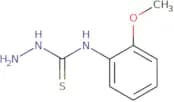
4-(2-Methoxyphenyl)-3-thiosemicarbazide
CAS:<p>4-(2-Methoxyphenyl)-3-thiosemicarbazide is a fluorescent compound that has been shown to have an inhibitory effect on bacteria. This compound binds to anions and can be used in the clarification of water. 4-(2-Methoxyphenyl)-3-thiosemicarbazide is also active as an antibacterial agent against gram-negative bacteria, such as Escherichia coli and Klebsiella pneumoniae. The antibacterial activity of 4-(2-Methoxyphenyl)-3-thiosemicarbazide may be due to its ability to inhibit the synthesis of proteins necessary for cell division.<br>4-(2-Methoxyphenyl)-3-thiosemicarbazide is a tautomeric, fluorescent compound that belongs to the class of antibiotic drugs. It has been shown to have chemosensor properties and can be used in the detection</p>Formula:C8H11N3OSPurity:Min. 95%Molecular weight:197.26 g/mol4-(4-Methoxyphenyl)-3-thiosemicarbazide
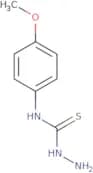
CAS:<p>4-(4-Methoxyphenyl)-3-thiosemicarbazide is a carbonyl compound that has been shown to have anticancer activity. It inhibits the growth of cancer cells by binding to the DNA of tumor cells, causing them to undergo apoptosis. 4-(4-Methoxyphenyl)-3-thiosemicarbazide also inhibits influenza virus and bacteria by inhibiting the enzyme ribonucleotide reductase and preventing the synthesis of viral RNA. This agent has potent inhibitory activity against gram-negative species such as Escherichia coli and Pseudomonas aeruginosa.</p>Formula:C8H11N3OSPurity:Min. 95%Molecular weight:197.26 g/molN-Hydroxy-2-(trifluoromethyl)benzamide
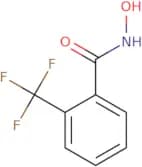
CAS:<p>Versatile small molecule scaffold</p>Formula:C8H6F3NO2Purity:Min. 95%Molecular weight:205.13 g/mol6-(hydroxymethyl)pyridin-3-ol
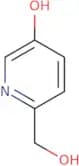
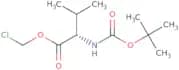
CAS:<p>6-(hydroxymethyl)pyridin-3-ol is a metabolite of the indole alkaloid, bufotenine. It has been shown to have cytotoxic activity against the human lung carcinoma cell line A549 and adipose cells, as well as antioxidant properties. 6-(hydroxymethyl)pyridin-3-ol also has been shown to modulate the production of reactive oxygen species in cells by inhibiting lipid peroxidation. This compound can be found in neutral pH environments, such as water and soil. 6-(hydroxymethyl)pyridin-3-ol can be synthesized from furfural or 5-hydroxymethylfurfural (HMF), which are produced through the degradation of glucose and other carbohydrates. The reaction between HMF with urea produces 6-(hydroxymethyl)pyridin-3-ol, leading to its presence in food chemistry.</p>Formula:C6H7NO2Purity:Min. 95%Molecular weight:125.12 g/mol(S)-Chloromethyl 2-((tert-butoxycarbonyl)amino)-3-methylbutanoate
CAS:<p>Versatile small molecule scaffold</p>Formula:C11H20ClNO4Purity:Min. 95%Molecular weight:265.73 g/mol3-[(3-Aminopropyl)amino]-1-propanol
CAS:<p>3-[(3-Aminopropyl)amino]-1-propanol is a complex chemical compound. It is a convergent synthesis and has the potential to be used in the field of chemistry, where it can be used to create new molecules with complex structures. 3-[(3-Aminopropyl)amino]-1-propanol can also be used to synthesize dendrons and dendrimers, which are highly symmetrical and designed architectures that have been shown to have orthogonal reactivity.</p>Formula:C6H16N2OPurity:Min. 95%Molecular weight:132.21 g/mol[4-(Hydroxymethyl)-1,3-thiazol-2-yl]methanol
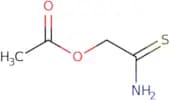
CAS:<p>Thiazole is a heterocyclic organic compound that is composed of three carbon atoms and two sulfur atoms. They are classified as either acidic or basic, depending on the substituents. 4-(Hydroxymethyl)-1,3-thiazol-2-yl]methanol is a diluent that is used in pharmaceuticals and other chemical products. It has been shown to have cardiovascular, nervous and circulatory effects, as well as an effect on the central nervous system. This diluent also acts as a cholinesterase inhibitor, which causes acetylcholine to accumulate at nerve endings and results in paralysis of the victim’s voluntary muscles. This can lead to death if the victim cannot be treated with an antidote.</p>Formula:C5H7NO2SPurity:Min. 95%Molecular weight:145.18 g/molCarbamothioylmethyl acetate
CAS:<p>Versatile small molecule scaffold</p>Formula:C4H7NO2SPurity:Min. 95%Molecular weight:133.17 g/molEthyl 2-(hydroxymethyl)thiazole-4-carboxylate
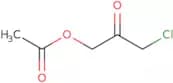
CAS:<p>Versatile small molecule scaffold</p>Formula:C7H9NO3SPurity:Min. 95%Molecular weight:187.22 g/mol3-Chloro-2-oxopropyl acetate
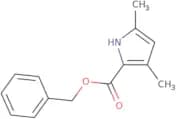
CAS:<p>3-Chloro-2-oxopropyl acetate is a chloride compound that is used as an acid catalyst. It has been shown to exhibit hypochlorous and cytostatic effects in animals. 3-Chloro-2-oxopropyl acetate is also a structural modification of chloroacetone, which has been shown to have antitumor effects. This compound can be used as an acid catalyst for the synthesis of chlorinated benzoates. 3-Chloro-2-oxopropyl acetate also exhibits cytostatic and antiinflammatory activities in animal studies.</p>Formula:C5H7ClO3Purity:Min. 95%Molecular weight:150.56 g/molBenzyl 3,5-dimethylpyrrole-2-carboxylate
CAS:Controlled Product<p>Benzyl 3,5-dimethylpyrrole-2-carboxylate is an enol ether that is stabilized by hydrogen bonds. This compound has a polymeric structure and forms dimers and dimers. The chains of the molecule are stabilized by hydrogen bonds. It has a carbonyl group and a carbonyl group that form hydrogen bonds with each other. There are also hydrogen bonding interactions between the benzyl chain and the acetyl groups present in the molecule. Benzyl 3,5-dimethylpyrrole-2-carboxylate is a part of the class of compounds known as polymeric ketones or polyketones, which are characterized by their chains of repeating units.</p>Formula:C14H15NO2Purity:Min. 95%Molecular weight:229.27 g/mol3,5-Dimethylhexan-2-one
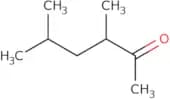
CAS:<p>Versatile small molecule scaffold</p>Formula:C8H16OPurity:Min. 95%Molecular weight:128.21 g/mol3-Propylhexan-2-one
CAS:<p>Versatile small molecule scaffold</p>Formula:C9H18OPurity:Min. 95%Molecular weight:142.2 g/mol4,6-Dimethylheptan-3-one
CAS:<p>Versatile small molecule scaffold</p>Formula:C9H18OPurity:Min. 95%Molecular weight:142.2 g/mol1,2,3,6-Tetrahydropyridine-1-carbonyl chloride
CAS:<p>Versatile small molecule scaffold</p>Formula:C6H8ClNOPurity:Min. 95%Molecular weight:145.59 g/mol1-Ethenyl-2,3-dimethylbenzene
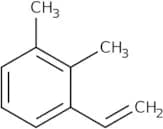
CAS:<p>1-Ethenyl-2,3-dimethylbenzene is a monomer that is used to prepare polymers. It has coagulation properties and can be used as a solid catalyst for the production of polyurethanes. 1-Ethenyl-2,3-dimethylbenzene is an oxidizing agent that can react with styrene to form copolymers. This chemical has been immobilized on silica gel using a surfactant coating to produce coatings. The hydroxyl group in this compound is acidic and reacts with inorganic acids such as hydrochloric acid or sulfuric acid to form esters.</p>Formula:C10H12Purity:Min. 95%Molecular weight:132.2 g/mol1-Ethenyl-3,5-dimethoxybenzene
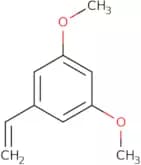
CAS:<p>1-Ethenyl-3,5-dimethoxybenzene is a monomer that can be used for anionic polymerization. This monomer is characterized by its high yield, which is consistent with the predictable conformation of the phenyl ring and the symmetric nature of the magnetic resonance spectra. The 1-ethenyl-3,5-dimethoxybenzene molecule has an anionic charge. It is also known to have a phenolic group, which provides ultraviolet absorption properties. The temperature range for this monomer's transition ranges from -20°C to 100°C.</p>Formula:C10H12O2Purity:Min. 95%Molecular weight:164.2 g/mol3-Hydroxybenzenethiol
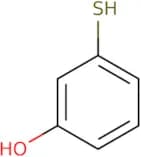
CAS:<p>3-Hydroxybenzenethiol is a reactive chemical that binds to human liver microsomes and inhibits the activity of cytochrome P450, an enzyme that is required for the metabolism of many drugs. 3-Hydroxybenzenethiol has been shown to have inhibitory properties against a number of bacterial enzymes including beta-lactamase and penicillinase. 3-Hydroxybenzenethiol also inhibits the uptake of flavonoids by cells, which may be due to its ability to bind to flavonoid derivatives. The molecule has been used in studies on monoclonal antibodies and enzyme inhibitors.</p>Formula:C6H6OSPurity:Min. 95%Molecular weight:126.17 g/molEthyl 5-methyl-4H-1,2,4-triazole-3-carboxylate
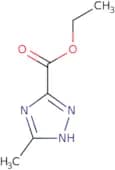
CAS:<p>Versatile small molecule scaffold</p>Formula:C6H9N3O2Purity:Min. 95%Molecular weight:155.15 g/mol2-[4-(2-Methoxyphenyl)piperazin-1-yl]ethan-1-amine
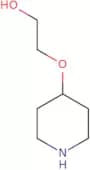
CAS:<p>Versatile small molecule scaffold</p>Formula:C13H21N3OPurity:Min. 95%Molecular weight:235.33 g/mol2-(Piperidin-4-yloxy)ethan-1-ol
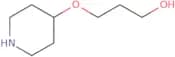
CAS:<p>Versatile small molecule scaffold</p>Formula:C7H15NO2Purity:Min. 95%Molecular weight:145.2 g/mol3-(Piperidin-4-yloxy)propan-1-ol
CAS:<p>Versatile small molecule scaffold</p>Formula:C8H17NO2Purity:Min. 95%Molecular weight:159.23 g/mol9-Benzyl-1,5-dioxa-9-azaspiro[5.5]undecane
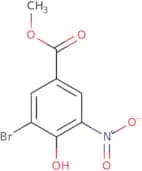
CAS:<p>Versatile small molecule scaffold</p>Formula:C15H21NO2Purity:Min. 95%Molecular weight:247.33 g/molMethyl 3-bromo-4-hydroxy-5-nitrobenzenecarboxylate
CAS:<p>Versatile small molecule scaffold</p>Formula:C8H6BrNO5Purity:Min. 95%Molecular weight:276.05 g/mol1-Phenyl-1H-pyrazole-3-carbaldehyde
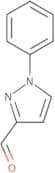
CAS:<p>1-Phenyl-1H-pyrazole-3-carbaldehyde is a pyrazole derivative that is used as a precursor in the synthesis of other compounds. The compound can be synthesized by nitro group reduction of 1,2,3-triazoles followed by chlorination of the resulting hydrazine. This reaction yields phenylhydrazones which undergo dehydrative condensation with carboxylic acids to give pyrazoles. These reactions are reversible and are catalyzed by acid or base. 1-Phenyl-1H-pyrazole-3-carbaldehyde has been shown to react with glucosyl residues in carbohydrates to form acetylated dihydroxyethyl moieties, which have been implicated in the prevention of diabetes and obesity.</p>Formula:C10H8N2OPurity:Min. 95%Molecular weight:172.18 g/mol6-(Pyrrolidin-1-yl)pyrazine-2-carboxylic acid
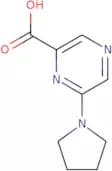
CAS:<p>Versatile small molecule scaffold</p>Formula:C9H11N3O2Purity:Min. 95%Molecular weight:193.2 g/mol2-N,6-N-Dimethylpyridine-2,6-diamine
CAS:<p>2-N,6-N-Dimethylpyridine-2,6-diamine is a macrocyclic diamine that has been synthesized in the form of a monoanion. It has an X-ray crystallography with a molecular structure that is consistent with the coordination of copper ions to two nitrogen atoms and two oxygen atoms. The ligand is coordinated in the axial position, with sulfate ions occupying the equatorial positions. The conformation of this compound is linear, which may be due to its negative charge. The crystal structure of 2-N,6-N-Dimethylpyridine-2,6-diamine is hexagonal.</p>Formula:C7H11N3Purity:Min. 95%Molecular weight:137.18 g/mol1-(4-Acetylphenyl)imidazolidin-2-one
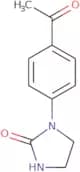
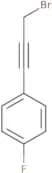
CAS:<p>Versatile small molecule scaffold</p>Formula:C11H12N2O2Purity:Min. 95%Molecular weight:204.22 g/mol1-(3-Bromoprop-1-yn-1-yl)-4-fluorobenzene
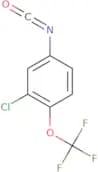
CAS:<p>Versatile small molecule scaffold</p>Formula:C9H6BrFPurity:Min. 95%Molecular weight:213.05 g/mol2-Chloro-4-isocyanato-1-(trifluoromethoxy)benzene
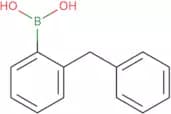
CAS:<p>Versatile small molecule scaffold</p>Formula:C8H3ClF3NO2Purity:Min. 95%Molecular weight:237.56 g/mol(2-Benzylphenyl)boronic acid
CAS:<p>2-Benzylphenylboronic acid is a heterocycle. It is an ester that can be made from the reaction of 2-benzylphenol and borane in the presence of ethanolamine. This compound has a 6-membered ring with three carbon atoms, two of which are attached to the boron atom. Pyrolysis results in the formation of benzene, nitrobenzene, and phenol.</p>Formula:C13H13BO2Purity:Min. 95%Molecular weight:212.05 g/mol(5,6,7,8-Tetrahydro-benzo[4,5]thieno[2,3- D ]pyrimidin-4-ylsulfanyl)-acetic acid
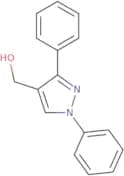
CAS:<p>Versatile small molecule scaffold</p>Formula:C12H12N2O2S2Purity:Min. 95%Molecular weight:280.4 g/mol(1,3-diphenylpyrazol-4-yl)methanol
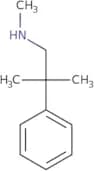
CAS:<p>Versatile small molecule scaffold</p>Formula:C16H14N2OPurity:Min. 95%Molecular weight:250.3 g/molMethyl(2-methyl-2-phenylpropyl)amine
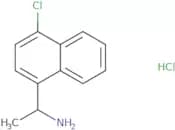
CAS:<p>Versatile small molecule scaffold</p>Formula:C11H17NPurity:Min. 95%Molecular weight:163.26 g/mol1-(4-Chloronaphthalen-1-yl)ethan-1-amine hydrochloride
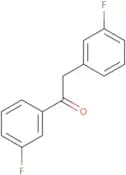
CAS:<p>Versatile small molecule scaffold</p>Formula:C12H13Cl2NPurity:Min. 95%Molecular weight:242.14 g/mol3'-Fluoro-2-(3-fluorophenyl)acetophenone
CAS:<p>Versatile small molecule scaffold</p>Formula:C14H10F2OPurity:Min. 95%Molecular weight:232.23 g/mol2-Chloro-5-(2-methoxyphenyl)-1,3,4-thiadiazole
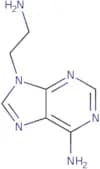
CAS:<p>Versatile small molecule scaffold</p>Formula:C9H7ClN2OSPurity:Min. 95%Molecular weight:226.68 g/mol9-(2-Aminoethyl)-9H-purin-6-amine
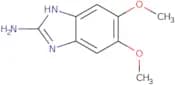
CAS:<p>9-(2-Aminoethyl)-9H-purin-6-amine is a nucleotide analog that has been used as a template for the synthesis of polymers with other heterocycles. The monomeric units are linked by crosslinks, which are formed by reacting two or more chains with an amine group on one of the chains. 9-(2-Aminoethyl)-9H-purin-6-amine is insoluble in water and reacts with cyanogen to form cyanuric acid. The phosphate groups can be reacted with chloride ions to form uracil, which is insoluble in water.</p>Formula:C7H10N6Purity:Min. 95%Molecular weight:178.2 g/mol5,6-Dimethoxy-1H-1,3-benzodiazol-2-amine
CAS:<p>Versatile small molecule scaffold</p>Formula:C9H11N3O2Purity:Min. 95%Molecular weight:193.2 g/mol2-(4-Chlorophenyl)cyclopentan-1-amine hydrochloride
CAS:<p>Versatile small molecule scaffold</p>Formula:C11H15Cl2NPurity:Min. 95%Molecular weight:232.15 g/mol2-(4-Chlorophenyl)cyclopentan-1-one
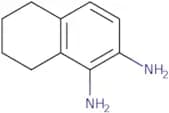
CAS:<p>Versatile small molecule scaffold</p>Formula:C11H11ClOPurity:Min. 95%Molecular weight:194.66 g/mol5,6,7,8-Tetrahydronaphthalene-1,2-diamine
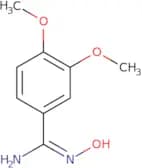
CAS:<p>Versatile small molecule scaffold</p>Formula:C10H14N2Purity:Min. 95%Molecular weight:162.23 g/mol3,4-Dimethoxybenzamidoxime
CAS:<p>Versatile small molecule scaffold</p>Formula:C9H12N2O3Purity:Min. 95%Molecular weight:196.2 g/molT62
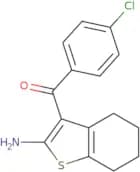
CAS:<p>T62 is a chemical element that belongs to the group of rare-earth metals. It is used in a variety of different industries, such as for the manufacture of magnets and batteries. T62 has been shown to be an effective inhibitor of bacterial ubiquitin ligases, which are enzymes that regulate protein degradation by attaching ubiquitin molecules to proteins. T62 has also been shown to inhibit chronic pain in animal models due to its ability to inhibit adenosine receptors. This drug has shown efficacy in treating bladder cancer and hematopoietic disorders.</p>Formula:C15H14ClNOSPurity:Min. 95%Molecular weight:291.8 g/molN-(3-Benzoyl-4,5,6,7-tetrahydro-1-benzothiophen-2-yl)-2-chloroacetamide
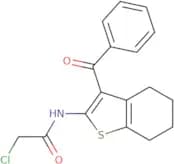
CAS:<p>Versatile small molecule scaffold</p>Formula:C17H16ClNO2SPurity:Min. 95%Molecular weight:333.8 g/mol[5-(2-Chlorophenyl)fur-2-yl]methanol
CAS:<p>Versatile small molecule scaffold</p>Formula:C11H9ClO2Purity:Min. 95%Molecular weight:208.64 g/mol2-(5-Methyl-1,3-dioxo-2,3-dihydro-1H-isoindol-2-yl)acetic acid
CAS:<p>Versatile small molecule scaffold</p>Formula:C11H9NO4Purity:Min. 95%Molecular weight:219.19 g/mol4-Methylphthalimide
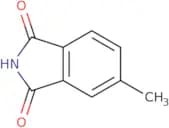
CAS:<p>4-Methylphthalimide is a chiral, birefringent, colorless crystalline compound. It is soluble in water and has a molecular weight of 98.4 g/mol. 4-Methylphthalimide is synthesized by the treatment of methylester with an oxidant and catalytic amide. The chemical reaction yields an isomeric mixture. 4-Methylphthalimide can be used in the treatment of biomolecular research as a chiral stationary phase for gel permeation chromatography (GPC). The compound's high refractive index leads to its use in densities measurements.br>br><br>br>br><br>Densities: 4-methylphthalimide has a density of 1.394 g/cm3 at 20 degrees Celsius and 1 atmosphere pressure.br>br><br>Temperature: 4-methylphthalimide melts at 247 degrees Celsius.br>br><br>Chiral: 4-methyl</p>Formula:C9H7NO2Purity:Min. 95%Molecular weight:161.15 g/mol4,6-Dichloropyridine-2-carbonitrile
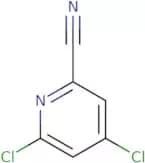
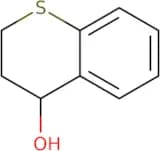
CAS:<p>Versatile small molecule scaffold</p>Formula:C6H2N2Cl2Purity:Min. 95%Molecular weight:172.99 g/mol3,4-Dihydro-2H-1-benzothiopyran-4-ol
CAS:<p>3,4-Dihydro-2H-1-benzothiopyran-4-ol is a reactive intermediate that can be generated by dehydrogenation of benzothiophene. 3,4-Dihydro-2H-1-benzothiopyran-4-ol is used as an activating agent for cross coupling reactions and has been shown to possess functional groups such as cyclopentyl. 3,4-Dihydro-2H-1-benzothiopyran-4-ol has been detected in significant amounts in the X ray crystal structures of lipases. This compound binds to the substrate binding site on lipases and participates in catalytic cleavage. The rate of this reaction increases with temperature and decreases with increasing organic solvent concentration.</p>Formula:C9H10OSPurity:Min. 95%Molecular weight:166.24 g/mol2-Chloro-3-[(2S)-1-methylpyrrolidin-2-yl]pyridine
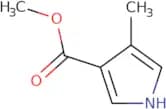
CAS:<p>Versatile small molecule scaffold</p>Formula:C10H13ClN2Purity:Min. 95%Molecular weight:196.67 g/molMethyl 4-methyl-1H-pyrrole-3-carboxylate
CAS:<p>Methyl 4-methyl-1H-pyrrole-3-carboxylate is a fluorescent probe that has been used in the detection of copper ions. The selectivity and sensitivity of this probe have been shown to be constant, with a detection limit of 0.5 nM and a stoichiometry of 1:1. Methyl 4-methyl-1H-pyrrole-3-carboxylate is also selective for copper, as it does not react with other metal ions such as nickel or cadmium. This compound has an affinity for copper ions and can be used in molecular probes to detect their presence in biological systems, such as cells or tissues. In addition, methyl 4-methyl-1H-pyrrole-3-carboxylate is sensitive to changes in pH levels and can be used to measure the pH of samples by using a colorimetric assay.</p>Formula:C7H9NO2Purity:Min. 95%Molecular weight:139.15 g/mol3,4-Dimethyl-2,6-dinitroaniline
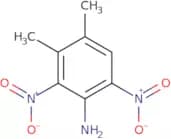
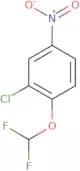
CAS:<p>Versatile small molecule scaffold</p>Formula:C8H9N3O4Purity:Min. 95%Color and Shape:PowderMolecular weight:211.17 g/mol1-Chloro-2-(difluoromethoxy)-4-nitrobenzene
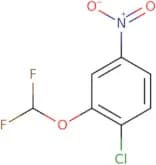
CAS:<p>Versatile small molecule scaffold</p>Formula:C7H4ClF2NO3Purity:Min. 95%Molecular weight:223.56 g/mol2-Chloro-1-(difluoromethoxy)-4-nitro-benzene
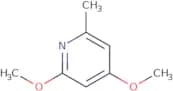
CAS:<p>Versatile small molecule scaffold</p>Formula:C7H4ClF2NO3Purity:Min. 95%Molecular weight:223.56 g/mol2,4-Dimethoxy-6-methylpyridine
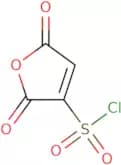
CAS:<p>Versatile small molecule scaffold</p>Formula:C8H11NO2Purity:Min. 95%Molecular weight:153.18 g/mol2,5-Dioxo-2,5-dihydrofuran-3-sulfonyl chloride
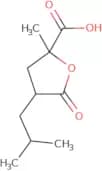
CAS:<p>Versatile small molecule scaffold</p>Formula:C4HClO5SPurity:Min. 95%Molecular weight:196.57 g/mol2-Methyl-4-(2-methylpropyl)-5-oxooxolane-2-carboxylic acid
CAS:<p>Versatile small molecule scaffold</p>Formula:C10H16O4Purity:Min. 95%Molecular weight:200.23 g/molrac-(1R,2R,4S)-2-(Aminomethyl)bicyclo[2.2.1]heptan-2-ol hydrochloride
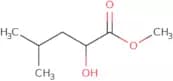
CAS:<p>Versatile small molecule scaffold</p>Formula:C8H16ClNOPurity:Min. 95%Molecular weight:177.7 g/molMethyl 2-hydroxy-4-methylvalerate
CAS:<p>Methyl 2-hydroxy-4-methylvalerate is an organic compound that belongs to the class of fatty acids. It is a colorless liquid with a fruity odor. Methyl 2-hydroxy-4-methylvalerate has been shown to inhibit the formation of reactive oxygen species and has antioxidant potential. It also inhibits bone resorption, which may be due to its ability to reduce levels of isobutyric acid in rats and humans. Methyl 2-hydroxy-4-methylvalerate has been found in tropical fruits such as mangoes, durians, and papayas.</p>Formula:C7H14O3Purity:Min. 95%Molecular weight:146.18 g/mol1-[(tert-Butoxy)carbonyl]-4-hydroxypyrrolidine-2-carboxylic acid
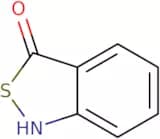
CAS:<p>Versatile small molecule scaffold</p>Formula:C10H17NO5Purity:Min. 95%Molecular weight:231.25 g/mol1,3-Dihydro-2,1-benzothiazol-3-one
CAS:<p>1,3-Dihydro-2,1-benzothiazol-3-one is a versatile compound widely used in chemistry and research applications. It belongs to the category of Research Chemicals and is highly sought after by scientists and researchers worldwide. This Australian-made product offers exceptional quality and purity, making it a reliable choice for various laboratory experiments and studies. With its unique chemical structure, 1,3-Dihydro-2,1-benzothiazol-3-one opens up new possibilities for innovative research and discovery. Whether you are working on organic synthesis, drug development, or material science, this compound is an essential addition to your scientific toolkit. Trust in its proven performance and explore the endless potential it holds for advancing your research endeavors.</p>Formula:C7H5NOSPurity:Min. 95%Molecular weight:151.19 g/mol1-(2-Amino-5-methylthiazol-4-yl)ethanone
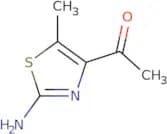
CAS:<p>Versatile small molecule scaffold</p>Formula:C6H8N2OSPurity:Min. 95%Molecular weight:156.21 g/mol4-Hydroxy-1-methyl-2-pyridone
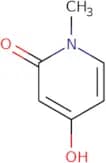
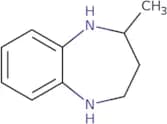
CAS:<p>Versatile small molecule scaffold</p>Formula:C6H7NO2Purity:Min. 95%Molecular weight:125.13 g/mol2-Methyl-2,3,4,5-tetrahydro-1H-1,5-benzodiazepine
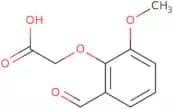
CAS:<p>Versatile small molecule scaffold</p>Formula:C10H14N2Purity:Min. 95%Molecular weight:162.23 g/mol2-(2-Formyl-6-methoxyphenoxy)acetic acid
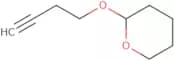
CAS:<p>2-(2-Formyl-6-methoxyphenoxy)acetic acid is a white crystalline solid that occurs as a monomer, dimer, or polymer. It has an asymmetric center and the molecule can exist in four different conformations. When it is crystallized from water, the dihydrate form is obtained; when the substance is heated to produce the anhydrous form, it becomes cyclic and rotates around its central axis. The compound has a centrosymmetric conformation and it can be classified as unidentate because it has only one functional group per molecule. 2-(2-Formyl-6-methoxyphenoxy)acetic acid also has a carboxylate group on its side chain.</p>Formula:C10H10O5Purity:Min. 95%Molecular weight:210.19 g/mol2-(3-Butynyloxy)tetrahydro-2H-pyran
CAS:<p>2-(3-Butynyloxy)tetrahydro-2H-pyran (BOP) is a synthetic chemical that interacts with the insect nervous system. It is an attractant for Lepidoptera and can be used to control pest populations. BOP has been shown to modify the behavior of conspecific insects, and it has also been shown to interact with other insecticides. BOP is a model study compound with stereospecificity, which means that it interacts differently when bound to lepidopteran or dipteran receptors. This compound has been found to have no effect on the metabolism of deoxyribose, but it does show some solvatochromism in different solvents.</p>Formula:C9H14O2Purity:Min. 95%Molecular weight:154.21 g/mol1,4-Dioxa-7-azaspiro[4.5]decane
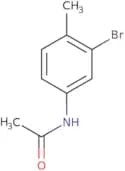
CAS:<p>Versatile small molecule scaffold</p>Formula:C7H13NO2Purity:Min. 95%Molecular weight:143.19 g/molN-(3-Bromo-4-methylphenyl)acetamide
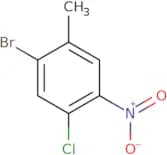
CAS:<p>Versatile small molecule scaffold</p>Formula:C9H10BrNOPurity:Min. 95%Molecular weight:228.09 g/mol2-Bromo-4-chloro-5-nitrotoluene
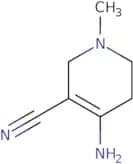
CAS:<p>2-Bromo-4-chloro-5-nitrotoluene is an amination catalyst that can be used in the palladium-catalyzed amination of aryl bromides. 2-Bromo-4-chloro-5-nitrotoluene is a stoichiometric reagent that catalyzes the reaction between an intermediate and ammonia to form an amine. It is compatible with various functional groups, including esters, ethers, alcohols, and amines.</p>Formula:C7H5BrClNO2Purity:Min. 95%Molecular weight:250.48 g/mol4-Amino-1-methyl-1,2,5,6-tetrahydro-pyridine-3-carbonitrile
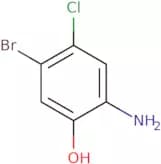
CAS:<p>Versatile small molecule scaffold</p>Formula:C7H11N3Purity:Min. 95%Molecular weight:137.18 g/mol2-Amino-5-bromo-4-chlorophenol
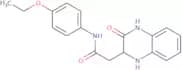
CAS:<p>Versatile small molecule scaffold</p>Formula:C6H5BrClNOPurity:Min. 95%Molecular weight:222.47 g/molN-(4-Ethoxyphenyl)-2-(3-oxo-1,2,3,4-tetrahydroquinoxalin-2-yl)acetamide
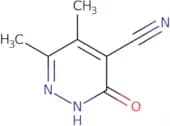
CAS:<p>Versatile small molecule scaffold</p>Formula:C18H19N3O3Purity:Min. 95%Molecular weight:325.4 g/mol5,6-dimethyl-3-oxo-2,3-dihydropyridazine-4-carbonitrile
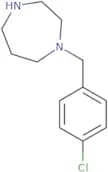
CAS:<p>Versatile small molecule scaffold</p>Formula:C7H7N3OPurity:Min. 95%Molecular weight:149.14 g/mol1-(4-Chlorobenzyl)-1,4-diazepane
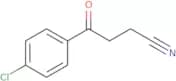
CAS:<p>1-(4-Chlorobenzyl)-1,4-diazepane is a psychoactive drug that belongs to the group of benzodiazepines. It has been detected in a number of samples taken from people who have consumed psychoactive substances. 1-(4-Chlorobenzyl)-1,4-diazepane is used as an analytical tool for the detection of other drugs, such as amphetamine and pentedrone. It can be analysed using gas chromatography with mass spectrometry (GC/MS) or liquid chromatography with tandem mass spectrometry (LC/MS).</p>Formula:C12H17ClN2Purity:Min. 95%Molecular weight:224.73 g/mol4-(4-Chlorophenyl)-4-oxobutanenitrile
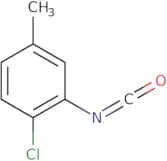
CAS:<p>Versatile small molecule scaffold</p>Formula:C10H8ClNOPurity:Min. 95%Molecular weight:193.63 g/mol2-Chloro-5-methylphenyl isocyanate
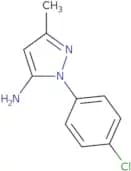
CAS:<p>Versatile small molecule scaffold</p>Formula:C8H6ClNOPurity:Min. 95%Molecular weight:167.59 g/mol1-(4-Chlorophenyl)-3-methyl-1H-pyrazol-5-amine
CAS:<p>1-(4-Chlorophenyl)-3-methyl-1H-pyrazol-5-amine is a sulfate ester that can be found in chondroitin sulfates. Its function is to assemble into a long polymer by reacting with the hydroxyl groups of the polysaccharides. Sulfate esters are also used as drugs, such as in the treatment of rheumatoid arthritis. 1-(4-Chlorophenyl)-3-methyl-1H-pyrazol-5-amine can also inhibit the growth of bacteria and fungi by inhibiting their ability to produce chondroitin sulfate.</p>Formula:C10H10ClN3Purity:Min. 95%Molecular weight:207.66 g/mol2-(3-Chloro-phenyl)-5-methyl-2H-pyrazol-3-ylamine
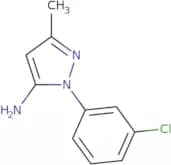
CAS:<p>Versatile small molecule scaffold</p>Formula:C10H10ClN3Purity:Min. 95%Molecular weight:207.66 g/mol7-Amino-6-chloro-4H-benzo[1,4]oxazin-3-one
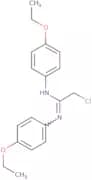
CAS:<p>Versatile small molecule scaffold</p>Formula:C8H7ClN2O2Purity:Min. 95%Molecular weight:198.61 g/mol2-Chloro-N,N'-bis(4-ethoxyphenyl)ethanimidamide
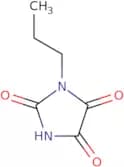
CAS:<p>Versatile small molecule scaffold</p>Formula:C18H21ClN2O2Purity:Min. 95%Molecular weight:332.8 g/mol1-Propylimidazolidine-2,4,5-trione
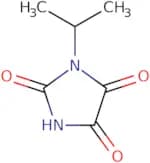
CAS:<p>Versatile small molecule scaffold</p>Formula:C6H8N2O3Purity:Min. 95%Molecular weight:156.14 g/mol1-(Propan-2-yl)imidazolidine-2,4,5-trione
CAS:<p>Versatile small molecule scaffold</p>Formula:C6H8N2O3Purity:Min. 95%Molecular weight:156.14 g/mol1-Butylimidazolidine-2,4,5-trione
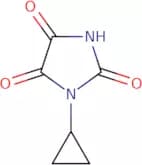
CAS:<p>Versatile small molecule scaffold</p>Formula:C7H10N2O3Purity:Min. 95%Molecular weight:170.17 g/mol1-Cyclopropylimidazolidine-2,4,5-trione
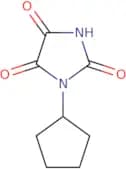
CAS:<p>Versatile small molecule scaffold</p>Formula:C6H6N2O3Purity:Min. 95%Molecular weight:154.12 g/mol1-Cyclopentylimidazolidine-2,4,5-trione
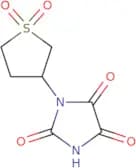
CAS:<p>Versatile small molecule scaffold</p>Formula:C8H10N2O3Purity:Min. 95%Molecular weight:182.18 g/mol1-(Tetrahydro-1,1-dioxido-3-thienyl)-2,4,5-imidazolidinetrione
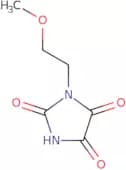
CAS:<p>Versatile small molecule scaffold</p>Formula:C7H8N2O5SPurity:Min. 95%Molecular weight:232.22 g/mol1-(2-Methoxyethyl)imidazolidine-2,4,5-trione
CAS:<p>Versatile small molecule scaffold</p>Formula:C6H8N2O4Purity:Min. 95%Molecular weight:172.14 g/molMethyl 2-[(2-methoxy-2-oxoethyl)(methyl)amino]acetate
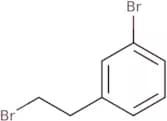
CAS:<p>Versatile small molecule scaffold</p>Formula:C7H13NO4Purity:Min. 95%Molecular weight:175.18 g/mol1-Bromo-3-(2-bromoethyl)benzene
CAS:<p>Versatile small molecule scaffold</p>Formula:C8H8Br2Purity:Min. 95%Molecular weight:263.96 g/mol1-Methyl-1H,2H,3H-imidazo[4,5-c]pyridin-2-one
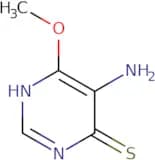
CAS:<p>Versatile small molecule scaffold</p>Formula:C7H7N3OPurity:Min. 95%Molecular weight:149.15 g/mol5-Amino-6-methoxy-3,4-dihydropyrimidine-4-thione
CAS:<p>5-Amino-6-methoxy-3,4-dihydropyrimidine-4-thione is an organic solvent that belongs to the heterocycles group. It is a pyrimidine derivative of acrylonitrile with a carbanion. The reaction products are dicarbonyl compounds and hydroxylamine. 5-Amino-6-methoxy-3,4-dihydropyrimidine-4-thione reacts with chloride in the presence of sulfur to form tetracyclic products. This compound has been used for researches and as a reagent for the formation of other organic compounds.</p>Formula:C5H7N3OSPurity:Min. 95%Molecular weight:157.2 g/mol1-(3-Isopropylphenyl)ethanone
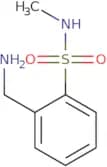
CAS:<p>Rhodium-catalyzed asymmetric hydrogenation of 1-(3-isopropylphenyl)ethanone with human serum albumin as a chiral ligand produces the corresponding enantiomers in high yield and excellent optical purity. The catalyst is immobilized on an inert support, which allows for easy scale-up and cost-effective production. This process is homogeneous and does not require the use of solvents or reagents that are toxic to humans.</p>Formula:C11H14OPurity:Min. 95%Molecular weight:162.23 g/mol2-(Aminomethyl)-N-methylbenzene-1-sulfonamide
CAS:<p>Versatile small molecule scaffold</p>Formula:C8H12N2O2SPurity:Min. 95%Molecular weight:200.26 g/mol2-(Phenylamino)-4,5,6,7-tetrahydro-1,3-benzothiazole-4-carboxylic acid
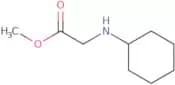
CAS:<p>Versatile small molecule scaffold</p>Formula:C14H14N2O2SPurity:Min. 95%Molecular weight:274.34 g/molMethyl 2-(cyclohexylamino)acetate
CAS:<p>Versatile small molecule scaffold</p>Formula:C9H17NO2Purity:Min. 95%Molecular weight:171.24 g/mol2-(4-Bromophenyl)propanal
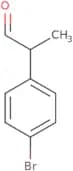
CAS:<p>Versatile small molecule scaffold</p>Formula:C9H9BrOPurity:Min. 95%Molecular weight:213.07 g/mol1,3-Dioxo-2,3-dihydro-1H-indene-5-carboxylic acid
CAS:<p>Versatile small molecule scaffold</p>Formula:C10H6O4Purity:Min. 95%Molecular weight:190.15 g/mol4-Methyl-1-phenylpentan-3-one
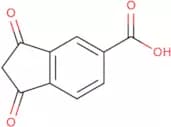
CAS:<p>Versatile small molecule scaffold</p>Formula:C12H16OPurity:Min. 95%Molecular weight:176.25 g/mol2-Methoxy-6,7,8,9-tetrahydro-5H-benzo[7]annulen-6-one
CAS:<p>Versatile small molecule scaffold</p>Formula:C12H14O2Purity:Min. 95%Molecular weight:190.24 g/mol

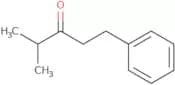
![3-[(3-Aminopropyl)amino]-1-propanol](/_next/image/?url=https%3A%2Fstatic.cymitquimica.com%2Fproducts%2F3D%2Fthumb-webp%2FQBA22615.webp&w=3840&q=75)
![[4-(Hydroxymethyl)-1,3-thiazol-2-yl]methanol](/_next/image/?url=https%3A%2Fstatic.cymitquimica.com%2Fproducts%2F3D%2Fthumb-webp%2FQBA23557.webp&w=3840&q=75)



![2-[4-(2-Methoxyphenyl)piperazin-1-yl]ethan-1-amine](/_next/image/?url=https%3A%2Fstatic.cymitquimica.com%2Fproducts%2F3D%2Fthumb-webp%2FQBA25548.webp&w=3840&q=75)
![9-Benzyl-1,5-dioxa-9-azaspiro[5.5]undecane](/_next/image/?url=https%3A%2Fstatic.cymitquimica.com%2Fproducts%2F3D%2Fthumb-webp%2FQBA25627.webp&w=3840&q=75)

![(5,6,7,8-Tetrahydro-benzo[4,5]thieno[2,3- D ]pyrimidin-4-ylsulfanyl)-acetic acid](/_next/image/?url=https%3A%2Fstatic.cymitquimica.com%2Fproducts%2F3D%2Fthumb-webp%2FQBA27759.webp&w=3840&q=75)


![[5-(2-Chlorophenyl)fur-2-yl]methanol](/_next/image/?url=https%3A%2Fstatic.cymitquimica.com%2Fproducts%2F3D%2Fthumb-webp%2FQBA31366.webp&w=3840&q=75)

![2-Chloro-3-[(2S)-1-methylpyrrolidin-2-yl]pyridine](/_next/image/?url=https%3A%2Fstatic.cymitquimica.com%2Fproducts%2F3D%2Fthumb-webp%2FQBA31689.webp&w=3840&q=75)
![rac-(1R,2R,4S)-2-(Aminomethyl)bicyclo[2.2.1]heptan-2-ol hydrochloride](/_next/image/?url=https%3A%2Fstatic.cymitquimica.com%2Fproducts%2F3D%2Fthumb-webp%2FQBA34480.webp&w=3840&q=75)
![1-[(tert-Butoxy)carbonyl]-4-hydroxypyrrolidine-2-carboxylic acid](/_next/image/?url=https%3A%2Fstatic.cymitquimica.com%2Fproducts%2F3D%2Fthumb-webp%2FQBA35082.webp&w=3840&q=75)
![1,4-Dioxa-7-azaspiro[4.5]decane](/_next/image/?url=https%3A%2Fstatic.cymitquimica.com%2Fproducts%2F3D%2Fthumb-webp%2FQBA36991.webp&w=3840&q=75)
![7-Amino-6-chloro-4H-benzo[1,4]oxazin-3-one](/_next/image/?url=https%3A%2Fstatic.cymitquimica.com%2Fproducts%2F3D%2Fthumb-webp%2FQBA40145.webp&w=3840&q=75)

![Methyl 2-[(2-methoxy-2-oxoethyl)(methyl)amino]acetate](/_next/image/?url=https%3A%2Fstatic.cymitquimica.com%2Fproducts%2F3D%2Fthumb-webp%2FQBA41838.webp&w=3840&q=75)
![1-Methyl-1H,2H,3H-imidazo[4,5-c]pyridin-2-one](/_next/image/?url=https%3A%2Fstatic.cymitquimica.com%2Fproducts%2F3D%2Fthumb-webp%2FQBA42352.webp&w=3840&q=75)


![2-Methoxy-6,7,8,9-tetrahydro-5H-benzo[7]annulen-6-one](/_next/image/?url=https%3A%2Fstatic.cymitquimica.com%2Fproducts%2F3D%2Fthumb-webp%2FQBA46328.webp&w=3840&q=75)