


Building Blocks
This section contains fundamental products for the synthesis of organic and biological compounds. Building blocks are the essential starting materials used to construct complex molecules through various chemical reactions. They play a critical role in drug discovery, material science, and chemical research. At CymitQuimica, we offer a diverse range of high-quality building blocks to support your innovative research and industrial projects, ensuring you have the essential components for successful synthesis.
Subcategories of "Building Blocks"
- Boronic Acids & Boronic Acid Derivatives(5,756 products)
- Chiral Building Blocks(1,242 products)
- Hydrocarbon Building Blocks(6,095 products)
- Organic Building Blocks(61,037 products)
Found 196200 products of "Building Blocks"
Sort by
Purity (%)
0
100
|
0
|
50
|
90
|
95
|
100
3-(5-Amino-1,3,4-thiadiazol-2-yl)propanoic acid
CAS:<p>Versatile small molecule scaffold</p>Formula:C5H7N3O2SPurity:Min. 95%Molecular weight:173.2 g/mol6-Bromo-3-methylbenzo[d]isoxazole
CAS:<p>Versatile small molecule scaffold</p>Formula:C8H6BrNOPurity:Min. 95%Molecular weight:212.04 g/mol5-Bromo-3-methyl-1,2-benzoxazole
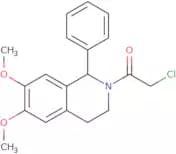
CAS:<p>5-Bromo-3-methyl-1,2-benzoxazole is a chemical compound that can be synthesized by reacting 5-bromoindazole with methyl iodide. This chemical has been shown to react with hypochlorite in the presence of base to produce reactive oxygen species. Reactive oxygen species are known to cause cell death and DNA damage. 5-Bromo-3-methyl-1,2-benzoxazole has also been shown to undergo cyclisation upon reaction with sodium hypochlorite.</p>Formula:C8H6BrNOPurity:Min. 95%Molecular weight:212.04 g/mol2-Chloro-1-(6,7-dimethoxy-1-phenyl-1,2,3,4-tetrahydroisoquinolin-2-yl)ethan-1-one
CAS:<p>Versatile small molecule scaffold</p>Formula:C19H20ClNO3Purity:Min. 95%Molecular weight:345.8 g/mol4-Chloro-2,3-dihydro-1H-indene-1-carboxylic acid
CAS:<p>Versatile small molecule scaffold</p>Formula:C10H9ClO2Purity:Min. 95%Molecular weight:196.63 g/mol7-chloro-2,3-dihydro-1H-indene-1-carboxylic acid
CAS:<p>Versatile small molecule scaffold</p>Formula:C10H9ClO2Purity:Min. 95%Molecular weight:196.63 g/mol[2-(Benzyloxy)ethyl](methyl)amine hydrochloride
CAS:<p>Versatile small molecule scaffold</p>Formula:C10H16ClNOPurity:Min. 95%Molecular weight:201.69 g/molN-[4-(Bromomethyl)phenyl]acetamide
CAS:<p>4-Aminobenzoic acid is a chemical that is used as an intermediate in the production of other chemicals and pharmaceuticals. It is an organic compound that has been shown to be an inhibitor of potassium channels, which are involved in the propagation of nerve impulses. 4-Aminobenzoic acid has also been shown to have anti-inflammatory properties, which may be due to its ability to inhibit prostaglandin synthesis.</p>Formula:C9H10BrNOPurity:Min. 95%Molecular weight:228.09 g/mol2-Methyl-4-(4-methylphenyl)-1,3-thiazole
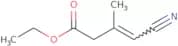
CAS:<p>Versatile small molecule scaffold</p>Formula:C11H11NSPurity:Min. 95%Molecular weight:189.28 g/molEthyl 4-cyano-3-methylbut-3-enoate
CAS:<p>Versatile small molecule scaffold</p>Formula:C8H11NO2Purity:Min. 95%Molecular weight:153.18 g/mol1-Bromobicyclo[3.3.1]nonan-3-one
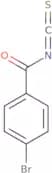
CAS:<p>Versatile small molecule scaffold</p>Formula:C9H13BrOPurity:Min. 95%Molecular weight:217.1 g/mol4-Bromo-N-(sulfanylidenemethylidene)benzamide
CAS:<p>4-Bromo-N-(sulfanylidenemethylidene)benzamide is a nitro compound that has been shown to be carcinogenic in rats. It was synthesized by reaction of 4-bromobenzoyl chloride with dimethylamine and thiourea. The nitro group on the benzene ring is reduced to the amine group, while the nitro group on the amino group is oxidized to the mixed anhydride, which undergoes acid hydrolysis to form picric acid. This residue was then neutralized with sodium hydroxide and converted into a chloride salt. The chemical structure of this compound resembles that of heterocyclic amines, which are known carcinogens.</p>Formula:C8H4BrNOSPurity:Min. 95%Molecular weight:242.09 g/mol2-[(2-Methoxy-4-nitrophenyl)amino]ethan-1-ol
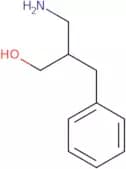
CAS:<p>2-[(2-Methoxy-4-nitrophenyl)amino]ethan-1-ol is a scientific chemical that is used in the production of care products. It is an allergen, as it has been shown to cause allergic reactions in population studies. Care products containing 2-[(2-Methoxy-4-nitrophenyl)amino]ethan-1-ol can cause sensitization, even if they are not directly applied to the skin. This chemical is tested for use in human subjects and for sensitization tests in animals. 2-[(2-Methoxy-4-nitrophenyl)amino]ethan-1-ol can be found in the environment due to its widespread use and accidental spills.</p>Formula:C9H12N2O4Purity:Min. 95%Molecular weight:212.2 g/mol3-Amino-2-benzylpropan-1-ol
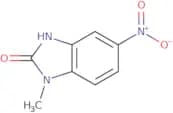
CAS:<p>Versatile small molecule scaffold</p>Formula:C10H15NOPurity:Min. 95%Molecular weight:165.23 g/mol1-Methyl-5-nitro-2,3-dihydro-1H-1,3-benzodiazol-2-one
CAS:<p>Versatile small molecule scaffold</p>Formula:C8H7N3O3Purity:Min. 95%Molecular weight:193.16 g/moltert-Butyl 2-[(2-methoxyethyl)amino]acetate
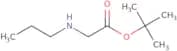
CAS:<p>Versatile small molecule scaffold</p>Formula:C9H19NO3Purity:Min. 95%Molecular weight:189.25 g/moltert-Butyl 2-(propylamino)acetate
CAS:<p>Versatile small molecule scaffold</p>Formula:C9H19NO2Purity:Min. 95%Molecular weight:173.25 g/moltert-Butyl 3-[(2-methoxyethyl)amino]propanoate
CAS:<p>Versatile small molecule scaffold</p>Formula:C10H21NO3Purity:Min. 95%Molecular weight:203.28 g/mol1-Benzylpiperidine-2-carboxylic acid hydrochloride
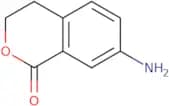
CAS:<p>Versatile small molecule scaffold</p>Formula:C13H18ClNO2Purity:Min. 95%Molecular weight:255.74 g/mol7-Aminoisochroman-1-one
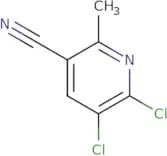
CAS:<p>Versatile small molecule scaffold</p>Formula:C9H9NO2Purity:Min. 95%Molecular weight:163.17 g/mol5,6-Dichloro-2-methylpyridine-3-carbonitrile
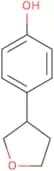
CAS:<p>Versatile small molecule scaffold</p>Formula:C7H4Cl2N2Purity:Min. 95%Molecular weight:187.02 g/mol4-(Oxolan-3-yl)phenol
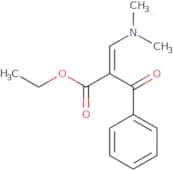
CAS:<p>Versatile small molecule scaffold</p>Formula:C10H12O2Purity:Min. 95%Molecular weight:164.2 g/molethyl-3-(diMethylaMino)-2-(phenylcarbonyl)prop-2-enoate
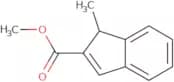
CAS:<p>Ceftriaxone is an antibacterial agent that has a broad spectrum of activity against Gram-positive and Gram-negative bacteria. Ceftriaxone binds to the beta-lactam ring of the bacterial cell wall, inhibiting the synthesis of peptidoglycan, which is necessary for the bacterial cell wall to maintain its shape. Ceftriaxone can be used to treat a number of bacterial infections and is active against both aerobic and anaerobic bacteria. Ceftriaxone has been shown effective against drug-resistant strains, such as staphylococcus aureus and escherichia coli. It has also been shown to be active against strains resistant to other antibiotics such as erythromycin, penicillin, tetracycline, chloramphenicol, and clindamycin. Ceftriaxone's molecular structure was determined by X-ray crystallography.</p>Formula:C14H17NO3Purity:Min. 95%Molecular weight:247.29 g/molMethyl 1-methyl-1H-indene-2-carboxylate
CAS:<p>Versatile small molecule scaffold</p>Formula:C12H12O2Purity:Min. 95%Molecular weight:188.22 g/mol1-Methyl-1H-indene-2-carboxylic acid
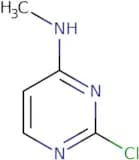
CAS:<p>Versatile small molecule scaffold</p>Formula:C11H10O2Purity:Min. 95%Molecular weight:174.2 g/mol2-Chloro-4-(methylamino)pyrimidine
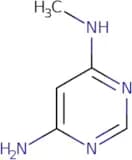
CAS:<p>Versatile small molecule scaffold</p>Formula:C5H6ClN3Purity:Min. 95%Molecular weight:143.57 g/mol4-N-Methylpyrimidine-4,6-diamine
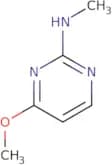
CAS:<p>Versatile small molecule scaffold</p>Formula:C5H8N4Purity:Min. 95%Molecular weight:124.14 g/mol4-Methoxy-N-methylpyrimidin-2-amine
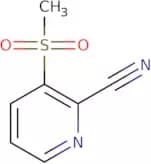
CAS:<p>Versatile small molecule scaffold</p>Formula:C6H9N3OPurity:Min. 95%Molecular weight:139.16 g/mol3-Methanesulfonylpyridine-2-carbonitrile
CAS:<p>Versatile small molecule scaffold</p>Formula:C7H6N2O2SPurity:Min. 95%Molecular weight:182.2 g/mol2-Methanesulfonylpyridine-4-carbonitrile
CAS:<p>Versatile small molecule scaffold</p>Formula:C7H6N2O2SPurity:Min. 95%Molecular weight:182.2 g/molEthyl 2-(1-methylbenzimidazol-2-yl)-2-oxoacetate
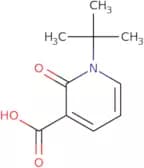
CAS:Controlled Product<p>Versatile small molecule scaffold</p>Formula:C12H12N2O3Purity:Min. 95%Molecular weight:232.24 g/mol1-tert-Butyl-2-oxo-1,2-dihydropyridine-3-carboxylic acid
CAS:<p>Versatile small molecule scaffold</p>Formula:C10H13NO3Purity:Min. 95%Molecular weight:195.21 g/mol4-Azido-1,2-dichlorobenzene
CAS:<p>Versatile small molecule scaffold</p>Formula:C6H3Cl2N3Purity:Min. 95%Molecular weight:188.01 g/mol3-Methylisatoic anhydride
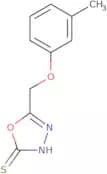
CAS:<p>Versatile small molecule scaffold</p>Formula:C9H7NO3Purity:Min. 95%Molecular weight:177.16 g/mol5-(3-Methylphenoxymethyl)-1,3,4-oxadiazole-2-thiol
CAS:<p>Versatile small molecule scaffold</p>Formula:C10H10N2O2SPurity:Min. 95%Molecular weight:222.27 g/mol5-(Pyrrolidin-1-yl)-1,3,4-thiadiazole-2-thiol
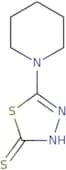
CAS:<p>Versatile small molecule scaffold</p>Formula:C6H9N3S2Purity:Min. 95%Molecular weight:187.3 g/mol5-(Piperidin-1-yl)-1,3,4-thiadiazole-2-thiol
CAS:<p>Versatile small molecule scaffold</p>Formula:C7H11N3S2Purity:Min. 95%Molecular weight:201.3 g/mol5-[(2-Methylpropyl)amino]-1,3,4-thiadiazole-2-thiol
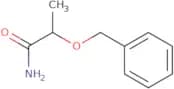
CAS:<p>5-[(2-Methylpropyl)amino]-1,3,4-thiadiazole-2-thiol is a modification of the oligosaccharide. It is a monosaccharide with a methyl group at the C5 position and a fluorine atom at the C4 position. 5-[(2-Methylpropyl)amino]-1,3,4-thiadiazole-2-thiol is synthesized by reacting 2-(methylpropyl)amine with thiadiazole dithiole. This compound has CAS No. 66180-54-9 and can be used as an intermediate in the synthesis of complex carbohydrates. The carbohydrate structure of 5-[(2-Methylpropyl)amino]-1,3,4-thiadiazole-2-thiol consists of a glycosidic linkage between two saccharides: a hexose and an acetal</p>Formula:C6H11N3S2Purity:Min. 95%Molecular weight:189.3 g/mol2-(Benzyloxy)propanamide
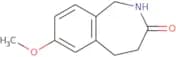
CAS:<p>Versatile small molecule scaffold</p>Formula:C10H13NO2Purity:Min. 95%Molecular weight:179.22 g/mol7-Methoxy-2,3,4,5-tetrahydro-1H-2-benzazepin-3-one
CAS:<p>Versatile small molecule scaffold</p>Formula:C11H13NO2Purity:Min. 95%Molecular weight:191.23 g/mol2-[(2-Bromophenyl)methyl]butanoic acid
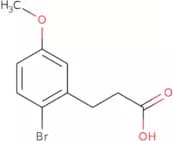
CAS:<p>Versatile small molecule scaffold</p>Formula:C11H13BrO2Purity:Min. 95%Molecular weight:257.12 g/mol3-(2-Bromo-5-methoxyphenyl)propanoic acid
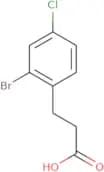
CAS:<p>Versatile small molecule scaffold</p>Formula:C10H11BrO3Purity:Min. 95%Molecular weight:259.1 g/mol3-(2-Bromo-4-chlorophenyl)propanoic acid
CAS:<p>Versatile small molecule scaffold</p>Formula:C9H8BrClO2Purity:Min. 95%Molecular weight:263.51 g/mol3-(2-bromo-5-chlorophenyl)propanoic acid
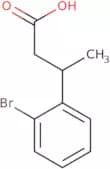
CAS:<p>Versatile small molecule scaffold</p>Formula:C9H8BrClO2Purity:Min. 95%Molecular weight:263.5 g/mol3-(2-Bromophenyl)butanoic acid
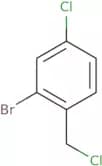
CAS:<p>Versatile small molecule scaffold</p>Formula:C10H11BrO2Purity:Min. 95%Molecular weight:243.1 g/mol2-Bromo-4-chloro-1-(chloromethyl)benzene
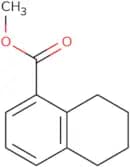
CAS:<p>Versatile small molecule scaffold</p>Formula:C7H5BrCl2Purity:Min. 95%Molecular weight:239.92 g/molMethyl 5,6,7,8-tetrahydronaphthalene-1-carboxylate
CAS:<p>Versatile small molecule scaffold</p>Formula:C12H14O2Purity:Min. 95%Molecular weight:190.24 g/mol3-Benzylpyrrolidine-2,5-dione
CAS:<p>3-Benzylpyrrolidine-2,5-dione is a potent and selective serine protease inhibitor. It binds to the active site of the enzyme, blocking the formation of an acyl enzyme intermediate that is required for biological activity. 3-Benzylpyrrolidine-2,5-dione is effective at inhibiting a wide range of serine proteases, including those from bacteria and viruses. This drug has been shown to be chemically stable in solution and does not react with other molecules in solution, which may be due to its carbonyl group. 3-Benzylpyrrolidine-2,5-dione also irreversibly inhibits serine proteases by covalent modification of key amino acid residues on the enzyme's active site.</p>Formula:C11H11NO2Purity:Min. 95%Molecular weight:189.21 g/mol2-Iodo-6-methoxybenzoic acid
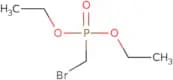
CAS:<p>Versatile small molecule scaffold</p>Formula:C8H7IO3Purity:Min. 95%Molecular weight:278.04 g/molDiethyl bromomethylphosphonate
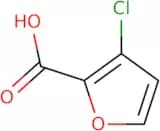
CAS:<p>Diethyl bromomethylphosphonate is a chemical compound with fatty acid properties. It is used as an inhibitor in pharmaceutical preparations and has been shown to be bactericidal to animals. Diethyl bromomethylphosphonate also inhibits the enzyme fatty acid synthase, which catalyzes the formation of fatty acids from acetyl-CoA and malonyl-CoA. This inhibitor is used in the treatment of congestive heart failure and insulin resistance. Diethyl bromomethylphosphonate is a functional group that can undergo hydrolysis by hydrochloric acid, leading to the release of diethyl methylphosphonite. Diethyl bromomethylphosphonate is a chemical compound that can react with organic solvents such as water or alcohols for reactions.</p>Formula:C5H12BrO3PPurity:Min. 95%Molecular weight:231.03 g/mol3-Chlorofuran-2-carboxylic acid
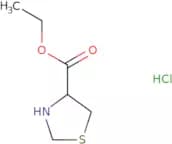
CAS:<p>Versatile small molecule scaffold</p>Formula:C5H3ClO3Purity:Min. 95%Molecular weight:146.53 g/molEthyl 1,3-thiazolidine-4-carboxylate hydrochloride
CAS:<p>Versatile small molecule scaffold</p>Formula:C6H12ClNO2SPurity:Min. 95%Molecular weight:197.68 g/mol2-Acetamido-6-methylbenzoic acid
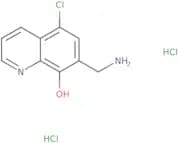
CAS:<p>Versatile small molecule scaffold</p>Formula:C10H11NO3Purity:Min. 95%Molecular weight:193.2 g/mol7-(Aminomethyl)-5-chloroquinolin-8-ol dihydrochloride
CAS:<p>Versatile small molecule scaffold</p>Formula:C10H11Cl3N2OPurity:Min. 95%Molecular weight:281.6 g/mol2-{[1,2,4]Triazolo[4,3-a]pyridin-3-ylsulfanyl}acetic acid
CAS:<p>Versatile small molecule scaffold</p>Formula:C8H7N3O2SPurity:Min. 95%Molecular weight:209.23 g/mol[1,2,4]Triazolo[1,5-a]pyrimidine-2-thiol
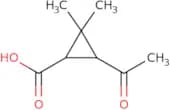
CAS:<p>Versatile small molecule scaffold</p>Formula:C5H4N4SPurity:Min. 95%Molecular weight:152.18 g/molrac-(1R,3R)-3-Acetyl-2,2-dimethylcyclopropane-1-carboxylic acid
CAS:<p>Versatile small molecule scaffold</p>Formula:C8H12O3Purity:Min. 95%Molecular weight:156.2 g/mol3-(2,5-Dioxopyrrolidin-1-yl)propanamide
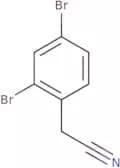
CAS:<p>Versatile small molecule scaffold</p>Formula:C7H10N2O3Purity:Min. 95%Molecular weight:170.17 g/mol2-(2,4-Dibromophenyl)acetonitrile
CAS:<p>Versatile small molecule scaffold</p>Formula:C8H5Br2NPurity:Min. 95%Molecular weight:274.94 g/mol5-Methylnaphthalen-2-ol
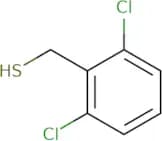
CAS:<p>Versatile small molecule scaffold</p>Formula:C11H10OPurity:Min. 95%Molecular weight:158.2 g/mol(2,6-Dichlorophenyl)methanethiol
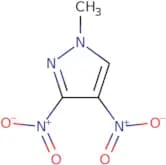
CAS:<p>Versatile small molecule scaffold</p>Formula:C7H6Cl2SPurity:Min. 95%Molecular weight:193.09 g/mol1-Methyl-3,4-dinitro-1H-pyrazole
CAS:<p>1-Methyl-3,4-dinitro-1H-pyrazole is a chemical compound that is not naturally occurring. It has been synthesized by the reaction of 1,2-diaminoethane with nitric acid and dinitrobenzene. The synthesis of this compound was first reported in 1966 by an Australian research team. The magnetic resonance spectrum of this compound showed a monoclinic crystal structure with a molecular weight of 166.19 g/mol. The molecular formula for this compound is C6H5N3O2 and it has an empirical formula of C6H5N3O2I. The yield for this reaction was found to be 85%.</p>Formula:C4H4N4O4Purity:Min. 95%Molecular weight:172.1 g/mol2-{[4-(4-Methylphenyl)-4H-1,2,4-triazol-3-yl]sulfanyl}acetic acid
CAS:<p>Versatile small molecule scaffold</p>Formula:C11H11N3O2SPurity:Min. 95%Molecular weight:249.29 g/mol2-{[4-(4-Methoxyphenyl)-4H-1,2,4-triazol-3-yl]sulfanyl}acetic acid
CAS:<p>Versatile small molecule scaffold</p>Formula:C11H11N3O3SPurity:Min. 95%Molecular weight:265.29 g/mol{[4-(3-Chlorophenyl)-4H-1,2,4-triazol-3-yl]thio}acetic acid
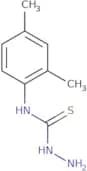
CAS:<p>Versatile small molecule scaffold</p>Formula:C10H8ClN3O2SPurity:Min. 95%Molecular weight:269.71 g/mol4-(2,4-Dimethylphenyl)-3-thiosemicarbazide
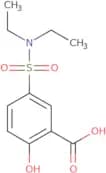
CAS:<p>Versatile small molecule scaffold</p>Formula:C9H13N3SPurity:Min. 95%Color and Shape:PowderMolecular weight:195.28 g/mol5-(Diethylsulfamoyl)-2-hydroxybenzoic acid
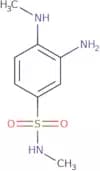
CAS:<p>Versatile small molecule scaffold</p>Formula:C11H15NO5SPurity:Min. 95%Molecular weight:273.31 g/mol3-Amino-N-methyl-4-(methylamino)benzenesulfonamide
CAS:<p>3-Amino-N-methyl-4-(methylamino)benzenesulfonamide is a synthetic compound that is used in the synthesis of oligosaccharides and polysaccharides. It is also used as a reagent for the methylation of saccharide, carbonyls and amines. 3-Amino-N-methyl-4-(methylamino)benzenesulfonamide has been shown to be useful in click chemistry reactions.</p>Formula:C8H13N3O2SPurity:Min. 95%Molecular weight:215.28 g/mol3-Amino-4-(methylamino)benzoic acid
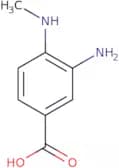
CAS:<p>3-Amino-4-(methylamino)benzoic acid is a modified amino acid that is used in the synthesis of proteins. It has been shown to inhibit the growth of retinoblastoma cells and to bind to specific sites in cellular protein, thereby inhibiting protein synthesis. 3-Amino-4-(methylamino)benzoic acid has also been shown to be effective as a linker in chemical ligation reactions, which can be used for the synthesis of peptides and proteins. This compound has not been found to have any biochemical or chemical modifications.</p>Formula:C8H10N2O2Purity:Min. 95%Molecular weight:166.18 g/molMethyl 3-amino-4-(methylamino)benzenecarboxylate
CAS:<p>Versatile small molecule scaffold</p>Formula:C9H12N2O2Purity:Min. 95%Molecular weight:180.21 g/mol3-Amino-4-(ethylamino)benzoic acid
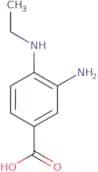
CAS:<p>Versatile small molecule scaffold</p>Formula:C9H12N2O2Purity:Min. 95%Molecular weight:180.2 g/mol3-Amino-4-(methylamino)benzene-1-sulfonamide
CAS:<p>Versatile small molecule scaffold</p>Formula:C7H11N3O2SPurity:Min. 95%Molecular weight:201.25 g/mol3-Amino-4-(benzylamino)benzamide
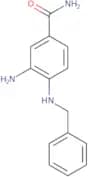
CAS:<p>Versatile small molecule scaffold</p>Formula:C14H15N3OPurity:Min. 95%Molecular weight:241.29 g/mol2-Amino-2-[4-(aminomethyl)phenyl]acetic acid dihydrochloride
CAS:<p>Versatile small molecule scaffold</p>Formula:C9H14Cl2N2O2Purity:Min. 95%Molecular weight:253.12 g/mol2-Chloro-1-methyl-1H-indole-3,5-dicarbaldehyde
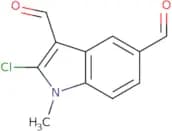
CAS:<p>Versatile small molecule scaffold</p>Formula:C11H8ClNO2Purity:Min. 95%Molecular weight:221.64 g/mol8-Methyl-1,4-dioxaspiro[4.5]decan-8-ol
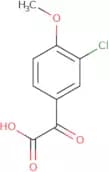
CAS:<p>Versatile small molecule scaffold</p>Formula:C9H16O3Purity:Min. 95%Molecular weight:172.23 g/mol2-(3-Chloro-4-methoxyphenyl)-2-oxoacetic acid
CAS:<p>Versatile small molecule scaffold</p>Formula:C9H7ClO4Purity:Min. 95%Molecular weight:214.6 g/molrac-[(1R,2S,4R,5R,6R)-3-Oxatricyclo[3.2.1.0,2,4]octan-6-yl]methanamine
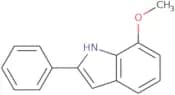
CAS:<p>Versatile small molecule scaffold</p>Formula:C8H13NOPurity:Min. 95%Molecular weight:139.2 g/mol7-Methoxy-2-phenyl-1H-indole
CAS:<p>Versatile small molecule scaffold</p>Formula:C15H13NOPurity:Min. 95%Molecular weight:223.27 g/molImidazo[1,2-a]pyridin-5-ylamine
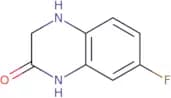
CAS:<p>Versatile small molecule scaffold</p>Formula:C7H7N3Purity:Min. 95%Molecular weight:133.15 g/mol7-Fluoro-3,4-dihydro-2(1H)-quinoxalinone
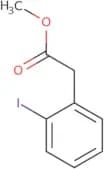
CAS:<p>Versatile small molecule scaffold</p>Formula:C8H7FN2OPurity:Min. 95%Molecular weight:166.15 g/molMethyl 2-(2-iodophenyl)acetate
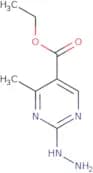
CAS:<p>Methyl 2-(2-iodophenyl)acetate is an alkylating agent that inhibits the growth of cancer cells by binding to their estrogen receptors. It has been shown that this drug binds to the estrogen receptor and blocks its interaction with estradiol in MCF-7 cells. Methyl 2-(2-iodophenyl)acetate also inhibits cell cycle progression, leading to cancer cell death. The stereoselective nature of this drug may be due to a specific interaction with the estrogen receptor, as well as other interactions with proteins in the target cell. In addition, this compound can be used to treat breast cancer by inhibiting tumor growth and stimulating apoptosis in MDA-MB-231 cells.</p>Formula:C9H9IO2Purity:Min. 95%Molecular weight:276.07 g/mol2-Hydrazino-4-methyl-pyrimidine-5-carboxylic acid ethyl ester
CAS:<p>2-Hydrazino-4-methylpyrimidine-5-carboxylic acid ethyl ester is a heterocyclic compound that is used in organic synthesis. It is obtained by the reaction of ethylene with chloroacetic acid and 2,6-dichloropyrimidine. This product can be used as a cocatalyst to promote the polymerization of ethylene. The molecular structure of this heterocyclic ring consists of three carbon atoms, five nitrogen atoms, and two oxygen atoms. The nomenclature for this product can be found in IUPAC Gold Book 1985. Triisobutylaluminium (TIBA) is a typical catalyst for the reaction. In addition, 2-hydrazino-4-methylpyrimidine-5-carboxylic acid ethyl ester chelates with copper or zinc compounds to form catalysts for reactions with other substrates.</p>Formula:C8H12N4O2Purity:Min. 95%Molecular weight:196.21 g/mol3-Ethyl-4,5-dihydro-1,2-oxazole-5-carbonitrile
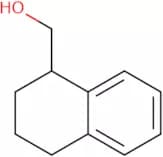
CAS:<p>Versatile small molecule scaffold</p>Formula:C6H8N2OPurity:Min. 95%Molecular weight:124.14 g/mol(1,2,3,4-Tetrahydronaphthalen-1-yl)methanol
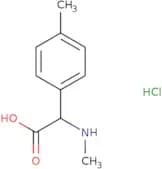
CAS:<p>Versatile small molecule scaffold</p>Formula:C11H14OPurity:Min. 95%Molecular weight:162.23 g/mol2-(Methylamino)-2-(4-methylphenyl)acetic acid hydrochloride
CAS:<p>Versatile small molecule scaffold</p>Formula:C10H14ClNO2Purity:Min. 95%Molecular weight:215.67 g/mol3-Bromo-5,7-dimethyl-1H,2H-pyrazolo[1,5-a]pyrimidin-2-one
CAS:<p>Versatile small molecule scaffold</p>Formula:C8H8BrN3OPurity:Min. 95%Molecular weight:242.07 g/mol3-(1-Benzothiophen-3-yl)-2-oxopropanoic acid
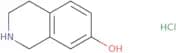
CAS:<p>Versatile small molecule scaffold</p>Formula:C11H8O3SPurity:Min. 95%Molecular weight:220.2 g/mol1,2,3,4-tetrahydroisoquinolin-7-ol hydrochloride
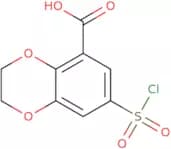
CAS:<p>Versatile small molecule scaffold</p>Formula:C9H12ClNOPurity:Min. 95%Molecular weight:185.65 g/mol7-(Chlorosulfonyl)-2,3-dihydro-1,4-benzodioxine-5-carboxylic acid
CAS:<p>Versatile small molecule scaffold</p>Formula:C9H7ClO6SPurity:Min. 95%Molecular weight:278.67 g/mol7-Nitro-2,3-dihydro-1,4-benzodioxine-5-carboxylic acid
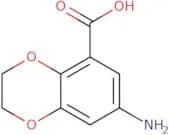
CAS:<p>Versatile small molecule scaffold</p>Formula:C9H7NO6Purity:Min. 95%Molecular weight:225.15 g/mol7-Amino-2,3-dihydro-1,4-benzodioxine-5-carboxylic acid
CAS:<p>Versatile small molecule scaffold</p>Formula:C9H9NO4Purity:Min. 95%Molecular weight:195.17 g/mol6,7-Dibromo-2,3-dihydro-1,4-benzodioxine-5-carboxylic acid
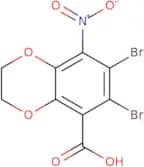
CAS:<p>Versatile small molecule scaffold</p>Formula:C9H6Br2O4Purity:Min. 95%Molecular weight:337.9 g/mol6,7-Dibromo-8-nitro-2,3-dihydro-1,4-benzodioxine-5-carboxylic acid
CAS:<p>Versatile small molecule scaffold</p>Formula:C9H5Br2NO6Purity:Min. 95%Molecular weight:382.95 g/mol8-Chloro-2,3-dihydro-1,4-benzodioxine-5-carboxylic acid
CAS:<p>Versatile small molecule scaffold</p>Formula:C9H7ClO4Purity:Min. 95%Molecular weight:214.6 g/mol6,7-Dinitro-2,3-dihydro-1,4-benzodioxine-5-carboxylic acid
CAS:<p>Versatile small molecule scaffold</p>Formula:C9H6N2O8Purity:Min. 95%Molecular weight:270.2 g/mol2,4-Diethyl 3-ethyl-5-methyl-1H-pyrrole-2,4-dicarboxylate
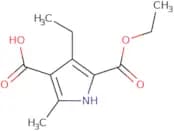
CAS:<p>Versatile small molecule scaffold</p>Formula:C13H19NO4Purity:Min. 95%Molecular weight:253.29 g/mol5-(Ethoxycarbonyl)-4-ethyl-2-methyl-1H-pyrrole-3-carboxylic acid
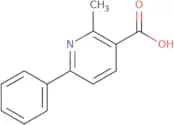
CAS:<p>Versatile small molecule scaffold</p>Formula:C11H15NO4Purity:Min. 95%Molecular weight:225.24 g/mol2-Methyl-6-phenylpyridine-3-carboxylic acid
CAS:<p>2-Methyl-6-phenylpyridine-3-carboxylic acid is a compound that has been used as an antimicrobial agent. It is the most active of the aldehydes for the treatment of tuberculosis. 2-Methyl-6-phenylpyridine-3-carboxylic acid inhibits bacterial growth by binding to DNA dependent RNA polymerase, thereby preventing transcription and replication. The high frequency of human activity has been shown using a patch clamp technique on human erythrocytes. This active form is metabolized through a number of metabolic transformations, including hydrolysis by esterases or glucuronidases, oxidation by cytochrome P450 enzymes, reduction by glutathione reductase, or conjugation with glucuronic acid. 2 methyl 6 phenylpyridine 3 carboxylic acid also specifically binds to markers expressed at high levels in Mycobacterium tuberculosis strains (e.g</p>Formula:C13H11NO2Purity:Min. 95%Molecular weight:213.23 g/mol4-[4-(Oxiran-2-ylmethoxy)phenyl]butan-2-one
CAS:<p>Versatile small molecule scaffold</p>Formula:C13H16O3Purity:Min. 95%Molecular weight:220.26 g/mol


![6-Bromo-3-methylbenzo[d]isoxazole](/_next/image/?url=https%3A%2Fstatic.cymitquimica.com%2Fproducts%2F3D%2Fthumb-webp%2FRCA03369.webp&w=3840&q=75)



amine hydrochloride](/_next/image/?url=https%3A%2Fstatic.cymitquimica.com%2Fproducts%2F3D%2Fthumb-webp%2FRCA04664.webp&w=3840&q=75)
![N-[4-(Bromomethyl)phenyl]acetamide](/_next/image/?url=https%3A%2Fstatic.cymitquimica.com%2Fproducts%2F3D%2Fthumb-webp%2FRCA04705.webp&w=3840&q=75)

![1-Bromobicyclo[3.3.1]nonan-3-one](/_next/image/?url=https%3A%2Fstatic.cymitquimica.com%2Fproducts%2F3D%2Fthumb-webp%2FRCA07798.webp&w=3840&q=75)
![2-[(2-Methoxy-4-nitrophenyl)amino]ethan-1-ol](/_next/image/?url=https%3A%2Fstatic.cymitquimica.com%2Fproducts%2F3D%2Fthumb-webp%2FRCA09581.webp&w=3840&q=75)
![tert-Butyl 2-[(2-methoxyethyl)amino]acetate](/_next/image/?url=https%3A%2Fstatic.cymitquimica.com%2Fproducts%2F3D%2Fthumb-webp%2FRCA11613.webp&w=3840&q=75)
![tert-Butyl 3-[(2-methoxyethyl)amino]propanoate](/_next/image/?url=https%3A%2Fstatic.cymitquimica.com%2Fproducts%2F3D%2Fthumb-webp%2FRCA11620.webp&w=3840&q=75)







![5-[(2-Methylpropyl)amino]-1,3,4-thiadiazole-2-thiol](/_next/image/?url=https%3A%2Fstatic.cymitquimica.com%2Fproducts%2F3D%2Fthumb-webp%2FRCA18054.webp&w=3840&q=75)
![2-[(2-Bromophenyl)methyl]butanoic acid](/_next/image/?url=https%3A%2Fstatic.cymitquimica.com%2Fproducts%2F3D%2Fthumb-webp%2FRCA19200.webp&w=3840&q=75)




![2-{[1,2,4]Triazolo[4,3-a]pyridin-3-ylsulfanyl}acetic acid](/_next/image/?url=https%3A%2Fstatic.cymitquimica.com%2Fproducts%2F3D%2Fthumb-webp%2FRCA23467.webp&w=3840&q=75)
![[1,2,4]Triazolo[1,5-a]pyrimidine-2-thiol](/_next/image/?url=https%3A%2Fstatic.cymitquimica.com%2Fproducts%2F3D%2Fthumb-webp%2FRCA23479.webp&w=3840&q=75)


![2-{[4-(4-Methylphenyl)-4H-1,2,4-triazol-3-yl]sulfanyl}acetic acid](/_next/image/?url=https%3A%2Fstatic.cymitquimica.com%2Fproducts%2F3D%2Fthumb-webp%2FRCA29764.webp&w=3840&q=75)
![2-{[4-(4-Methoxyphenyl)-4H-1,2,4-triazol-3-yl]sulfanyl}acetic acid](/_next/image/?url=https%3A%2Fstatic.cymitquimica.com%2Fproducts%2F3D%2Fthumb-webp%2FRCA29767.webp&w=3840&q=75)
![{[4-(3-Chlorophenyl)-4H-1,2,4-triazol-3-yl]thio}acetic acid](/_next/image/?url=https%3A%2Fstatic.cymitquimica.com%2Fproducts%2F3D%2Fthumb-webp%2FRCA29769.webp&w=3840&q=75)


![2-Amino-2-[4-(aminomethyl)phenyl]acetic acid dihydrochloride](/_next/image/?url=https%3A%2Fstatic.cymitquimica.com%2Fproducts%2F3D%2Fthumb-webp%2FRCA32062.webp&w=3840&q=75)
![8-Methyl-1,4-dioxaspiro[4.5]decan-8-ol](/_next/image/?url=https%3A%2Fstatic.cymitquimica.com%2Fproducts%2F3D%2Fthumb-webp%2FRCA33642.webp&w=3840&q=75)
![rac-[(1R,2S,4R,5R,6R)-3-Oxatricyclo[3.2.1.0,2,4]octan-6-yl]methanamine](/_next/image/?url=https%3A%2Fstatic.cymitquimica.com%2Fproducts%2F3D%2Fthumb-webp%2FRCA34153.webp&w=3840&q=75)
![Imidazo[1,2-a]pyridin-5-ylamine](/_next/image/?url=https%3A%2Fstatic.cymitquimica.com%2Fproducts%2F3D%2Fthumb-webp%2FRCA35823.webp&w=3840&q=75)

![3-Bromo-5,7-dimethyl-1H,2H-pyrazolo[1,5-a]pyrimidin-2-one](/_next/image/?url=https%3A%2Fstatic.cymitquimica.com%2Fproducts%2F3D%2Fthumb-webp%2FRCA38354.webp&w=3840&q=75)





![4-[4-(Oxiran-2-ylmethoxy)phenyl]butan-2-one](/_next/image/?url=https%3A%2Fstatic.cymitquimica.com%2Fproducts%2F3D%2Fthumb-webp%2FRCA42254.webp&w=3840&q=75)