Building Blocks
This section contains fundamental products for the synthesis of organic and biological compounds. Building blocks are the essential starting materials used to construct complex molecules through various chemical reactions. They play a critical role in drug discovery, material science, and chemical research. At CymitQuimica, we offer a diverse range of high-quality building blocks to support your innovative research and industrial projects, ensuring you have the essential components for successful synthesis.
Subcategories of "Building Blocks"
- Boronic Acids & Boronic Acid Derivatives(5,756 products)
- Chiral Building Blocks(1,242 products)
- Hydrocarbon Building Blocks(6,093 products)
- Organic Building Blocks(60,532 products)
Found 195534 products of "Building Blocks"
Sort by
Purity (%)
0
100
|
0
|
50
|
90
|
95
|
100
2,3-Dihydro-1H-spiro[isoquinoline-4,4'-piperidine]-3-one
CAS:<p>Versatile small molecule scaffold</p>Formula:C13H16N2OPurity:Min. 95%Molecular weight:216.28 g/mol5H,6H,7H,8H,9H-Pyrido[3,2-b]azepine-6,9-dione
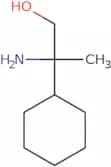
CAS:<p>Versatile small molecule scaffold</p>Formula:C9H8N2O2Purity:Min. 95%Molecular weight:176.17 g/mol2-Amino-2-cyclohexylpropan-1-ol
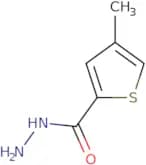
CAS:<p>Versatile small molecule scaffold</p>Formula:C9H19NOPurity:Min. 95%Molecular weight:157.25 g/mol4-Methylthiophene-2-carbohydrazide
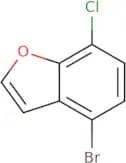
CAS:<p>Versatile small molecule scaffold</p>Formula:C6H8N2OSPurity:Min. 95%Molecular weight:156.21 g/mol4-Bromo-7-chlorobenzofuran
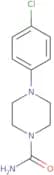
CAS:<p>Versatile small molecule scaffold</p>Formula:C8H4BrClOPurity:Min. 95%Molecular weight:231.47 g/mol4-(4-Chlorophenyl)piperazine-1-carboxamide
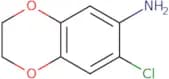
CAS:Controlled Product<p>Versatile small molecule scaffold</p>Formula:C11H14ClN3OPurity:Min. 95%Molecular weight:239.7 g/mol7-Chloro-2,3-dihydro-1,4-benzodioxin-6-amine
CAS:<p>Versatile small molecule scaffold</p>Formula:C8H8ClNO2Purity:Min. 95%Molecular weight:185.61 g/mol3-Amino-6-(difluoromethyl)-4-methylthieno[2,3-b]pyridine-2-carboxylic acid
CAS:<p>Versatile small molecule scaffold</p>Formula:C10H8F2N2O2SPurity:Min. 95%Molecular weight:258.25 g/mol3-[3-({[(9H-Fluoren-9-yl)methoxy]carbonyl}amino)propanamido]propanoic acid
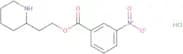
CAS:<p>Versatile small molecule scaffold</p>Formula:C21H22N2O5Purity:Min. 95%Molecular weight:382.4 g/mol2-(Piperidin-2-yl)ethyl 3-nitrobenzoate hydrochloride
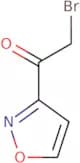
CAS:<p>Versatile small molecule scaffold</p>Formula:C14H19ClN2O4Purity:Min. 95%Molecular weight:314.76 g/mol2-Bromo-1-(1,2-oxazol-3-yl)ethan-1-one
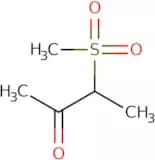
CAS:<p>Versatile small molecule scaffold</p>Formula:C5H4BrNO2Purity:Min. 95%Molecular weight:189.99 g/mol3-Methanesulfonylbutan-2-one
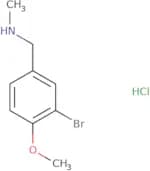
CAS:<p>Versatile small molecule scaffold</p>Formula:C5H10O3SPurity:Min. 95%Molecular weight:150.2 g/mol1-(3-Bromo-4-methoxyphenyl)-N-methylmethanamine hydrochloride
CAS:<p>Versatile small molecule scaffold</p>Formula:C9H13BrClNOPurity:Min. 95%Molecular weight:266.56 g/mol[3-(Ethanesulfonyl)phenyl]methanamine hydrochloride
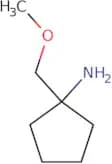
CAS:<p>Versatile small molecule scaffold</p>Formula:C9H14ClNO2SPurity:Min. 95%Molecular weight:235.73 g/mol1-(Methoxymethyl)cyclopentan-1-amine
CAS:<p>Versatile small molecule scaffold</p>Formula:C7H15NOPurity:Min. 95%Molecular weight:129.2 g/mol3-(Methylsulfonyl)benzylaminehydrochloride
CAS:<p>Versatile small molecule scaffold</p>Formula:C8H12ClNO2SPurity:Min. 95%Molecular weight:221.71 g/mol(4-Methyl-1H-imidazol-2-yl)methanamine dihydrochloride
CAS:<p>Versatile small molecule scaffold</p>Formula:C5H9N3·2HClPurity:Min. 95%Molecular weight:184.07 g/mol3-(Aminomethyl)-N,N-dimethylbenzene-1-sulfonamide hydrochloride
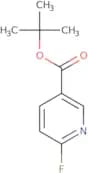
CAS:<p>Versatile small molecule scaffold</p>Formula:C9H15ClN2O2SPurity:Min. 95%Molecular weight:250.75 g/mol6-Fluoronicotinic acid tert-butyl ester
CAS:<p>Versatile small molecule scaffold</p>Formula:C10H12FNO2Purity:Min. 95%Molecular weight:197.21 g/mol7-chloro-2,3-dihydro-1,4-benzodioxin-6-amine Hydrochloride
CAS:<p>Versatile small molecule scaffold</p>Formula:C8H8NO2Cl·HClPurity:Min. 95%Molecular weight:222.06 g/mol4-Chloro-[1,1'-biphenyl]-3-carboxylic acid
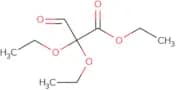
CAS:<p>Versatile small molecule scaffold</p>Formula:C13H9ClO2Purity:Min. 95%Molecular weight:232.66 g/molEthyl 2,2-diethoxy-3-oxopropanoate
CAS:<p>Versatile small molecule scaffold</p>Formula:C9H16O5Purity:Min. 95%Molecular weight:204.22 g/mol1-Boc-4-[(3-aminophenyl)methyl]-piperidine
CAS:<p>Versatile small molecule scaffold</p>Formula:C17H26N2O2Purity:Min. 95%Molecular weight:290.4 g/mol2,3-Dihydro-1,8-Naphthyridin-4(1H)-One
CAS:<p>Versatile small molecule scaffold</p>Formula:C8H8N2OPurity:Min. 95%Molecular weight:148.16 g/mol2-Methyl-5-(4,4,5,5-tetramethyl-1,3,2-dioxaborolan-2-yl)-1H-pyrrole
CAS:<p>Versatile small molecule scaffold</p>Formula:C11H18BNO2Purity:Min. 95%Molecular weight:207.08 g/mol4-[(2-Methoxyethyl)amino]benzoic acid
CAS:<p>Versatile small molecule scaffold</p>Formula:C10H13NO3Purity:Min. 95%Molecular weight:195.21 g/mol5-(Methoxycarbonyl)furan-2-boronic acid pinacol ester
CAS:<p>Versatile small molecule scaffold</p>Formula:C12H17BO5Purity:Min. 95%Molecular weight:252.07 g/mol6,7-Dimethyl-2-phenylquinoline-4-carboxylic acid
CAS:<p>Versatile small molecule scaffold</p>Formula:C18H15NO2Purity:Min. 95%Molecular weight:277.3 g/molMethyl (2-bromo-4-formyl-6-methoxyphenoxy)acetate
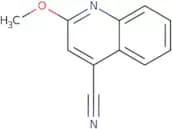
CAS:<p>Versatile small molecule scaffold</p>Formula:C11H11BrO5Purity:Min. 95%Molecular weight:303.11 g/mol2-Methoxyquinoline-4-carbonitrile
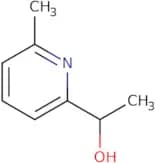
CAS:<p>Versatile small molecule scaffold</p>Formula:C11H8N2OPurity:Min. 95%Molecular weight:184.19 g/mol(R)-1-(6-Methylpyridin-2-yl)ethanol
CAS:<p>(R)-1-(6-Methylpyridin-2-yl)ethanol is a divalent metal complex with a coordination number of 2. It belongs to the group of coordination compounds, which are compounds that contain metal ions in their molecular structures. The compound is magnetic, crystallizes in the solid state and has an inorganic chemical nature. (R)-1-(6-Methylpyridin-2-yl)ethanol has been shown to exhibit antiferromagnetic coupling between two metal ions and mediated hydrogen bonding. The hydrogen bond donor is the oxygen atom from the alcohol functional group, while the hydrogen bond acceptor is one of the two methyl groups on pyridine. Due to its enantiopurity, it can be used as a ligand for asymmetric catalysis.</p>Formula:C8H11NOPurity:Min. 95%Molecular weight:137.18 g/mol5-Methyl-7-(pentafluoroethyl)pyrazolo[1,5-a]pyrimidine-2-carboxylic acid
CAS:<p>Versatile small molecule scaffold</p>Formula:C10H6F5N3O2Purity:Min. 95%Molecular weight:295.17 g/mol4-(2,5-Dichlorophenyl)butanoic acid
CAS:<p>Versatile small molecule scaffold</p>Formula:C10H10Cl2O2Purity:Min. 95%Molecular weight:233.09 g/mol2-({[(9H-fluoren-9-yl)methoxy]carbonyl}amino)-4,5-dimethoxybenzoic acid
CAS:<p>Versatile small molecule scaffold</p>Formula:C24H21NO6Purity:Min. 95%Molecular weight:419.4 g/mol1-Benzyl-1H-imidazole-4-carboxylic acid
CAS:<p>1-Benzyl-1H-imidazole-4-carboxylic acid is a tetracyclic molecule with a nucleophilic amide group in the 1,2 position. The intramolecular nucleophilic addition of this amide group to the carbonyl carbon atom of the benzyl ester, followed by coupling with an aryl halide, provides access to substituted imidazoles. This synthetic route is catalyzed by palladium and proceeds through a convergent process.</p>Formula:C11H10N2O2Purity:Min. 95%Molecular weight:202.21 g/mol3-({[(9H-Fluoren-9-yl)methoxy]carbonyl}amino)bicyclo[1.1.1]pentane-1-carboxylic acid
CAS:<p>Versatile small molecule scaffold</p>Formula:C21H19NO4Purity:Min. 95%Molecular weight:349.4 g/molmethyl 3-aminobicyclo[1.1.1]pentane-1-carboxylate hydrochloride
CAS:<p>Versatile small molecule scaffold</p>Formula:C7H12ClNO2Purity:Min. 95%Molecular weight:177.63 g/molMethyl 3-((tert-butoxycarbonyl)amino)bicyclo[1.1.1]pentane-1-carboxylate
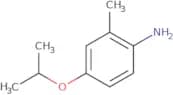
CAS:<p>Versatile small molecule scaffold</p>Formula:C12H19NO4Purity:Min. 95%Molecular weight:241.29 g/mol2-Methyl-4-(propan-2-yloxy)aniline
CAS:<p>Versatile small molecule scaffold</p>Formula:C10H15NOPurity:Min. 95%Molecular weight:165.23 g/mol1-[(tert-Butoxy)carbonyl]-5,5-dimethylpiperidine-2-carboxylic acid
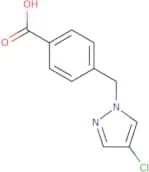
CAS:<p>Versatile small molecule scaffold</p>Formula:C13H23NO4Purity:Min. 95%Molecular weight:257.33 g/mol4-(4-Chloro-pyrazol-1-ylmethyl)benzoic acid
CAS:<p>Versatile small molecule scaffold</p>Formula:C11H9ClN2O2Purity:Min. 95%Molecular weight:236.66 g/mol3-[(4-Chloro-1H-pyrazol-1-yl)methyl]benzoic acid
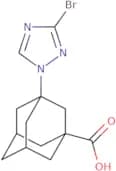
CAS:<p>Versatile small molecule scaffold</p>Formula:C11H9ClN2O2Purity:Min. 95%Molecular weight:236.66 g/mol3-(3-Bromo-1H-1,2,4-triazol-1-yl)adamantane-1-carboxylic acid
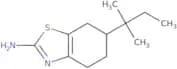
CAS:<p>Versatile small molecule scaffold</p>Formula:C13H16BrN3O2Purity:Min. 95%Molecular weight:326.19 g/mol6-(2-Methylbutan-2-yl)-4,5,6,7-tetrahydro-1,3-benzothiazol-2-amine
CAS:<p>Versatile small molecule scaffold</p>Formula:C12H20N2SPurity:Min. 95%Molecular weight:224.37 g/molN-Isopropyl carvedilol
CAS:<p>Please enquire for more information about N-Isopropyl carvedilol including the price, delivery time and more detailed product information at the technical inquiry form on this page</p>Formula:C27H32N2O4Purity:Min. 95%Molecular weight:448.56 g/mol4-(4-Hydroxypiperidin-1-yl)-4-oxobutanoic acid
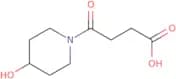
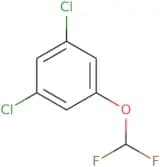
CAS:<p>4-(4-Hydroxypiperidin-1-yl)-4-oxobutanoic acid (HOP) is a peptide that inhibits the binding of an antibody to its cognate antigen. It has been used as a research tool in cell biology, pharmacology, and life science to study protein interactions, inhibition of ion channels, and receptor functions. HOP is a competitive inhibitor of the alpha subunit of the acetylcholine receptor. HOP also binds to nicotinic acetylcholine receptors with high affinity and acts as an activator. It has been shown to have anti-inflammatory effects by inhibiting prostaglandin synthesis and reducing production of cytokines such as tumor necrosis factor alpha (TNFα).</p>Formula:C9H15NO4Purity:Min. 95%Molecular weight:201.22 g/mol1,3-Dichloro-5-(difluoromethoxy)benzene
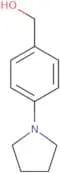
CAS:<p>Versatile small molecule scaffold</p>Formula:C7H4Cl2F2OPurity:Min. 95%Molecular weight:213.01 g/mol(4-Pyrrolidin-1-ylphenyl)methanol
CAS:<p>4-Pyrrolidin-1-ylphenol is a protease enzyme inhibitor that has been shown to inhibit the catalytic activity of serine proteases. It reversibly binds to the active site of these enzymes and inhibits their ability to hydrolyze peptide bonds, which are required for protein digestion. 4-Pyrrolidin-1-ylphenol has been shown to be a specific inhibitor of hepatitis C virus protease. This drug has also been used as a reagent in the synthesis of peptides and proteins, and is being investigated as a potential drug in the treatment of HIV infection. 4-Pyrrolidin-1-ylphenol is an asymmetric chiral molecule that can be synthesized using Grignard reaction with benzyl alcohol and an amino phenyl boronic acid. The stereochemistry of this molecule is determined by its molecular modeling and conformational analysis. The amino group in this molecule is orientated such that it</p>Formula:C11H15NOPurity:Min. 95%Molecular weight:177.25 g/mol[1-Methyl-5-(trifluoromethyl)-1H-pyrazol-4-yl]methanol
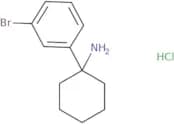
CAS:<p>Versatile small molecule scaffold</p>Formula:C6H7F3N2OPurity:Min. 95%Molecular weight:180.13 g/mol1-(3-Bromophenyl)cyclohexan-1-amine hydrochloride
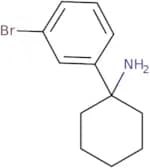
CAS:Controlled Product<p>Versatile small molecule scaffold</p>Formula:C12H17BrClNPurity:Min. 95%Molecular weight:290.63 g/mol1-(3-bromophenyl)cyclohexan-1-amine
CAS:Controlled Product<p>Versatile small molecule scaffold</p>Formula:C12H16BrNPurity:Min. 95%Molecular weight:254.2 g/mol6-Bromoisochroman-4-one
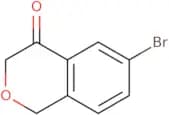
CAS:<p>Versatile small molecule scaffold</p>Formula:C9H7BrO2Purity:Min. 95%Molecular weight:227.06 g/mol(4S)-6-(Propan-2-yl)-3,4-dihydro-2H-1-benzopyran-4-amine hydrochloride
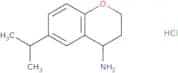
CAS:<p>Versatile small molecule scaffold</p>Formula:C12H18ClNOPurity:Min. 95%Molecular weight:227.73 g/mol(R)-6-Isopropylchroman-4-amine hydrochloride
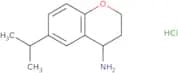
CAS:<p>Versatile small molecule scaffold</p>Formula:C12H18ClNOPurity:Min. 95%Molecular weight:227.73 g/mol(S)-7-Bromo-1,2,3,4-tetrahydro-naphthalen-1-ylamine hydrochloride ee
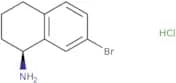
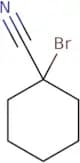
CAS:<p>Versatile small molecule scaffold</p>Formula:C10H13BrClNPurity:Min. 95%Molecular weight:262.57 g/mol1-Bromocyclohexane-1-carbonitrile
CAS:<p>1-Bromocyclohexane-1-carbonitrile (1BCC) is an orthogonal alkylation agent that can react with a wide variety of functionalized organic halides. It reacts with the carbon atom in the organic halide, forming a new carbon-carbon bond. This reaction is highly selective and does not require any protecting groups or activation by copper. 1BCC also has high activity with nitroalkanes, which makes it a useful reagent for synthesizing diamines. 1BCC can be used as an efficient synthetic method for aromatic and nonaromatic diamines.</p>Formula:C7H10BrNPurity:Min. 95%Molecular weight:188.06 g/molN-Benzyl-3,3,3-trifluoropropanamide
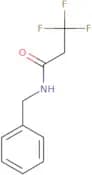
CAS:<p>Versatile small molecule scaffold</p>Formula:C10H10F3NOPurity:Min. 95%Molecular weight:217.19 g/mol9-Methyl-4-oxo-4H-pyrido[1,2-a]pyrimidine-3-carboxylic acid
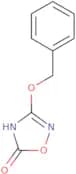
CAS:<p>Versatile small molecule scaffold</p>Formula:C10H8N2O3Purity:Min. 95%Molecular weight:204.18 g/mol3-(Benzyloxy)-4,5-dihydro-1,2,4-oxadiazol-5-one
CAS:<p>Versatile small molecule scaffold</p>Formula:C9H8N2O3Purity:Min. 95%Molecular weight:192.17 g/molMethyl 5-hydroxy-1H-indole-2-carboxylate
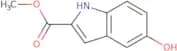
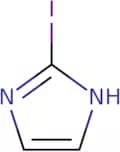
CAS:<p>Methyl 5-hydroxy-1H-indole-2-carboxylate is a potent drug for the treatment of cancer cells. It inhibits acetylcholinesterase activity and has been shown to have neurodegenerative properties in a number of different cell lines. Methyl 5-hydroxy-1H-indole-2-carboxylate is also a strong inhibitor of acetylcholinesterase, which may be responsible for its neuroprotective effects.</p>Formula:C10H9NO3Purity:Min. 95%Molecular weight:191.18 g/mol2-Iodo-1H-imidazole
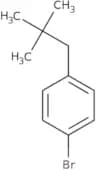
CAS:<p>2-Iodo-1H-imidazole is an asymmetric molecule that is synthesized by a Suzuki coupling reaction between malonic acid and tautomers of 2-iodo-1H-imidazole. This molecule inhibits the activity of inhibitor molecules, such as nitrogen atoms, which are used in pesticide production. It also has pesticidal activity and can be used to treat cancer or autoimmune diseases. 2-Iodo-1H-imidazole is metabolized through a number of metabolic transformations, including hydrolysis by esterases or glucuronidases, oxidation by cytochrome P450 enzymes, reduction by glutathione reductase, or conjugation with glucuronic acid.</p>Formula:C3H3IN2Purity:Min. 95%Color and Shape:White PowderMolecular weight:193.97 g/mol1-Bromo-4-(2,2-dimethylpropyl)benzene
CAS:<p>Versatile small molecule scaffold</p>Formula:C11H15BrPurity:Min. 95%Molecular weight:227.14 g/mol9-Azaspiro[5.6]dodecane
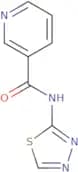
CAS:<p>Versatile small molecule scaffold</p>Formula:C11H21NPurity:Min. 95%Molecular weight:167.29 g/molN-(1,3,4-Thiadiazolyl)nicotinamide
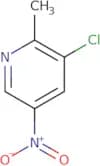
CAS:<p>N-(1,3,4-Thiadiazolyl)nicotinamide is an intracellular drug that inhibits the release of a growth factor, which may be involved in the development of migraine. It has been shown to inhibit the activity of the enzyme VEGF and reduces infarction volume in rats. N-(1,3,4-Thiadiazolyl)nicotinamide also has a neuroprotective effect by reducing reactive astrocytes and inhibiting fibrillary acidic protein expression in the cerebral cortex of rats. This drug is osmotically active and can induce neuronal damage due to brain swelling. N-(1,3,4-Thiadiazolyl)nicotinamide is also used as a stain for neurons in histological studies.</p>Formula:C8H6N4OSPurity:Min. 95%Molecular weight:206.22 g/mol3-Chloro-2-methyl-5-nitropyridine
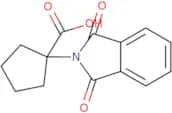
CAS:<p>Versatile small molecule scaffold</p>Formula:C6H5ClN2O2Purity:Min. 95%Molecular weight:172.57 g/mol1-(1,3-Dioxo-2,3-dihydro-1H-isoindol-2-yl)cyclopentane-1-carboxylic acid
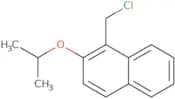
CAS:<p>Versatile small molecule scaffold</p>Formula:C14H13NO4Purity:Min. 95%Molecular weight:259.26 g/mol1-(Chloromethyl)-2-(propan-2-yloxy)naphthalene
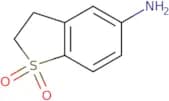
CAS:<p>Versatile small molecule scaffold</p>Formula:C14H15ClOPurity:Min. 95%Molecular weight:234.72 g/mol2,3-Dihydro-1-benzothiophen-5-amine 1,1-dioxide
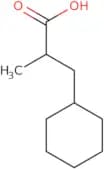
CAS:<p>Versatile small molecule scaffold</p>Formula:C8H9NO2SPurity:Min. 95%Molecular weight:183.23 g/mol3-Cyclohexyl-2-methylpropanoic acid
CAS:<p>Versatile small molecule scaffold</p>Formula:C10H18O2Purity:Min. 95%Molecular weight:170.25 g/mol2,5,8-Trioxa-11-azadodecane
CAS:<p>Versatile small molecule scaffold</p>Formula:C8H19NO3Purity:Min. 95%Molecular weight:177.24 g/molo-Isopentylhydroxylamine hydrochloride
CAS:<p>Versatile small molecule scaffold</p>Formula:C5H14ClNOPurity:Min. 95%Molecular weight:139.62 g/molHO-PEG3-CH2COOH
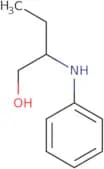
CAS:<p>HO-PEG3-CH2COOH is a PEG polymer categorised as monofunctional (OH-PEG-X). Used as a linker, HO-PEG3-CH2COOH is used to attached PEG to proteins, peptides, oligonucleotides, nanoparticles and small molecules via pegylation, a bioconjugation technique.</p>Formula:C8H16O6Purity:Min. 95%Molecular weight:208.21 g/mol2-(Phenylamino)butan-1-ol
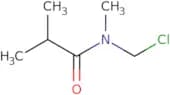
CAS:<p>Versatile small molecule scaffold</p>Formula:C10H15NOPurity:Min. 95%Molecular weight:165.23 g/molN-(Chloromethyl)-N-methylisobutyramide
CAS:<p>Versatile small molecule scaffold</p>Formula:C6H12ClNOPurity:Min. 95%Molecular weight:149.62 g/mol2-[(6-Methylpyrimidin-4-yl)amino]acetic acid
CAS:<p>Versatile small molecule scaffold</p>Formula:C7H9N3O2Purity:Min. 95%Molecular weight:167.17 g/molα-Hydroxy-α-phenylbenzeneacetic acid (3-endo)-8-azabicyclo[3.2.1]oct-3-yl ester hydrochloride
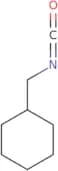
CAS:<p>Please enquire for more information about alpha-Hydroxy-alpha-phenylbenzeneacetic acid (3-endo)-8-azabicyclo[3.2.1]oct-3-yl ester hydrochloride including the price, delivery time and more detailed product information at the technical inquiry form on this page</p>Formula:C21H23NO3·HClPurity:Min. 95%Color and Shape:White PowderMolecular weight:373.87 g/molCyclohexanemethyl isocyanate
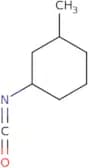
CAS:<p>Cyclohexanemethyl isocyanate is a reactive carboxylate. It is used as a polymerization initiator for polyurethane coatings, binders, and adhesives. It reacts with primary amino groups in the presence of an alkali metal to form ureas and amines. Cyclohexanemethyl isocyanate also reacts with hydroxyl groups to form esters or ethers. This compound has functional groups that include a primary amino group, a hydroxyl group, and a zirconium oxide group.</p>Formula:C8H13NOPurity:Min. 95%Molecular weight:139.2 g/mol1-Isocyanato-3-methylcyclohexane
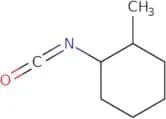
CAS:<p>Versatile small molecule scaffold</p>Formula:C8H13NOPurity:Min. 95%Molecular weight:139.19 g/mol1-Isocyanato-2-methylcyclohexanes
CAS:<p>1-Isocyanato-2-methylcyclohexanes is an organic compound with a molecular weight of 210.1 g/mol. It is a colorless liquid that has an odor similar to that of acetone. 1-Isocyanato-2-methylcyclohexanes has been shown to inhibit mitochondrial protein synthesis, which may be due to its ability to introduce mutations in the mitochondrial genome. 1-Isocyanato-2-methylcyclohexanes also interacts with human neurodegenerative diseases such as Parkinson's disease and Alzheimer's disease, and may have therapeutic effects against these diseases. The oral bioavailability of this drug is low, but it has been shown to be effective in the treatment of Parkinson's disease and Alzheimer's disease when administered intravenously. This drug has not yet been approved for use by the FDA and is still undergoing clinical trials for safety and efficacy</p>Formula:C8H13NOPurity:Min. 95%Molecular weight:139.2 g/mol(1S)-1-(4-Methylphenyl)ethan-1-ol
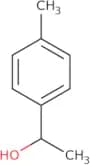
CAS:<p>Versatile small molecule scaffold</p>Formula:C9H12OPurity:Min. 95%Molecular weight:136.19 g/mol(1S)-1-(3-Methylphenyl)ethan-1-ol
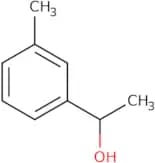
CAS:<p>Versatile small molecule scaffold</p>Formula:C9H12OPurity:Min. 95%Molecular weight:136.19 g/mol5-Methylnaphthalen-1-ol
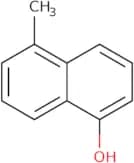
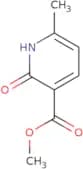
CAS:<p>Versatile small molecule scaffold</p>Formula:C11H10OPurity:Min. 95%Molecular weight:158.2 g/mol6-Methyl-2-oxo-1,2-dihydro-pyridine-3-carboxylic acid methyl ester
CAS:<p>6-Methyl-2-oxo-1,2-dihydro-pyridine-3-carboxylic acid methyl ester is a molecule that is emitted by the combustion of coal and oil. It has a protonated nitrogen atom, which can be transferred to an electron in an excited state. This transfer is accomplished through fluorescence or n-hexane. The hydroxyl group on the 6-methyl group can be measured as well as the constant and transfer rates. Molecular properties include a tautomeric form, pyridine nitrogen protonation, and n-hexane solvation.</p>Formula:C8H9NO3Purity:Min. 95%Molecular weight:167.16 g/mol1,3-Diazaspiro[4.5]decane-2,4,8-trione
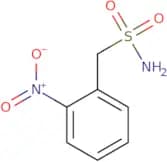
CAS:<p>Versatile small molecule scaffold</p>Formula:C8H10N2O3Purity:Min. 95%Molecular weight:182.18 g/mol(2-Nitrophenyl)methanesulfonamide
CAS:<p>Versatile small molecule scaffold</p>Formula:C7H8N2O4SPurity:Min. 95%Molecular weight:216.22 g/mol1-[2-(Morpholin-4-yl)ethyl]piperidin-4-one
CAS:<p>Versatile small molecule scaffold</p>Formula:C11H20N2O2Purity:Min. 95%Molecular weight:212.29 g/mol2-Chloro-1-{imidazo[1,5-a]pyridin-1-yl}ethan-1-one
CAS:<p>Versatile small molecule scaffold</p>Formula:C9H7ClN2OPurity:Min. 95%Molecular weight:194.62 g/mol2-{5H,6H,7H,8H-Imidazo[1,2-a]pyridin-2-yl}ethan-1-amine
CAS:<p>Versatile small molecule scaffold</p>Formula:C9H15N3Purity:Min. 95%Molecular weight:165.24 g/mol2-(Imidazo[1,2-a]pyridin-2-yl)ethanamine dihydrochloride
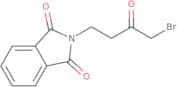
CAS:<p>Versatile small molecule scaffold</p>Formula:C9H13Cl2N3Purity:Min. 95%Molecular weight:234.13 g/mol1-Bromo-4-N-phthalimido-2-butanone
CAS:<p>1-Bromo-4-N-phthalimido-2-butanone is a quinazolinone that has been shown to be active against a number of bacterial strains, including Staphylococcus aureus, Salmonella typhi, and Escherichia coli. It also has cytotoxic effects on the human breast cancer cell line MCF-7. 1-Bromo-4-N-phthalimido-2-butanone has been shown to inhibit the growth of human prostate cancer cells by binding to the DNA in these cells and inhibiting RNA synthesis. This drug also prevents the development of influenza A virus in mice by acting as an analgesic and an antitumor agent. The antiinflammatory activities of 1BBA may be due to its inhibition of prostaglandin synthesis.</p>Formula:C12H10BrNO3Purity:Min. 95%Molecular weight:296.12 g/mol8-Oxa-1-azaspiro[4.5]decane
CAS:<p>Versatile small molecule scaffold</p>Formula:C8H15NOPurity:Min. 95%Molecular weight:141.21 g/mol9-Oxa-6-azaspiro[4.5]decane
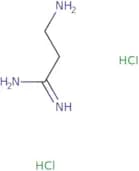
CAS:<p>Versatile small molecule scaffold</p>Formula:C8H15NOPurity:Min. 95%Molecular weight:141.21 g/mol3-Aminopropanimidamide dihydrochloride
CAS:<p>Versatile small molecule scaffold</p>Formula:C3H11Cl2N3Purity:Min. 95%Molecular weight:160.04 g/mol2-Amino-3-[(2-methoxy-2-oxoethyl)sulfanyl]propanoic acid
CAS:<p>Versatile small molecule scaffold</p>Formula:C6H11NO4SPurity:Min. 95%Molecular weight:193.2 g/mol2-Aminopyrazolo[1,5-a]pyridine
CAS:<p>2-Aminopyrazolo[1,5-a]pyridine is a chemical compound that yields yellow crystals. It cyclizes in the presence of acid to form 2,6-diaminopyrazolo[1,5-a]pyridine. The cyclization reaction can be used for the synthesis of other compounds as well.</p>Formula:C7H7N3Purity:Min. 95%Molecular weight:133.15 g/molPyrazolo[1,5-a]pyridin-3-ol
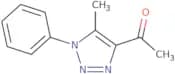
CAS:<p>Versatile small molecule scaffold</p>Formula:C7H6N2OPurity:Min. 95%Molecular weight:134.14 g/mol1-(5-Methyl-1-phenyl-1H-1,2,3-triazol-4-yl)ethan-1-one
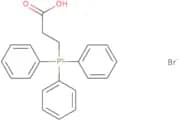
CAS:<p>Versatile small molecule scaffold</p>Formula:C11H11N3OPurity:Min. 95%Molecular weight:201.22 g/mol2-Carboxyethyl(triphenyl)phosphonium bromide
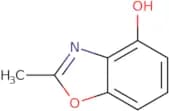
CAS:<p>2-Carboxyethyl(triphenyl)phosphonium bromide is a phosphonium salt that inhibits the adenosine receptors. It is also shown to have anti-cancer effects on cells. 2-Carboxyethyl(triphenyl)phosphonium bromide has been shown to inhibit the growth of cancer cells in cell culture and in animal models. It has been proposed as a potential therapeutic agent for neurodegenerative diseases, such as Parkinson's disease and Huntington's disease, due to its ability to inhibit the activity of the enzyme formylation. The drug binds to nucleophilic sites on proteins, which may be due to its structure activity relationship with adenosine receptors. The synthesis of this drug involves ethyl formate as a starting material, which undergoes an amination reaction with diisobutylaluminium followed by formylation with dibromomethane in acid catalyst conditions.</p>Formula:C21H20O2PBrPurity:Min. 95%Molecular weight:415.26 g/mol2-Methyl-1,3-benzoxazol-4-ol
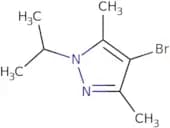
CAS:<p>2-Methyl-1,3-benzoxazol-4-ol is a planar torsion with a chloride. The crystal structure of 2-Methyl-1,3-benzoxazol-4-ol has been solved by XRD and the molecular weight was found to be 253.2 g/mol. The chemical formula for 2-Methyl-1,3-benzoxazol-4-ol is C11H12ClNO2. <br>The benzoxazole ring in 2 methyl 1,3 benzoxazole 4 ol is planar and contains two methyl groups on the 4 position. This molecule can exist as either cis or trans form depending on the geometry of the molecule. The cis form has two hydrogen atoms on the opposite side of the molecule to each other whereas in trans it has only one hydrogen atom on opposite sides of the molecule. These two forms are not interchangeable and have different physical properties such as</p>Formula:C8H7NO2Purity:Min. 95%Molecular weight:149.15 g/mol4-Bromo-3,5-dimethyl-1-(propan-2-yl)-1H-pyrazole
CAS:<p>Versatile small molecule scaffold</p>Formula:C8H13BrN2Purity:Min. 95%Molecular weight:217.11 g/mol
![2,3-Dihydro-1H-spiro[isoquinoline-4,4'-piperidine]-3-one](/_next/image/?url=https%3A%2Fstatic.cymitquimica.com%2Fproducts%2F3D%2Fthumb-webp%2FBCB60738.webp&w=3840&q=75)

![5H,6H,7H,8H,9H-Pyrido[3,2-b]azepine-6,9-dione](/_next/image/?url=https%3A%2Fstatic.cymitquimica.com%2Fproducts%2F3D%2Fthumb-webp%2FBCB59663.webp&w=3840&q=75)
![3-Amino-6-(difluoromethyl)-4-methylthieno[2,3-b]pyridine-2-carboxylic acid](/_next/image/?url=https%3A%2Fstatic.cymitquimica.com%2Fproducts%2F3D%2Fthumb-webp%2FBCB57953.webp&w=3840&q=75)
![3-[3-({[(9H-Fluoren-9-yl)methoxy]carbonyl}amino)propanamido]propanoic acid](/_next/image/?url=https%3A%2Fstatic.cymitquimica.com%2Fproducts%2F3D%2Fthumb-webp%2FFJB31646.webp&w=3840&q=75)
![[3-(Ethanesulfonyl)phenyl]methanamine hydrochloride](/_next/image/?url=https%3A%2Fstatic.cymitquimica.com%2Fproducts%2F3D%2Fthumb-webp%2FFJB27147.webp&w=3840&q=75)



![4-Chloro-[1,1'-biphenyl]-3-carboxylic acid](/_next/image/?url=https%3A%2Fstatic.cymitquimica.com%2Fproducts%2F3D%2Fthumb-webp%2FFJB20759.webp&w=3840&q=75)
![1-Boc-4-[(3-aminophenyl)methyl]-piperidine](/_next/image/?url=https%3A%2Fstatic.cymitquimica.com%2Fproducts%2F3D%2Fthumb-webp%2FBCB52803.webp&w=3840&q=75)


![4-[(2-Methoxyethyl)amino]benzoic acid](/_next/image/?url=https%3A%2Fstatic.cymitquimica.com%2Fproducts%2F3D%2Fthumb-webp%2FFJB19907.webp&w=3840&q=75)


![5-Methyl-7-(pentafluoroethyl)pyrazolo[1,5-a]pyrimidine-2-carboxylic acid](/_next/image/?url=https%3A%2Fstatic.cymitquimica.com%2Fproducts%2F3D%2Fthumb-webp%2FBCB46964.webp&w=3840&q=75)

![2-({[(9H-fluoren-9-yl)methoxy]carbonyl}amino)-4,5-dimethoxybenzoic acid](/_next/image/?url=https%3A%2Fstatic.cymitquimica.com%2Fproducts%2F3D%2Fthumb-webp%2FFJB00512.webp&w=3840&q=75)

![3-({[(9H-Fluoren-9-yl)methoxy]carbonyl}amino)bicyclo[1.1.1]pentane-1-carboxylic acid](/_next/image/?url=https%3A%2Fstatic.cymitquimica.com%2Fproducts%2F3D%2Fthumb-webp%2FBCB37166.webp&w=3840&q=75)
![methyl 3-aminobicyclo[1.1.1]pentane-1-carboxylate hydrochloride](/_next/image/?url=https%3A%2Fstatic.cymitquimica.com%2Fproducts%2F3D%2Fthumb-webp%2FBCB37165.webp&w=3840&q=75)
![Methyl 3-((tert-butoxycarbonyl)amino)bicyclo[1.1.1]pentane-1-carboxylate](/_next/image/?url=https%3A%2Fstatic.cymitquimica.com%2Fproducts%2F3D%2Fthumb-webp%2FBCB37164.webp&w=3840&q=75)
![1-[(tert-Butoxy)carbonyl]-5,5-dimethylpiperidine-2-carboxylic acid](/_next/image/?url=https%3A%2Fstatic.cymitquimica.com%2Fproducts%2F3D%2Fthumb-webp%2FBCB35572.webp&w=3840&q=75)
![3-[(4-Chloro-1H-pyrazol-1-yl)methyl]benzoic acid](/_next/image/?url=https%3A%2Fstatic.cymitquimica.com%2Fproducts%2F3D%2Fthumb-webp%2FBCB34840.webp&w=3840&q=75)
![[1-Methyl-5-(trifluoromethyl)-1H-pyrazol-4-yl]methanol](/_next/image/?url=https%3A%2Fstatic.cymitquimica.com%2Fproducts%2F3D%2Fthumb-webp%2FBCB23650.webp&w=3840&q=75)
![9-Methyl-4-oxo-4H-pyrido[1,2-a]pyrimidine-3-carboxylic acid](/_next/image/?url=https%3A%2Fstatic.cymitquimica.com%2Fproducts%2F3D%2Fthumb-webp%2FBCA99193.webp&w=3840&q=75)
![9-Azaspiro[5.6]dodecane](/_next/image/?url=https%3A%2Fstatic.cymitquimica.com%2Fproducts%2F3D%2Fthumb-webp%2FBCA99109.webp&w=3840&q=75)



![2-[(6-Methylpyrimidin-4-yl)amino]acetic acid](/_next/image/?url=https%3A%2Fstatic.cymitquimica.com%2Fproducts%2F3D%2Fthumb-webp%2FBCA16363.webp&w=3840&q=75)
![α-Hydroxy-α-phenylbenzeneacetic acid (3-endo)-8-azabicyclo[3.2.1]oct-3-yl ester hydrochloride](/_next/image/?url=https%3A%2Fstatic.cymitquimica.com%2Fproducts%2F3D%2Fthumb-webp%2FFH55814.webp&w=3840&q=75)
![1,3-Diazaspiro[4.5]decane-2,4,8-trione](/_next/image/?url=https%3A%2Fstatic.cymitquimica.com%2Fproducts%2F3D%2Fthumb-webp%2FBCA14574.webp&w=3840&q=75)
![1-[2-(Morpholin-4-yl)ethyl]piperidin-4-one](/_next/image/?url=https%3A%2Fstatic.cymitquimica.com%2Fproducts%2F3D%2Fthumb-webp%2FBCA13777.webp&w=3840&q=75)
![2-Chloro-1-{imidazo[1,5-a]pyridin-1-yl}ethan-1-one](/_next/image/?url=https%3A%2Fstatic.cymitquimica.com%2Fproducts%2F3D%2Fthumb-webp%2FBCA13206.webp&w=3840&q=75)
![2-{5H,6H,7H,8H-Imidazo[1,2-a]pyridin-2-yl}ethan-1-amine](/_next/image/?url=https%3A%2Fstatic.cymitquimica.com%2Fproducts%2F3D%2Fthumb-webp%2FBCA13204.webp&w=3840&q=75)
![2-(Imidazo[1,2-a]pyridin-2-yl)ethanamine dihydrochloride](/_next/image/?url=https%3A%2Fstatic.cymitquimica.com%2Fproducts%2F3D%2Fthumb-webp%2FBCA13202.webp&w=3840&q=75)
![8-Oxa-1-azaspiro[4.5]decane](/_next/image/?url=https%3A%2Fstatic.cymitquimica.com%2Fproducts%2F3D%2Fthumb-webp%2FBCA13063.webp&w=3840&q=75)
![9-Oxa-6-azaspiro[4.5]decane](/_next/image/?url=https%3A%2Fstatic.cymitquimica.com%2Fproducts%2F3D%2Fthumb-webp%2FBCA13061.webp&w=3840&q=75)
![2-Amino-3-[(2-methoxy-2-oxoethyl)sulfanyl]propanoic acid](/_next/image/?url=https%3A%2Fstatic.cymitquimica.com%2Fproducts%2F3D%2Fthumb-webp%2FBCA12486.webp&w=3840&q=75)
![2-Aminopyrazolo[1,5-a]pyridine](/_next/image/?url=https%3A%2Fstatic.cymitquimica.com%2Fproducts%2F3D%2Fthumb-webp%2FBCA11905.webp&w=3840&q=75)
![Pyrazolo[1,5-a]pyridin-3-ol](/_next/image/?url=https%3A%2Fstatic.cymitquimica.com%2Fproducts%2F3D%2Fthumb-webp%2FBCA11868.webp&w=3840&q=75)