


Building Blocks
This section contains fundamental products for the synthesis of organic and biological compounds. Building blocks are the essential starting materials used to construct complex molecules through various chemical reactions. They play a critical role in drug discovery, material science, and chemical research. At CymitQuimica, we offer a diverse range of high-quality building blocks to support your innovative research and industrial projects, ensuring you have the essential components for successful synthesis.
Subcategories of "Building Blocks"
- Boronic Acids & Boronic Acid Derivatives(5,756 products)
- Chiral Building Blocks(1,242 products)
- Hydrocarbon Building Blocks(6,093 products)
- Organic Building Blocks(60,532 products)
Found 195534 products of "Building Blocks"
Sort by
Purity (%)
0
100
|
0
|
50
|
90
|
95
|
100
4-phenyl-1H-imidazole-2-carbaldehyde
CAS:<p>Versatile small molecule scaffold</p>Formula:C10H7N2OPurity:Min. 95%Molecular weight:171.17 g/mol2-Methoxybenzaldehyde-d3
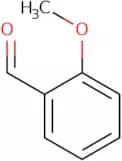
CAS:<p>Versatile small molecule scaffold</p>Formula:C8H8O2Purity:Min. 95%Molecular weight:139.17 g/mol2-Ethoxy-2-phenylethan-1-amine hydrochloride
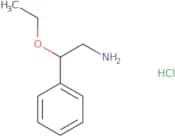
CAS:Controlled Product<p>Versatile small molecule scaffold</p>Formula:C10H16ClNOPurity:Min. 95%Molecular weight:201.69 g/mol2-Hydrazinyl-4,5-dihydro-1H-imidazol-5-one hydroiodide
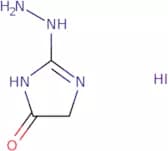
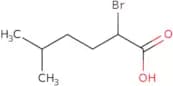
CAS:<p>Versatile small molecule scaffold</p>Formula:C3H7IN4OPurity:Min. 95%Molecular weight:242.02 g/mol2-Bromo-5-methylhexanoic acid
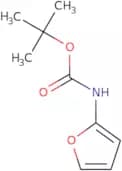
CAS:<p>Versatile small molecule scaffold</p>Formula:C7H13BrO2Purity:Min. 95%Molecular weight:209.08 g/moltert-Butyl N-(2-furyl)carbamate
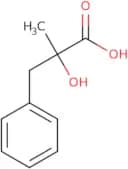
CAS:<p>Versatile small molecule scaffold</p>Formula:C9H13NO3Purity:Min. 95%Molecular weight:183.21 g/mol2-Hydroxy-2-methyl-3-phenylpropanoic acid
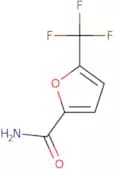
CAS:<p>2-Hydroxy-2-methyl-3-phenylpropanoic acid is a chlorinating agent that can be used as a cancer drug. It is one of the active substances in the plant didemnin, which has shown anticancer effects. 2-Hydroxy-2-methyl-3-phenylpropanoic acid reacts with oxindole to form 2,4,5,6,7 tetrahydrooxindole and 2,4,5,6 tetrahydrodideoxyoxindole. The chlorination reaction is catalyzed by corynebacterium glutamicum and produces epoxides. The epoxide ring opens under physiological conditions and reacts with hydroxyl groups on other molecules to form chlorohydrins or hydroxylamines.</p>Formula:C10H12O3Purity:Min. 95%Molecular weight:180.2 g/mol5-(Trifluoromethyl)furan-2-carboxamide
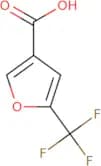
CAS:<p>Versatile small molecule scaffold</p>Formula:C6H4F3NO2Purity:Min. 95%Molecular weight:179.1 g/mol5-(Trifluoromethyl)furan-3-carboxylic acid
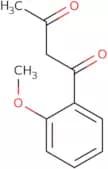
CAS:<p>Versatile small molecule scaffold</p>Formula:C6H3F3O3Purity:Min. 95%Molecular weight:180.08 g/mol1-(2-Methoxyphenyl)butane-1,3-dione
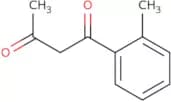
CAS:<p>Versatile small molecule scaffold</p>Formula:C11H12O3Purity:Min. 95%Molecular weight:192.21 g/mol1-o-Tolylbutane-1,3-dione
CAS:<p>Versatile small molecule scaffold</p>Formula:C11H12O2Purity:Min. 95%Molecular weight:176.21 g/mol8-Methoxy-1,4-dioxaspiro[4.5]decane
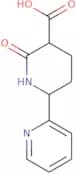
CAS:<p>Versatile small molecule scaffold</p>Formula:C9H16O3Purity:Min. 95%Molecular weight:172.22 g/mol2-Oxo-6-(2-pyridinyl)-1,2-dihydro-3-pyridinecarboxylic acid
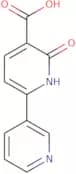
CAS:<p>Versatile small molecule scaffold</p>Formula:C11H8N2O3Purity:Min. 95%Molecular weight:216.19 g/mol2-Oxo-6-(pyridin-3-yl)-1,2-dihydropyridine-3-carboxylic acid
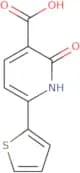
CAS:<p>Versatile small molecule scaffold</p>Formula:C11H8N2O3Purity:Min. 95%Molecular weight:216.19 g/mol2-Oxo-6-(thiophen-2-yl)-1,2-dihydropyridine-3-carboxylic acid
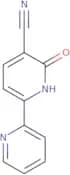
CAS:<p>Versatile small molecule scaffold</p>Formula:C10H7NO3SPurity:Min. 95%Molecular weight:221.23 g/mol2-Oxo-6-(2-pyridinyl)-1,2-dihydro-3-pyridinecarbonitrile
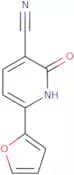
CAS:<p>Versatile small molecule scaffold</p>Formula:C11H7N3OPurity:Min. 95%Molecular weight:197.19 g/mol6-(2-Furyl)-2-oxo-1,2-dihydro-3-pyridinecarbonitrile
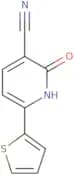
CAS:<p>Versatile small molecule scaffold</p>Formula:C10H6N2O2Purity:Min. 95%Molecular weight:186.17 g/mol2-Oxo-6-(thiophen-2-yl)-1,2-dihydropyridine-3-carbonitrile
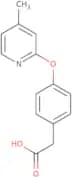
CAS:<p>Versatile small molecule scaffold</p>Formula:C10H6N2OSPurity:Min. 95%Molecular weight:202.23 g/mol2-(4-((4-Methylpyridin-2-yl)oxy)phenyl)acetic acid
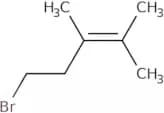
CAS:<p>Versatile small molecule scaffold</p>Formula:C14H13NO3Purity:Min. 95%Molecular weight:243.26 g/mol5-Bromo-2,3-dimethylpent-2-ene
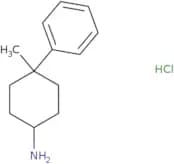
CAS:<p>5-Bromo-2,3-dimethylpent-2-ene (5BDMPE) is a novel chlorinating agent that produces bromine radicals through the process of homolysis. It is an effective chlorinating agent for organic synthesis and has been shown to be selective with respect to the functional groups present in the starting material. 5BDMPE has been shown to react with pyridine rings and to form alkoxides, which are highly reactive intermediates that can lead to kinetic or mechanistic studies. 5BDMPE is an activating reagent that stabilizes amines by converting them into their corresponding amides. This property makes it a useful chemical in organic synthesis.</p>Formula:C7H13BrPurity:Min. 95%Molecular weight:177.08 g/mol4-Methyl-4-phenylcyclohexan-1-amine hydrochloride
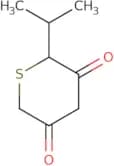
CAS:<p>Versatile small molecule scaffold</p>Formula:C13H20ClNPurity:Min. 95%Molecular weight:225.76 g/mol2-(Propan-2-yl)thiane-3,5-dione
CAS:<p>Versatile small molecule scaffold</p>Formula:C8H12O2SPurity:Min. 95%Molecular weight:172.25 g/mol7-Benzyl-5,6-dimethyl-7H-pyrrolo[2,3-d]pyrimidin-4-amine
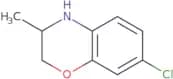
CAS:<p>Versatile small molecule scaffold</p>Formula:C15H16N4Purity:Min. 95%Molecular weight:252.31 g/mol7-Chloro-3-methyl-3,4-dihydro-2H-1,4-benzoxazine
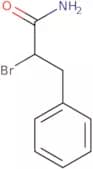
CAS:<p>Versatile small molecule scaffold</p>Formula:C9H10ClNOPurity:Min. 95%Molecular weight:183.63 g/mol2-Bromo-3-phenylpropanamide
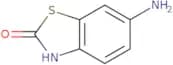
CAS:<p>Versatile small molecule scaffold</p>Formula:C9H10BrNOPurity:Min. 95%Molecular weight:228.09 g/mol6-Amino-3H-benzothiazol-2-one
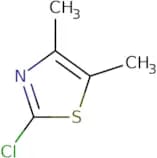
CAS:<p>6-Amino-3H-benzothiazol-2-one is a benzothiazolone that has been shown to be an effective stimulator and yields of 3-nitrobenzaldehyde. The compound has also been shown to have antihelmintic activity, with the best results when combined with other drugs. 6-Amino-3H-benzothiazol-2-one is a pharmacophore that can be used as a starting material for the synthesis of other benzothiazole derivatives. It has been shown to produce an elemental analysis in ethanol and 2,6,8,-trimethylpyridine.</p>Formula:C7H6N2OSPurity:Min. 95%Molecular weight:166.2 g/mol2-Chloro-4,5-dimethyl-1,3-thiazole
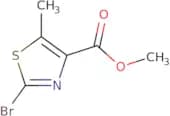
CAS:<p>Versatile small molecule scaffold</p>Formula:C5H6NSClPurity:Min. 95%Molecular weight:147.62 g/molMethyl 2-bromo-5-methylthiazole-4-carboxylate
CAS:<p>Versatile small molecule scaffold</p>Formula:C6H6BrNO2SPurity:Min. 95%Molecular weight:236.09 g/mol4-[4-(Chlorosulfonyl)-2-methylphenoxy]butanoic acid
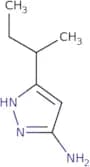
CAS:Controlled Product<p>Versatile small molecule scaffold</p>Formula:C11H13ClO5SPurity:Min. 95%Molecular weight:292.74 g/mol3-(Butan-2-yl)-1H-pyrazol-5-amine
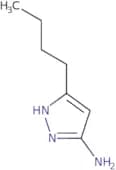
CAS:<p>Versatile small molecule scaffold</p>Formula:C7H13N3Purity:Min. 95%Molecular weight:139.2 g/mol3-Butyl-1H-pyrazol-5-amine
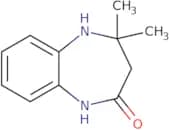
CAS:<p>3-Butyl-1H-pyrazol-5-amine is a cytotoxic agent that has been shown to inhibit the proliferation of glioblastoma cells in vitro. The drug is an analog of pyrazolopyrimidinone, which is a prodrug that can be activated by cytochrome P450 enzymes. In this study, 3-butyl-1H-pyrazol-5-amine was found to be a potent and selective inhibitor of cancer cell proliferation. It also exhibits greater stability than pyrazolopyrimidinone, making it more suitable for clinical trials. This prodrug derivative has been synthesized and its prodrug derivatives have been generated with different activation chemistries to allow for the selective delivery of cytotoxic agents to cancer cells.</p>Formula:C7H13N3Purity:Min. 95%Molecular weight:139.2 g/mol4,4-Dimethyl-2,3,4,5-tetrahydro-1H-1,5-benzodiazepin-2-one
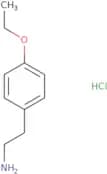
CAS:<p>Versatile small molecule scaffold</p>Formula:C11H14N2OPurity:Min. 95%Molecular weight:190.24 g/mol2-(4-Ethoxyphenyl)ethanamine HCl
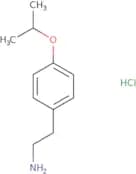
CAS:Controlled Product<p>Versatile small molecule scaffold</p>Formula:C10H16ClNOPurity:Min. 95%Molecular weight:201.69 g/mol2-(4-Isopropoxyphenyl)ethylamine HCl
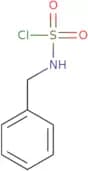
CAS:Controlled Product<p>Versatile small molecule scaffold</p>Formula:C11H18ClNOPurity:Min. 95%Molecular weight:215.72 g/molN-Benzylsulfamoyl chloride
CAS:<p>N-Benzylsulfamoyl chloride is an inhibitor of the enzyme, racemase. This inhibitor has been shown to be active against a variety of hyperproliferative diseases. N-Benzylsulfamoyl chloride inhibits the production of cell proteins and can be used for the treatment of mycoses and thioether-related disorders. It also has cytoprotective activity in liver cells and neuronal cells, which may be due to its ability to inhibit carboxyalkylases.</p>Formula:C7H8ClNO2SPurity:Min. 95%Molecular weight:205.66 g/mol6-Chloro-3-(4-methylphenyl)-[1,2,4]triazolo[4,3-b]pyridazine
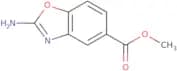
CAS:<p>Versatile small molecule scaffold</p>Formula:C12H9ClN4Purity:Min. 95%Molecular weight:244.68 g/molMethyl 2-amino-1,3-benzoxazole-5-carboxylate
CAS:<p>Versatile small molecule scaffold</p>Formula:C9H8N2O3Purity:Min. 95%Molecular weight:192.17 g/mol2-[4-(6-Chloropyridazin-3-yl)piperazin-1-yl]ethan-1-ol
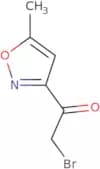
CAS:<p>Versatile small molecule scaffold</p>Formula:C10H15ClN4OPurity:Min. 95%Molecular weight:242.7 g/mol2-Bromo-1-(5-methyl-1,2-oxazol-3-yl)ethan-1-one
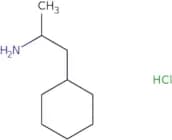
CAS:<p>Versatile small molecule scaffold</p>Formula:C6H6BrNO2Purity:Min. 95%Molecular weight:204.02 g/mol(2S)-1-Cyclohexylpropan-2-amine hydrochloride
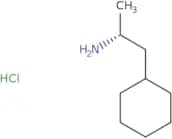
CAS:<p>Versatile small molecule scaffold</p>Formula:C9H20ClNPurity:Min. 95%Molecular weight:177.71 g/mol(2R)-1-Cyclohexylpropan-2-amine hydrochloride
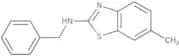
CAS:<p>Versatile small molecule scaffold</p>Formula:C9H20ClNPurity:Min. 95%Molecular weight:177.7 g/molN-Benzyl-6-methyl-1,3-benzothiazol-2-amine
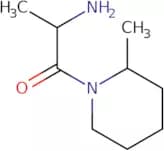
CAS:<p>Versatile small molecule scaffold</p>Formula:C15H14N2SPurity:Min. 95%Molecular weight:254.4 g/mol2-Amino-1-(2-methylpiperidin-1-yl)propan-1-one
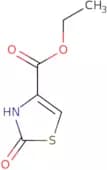
CAS:Controlled Product<p>Versatile small molecule scaffold</p>Formula:C9H18N2OPurity:Min. 95%Molecular weight:170.25 g/molEthyl 2-hydroxy-1,3-thiazole-4-carboxylate
CAS:<p>Versatile small molecule scaffold</p>Formula:C6H7NO3SPurity:Min. 95%Molecular weight:173.19 g/mol2-(Carbamoylmethoxy)benzoic acid
CAS:<p>Versatile small molecule scaffold</p>Formula:C9H9NO4Purity:Min. 95%Molecular weight:195.17 g/molo-[3-(Dimethylamino)propyl]hydroxylamine dihydrochloride
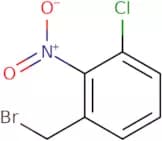
CAS:<p>o-[3-(Dimethylamino)propyl]hydroxylamine dihydrochloride is a drug used to treat cardiovascular disorders. It is a prodrug that is metabolized in the body to form hydroxylamine, which has affinity for c1-6 alkyl groups. The hydroxyl group on the heterocycle of o-[3-(Dimethylamino)propyl]hydroxylamine dihydrochloride also has biological properties. This drug is an inhibitor of monoamine oxidase and may reduce the risk of heart disease by lowering blood pressure and decreasing cholesterol levels. The stereoisomers of this compound are used for the treatment of hypertension. The benzyl group on o-[3-(Dimethylamino)propyl]hydroxylamine dihydrochloride may be responsible for its ability to inhibit monoamine oxidase A and B, as well as other enzymes involved in cardiovascular diseases.</p>Formula:C5H16Cl2N2OPurity:Min. 95%Molecular weight:191.1 g/mol3-Chloro-2-nitrobenzyl bromide
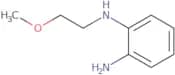
CAS:<p>Versatile small molecule scaffold</p>Formula:C7H5BrClNO2Purity:Min. 95%Molecular weight:250.48 g/molN1-(2-Methoxyethyl)benzene-1,2-diamine
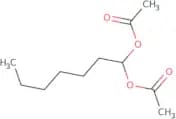
CAS:<p>Versatile small molecule scaffold</p>Formula:C9H14N2OPurity:Min. 95%Molecular weight:166.22 g/mol1-(Acetyloxy)heptyl acetate
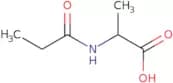
CAS:<p>1-(Acetyloxy)heptyl acetate is an organic compound that has the molecular formula CH3COOC7H15. It is a colorless liquid with boiling point of 174°C at 1 mmHg. This compound is used as a solvent, and it is also used in the synthesis of some pharmaceuticals. The melting point of 1-(acetyloxy)heptyl acetate varies depending on the temperature because this compound exists as two polymorphs. The compound can be activated by heating to temperatures above 145°C, which will cause it to form hydrogen bonds with water molecules. One of the major uses for 1-(acetyloxy)heptyl acetate is as an excipient in tablets and capsules. The most common use for this substance is in pharmaceuticals that are taken orally and require solvents or solubilizers to dissolve other components such as inactive ingredients, active ingredients, or colors.</p>Formula:C11H20O4Purity:Min. 95%Molecular weight:216.27 g/mol(2S)-2-Propanamidopropanoic acid
CAS:<p>(2S)-2-Propanamidopropanoic acid is a non-protein amino acid that is used in the synthesis of peptides. It has an acidic side chain and can be reacted with amines to form a beta-amide linkage. These reactions are catalyzed by enzymes such as proteases and thiols. This compound has been shown to inhibit the activity of proteases, which may be due to its ability to compete for binding sites on the enzyme. The equilibrium constant for this reaction is 1.5 x 10^9 M^(-1).</p>Formula:C6H11NO3Purity:Min. 95%Molecular weight:145.16 g/molMethyl 2-[(3-aminophenyl)formamido]acetate
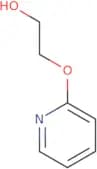
CAS:<p>Versatile small molecule scaffold</p>Formula:C10H12N2O3Purity:Min. 95%Molecular weight:208.21 g/mol2-(Pyridin-2-yloxy)ethan-1-ol
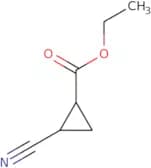
CAS:<p>Versatile small molecule scaffold</p>Formula:C7H9NO2Purity:Min. 95%Molecular weight:139.15 g/molethyl 2-cyanocyclopropane-1-carboxylate
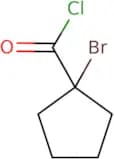
CAS:<p>Ethyl 2-cyanocyclopropane-1-carboxylate is a reactive chemical reagent that can be used to synthesize a variety of compounds. It is an aliphatic compound with a carbonyl group at the end of the molecule and belongs to a class of compounds called chlorohydrins. Ethyl 2-cyanocyclopropane-1-carboxylate has been used as an organoindium compound for the synthesis of stilbene derivatives. It can also be used to synthesize chlorinated alkenes, oxiranes, and other cyclopropanes. Ethyl 2-cyanocyclopropane-1-carboxylate can react with alcohols or phenols in presence of acid to form acetals or ketals, respectively.</p>Formula:C7H9NO2Purity:Min. 95%Molecular weight:139.15 g/mol1-Bromocyclopentane-1-carbonyl chloride
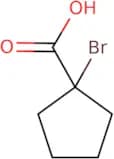
CAS:<p>Versatile small molecule scaffold</p>Formula:C6H8BrClOPurity:Min. 95%Molecular weight:211.48 g/mol1-Bromocyclopentane-1-carboxylic acid
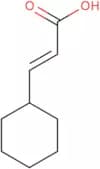
CAS:<p>Cyclopentane-1,2-dicarboxylic acid is an organic compound with the molecular formula C5H8O4. The molecule consists of a cyclopentane ring and two carboxylic acid groups. Cyclopentane-1,2-dicarboxylic acid can be synthesized by an intramolecular cyclization reaction between a 1-bromocyclopentane and a chalcone. This reagent can also be used to synthesize other compounds such as phenoxyethanol, an enolate, and organozinc compounds.</p>Formula:C6H9BrO2Purity:Min. 95%Molecular weight:193.04 g/mol(E)-3-Cyclohexylacrylic acid
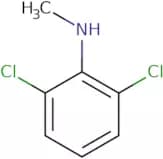
CAS:<p>(E)-3-Cyclohexylacrylic acid is an antibacterial agent that inhibits the growth of bacteria by binding to the 50S ribosomal subunit. It binds to bacterial 16S ribosomal RNA and inhibits protein synthesis, leading to cell death by inhibiting the production of proteins vital for cell division. (E)-3-Cyclohexylacrylic acid has been shown to be effective against methicillin-resistant Staphylococcus aureus (MRSA) and Clostridium perfringens, although is not active against acid-fast bacteria such as Mycobacterium tuberculosis or Mycobacterium avium complex. This compound also has anticancer activity, which may be due to its ability to inhibit topoisomerase II activity in cells.</p>Formula:C9H14O2Purity:Min. 95%Molecular weight:154.21 g/mol2,6-Dichloro-N-methylaniline
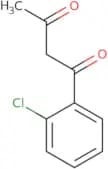
CAS:<p>Versatile small molecule scaffold</p>Formula:C7H7Cl2NPurity:Min. 95%Molecular weight:176.04 g/mol1-(2-Chlorophenyl)-1,3-butanedione
CAS:<p>Versatile small molecule scaffold</p>Formula:C10H9O2ClPurity:Min. 95%Molecular weight:196.63 g/mol7H,8H-Imidazo[1,5-a]pyrazin-8-one
CAS:<p>7H,8H-Imidazo[1,5-a]pyrazin-8-one is a potent and selective inhibitor of the bromodomain family. Bromodomains are protein domains found in many proteins that have been implicated in regulating gene expression, DNA repair, and protein degradation. Inhibiting this domain leads to decreased proliferation of tumor cells. 7H,8H-Imidazo[1,5-a]pyrazin-8-one has also shown potential as an anti-neurodegenerative agent by inhibiting the enzyme acetylcholinesterase. This compound is active against cancerous cell lines and is crystalline with a polymorphic form that can be used for medicine production.</p>Formula:C6H5N3OPurity:Min. 95%Molecular weight:135.12 g/mol8-chloroimidazo[1,5-a]pyrazine
CAS:<p>8-Chloroimidazo[1,5-a]pyrazine is a potent insulin-like growth factor-I receptor (IGF-IR) inhibitor with potential therapeutic use for type II diabetes. It was found to inhibit IGF-I induced activation of the IR and downstream signaling pathways in a dose dependent manner. 8-Chloroimidazo[1,5-a]pyrazine inhibited IGF-I induced mitogenesis in human colon cancer cells and showed antiangiogenic activity in nude mice bearing xenografts of human colon cancer cells.</p>Formula:C6H4ClN3Purity:Min. 95%Molecular weight:153.57 g/mol4-(Propan-2-yl)benzene-1,2-diamine
CAS:<p>Versatile small molecule scaffold</p>Formula:C9H14N2Purity:Min. 95%Molecular weight:150.22 g/molFuro[3,2-b]pyridine-5-carboxylic acid
CAS:<p>Versatile small molecule scaffold</p>Formula:C8H5NO3Purity:Min. 95%Molecular weight:163.13 g/molThieno[3,2-b]pyridine-5-carboxylic acid
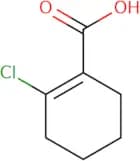
CAS:<p>Versatile small molecule scaffold</p>Formula:C8H5NO2SPurity:Min. 95%Molecular weight:179.2 g/mol2-Chlorocyclohex-1-ene-1-carboxylic acid
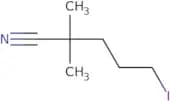
CAS:<p>2-Chlorocyclohex-1-ene-1-carboxylic acid is a synthetic compound that has been used as a reactant for the production of phthalic anhydride. The reaction mechanism begins with the formation of isocyanide, which reacts with benzoic acid to form an intermediate benzoyl isocyanide. This intermediate reacts with the acetic acid to produce 2-chlorocyclohexanecarboxylic acid, which in turn undergoes hydrolysis to give phthalic anhydride.</p>Formula:C7H9ClO2Purity:Min. 95%Molecular weight:160.6 g/mol5-Iodo-2,2-dimethylpentanenitrile
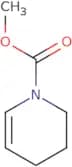
CAS:<p>Versatile small molecule scaffold</p>Formula:C7H12INPurity:Min. 95%Molecular weight:237.08 g/molMethyl 1,2,3,4-tetrahydropyridine-1-carboxylate
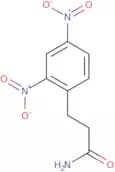
CAS:<p>Versatile small molecule scaffold</p>Formula:C7H11NO2Purity:Min. 95%Molecular weight:141.17 g/mol3-(2,4-Dinitrophenyl)propanamide
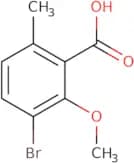
CAS:<p>Versatile small molecule scaffold</p>Formula:C9H9N3O5Purity:Min. 95%Molecular weight:239.18 g/mol3-Bromo-2-methoxy-6-methylbenzoic acid
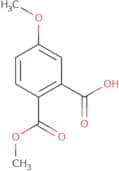
CAS:<p>Versatile small molecule scaffold</p>Formula:C9H9BrO3Purity:Min. 95%Molecular weight:245.07 g/mol5-Methoxy-2-(methoxycarbonyl)benzoic acid
CAS:<p>Versatile small molecule scaffold</p>Formula:C10H10O5Purity:Min. 95%Molecular weight:210.18 g/molN4-[(Furan-2-yl)methyl]-N2-methylquinazoline-2,4-diamine
CAS:<p>Versatile small molecule scaffold</p>Formula:C14H14N4OPurity:Min. 95%Molecular weight:254.29 g/mol{1-[4-(Trifluoromethyl)phenyl]piperidin-4-yl}methanol
CAS:<p>Versatile small molecule scaffold</p>Formula:C13H16F3NOPurity:Min. 95%Molecular weight:259.27 g/mol1-{[4-(Trifluoromethoxy)phenyl]methyl}piperidin-4-ol
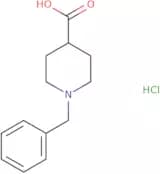
CAS:<p>Versatile small molecule scaffold</p>Formula:C13H16F3NO2Purity:Min. 95%Molecular weight:275.27 g/mol1-Benzylpiperidine-4-carboxylic acid hydrochloride
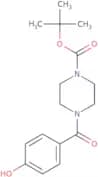
CAS:<p>Versatile small molecule scaffold</p>Formula:C13H18ClNO2Purity:Min. 95%Molecular weight:255.74 g/moltert-Butyl 4-(4-hydroxybenzoyl)piperazine-1-carboxylate
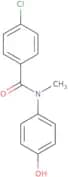
CAS:<p>Versatile small molecule scaffold</p>Formula:C16H22N2O4Purity:Min. 95%Molecular weight:306.36 g/mol4-Chloro-N-(4-hydroxyphenyl)-N-methylbenzamide
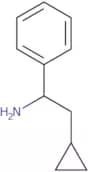
CAS:<p>Versatile small molecule scaffold</p>Formula:C14H12ClNO2Purity:Min. 95%Molecular weight:261.7 g/mol2-Cyclopropyl-1-phenylethan-1-amine
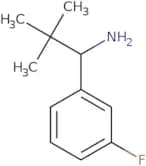
CAS:<p>Versatile small molecule scaffold</p>Formula:C11H15NPurity:Min. 95%Molecular weight:161.24 g/mol1-(3-Fluorophenyl)-2,2-dimethylpropan-1-amine
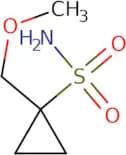
CAS:<p>Versatile small molecule scaffold</p>Formula:C11H16FNPurity:Min. 95%Molecular weight:181.25 g/mol1-(Methoxymethyl)cyclopropane-1-sulfonamide
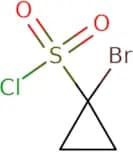
CAS:<p>Versatile small molecule scaffold</p>Formula:C5H11NO3SPurity:Min. 95%Molecular weight:165.21 g/mol1-Bromocyclopropane-1-sulfonyl chloride
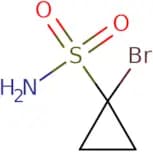
CAS:<p>Versatile small molecule scaffold</p>Formula:C3H4BrClO2SPurity:Min. 95%Molecular weight:219.49 g/mol1-Bromocyclopropane-1-sulfonamide
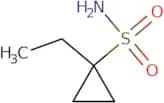
CAS:<p>Versatile small molecule scaffold</p>Formula:C3H6BrNO2SPurity:Min. 95%Molecular weight:200.06 g/mol1-ethylcyclopropane-1-sulfonamide
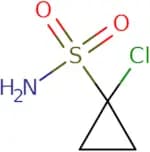
CAS:<p>Versatile small molecule scaffold</p>Formula:C5H11NO2SPurity:Min. 95%Molecular weight:149.21 g/mol1-Chlorocyclopropane-1-sulfonamide
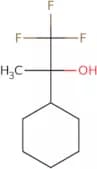
CAS:<p>Versatile small molecule scaffold</p>Formula:C3H6ClNO2SPurity:Min. 95%Molecular weight:155.6 g/mol2-Cyclohexyl-1,1,1-trifluoropropan-2-ol
CAS:<p>Versatile small molecule scaffold</p>Formula:C9H15F3OPurity:Min. 95%Molecular weight:196.21 g/molN-Cyclopropylquinolin-4-amine
CAS:<p>Versatile small molecule scaffold</p>Formula:C12H12N2Purity:Min. 95%Molecular weight:184.24 g/mol1-Ethyl-1H-indol-6-amine
CAS:<p>Versatile small molecule scaffold</p>Formula:C10H12N2Purity:Min. 95%Molecular weight:160.22 g/mol4,6-Dimethyl-3-(1H-pyrrol-1-yl)thieno[2,3-b]pyridine-2-carboxylic acid
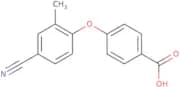
CAS:<p>Versatile small molecule scaffold</p>Formula:C14H12N2O2SPurity:Min. 95%Molecular weight:272.32 g/mol4-(4-Cyano-2-methylphenoxy)benzoic acid
CAS:<p>Versatile small molecule scaffold</p>Formula:C15H11NO3Purity:Min. 95%Molecular weight:253.25 g/mol[3-(4-Benzylpiperidin-1-yl)propyl](ethyl)amine
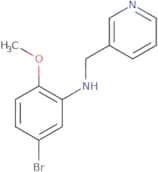
CAS:<p>Versatile small molecule scaffold</p>Formula:C17H28N2Purity:Min. 95%Molecular weight:260.4 g/mol5-Bromo-2-methoxy-N-(pyridin-3-ylmethyl)aniline
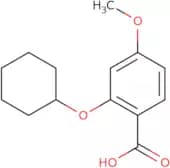
CAS:<p>Versatile small molecule scaffold</p>Formula:C13H13BrN2OPurity:Min. 95%Molecular weight:293.16 g/mol2-(Cyclohexyloxy)-4-methoxybenzoic acid
CAS:<p>Versatile small molecule scaffold</p>Formula:C14H18O4Purity:Min. 95%Molecular weight:250.29 g/mol1-({[(3-Bromophenyl)methyl]amino}methyl)cyclohexan-1-ol
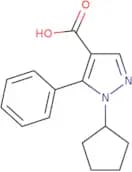
CAS:<p>Versatile small molecule scaffold</p>Formula:C14H20BrNOPurity:Min. 95%Molecular weight:298.22 g/mol1-Cyclopentyl-5-phenyl-1H-pyrazole-4-carboxylic acid
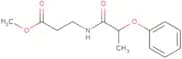
CAS:<p>Versatile small molecule scaffold</p>Formula:C15H16N2O2Purity:Min. 95%Molecular weight:256.3 g/molMethyl 3-(2-phenoxypropanamido)propanoate
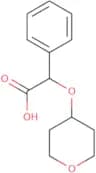
CAS:<p>Versatile small molecule scaffold</p>Formula:C13H17NO4Purity:Min. 95%Molecular weight:251.28 g/mol2-(Oxan-4-yloxy)-2-phenylacetic acid
CAS:<p>Versatile small molecule scaffold</p>Formula:C13H16O4Purity:Min. 95%Molecular weight:236.26 g/mol6-Chloro-N-[2-(4-chlorophenyl)ethyl]-3-nitropyridin-2-amine
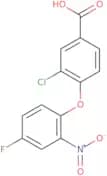
CAS:<p>Versatile small molecule scaffold</p>Formula:C13H11Cl2N3O2Purity:Min. 95%Molecular weight:312.15 g/mol3-Chloro-4-(4-fluoro-2-nitrophenoxy)benzoic acid
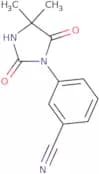
CAS:<p>Versatile small molecule scaffold</p>Formula:C13H7ClFNO5Purity:Min. 95%Molecular weight:311.65 g/mol3-(4,4-Dimethyl-2,5-dioxoimidazolidin-1-yl)benzonitrile
CAS:<p>Versatile small molecule scaffold</p>Formula:C12H11N3O2Purity:Min. 95%Molecular weight:229.23 g/mol1-[4-(4-Chlorophenyl)piperazin-1-yl]-2-methylpropan-2-amine
CAS:<p>Versatile small molecule scaffold</p>Formula:C14H22ClN3Purity:Min. 95%Molecular weight:267.8 g/mol3-Amino-4,5-dichloro-N-[1-(dimethylamino)-4-methylpentan-2-yl]benzamide
CAS:<p>Versatile small molecule scaffold</p>Formula:C15H23Cl2N3OPurity:Min. 95%Molecular weight:332.3 g/mol[(2,4-Dichlorophenyl)(pyridin-3-yl)methyl](methyl)amine
CAS:<p>Versatile small molecule scaffold</p>Formula:C13H12Cl2N2Purity:Min. 95%Molecular weight:267.15 g/mol

![8-Methoxy-1,4-dioxaspiro[4.5]decane](/_next/image/?url=https%3A%2Fstatic.cymitquimica.com%2Fproducts%2F3D%2Fthumb-webp%2FGCA29299.webp&w=3840&q=75)
![7-Benzyl-5,6-dimethyl-7H-pyrrolo[2,3-d]pyrimidin-4-amine](/_next/image/?url=https%3A%2Fstatic.cymitquimica.com%2Fproducts%2F3D%2Fthumb-webp%2FGCA34453.webp&w=3840&q=75)
![4-[4-(Chlorosulfonyl)-2-methylphenoxy]butanoic acid](/_next/image/?url=https%3A%2Fstatic.cymitquimica.com%2Fproducts%2F3D%2Fthumb-webp%2FGCA35914.webp&w=3840&q=75)
![6-Chloro-3-(4-methylphenyl)-[1,2,4]triazolo[4,3-b]pyridazine](/_next/image/?url=https%3A%2Fstatic.cymitquimica.com%2Fproducts%2F3D%2Fthumb-webp%2FGCA38342.webp&w=3840&q=75)
![2-[4-(6-Chloropyridazin-3-yl)piperazin-1-yl]ethan-1-ol](/_next/image/?url=https%3A%2Fstatic.cymitquimica.com%2Fproducts%2F3D%2Fthumb-webp%2FGCA39287.webp&w=3840&q=75)

![o-[3-(Dimethylamino)propyl]hydroxylamine dihydrochloride](/_next/image/?url=https%3A%2Fstatic.cymitquimica.com%2Fproducts%2F3D%2Fthumb-webp%2FGCA42532.webp&w=3840&q=75)
![Methyl 2-[(3-aminophenyl)formamido]acetate](/_next/image/?url=https%3A%2Fstatic.cymitquimica.com%2Fproducts%2F3D%2Fthumb-webp%2FGCA44569.webp&w=3840&q=75)
![7H,8H-Imidazo[1,5-a]pyrazin-8-one](/_next/image/?url=https%3A%2Fstatic.cymitquimica.com%2Fproducts%2F3D%2Fthumb-webp%2FGCA46821.webp&w=3840&q=75)
![8-chloroimidazo[1,5-a]pyrazine](/_next/image/?url=https%3A%2Fstatic.cymitquimica.com%2Fproducts%2F3D%2Fthumb-webp%2FGCA46823.webp&w=3840&q=75)

![Furo[3,2-b]pyridine-5-carboxylic acid](/_next/image/?url=https%3A%2Fstatic.cymitquimica.com%2Fproducts%2F3D%2Fthumb-webp%2FGCA47391.webp&w=3840&q=75)
![Thieno[3,2-b]pyridine-5-carboxylic acid](/_next/image/?url=https%3A%2Fstatic.cymitquimica.com%2Fproducts%2F3D%2Fthumb-webp%2FGCA47392.webp&w=3840&q=75)
![N4-[(Furan-2-yl)methyl]-N2-methylquinazoline-2,4-diamine](/_next/image/?url=https%3A%2Fstatic.cymitquimica.com%2Fproducts%2F3D%2Fthumb-webp%2FGCB47524.webp&w=3840&q=75)
![{1-[4-(Trifluoromethyl)phenyl]piperidin-4-yl}methanol](/_next/image/?url=https%3A%2Fstatic.cymitquimica.com%2Fproducts%2F3D%2Fthumb-webp%2FGCB48199.webp&w=3840&q=75)
![1-{[4-(Trifluoromethoxy)phenyl]methyl}piperidin-4-ol](/_next/image/?url=https%3A%2Fstatic.cymitquimica.com%2Fproducts%2F3D%2Fthumb-webp%2FGCB48200.webp&w=3840&q=75)


![4,6-Dimethyl-3-(1H-pyrrol-1-yl)thieno[2,3-b]pyridine-2-carboxylic acid](/_next/image/?url=https%3A%2Fstatic.cymitquimica.com%2Fproducts%2F3D%2Fthumb-webp%2FGCB85003.webp&w=3840&q=75)
amine](/_next/image/?url=https%3A%2Fstatic.cymitquimica.com%2Fproducts%2F3D%2Fthumb-webp%2FGCC03451.webp&w=3840&q=75)
![1-({[(3-Bromophenyl)methyl]amino}methyl)cyclohexan-1-ol](/_next/image/?url=https%3A%2Fstatic.cymitquimica.com%2Fproducts%2F3D%2Fthumb-webp%2FGCC07989.webp&w=3840&q=75)
![6-Chloro-N-[2-(4-chlorophenyl)ethyl]-3-nitropyridin-2-amine](/_next/image/?url=https%3A%2Fstatic.cymitquimica.com%2Fproducts%2F3D%2Fthumb-webp%2FGCC18361.webp&w=3840&q=75)
![1-[4-(4-Chlorophenyl)piperazin-1-yl]-2-methylpropan-2-amine](/_next/image/?url=https%3A%2Fstatic.cymitquimica.com%2Fproducts%2F3D%2Fthumb-webp%2FGCC19931.webp&w=3840&q=75)
![3-Amino-4,5-dichloro-N-[1-(dimethylamino)-4-methylpentan-2-yl]benzamide](/_next/image/?url=https%3A%2Fstatic.cymitquimica.com%2Fproducts%2F3D%2Fthumb-webp%2FGCC21447.webp&w=3840&q=75)
amine](/_next/image/?url=https%3A%2Fstatic.cymitquimica.com%2Fproducts%2F3D%2Fthumb-webp%2FGCC22507.webp&w=3840&q=75)