Building Blocks
This section contains fundamental products for the synthesis of organic and biological compounds. Building blocks are the essential starting materials used to construct complex molecules through various chemical reactions. They play a critical role in drug discovery, material science, and chemical research. At CymitQuimica, we offer a diverse range of high-quality building blocks to support your innovative research and industrial projects, ensuring you have the essential components for successful synthesis.
Subcategories of "Building Blocks"
- Boronic Acids & Boronic Acid Derivatives(5,756 products)
- Chiral Building Blocks(1,242 products)
- Hydrocarbon Building Blocks(6,095 products)
- Organic Building Blocks(61,038 products)
Found 196817 products of "Building Blocks"
Sort by
Purity (%)
0
100
|
0
|
50
|
90
|
95
|
100
2-[4-Chloro-3,5-bis(difluoromethyl)-1H-pyrazol-1-yl]propanoic acid
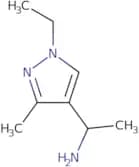
CAS:<p>Versatile small molecule scaffold</p>Formula:C8H7ClF4N2O2Purity:Min. 95%Molecular weight:274.6 g/mol1-(1-Ethyl-3-methyl-1H-pyrazol-4-yl)ethan-1-amine
CAS:<p>Versatile small molecule scaffold</p>Formula:C8H15N3Purity:Min. 95%Molecular weight:153.22 g/mol2-[4-Chloro-5-methyl-3-(trifluoromethyl)-1H-pyrazol-1-yl]propanoic acid
CAS:<p>Versatile small molecule scaffold</p>Formula:C8H8ClF3N2O2Purity:Min. 95%Molecular weight:256.61 g/mol2-(3-Methyl-1H-pyrazol-1-yl)propanohydrazide
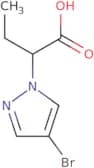
CAS:<p>Versatile small molecule scaffold</p>Formula:C7H12N4OPurity:Min. 95%Molecular weight:168.2 g/mol2-(4-Bromo-1H-pyrazol-1-yl)butanoic acid
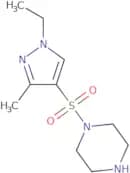
CAS:<p>Versatile small molecule scaffold</p>Formula:C7H9BrN2O2Purity:Min. 95%Molecular weight:233.06 g/mol1-(1-Ethyl-3-methyl-1H-pyrazole-4-sulfonyl)-piperazine
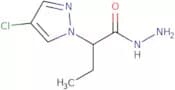
CAS:<p>Versatile small molecule scaffold</p>Formula:C10H18N4O2SPurity:Min. 95%Molecular weight:258.34 g/mol2-(4-Chloro-1H-pyrazol-1-yl)butanohydrazide
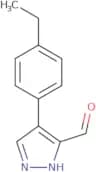
CAS:<p>Versatile small molecule scaffold</p>Formula:C7H11ClN4OPurity:Min. 95%Molecular weight:202.64 g/mol4-(4-Ethylphenyl)-1H-pyrazole-3-carbaldehyde
CAS:<p>Versatile small molecule scaffold</p>Formula:C12H12N2OPurity:Min. 95%Molecular weight:200.24 g/mol1-[(tert-butoxy)carbonyl]-4-(methoxycarbonyl)piperidine-4-carboxylic acid
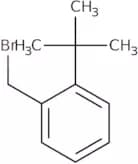
CAS:<p>Versatile small molecule scaffold</p>Formula:C13H21NO6Purity:Min. 95%Molecular weight:287.3 g/mol1-(Bromomethyl)-2-tert-butylbenzene
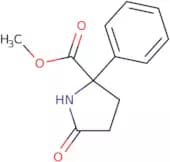
CAS:<p>Versatile small molecule scaffold</p>Formula:C11H15BrPurity:Min. 95%Molecular weight:227.14 g/molMethyl 5-oxo-2-phenylpyrrolidine-2-carboxylate
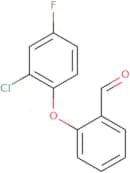
CAS:<p>Versatile small molecule scaffold</p>Formula:C12H13NO3Purity:Min. 95%Molecular weight:219.24 g/mol2-(2-Chloro-4-fluorophenoxy)benzaldehyde
CAS:<p>Versatile small molecule scaffold</p>Formula:C13H8ClFO2Purity:Min. 95%Molecular weight:250.65 g/mol3-(Iodomethyl)-2-oxaspiro[4.4]nonan-1-one
CAS:<p>Versatile small molecule scaffold</p>Formula:C9H13IO2Purity:Min. 95%Molecular weight:280.1 g/mol2-Methyl-2,6-diazaspiro[3.3]heptane diHCl
CAS:<p>Versatile small molecule scaffold</p>Formula:C6H14Cl2N2Purity:Min. 95%Molecular weight:185.09 g/molEthyl 2H,4H,5H,7H-pyrano[3,4-c]pyrazole-3-carboxylate
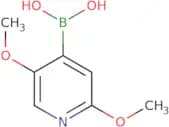
CAS:<p>Versatile small molecule scaffold</p>Formula:C9H12N2O3Purity:Min. 95%Molecular weight:196.2 g/mol2,5-Dimethoxypyridine-4-boronic acid
CAS:<p>Versatile small molecule scaffold</p>Formula:C7H10BNO4Purity:Min. 95%Molecular weight:182.97 g/moltert-Butyl N-(3-{[(tert-butoxy)carbonyl]amino}-5-tert-butylphenyl)carbamate
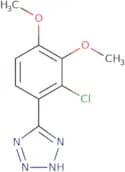
CAS:<p>Versatile small molecule scaffold</p>Formula:C20H32N2O4Purity:Min. 95%Molecular weight:364.5 g/mol5-(2-Chloro-3,4-dimethoxyphenyl)-2H-1,2,3,4-tetrazole
CAS:<p>Versatile small molecule scaffold</p>Formula:C9H9ClN4O2Purity:Min. 95%Molecular weight:240.64 g/mol3-{[(9H-Fluoren-9-yl)methoxy]carbonyl}-2,3,4,5-tetrahydro-1H-3-benzazepine-7-carboxylic acid
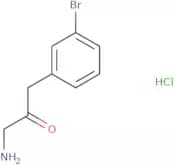
CAS:<p>Versatile small molecule scaffold</p>Formula:C26H23NO4Purity:Min. 95%Molecular weight:413.5 g/mol1-Amino-3-(3-bromophenyl)propan-2-one hydrochloride
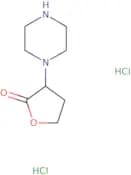
CAS:<p>Versatile small molecule scaffold</p>Formula:C9H11BrClNOPurity:Min. 95%Molecular weight:264.54 g/mol3-(Piperazin-1-yl)oxolan-2-one dihydrochloride
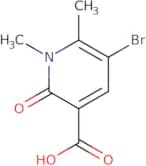
CAS:<p>Versatile small molecule scaffold</p>Formula:C8H16Cl2N2O2Purity:Min. 95%Molecular weight:243.13 g/mol5-bromo-1,6-dimethyl-2-oxo-1,2-dihydropyridine-3-carboxylic acid
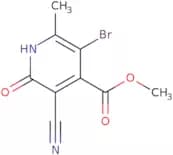
CAS:<p>Versatile small molecule scaffold</p>Formula:C8H8BrNO3Purity:Min. 95%Molecular weight:246.1 g/molMethyl 5-bromo-3-cyano-6-methyl-2-oxo-1,2-dihydropyridine-4-carboxylate
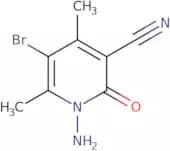
CAS:<p>Versatile small molecule scaffold</p>Formula:C9H7BrN2O3Purity:Min. 95%Molecular weight:271.07 g/mol1-Amino-5-bromo-4,6-dimethyl-2-oxo-1,2-dihydropyridine-3-carbonitrile
CAS:<p>Versatile small molecule scaffold</p>Formula:C8H8BrN3OPurity:Min. 95%Molecular weight:242.07 g/mol2-{5,11-Dioxo-5H,6H,6aH,11H-isoindolo[2,1-a]quinazolin-6-yl}acetic acid
CAS:<p>Versatile small molecule scaffold</p>Formula:C17H12N2O4Purity:Min. 95%Molecular weight:308.29 g/mol6a,11-Dihydro-9,10-dimethoxy-5,11-dioxo-isoindolo[2,1-a]quinazoline-6(5H)-hexanoic acid
CAS:<p>Versatile small molecule scaffold</p>Formula:C23H24N2O6Purity:Min. 95%Molecular weight:424.4 g/mol8-Oxabicyclo[3.2.1]octan-3-amine HCl
CAS:<p>Versatile small molecule scaffold</p>Formula:C7H14ClNOPurity:Min. 95%Molecular weight:163.65 g/mol1,1-difluoro-5-azaspiro[2.5]octane hydrochloride
CAS:<p>Versatile small molecule scaffold</p>Formula:C7H12ClF2NPurity:Min. 95%Molecular weight:183.63 g/mol2-azabicyclo[2.2.2]octane-1-methanol hcl
CAS:<p>Versatile small molecule scaffold</p>Formula:C8H16ClNOPurity:Min. 95%Molecular weight:177.67 g/moltert-butyl N-({3-aminobicyclo[1.1.1]pentan-1-yl}methyl)carbamate
CAS:<p>Versatile small molecule scaffold</p>Formula:C11H20N2O2Purity:Min. 95%Molecular weight:212.3 g/moltert-butyl (4-aminobicyclo[2.2.2]octan-1-yl)carbamate
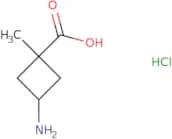
CAS:<p>Versatile small molecule scaffold</p>Formula:C13H24N2O2Purity:Min. 95%Molecular weight:240.34 g/molcis-3-amino-1-methylcyclobutanecarboxylic acid hcl
CAS:<p>Versatile small molecule scaffold</p>Formula:C6H12ClNO2Purity:Min. 95%Molecular weight:165.62 g/mol1,1-Difluoro-5-azaspiro[2.3]hexane hydrochloride
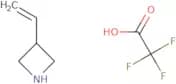
CAS:<p>Versatile small molecule scaffold</p>Formula:C5H8ClF2NPurity:Min. 95%Molecular weight:155.6 g/mol3-Ethenylazetidine; trifluoroacetic acid
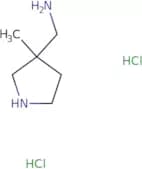
CAS:<p>Versatile small molecule scaffold</p>Formula:C7H10F3NO2Purity:Min. 95%Molecular weight:197.16 g/mol(3-methylpyrrolidin-3-yl)methanamine dihydrochloride
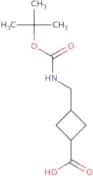
CAS:<p>Versatile small molecule scaffold</p>Formula:C6H16Cl2N2Purity:Min. 95%Molecular weight:187.11 g/mol3-(((tert-Butoxycarbonyl)amino)methyl)cyclobutanecarboxylic acid
CAS:<p>Versatile small molecule scaffold</p>Formula:C11H19NO4Purity:Min. 95%Molecular weight:229.3 g/molN-(4-Aminobicyclo[2.2.1]hept-1-yl)carbamic Acid 1,1-Dimethylethyl Ester
CAS:<p>Versatile small molecule scaffold</p>Formula:C12H22N2O2Purity:Min. 95%Molecular weight:226.32 g/mol(2E)-3-[4-(Heptyloxy)-3-methoxyphenyl]prop-2-enoic acid
CAS:<p>Versatile small molecule scaffold</p>Formula:C17H24O4Purity:Min. 95%Molecular weight:292.4 g/mol(1S)-1-(3-Methylphenyl)ethan-1-amine hydrochloride
CAS:<p>Versatile small molecule scaffold</p>Formula:C9H14ClNPurity:Min. 95%Molecular weight:171.67 g/mol(2S,4R)-4-Ethoxypyrrolidine-2-carboxylic acid hydrochloride
CAS:Versatile small molecule scaffoldFormula:C7H14ClNO3Purity:Min. 95%Molecular weight:195.6 g/molTrifluoromethanesulfonic acid
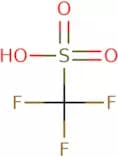
CAS:<p>Trifluoromethanesulfonic acid is a strong oxidizing agent that is used as a catalyst for the synthesis of organic compounds. It is an excellent solvent for many types of reactions and has been shown to be an effective catalyst for the synthesis of triflate, which can be used in cationic polymerization. Trifluoromethanesulfonic acid also has potential applications in carbohydrate chemistry and asymmetric synthesis, due to its ability to reduce carboxylic acids and nitriles. Trifluoromethanesulfonic acid can be synthesized by reacting potassium hexafluorophosphate with amines or nitrogen atoms under activated conditions.</p>Formula:CHF3O3SPurity:Min. 95%Color and Shape:Clear LiquidMolecular weight:150.08 g/mol2,3,5-Trichloropyridine
CAS:<p>2,3,5-Trichloropyridine is a chemical compound that reacts with chlorine and hydroxide to form hydrogen chloride and sodium hydroxide. It is used in the wastewater treatment process as an oxidizing agent for the removal of organic compounds from water. 2,3,5-Trichloropyridine is also used as a chlorinating agent for various purposes such as the production of acrylonitrile or the destruction of hazardous wastes. The reaction products are hydrochloric acid and sodium carbonate. This substance may react with nucleophiles to form more reactive species such as nitronium ions.</p>Formula:C5H2Cl3NPurity:Min. 95%Molecular weight:180.925281,1,4,4-Tetraphenyl-1,3-butadiene
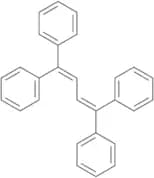
CAS:<p>1,1,4,4-Tetraphenyl-1,3-butadiene is a chemical compound that is stable in air and water. It has been shown to be active against pluripotent cells which are the precursor of all cells in the body. 1,1,4,4-Tetraphenyl-1,3-butadiene has been used for a number of biochemical research studies and has been shown to have electrochemical properties as an electrode material. This compound also has high values for toxicological studies. It can be found in the atmosphere at low levels but can also be released into the environment from industrial sources such as electric arc furnaces or coal burning plants.</p>Formula:C28H22Purity:Min. 99.0%Color and Shape:White PowderMolecular weight:358.47 g/mol3,4,5-Trihydroxycinnamic acid
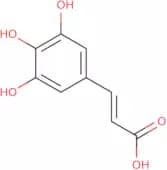
CAS:<p>3,4,5-Trihydroxycinnamic acid is a phenolic compound found in the bark of Betula pubescens that has been shown to have antiinflammatory activity. It also has antioxidant properties and has been shown to inhibit the production of TNF-α (tumor necrosis factor-alpha) and to reduce oxidative stress in cells. 3,4,5-Trihydroxycinnamic acid has also been shown to inhibit prostate cancer cell growth by inducing apoptosis. Cell culture experiments have shown that 3,4,5-trihydroxycinnamic acid reduces lung damage caused by lipopolysaccharide (LPS)-induced inflammatory response.</p>Formula:C9H8O5Purity:Min. 95%Color and Shape:PowderMolecular weight:196.16 g/molN'-(4-Methoxy-1,3-benzothiazol-2-yl)-N,N-dimethylpropane-1,3-diamine
CAS:<p>Versatile small molecule scaffold</p>Formula:C13H19N3OSPurity:Min. 95%Molecular weight:265.38 g/mol6-(Thiophen-2-yl)pyrimidin-4-ol
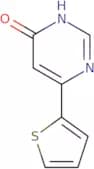
CAS:<p>Versatile small molecule scaffold</p>Formula:C8H6N2OSPurity:Min. 95%Molecular weight:178.21 g/mol4-Butyl-6-chloropyrimidine
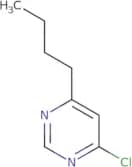
CAS:<p>Versatile small molecule scaffold</p>Formula:C8H11ClN2Purity:Min. 95%Molecular weight:170.64 g/mol3-Ethyl-3,6-dihydro-7H-[1,2,3]triazolo[4,5-d]pyrimidin-7-one
CAS:<p>Versatile small molecule scaffold</p>Formula:C6H7N5OPurity:Min. 95%Molecular weight:165.15 g/mol3-Ethoxy-6-(piperazin-1-yl)pyridazine
CAS:<p>Versatile small molecule scaffold</p>Formula:C10H16N4OPurity:Min. 95%Molecular weight:208.26 g/mol1-tert-Butyl-4-methyl-1H,6H,7H-pyrazolo[3,4-d]pyridazin-7-one
CAS:<p>Versatile small molecule scaffold</p>Formula:C10H14N4OPurity:Min. 95%Molecular weight:206.24 g/mol1-tert-Butyl-4-(propan-2-yl)-1H,6H,7H-pyrazolo[3,4-d]pyridazin-7-one
CAS:<p>Versatile small molecule scaffold</p>Formula:C12H18N4OPurity:Min. 95%Molecular weight:234.3 g/mol1-Phenyl-4-(propan-2-yl)-1H,6H,7H-pyrazolo[3,4-d]pyridazin-7-one
CAS:<p>Versatile small molecule scaffold</p>Formula:C14H14N4OPurity:Min. 95%Molecular weight:254.29 g/mol4-Cyclopropyl-1-phenyl-1H,6H,7H-pyrazolo[3,4-d]pyridazin-7-one
CAS:<p>Versatile small molecule scaffold</p>Formula:C14H12N4OPurity:Min. 95%Molecular weight:252.27 g/mol3-(2-Methylpent-2-enoyl)-1,3-thiazolidine-4-carboxylic acid
CAS:<p>Versatile small molecule scaffold</p>Formula:C10H15NO3SPurity:Min. 95%Molecular weight:229.3 g/mol2-Methoxy-3-(tributylstannyl)pyrazine
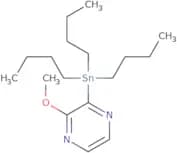
CAS:Controlled Product<p>Versatile small molecule scaffold</p>Formula:C17H32N2OSnPurity:Min. 95%Molecular weight:399.16 g/mol1-(4-Cyanophenyl)-4-hydroxypyrrolidine-2-carboxylic acid
CAS:<p>Versatile small molecule scaffold</p>Formula:C12H12N2O3Purity:Min. 95%Molecular weight:232.2 g/mol1-Boc-3-methoxycarbonylmethyleneazetidine
CAS:<p>Versatile small molecule scaffold</p>Formula:C11H17NO4Purity:Min. 95%Molecular weight:227.26 g/mol4-Azaspiro[2.5]octane-5,7-dione
CAS:<p>Versatile small molecule scaffold</p>Formula:C7H9NO2Purity:Min. 95%Molecular weight:139.15 g/mol(1R,5S)-Bicyclo[3.2.0]heptane-2,4-dione
CAS:<p>Versatile small molecule scaffold</p>Formula:C7H8O2Purity:Min. 95%Molecular weight:124.1 g/mol2-chloro-5,6,7,8-tetrahydroquinazolin-8-one
CAS:<p>Versatile small molecule scaffold</p>Formula:C8H7ClN2OPurity:Min. 95%Molecular weight:182.61 g/molMethyl 2-(3-oxetanylidene)acetate
CAS:<p>Methyl 2-(3-oxetanylidene)acetate is a carbonyl compound that has been synthesised and is used in the synthesis of isoindolones. It reacts with 1,3-dipolarophiles such as pyridine and cycloaddition reactions to form a new ring system. This reaction is catalysed by acid methyl esters.</p>Formula:C6H8O3Purity:Min. 95%Molecular weight:128.13 g/mol5-Azaspiro[3.5]nonane-6,8-dione
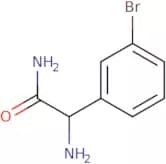
CAS:<p>Versatile small molecule scaffold</p>Formula:C8H11NO2Purity:Min. 95%Molecular weight:153.18 g/mol2-Amino-2-(3-bromophenyl)acetamide
CAS:<p>Versatile small molecule scaffold</p>Formula:C8H9BrN2OPurity:Min. 95%Molecular weight:229.07 g/mol1-(Butane-1-sulfonyl)piperidine-2-carboxylic acid
CAS:<p>Versatile small molecule scaffold</p>Formula:C10H19NO4SPurity:Min. 95%Molecular weight:249.33 g/mol4-(2-Amino-4-methylpentanoyl)piperazin-2-one
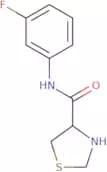
CAS:<p>Versatile small molecule scaffold</p>Formula:C10H19N3O2Purity:Min. 95%Molecular weight:213.28 g/molN-(3-Fluorophenyl)-1,3-thiazolidine-4-carboxamide
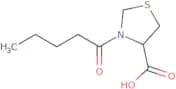
CAS:<p>Versatile small molecule scaffold</p>Formula:C10H11FN2OSPurity:Min. 95%Molecular weight:226.27 g/mol3-Pentanoyl-1,3-thiazolidine-4-carboxylic acid
CAS:<p>Versatile small molecule scaffold</p>Formula:C9H15NO3SPurity:Min. 95%Molecular weight:217.29 g/molOctahydro-1H-indole-2-carboxamide
CAS:<p>Versatile small molecule scaffold</p>Formula:C9H16N2OPurity:Min. 95%Molecular weight:168.24 g/mol4-(5-Chlorothiophene-2-carbonyl)-3-methylpiperazin-2-one
CAS:<p>Versatile small molecule scaffold</p>Formula:C10H11ClN2O2SPurity:Min. 95%Molecular weight:258.73 g/mol2-Oxo-2,3-dihydrobenzoxazole-6-boronic Acid Pinacol Ester
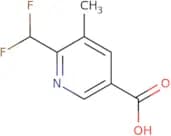
CAS:<p>Versatile small molecule scaffold</p>Formula:C13H16BNO4Purity:Min. 95%Molecular weight:261.08 g/mol2-(Difluoromethyl)-3-methylpyridine-5-carboxylic acid
CAS:<p>Versatile small molecule scaffold</p>Formula:C8H7F2NO2Purity:Min. 95%Molecular weight:187.14 g/mol5-Methyl-6-(trifluoromethyl)pyridine-3-carboxylic acid
CAS:<p>Versatile small molecule scaffold</p>Formula:C8H6F3NO2Purity:Min. 95%Molecular weight:205.13 g/mol2-Fluoro-6-(trifluoromethyl)pyridine-3-carboxylic acid
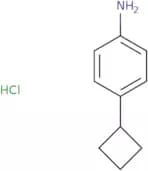
CAS:<p>Versatile small molecule scaffold</p>Formula:C7H3F4NO2Purity:Min. 95%Molecular weight:209.1 g/mol4-Cyclobutylaniline hydrochloride
CAS:<p>Versatile small molecule scaffold</p>Formula:C10H14ClNPurity:Min. 95%Molecular weight:183.68 g/mol3,4,5-Trihydroxybenzene-1-sulfonamide
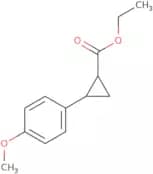
CAS:<p>Versatile small molecule scaffold</p>Formula:C6H7NO5SPurity:Min. 95%Molecular weight:205.2 g/molTrans-ethyl 2-(4-methoxyphenyl)cyclopropanecarboxylate
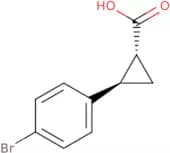
CAS:Versatile small molecule scaffoldFormula:C13H16O3Purity:Min. 95%Molecular weight:220.26 g/molrac-(1R,2R)-2-(4-bromophenyl)cyclopropane-1-carboxylic acid, trans
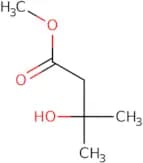
CAS:<p>Versatile small molecule scaffold</p>Formula:C10H9BrO2Purity:Min. 95%Molecular weight:241.1 g/molMethyl 3-hydroxy-3-methylbutanoate
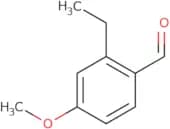
CAS:<p>Methyl 3-hydroxy-3-methylbutanoate is a reactive compound that can be used as a building block in organic synthesis. It is used to synthesize a variety of compounds, including pharmaceuticals and agrochemicals. Methyl 3-hydroxy-3-methylbutanoate has been shown to react with methoxy groups to form methyl hydroxy groups. This reaction is catalyzed by the protonation of the oxygen atom on the reactant's oxygen atom, which leads to a cyclic transition state. Kinetic studies have been performed and show that the rate of this reaction increases with an increase in temperature. The kinetic parameters for this reaction are not currently known, but it has been shown that the nucleophilic attack on the carbon atom adjacent to the leaving group occurs from primary alcohols and alkyl halides.</p>Formula:C6H12O3Purity:Min. 95%Molecular weight:132.16 g/mol2-Ethyl-4-methoxybenzaldehyde
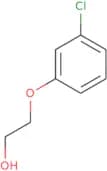
CAS:<p>2-Ethyl-4-methoxybenzaldehyde is an aromatic aldehyde that is used in the synthesis of estrogens. It can be synthesized by the Corey-Fuchs reaction between 2-methylphenol and ethyl acetoacetate. This product can also be reacted with bromine to produce bromoaldehydes, which have been used as estrogen analogues. The formylation of this compound produces formaldehyde, which is used in the elimination of steroids.</p>Formula:C10H12O2Purity:Min. 95%Molecular weight:164.2 g/mol2-(3-Chlorophenoxy)ethan-1-ol
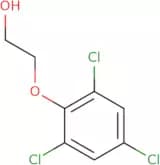
CAS:<p>Versatile small molecule scaffold</p>Formula:C8H9ClO2Purity:Min. 95%Molecular weight:172.61 g/mol2-(2,4,6-Trichlorophenoxy)ethanol
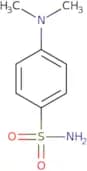
CAS:<p>2-(2,4,6-Trichlorophenoxy)ethanol is a chlorinating agent that catalyzes the reaction of chlorine with hydroxyl groups to form hypochlorite. 2-(2,4,6-Trichlorophenoxy)ethanol can be used to produce chlorinated water or other disinfectants. It has been shown to have a weak estrogenic effect and has been found in the urine of animals treated with this compound. This chemical also binds to glucuronic acid and is excreted in the urine as a conjugate with glucuronide. The fixation of 2-(2,4,6-trichlorophenoxy)ethanol onto the imidazole ring of histidine residues can be inhibited by prochloraz and chloramine T.</p>Formula:C8H7Cl3O2Purity:Min. 95%Molecular weight:241.5 g/mol4-(Dimethylamino)benzenesulfonamide
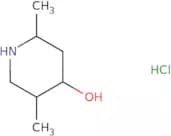
CAS:<p>4-(Dimethylamino)benzenesulfonamide is a fluorescent dye used in analytical chemistry. It has been shown to be useful as a solvent for the separation of metal cations and anilines, as well as for the determination of binding constants. The fluorescence spectrum of 4-(dimethylamino)benzenesulfonamide is sensitive to metal cations and anilines, which can be used to determine their concentration. 4-(dimethylamino)benzenesulfonamide has a phenyl ring with amido groups that make it nonpolar, allowing it to dissolve in solvents such as acetonitrile. This molecule also binds to metal cations such as copper and zinc, which allows it to act as a sensor for those metals.</p>Formula:C8H12N2O2SPurity:Min. 95%Molecular weight:200.26 g/mol2,5-Dimethylpiperidin-4-ol hydrochloride
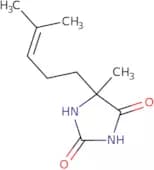
CAS:<p>Versatile small molecule scaffold</p>Formula:C7H16ClNOPurity:Min. 95%Molecular weight:165.66 g/mol5-Methyl-5-(4-methylpent-3-en-1-yl)imidazolidine-2,4-dione
CAS:<p>Versatile small molecule scaffold</p>Formula:C10H16N2O2Purity:Min. 95%Molecular weight:196.25 g/molMethyl 2-[benzyl(2-methoxy-2-oxoethyl)amino]acetate
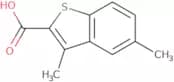
CAS:<p>Versatile small molecule scaffold</p>Formula:C13H17NO4Purity:Min. 95%Molecular weight:251.28 g/mol3,5-Dimethyl-1-benzothiophene-2-carboxylic acid
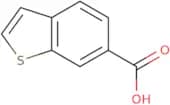
CAS:<p>3,5-Dimethyl-1-benzothiophene-2-carboxylic acid is a fatty acid that is found in the blood of human beings and other animals. It has been shown to be an acidic molecule that is soluble in water. 3,5-Dimethyl-1-benzothiophene-2-carboxylic acid is also a component of hippuric acid and diazaborine, which are used as chromatographic methods for the analysis of biological specimens. The molecular weight of 3,5-dimethyl-1-benzothiophene 2 carboxylic acid is 216.3 g/mol. This compound can be used as a viscosity indicator, with high concentrations resulting in increased viscosity. 3,5 - Dimethyl benzothiophene 2 carboxylic acid can be found in butyric acid and malic acid as sulfonic acids. It can also be found in pe</p>Formula:C11H10O2SPurity:Min. 95%Molecular weight:206.26 g/mol1-Benzothiophene-6-carboxylic acid
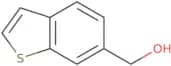
CAS:<p>1-Benzothiophene-6-carboxylic acid is a nicotinic acetylcholine receptor agonist that has been shown to have high oral bioavailability and efficacy in vivo. It binds to the α7 nicotinic acetylcholine receptor and activates the receptor, leading to increased neurotransmitter release. 1-Benzothiophene-6-carboxylic acid has been shown to be effective in vivo in models of neuropathic pain and Parkinson's disease. This drug also has a low affinity for other receptors, such as muscarinic acetylcholine receptors, which reduces the chance of adverse effects.</p>Formula:C9H6O2SPurity:Min. 95%Molecular weight:178.21 g/mol1-Benzothiophen-6-ylmethanol
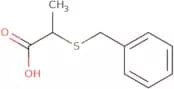
CAS:<p>Versatile small molecule scaffold</p>Formula:C9H8OSPurity:Min. 95%Molecular weight:164.22 g/mol2-(Benzylthio)propanoic acid
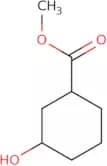
CAS:<p>2-Benzylthiopropanoic acid is a primary alcohol that is an antimicrobial agent. It is a n-oxide, which means it contains the –O–O– group. 2-Benzylthiopropanoic acid has two isomers, alpha and beta. The alpha form has a sulfamic acid group and the beta form has a carboxylic acid group. 2-Benzylthiopropanoic acid can be used to treat gram-negative bacterial infections, such as those caused by Escherichia coli, Klebsiella pneumoniae, Pseudomonas aeruginosa, or Enterobacter cloacae. The most effective way to use this drug is as an aerosol for inhalation therapy in patients with cystic fibrosis or bronchiectasis who have had chronic lung infection. In addition to being an antimicrobial agent, 2-benzylthiopropanoic acid has been shown to have antiinflammatory</p>Formula:C10H12O2SPurity:Min. 95%Molecular weight:196.27 g/molMethyl cis-3-hydroxycyclohexane-1-carboxylate
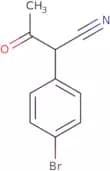
CAS:<p>Versatile small molecule scaffold</p>Formula:C8H14O3Purity:Min. 95%Molecular weight:158.19 g/mol2-(4-Bromophenyl)-3-oxobutanenitrile
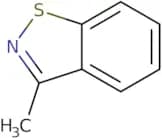
CAS:<p>2-(4-Bromophenyl)-3-oxobutanenitrile (2BPOBN) is a heterocyclic compound that contains a benzene ring and an oxobutane moiety. It has been shown to have electron transfer properties, which can be used in organic electronics. 2BPOBN has been theoretically studied using the functional theory, which predicts its optical properties. Experimental results have shown that 2BPOBN absorbs light at wavelengths from 300 to 1000 nm and has a high extinction coefficient. This molecule also has intramolecular interactions, such as hydrogen bonding, dipole-dipole forces, and van der Waals forces. These interactions are important for determining the molecular structure of 2BPOBN. X-ray diffraction data has shown that the molecule is linear with an all trans geometry. The energy levels of the electrons in this molecule can be predicted by the nonlinear optical theory and experimental results show that it is an experimentally verified</p>Formula:C10H8BrNOPurity:Min. 95%Molecular weight:238.08 g/mol3-Methyl-1,2-benzothiazole
CAS:<p>3-Methyl-1,2-benzothiazole is an oxime, a chemical that can reverse the effects of nerve gas. It is used as a stabilizer in polyphosphoric acid and cyanic acid. 3-Methyl-1,2-benzothiazole is also used to make other chemicals, such as cyclopentadienyl manganese tricarbonyl (CpMn(CO)3).</p>Formula:C8H7NSPurity:Min. 95%Molecular weight:149.21 g/mol2,5-Dimethylimidazo[1,2-a]pyridine
CAS:<p>Versatile small molecule scaffold</p>Formula:C9H10N2Purity:Min. 95%Molecular weight:146.19 g/molCis-4-hepten-1-ol
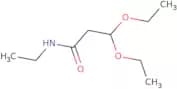
CAS:<p>Cis-4-hepten-1-ol is a volatile natural chemical compound that is found in many fruits and plants, such as apples, cherries, peaches, plums, and grapes. It is also used as a fragrance in perfumery. Cis-4-hepten-1-ol can be extracted by solid phase microextraction (SPME) or headspace techniques. This compound can be analyzed using gas chromatography with flame ionization detection (GC/FID). Cis-4-hepten-1-ol has been shown to have toxicological effects on living cells, such as causing DNA damage to human lymphocytes.</p>Formula:C7H14OPurity:Min. 95%Molecular weight:114.19 g/mol3,3-Diethoxy-N-ethylpropanamide
CAS:<p>Versatile small molecule scaffold</p>Formula:C9H19NO3Purity:Min. 95%Molecular weight:189.25 g/mol3,3-Diethoxy-propionic acid
CAS:<p>3,3-Diethoxy-propionic acid is a synthetic compound that has been shown to inhibit the activity of dipeptidyl peptidase-4 (DPP-4). This enzyme plays an important role in the regulation of blood sugar levels. 3,3-Diethoxy-propionic acid is orally active and has potent inhibition of DPP-4. It is also an inhibitor of ethyl esters and asymmetric synthesis. 3,3-Diethoxy-propionic acid can be used as a potential drug for diabetes mellitus type II.</p>Formula:C7H14O4Purity:Min. 95%Molecular weight:162.19 g/molImidazo[1,2-a]pyridine-3-carbonitrile
CAS:<p>Versatile small molecule scaffold</p>Formula:C8H5N3Purity:Min. 95%Molecular weight:143.15 g/molEthyl 2-[(cyclopropylmethyl)amino]acetate
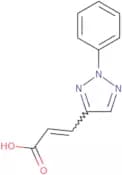
CAS:<p>Versatile small molecule scaffold</p>Formula:C8H15NO2Purity:Min. 95%Molecular weight:157.21 g/mol(2E)-3-(2-Phenyl-2H-1,2,3-triazol-4-yl)prop-2-enoic acid
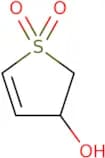
CAS:<p>Versatile small molecule scaffold</p>Formula:C11H9N3O2Purity:Min. 95%Molecular weight:215.21 g/mol2,3-Dihydro-3-hydroxythiophene 1,1-Dioxide
CAS:<p>2,3-Dihydro-3-hydroxythiophene 1,1-dioxide is a reactive intermediate that can be used in the oxidative chlorination of alcohols. It is an aliphatic nucleophile that reacts with electrophilic aromatic amines to yield reactive intermediates such as hydrosulfide and sulfinic acid. The disulfide derivative of 2,3-dihydro-3-hydroxythiophene 1,1-dioxide has been shown to react with magnesium metal to form a novel organometallic complex. Thermography studies have also been carried out on 2,3-dithydro-3-hydroxythiophene 1,1-dioxide derivatives.</p>Formula:C4H6O3SPurity:Min. 95%Molecular weight:134.15 g/mol
![2-[4-Chloro-3,5-bis(difluoromethyl)-1H-pyrazol-1-yl]propanoic acid](/_next/image/?url=https%3A%2Fstatic.cymitquimica.com%2Fproducts%2F3D%2Fthumb-webp%2FFQB67867.webp&w=3840&q=75)

![2-[4-Chloro-5-methyl-3-(trifluoromethyl)-1H-pyrazol-1-yl]propanoic acid](/_next/image/?url=https%3A%2Fstatic.cymitquimica.com%2Fproducts%2F3D%2Fthumb-webp%2FFQB67911.webp&w=3840&q=75)

![1-[(tert-butoxy)carbonyl]-4-(methoxycarbonyl)piperidine-4-carboxylic acid](/_next/image/?url=https%3A%2Fstatic.cymitquimica.com%2Fproducts%2F3D%2Fthumb-webp%2FFQB73845.webp&w=3840&q=75)
![3-(Iodomethyl)-2-oxaspiro[4.4]nonan-1-one](/_next/image/?url=https%3A%2Fstatic.cymitquimica.com%2Fproducts%2F3D%2Fthumb-webp%2FFQC06871.webp&w=3840&q=75)
![2-Methyl-2,6-diazaspiro[3.3]heptane diHCl](/_next/image/?url=https%3A%2Fstatic.cymitquimica.com%2Fproducts%2F3D%2Fthumb-webp%2FFQC08257.webp&w=3840&q=75)
![Ethyl 2H,4H,5H,7H-pyrano[3,4-c]pyrazole-3-carboxylate](/_next/image/?url=https%3A%2Fstatic.cymitquimica.com%2Fproducts%2F3D%2Fthumb-webp%2FFQC09671.webp&w=3840&q=75)
![tert-Butyl N-(3-{[(tert-butoxy)carbonyl]amino}-5-tert-butylphenyl)carbamate](/_next/image/?url=https%3A%2Fstatic.cymitquimica.com%2Fproducts%2F3D%2Fthumb-webp%2FFQC20515.webp&w=3840&q=75)
![3-{[(9H-Fluoren-9-yl)methoxy]carbonyl}-2,3,4,5-tetrahydro-1H-3-benzazepine-7-carboxylic acid](/_next/image/?url=https%3A%2Fstatic.cymitquimica.com%2Fproducts%2F3D%2Fthumb-webp%2FFQC74341.webp&w=3840&q=75)
![2-{5,11-Dioxo-5H,6H,6aH,11H-isoindolo[2,1-a]quinazolin-6-yl}acetic acid](/_next/image/?url=https%3A%2Fstatic.cymitquimica.com%2Fproducts%2F3D%2Fthumb-webp%2FFQC76389.webp&w=3840&q=75)
![6a,11-Dihydro-9,10-dimethoxy-5,11-dioxo-isoindolo[2,1-a]quinazoline-6(5H)-hexanoic a…](/_next/image/?url=https%3A%2Fstatic.cymitquimica.com%2Fproducts%2F3D%2Fthumb-webp%2FFQC76397.webp&w=3840&q=75)
![8-Oxabicyclo[3.2.1]octan-3-amine HCl](/_next/image/?url=https%3A%2Fstatic.cymitquimica.com%2Fproducts%2F3D%2Fthumb-webp%2FFQC90633.webp&w=3840&q=75)
![1,1-difluoro-5-azaspiro[2.5]octane hydrochloride](/_next/image/?url=https%3A%2Fstatic.cymitquimica.com%2Fproducts%2F3D%2Fthumb-webp%2FFQC90635.webp&w=3840&q=75)
![2-azabicyclo[2.2.2]octane-1-methanol hcl](/_next/image/?url=https%3A%2Fstatic.cymitquimica.com%2Fproducts%2F3D%2Fthumb-webp%2FFQC90636.webp&w=3840&q=75)
![tert-butyl N-({3-aminobicyclo[1.1.1]pentan-1-yl}methyl)carbamate](/_next/image/?url=https%3A%2Fstatic.cymitquimica.com%2Fproducts%2F3D%2Fthumb-webp%2FFQC90649.webp&w=3840&q=75)
![tert-butyl (4-aminobicyclo[2.2.2]octan-1-yl)carbamate](/_next/image/?url=https%3A%2Fstatic.cymitquimica.com%2Fproducts%2F3D%2Fthumb-webp%2FFQC90654.webp&w=3840&q=75)
![1,1-Difluoro-5-azaspiro[2.3]hexane hydrochloride](/_next/image/?url=https%3A%2Fstatic.cymitquimica.com%2Fproducts%2F3D%2Fthumb-webp%2FFQC90691.webp&w=3840&q=75)
![N-(4-Aminobicyclo[2.2.1]hept-1-yl)carbamic Acid 1,1-Dimethylethyl Ester](/_next/image/?url=https%3A%2Fstatic.cymitquimica.com%2Fproducts%2F3D%2Fthumb-webp%2FFQC90727.webp&w=3840&q=75)
![(2E)-3-[4-(Heptyloxy)-3-methoxyphenyl]prop-2-enoic acid](/_next/image/?url=https%3A%2Fstatic.cymitquimica.com%2Fproducts%2F3D%2Fthumb-webp%2FFQC94990.webp&w=3840&q=75)



![3-Ethyl-3,6-dihydro-7H-[1,2,3]triazolo[4,5-d]pyrimidin-7-one](/_next/image/?url=https%3A%2Fstatic.cymitquimica.com%2Fproducts%2F3D%2Fthumb-webp%2FFUB19578.webp&w=3840&q=75)

![1-tert-Butyl-4-methyl-1H,6H,7H-pyrazolo[3,4-d]pyridazin-7-one](/_next/image/?url=https%3A%2Fstatic.cymitquimica.com%2Fproducts%2F3D%2Fthumb-webp%2FFUB19644.webp&w=3840&q=75)
![1-tert-Butyl-4-(propan-2-yl)-1H,6H,7H-pyrazolo[3,4-d]pyridazin-7-one](/_next/image/?url=https%3A%2Fstatic.cymitquimica.com%2Fproducts%2F3D%2Fthumb-webp%2FFUB19646.webp&w=3840&q=75)
![1-Phenyl-4-(propan-2-yl)-1H,6H,7H-pyrazolo[3,4-d]pyridazin-7-one](/_next/image/?url=https%3A%2Fstatic.cymitquimica.com%2Fproducts%2F3D%2Fthumb-webp%2FFUB19652.webp&w=3840&q=75)
![4-Cyclopropyl-1-phenyl-1H,6H,7H-pyrazolo[3,4-d]pyridazin-7-one](/_next/image/?url=https%3A%2Fstatic.cymitquimica.com%2Fproducts%2F3D%2Fthumb-webp%2FFUB19741.webp&w=3840&q=75)



![4-Azaspiro[2.5]octane-5,7-dione](/_next/image/?url=https%3A%2Fstatic.cymitquimica.com%2Fproducts%2F3D%2Fthumb-webp%2FFUB66334.webp&w=3840&q=75)
![(1R,5S)-Bicyclo[3.2.0]heptane-2,4-dione](/_next/image/?url=https%3A%2Fstatic.cymitquimica.com%2Fproducts%2F3D%2Fthumb-webp%2FFUB66357.webp&w=3840&q=75)


![5-Azaspiro[3.5]nonane-6,8-dione](/_next/image/?url=https%3A%2Fstatic.cymitquimica.com%2Fproducts%2F3D%2Fthumb-webp%2FFUB66546.webp&w=3840&q=75)







![Methyl 2-[benzyl(2-methoxy-2-oxoethyl)amino]acetate](/_next/image/?url=https%3A%2Fstatic.cymitquimica.com%2Fproducts%2F3D%2Fthumb-webp%2FGAA17526.webp&w=3840&q=75)
![2,5-Dimethylimidazo[1,2-a]pyridine](/_next/image/?url=https%3A%2Fstatic.cymitquimica.com%2Fproducts%2F3D%2Fthumb-webp%2FGAA18830.webp&w=3840&q=75)


![Imidazo[1,2-a]pyridine-3-carbonitrile](/_next/image/?url=https%3A%2Fstatic.cymitquimica.com%2Fproducts%2F3D%2Fthumb-webp%2FGAA20059.webp&w=3840&q=75)
![Ethyl 2-[(cyclopropylmethyl)amino]acetate](/_next/image/?url=https%3A%2Fstatic.cymitquimica.com%2Fproducts%2F3D%2Fthumb-webp%2FGAA20101.webp&w=3840&q=75)