Building Blocks
This section contains fundamental products for the synthesis of organic and biological compounds. Building blocks are the essential starting materials used to construct complex molecules through various chemical reactions. They play a critical role in drug discovery, material science, and chemical research. At CymitQuimica, we offer a diverse range of high-quality building blocks to support your innovative research and industrial projects, ensuring you have the essential components for successful synthesis.
Subcategories of "Building Blocks"
- Boronic Acids & Boronic Acid Derivatives(5,756 products)
- Chiral Building Blocks(1,242 products)
- Hydrocarbon Building Blocks(6,095 products)
- Organic Building Blocks(61,055 products)
Found 199650 products of "Building Blocks"
Sort by
Purity (%)
0
100
|
0
|
50
|
90
|
95
|
100
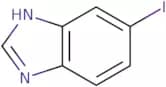
5-Iodo-1H-benzimidazole
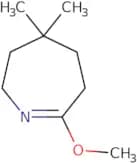
CAS:<p>5-Iodo-1H-benzimidazole is a chemical compound that can be recycled. It is used in medicinal chemistry and organic chemistry, but has not been extensively studied. This compound is used as a precursor to other structures, such as 5-iodo-N-methylbenzamide. The reaction of 5-iodo-1H benzimidazole with zinc powder produces a high yield of the desired product.<br>5-Iodo benzimidazole can be used as an electron donor in reductive reactions, such as the synthesis of nitroarenes. In addition to its use in organic chemistry, this compound has shown potential for biomolecular applications.</p>Formula:C7H5IN2Purity:Min. 95%Molecular weight:244.03 g/mol7-Methoxy-4,4-dimethyl-3,4,5,6-tetrahydro-2H-azepine
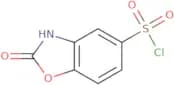
CAS:<p>Versatile small molecule scaffold</p>Formula:C9H17NOPurity:Min. 95%Molecular weight:155.2 g/mol2-Oxo-2,3-dihydro-1,3-benzoxazole-5-sulfonyl Chloride
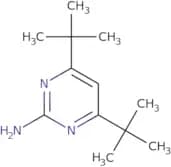
CAS:Versatile small molecule scaffoldFormula:C7H4NO4SClPurity:Min. 95%Molecular weight:233.62 g/mol4,6-Di-tert-butylpyrimidin-2-amine
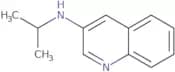
CAS:<p>Versatile small molecule scaffold</p>Formula:C12H21N3Purity:Min. 95%Molecular weight:207.32 g/molN-(Propan-2-yl)quinolin-3-amine
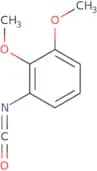
CAS:<p>Versatile small molecule scaffold</p>Formula:C12H14N2Purity:Min. 95%Molecular weight:186.25 g/mol1-Isocyanato-2,3-dimethoxybenzene
CAS:<p>Versatile small molecule scaffold</p>Formula:C9H9NO3Purity:Min. 95%Molecular weight:179.17 g/molEthyl 4-oxotetrahydrothiophene-3-carboxylate
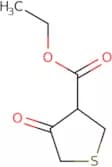
CAS:<p>Ethyl 4-oxotetrahydrothiophene-3-carboxylate is a synthetic compound that can be prepared by the reaction of ethoxycarbonylethyl thioglycolate with diethyl sulfide. It is an acrylate, which can be used to make polynuclear compounds. The target compound is an ethyl ester, which can be obtained by adding ethylene glycol and sulfuric acid to the adduct of methyl thioglycolate and toluene. Ethyl 4-oxotetrahydrothiophene-3-carboxylate has been shown to react with thioglycolic acid in a workup procedure, producing the desired product.</p>Formula:C7H10O3SPurity:Min. 95%Molecular weight:174.21 g/mol2-(Pyrrolidin-1-yl)benzoic acid
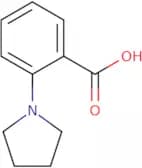
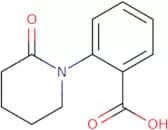
CAS:<p>Versatile small molecule scaffold</p>Formula:C11H13NO2Purity:Min. 95%Molecular weight:191.23 g/mol2-(2-Oxopiperidin-1-yl)benzoic acid
CAS:<p>Versatile small molecule scaffold</p>Formula:C12H13NO3Purity:Min. 95%Molecular weight:219.24 g/molMethyl 3-[(2-methoxy-2-oxoethyl)sulfanyl]butanoate
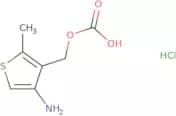
CAS:Versatile small molecule scaffoldFormula:C8H14O4SPurity:Min. 95%Molecular weight:206.26 g/mol(4-Amino-2-methylthiophen-3-yl)methyl hydrogen carbonate hydrochloride
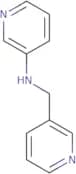
CAS:<p>Versatile small molecule scaffold</p>Formula:C7H10ClNO3SPurity:Min. 95%Molecular weight:223.68 g/molN-(Pyridin-3-ylmethyl)pyridin-3-amine
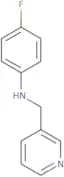
CAS:<p>N-(Pyridin-3-ylmethyl)pyridin-3-amine is a ligand that has been shown to have non-covalent interactions with anions such as nitrate. It has been shown to have single-crystal x-ray diffraction in the form of supramolecular, orientations, and architectures. The ligand is also luminescent, which can be observed by its nature as a metal complex.</p>Formula:C11H11N3Purity:Min. 95%Molecular weight:185.22 g/mol(4-Fluoro-phenyl)-pyridin-3-ylmethyl-amine
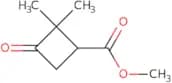
CAS:<p>Versatile small molecule scaffold</p>Formula:C12H11FN2Purity:Min. 95%Molecular weight:202.23 g/molMethyl 2,2-dimethyl-3-oxocyclobutane-1-carboxylate
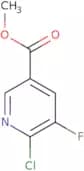
CAS:<p>Versatile small molecule scaffold</p>Formula:C8H12O3Purity:Min. 95%Molecular weight:156.18 g/molMethyl 6-chloro-5-fluoronicotinate
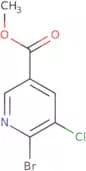
CAS:<p>Versatile small molecule scaffold</p>Formula:C7H5ClFNO2Purity:Min. 95%Molecular weight:189.57 g/molMethyl 6-bromo-5-chloronicotinate
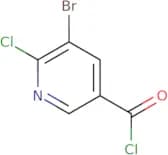
CAS:<p>Versatile small molecule scaffold</p>Formula:C7H5BrClNO2Purity:Min. 95%Molecular weight:250.48 g/mol5-Bromo-6-chloronicotinoyl chloride
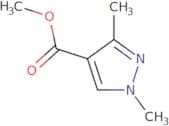
CAS:<p>Versatile small molecule scaffold</p>Formula:C6H2BrCl2NOPurity:Min. 95%Molecular weight:254.89 g/molMethyl 1,3-dimethyl-1H-pyrazole-4-carboxylate
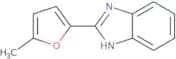
CAS:Versatile small molecule scaffoldFormula:C7H10N2O2Purity:Min. 95%Molecular weight:154.17 g/mol2-(5-Methylfuran-2-yl)-1H-1,3-benzodiazole
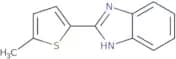
CAS:<p>Versatile small molecule scaffold</p>Formula:C12H10N2OPurity:Min. 95%Molecular weight:198.22 g/mol2-(5-Methylthiophen-2-yl)-1H-1,3-benzodiazole
CAS:<p>Versatile small molecule scaffold</p>Formula:C12H10N2SPurity:Min. 95%Molecular weight:214.29 g/mol5,7-dichloro-[1,2,4]triazolo[1,5-a]pyrimidine
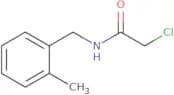
CAS:<p>Versatile small molecule scaffold</p>Formula:C5H2Cl2N4Purity:Min. 95%Molecular weight:189 g/mol2-Chloro-N-(2-methylbenzyl)acetamide
CAS:<p>Versatile small molecule scaffold</p>Formula:C10H12ClNOPurity:Min. 95%Molecular weight:197.66 g/mol2-Chloro-N-[(3-methylphenyl)methyl]acetamide
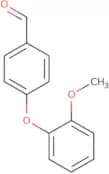
CAS:Versatile small molecule scaffoldFormula:C10H12ClNOPurity:Min. 95%Molecular weight:197.66 g/mol4-(2-Methoxy-phenoxy)-benzaldehyde
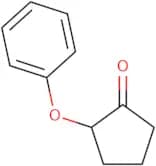
CAS:<p>Versatile small molecule scaffold</p>Formula:C14H12O3Purity:Min. 95%Molecular weight:228.24 g/mol2-Phenoxycyclopentan-1-one
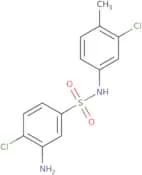
CAS:<p>Versatile small molecule scaffold</p>Formula:C11H12O2Purity:Min. 95%Molecular weight:176.21 g/mol3-Amino-4-chloro-N-(3-chloro-4-methylphenyl)benzene-1-sulfonamide
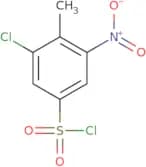
CAS:<p>Versatile small molecule scaffold</p>Formula:C13H12Cl2N2O2SPurity:Min. 95%Molecular weight:331.2 g/mol3-Chloro-4-methyl-5-nitrobenzene-1-sulfonyl chloride
CAS:<p>Versatile small molecule scaffold</p>Formula:C7H5Cl2NO4SPurity:Min. 95%Molecular weight:270.09 g/molN-Methyl-7h-pyrrolo[2,3-d]pyrimidin-4-amine
CAS:<p>Versatile small molecule scaffold</p>Formula:C7H8N4Purity:Min. 95%Molecular weight:148.17 g/molMethyl 2-(phenylamino)acetate hydrochloride
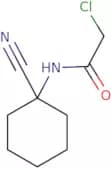
CAS:<p>Methyl 2-(phenylamino)acetate hydrochloride is a serine protease inhibitor that prevents the breakdown of proteins by inhibiting the activity of serine proteases. It has been shown to be effective in treating chronic kidney disease, autoimmune diseases, and hepatitis. Methyl 2-(phenylamino)acetate hydrochloride binds to copper ions with high affinity and forms a complex which inhibits the activity of serine proteases. The molecular mechanism of inhibition is not fully understood, but it has been proposed that this reaction proceeds via an acylation reaction in which the enzyme's active site is blocked by a chemical group from MPAH.</p>Formula:C9H12ClNO2Purity:Min. 95%Molecular weight:201.65 g/mol2-Chloro-N-(1-cyanocyclohexyl)acetamide
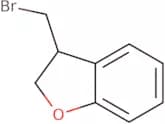
CAS:<p>Versatile small molecule scaffold</p>Formula:C9H13ClN2OPurity:Min. 95%Molecular weight:200.66 g/mol3-(Bromomethyl)-2,3-dihydro-1-benzofuran
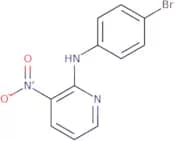
CAS:<p>Versatile small molecule scaffold</p>Formula:C9H9BrOPurity:Min. 95%Molecular weight:213.07 g/molN-(4-Bromophenyl)-3-nitropyridin-2-amine
CAS:Versatile small molecule scaffoldFormula:C11H8BrN3O2Purity:Min. 95%Molecular weight:294.1 g/mol2-N-(4-Bromophenyl)pyridine-2,3-diamine
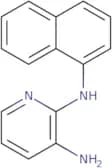
CAS:<p>Versatile small molecule scaffold</p>Formula:C11H10BrN3Purity:Min. 95%Molecular weight:264.12 g/mol2-N-(Naphthalen-1-yl)pyridine-2,3-diamine
CAS:<p>Versatile small molecule scaffold</p>Formula:C15H13N3Purity:Min. 95%Molecular weight:235.28 g/mol5-Amino-1,2-dimethyl-1H-imidazole-4-carboxamide
CAS:<p>Versatile small molecule scaffold</p>Formula:C6H10N4OPurity:Min. 95%Molecular weight:154.17 g/mol5-fluoro-1H-benzo[d][1,3]oxazine-2,4-dione
CAS:<p>Versatile small molecule scaffold</p>Formula:C8H4NO3FPurity:Min. 95%Molecular weight:181.12 g/mol1h,2h,4h-Thieno[3,2-d][1,3]oxazine-2,4-dione
CAS:<p>Thieno[3,2-d][1,3]oxazin-2,4-dione is a bicyclic organic compound with the chemical formula C6H4N2O. It is an analog of oxazole and it has been shown to react in a nucleophilic fashion. This reactivity makes it useful for synthesizing other compounds. Thieno[3,2-d][1,3]oxazin-2,4-dione is commercially available as an optically pure powder or as a combinatorial library.</p>Formula:C6H3NO3SPurity:Min. 95%Molecular weight:169.16 g/mol7-Bromo-4-methyl-3,4-dihydro-1H-benzo[E][1,4]diazepine-2,5-dione
CAS:<p>Versatile small molecule scaffold</p>Formula:C10H9BrN2O2Purity:Min. 95%Molecular weight:269.09 g/mol8-Bromo-5,6-dihydro-5-methyl-6-oxo-4H-imidazo[1,5-a][1,4]benzodiazepine-3-carboxylic acid ethyl ester
CAS:8-Bromo-5,6-dihydro-5-methyl-6-oxo-4H-imidazo[1,5a][1,4]benzodiazepine-3-carboxylic acid ethyl ester is a palladium catalyzed reaction that converts aryl bromides to bromides. The optimized yields and functionalized products are the result of optimizing the catalyst and reagents. This reaction can be used to produce triflates from bromides.Formula:C15H14BrN3O3Purity:Min. 95%Molecular weight:364.19 g/mol4-Chloro-2,7-dimethyl-7H-pyrrolo[2,3-d]pyrimidine
CAS:<p>Versatile small molecule scaffold</p>Formula:C8H8ClN3Purity:Min. 95%Molecular weight:181.62 g/mol2-methyl-3,5-dinitrothiophene
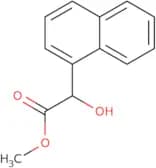
CAS:<p>2-methyl-3,5-dinitrothiophene is an organic solvent with a nonlinear optical response. It has been used as a monomer for the preparation of polymers. 2-Methyl-3,5-dinitrothiophene has shown thermal stability and hydroxy groups that can be used to solvate other molecules. This compound is also soluble in organic solvents such as acetone and chloroform. The chromophore present in 2-methyl-3,5-dinitrothiophene gives it a yellow color at low concentrations and a reddish color at high concentrations.</p>Formula:C5H4N2O4SPurity:Min. 95%Molecular weight:188.16 g/molMethyl 2-hydroxy-2-(naphthalen-1-yl)acetate
CAS:<p>Versatile small molecule scaffold</p>Formula:C13H12O3Purity:Min. 95%Molecular weight:216.23 g/mol5-Methyl-5-(naphthalen-2-yl)imidazolidine-2,4-dione
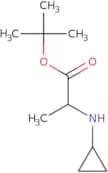
CAS:<p>Versatile small molecule scaffold</p>Formula:C14H12N2O2Purity:Min. 95%Molecular weight:240.26 g/moltert-Butyl 2-(cyclopropylamino)propanoate
CAS:<p>Versatile small molecule scaffold</p>Formula:C10H19NO2Purity:Min. 95%Molecular weight:185.26 g/mol3-Chloro-6-pyridin-3-ylpyridazine
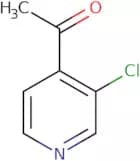
CAS:<p>Versatile small molecule scaffold</p>Formula:C9H6ClN3Purity:Min. 95%Molecular weight:191.62 g/mol1-(3-chloropyridin-4-yl)ethan-1-one
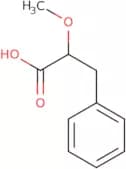
CAS:<p>Versatile small molecule scaffold</p>Formula:C7H6ClNOPurity:Min. 95%Molecular weight:155.58 g/mol2-Methoxy-3-phenylpropanoic acid
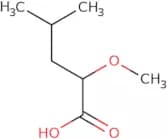
CAS:<p>2-Methoxy-3-phenylpropanoic acid is an ester with a carboxylic acid group at its end. It is a chiral molecule that has two enantiomers, which are mirror images of each other. The stereochemical conformations of these molecules can be determined by the weighting of their conformational energies. This compound is used in the synthesis of various pharmaceuticals and pesticides, such as carbamates and herbicides. The nmr spectroscopic data for this compound show that it has two conformers, A and B, which have different chemical shifts in their nmr spectra. The experimental data show that the equilibrium between these two conformers is weighted heavily to conformer A because it has a lower energy barrier than conformer B.</p>Formula:C10H12O3Purity:Min. 95%Molecular weight:180.2 g/mol2-Methoxy-4-methylpentanoic acid
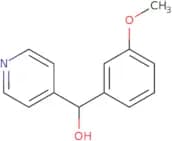
CAS:<p>Versatile small molecule scaffold</p>Formula:C7H14O3Purity:Min. 95%Molecular weight:146.18 g/mol(3-Methoxyphenyl)(pyridin-4-yl)methanol
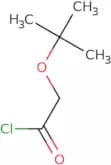
CAS:<p>Versatile small molecule scaffold</p>Formula:C13H13NO2Purity:Min. 95%Molecular weight:215.25 g/mol2-(tert-Butoxy)acetyl chloride
CAS:<p>Versatile small molecule scaffold</p>Formula:C6H11ClO2Purity:Min. 95%Molecular weight:150.6 g/mol4-(Benzylsulfanyl)benzaldehyde
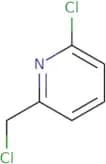
CAS:<p>Benzylsulfanylbenzaldehyde is a benzyl derivative that has been studied for its optical properties and electronic structures. The sulfur atom in this molecule is replaced with an electron-donating group, which gives the molecule a positive charge. This change also makes the substituent more polar and thus increases its ability to interact with other molecules. Substituents are groups attached to benzene rings in order to modify their chemical or physical properties. Chromophores are groups of atoms that absorb light and can be used to identify substances by their color. Electron withdrawing groups cause the dipole moment of the molecule to increase, while electron donating groups have the opposite effect on the dipole moment.</p>Formula:C14H12OSPurity:Min. 95%Molecular weight:228.31 g/mol2-Chloro-6-(chloromethyl)pyridine
CAS:<p>2-Chloro-6-(chloromethyl)pyridine (2C6CP) is a chloride precursor that can be used for the synthesis of metal chlorides, such as copper chlorides. 2C6CP is synthesized by reacting thionyl chloride with the substituted pyridine under anhydrous conditions at -78°C. The resultant 2C6CP is then hydrolyzed to produce the desired chloride.<br>2C6CP has been shown to act as a ligand in coordination chemistry. It was first synthesized by reacting 3-chloropyridine with thionyl chloride and then hydrolyzing it to 2-chloropyridine. This method was later modified to use 4-chlorobenzoyl chloride instead of 3-chloropyridine, producing 2,4-dichloropyridine.</p>Formula:C6H5Cl2NPurity:Min. 95%Molecular weight:162.02 g/mol3-[5-(4-Chlorophenyl)-1,3,4-oxadiazol-2-yl]propanoic acid
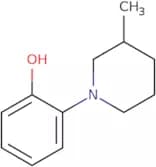
CAS:<p>Versatile small molecule scaffold</p>Formula:C11H9ClN2O3Purity:Min. 95%Molecular weight:252.65 g/mol2-(3-Methylpiperidin-1-yl)phenol
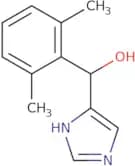
CAS:<p>Versatile small molecule scaffold</p>Formula:C12H17NOPurity:Min. 95%Molecular weight:191.27 g/mol(2,6-Dimethylphenyl)(1H-imidazol-4-yl)methanol
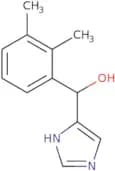
CAS:<p>Versatile small molecule scaffold</p>Formula:C12H14N2OPurity:Min. 95%Molecular weight:202.26 g/mol(2,3-dimethylphenyl)(1H-imidazol-5-yl)methanol
CAS:Versatile small molecule scaffoldFormula:C12H14N2OPurity:Min. 95%Molecular weight:202.25 g/mol4-[(2,6-Dimethylphenyl)methyl]-1H-imidazole hydrochloride
CAS:Versatile small molecule scaffoldFormula:C12H15ClN2Purity:Min. 95%Molecular weight:222.71 g/molMethyl 5-methyl-1H-imidazole-4-carboxylate hydrochloride
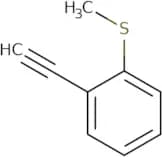
CAS:<p>Versatile small molecule scaffold</p>Formula:C6H9ClN2O2Purity:Min. 95%Molecular weight:176.6 g/mol1-Ethynyl-2-(methylsulfanyl)benzene
CAS:<p>1-Ethynyl-2-(methylsulfanyl)benzene is a potent antioxidant. It has been shown to have antimicrobial activity against both Gram-positive and Gram-negative bacteria, as well as antifungal activity against both mold and yeast. 1-Ethynyl-2-(methylsulfanyl)benzene has been shown to inhibit the growth of S. aureus and E. coli in vitro, having an IC50 of less than 0.1 μg/mL. This compound also inhibits the growth of Bacillus subtilis and B. cereus, with IC50 values of 0.5 and 0.06 μg/mL respectively, but is not active against Escherichia coli or Pseudomonas aeruginosa at concentrations up to 200 μg/mL.</p>Formula:C9H8SPurity:Min. 95%Molecular weight:148.23 g/mol(3E)-5-Phenylpent-3-enoic acid
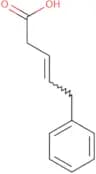
CAS:<p>Versatile small molecule scaffold</p>Formula:C11H12O2Purity:Min. 95%Molecular weight:176.21 g/molMethyl 4-(isocyanatomethyl)benzoate
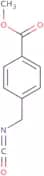
CAS:<p>Versatile small molecule scaffold</p>Formula:C10H9NO3Purity:Min. 95%Molecular weight:191.18 g/mol5-Phenyl-2,3-dihydropyridazin-3-one
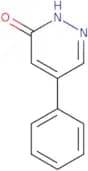
CAS:<p>Versatile small molecule scaffold</p>Formula:C10H8N2OPurity:Min. 95%Molecular weight:172.18 g/mol1-[3-(Chloromethyl)-4-ethoxyphenyl]ethan-1-one
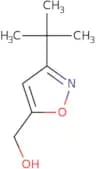
CAS:<p>Versatile small molecule scaffold</p>Formula:C11H13ClO2Purity:Min. 95%Molecular weight:212.67 g/mol(3-tert-Butyl-1,2-oxazol-5-yl)methanol
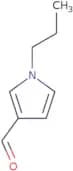
CAS:<p>Versatile small molecule scaffold</p>Formula:C8H13NO2Purity:Min. 95%Molecular weight:155.19 g/mol1-Propyl-1H-pyrrole-3-carbaldehyde
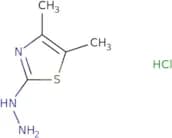
CAS:<p>Versatile small molecule scaffold</p>Formula:C8H11NOPurity:Min. 95%Molecular weight:137.18 g/mol2-Hydrazinyl-4,5-dimethyl-1,3-thiazole hydrochloride
CAS:<p>Versatile small molecule scaffold</p>Formula:C5H10ClN3SPurity:Min. 95%Molecular weight:179.67 g/mol1-Chloro-4-(4-methoxyphenyl)phthalazine
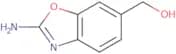
CAS:<p>Versatile small molecule scaffold</p>Formula:C15H11ClN2OPurity:Min. 95%Molecular weight:270.71 g/mol(2-Amino-1,3-benzoxazol-6-yl)methanol
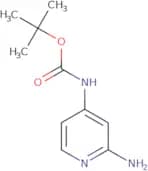
CAS:<p>Versatile small molecule scaffold</p>Formula:C8H8N2O2Purity:Min. 95%Molecular weight:164.16 g/moltert-butyl N-(2-aminopyridin-4-yl)carbamate
CAS:<p>Versatile small molecule scaffold</p>Formula:C10H15N3O2Purity:Min. 95%Molecular weight:209.2 g/molBenzyl({2-[2-(ethylamino)ethoxy]ethyl})amine
CAS:<p>Versatile small molecule scaffold</p>Formula:C13H22N2OPurity:Min. 95%Molecular weight:222.33 g/mol4-{[3-(Chloromethyl)phenyl]methyl}morpholine hydrochloride
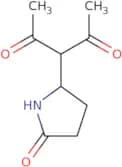
CAS:<p>Versatile small molecule scaffold</p>Formula:C12H17Cl2NOPurity:Min. 95%Molecular weight:262.17 g/mol3-(5-Oxopyrrolidin-2-yl)pentane-2,4-dione
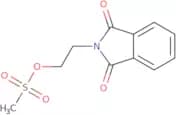
CAS:<p>Versatile small molecule scaffold</p>Formula:C9H13NO3Purity:Min. 95%Molecular weight:183.2 g/mol2-(1,3-Dioxo-2,3-dihydro-1H-isoindol-2-yl)ethyl methanesulfonate
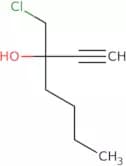
CAS:<p>Versatile small molecule scaffold</p>Formula:C11H11NO5SPurity:Min. 95%Molecular weight:269.28 g/mol3-(Chloromethyl)hept-1-yn-3-ol
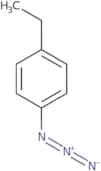
CAS:<p>Versatile small molecule scaffold</p>Formula:C8H13ClOPurity:Min. 95%Molecular weight:160.64 g/mol1-Azido-4-ethylbenzene
CAS:<p>1-Azido-4-ethylbenzene is a chemical compound that is synthesized from 1-azido-2,4-dibromobenzene and an alkylating agent. It reacts with triflates to produce the corresponding aziridines. The synthesis of 1-azido-4-ethylbenzene can be achieved by using photoreduction or cross coupling reactions. This compound is used in the synthesis of diarylamines and aziridinium salts.<br>1-Azido-4-ethylbenzene can be synthesized from 1,2,3,4,5,6-(dibromomethyl)benzene and an alkylating agent (e.g., ethyl bromide). It reacts with triflates to produce the corresponding aziridines. The synthesis of 1-azido-4-ethylbenzene can also be achieved by using photore</p>Formula:C8H9N3Purity:Min. 95%Molecular weight:147.18 g/mol[(4-Methanesulfinylphenyl)methyl](methyl)amine
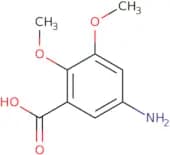
CAS:<p>Versatile small molecule scaffold</p>Formula:C9H13NOSPurity:Min. 95%Molecular weight:183.27 g/mol5-Amino-2,3-dimethoxybenzoic acid
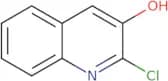
CAS:<p>Versatile small molecule scaffold</p>Formula:C9H11NO4Purity:Min. 95%Molecular weight:197.19 g/mol2-Chloroquinolin-3-ol
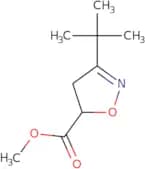
CAS:<p>2-Chloroquinolin-3-ol is an orally active, organic solvent-free, synthetic drug that is a basic compound. It has been shown to have anti-inflammatory properties and can be used for the treatment of inflammatory diseases such as rheumatoid arthritis. The drug has also been shown to be effective against autoimmune diseases such as type 1 diabetes mellitus. 2-Chloroquinolin-3-ol is an analogue of quinolinic acid, which is found in plants and animals. 2CQOL binds to chloride channels on the surface of cells, which prevents the influx of chloride ions into the cell and leads to cytotoxicity.</p>Formula:C9H6ClNOPurity:Min. 95%Molecular weight:179.6 g/molMethyl 3-tert-butyl-4,5-dihydro-1,2-oxazole-5-carboxylate
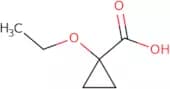
CAS:<p>Versatile small molecule scaffold</p>Formula:C9H15NO3Purity:Min. 95%Molecular weight:185.2 g/mol1-ethoxycyclopropane-1-carboxylic acid
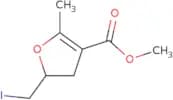
CAS:<p>Versatile small molecule scaffold</p>Formula:C6H10O3Purity:Min. 95%Molecular weight:130.14 g/molMethyl 5-(iodomethyl)-2-methyl-4,5-dihydrofuran-3-carboxylate
CAS:<p>Versatile small molecule scaffold</p>Formula:C8H11IO3Purity:Min. 95%Molecular weight:282.08 g/molMethyl[(6-methylpyridin-2-yl)methyl]amine dihydrochloride
CAS:<p>Versatile small molecule scaffold</p>Formula:C8H14Cl2N2Purity:Min. 95%Molecular weight:209.11 g/mol1-Methyl-hexahydropyrrolo[3,4-b]pyrrole
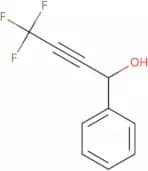
CAS:<p>Versatile small molecule scaffold</p>Formula:C7H14N2Purity:Min. 95%Molecular weight:126.2 g/mol4,4,4-Trifluoro-1-phenylbut-2-yn-1-ol
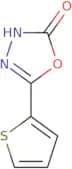
CAS:<p>Versatile small molecule scaffold</p>Formula:C10H7F3OPurity:Min. 95%Molecular weight:200.16 g/mol5-(Thiophen-2-yl)-2,3-dihydro-1,3,4-oxadiazol-2-one
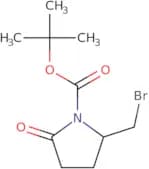
CAS:<p>Versatile small molecule scaffold</p>Formula:C6H4N2O2SPurity:Min. 95%Molecular weight:168.18 g/mol(R)-1-Boc-5-(bromomethyl)pyrrolidin-2-one
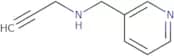
CAS:Versatile small molecule scaffoldFormula:C10H16BrNO3Purity:Min. 95%Molecular weight:278.14 g/mol(Prop-2-yn-1-yl)(pyridin-3-ylmethyl)amine
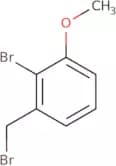
CAS:Versatile small molecule scaffoldFormula:C9H10N2Purity:Min. 95%Molecular weight:146.19 g/mol2-Bromo-3-methoxybenzyl bromide
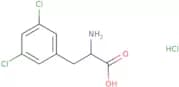
CAS:<p>2-Bromo-3-methoxybenzyl bromide is a ligand that binds to the 5-HT1A receptor. It has been shown to bind to the serotonin transporter and inhibit uptake of serotonin into the brain, as well as antagonize 5HT1A receptors. This drug has also been shown to be an optimization for 5HT1A receptor agonists, with potential therapeutic applications for disorders such as depression, anxiety, and insomnia.</p>Formula:C8H8Br2OPurity:Min. 95%Molecular weight:279.96 g/mol2-Amino-3-(3,5-dichlorophenyl)propanoic acid hydrochloride
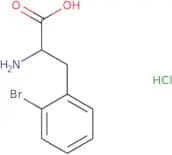
CAS:<p>Versatile small molecule scaffold</p>Formula:C9H10Cl3NO2Purity:Min. 95%Molecular weight:270.5 g/mol2-Amino-3-(2-bromophenyl)propanoic acid hydrochloride
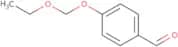
CAS:Controlled Product2-Amino-3-(2-bromophenyl)propanoic acid hydrochloride is a cell biology research tool. It is an inhibitor of ion channels and ligand for the receptor. 2-Amino-3-(2-bromophenyl)propanoic acid hydrochloride is soluble in water, which makes it suitable for use in pharmacological research and as an activator of antibodies.Formula:C9H11BrClNO2Purity:Min. 95%Molecular weight:280.54 g/mol4-(Ethoxymethoxy)benzaldehyde
CAS:<p>Versatile small molecule scaffold</p>Formula:C10H12O3Purity:Min. 95%Molecular weight:180.2 g/mol4-Amino-1H,2H,3H-pyrazolo[3,4-d]pyrimidin-3-one
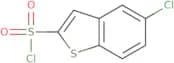
CAS:<p>Versatile small molecule scaffold</p>Formula:C5H5N5OPurity:Min. 95%Molecular weight:151.13 g/mol5-Chloro-1-benzothiophene-2-sulfonyl chloride
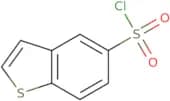
CAS:<p>Versatile small molecule scaffold</p>Formula:C8H4Cl2O2S2Purity:Min. 95%Molecular weight:267.2 g/mol1-Benzothiophene-5-sulfonyl chloride
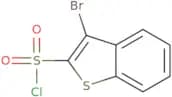
CAS:<p>Versatile small molecule scaffold</p>Formula:C8H5ClO2S2Purity:Min. 95%Molecular weight:232.7 g/mol3-Bromo-1-benzothiophene-2-sulfonyl chloride
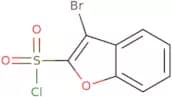
CAS:<p>Versatile small molecule scaffold</p>Formula:C8H4BrClO2S2Purity:Min. 95%Molecular weight:311.6 g/mol3-Bromo-1-benzofuran-2-sulfonyl chloride
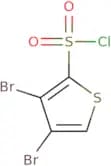
CAS:<p>Versatile small molecule scaffold</p>Formula:C8H4BrClO3SPurity:Min. 95%Molecular weight:295.54 g/mol3,4-Dibromothiophene-2-sulfonyl chloride
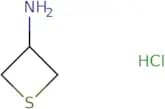
CAS:<p>Versatile small molecule scaffold</p>Formula:C4HBr2ClO2S2Purity:Min. 95%Molecular weight:340.4 g/mol3-Thietanamine HCl
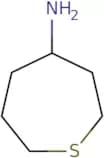
CAS:<p>Versatile small molecule scaffold</p>Formula:C3H8ClNSPurity:Min. 95%Molecular weight:125.16 g/molThiepan-4-amine
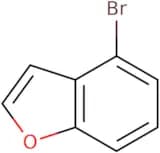
CAS:<p>Versatile small molecule scaffold</p>Formula:C6H13NSPurity:Min. 95%Molecular weight:131.24 g/mol4-Bromobenzofuran
CAS:<p>4-Bromobenzofuran is a heterocycle that has electron donating properties. It is a benzofuran with a bromine atom in the 4-position, which is activated and can be used as an intermediate for pharmaceuticals. The heterocycle has been shown to have medicinal properties, including anti-inflammatory, antibacterial, and antifungal activities. 4-Bromobenzofuran is also used as a starting material in the synthesis of other heterocycles such as furan, pyrrole, thiophene and benzene. Furfural and bromoform are two derivatives of 4-bromobenzofuran.</p>Formula:C8H5BrOPurity:Min. 95%Molecular weight:197.03 g/mol

![Methyl 3-[(2-methoxy-2-oxoethyl)sulfanyl]butanoate](/_next/image/?url=https%3A%2Fstatic.cymitquimica.com%2Fproducts%2F3D%2Fthumb-webp%2FDDA64841.webp&w=3840&q=75)
![5,7-dichloro-[1,2,4]triazolo[1,5-a]pyrimidine](/_next/image/?url=https%3A%2Fstatic.cymitquimica.com%2Fproducts%2F3D%2Fthumb-webp%2FDDA70626.webp&w=3840&q=75)
![2-Chloro-N-[(3-methylphenyl)methyl]acetamide](/_next/image/?url=https%3A%2Fstatic.cymitquimica.com%2Fproducts%2F3D%2Fthumb-webp%2FDDA71037.webp&w=3840&q=75)
![N-Methyl-7h-pyrrolo[2,3-d]pyrimidin-4-amine](/_next/image/?url=https%3A%2Fstatic.cymitquimica.com%2Fproducts%2F3D%2Fthumb-webp%2FDDA72716.webp&w=3840&q=75)


![5-fluoro-1H-benzo[d][1,3]oxazine-2,4-dione](/_next/image/?url=https%3A%2Fstatic.cymitquimica.com%2Fproducts%2F3D%2Fthumb-webp%2FDDA75594.webp&w=3840&q=75)
![1h,2h,4h-Thieno[3,2-d][1,3]oxazine-2,4-dione](/_next/image/?url=https%3A%2Fstatic.cymitquimica.com%2Fproducts%2F3D%2Fthumb-webp%2FDDA75628.webp&w=3840&q=75)
![7-Bromo-4-methyl-3,4-dihydro-1H-benzo[E][1,4]diazepine-2,5-dione](/_next/image/?url=https%3A%2Fstatic.cymitquimica.com%2Fproducts%2F3D%2Fthumb-webp%2FDDA75636.webp&w=3840&q=75)
![8-Bromo-5,6-dihydro-5-methyl-6-oxo-4H-imidazo[1,5-a][1,4]benzodiazepine-3-carboxylic acid ethyl es…](/_next/image/?url=https%3A%2Fstatic.cymitquimica.com%2Fproducts%2F3D%2Fthumb-webp%2FDDA75637.webp&w=3840&q=75)
![4-Chloro-2,7-dimethyl-7H-pyrrolo[2,3-d]pyrimidine](/_next/image/?url=https%3A%2Fstatic.cymitquimica.com%2Fproducts%2F3D%2Fthumb-webp%2FDDA75680.webp&w=3840&q=75)




![3-[5-(4-Chlorophenyl)-1,3,4-oxadiazol-2-yl]propanoic acid](/_next/image/?url=https%3A%2Fstatic.cymitquimica.com%2Fproducts%2F3D%2Fthumb-webp%2FDDA85861.webp&w=3840&q=75)
![4-[(2,6-Dimethylphenyl)methyl]-1H-imidazole hydrochloride](/_next/image/?url=https%3A%2Fstatic.cymitquimica.com%2Fproducts%2F3D%2Fthumb-webp%2FDDA89245.webp&w=3840&q=75)

![1-[3-(Chloromethyl)-4-ethoxyphenyl]ethan-1-one](/_next/image/?url=https%3A%2Fstatic.cymitquimica.com%2Fproducts%2F3D%2Fthumb-webp%2FDDA92773.webp&w=3840&q=75)
![Benzyl({2-[2-(ethylamino)ethoxy]ethyl})amine](/_next/image/?url=https%3A%2Fstatic.cymitquimica.com%2Fproducts%2F3D%2Fthumb-webp%2FDFA62059.webp&w=3840&q=75)
![4-{[3-(Chloromethyl)phenyl]methyl}morpholine hydrochloride](/_next/image/?url=https%3A%2Fstatic.cymitquimica.com%2Fproducts%2F3D%2Fthumb-webp%2FDFA62308.webp&w=3840&q=75)
amine](/_next/image/?url=https%3A%2Fstatic.cymitquimica.com%2Fproducts%2F3D%2Fthumb-webp%2FDFA66880.webp&w=3840&q=75)
![Methyl[(6-methylpyridin-2-yl)methyl]amine dihydrochloride](/_next/image/?url=https%3A%2Fstatic.cymitquimica.com%2Fproducts%2F3D%2Fthumb-webp%2FDFA73914.webp&w=3840&q=75)
![1-Methyl-hexahydropyrrolo[3,4-b]pyrrole](/_next/image/?url=https%3A%2Fstatic.cymitquimica.com%2Fproducts%2F3D%2Fthumb-webp%2FDFA74009.webp&w=3840&q=75)
![4-Amino-1H,2H,3H-pyrazolo[3,4-d]pyrimidin-3-one](/_next/image/?url=https%3A%2Fstatic.cymitquimica.com%2Fproducts%2F3D%2Fthumb-webp%2FDFA85054.webp&w=3840&q=75)