


Building Blocks
Subcategories of "Building Blocks"
- Boronic Acids & Boronic Acid Derivatives(5,778 products)
- Chiral Building Blocks(1,243 products)
- Hydrocarbon Building Blocks(6,099 products)
- Organic Building Blocks(61,038 products)
Found 205376 products of "Building Blocks"
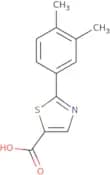
2-(3,4-Dimethylphenyl)-1,3-thiazole-5-carboxylic acid
CAS:Versatile small molecule scaffold
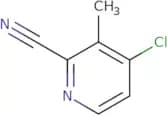
Formula:C12H11NO2SPurity:Min. 95%Molecular weight:233.29 g/mol4-chloro-3-methylpyridine-2-carbonitrile
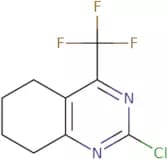
CAS:Rabeprazole is a proton pump inhibitor with antacid and anti-ulcer properties. It works by reducing the amount of acid produced in the stomach. Rabeprazole is used to treat conditions that cause excess stomach acid, such as Zollinger-Ellison syndrome and gastroesophageal reflux disease (GERD). Rabeprazole sodium is an alternative formulation of rabeprazole that has been modified to make it easier to dissolve in water.Formula:C7H5ClN2Purity:Min. 95%Molecular weight:152.58 g/mol2-Chloro-4-trifluoromethyl-5,6,7,8-tetrahydro-quinazoline
CAS:Versatile small molecule scaffoldFormula:C9H8ClF3N2Purity:Min. 95%Molecular weight:236.62 g/molRef: 3D-LKB49400
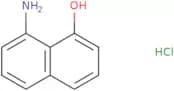
Discontinued product8-Aminonaphthalen-1-ol hydrochloride
CAS:Versatile small molecule scaffold
Formula:C10H10ClNOPurity:Min. 95%Molecular weight:195.64 g/molRef: 3D-QBA47130
Discontinued product6-bromo-[1,2,4]triazolo[1,5-b]pyridazin-2-amine
CAS:Versatile small molecule scaffoldFormula:C5H4BrN5Purity:Min. 95%Molecular weight:214.03 g/molRef: 3D-QQC12088
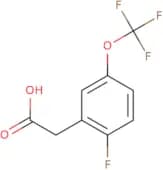
Discontinued product2-Fluoro-5-(trifluoromethoxy)phenylacetic acid
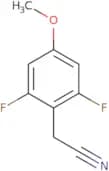
CAS:Versatile small molecule scaffoldFormula:C9H6F4O3Purity:Min. 95%Molecular weight:238.14 g/mol2,6-Difluoro-4-methoxyphenylacetonitrile
CAS:Versatile small molecule scaffold
Formula:C9H7F2NOPurity:Min. 95%Molecular weight:183.16 g/mol2-(1-Ethyl-1H-1,2,3-triazol-4-yl)ethan-1-amine
CAS:Versatile small molecule scaffold
Formula:C6H12N4Purity:Min. 95%Molecular weight:140.19 g/molRef: 3D-LKC96014
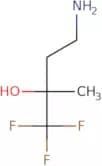
Discontinued product4-Amino-1,1,1-trifluoro-2-methylbutan-2-ol
CAS:Versatile small molecule scaffoldFormula:C5H10F3NOPurity:Min. 95%Molecular weight:157.13 g/molRef: 3D-LLB06086
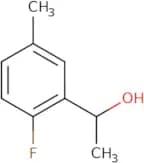
Discontinued product1-(2-Fluoro-5-methylphenyl)ethan-1-ol
CAS:Versatile small molecule scaffoldFormula:C9H11FOPurity:Min. 95%Molecular weight:154.18 g/molRef: 3D-LLB21808
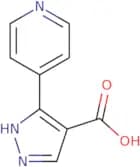
Discontinued product3-(Pyridin-4-yl)-1H-pyrazole-4-carboxylic acid
CAS:Versatile small molecule scaffoldFormula:C9H7N3O2Purity:Min. 95%Molecular weight:189.17 g/molRef: 3D-LLB46225
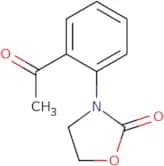
Discontinued product3-(2-Acetylphenyl)-1,3-oxazolidin-2-one
CAS:Versatile small molecule scaffoldFormula:C11H11NO3Purity:Min. 95%Molecular weight:205.21 g/molRef: 3D-LLC41176
Discontinued product3-(3-Methoxypropoxy)azetidine hydrochloride
CAS:Versatile small molecule scaffoldFormula:C7H16ClNO2Purity:Min. 95%Molecular weight:181.66 g/molRef: 3D-JCC20791
Discontinued product2,4-Dimethylfuran-3-carboxylic acid
CAS:2,4-Dimethylfuran-3-carboxylic acid is a dianion that is used as a fungicide. It has been shown to be effective against many plant diseases, including powdery mildews, rusts, and sooty molds. The methyl ester of 2,4-dimethylfuran-3-carboxylic acid can be synthesized in the laboratory from cyclohexanone and methylamine. The reactive methyl group of the dianion catalyzes the reaction with hydroxyl groups on other molecules, forming an amide or alkylating agent. This reaction occurs stereoselectively when one of the hydrogens on the carbon adjacent to the carboxylate group is also replaced by a methyl group.
Formula:C7H8O3Purity:Min. 95%Molecular weight:140.14 g/mol8-Fluoro-3-methyl-1,2,3,4-tetrahydroquinoline hydrochloride
CAS:Versatile small molecule scaffold
Formula:C10H13ClFNPurity:Min. 95%Molecular weight:201.67 g/molRef: 3D-PID25606
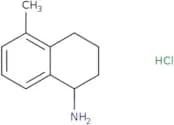
Discontinued product5-Methyl-1,2,3,4-tetrahydronaphthalen-1-amine hydrochloride
CAS:Versatile small molecule scaffold
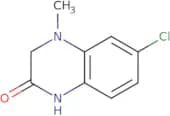
Formula:C11H16ClNPurity:Min. 95%Molecular weight:197.7 g/mol6-Chloro-4-methyl-1,2,3,4-tetrahydroquinoxalin-2-one
CAS:Versatile small molecule scaffoldFormula:C9H9ClN2OPurity:Min. 95%Molecular weight:196.63 g/molRef: 3D-QZB38194
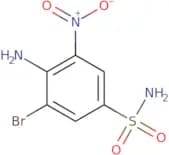
Discontinued product4-Amino-3-bromo-5-nitro-benzenesulfonamide
CAS:Versatile small molecule scaffold
Formula:C6H6BrN3O4SPurity:Min. 95%Molecular weight:296.1 g/molRef: 3D-PBA23496
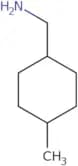
Discontinued product4-Methyl-cyclohexanemethanamine
CAS:Versatile small molecule scaffold
Formula:C8H17NPurity:Min. 95%Molecular weight:127.23 g/mol2-Chloro-5,8-difluoroquinoline
CAS:Versatile small molecule scaffold
Formula:C9H4ClF2NPurity:Min. 95%Molecular weight:199.58 g/mol1-[3-(Chloromethyl)benzoyl]piperidine
CAS:Versatile small molecule scaffold
Formula:C13H16ClNOPurity:Min. 95%Molecular weight:237.72 g/mol3-[(2,2,3,3-Tetrafluoropropoxy)methyl]benzoic acid
CAS:Versatile small molecule scaffoldFormula:C11H10F4O3Purity:Min. 95%Molecular weight:266.19 g/molRef: 3D-NSA46600
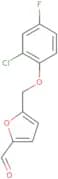
Discontinued product5-(2-Chloro-4-fluorophenoxymethyl)furan-2-carbaldehyde
CAS:Versatile small molecule scaffold
Formula:C12H8ClFO3Purity:Min. 95%Molecular weight:254.64 g/molRef: 3D-NSA22197
Discontinued product4-Bromomethyl-4'-methyl-2,2'-bipyridine
CAS:Please enquire for more information about 4-Bromomethyl-4'-methyl-2,2'-bipyridine including the price, delivery time and more detailed product information at the technical inquiry form on this page
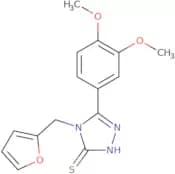
Formula:C12H11BrN2Purity:Min. 91.0 Area-%Molecular weight:263.14 g/mol5-(3,4-Dimethoxyphenyl)-4-(furan-2-ylmethyl)-4H-1,2,4-triazole-3-thiol
CAS:Versatile small molecule scaffold
Formula:C15H15N3O3SPurity:Min. 95%Molecular weight:317.4 g/molRef: 3D-SQA23740
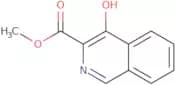
Discontinued productMethyl 4-hydroxyisoquinoline-3-carboxylate
CAS:Versatile small molecule scaffold
Formula:C11H9NO3Purity:Min. 95%Molecular weight:203.19 g/molRef: 3D-IUB14690
Discontinued product5-Amino-1-methyl-1,2,3,4-tetrahydropyrimidine-2,4-dione
CAS:Versatile small molecule scaffoldFormula:C5H7N3O2Purity:Min. 95%Molecular weight:141.13 g/mol(4-Chlorophenyl)({8-methyl-8-azabicyclo[3.2.1]octan-3-yl})methanamine
CAS:Versatile small molecule scaffold
Formula:C15H21ClN2Purity:Min. 95%Molecular weight:264.79 g/molRef: 3D-ITC29319
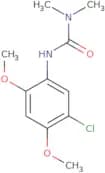
Discontinued product1-(5-Chloro-2,4-dimethoxyphenyl)-3,3-dimethylurea
CAS:Versatile small molecule scaffold
Formula:C11H15ClN2O3Purity:Min. 95%Molecular weight:258.7 g/molRef: 3D-ITC19526
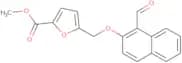
Discontinued product5-(1-Formyl-naphthalen-2-yloxymethyl)-furan-2-carboxylic acid methyl ester
CAS:Versatile small molecule scaffold
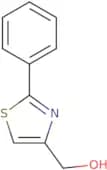
Formula:C18H14O5Purity:Min. 95%Molecular weight:310.3 g/mol4-(Hydroxymethyl)-2-phenyl-1,3-thiazole
CAS:4-(Hydroxymethyl)-2-phenyl-1,3-thiazole is a versatile compound that has various applications in research and chemical synthesis. It is commonly used as a building block for the synthesis of organic compounds, including antibodies and research chemicals. This compound has been found to exhibit potent antiangiogenic properties, making it valuable in the field of cancer research. Additionally, 4-(Hydroxymethyl)-2-phenyl-1,3-thiazole can be used as a precursor in the synthesis of important pharmaceuticals such as cephalosporins and taxol. Its unique structure allows for diverse chemical reactions, making it an essential tool for chemists and researchers alike. Whether you're working on developing new drugs or exploring novel chemical reactions, 4-(Hydroxymethyl)-2-phenyl-1,3-thiazole is an indispensable compound that will help drive your scientific endeavors forward.
Formula:C10H9NOSPurity:Min. 95%Molecular weight:191.25 g/mol(2S)-2-Amino-4-(aminooxy)butanoic acid dihydrochloride
CAS:Versatile small molecule scaffold
Formula:C4H12Cl2N2O3Purity:Min. 95%Molecular weight:207.1 g/molRef: 3D-YAA70165
Discontinued product{6-[(2-Fluorophenyl)methoxy]pyridin-3-yl}methanol
CAS:Versatile small molecule scaffoldFormula:C13H12FNO2Purity:Min. 95%Molecular weight:233.24 g/molRef: 3D-NSA04964
Discontinued product2-isopropyltetrahydro-4H-pyran-4-one
CAS:Versatile small molecule scaffoldFormula:C8H14O2Purity:Min. 95%Molecular weight:142.19 g/mol3-Benzyl-3-azabicyclo[3.1.1]heptane-6-carboxylic acid hydrochloride
CAS:Versatile small molecule scaffold
Formula:C14H18ClNO2Purity:Min. 95%Molecular weight:267.75 g/mol2-Chloro-N-[5-(2,2,2-trifluoroethyl)-1,3,4-oxadiazol-2-yl]acetamide
CAS:Versatile small molecule scaffold
Formula:C6H5ClF3N3O2Purity:Min. 95%Molecular weight:243.57 g/molRef: 3D-QZB52619
Discontinued producttert-Butyl 3-amino-2-(oxan-4-yl)propanoate
CAS:Versatile small molecule scaffoldFormula:C12H23NO3Purity:Min. 95%Molecular weight:229.3 g/mol2-(3-Amino-2-oxopiperidin-1-yl)acetic acid hydrochloride
CAS:Versatile small molecule scaffold
Formula:C7H13ClN2O3Purity:Min. 95%Molecular weight:208.6 g/molRef: 3D-XXC41801
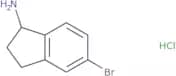
Discontinued product5-bromo-2,3-dihydro-1H-inden-1-amine hydrochloride
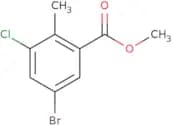
CAS:Controlled ProductVersatile small molecule scaffoldFormula:C9H11BrClNPurity:Min. 95%Molecular weight:248.5 g/molMethyl 5-bromo-3-chloro-2-methylbenzoate
CAS:Versatile small molecule scaffold
Formula:C9H8BrClO2Purity:Min. 95%Molecular weight:263.51 g/moltert-Butyl N-[(2R)-4-chloro-3-oxobutan-2-yl]carbamate
CAS:Versatile small molecule scaffold
Formula:C9H16ClNO3Purity:Min. 95%Color and Shape:PowderMolecular weight:221.68 g/molRef: 3D-XKC24150
Discontinued productBis(N-[2-(pyridin-3-yl)ethyl]guanidine), sulfuric acid
CAS:Versatile small molecule scaffold
Formula:C16H26N8O4SPurity:Min. 95%Molecular weight:426.5 g/molRef: 3D-NKD38418
Discontinued product[2-(2-Methoxyethoxy)pyridin-4-yl]methanol
CAS:Versatile small molecule scaffold
Formula:C9H13NO3Purity:Min. 95%Molecular weight:183.2 g/molRef: 3D-XKB95076
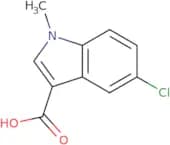
Discontinued product5-Chloro-1-methyl-1H-indole-3-carboxylic acid
CAS:Controlled ProductVersatile small molecule scaffoldFormula:C10H8ClNO2Purity:Min. 95%Molecular weight:209.63 g/molRef: 3D-XGA59662
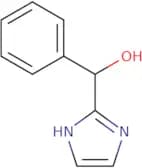
Discontinued product1H-Imidazol-2-yl(phenyl)methanol
CAS:Versatile small molecule scaffold
Formula:C10H10N2OPurity:Min. 95%Molecular weight:174.2 g/mol5,5-Dimethylpyrrolidine-2-carboxylic acid hydrochloride
CAS:Versatile small molecule scaffold
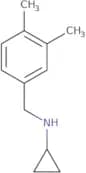
Formula:C7H14ClNO2Purity:Min. 95%Molecular weight:179.64 g/molN-(3,4-Dimethylbenzyl)cyclopropanamine
CAS:Versatile small molecule scaffold
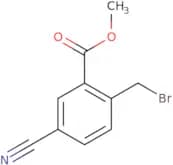
Formula:C12H17NPurity:Min. 95%Molecular weight:175.27 g/molMethyl 2-(bromomethyl)-5-cyanobenzoate
CAS:Versatile small molecule scaffold
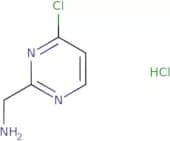
Formula:C10H8BrNO2Purity:Min. 95%Molecular weight:254.08 g/mol2-(Aminomethyl)-4-chloropyrimidine HCl
CAS:Versatile small molecule scaffold
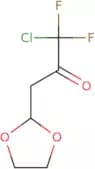
Formula:C5H7Cl2N3Purity:Min. 95%Molecular weight:180.04 g/mol1-Chloro-3-(1,3-dioxolan-2-yl)-1,1-difluoropropan-2-one
CAS:Versatile small molecule scaffold
Formula:C6H7ClF2O3Purity:Min. 95%Molecular weight:200.57 g/molRef: 3D-WMB07899
Discontinued product2-(1-Methylazetidin-3-yl)ethan-1-amine dihydrochloride
CAS:Versatile small molecule scaffold
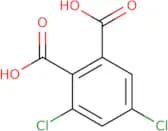
Formula:C6H16Cl2N2Purity:Min. 95%Molecular weight:187.11 g/mol3,5-Dichlorophthalic acid
CAS:3,5-Dichlorophthalic acid is a divalent organic acid that is used as an intermediate in the production of other chemicals. 3,5-Dichlorophthalic acid is used as a regulator of plant growth and development. It can also be used to make different n-substituted compounds, such as naphthalene, phthalic anhydride, and 2,6-dichloro-pyridine.
Formula:C8H4Cl2O4Purity:Min. 95%Molecular weight:235.02 g/molRef: 3D-ABA64198
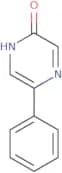
Discontinued product5-Phenyl-1H-pyrazin-2-one
CAS:5-Phenyl-1H-pyrazin-2-one is a potent inhibitor of tyrosine kinase, which is an enzyme that regulates the activity of cells by transferring phosphate groups from ATP to tyrosine residues. This drug binds to the ATP binding site, resulting in inhibition of the enzyme's activity and reduced cell proliferation. 5-Phenyl-1H-pyrazin-2-one has been shown to be effective in treating rheumatoid arthritis and other autoimmune diseases, with no adverse effects on bone metabolism or blood pressure. It also has no effect on platelet aggregation or erythrocytes.
Formula:C10H8N2OPurity:Min. 95%Molecular weight:172.18 g/mol3-(3-Amino-1H-pyrazol-1-yl)pyrrolidin-2-one
CAS:Versatile small molecule scaffold
Formula:C7H10N4OPurity:Min. 95%Molecular weight:166.18 g/molRef: 3D-NKD27328
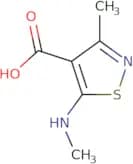
Discontinued product3-Methyl-5-(methylamino)-1,2-thiazole-4-carboxylic acid
CAS:Versatile small molecule scaffold
Formula:C6H8N2O2SPurity:Min. 95%Molecular weight:172.21 g/molRef: 3D-WJB21745
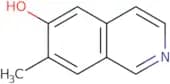
Discontinued product7-Methylisoquinolin-6-ol
CAS:Versatile small molecule scaffold
Formula:C10H9NOPurity:Min. 95%Molecular weight:159.18 g/molRef: 3D-RBB73506
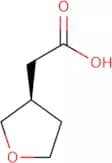
Discontinued product(R)-2-(Tetrahydrofuran-3-yl)acetic Acid
CAS:Versatile small molecule scaffold
Formula:C6H10O3Purity:Min. 95%Molecular weight:130.14 g/molRef: 3D-WFA25525
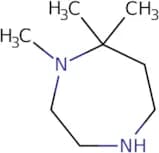
Discontinued product1,7,7-Trimethyl-1,4-diazepane
CAS:Versatile small molecule scaffold
Formula:C8H18N2Purity:Min. 95%Molecular weight:142.24 g/molRef: 3D-IMB71635
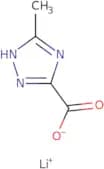
Discontinued productLithium 5-methyl-1H-1,2,4-triazole-3-carboxylate
CAS:Versatile small molecule scaffold
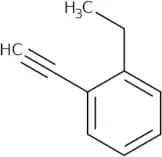
Formula:C4H4LiN3O2Purity:Min. 95%Molecular weight:133.1 g/mol1-Ethyl-2-ethynylbenzene
CAS:1-Ethyl-2-ethynylbenzene is an indene that can be synthesized by the reaction of 1-ethylbenzene with ethynylmagnesium bromide and trifluoroacetyl chloride. 1-Ethyl-2-ethynylbenzene reacts as a nucleophile with electrophiles, such as phenylsulfonyl and acetylene compounds, to form sulfones and acetylenes. It can also react with tetrafluoroborates to form indenes.
Formula:C10H10Purity:Min. 95%Molecular weight:130.19 g/molRef: 3D-ADA65949
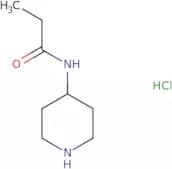
Discontinued productN-(Piperidin-4-yl)propanamide hydrochloride
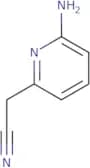
CAS:Versatile small molecule scaffoldFormula:C8H17ClN2OPurity:Min. 95%Molecular weight:192.68 g/mol2-(6-Aminopyridin-2-yl)acetonitrile
CAS:Versatile small molecule scaffold
Formula:C7H7N3Purity:Min. 95%Molecular weight:133.15 g/molRef: 3D-ARA77668
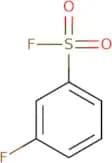
Discontinued product3-Fluorobenzene-1-sulfonyl fluoride
CAS:3-Fluorobenzene-1-sulfonyl fluoride is a chemical compound that can be used as a catalyst to synthesize organic compounds. It is a colorless liquid, which is soluble in water and organic solvents. This catalyst has been shown to be more efficient than the traditional catalysts, such as tetraphenylphosphonium chloride, potassium fluoride or sodium borohydride. 3-Fluorobenzene-1-sulfonyl fluoride also reacts with nitro groups to produce dinitro compounds, which are valuable synthetic intermediates for the production of dyes and pharmaceuticals. The synthesis of this compound can be carried out in high yields with stoichiometric amounts of reactants.
Formula:C6H4F2O2SPurity:Min. 95%Molecular weight:178.16 g/mol2-[2-({[(9H-Fluoren-9-yl)methoxy]carbonyl}amino)-1,2,3,4-tetrahydronaphthalen-2-yl]acetic acid
CAS:Versatile small molecule scaffold
Formula:C27H25NO4Purity:Min. 95%Molecular weight:427.5 g/molRef: 3D-NKD27275
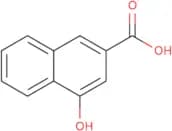
Discontinued product4-Hydroxy-2-naphthoic acid
CAS:4-Hydroxy-2-naphthoic acid is a hydrocarbon with a carboxylic acid group. It can act as an antagonist to the hydrocarbon receptor (HCR). 4-Hydroxy-2-naphthoic acid has been shown to be effective in treating colon cancer cells in vitro, and has been shown to inhibit the growth of cancer cells in vivo. This compound is also effective at inhibiting the proliferation of human colon cancer cells (Caco2) that have been exposed to benzo(a)pyrene, an aromatic hydrocarbon found in cigarette smoke. The mechanism by which this drug inhibits cell proliferation is not fully understood but may involve inhibition of cytochrome P450 1A1 (CYP1A1), which metabolizes benzo(a)pyrene into carcinogenic intermediates. 4-Hydroxy-2-naphthoic acid has also been shown to be anisotropic and microreactor, meaning
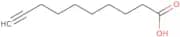
Formula:C11H8O3Purity:Min. 95%Molecular weight:188.17 g/molDec-9-ynoic acid
CAS:Dec-9-ynoic acid is a synthetic fatty acid that is a precursor to several biologically important substances. It is labile and easily oxidized by air, light, or heat. Dec-9-ynoic acid has been shown to be a central metabolic intermediate for the biosynthesis of polyunsaturated fatty acids. It can also be converted into linolenic acid, which is an essential fatty acid that cannot be synthesized by humans. Dec-9-ynoic acid exists in two geometric isomers: cis and trans. The cis form exhibits kinetic properties that are different from the trans form. Dec-9-ynoic acid has been studied as a potential treatment for human diseases such as diabetes mellitus type 2, Parkinson's disease, Alzheimer's disease, schizophrenia, and depression.
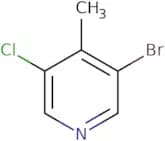
Formula:C10H16O2Purity:Min. 95%Molecular weight:168.23 g/mol3-Bromo-5-chloro-4-methylpyridine
CAS:Versatile small molecule scaffold
Formula:C6H5BrClNPurity:Min. 95%Molecular weight:206.47 g/mol4-Chloro-2-hydroxy-6-methylphenylboronic acid
CAS:Versatile small molecule scaffoldFormula:C7H8BClO3Purity:Min. 95%Molecular weight:186.4 g/mol1-Hydroxycyclopentane-1-carbonitrile
CAS:1-Hydroxycyclopentane-1-carbonitrile is a monomer that is hydrolyzed to form benzoin and cyanohydrins. It can be used in the production of scifinder as a monomer or dimerizer.
Formula:C6H9NOPurity:Min. 95%Molecular weight:111.14 g/mol2-Bromo-3,3,3-trifluoro-1-propene
CAS:Controlled Product2-Bromo-3,3,3-trifluoro-1-propene is a chemical compound that has been synthesized in an asymmetric reaction. The reactant is bromopropane and the product is 2,2,2-trifluoropropene. The methylene group on the propene molecule is activated by the nucleophilic attack of a fluoride ion from hydrogen fluoride to form a cavity with a highly strained bond. The kinetic study of this reaction revealed that the activation energy for the reaction is 42 kJ/mol. Palladium-catalyzed coupling reactions are catalyzed by palladium and require nonpolar solvents such as toluene or dichloromethane. This type of reaction has been shown to be exothermic with an isolated yield of 1%.
Formula:C3H2BrF3Purity:Min. 95%Color and Shape:Colorless PowderMolecular weight:174.95 g/moltert-Butyl (2,2-difluoro-3-hydroxypropyl)carbamate
CAS:Versatile small molecule scaffoldFormula:C10H13NO4Purity:Min. 95%Molecular weight:211.21 g/mol4,5-Dihydro-1H-imidazol-2-amine hydrochloride
CAS:Please enquire for more information about 4,5-Dihydro-1H-imidazol-2-amine hydrochloride including the price, delivery time and more detailed product information at the technical inquiry form on this page
Formula:C3H7N3•HClPurity:Min. 95%Molecular weight:121.57 g/molRef: 3D-FD183639
Discontinued product3-Hydroxy-5-methylpyridine
CAS:3-Hydroxy-5-methylpyridine (3HMP) is a chemical substance that has been classified as an amine. It is a product of the metabolism of purines, which are nitrogenous bases found in DNA and RNA. 3HMP is produced by aerogenic bacteria (such as Enterobacter), and can be used to estimate the number of these bacteria present in water samples. 3HMP has been shown to have antiviral properties against influenza virus, and can be used as a biomarker for the presence of other viruses in animals. 3HMP also has mineralization properties, which have been studied extensively, particularly with regards to pancreatic disease.
Formula:C6H7NOPurity:Min. 95%Color and Shape:PowderMolecular weight:109.13 g/molRef: 3D-FH16174
Discontinued product8-Bromo-2-methylimidazo[1,2-a]pyridine
CAS:Versatile small molecule scaffold
Formula:C8H7N2BrPurity:Min. 95%Molecular weight:211.05 g/mol4,5-Dihydroxy-2,3-Pentanedione
CAS:4,5-Dihydroxy-2,3-pentanedione is a carbonyl compound that is the product of the oxidation of ascorbic acid. It is used in wastewater treatment and has antimicrobial properties against infectious diseases. This compound has been shown to inhibit protein synthesis by binding to the ribosome and preventing the formation of peptide bonds between amino acids. 4,5-Dihydroxy-2,3-pentanedione has also been shown to bind to plasma proteins, which may be due to its acyl chain structure. 4,5-Dihydroxy-2,3-pentanedione can be synthesized in a catalytic mechanism that involves dehydroascorbic acid and molecular oxygen.
Formula:C5H8O4Purity:Min. 95%Color and Shape:PowderMolecular weight:132.11 g/molRef: 3D-FD180770
Discontinued productPiperyline
CAS:Piperyline is an alkanoic acid that has shown to be effective against skin cancer. It also has antimicrobial properties, which may be due to its ability to bind metal ions and form polymeric compounds. Piperyline inhibits microbial growth by inhibiting the synthesis of proteins and nucleic acids. The antimicrobial activity is related to its cationic polymerization with hydroxyl groups, which forms a structure that can inhibit microbial enzymes and disrupt microbial cell membranes. This compound also interacts with the skin's natural lipids, making it difficult for microorganisms to attach and grow on the skin. Piperyline is synthesized in organic chemistry laboratories as an amide precursor of other pharmaceuticals such as penicillin.
Formula:C16H17NO3Purity:Min. 95%Molecular weight:271.31 g/mol

![6-bromo-[1,2,4]triazolo[1,5-b]pyridazin-2-amine](/_next/image/?url=https%3A%2Fstatic.cymitquimica.com%2Fproducts%2F3D%2Fthumb-webp%2FQQC12088.webp&w=3840&q=75)



![1-[3-(Chloromethyl)benzoyl]piperidine](/_next/image/?url=https%3A%2Fstatic.cymitquimica.com%2Fproducts%2F3D%2Fthumb-webp%2FYFA58364.webp&w=3840&q=75)
![3-[(2,2,3,3-Tetrafluoropropoxy)methyl]benzoic acid](/_next/image/?url=https%3A%2Fstatic.cymitquimica.com%2Fproducts%2F3D%2Fthumb-webp%2FNSA46600.webp&w=3840&q=75)

![(4-Chlorophenyl)({8-methyl-8-azabicyclo[3.2.1]octan-3-yl})methanamine](/_next/image/?url=https%3A%2Fstatic.cymitquimica.com%2Fproducts%2F3D%2Fthumb-webp%2FITC29319.webp&w=3840&q=75)
![{6-[(2-Fluorophenyl)methoxy]pyridin-3-yl}methanol](/_next/image/?url=https%3A%2Fstatic.cymitquimica.com%2Fproducts%2F3D%2Fthumb-webp%2FNSA04964.webp&w=3840&q=75)
![3-Benzyl-3-azabicyclo[3.1.1]heptane-6-carboxylic acid hydrochloride](/_next/image/?url=https%3A%2Fstatic.cymitquimica.com%2Fproducts%2F3D%2Fthumb-webp%2FQZB52581.webp&w=3840&q=75)
![2-Chloro-N-[5-(2,2,2-trifluoroethyl)-1,3,4-oxadiazol-2-yl]acetamide](/_next/image/?url=https%3A%2Fstatic.cymitquimica.com%2Fproducts%2F3D%2Fthumb-webp%2FQZB52619.webp&w=3840&q=75)

![tert-Butyl N-[(2R)-4-chloro-3-oxobutan-2-yl]carbamate](/_next/image/?url=https%3A%2Fstatic.cymitquimica.com%2Fproducts%2F3D%2Fthumb-webp%2FXKC24150.webp&w=3840&q=75)
![Bis(N-[2-(pyridin-3-yl)ethyl]guanidine), sulfuric acid](/_next/image/?url=https%3A%2Fstatic.cymitquimica.com%2Fproducts%2F3D%2Fthumb-webp%2FNKD38418.webp&w=3840&q=75)
![[2-(2-Methoxyethoxy)pyridin-4-yl]methanol](/_next/image/?url=https%3A%2Fstatic.cymitquimica.com%2Fproducts%2F3D%2Fthumb-webp%2FXKB95076.webp&w=3840&q=75)



![2-[2-({[(9H-Fluoren-9-yl)methoxy]carbonyl}amino)-1,2,3,4-tetrahydronaphthalen-2-yl]acetic acid](/_next/image/?url=https%3A%2Fstatic.cymitquimica.com%2Fproducts%2F3D%2Fthumb-webp%2FNKD27275.webp&w=3840&q=75)





![8-Bromo-2-methylimidazo[1,2-a]pyridine](/_next/image/?url=https%3A%2Fstatic.cymitquimica.com%2Fproducts%2F3D%2Fthumb-webp%2FUXB37475.webp&w=3840&q=75)

