Building Blocks
Subcategories of "Building Blocks"
- Boronic Acids & Boronic Acid Derivatives(5,774 products)
- Chiral Building Blocks(1,237 products)
- Hydrocarbon Building Blocks(6,098 products)
- Organic Building Blocks(60,969 products)
Found 205134 products of "Building Blocks"
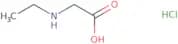
N-Ethyl-glycine hydrochloride
CAS:N-Ethylglycine hydrochloride is a pharmaceutical preparation that inhibits the enzyme cholesterol esterase. It is used to treat congestive heart failure and as a diuretic. N-Ethylglycine hydrochloride prevents the production of unsaturated fatty acids by inhibiting the enzyme cholesterol esterase, which converts cholesterol into fatty acid. This leads to lower levels of cholesterol in the blood, which can be beneficial in treating high cholesterol levels. N-Ethylglycine hydrochloride has been shown to have antiviral effects against influenza virus, with an IC50 of 0.5 μM, as well as anti-inflammatory properties.
Formula:C4H10ClNO2Purity:Min. 95%Molecular weight:139.58 g/mol[(4-Chlorophenyl)(pyridin-4-yl)methyl](methyl)amine
CAS:Versatile small molecule scaffoldFormula:C13H13ClN2Purity:Min. 95%Molecular weight:232.71 g/molRef: 3D-EWB31180
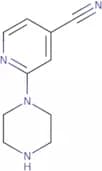
Discontinued product2-Piperazin-1-ylisonicotinonitrile
CAS:Versatile small molecule scaffold
Formula:C10H12N4Purity:Min. 95%Molecular weight:188.23 g/molRef: 3D-FMA38105
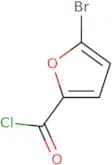
Discontinued product5-Bromo-furan-2-carbonyl chloride
CAS:5-Bromo-furan-2-carbonyl chloride is a colorless liquid that is soluble in organic solvents. It has a thionyl, polymerized odor and can be used as a feedstock for the production of amines, cyclopentadienyl, and chloride. 5-Bromo-furan-2-carbonyl chloride also has radiation damage properties and can be used in radiochemical synthesis of pyrrole. This chemical has been used to produce glycosides by reacting with diluents such as methanol and ethanol.
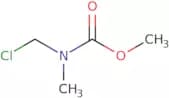
Formula:C5H2BrClO2Purity:Min. 95%Molecular weight:209.42 g/molMethyl N-(chloromethyl)-N-methylcarbamate
CAS:Versatile small molecule scaffold
Formula:C4H8ClNO2Purity:Min. 95%Molecular weight:137.56 g/mol3-[(2-Furylmethyl)amino]propanenitrile
CAS:Versatile small molecule scaffold
Formula:C8H10N2OPurity:Min. 95%Molecular weight:150.18 g/molRef: 3D-GAA78868
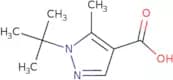
Discontinued product1-(tert-Butyl)-5-methyl-1H-pyrazole-4-carboxylic acid
CAS:Versatile small molecule scaffoldFormula:C9H14N2O2Purity:Min. 95%Molecular weight:182.22 g/molRef: 3D-NLA25151
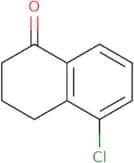
Discontinued product5-Chloro-1-tetralone
CAS:5-Chloro-1-tetralone is an oxime that is used as a topical agent for the treatment of staphylococcal infections. It acts by inhibiting bacterial cell wall synthesis, preventing the formation of cross-links between the peptidoglycan chains. 5-Chloro-1-tetralone has potent antibacterial activity against many bacteria and fungi. This compound has shown to be effective against escherichia coli, pneumoniae, and imidazole derivatives. The mechanism of action is not well understood, but it may involve inhibition of protein synthesis or DNA replication by binding to enzymes involved in these processes.
Formula:C10H9ClOPurity:Min. 95%Molecular weight:180.63 g/molRef: 3D-BBA67330
Discontinued product(2R,3S,4R,5R)-Oxane-2,3,4,5-tetrol
CAS:(2R,3S,4R,5R)-Oxane-2,3,4,5-tetrol is a ligand that binds to metal ions and isomers of nitro groups. This compound has four chiral centers and two stereogenic centers. It has been used as an immobilized catalyst in the synthesis of enantiopure alcohols and aldehydes. (2R,3S,4R,5R)-Oxane-2,3,4,5-tetrol can be used as a feedstock for the production of polyols or polymers. It can also be used in fermentations such as the conversion of sugars into alcohols using yeast. (2R,3S,4R,5R)-Oxane-2,3,4,5-tetrol is transported across cell membranes by active transport or diffusion. Growth temperature affects its solubility in water and its ability to form hydrogen bonds
Formula:C5H10O5Purity:Min. 95%Molecular weight:150.13 g/molRef: 3D-GAA74895
Discontinued product4-(4-Methoxy-phenyl)-piperidine hydrochloride
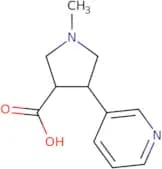
CAS:Versatile small molecule scaffoldFormula:C12H18ClNOPurity:Min. 95%Molecular weight:227.74 g/molrac-(3R,4S)-1-Methyl-4-(pyridin-3-yl)pyrrolidine-3-carboxylic acid
CAS:Versatile small molecule scaffoldFormula:C11H14N2O2Purity:Min. 95%Molecular weight:206.2 g/molRef: 3D-WGC76687
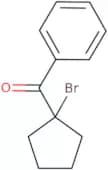
Discontinued product(1-Bromocyclopentyl)(phenyl)methanone
CAS:Versatile small molecule scaffold
Formula:C12H13BrOPurity:Min. 95%Molecular weight:253.13 g/molRef: 3D-GAA74066
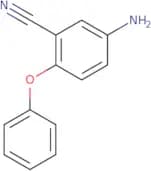
Discontinued product5-Amino-2-phenoxybenzonitrile
CAS:Versatile small molecule scaffold
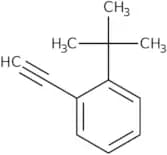
Formula:C13H10N2OPurity:Min. 95%Molecular weight:210.23 g/mol1-(tert-Butyl)-2-ethynylbenzene
CAS:Versatile small molecule scaffold
Formula:C12H14Purity:Min. 95%Molecular weight:158.24 g/molRef: 3D-AHA70037
Discontinued product5-Iodopentanenitrile
CAS:5-Iodopentanenitrile is a reactive chemical that can be used to produce organic compounds. This compound is an intermediate in the production of 5-iodo-1,3-dihydrobenzofuran and 5-iodoquinoline. It is also used for the production of pharmaceutical intermediates such as fluoroquinolones and alkylating agents. The mechanism of this chemical's reactivity has been studied extensively, which led to the discovery that it reacts by nucleophilic addition at electron deficient carbonyls groups. These reactions are known as Grignard reactions or halolactonizations. This chemical has also been shown to be reactive with biomolecules, such as DNA and RNA, and can bind to their sugar residues.
Formula:C5H8INPurity:Min. 95%Molecular weight:209.03 g/mol3-(4-Iodo-5-methyl-1H-pyrazol-1-yl)propanoic acid
CAS:Versatile small molecule scaffold
Formula:C7H9IN2O2Purity:Min. 95%Molecular weight:280.06 g/molRef: 3D-GAA71593
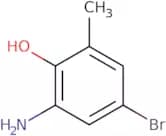
Discontinued product2-Amino-4-bromo-6-methylphenol
CAS:Versatile small molecule scaffold
Formula:C7H8BrNOPurity:Min. 95%Color and Shape:PowderMolecular weight:202.05 g/mol1-azabicyclo[2.2.2]octan-4-ylmethanol
CAS:Sinensetin is an anti-inflammatory compound that belongs to the chromones class of compounds. Sinensetin has been shown to have anti-inflammatory properties at high temperatures in experimental models. The mechanism of action for sinensetin is not well understood, but it may be due to the inhibition of prostaglandin synthesis or by direct interaction with TNF-α. Sinensetin also has antioxidant and antifungal properties, which are attributed to its ability to scavenge free radicals and inhibit lipid peroxidation. Sinensetin was found in a variety of plants from China, including Acanthopanax senticosus and Eurycoma longifolia.
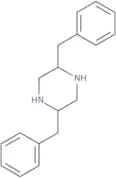
Formula:C8H15NOPurity:Min. 95%Molecular weight:141.21 g/mol2,5-Dibenzylpiperazine
CAS:Versatile small molecule scaffold
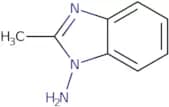
Formula:C18H22N2Purity:Min. 95%Molecular weight:266.4 g/mol2-Methyl-1H-1,3-benzodiazol-1-amine
CAS:Versatile small molecule scaffold
Formula:C8H9N3Purity:Min. 95%Molecular weight:147.18 g/molRef: 3D-GAA29993
Discontinued product

amine](/_next/image/?url=https%3A%2Fstatic.cymitquimica.com%2Fproducts%2F3D%2Fthumb-webp%2FEWB31180.webp&w=3840&q=75)
![3-[(2-Furylmethyl)amino]propanenitrile](/_next/image/?url=https%3A%2Fstatic.cymitquimica.com%2Fproducts%2F3D%2Fthumb-webp%2FGAA78868.webp&w=3840&q=75)




![1-azabicyclo[2.2.2]octan-4-ylmethanol](/_next/image/?url=https%3A%2Fstatic.cymitquimica.com%2Fproducts%2F3D%2Fthumb-webp%2FBBA60858.webp&w=3840&q=75)