Building Blocks
Subcategories of "Building Blocks"
- Boronic Acids & Boronic Acid Derivatives(5,774 products)
- Chiral Building Blocks(1,237 products)
- Hydrocarbon Building Blocks(6,098 products)
- Organic Building Blocks(60,970 products)
Found 205135 products of "Building Blocks"
1-[3-(Pyrrolidin-1-yl)phenyl]ethan-1-amine
CAS:Versatile small molecule scaffoldFormula:C12H18N2Purity:Min. 95%Molecular weight:190.28 g/molRef: 3D-EEC65903
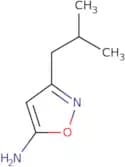
Discontinued product3-(2-Methylpropyl)-1,2-oxazol-5-amine
CAS:Versatile small molecule scaffold
Formula:C7H12N2OPurity:Min. 95%Molecular weight:140.18 g/molRef: 3D-HSB06436
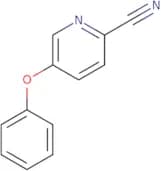
Discontinued product5-Phenoxypyridine-2-carbonitrile
CAS:5-Phenoxypyridine-2-carbonitrile is a pharmacological agent that has been shown to induce amnesia in rats. It has also been found to inhibit the activity of acetylcholinesterase. 5-Phenoxypyridine-2-carbonitrile may be used as a research tool for studying the mechanisms of memory and learning.
Formula:C12H8N2OPurity:Min. 95%Molecular weight:196.2 g/molRef: 3D-ADA58003
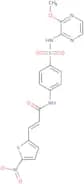
Discontinued productMLKL Inhibitor, Necrosulfonamide
CAS:Necrosulfonamide is a chemical inhibitor of MLKL, a protein that is involved in apoptosis and necroptosis. Necrosulfonamide has been shown to inhibit the kinase activity of MLKL and induce cell death by apoptosis or necroptosis. It has also been shown to inhibit cancer cell growth and suppress tumor development in animal models. Necrosulfonamide binds to MLKL and prevents its interaction with other proteins, inhibiting mitochondrial functions and leading to necrosis or necroptosis. Necrosulfonamide has also shown anti-inflammatory properties, which may be due to its inhibition of prostaglandin synthesis.
Formula:C18H15N5O6S2Purity:Min. 95%Molecular weight:461.47 g/molRef: 3D-HSA53171
Discontinued product2-(2-{[(2,2,2-Trifluoroethoxy)carbonyl]amino}-1,3-thiazol-4-yl)acetic acid
CAS:Versatile small molecule scaffold
Formula:C8H7F3N2O4SPurity:Min. 95%Molecular weight:284.21 g/molRef: 3D-GCC64488
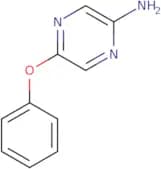
Discontinued product5-Phenoxypyrazin-2-amine
CAS:Versatile small molecule scaffold
Formula:C10H9N3OPurity:Min. 95%Molecular weight:187.2 g/molRef: 3D-PLC59503
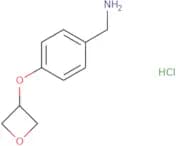
Discontinued product(4-(Oxetan-3-yloxy)phenyl)methanamine hydrochloride
CAS:Versatile small molecule scaffoldFormula:C10H14ClNO2Purity:Min. 95%Molecular weight:215.67 g/molRef: 3D-PHC90028
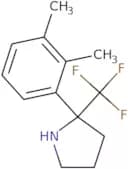
Discontinued product2-(2,3-Dimethylphenyl)-2-(trifluoromethyl)pyrrolidine
CAS:Versatile small molecule scaffold
Formula:C13H16F3NPurity:Min. 95%Molecular weight:243.27 g/molRef: 3D-JFC43101
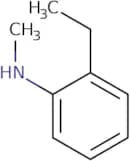
Discontinued product2-Ethyl-N-methylaniline
CAS:2-Ethyl-N-methylaniline is a colorless liquid that has a pyrrole ring and an indole group. It is used in the production of potassium and indoles, as well as in the synthesis of other organic compounds. 2-Ethyl-N-methylaniline also has pyrrole properties, which are similar to those of pyrrole. This chemical was first created by the German chemist Emil Fischer in 1887.
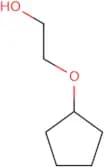
Formula:C9H13NPurity:Min. 95%Molecular weight:135.21 g/mol2-(cyclopentyloxy)ethanol
CAS:Versatile small molecule scaffold
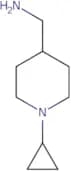
Formula:C7H14O2Purity:Min. 95%Molecular weight:130.19 g/mol(1-Cyclopropylpiperidin-4-yl)methanamine
CAS:Versatile small molecule scaffoldFormula:C9H18N2Purity:Min. 95%Molecular weight:154.25 g/molRef: 3D-EEC31559
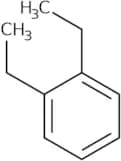
Discontinued product1,2-Diethylbenzene
CAS:1,2-Diethylbenzene is a trifluoroacetic acid derivative that is used as an acylation agent and a solid catalyst. 1,2-Diethylbenzene has been shown to increase the energy metabolism in cultured human cells. It also influences fatty acid synthesis and nmr spectra of plant families. 1,2-Diethylbenzene was found to be safe for use in sciatic nerve regeneration in Sprague-Dawley rats with axonopathy. This chemical can also be used as an analytical reagent for the separation of urine samples by liquid chromatography methods.
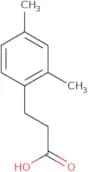
Formula:C10H14Purity:Min. 95%Molecular weight:134.22 g/mol3-(2,4-Dimethylphenyl)propionic acid
CAS:3-(2,4-Dimethylphenyl)propionic acid is an organic compound that belongs to the class of propionic acid derivatives. It is a chiral compound with two stereoisomers. The crystal structure of the racemic mixture has been determined by x-ray crystallography and the absolute configuration was assigned as (S) based on its enantiomeric excess. 3-(2,4-Dimethylphenyl)propionic acid can be synthesized from benzyloxymethyl chloride and propionic acid. This reaction is mediated by a base, such as sodium methoxide or potassium t-butoxide.
3-(2,4-Dimethylphenyl)propionic acid is used in the synthesis of other compounds, such as phenylethyl propionate and 2-methylbenzaldehyde.Formula:C11H14O2Purity:Min. 95%Molecular weight:178.23 g/molRef: 3D-BAA81185
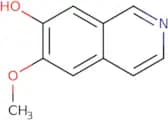
Discontinued product6-Methoxyisoquinolin-7-ol
CAS:Versatile small molecule scaffold
Formula:C10H9NO2Purity:Min. 95%Molecular weight:175.18 g/molRef: 3D-BAA81058
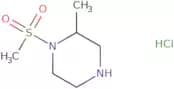
Discontinued product(2R)-1-Methanesulfonyl-2-methylpiperazine hydrochloride
CAS:Versatile small molecule scaffoldFormula:C6H15ClN2O2SPurity:Min. 95%Molecular weight:214.71 g/molRef: 3D-HRB75787
Discontinued product5-Methyl-2-(tributylstannyl)pyridine
CAS:Controlled Product5-Methyl-2-(tributylstannyl)pyridine (MTBP) is a ligand that has been used to polymerize ethylene. It is synthesized by the hydrosilylation of 2-bromopyridine with tributyltin hydride, followed by reaction with trimethylaluminium in a cavity. MTBP has been shown to be an effective catalyst for the hydrosilylation of olefins, where it can be used as a replacement for bulky and expensive transition metals such as platinum. 5-Methyl-2-(tributylstannyl)pyridine can also be used to catalyze the synthesis of supramolecular structures and photophysical processes.
Formula:C18H33NSnPurity:Min. 95%Molecular weight:382.17 g/molRef: 3D-PHA19541
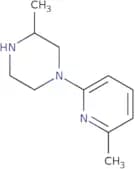
Discontinued product3-Methyl-1-(6-methylpyridin-2-yl)piperazine
CAS:Versatile small molecule scaffold
Formula:C11H17N3Purity:Min. 95%Molecular weight:191.27 g/molRef: 3D-XZB65897
Discontinued product8-Methyl-3-(propan-2-yl)-5H,6H,7H,8H-[1,2,4]triazolo[4,3-a]pyrazine
CAS:Versatile small molecule scaffold
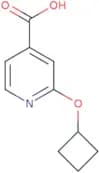
Formula:C9H16N4Purity:Min. 95%Molecular weight:180.25 g/mol2-Cyclobutoxypyridine-4-carboxylic acid
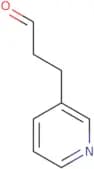
CAS:Versatile small molecule scaffoldFormula:C10H11NO3Purity:Min. 95%Molecular weight:193.2 g/mol3-(Pyridin-3-yl)propanal
CAS:3-(Pyridin-3-yl)propanal is a potential anticancer agent that has been shown to cause apoptosis in DU145 cells. 3-(Pyridin-3-yl)propanal inhibits the kinase activity of 3-kinase, leading to the phosphatidylinositol pathway and the activation of caspases. This compound also has potent anti-proliferative activities in cancer cells, and may be used as an anticancer agent. 3-(Pyridin-3-yl)propanal was found to inhibit the proliferation of U937 cells in vitro by inducing apoptosis and inhibiting cell cycle progression at G1 phase.
Formula:C8H9NOPurity:Min. 95%Molecular weight:135.16 g/mol
![1-[3-(Pyrrolidin-1-yl)phenyl]ethan-1-amine](/_next/image/?url=https%3A%2Fstatic.cymitquimica.com%2Fproducts%2F3D%2Fthumb-webp%2FEEC65903.webp&w=3840&q=75)

![2-(2-{[(2,2,2-Trifluoroethoxy)carbonyl]amino}-1,3-thiazol-4-yl)acetic acid](/_next/image/?url=https%3A%2Fstatic.cymitquimica.com%2Fproducts%2F3D%2Fthumb-webp%2FGCC64488.webp&w=3840&q=75)
![8-Methyl-3-(propan-2-yl)-5H,6H,7H,8H-[1,2,4]triazolo[4,3-a]pyrazine](/_next/image/?url=https%3A%2Fstatic.cymitquimica.com%2Fproducts%2F3D%2Fthumb-webp%2FXZB66015.webp&w=3840&q=75)