Building Blocks
Subcategories of "Building Blocks"
- Boronic Acids & Boronic Acid Derivatives(5,778 products)
- Chiral Building Blocks(1,243 products)
- Hydrocarbon Building Blocks(6,099 products)
- Organic Building Blocks(61,038 products)
Found 205376 products of "Building Blocks"
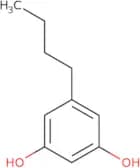
5-Butylbenzene-1,3-diol
CAS:Versatile small molecule scaffoldFormula:C10H14O2Purity:Min. 95%Molecular weight:166.22 g/mol1,7-Diazaspiro[4.4]nonane-7-carboxylic acid tert-butyl ester
CAS:Versatile small molecule scaffoldFormula:C12H22N2O2Purity:Min. 95%Molecular weight:226.32 g/mol2,4,6-Triphenylpyridine
CAS:2,4,6-Triphenylpyridine is an aromatic heterocycle with a benzyl group and trifluoroacetic acid at the 2-, 4-, and 6-positions. It is a colorless solid that has a melting point of 183 °C. In the gas phase, it exists as three anion radicals (2-, 4-, and 6-). These radicals are responsible for its optical properties. The 2-anion radical has a blue emission spectrum while the 4- and 6-anion radicals have red emission spectra. 2,4,6-Triphenylpyridine can be used as an indicator for trifluoroacetic acid or benzonitrile. It is soluble in primary alcohols such as methanol and ethanol at lower temperatures, but becomes insoluble at higher temperatures. 2,4,6-Triphenylpyridine also has functional theory applications due to its ability to
Formula:C23H17NPurity:Min. 95%Molecular weight:307.4 g/mol3-Hydroxynaphthalene-2-carboxaldehyde
CAS:3-Hydroxynaphthalene-2-carboxaldehyde is a primary amino acid that can exist in two forms, the imine and the enamine tautomers. The proton on carbon 2 is acidic, which allows for hydrogen bonding with other molecules. The 3-hydroxynaphthalene-2-carboxaldehyde has a viscosity of 1mm2/s and a fluorescence emission maximum at about 275nm. It also has optical properties that are similar to naphthalene.Formula:C11H8O2Purity:Min. 95%Molecular weight:172.18 g/molPiperidine-3-sulfonamide hydrochloride
CAS:Versatile small molecule scaffoldFormula:C5H13ClN2O2SPurity:Min. 95%Molecular weight:200.69 g/mol3-(Prop-2-en-1-ylsulfanyl)prop-1-ene
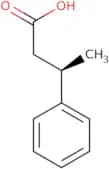
CAS:Please enquire for more information about 3-(Prop-2-en-1-ylsulfanyl)prop-1-ene including the price, delivery time and more detailed product information at the technical inquiry form on this pageFormula:C6H10SPurity:Min. 95%Molecular weight:114.21 g/mol(R)-3-Phenylbutyric Acid
CAS:Versatile small molecule scaffoldFormula:C10H12O2Purity:Min. 95%Molecular weight:164.2 g/molMethyl 3-formyl-4-methoxybenzoate
CAS:Versatile small molecule scaffold
Formula:C10H10O4Purity:Min. 95%Molecular weight:194.19 g/molPyridazin-4-ylmethanol
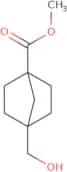
CAS:Versatile small molecule scaffoldFormula:C5H6N2OPurity:Min. 95%Molecular weight:110.11 g/molMethyl 4-(hydroxymethyl)norbornane-1-carboxylate
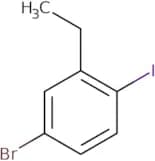
CAS:Versatile small molecule scaffoldFormula:C10H16O3Purity:Min. 95%Molecular weight:184.23 g/mol4-Bromo-2-ethyliodobenzene
CAS:Versatile small molecule scaffold
Formula:C8H8BrIPurity:Min. 95%Molecular weight:310.96 g/mol2-Methylthiazole-4-carboxaldehyde
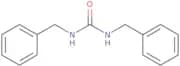
CAS:2-Methylthiazole-4-carboxaldehyde is an aldehyde that is the product of the condensation of 2,4-dibenzoylacetone and acetone in the presence of diazomethane. It has been used as a precursor to other compounds such as benzoyl chloride, glyoxal, and aldehydes. 2-Methylthiazole-4-carboxaldehyde can be synthesized using acetylation or nitration of thiols or with glyoxal or aldehyde. The reactivity of this compound is high and can be carried out in high yield.Formula:C5H5NOSPurity:Min. 95%Molecular weight:127.16 g/mol1,3-Dibenzylurea
CAS:1,3-Dibenzylurea is an organic molecule that has been used as a model system for the study of chemical reactions. This compound has been shown to have inhibitory properties against pain in animal studies and has been used to treat bowel disease. 1,3-Dibenzylurea can inhibit the inflammatory response by preventing the oxidative carbonylation of proteins. It also inhibits the production of inflammatory cytokines and chemokines in vitro. Nucleophilic attack by amines on the carbonyl group is a possible reaction pathway for this molecule.
Formula:C15H16N2OPurity:Min. 95%Molecular weight:240.3 g/mol1-[4-(Propan-2-yl)phenyl]ethan-1-ol
CAS:Versatile small molecule scaffold
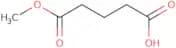
Formula:C11H16OPurity:Min. 95%Molecular weight:164.24 g/molMonomethyl Glutarate
CAS:Monomethyl glutarate is a monomer for the synthesis of polymers. It has been used in the past as a precursor for the production of polyacrylic acid and its copolymers. Monomethyl glutarate is synthesized by the reaction of hydrochloric acid, high salt, and an expression plasmid containing glutarate dehydrogenase. This compound is also used as a reagent in kinetic studies of fatty acids and glutaric acid. Monomethyl glutarate is an acidic compound with a pKa value of 3.5 at 25°C. It is rapidly hydrolyzed in water to form monomethyl glutarate acid, which has a pKa value of 2.4 at 25°C. Monomethyl glutarate can be ingested orally or applied topically due to its low energy requirements for hydrolysis in water.
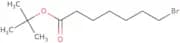
Formula:C6H10O4Purity:Min. 95%Molecular weight:146.14 g/moltert-Butyl 7-bromoheptanoate
CAS:Versatile small molecule scaffold
Formula:C11H21BrO2Purity:Min. 95%Molecular weight:265.19 g/molBromo-PEG4-azide
CAS:Bromo-PEG4-azide is a PEG compound with two different functional groups (also known as heterobifunctional). Unlike homobifunctional PEG compounds (same functional group on both ends), this type of compounds are more versatile as have two different anchor points. Bromo-PEG4-azide is used as a linker and spacer to add a PEG moiety, via pegylation (a bioconjugation technique) to proteins, peptides, oligonucleotides, small molecules and nanoparticles.
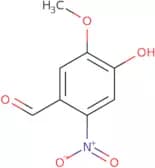
Formula:C10H20BrN3O4Purity:Min. 95%Molecular weight:326.19 g/mol4-hydroxy-5-methoxy-2-nitrobenzaldehyde
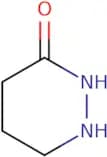
CAS:4-Hydroxy-5-methoxy-2-nitrobenzaldehyde (4HMN) is a proton donor that can be used as a crosslinking agent. It is an acidic compound that binds to the substrate, usually via hydrogen bonds. 4HMN has been shown to have good binding affinity for tumour cell lines and can be used as a crosslinking agent in bioconjugation reactions. It is also a reversible chemical reaction, which means it can be hydrolyzed under certain conditions. 4HMN has been shown to be capable of enhancing the rate of enzymatic reactions by acting as a cofactor or coenzyme, such as degradable enzymes and enzymes with low turnover rates. The kinetic process of these reactions are measured by fluorescence techniques and gel permeation chromatography.Formula:C8H7NO5Purity:Min. 95%Color and Shape:PowderMolecular weight:197.1 g/mol1,2-Diazinan-3-one
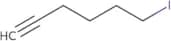
CAS:Please enquire for more information about 1,2-Diazinan-3-one including the price, delivery time and more detailed product information at the technical inquiry form on this pageFormula:C4H8N2OPurity:Min. 95%Molecular weight:100.12 g/mol6-Iodo-1-hexyne
CAS:Versatile small molecule scaffoldFormula:C6H9IPurity:Min. 95%Molecular weight:208.04 g/mol

![1,7-Diazaspiro[4.4]nonane-7-carboxylic acid tert-butyl ester](/_next/image/?url=https%3A%2Fstatic.cymitquimica.com%2Fproducts%2F3D%2Fthumb-webp%2FWAB05563.webp&w=3840&q=75)





![1-[4-(Propan-2-yl)phenyl]ethan-1-ol](/_next/image/?url=https%3A%2Fstatic.cymitquimica.com%2Fproducts%2F3D%2Fthumb-webp%2FBAA47510.webp&w=3840&q=75)