


Building Blocks
Subcategories of "Building Blocks"
- Boronic Acids & Boronic Acid Derivatives(5,784 products)
- Chiral Building Blocks(1,242 products)
- Hydrocarbon Building Blocks(6,105 products)
- Organic Building Blocks(61,061 products)
Found 205399 products of "Building Blocks"
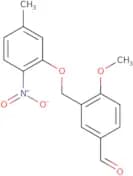
4-Methoxy-3-(5-methyl-2-nitro-phenoxymethyl)-benzaldehyde
CAS:Versatile small molecule scaffold
Formula:C16H15NO5Purity:Min. 95%Molecular weight:301.29 g/mol4-(4-Methoxyphenyl)-5-methyl-4H-1,2,4-triazole-3-thiol
CAS:Versatile small molecule scaffold
Formula:C10H11N3OSPurity:Min. 95%Molecular weight:221.28 g/molRef: 3D-TCA33744
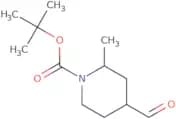
Discontinued producttert-butyl 4-formyl-2-methylpiperidine-1-carboxylate
CAS:Versatile small molecule scaffold
Formula:C12H21NO3Purity:Min. 95%Molecular weight:227.3 g/molRef: 3D-RRA85238
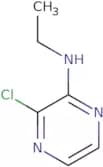
Discontinued product3-Chloro-N-ethylpyrazin-2-amine
CAS:Versatile small molecule scaffold
Formula:C6H8ClN3Purity:Min. 95%Molecular weight:157.6 g/molRef: 3D-DCA26530
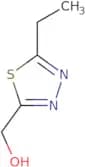
Discontinued product(5-Ethyl-1,3,4-thiadiazol-2-yl)methanol
CAS:Versatile small molecule scaffoldFormula:C5H8N2OSPurity:Min. 95%Molecular weight:144.2 g/molRef: 3D-FDC75551
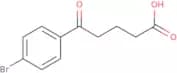
Discontinued product5-(4-Bromophenyl)-5-oxovaleric acid
CAS:5-(4-Bromophenyl)-5-oxovaleric acid is a molecule that has been synthesized to be used as a cancer drug. It is an amide derivative of the natural compound valproic acid and is being developed for the treatment of cancers, such as leukemia and melanoma. 5-(4-Bromophenyl)-5-oxovaleric acid has been shown to inhibit the function of integrin, which plays a role in cell adhesion and migration, with potential applications in wound healing.
The molecule has also been shown to have chemokine binding properties and may be useful in the treatment of diseases where chemokines are involved, such as HIV or AIDS. This compound also binds to CCR5 receptor and inhibits HIV entry into cells. The molecule has also been shown to antagonize survivin, an antiapoptotic protein that protects cells from undergoing apoptosis and prevents tumor suppression. The affinity of 5-(4-bromophenylFormula:C11H11BrO3Purity:Min. 95%Molecular weight:271.12 g/molRef: 3D-KBA33326
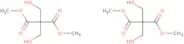
Discontinued productDimethyl Bis(hydroxymethyl)malonate
CAS:Versatile small molecule scaffold
Formula:C7H12O6Purity:Min. 95%Molecular weight:192.17 g/molRef: 3D-KBA32973
Discontinued product2-[3-(Tetramethyl-1,3,2-dioxaborolan-2-yl)phenyl]-1H-imidazole
CAS:Versatile small molecule scaffold
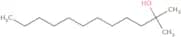
Formula:C15H19BN2O2Purity:Min. 95%Molecular weight:270.14 g/mol2-Methyl-2-dodecanol
CAS:2-Methyl-2-dodecanol is a reactive chemical that can be used as an additive in metal halides. It has been found to be an effective catalyst for the production of ethylene glycol and other chemicals. The reaction is catalyzed by alkali metals, such as sodium and potassium. 2-Methyl-2-dodecanol can also function as a solvent and has viscosity comparable to water.
Formula:C13H28OPurity:Min. 95%Molecular weight:200.36 g/molRef: 3D-BAA65337
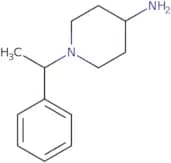
Discontinued product1-(1-Phenylethyl)piperidin-4-amine
CAS:Versatile small molecule scaffold
Formula:C13H20N2Purity:Min. 95%Molecular weight:204.31 g/molN-[1-Chloro-3-(hydroxyimino)propan-2-ylidene]hydroxylamine
CAS:Versatile small molecule scaffold
Formula:C3H5ClN2O2Purity:Min. 95%Molecular weight:136.54 g/mol2-[(5-Formylfuran-2-yl)methoxy]benzamide
CAS:Versatile small molecule scaffold
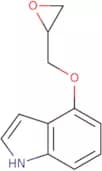
Formula:C13H11NO4Purity:Min. 95%Molecular weight:245.23 g/mol4-(Oxiran-2-ylmethoxy)-1H-indole
CAS:Versatile small molecule scaffold
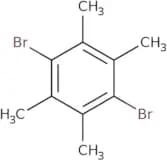
Formula:C11H11NO2Purity:Min. 95%Molecular weight:189.21 g/mol1,4-Dibromo-2,3,5,6-tetramethylbenzene
CAS:1,4-Dibromo-2,3,5,6-tetramethylbenzene is a five-membered ring molecule with the chemical formula C8H8Br6. It has been shown to react with dichlorocarbene to form a 1:1 adduct, which is stable at room temperature and can be isolated as a crystalline solid. This compound has been used in the synthesis of perfluorinated compounds. The reaction rate of 1,4-dibromo-2,3,5,6-tetramethylbenzene is affected by electron donating or withdrawing groups on the methyl group. The compound has also been found to have inflammatory effects on diseases such as asthma and arthritis.
Formula:C10H12Br2Purity:Min. 95%Molecular weight:292.01 g/mol4-Bromo-2-(4-fluorophenoxy)benzoic acid
CAS:Versatile small molecule scaffold
Formula:C13H8BrFO3Purity:Min. 95%Molecular weight:311.1 g/molRef: 3D-ZTB68777
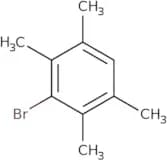
Discontinued product1-Bromo-2,3,5,6-tetramethylbenzene
CAS:1-Bromo-2,3,5,6-tetramethylbenzene (1-BTTB) is an organic compound that is used as a model system to study the reactivity of methyl groups. 1-BTTB reacts with potassium t-butoxide in a nonpolar solvent to form a cyclic ether product. The reaction is initiated by the addition of hydrogen peroxide. This reaction can be monitored using vibrational spectroscopy and yields nitro groups and imidazole derivatives when it is carried out in the presence of nitric acid or ammonium nitrate. 1-BTTB also has heat resistant properties that make it useful for use in chemical processes involving carbon tetrachloride or hydrogen fluoride.
Formula:C10H13BrPurity:Min. 95%Molecular weight:213.11 g/mol2-(4-Chlorobenzenesulfinyl)acetic acid
CAS:Versatile small molecule scaffold
Formula:C8H7ClO3SPurity:Min. 95%Molecular weight:218.66 g/molRef: 3D-DAA99647
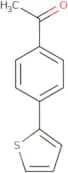
Discontinued product1-(4-Thiophen-2-yl-phenyl)-ethanone
CAS:Versatile small molecule scaffold
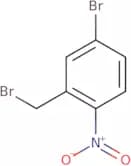
Formula:C12H10OSPurity:Min. 95%Molecular weight:202.27 g/mol5-Bromo-2-nitrobenzyl bromide
CAS:Versatile small molecule scaffold
Formula:C7H5Br2NO2Purity:Min. 95%Molecular weight:294.93 g/molRef: 3D-KBA28742
Discontinued productMethyl benzo[b]furan-2-carboxylate
CAS:Methyl benzo[b]furan-2-carboxylate is a synthetic chemical compound that is not found in nature. It has been shown to have potent anticancer activity against a variety of cancer cell lines, including leukemia, prostate, colon, and breast cancer cells. Methyl benzo[b]furan-2-carboxylate inhibits the growth of these cells by inducing programmed cell death (apoptosis) through a mechanism that is different from other anticancer drugs. This chemical also has significant inhibitory activity against alkene and benzofuran derivatives, which are known to be resistant to chemotherapy. Methyl benzo[b]furan-2-carboxylate has not shown any neurotoxicity in animal models and has a good safety profile.
Formula:C10H8O3Purity:Min. 95%Molecular weight:176.17 g/molRef: 3D-BAA64627
Discontinued product


![2-[3-(Tetramethyl-1,3,2-dioxaborolan-2-yl)phenyl]-1H-imidazole](/_next/image/?url=https%3A%2Fstatic.cymitquimica.com%2Fproducts%2F3D%2Fthumb-webp%2FNCC04930.webp&w=3840&q=75)
![N-[1-Chloro-3-(hydroxyimino)propan-2-ylidene]hydroxylamine](/_next/image/?url=https%3A%2Fstatic.cymitquimica.com%2Fproducts%2F3D%2Fthumb-webp%2FKBA32155.webp&w=3840&q=75)
![2-[(5-Formylfuran-2-yl)methoxy]benzamide](/_next/image/?url=https%3A%2Fstatic.cymitquimica.com%2Fproducts%2F3D%2Fthumb-webp%2FHIB73731.webp&w=3840&q=75)

![Methyl benzo[b]furan-2-carboxylate](/_next/image/?url=https%3A%2Fstatic.cymitquimica.com%2Fproducts%2F3D%2Fthumb-webp%2FBAA64627.webp&w=3840&q=75)