Building Blocks
This section contains fundamental products for the synthesis of organic and biological compounds. Building blocks are the essential starting materials used to construct complex molecules through various chemical reactions. They play a critical role in drug discovery, material science, and chemical research. At CymitQuimica, we offer a diverse range of high-quality building blocks to support your innovative research and industrial projects, ensuring you have the essential components for successful synthesis.
Subcategories of "Building Blocks"
- Boronic Acids & Boronic Acid Derivatives(5,756 products)
- Chiral Building Blocks(1,242 products)
- Hydrocarbon Building Blocks(6,095 products)
- Organic Building Blocks(61,038 products)
Found 196817 products of "Building Blocks"
Sort by
Purity (%)
0
100
|
0
|
50
|
90
|
95
|
100
2-Methyl-3-nitrobenzoic acid
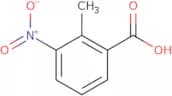
CAS:<p>2-Methyl-3-nitrobenzoic acid is a diketone that is used as a synthetic building block for the synthesis of fatty acid esters. This compound is also used to normalize butyric acid levels in blood, and has been shown to inhibit the formation of coumarin derivatives from nitrosalicylic acid. 2-Methyl-3-nitrobenzoic acid is an organic molecule with a molecular weight of 128.17 g/mol, and has four functional groups: two methyl groups, one carboxyl group, and one phenyl group. The compound reacts with a solution containing nitrite ions in an acidic environment to form nitrous acid (HONO) and 2-methylene-3-nitrobenzaldehyde (2MNB). 2MNB is soluble in water and has a solubility data of 0.0012 g/100 mL at 25 degrees Celsius.</p>Formula:C8H7NO4Purity:Min. 98 Area-%Color and Shape:PowderMolecular weight:181.15 g/mol3-Acetylbenzonitrile
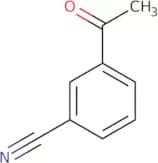
CAS:<p>3-Acetylbenzonitrile is an isomeric, asymmetric synthesis that has been synthesised in the presence of copper complex and salicylic acid. The reaction was carried out with a gaseous phase, where the chalcone was formed. The experimental techniques used were cross-coupling reactions and molecular modeling techniques. 3-Acetylbenzonitrile has been synthesised by a rationalized enthalpic approach that includes alcohol dehydrogenases and molecular modeling techniques.</p>Formula:C9H7NOPurity:Min. 95%Color and Shape:PowderMolecular weight:145.16 g/molMethyl 5-nitrosalicylate
CAS:<p>Methyl 5-nitrosalicylate is a chemical compound that belongs to the group of 4-hydroxycoumarin derivatives. It is an inhibitor of the reaction between salicylic acid and nitrous acid, inhibiting the formation of 5-nitrosalicylic acid. Methyl 5-nitrosalicylate has shown inhibitory activity against various nitro compounds, including benzofurans. The inhibitory effect on oxidation reactions may be due to its ability to act as a ligand and form coordination complexes with metal ions such as copper, zinc, and iron. Methyl 5-nitrosalicylate also has anti-inflammatory properties that are due to its ability to inhibit prostaglandin synthesis by blocking cyclooxygenase enzyme activity.<br>Methyl 5-nitrosalicylate can be synthesized in a few ways. One method includes reacting methyl salicylate with nitrous acid in the presence of light</p>Formula:C8H7NO5Purity:Min. 95%Color and Shape:PowderMolecular weight:197.14 g/molN-(4-Aminobutyl)-1,4-butanediamine trihydrochloride
CAS:<p>N-(4-Aminobutyl)-1,4-butanediamine trihydrochloride (N(4)ABDAT) is a fine chemical and versatile building block. It can be used as an intermediate in the synthesis of pharmaceuticals and other organic chemicals. N(4)ABDAT is also a useful reagent for research purposes. The compound has a CAS number of 189340-78-1. It was originally synthesized by reacting 4-aminobutyric acid with 1,4-butanediamine, which yielded N(4)ABDAT as the major product. The chemical properties of N(4)ABDAT have been studied extensively including its reaction with potassium hydroxide, hydrochloric acid and sodium hydroxide to form different compounds.</p>Formula:C8H24Cl3N3Purity:Min. 95%Color and Shape:White PowderMolecular weight:268.65 g/mol7-Methyl-DL-tryptophan
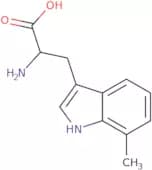
CAS:<p>7-Methyl-DL-tryptophan is a crystalline solid that is used as a protein analog. It is structurally similar to L-tryptophan and has been shown to have the same biochemical properties. 7-Methyl-DL-tryptophan can be used in the production of recombinant proteins, such as human growth hormone, and for structural analysis of proteins. This compound also has herbicide resistance, which may be due to its ability to bind with anthranilate. The solubility of 7-methyl-DL-tryptophan in water is about 0.1 mg/mL at room temperature.</p>Formula:C12H14N2O2Purity:Min. 95%Color and Shape:PowderMolecular weight:218.25 g/molN,N-Diisobutyl-2-(octylphenylphosphoryl)acetamide
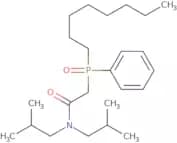
CAS:<p>N,N-Diisobutyl-2-(octylphenylphosphoryl)acetamide is a redox active extractant that is used for the extraction of metals from acidic solutions. It has been shown to have an adsorption mechanism that includes hydrogen bonding and intramolecular hydrogen bonding. N,N-Diisobutyl-2-(octylphenylphosphoryl)acetamide also has a high redox potential and fluorescence properties. This extractant can be used as a metal chelate to extract copper from hydroxide or carbonate solutions. It can also be used in titration calorimetry experiments.</p>Formula:C24H42NO2PPurity:Min. 98 Area-%Color and Shape:White To Off-White SolidMolecular weight:407.57 g/mol6-Methyl-DL-tryptophan
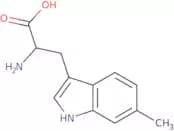
CAS:<p>6-Methyl-DL-tryptophan is a naturally occurring amino acid that is used as a precursor in the synthesis of the neurotransmitter serotonin. 6-Methyl-DL-tryptophan is synthesized from the amino acid L-tryptophan by the enzyme tryptophan synthase. It is also found in dietary sources such as nuts and seeds, but not in significant quantities. 6-Methyl-DL-tryptophan has been shown to inhibit cancer cells in vitro and has been shown to be effective against prostate cancer cells. The inhibition mechanism for this drug has not yet been elucidated, but it may be due to frameshifting and/or inhibition of protein synthesis.</p>Formula:C12H14N2O2Purity:Min. 95%Color and Shape:White PowderMolecular weight:218.25 g/mol6,6'-Dimethyl-2,2'-bipyridine
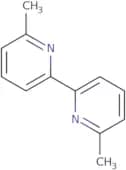
CAS:<p>6,6'-Dimethyl-2,2'-bipyridine (DMBP) is a bidentate ligand that is used in the functional theory of antibacterial activity. The bond cleavage of DMBP is believed to be due to its high oxidation potential and its ability to form hydrogen bonds with the bacteria cell wall. DMBP has been shown to have an antibacterial effect on both Gram-positive and Gram-negative bacteria. The mechanism of action may be due to its ability to release hydroxyl radicals when exposed to ultraviolet light. This compound also has a boronic acid group that can form a complex with 4-methoxyphenylboronic acid (MPA) which can inhibit bacterial growth.</p>Formula:C12H12N2Purity:Min. 98%Color and Shape:PowderMolecular weight:184.24 g/molO6-Diphenylcarbamoyl-N2-isobutyrylguanine
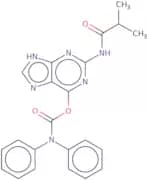
CAS:<p>Synthetic building block for nucleic acid research</p>Formula:C22H20N6O3Purity:Min. 95%Color and Shape:PowderMolecular weight:416.43 g/mol2-Amino-5-methylbenzoic acid
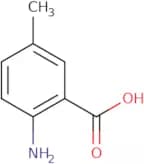
CAS:<p>2-Amino-5-methylbenzoic acid is an anthranilic acid derivative that has been shown to have potent antitumor activity. It inhibits the growth of cancer cells and is effective against light emission. 2-Amino-5-methylbenzoic acid blocks the production of porphyrins, which are necessary for the production of heme, a cofactor in many enzymes. The compound also inhibits serine protease, which is involved in tumor cell proliferation and metastasis.<br>2-Amino-5-methylbenzoic acid has been shown to inhibit the growth of human liver cancer cells in vitro. This compound can be synthesized by a Suzuki coupling reaction with phenylacetic acid and 3-(2'-aminoethyl)aminobenzene.</p>Formula:C8H9NO2Purity:Min. 95%Color and Shape:PowderMolecular weight:151.16 g/mol3-Methylbenzophenone
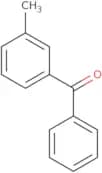
CAS:<p>3-Methylbenzophenone is a fatty acid that has been used as an analytical reagent in organic synthesis. It can be synthesized by acylation of benzoic acid with methylchloroformate. 3-Methylbenzophenone is also a chlorinated derivative of benzophenone, and its structure can be rationalized by the protonation and deprotonation of the chloride ion. The acidic properties of 3-methylbenzophenone are due to the presence of carbonyl group.</p>Formula:C14H12OPurity:Min. 98 Area-%Color and Shape:PowderMolecular weight:196.24 g/mol4-Amino-5-chloro-2-methoxybenzoic acid
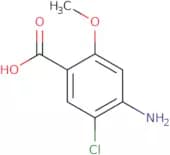
CAS:<p>4-Amino-5-chloro-2-methoxybenzoic acid is a compound that has been shown to be a potent 5-HT4 receptor agonist. It is used in the treatment of obesity and diabetes. The molecular structure of 4-Amino-5-chloro-2-methoxybenzoic acid consists of a carbonyl group and an amine group, which are bound to each other by a covalent bond. This molecule is found to bind to the 5HT4 receptor with high affinity, which leads to its efficacy as an antiobesity agent.</p>Formula:C8H8ClNO3Color and Shape:White PowderMolecular weight:201.61 g/mol4,6-Dihydroxypyrimidine
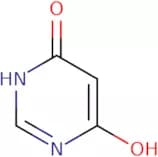
CAS:<p>4,6-Dihydroxypyrimidine is a competitive inhibitor of the bacterial enzyme DNA gyrase. It binds to the ATP-binding site and blocks the conversion of ATP to ADP. This leads to inhibition of the DNA replication process. 4,6-Dihydroxypyrimidine has shown inhibition constants against various bacterial strains. The kinetic data indicate that this compound is a noncompetitive inhibitor for DNA gyrase. 4,6-Dihydroxypyrimidine also binds to sodium hydroxide solution and forms a Langmuir adsorption isotherm that can be described by an equation with a single binding site. The chemical structure of 4,6-dihydroxypyrimidine consists of three atoms: two hydrogen atoms and one oxygen atom. This molecule has been found in electrochemical impedance spectroscopy experiments using methanol solvent as an electrolyte and monosodium salt as a supporting electrolyte.</p>Formula:C4H4N2O2Purity:Min. 95%Color and Shape:Yellow PowderMolecular weight:112.09 g/molN-Acetyl-4-aminosalicylic acid
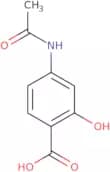
CAS:<p>N-Acetyl-4-aminosalicylic acid is an active site directed probe for the detection of salicylic acid. It has a fluorescence emission maximum at 370 nm and a fluorescence quantum yield of 0.93. N-Acetyl-4-aminosalicylic acid can be used to analyze samples, such as wastewater and human urine, which contain salicylic acid. The probe is protonated in the presence of salicylic acid and then binds to the acceptor in the sample with a bimodal distribution. The fluorescence resonance energy transfer (FRET) process between the donor and acceptor leads to an increase in fluorescence intensity that can be detected by electrophoresis methods. This probe also has a conformational change when it binds to its target, which allows for easy separation from other components in the sample by size exclusion chromatography.</p>Formula:C9H9NO4Purity:Min. 95%Color and Shape:Slightly Brown PowderMolecular weight:195.17 g/mol5-Methoxy-2-nitrobenzoic acid
CAS:<p>5-Methoxy-2-nitrobenzoic acid is a compound that has been shown to have antiinflammatory properties. It has been found to inhibit the production of inflammatory mediators such as leukotrienes and prostaglandins. 5-Methoxy-2-nitrobenzoic acid also inhibits certain enzymes, such as cyclooxygenase and lipoxygenase, which are involved in the biosynthesis of these mediators. 5-Methoxy-2-nitrobenzoic acid may be useful in the treatment of inflammatory diseases such as arthritis or asthma. This drug can also be used for chemoprevention against cancer. The drug has been shown to inhibit the growth of tumor cells in vivo by oral administration. This is due to its ability to inhibit DNA synthesis and protein synthesis in cells by binding with DNA and inhibiting RNA synthesis through inhibition of ribonucleotide reductase.</p>Formula:C8H7NO5Purity:90%Color and Shape:PowderMolecular weight:197.14 g/molN-Acetyl-3-hydroxyindole
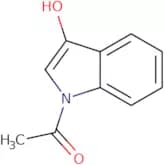
CAS:<p>N-Acetyl-3-hydroxyindole is a colorless liquid that inhibits the activity of enzymes such as butyric acid, active methylene, and acyl halides. It is also used to inhibit the enzyme eosinophil peroxidase in clinical tests. N-Acetyl-3-hydroxyindole has been shown to be an efficient method for high-throughput analysis of enzymatic reactions. This chemical can be immobilized on porous supports and used to measure enzyme activities. N-Acetyl-3-hydroxyindole has been shown to have therapeutic effects in clinical data with a potent inhibitor of eosinophil peroxidase.</p>Formula:C10H9NO2Purity:Min. 95%Color and Shape:Orange PowderMolecular weight:175.18 g/molMethyl 3-bromo-2-fluorobenzoate
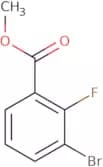
CAS:<p>Methyl 3-bromo-2-fluorobenzoate (MBFB) is a versatile building block in chemical synthesis. MBFB can be used as a reagent or speciality chemical. It has been used as an intermediate for the synthesis of other compounds, such as methyl 5-bromo-2-fluorobenzoate and ethyl 5-bromo-2-fluorobenzoate. MBFB is also a useful scaffold for the synthesis of complex compounds with interesting functions, such as research chemicals.</p>Formula:C8H6BrF2Purity:Min. 95%Color and Shape:White PowderMolecular weight:233 g/molMethyl 2-nitrobenzoate
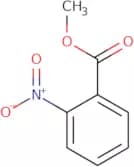
CAS:<p>Methyl 2-nitrobenzoate is a nitro compound that has been used to synthesize benzyl esters. It has been shown to react with protonation and acidic conditions. Methyl 2-nitrobenzoate is also used as an intermediate in the synthesis of methyl anthranilate, which is a component of artificial grape flavoring. The mechanism of the reaction is not fully understood, but it has been proposed that methyl 2-nitrobenzoate undergoes an intramolecular hydrogen bond with the benzoate group to form an intermediate compound called N-methyl-2-(phenylmethyl)benzamide. This intermediate then reacts with methylamine to form methyl anthranilate.<br> <br>The molecule can be detected by gas chromatography or liquid chromatography in organic solvents such as methanol or acetone.</p>Formula:C8H7NO4Purity:Min. 95%Color and Shape:Yellow Clear LiquidMolecular weight:181.15 g/mol4-Aminohippuric acid
CAS:<p>4-Aminohippuric acid (4-AHA) is a substance that is used as an analytical tool to measure the amount of inulin in the blood. It is injected intravenously, and the 4-aminohippuric acid enters cells via facilitated transport. In cells, 4-aminohippuric acid binds to pyrazinoic acid to form a fluorescent product that can be detected by a spectrophotometer. This test has been used to study the role of various compounds in the angiotensin system and their effect on renal function.</p>Formula:C9H10N2O3Color and Shape:PowderMolecular weight:194.19 g/molAcrylamide
CAS:<p>Used for gel preparation for protein electrophoresis</p>Formula:C3H5NOPurity:Min. 95%Color and Shape:PowderMolecular weight:71.08 g/mol