


Building Blocks
This section contains fundamental products for the synthesis of organic and biological compounds. Building blocks are the essential starting materials used to construct complex molecules through various chemical reactions. They play a critical role in drug discovery, material science, and chemical research. At CymitQuimica, we offer a diverse range of high-quality building blocks to support your innovative research and industrial projects, ensuring you have the essential components for successful synthesis.
Subcategories of "Building Blocks"
- Boronic Acids & Boronic Acid Derivatives(5,756 products)
- Chiral Building Blocks(1,242 products)
- Hydrocarbon Building Blocks(6,095 products)
- Organic Building Blocks(61,038 products)
Found 196817 products of "Building Blocks"
Sort by
Purity (%)
0
100
|
0
|
50
|
90
|
95
|
100
6-Phenoxy-3-pyridinemethanol
CAS:<p>Please enquire for more information about 6-Phenoxy-3-pyridinemethanol including the price, delivery time and more detailed product information at the technical inquiry form on this page</p>Formula:C12H11NO2Purity:Min. 95%Color and Shape:Clear LiquidMolecular weight:201.22 g/mol1,1,2,3,3-Pentachloropropane
CAS:<p>Please enquire for more information about 1,1,2,3,3-Pentachloropropane including the price, delivery time and more detailed product information at the technical inquiry form on this page</p>Formula:C3H3Cl5Purity:Min. 95%Color and Shape:Clear LiquidMolecular weight:216.32 g/mol2-(Pyridin-4-ylformamido)acetic acid
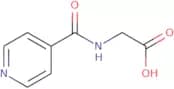
CAS:<p>2-(Pyridin-4-ylformamido)acetic acid is a chemical intermediate that is used in the synthesis of other compounds. It is a chemical building block, useful for the production of fine chemicals and speciality chemicals. 2-(Pyridin-4-ylformamido)acetic acid can be used as a reaction component or reagent in organic synthesis. It has been shown to have high purity and quality for research purposes. CAS No. 2015-20-5.br><br>2-(Pyridin-4-ylformamido)acetic acid can be used to synthesize a variety of compounds with different properties, such as antihistamines, antibiotics, antihypertensives, and antipsychotics.</p>Formula:C8H8N2O3Purity:Min. 95 Area-%Color and Shape:PowderMolecular weight:180.16 g/molPhospho-L-tyrosine disodium
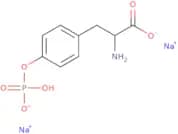
CAS:<p>Phospho-L-tyrosine disodium is a versatile building block that has many different uses in research. It is used as a reagent for the synthesis of other chemicals, such as vitamins, drugs and pesticides. The compound can be used to make high quality, useful intermediates for chemical reactions or as a reaction component. Phospho-L-tyrosine disodium is a speciality chemical that can be used in the production of many complex compounds. This product also has CAS number 1610350-91-8.</p>Formula:C9H10NNa2O6PPurity:Min. 95%Color and Shape:White PowderMolecular weight:305.13 g/mol7-Hydroxy-4-methyl-3-coumarinylacetic acid
CAS:<p>7-Hydroxy-4-methyl-3-coumarinylacetic acid (7HMCA) is an analog of 7-amino-4-methylcoumarin. It is a fluorescent material that can be used as a dye in analytical chemistry. The fluorescence of 7HMCA depends on the pH and temperature, as well as the presence of reactive oxygen species such as gadolinium or carbostyril. 7HMCA binds to the molecule's amino group, which has been shown to contribute to its stability and reactivity.</p>Formula:C12H10O5Purity:Min. 95%Color and Shape:PowderMolecular weight:234.20 g/mol[Hydroxy(propan-2-yl)carbamoyl]formic acid
CAS:<p>Hydroxy(propan-2-yl)carbamoyl formic acid is a metabolite of formaldehyde. It is used to measure formaldehyde in biological samples such as blood, serum, and urine. It also acts as a precursor for the production of other metabolites which are related to bowel disease and cardiac function. Hydroxy(propan-2-yl)carbamoyl formic acid has been shown to be a good indicator of iron homeostasis in vivo and in vitro models. This compound can be detected by chemiluminescence methods and can be used with zirconium oxide to study the effects on axonal growth.</p>Formula:C5H9NO4Purity:Min. 95%Molecular weight:147.13 g/molVioluric acid
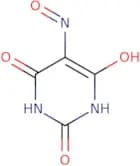
CAS:<p>Violuric acid is a chemical compound that is used in biological treatment. It has a hydroxyl group and UV absorption, which makes it reactive. Violuric acid undergoes protonation and deprotonation to form an acid complex with water. The nitrogen atoms in violuric acid can react with the oxygen atoms of water molecules to form nitrous acid, which then reacts with hydrogen peroxide to form an oxidizing agent. Violuric acid is synthesized by chain reactions between organic acids and inorganic acids. Violuric acid has a redox potential of −0.35 volts, making it an excellent reducing agent for organic compounds. In organic chemistry, violuric acid is used as a reducing agent for esters or amides.</p>Formula:C4H3N3O4Purity:Min. 95%Color and Shape:PowderMolecular weight:157.08 g/moltrans-Isoferulic acid
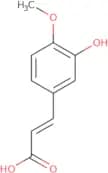
CAS:<p>Trans-iso-ferulic acid is a bioactive phenolic compound that has been shown to have antioxidant and anti-inflammatory properties. It is produced by the metabolism of ferulic acid in the body and can be found in plant cell walls. Trans-iso-ferulic acid has been shown to act as an antimicrobial agent against bacterial strains such as Escherichia coli, Bacillus cereus, Staphylococcus aureus, Klebsiella pneumoniae, Pseudomonas aeruginosa, and Candida albicans. It also has locomotor activity and has been shown to reduce the severity of cardiac disorders. Trans-iso-ferulic acid works by blocking the synthesis of fatty acids which are necessary for energy storage and making regulatory proteins that control metabolism. Trans-iso-ferulic acid also binds to anion radicals which may scavenge free radicals that are formed during oxidative stress. This process prevents lipid peroxidation from occurring which reduces inflammation caused</p>Formula:C10H10O4Purity:Min. 95%Molecular weight:194.18 g/mol4-[(Pyridine-3-carbonyl)amino]butyric acid
CAS:<p>4-[(Pyridine-3-carbonyl)amino]butyric acid (4-PBA) is a non-proteinogenic amino acid that has been found in food and has been shown to have therapeutic effects on a number of diseases. 4-PBA is converted to gamma-aminobutyric acid (GABA) by the enzyme GABA transaminase. It also has a synergistic effect with sodium succinate, which is another precursor in the production of GABA. This synergistic effect increases the amount of GABA produced from 4-PBA and sodium succinate when they are consumed together. 4-PBA also binds to receptors for dopamine, which may be why it is effective for treating diabetic neuropathy and Parkinson's disease.</p>Formula:C10H12N2O3Purity:Min. 95%Color and Shape:White PowderMolecular weight:208.21 g/mol3,5-Dinitrosalicylaldehyde
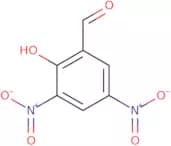
CAS:<p>3,5-Dinitrosalicylaldehyde is an oxidizing agent that is used in organic chemistry to produce aldehydes or carboxylic acids. It reacts with the amino groups of lysine residues and converts them to nitro groups. 3,5-Dinitrosalicylaldehyde is also used as a reagent in the determination of the number of lysine residues in proteins by titration with hydrochloric acid. The reaction mechanism of 3,5-dinitrosalicylaldehyde involves formation of an electron deficient intermediate that oxidizes chloride ions to form water molecules and chloride radicals. These intermediates react with nitro groups on lysine residues, resulting in nitro compounds. Crystallography studies have shown that the molecular structure of 3,5-dinitrosalicylaldehyde has two nitro groups and one hydroxyl group.</p>Formula:C7H4N2O6Purity:Min. 95%Color and Shape:Yellow PowderMolecular weight:212.12 g/mol3-Hydroxyheptanoic acid
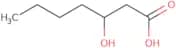
CAS:<p>3-Hydroxyheptanoic acid is a synthetic fatty acid that has been shown to have anti-cancer activity in vitro and in vivo. 3-Hydroxyheptanoic acid binds to the hydrophobic amino acids found in the membrane of cancer cells, preventing them from functioning as a transporter for nutrients and oxygen. This leads to cell death by depriving cells of vital nutrients. 3-Hydroxyheptanoic acid also inhibits the growth of mutant cells that have lost their ability to repair DNA damage, which may be due to its inhibition of protein synthesis. The hydrophobic nature of this molecule may also inhibit cancer cell invasion by inhibiting fatty acid synthase and other enzymes involved in lipid production.</p>Formula:C7H14O3Purity:Min. 95%Color and Shape:PowderMolecular weight:146.18 g/mol4-Iodobenzaldehyde
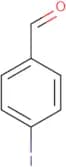
CAS:<p>4-Iodobenzaldehyde is a chemical compound with the molecular formula C6H5IO. It is an aromatic compound that can be used in cancer therapy. 4-Iodobenzaldehyde reacts with trifluoroacetic acid to form an intramolecular hydrogen, which is detected using a low-energy monomer and high detection sensitivity. 4-Iodobenzaldehyde has two phenyl substituents and a serine protease functional group, which are required for its interaction with other molecules. The presence of these functional groups allows analytical methods to be used to identify 4-iodobenzaldehyde in various samples. Using analytical methods, it can be determined that 4-iodobenzaldehyde interacts with an acceptor molecule at the reaction vessel thermally or by irradiation.</p>Formula:C7H5IOPurity:Min. 95%Color and Shape:Yellow PowderMolecular weight:232.02 g/molN-(3-Phenylpropionyl)glycine
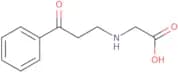
CAS:<p>N-(3-Phenylpropionyl)glycine is a metabolite of the amino acid glycine that is produced by plants. It has been used in diagnostic tests to measure the activity of enzymes involved in fatty acid metabolism and as a marker for metabolic disorders. N-(3-Phenylpropionyl)glycine can be detected in urine samples and has been used to diagnose different types of orotic aciduria, including infantile orotic aciduria. This metabolite inhibits the activity of the enzyme hexanoylglycerol O-acyltransferase, which catalyzes the conversion of hexanoylglycine to p-hydroxybenzoic acid. Hexanoylglycine is an intermediate product of human liver metabolism and it can be found in high concentrations in body tissues such as heart tissue.</p>Formula:C11H13NO3Purity:Min. 95%Color and Shape:PowderMolecular weight:207.23 g/mol2-(4-Methoxyphenyl)propanal
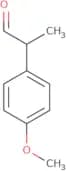
CAS:<p>Versatile small molecule scaffold</p>Formula:C10H12O2Purity:Min. 95%Molecular weight:164.2 g/mol{2-Bromo-4-[(2-chlorophenyl)methoxy]-5-methoxyphenyl}methanamine
CAS:<p>This is a chemical intermediate with the CAS No. 937598-86-2. It is a versatile building block that can be used to synthesize new drugs and pharmaceuticals, as well as other fine chemicals. This compound has been shown to be useful in reactions such as the formation of heterocycles, the synthesis of complex compounds, and the preparation of research chemicals. The high quality of this chemical makes it suitable for use in many different types of reactions.</p>Formula:C15H15BrClNO2Purity:Min. 95%Color and Shape:PowderMolecular weight:356.64 g/mol4-Cyanobenzophenone
CAS:<p>4-Cyanobenzophenone is an organic compound that is used as a reactant in the synthesis of other compounds. 4-Cyanobenzophenone has a number of applications, including use as a reagent in organic synthesis and as a building block for the synthesis of more complex compounds. It can also be used to synthesize antimalarial drugs, antibiotics, and other pharmaceuticals.</p>Formula:C14H9NOPurity:Min. 98 Area-%Molecular weight:207.23 g/mol4-Methoxybenzenediazonium tetrafluoroborate
CAS:<p>4-Methoxybenzenediazonium tetrafluoroborate is a reactive chemical that is used as a component of a number of reagents, including those used in organic chemistry. This compound has been used as an intermediate for the synthesis of other chemicals, such as 4-methoxybenzenediazonium chloride and 4-methoxybenzenediazonium bromide. 4-Methoxybenzenediazonium tetrafluoroborate is also an excellent building block for complex compounds and fine chemicals. The CAS No. for this chemical is 459-64-3.</p>Formula:C6H16N2Molecular weight:116.2 g/mol4-Bromo-1-butene
CAS:<p>4-Bromo-1-butene is a useful building block, reaction component, and useful scaffold that can be used in the synthesis of various chemical compounds. This compound is a high quality, complex compound with versatile building blocks that can be used as a reagent in research or as a speciality chemical. 4-Bromo-1-butene has been found to have many uses in the production of other chemicals such as pharmaceuticals, pesticides, and cosmetics.</p>Formula:C3H8INMolecular weight:185.01 g/molDipropyl ether
CAS:<p>Dipropyl ether is a reagent that is used in organic synthesis as a reaction component or building block for the preparation of complex compounds. It is also known to be an intermediate in the production of propylene oxide, which is used in the production of polyurethane. Dipropyl ether has been shown to be useful as a research chemical and speciality chemical. This compound has CAS number 111-43-3 and can be prepared by reacting diethyl ether with propene, acetone, or chloroform.</p>Formula:C4H9NO2SMolecular weight:135.19 g/mol1,2-Diiodoethane
CAS:<p>1,2-Diiodoethane is a useful building block that can be used as a reaction component in organic synthesis. It is also used as a reagent and can be used to produce high quality research chemicals. This chemical has many uses, including as a versatile building block or as an intermediate. 1,2-Diiodoethane is not found naturally in the environment and has been assigned CAS number 624-73-7.</p>Formula:C2H4I2Purity:Min. 98.5 Area-%Molecular weight:281.86 g/mol



![[Hydroxy(propan-2-yl)carbamoyl]formic acid](/_next/image/?url=https%3A%2Fstatic.cymitquimica.com%2Fproducts%2F3D%2Fthumb-webp%2FHFA41803.webp&w=3840&q=75)
![4-[(Pyridine-3-carbonyl)amino]butyric acid](/_next/image/?url=https%3A%2Fstatic.cymitquimica.com%2Fproducts%2F3D%2Fthumb-webp%2FFP15522.webp&w=3840&q=75)
![{2-Bromo-4-[(2-chlorophenyl)methoxy]-5-methoxyphenyl}methanamine](/_next/image/?url=https%3A%2Fstatic.cymitquimica.com%2Fproducts%2F3D%2Fthumb-webp%2FMMB59886.webp&w=3840&q=75)


