Building Blocks
This section contains fundamental products for the synthesis of organic and biological compounds. Building blocks are the essential starting materials used to construct complex molecules through various chemical reactions. They play a critical role in drug discovery, material science, and chemical research. At CymitQuimica, we offer a diverse range of high-quality building blocks to support your innovative research and industrial projects, ensuring you have the essential components for successful synthesis.
Subcategories of "Building Blocks"
- Boronic Acids & Boronic Acid Derivatives(5,756 products)
- Chiral Building Blocks(1,242 products)
- Hydrocarbon Building Blocks(6,093 products)
- Organic Building Blocks(60,522 products)
Found 195533 products of "Building Blocks"
Sort by
Purity (%)
0
100
|
0
|
50
|
90
|
95
|
100
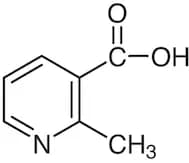
2-Methylnicotinic Acid
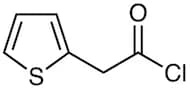
CAS:Formula:C7H7NO2Purity:>98.0%(GC)(T)Color and Shape:White to Green to Brown powder to crystalMolecular weight:137.14Thiophene-2-acetyl Chloride
CAS:Formula:C6H5ClOSPurity:>98.0%(GC)(T)Color and Shape:Yellow to Amber to Dark purple clear liquidMolecular weight:160.625,6,7,8-Tetrahydro-1-naphthol
CAS:<p>5,6,7,8-Tetrahydro-1-naphthol is a natural compound that belongs to the group of diazonium compounds. It reacts with an alkanoic acid and a hydrochloric acid in the presence of a diazo compound to form an alkylating product. This product can be used as a precursor for the synthesis of other organic compounds. The reaction mechanism has been studied using rat liver microsomes. 5,6,7,8-Tetrahydro-1-naphthol can react with dopamine in human liver samples to form 1-hydroxyindole and phenylhydroxyl radicals (a reactive oxygen species). 5,6,7,8-Tetrahydro-1-naphthol also reacts with soybean lipoxygenase to produce an alkyl radical intermediate that can react with molecular oxygen to form peroxides.</p>Formula:C10H12OPurity:Min. 98 Area-%Color and Shape:PowderMolecular weight:148.2 g/mol2-Thiophenemethanol
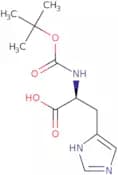
CAS:<p>2-Thiophenemethanol is a colorless liquid that has a strong, disagreeable odor and is soluble in water. It can be prepared by the reaction of 2-methylpropanal with trifluoroacetic acid. This compound reacts with methapyrilene to form polymers, which have a cationic character. The chemical structure of the molecule was determined by a combination of experimental techniques such as proton nuclear magnetic resonance spectroscopy, infrared spectroscopy, and mass spectrometry. Hydrogen bonding plays an important role in the structure of 2-thiophenemethanol as it forms intermolecular hydrogen bonds with neighboring molecules. The chemical formula for this compound is CH3C6H4SO2H. Hydrochloric acid can be used to break down this compound into methylmercaptan and sulfur dioxide.</p>Formula:C5H6OSPurity:Min. 98%Color and Shape:Clear LiquidMolecular weight:114.17 g/molBoc-L-Histidine
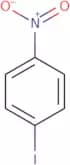
CAS:<p>Boc-L-histidine is a histidine derivative with a boronic acid group that can be used to synthesize imines. It is an organic solvent and can be used in magnetic resonance spectroscopy. Boc-L-histidine has been shown to inhibit the tyrosine activity of tyrosinase, which is involved in melanin synthesis. This compound also inhibits cancer cells by inhibiting the cellular process of protein synthesis and, as such, may be useful for the treatment of cancers.</p>Formula:C11H17N3O4Purity:Min. 98 Area-%Color and Shape:White PowderMolecular weight:255.27 g/mol1-Iodo-4-nitrobenzene
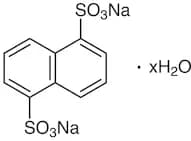
CAS:<p>1-Iodo-4-nitrobenzene is an insecticide with a nitro group. It is synthesized by the asymmetric synthesis of diazonium salt and hydroxyl group in the presence of a solid catalyst, such as palladium. 1-Iodo-4-nitrobenzene can be used as a coupling reagent for Suzuki coupling reactions, halide transfer reactions, and other multi-walled carbon transfer reactions. It has also been reported to have neuroprotective effects against Parkinson's disease in levopimaric acid model system. 1-Iodo-4-nitrobenzene has also been shown to inhibit the proliferation of neuro2a cells.</p>Formula:C6H4INO2Purity:Min. 95%Color and Shape:Slightly Yellow PowderMolecular weight:249.01 g/molDisodium 1,5-Naphthalenedisulfonate
CAS:Formula:C10H6Na2O6S2Purity:>98.0%(T)(HPLC)Color and Shape:White to Almost white powder to crystalMolecular weight:332.254-Butoxyphthalonitrile
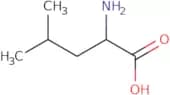
CAS:Formula:C12H12N2OPurity:>96.0%(GC)Color and Shape:White to Light yellow powder to crystalMolecular weight:200.24DL-Leucine
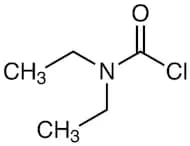
CAS:<p>DL-Leucine is an amino acid that is needed for the formation of proteins. It is also able to inhibit the activity of enzymes by hydrolyzing them. DL-Leucine has been shown to be a potent inhibitor of lysine hydrolases and can be used as an additive in the manufacture of animal feed. DL-Leucine has been shown to be stable in many environments, including those containing chlorine, hydrochloric acid, n-dimethyl formamide, and x-ray crystallography. The enantiomers of DL-leucine have different chemical stability; one form is more stable than the other in acidic environments.</p>Formula:C6H13NO2Purity:Min. 95%Color and Shape:PowderMolecular weight:131.17 g/molDiethylcarbamoyl Chloride
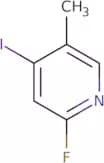
CAS:Formula:C5H10ClNOPurity:>98.0%(GC)(T)Color and Shape:Colorless to Yellow to Orange clear liquidMolecular weight:135.592-Fluoro-4-iodo-5-methylpyridine
CAS:<p>2-Fluoro-4-iodo-5-methylpyridine is a versatile building block that can be used as a reagent or reaction component. It is an intermediate for the production of pharmaceuticals, pesticides, and other organic compounds. 2-Fluoro-4-iodo-5-methylpyridine is also used as a speciality chemical in research laboratories. 2-Fluoro-4-iodo-5-methylpyridine can be used as a building block to produce complex compounds with various functionalities.</p>Formula:C6H5FINPurity:Min. 95%Color and Shape:White PowderMolecular weight:237.01 g/mol5-Nitro-7-azaindole
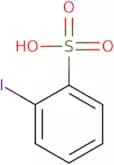
CAS:<p>5-Nitro-7-azaindole is a heterocyclic compound that is structurally related to the furoquinolines. It has been shown to act as an inhibitor of benzene and pyridine oxidases, which are enzymes that catalyze the conversion of these compounds into reactive intermediates. The reaction mechanism of 5-Nitro-7-azaindole with benzene and pyridine oxidases involves the formation of covalent bonds with reactive sulfur atoms in the enzyme active site. 5-Nitro-7-azaindole also inhibits bacterial growth by inhibiting DNA synthesis. This compound has been found to be scalable and can be produced at large scales without loss in quality. 5-Nitro-7-azaindole is not stereoselective and it is not an aromatic system, meaning that it does not have a benzene ring.</p>Formula:C7H5N3O2Purity:Min. 95%Color and Shape:PowderMolecular weight:163.13 g/mol2-Iodobenzenesulfonic acid
CAS:<p>2-Iodobenzenesulfonic acid is a synthetic molecule with a molecular weight of 169.27 g/mol. It is an acidic salt that reacts with nucleophilic substitutions, such as hydroxyl groups and heterocycles. 2-Iodobenzenesulfonic acid has been studied using molecular modeling techniques to identify its pharmacophore and the key features that may be important for binding to the active site of the enzyme. The results of these studies show that the most important features are a sulfonyl group, two hydroxyl groups, and an aromatic ring.</p>Formula:C6H5IO3SPurity:Min. 95%Color and Shape:Slightly Yellow PowderMolecular weight:284.07 g/mol2-Toluenesulfonyl isocyanate
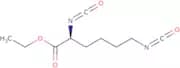
CAS:<p>2-Toluenesulfonyl isocyanate (2TSIC) is a reactive compound that belongs to the group of polyols. It has high resistance to water and other solvents, which makes it an excellent sealant. 2TSIC reacts with hydroxy groups on polymers and monomers to form hydrogen bonds. This reaction can be used in radiation curing of sealants. 2TSIC also interacts with m1 receptors, which are proteins found in the brain and spinal cord that regulate neurotransmitter release.</p>Formula:C8H7NO3SPurity:Min. 95%Color and Shape:Colourless liquid.Molecular weight:197.21 g/molL-Lysine diisocyanate ethyl ester
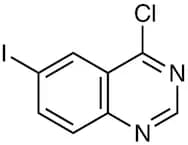
CAS:<p>L-Lysine diisocyanate ethyl ester (LDIEE) is a fluorescence probe that can be used to detect the presence of disulfide bonds. This compound reacts with thiols, such as cysteine, glutathione, and metallothioneins. LDIEE has been shown to bind to human serum proteins and has been used in biological studies for the detection of hydrogen bonding interactions. The biological properties of this compound have not been studied but it is hypothesized that LDIE may have anti-cancer activities due to its ability to react with coumarin derivatives.</p>Formula:C10H14N2O4Purity:Min. 95 Area-%Color and Shape:Clear LiquidMolecular weight:226.23 g/mol4-Chloro-6-iodoquinazoline
CAS:Formula:C8H4ClIN2Purity:>98.0%(GC)Color and Shape:White to Yellow to Green powder to crystalMolecular weight:290.49Fmoc-D-Asp(OtBu)-Opfp
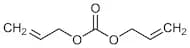
CAS:<p>Fmoc-D-Asp(OtBu)-Opfp is a high quality, complex compound that is used as a building block for the synthesis of various drugs and pharmaceuticals. It has been shown to be an excellent reaction component in the synthesis of various drugs and pharmaceuticals. The versatility of this chemical makes it a useful scaffold for generating complex molecules. It has been shown to be a useful intermediate for the synthesis of peptides, oligonucleotides, and small organic molecules. Fmoc-D-Asp(OtBu)-Opfp can also be used as a reagent in biochemical research.<br>Fmoc-D-Asp(OtBu)-Opfp can be synthesized by reacting 2-(2'-aminoethoxy)propionic acid with N,N'-dimethylformamide dimethyl acetal in the presence of sodium hydride at 0°C. This reaction produces an amide bond between the N termin</p>Formula:C29H24NO6F5Purity:Min. 95%Color and Shape:PowderMolecular weight:577.5 g/molDiallyl Carbonate
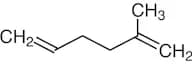
CAS:Formula:C7H10O3Purity:>98.0%(GC)Color and Shape:Colorless to Light yellow clear liquidMolecular weight:142.152-Methyl-1,5-hexadiene
CAS:Formula:C7H12Purity:>98.0%(GC)Color and Shape:Colorless to Almost colorless clear liquidMolecular weight:96.173,5-Dimethoxy-4-hydroxybenzoic acid methyl ester
CAS:<p>3,5-Dimethoxy-4-hydroxybenzoic acid methyl ester (DMHBME) is a natural compound that has been shown to have high redox potential values and chemical stability. This compound is an inhibitor of p-hydroxylases and has been shown to inhibit human serum laccase activity. DMHBME also inhibits polymerase chain reactions in the presence of DNA templates, which may be due to its ability to bind to the enzyme at the active site. DMHBME is a potent antimicrobial agent that can be used as a fungicide or preservative in food products. It is also effective against bacteria such as Staphylococcus aureus, Clostridium perfringens, Escherichia coli, and Mycobacterium tuberculosis.</p>Formula:C10H12O5Purity:Min. 95%Color and Shape:White PowderMolecular weight:212.2 g/mol