Building Blocks
This section contains fundamental products for the synthesis of organic and biological compounds. Building blocks are the essential starting materials used to construct complex molecules through various chemical reactions. They play a critical role in drug discovery, material science, and chemical research. At CymitQuimica, we offer a diverse range of high-quality building blocks to support your innovative research and industrial projects, ensuring you have the essential components for successful synthesis.
Subcategories of "Building Blocks"
- Boronic Acids & Boronic Acid Derivatives(5,756 products)
- Chiral Building Blocks(1,242 products)
- Hydrocarbon Building Blocks(6,095 products)
- Organic Building Blocks(61,037 products)
Found 196200 products of "Building Blocks"
Sort by
Purity (%)
0
100
|
0
|
50
|
90
|
95
|
100
2,6-Diaminotoluene
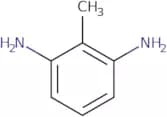
CAS:<p>2,6-Diaminotoluene (2,6-TDA), also known as o-tolidine, is a colorless to yellowish crystalline solid that is soluble in organic solvents. This compound has been shown to be genotoxic and carcinogenic in laboratory animals. 2,6-TDA binds to the receptor molecule of DNA and inhibits the repair of DNA strand breaks, leading to mutations and cancerous cells. 2,6-TDA has been shown to have toxic effects on fetal bovine kidney cells at low doses. The toxicity studies showed that 2,6-TDA inhibits cell growth and induces apoptosis in a dose dependent manner. This study also shows that 2,6-TDA inhibits protein synthesis by binding to ribosomes in the cytoplasm.</p>Formula:C7H10N2Purity:Min. 95%Color and Shape:PowderMolecular weight:122.17 g/mol1,1'-Dichloroferrocene
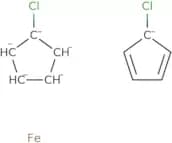
CAS:<p>1,1'-Dichloroferrocene is a molecule that belongs to the group of benzenes and has a gaseous form. It has potential energy and is an optical active compound. 1,1'-Dichloroferrin can be found in synchrotron radiation and it's optical absorption is dipole. The ligand for 1,1'-dichloroferrocene is ferrocene. This molecule transfers energy through radiation and optical excitation. The parameters for bromoferrocene are similar to those of 1,1'-dichloroferrin except that it does not have the same steric properties.</p>Formula:C10H8Cl2FePurity:Min. 95%Color and Shape:Off-White To Dark Yellow SolidMolecular weight:254.92 g/mol2,5-Diamino-4,6-dichloropyrimidine
CAS:<p>2,5-Diamino-4,6-dichloropyrimidine is a biomolecule that is made of carbon, hydrogen, nitrogen, and chloride. It has been shown to inhibit cell growth in culture by reacting with malonic acid to form an oxidation product. This product can then react with trifluoroacetic acid to form a chlorinating agent which reacts reversibly with amine groups on the nucleobases in DNA. The reaction mechanism may be due to the ability of 2,5-Diamino-4,6-dichloropyrimidine to react with amino function and amide groups on nucleobases in DNA. 2,5-Diamino-4,6-dichloropyrimidine has also been shown to have anti-cancer activity against leukemia cells.</p>Formula:C4H4N4Cl2Purity:Min. 95%Color and Shape:PowderMolecular weight:179.01 g/mol4-Cyclobutylbenzaldehyde
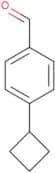
CAS:<p>4-Cyclobutylbenzaldehyde is a versatile building block that is used in the synthesis of complex compounds. This chemical is a reagent and speciality chemical which can be used for research purposes. It also has potential use as an intermediate or scaffold in organic synthesis. 4-Cyclobutylbenzaldehyde is a high quality compound with a CAS number of 875306-94-8.</p>Formula:C11H12OPurity:Min. 95%Color and Shape:Clear LiquidMolecular weight:160.22 g/mol3,3'-Dithiobis[6-nitrobenzoic acid] bis(succinimide) ester
CAS:<p>3,3'-Dithiobis[6-nitrobenzoic acid] bis(succinimide) ester is a reagent and reaction component. It is used as a building block to create other compounds that are useful in research and development of pharmaceuticals, agrochemicals, cosmetics, and other applications. 3,3'-Dithiobis[6-nitrobenzoic acid] bis(succinimide) ester can be used as a versatile building block to produce complex structures with high purity. It is also used as an intermediate for the synthesis of fine chemicals such as pharmaceuticals and agrochemicals. This product has CAS No. 60129-38-6.</p>Formula:C22H14N4O12S2Purity:Min. 95%Color and Shape:PowderMolecular weight:590.5 g/mol1,3-Diacetylbenzene
CAS:<p>Methyl ketones are organic compounds that contain a carbonyl group and an alkyl group. They are reactive, meaning they readily react with other substances. Methyl ketones can be found in many natural compounds such as the essential oils of lavender and rosemary, which have been shown to possess anti-diabetic properties. 1,3-Diacetylbenzene is a methyl ketone that has been used as an experimental model for the study of mitochondrial membrane potential and sciatic nerve injury. This chemical also has conformational properties that mimic those of kinesin and enolate, which are molecules involved in DNA replication.</p>Formula:C10H10O2Purity:Min. 95%Color and Shape:PowderMolecular weight:162.19 g/mol3,4-Dihydroxy-3-cyclobutene-1,2-dione
CAS:<p>3,4-Dihydroxy-3-cyclobutene-1,2-dione is a small molecule that has been shown to be an effective antimicrobial agent. It is structurally related to squaric acid and has high reactivity with hydrogen fluoride. 3,4-Dihydroxy-3-cyclobutene-1,2-dione has the ability to lyse cells through the formation of hydrogen bonds with nucleic acids. This chemical compound can also act as a fluorescence probe for group P2 human serum proteins. The kinetic energy of this molecule was found to be very high in comparison to other molecules in its structural class.</p>Formula:C4H2O4Purity:Min 99.0%Color and Shape:Off-White PowderMolecular weight:114.06 g/molcis-2-Decenoic acid
CAS:<p>cis-2-Decenoic acid is a fatty acid that acts as an antimicrobial agent. It has been shown to inhibit the growth of many human pathogens, including methicillin-resistant Staphylococcus aureus, Pseudomonas aeruginosa, and Candida albicans. cis-2-Decenoic acid also inhibits the production of proinflammatory cytokines by lipopolysaccharide and stimulates the production of anti-inflammatory cytokines. cis-2-Decenoic acid was also found to be effective against diabetic neuropathy biofilm in mice and may be useful for treatment of this condition.</p>Formula:C10H18O2Purity:Min. 98 Area-%Color and Shape:Clear LiquidMolecular weight:170.25 g/mol1,4-Diaminobutane dihydrochloride
CAS:<p>Ubiquitous polyamine necessary for optimal cell growth</p>Formula:C4H14Cl2N2Purity:Min. 98.0%Color and Shape:PowderMolecular weight:161.07 g/molcis-N-(3-Chloroallyl)-1-(R)-aminoindan hydrochloride
CAS:<p>cis-N-(3-Chloroallyl)-1-(R)-aminoindan hydrochloride is a high quality, research chemical that is a versatile building block. It is used as a reagent and reaction component for the synthesis of fine chemicals, speciality chemicals, and complex compounds. cis-N-(3-Chloroallyl)-1-(R)-aminoindan hydrochloride has CAS number 1175018-80-0.</p>Formula:C12H14ClN·HClPurity:Min. 95 Area-%Color and Shape:PowderMolecular weight:244.16 g/molcis-4-Chloro-3-nitrocinnamic acid
<p>Cis-4-Chloro-3-nitrocinnamic acid is an aromatic organic compound with potential utility in biochemical research and synthesis. This compound is typically derived from synthetic chemical processes involving chlorination and nitration reactions on cinnamic acid derivatives. Its molecular structure, characterized by both chloro and nitro functional groups, allows it to interact in unique ways with various biochemical pathways and molecular frameworks.</p>Formula:C9H6ClNO4Purity:Min. 95%Color and Shape:White PowderMolecular weight:227.6 g/molCyclohexane-1,2-dione
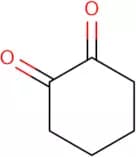
CAS:<p>Cyclohexane-1,2-dione is a natural compound that can be found in kidney beans and other plants. It has been shown to inhibit the growth of tumor cells in vitro. Cyclohexane-1,2-dione binds to DNA polymerase, preventing replication and transcription. This reaction mechanism is similar to that of the rifamycins. Cyclohexane-1,2-dione has also been shown to bind enzymes such as nitrite ion reductase with high affinity and inhibit their activity. Cyclohexane-1,2-dione is chemically stable and does not react with metal ions or form stable complexes with biological molecules. The redox potentials for this molecule are -0.42 V (5/6) under aerobic conditions and -0.52 V (5/6) under anaerobic conditions.</p>Formula:C6H8O2Purity:Min. 96.5%Color and Shape:PowderMolecular weight:112.13 g/mol(3S)-3-Amino-1-hydroxy-1,2,3,4-tetrahydroquinolin-2-one
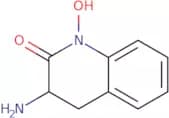
CAS:<p>(3S)-3-Amino-1-hydroxy-1,2,3,4-tetrahydroquinolin-2-one is a fine chemical with versatile building block properties. This compound has been used as a reagent and in the synthesis of complex compounds. It has also been used as a speciality chemical in research and can be used as a useful intermediate for organic reactions. (3S)-3-Amino-1-hydroxy-1,2,3,4-tetrahydroquinolin-2-one is an intermediate that can be used to synthesize other compounds or scaffolds with different functional groups. CAS No.: 34783-48-7</p>Formula:C9H10N2O2Purity:Min. 95%Color and Shape:PowderMolecular weight:178.19 g/mol4-Cyanophenol
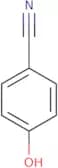
CAS:<p>4-Cyclohexyphenol is a natural compound that belongs to the class of compounds known as phenols. It has a hydroxyl group and an intramolecular hydrogen bond. The thermal expansion of 4-cyanophenol is approximately 6.6 × 10⁻⁶/°C, which is greater than the thermal expansion of p-hydroxybenzoic acid (approximately 1.8 × 10⁻⁶/°C). The reaction mechanism for 4-cyanophenol involves intramolecular hydrogen bonding, which leads to its rapid degradation. 4-Cyanophenol reacts with trifluoroacetic acid in the presence of sodium carbonate to form p-hydroxybenzoic acid, which can be determined by measuring its absorbance at 290 nm. Hydrogen bonding interactions with the surface are responsible for the high sensitivity and selectivity of this analytical method.<br>4-Cyanophenol may also be detected using plasma mass spect</p>Formula:C7H5NOPurity:Min. 95%Color and Shape:PowderMolecular weight:119.12 g/mol2-Chloro-5-nitropyridine
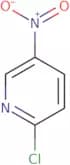
CAS:<p>2-Chloro-5-nitropyridine is a chemical compound with the molecular formula CHClNO. It is a white solid that is soluble in water and has a melting point of 132.2 °C. The molecule consists of two chlorine atoms bonded to an oxygen atom, with two nitro groups bonded to carbon atoms. 2-Chloro-5-nitropyridine was synthesized by reacting sodium carbonate with hydrochloric acid and then adding trifluoroacetic acid to the solution. This reaction produces 2-chloro-5-nitropyridine, hydrogen chloride gas, and sodium chloride crystals as byproducts. The product can be purified using column chromatography or recrystallization methods.</p>Formula:C5H3ClN2O2Purity:Min. 95%Color and Shape:White PowderMolecular weight:158.54 g/mol7-Fluoro-4-(trifluoromethyl)-1H-indole
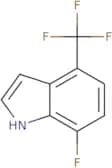
CAS:<p>Versatile small molecule scaffold</p>Formula:C9H5F4NPurity:Min. 95%Color and Shape:PowderMolecular weight:203.14 g/mol2-(4-Bromophenyl)-1,3-thiazole
CAS:<p>Versatile small molecule scaffold</p>Formula:C9H6BrNSPurity:Min. 95%Color and Shape:PowderMolecular weight:240.12 g/mol(2E)-3-(1,3-Oxazol-2-yl)prop-2-enoic acid
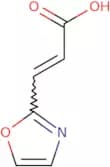
CAS:<p>1,3-Oxazole is an organic compound that belongs to the class of 1,3-diketones. It is a versatile building block that can be used in many different reactions. 1,3-Oxazole has been shown to be a reagent for use in research and as a speciality chemical. It has also been shown to be a useful intermediate for the synthesis of complex compounds. The compound is also a useful scaffold for developing high quality drug candidates with potential applications in medicine or other fields.</p>Formula:C6H5NO3Purity:Min. 95%Molecular weight:139.11 g/mol2-(Hydroxymethyl)-3,4-dihydroquinazolin-4-one
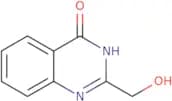
CAS:<p>2-(Hydroxymethyl)-3,4-dihydroquinazolin-4-one is an organic compound that belongs to the group of quinazolines. It is a fine chemical with CAS No. 34637-40-6. This product is a versatile building block for synthesis of complex compounds and can be used as a reaction component in organic chemistry. 2-(Hydroxymethyl)-3,4-dihydroquinazolin-4-one is a useful intermediate in the preparation of various pharmaceuticals, including antibiotics and antihypertensives. It is also used as a reagent in the laboratory or as a speciality chemical.</p>Formula:C9H8N2O2Purity:Min. 95%Color and Shape:PowderMolecular weight:176.17 g/mol2-Phenylbutan-1-amine
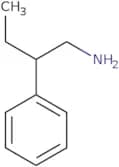
CAS:Controlled Product<p>2-Phenylbutan-1-amine is an optical isomer of the more common 1-phenylbutan-2-amine. It has been used as a chiral building block in the synthesis of pharmaceuticals and industrial products. 2-Phenylbutan-1-amine selectively reacts with propionic acid to produce optically pure 2-(4-methoxyphenyl)propionic acid, which can be used in the production of fluoroquinolone antibiotics, such as flurbiprofen. 2-Phenylbutan-1-amine has also been studied for its ability to hydrolyze microorganisms and amides.</p>Formula:C10H15NPurity:Min. 95%Color and Shape:PowderMolecular weight:149.23 g/mol


![3,3'-Dithiobis[6-nitrobenzoic acid] bis(succinimide) ester](/_next/image/?url=https%3A%2Fstatic.cymitquimica.com%2Fproducts%2F3D%2Fthumb-webp%2FFD15467.webp&w=3840&q=75)