Building Blocks
This section contains fundamental products for the synthesis of organic and biological compounds. Building blocks are the essential starting materials used to construct complex molecules through various chemical reactions. They play a critical role in drug discovery, material science, and chemical research. At CymitQuimica, we offer a diverse range of high-quality building blocks to support your innovative research and industrial projects, ensuring you have the essential components for successful synthesis.
Subcategories of "Building Blocks"
- Boronic Acids & Boronic Acid Derivatives(5,756 products)
- Chiral Building Blocks(1,242 products)
- Hydrocarbon Building Blocks(6,093 products)
- Organic Building Blocks(60,519 products)
Found 195533 products of "Building Blocks"
Sort by
Purity (%)
0
100
|
0
|
50
|
90
|
95
|
100
4-Phenyl-2-butanol
CAS:<p>4-Phenyl-2-butanol is a monoclonal antibody that is used in the treatment of human immunodeficiency virus (HIV). It is an aromatic hydrocarbon that binds to amines and reacts with malonic acid, which has monophenolase activity. The resulting product, dimethyl malonate, reacts with unsaturated ketones to form diphenols. The reaction solution also contains chloride yields, which are generated by the conversion of amines to their corresponding chlorides. 4-Phenyl-2-butanol has been shown to have enantiopure properties for the synthesis of fatty acids and other compounds containing unsaturated ketones.</p>Formula:C10H14OPurity:Min. 95%Color and Shape:Clear Colourless LiquidMolecular weight:150.22 g/mol1,4-Diazabicyclo[3.2.2]nonane
CAS:<p>Diazepam (also known as Valium) is a benzodiazepine drug used to treat anxiety disorders, muscle spasms, alcohol withdrawal symptoms, and other conditions. Diazepam is a tranquilizer that works by slowing down the activity of the central nervous system. It may also be used to control seizures, prevent certain types of muscle spasms, treat insomnia and relieve anxiety before surgery. Diazepam has been shown to have an affinity for nicotinic acetylcholine receptors in rat brains. This drug can work by blocking these receptors and preventing the transmission of impulses between neurons. Diazepam is marketed in many countries as an anxiolytic agent under trade names such as Valium and Librium. The clinical use of diazepam should be limited because it has been shown to cause birth defects in animal studies when given at high doses or during pregnancy.</p>Formula:C7H14N2Purity:Min. 95%Color and Shape:White PowderMolecular weight:126.2 g/molThiophene-2-acetyl Chloride
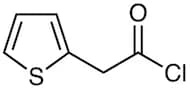
CAS:Formula:C6H5ClOSPurity:>98.0%(GC)(T)Color and Shape:Yellow to Amber to Dark purple clear liquidMolecular weight:160.623-Fluoro-4-methoxyaniline
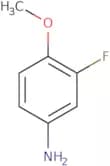
CAS:<p>3-Fluoro-4-methoxyaniline is a chemical intermediate. It is an aminopyridine that is used in the synthesis of bosutinib, an anticancer drug. 3-Fluoro-4-methoxyaniline binds to the ATP binding site of the cell's mitochondria and prevents the release of cytochrome c from the mitochondria, which leads to apoptosis. 3-Fluoro-4-methoxyaniline also has antimitotic effects and can inhibit the growth of tumor cells. 3-Fluoro-4-methoxyaniline has been shown to have poor cellular uptake, which may be due to its interaction with positron emission tomography (PET) agents such as cyanuric acid or glycopeptide. This chemical has also been shown to be a good surrogate for chloride ions in studies on transfected tumor cells.</p>Formula:C7H8FNOPurity:Min. 98.5%Color and Shape:Off-White PowderMolecular weight:141.14 g/molMethyl 2-Fluoro-5-nitrobenzoate
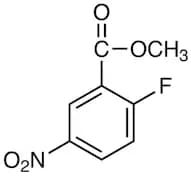
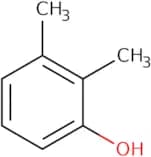
CAS:Formula:C8H6FNO4Purity:>98.0%(GC)Color and Shape:White to Yellow to Green powder to crystalMolecular weight:199.141-Hydroxy-2,3-dimethylbenzene
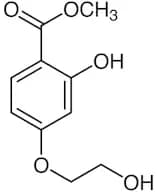
CAS:<p>1-Hydroxy-2,3-dimethylbenzene (1,2-DMB) is a chemical compound that is used as an industrial catalyst. It has been shown to be an efficient catalyst for the treatment of wastewater, and has been studied in the removal of nitrogen from industrial gases. 1,2-DMB has also been found to be active against bacteria such as Pseudomonas aeruginosa and Staphylococcus aureus. This compound reacts with copper ions to form an organometallic complex, which then reacts with trifluoroacetic acid in an organic solution to form an aldehyde group.</p>Formula:C8H10OPurity:Min. 95%Color and Shape:Off-White PowderMolecular weight:122.16 g/molMethyl 4-(2-Hydroxyethoxy)salicylate
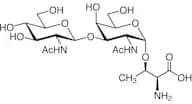
Formula:C10H12O5Purity:>98.0%(GC)Color and Shape:White to Light yellow to Light orange powder to crystalMolecular weight:212.20GlcNAcβ(1-3)GalNAc-α-Thr
CAS:Formula:C20H35N3O13Purity:>97.0%(HPLC)Color and Shape:White to Almost white powder to crystalMolecular weight:525.51Galβ(1-3)[Neu5Acα(2-6)]GalNAc-β-pNP
CAS:Formula:C31H45N3O21Purity:min. 97.0 area%(HPLC)Color and Shape:White to Light yellow to Green powder to crystalMolecular weight:795.70Pro-Gly-OH
CAS:<p>Pro-Gly-OH is a cyclic peptide that has been shown to have antimicrobial activity. Pro-Gly-OH has been shown to be an intramolecular hydrogen acceptor, which leads to the formation of a carbonyl group. This compound also has site specific interactions with the cell membrane and is taken up by cells. It is active at acidic pHs and can be activated by growth factors.<br>The conformational properties of Pro-Gly-OH are due to hydrogen bonding interactions and amide bond formation.</p>Formula:C7H12N2O3Purity:Min. 95%Color and Shape:PowderMolecular weight:172.18 g/molTetrathiafulvalene
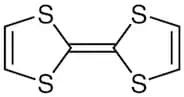
CAS:Formula:C6H4S4Purity:>98.0%(GC)Color and Shape:Orange to Brown powder to crystalMolecular weight:204.34Bithionol Disodium Salt
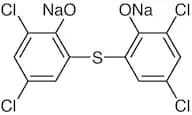
CAS:Formula:C12H4Cl4Na2O2SPurity:>98.0%(T)(HPLC)Color and Shape:White to Gray to Brown powder to crystalMolecular weight:400.001,2:5,6-Di-O-isopropylidene-α-D-allofuranose
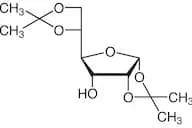
CAS:Formula:C12H20O6Purity:>98.0%(GC)Color and Shape:White to Almost white powder to crystalMolecular weight:260.291,1,3,3-Tetramethoxypropane
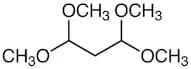
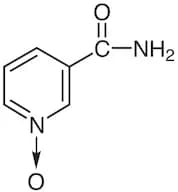
CAS:Formula:C7H16O4Purity:>98.0%(GC)Color and Shape:Colorless to Light yellow clear liquidMolecular weight:164.20Nicotinamide N-Oxide
CAS:Formula:C6H6N2O2Purity:>98.0%(T)Color and Shape:White to Light yellow powder to crystalMolecular weight:138.134-(Chloromethyl)styrene (stabilized with TBC + ONP + 2-Nitro-p-cresol)
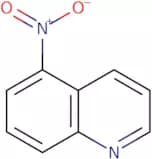
CAS:Formula:C9H9ClPurity:>90.0%(GC)Color and Shape:Light yellow to Yellow to Orange clear liquidMolecular weight:152.625-Nitroquinoline
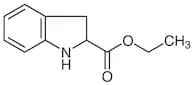
CAS:<p>5-Nitroquinoline is a nitrogen-containing heterocyclic organic compound. It is a white solid that has a melting point of 104 °C and a boiling point of 212 °C. 5-Nitroquinoline can be synthesized by the addition of sodium carbonate to 6-nitroquinoline in hydrochloric acid. The product is then purified by vacuum distillation and recrystallization from nitric acid and acetic acid. 5-Nitroquinoline can be used as an intermediate in the synthesis of other molecules, such as quinolones, which are used in pharmaceuticals. This compound has been shown to cause metastatic colorectal cancer in mice, but not in human liver cells or human lymphocytes.</p>Formula:C9H6N2O2Purity:Min. 95%Color and Shape:Light (Or Pale) Yellow To Dark Yellow SolidMolecular weight:174.16 g/molEthyl Indoline-2-carboxylate
CAS:Formula:C11H13NO2Purity:>95.0%(GC)Color and Shape:White to Orange to Green powder to crystalMolecular weight:191.231-Hexen-3-one
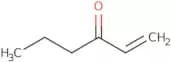
CAS:<p>1-Hexen-3-one is a carbonyl compound that has been shown to act as an estrogen receptor modulator. It has been isolated from the reaction product of hexene and formaldehyde, in which the intramolecular hydrogen is transferred to the carbon atom adjacent to the carbonyl group. 1-Hexen-3-one has been shown to induce muscle cell proliferation in vitro and inhibit liver microsomal protein synthesis in vivo. The 1-hexen-3-one can be prepared by reacting hexene with formaldehyde. The yield of this reaction is about 80%.<br>2 HCHO + C6H12 → C6H14O + 2 HCOOH</p>Formula:C6H10OPurity:Min. 95%Color and Shape:PowderMolecular weight:98.14 g/mol2-Hydroxytetrahydrofuran
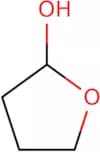
CAS:<p>2-Hydroxytetrahydrofuran is a glycol ether that is used as an agent in various industrial processes. It has been shown to be a potent inhibitor of the Mcl-1 protein, which plays an important role in apoptosis. 2-Hydroxytetrahydrofuran has also been found to be effective against autoimmune diseases and metabolic disorders such as diabetes mellitus. In addition, this chemical is known for its ability to inhibit the oxidation of hydrogen peroxide by acting as a catalyst. 2-Hydroxytetrahydrofuran is used in wastewater treatment because it prevents the formation of nitrates and nitrites from nitrogen-containing organic compounds. This chemical can also cause eye disorders if it penetrates the cornea or other parts of the eye.</p>Formula:C4H8O2Purity:Min. 95 Area-%Color and Shape:Colorless Clear LiquidMolecular weight:88.11 g/mol


![1,4-Diazabicyclo[3.2.2]nonane](/_next/image/?url=https%3A%2Fstatic.cymitquimica.com%2Fproducts%2F3D%2Fthumb-webp%2FFD07111.webp&w=3840&q=75)

![Galβ(1-3)[Neu5Acα(2-6)]GalNAc-β-pNP](/_next/image/?url=https%3A%2Fstatic.cymitquimica.com%2Fproducts%2F3B%2Fthumb-webp%2FG0345.webp&w=3840&q=75)