Building Blocks
This section contains fundamental products for the synthesis of organic and biological compounds. Building blocks are the essential starting materials used to construct complex molecules through various chemical reactions. They play a critical role in drug discovery, material science, and chemical research. At CymitQuimica, we offer a diverse range of high-quality building blocks to support your innovative research and industrial projects, ensuring you have the essential components for successful synthesis.
Subcategories of "Building Blocks"
- Boronic Acids & Boronic Acid Derivatives(5,756 products)
- Chiral Building Blocks(1,242 products)
- Hydrocarbon Building Blocks(6,093 products)
- Organic Building Blocks(60,519 products)
Found 195533 products of "Building Blocks"
Sort by
Purity (%)
0
100
|
0
|
50
|
90
|
95
|
100
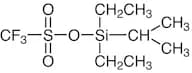
Diethylisopropylsilyl Trifluoromethanesulfonate
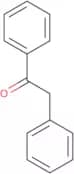
CAS:Formula:C8H17F3O3SSiPurity:>98.0%(T)Color and Shape:Colorless to Light yellow to Light orange clear liquidMolecular weight:278.362-Phenylacetophenone
CAS:<p>2-Phenylacetophenone is a synthetic compound that has been shown to be cytotoxic and significantly inhibit the growth of bacteria. 2-Phenylacetophenone binds to fatty acids in the cell membrane and forms covalent linkages with them, leading to the permeabilization of the cell membrane. This leads to bacterial death because without a functional cell membrane, cells cannot maintain homeostasis. The mechanism for this is not fully understood but it is believed that 2-phenylacetophenone binds to toll-like receptor 4 (TLR4) on macrophages, which triggers an inflammatory response. 2-Phenylacetophenone also reacts with hydroxyl groups on DNA and may interfere with DNA repair mechanisms.</p>Formula:C14H12OPurity:Min. 95%Color and Shape:Red PowderMolecular weight:196.24 g/mol3-Bromo-4-nitrobenzoic acid
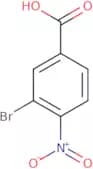
CAS:<p>3-Bromo-4-nitrobenzoic acid is a chemical compound with the molecular formula CHBrNO2. It is a versatile building block that can be used in the synthesis of many different compounds. 3-Bromo-4-nitrobenzoic acid is a white crystalline solid that is soluble in water, ethanol, and ether. It reacts with many substances to produce other useful compounds. It can also be used as a reagent for the detection of proteins or nucleic acids. This product has been shown to be an effective intermediate in organic reactions and has been used as a scaffold in the synthesis of complex molecules such as natural products, pharmaceuticals, and agrochemicals.</p>Formula:C7H4BrNO4Purity:Min. 95%Color and Shape:PowderMolecular weight:246.02 g/molResorcinol Monoacetate
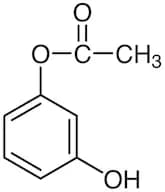
CAS:Formula:C8H8O3Purity:>50.0%(GC)Color and Shape:Colorless to Yellow to Orange clear liquidMolecular weight:152.15Bis(2-bromoethyl) Ether
CAS:Formula:C4H8Br2OPurity:>98.0%(GC)Color and Shape:Colorless to Yellow clear liquidMolecular weight:231.921-Methyl-3-[6-(methylsulfinyl)hexyl]imidazolium p-Toluenesulfonate
CAS:Formula:C18H28N2O4S2Purity:>97.0%(HPLC)(N)Color and Shape:Colorless to Light orange to Yellow clear liquidMolecular weight:400.55Pro-Gly-OH
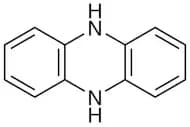
CAS:<p>Pro-Gly-OH is a cyclic peptide that has been shown to have antimicrobial activity. Pro-Gly-OH has been shown to be an intramolecular hydrogen acceptor, which leads to the formation of a carbonyl group. This compound also has site specific interactions with the cell membrane and is taken up by cells. It is active at acidic pHs and can be activated by growth factors.<br>The conformational properties of Pro-Gly-OH are due to hydrogen bonding interactions and amide bond formation.</p>Formula:C7H12N2O3Purity:Min. 95%Color and Shape:PowderMolecular weight:172.18 g/mol5,10-Dihydrophenazine
CAS:Formula:C12H10N2Purity:>98.0%(T)Color and Shape:White to Light yellow powder to crystalMolecular weight:182.231,2-Ethanediol ditosylate
CAS:<p>1,2-Ethanediol ditosylate is a coumarin derivative that is used as a contrast agent in the diagnosis of prostate cancer. It has been shown to be effective against prostate cancer cells in vitro and in vivo. 1,2-Ethanediol ditosylate is injected into the excretory organ (e.g., urinary bladder) and then excreted from the body by the kidneys. The compound accumulates in the prostate gland, where it binds to fatty acids on the cell membrane and induces a positron emission that can be detected with positron emission tomography (PET). This compound also inhibits tumor growth by blocking epidermal growth factor receptor signaling through its ability to bind to carbonic anhydrase II (CAII) receptors on tumor cells.</p>Formula:C16H18O6S2Purity:Min. 95%Color and Shape:White PowderMolecular weight:370.44 g/mol4-Butoxyphthalonitrile
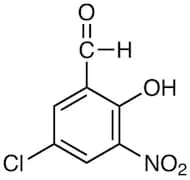
CAS:Formula:C12H12N2OPurity:>96.0%(GC)Color and Shape:White to Light yellow powder to crystalMolecular weight:200.245-Chloro-3-nitrosalicylaldehyde
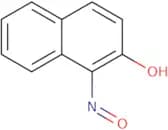
CAS:Formula:C7H4ClNO4Purity:>98.0%(GC)(T)Color and Shape:Light orange to Yellow to Green powder to crystalMolecular weight:201.561-Nitroso-2-naphthol
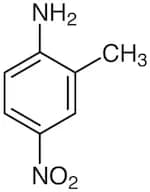
CAS:<p>1-Nitroso-2-naphthol is a copper complex that is used as an analytical reagent for the determination of nitrogen content in organic compounds. It has been shown to have linear calibration curves with a detection limit of 0.01% nitrogen at a concentration of 20 ppm. The thermodynamic data for the formation of this complex is available and includes free energy, enthalpy, entropy, and Gibbs free energy values. A reaction mechanism has also been proposed for this compound. 1-Nitroso-2-naphthol has been shown to chelate ligands such as picolinic acid and matrix effects on its electrochemical impedance spectra can be seen. Pharmaceutical preparations containing 1-nitroso-2-naphthol are on the market as treatment for gastric ulcers and duodenal ulcers.</p>Formula:C10H7NO2Purity:Min. 95%Color and Shape:Brown PowderMolecular weight:173.17 g/mol2-Methyl-4-nitroaniline
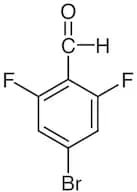
CAS:Formula:C7H8N2O2Purity:>98.0%(GC)Color and Shape:White to Yellow to Green powder to crystalMolecular weight:152.154-Bromo-2,6-difluorobenzaldehyde
CAS:Formula:C7H3BrF2OPurity:>98.0%(GC)Color and Shape:White to Light yellow to Light orange powder to crystalMolecular weight:221.004-Nitrobenzoic anhydride
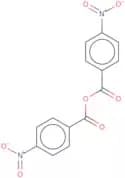
CAS:<p>4-Nitrobenzoic anhydride is a chemical compound that is used as a reagent in organic synthesis. It can be prepared by reacting magnesium with 4-nitrobenzoyl chloride in tetrahydrofuran. This reaction produces the salt of the acid, which can then be reacted with ethyl acetate to form the diethyl ester. The product can also be prepared by reacting propionyl chloride and peroxide in tetrahydrofuran or by reaction of 1-naphthaldehyde and chloride in acetic acid. 4-Nitrobenzoic anhydride is a salt that has been used as a corrosion inhibitor for metals and as a reducing agent for epoxides. It has also been used to produce other substances, such as methylamines, amines, and nitro compounds. 4-Nitrobenzoic anhydride reacts with nucleophiles such as water or alkalis to produce perox</p>Formula:C14H8N2O7Purity:Min. 95%Color and Shape:Off-White PowderMolecular weight:316.22 g/mol2,6-Dibromopyridine
CAS:<p>2,6-Dibromopyridine (2,6-DBP) is a chemical compound that has been used in the synthesis of other organic compounds. It is an aromatic heterocycle with nitrogen atoms at the 2 and 6 positions. 2,6-DBP is a monosubstituted pyridine derivative that undergoes a palladium-catalyzed coupling reaction with an aryl halide to form pyrazoles. This process can be done unsymmetrically by protonating the 2 position of the dibromopyridine molecule. The presence of serine protease has been shown to promote this reaction by increasing the surface area of the substrate.</p>Formula:C5H3Br2NPurity:Min. 98 Area-%Color and Shape:Off-White Yellow PowderMolecular weight:236.89 g/molL-Norvaline ethyl ester hydrochloride
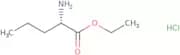
CAS:<p>L-Norvaline ethyl ester hydrochloride is an angiotensin-converting enzyme inhibitor. It has been shown to reduce the levels of angiotensin I and II, which are hormones that constrict blood vessels, resulting in a decrease in blood pressure. L-Norvaline ethyl ester hydrochloride also inhibits the production of aldosterone, a hormone involved in water retention. This drug is used as a supplement for people with congestive heart failure or those who have experienced a myocardial infarction. L-Norvaline ethyl ester hydrochloride is purified by elution from a column and then processed to remove impurities. The flow rate of the process is determined by measuring the height of the liquid in millimeters at various points on the column.</p>Formula:C7H15NO2·HClPurity:Min. 95%Color and Shape:PowderMolecular weight:181.66 g/mol2,4-Dimethoxybenzaldoxime
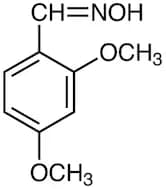
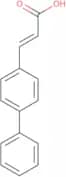
CAS:Formula:C9H11NO3Purity:>95.0%(GC)Color and Shape:White to Almost white powder to crystalMolecular weight:181.194-Phenylcinnamic acid
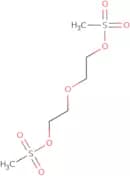
CAS:<p>4-Phenylcinnamic acid is a prenylated aromatic compound that is used as a chromatographic stationary phase. It has been shown to inhibit the activity of tyrosinase and thus may be used for the treatment of hyperpigmentation disorders such as melasma. 4-Phenylcinnamic acid interacts with piperidine and inhibits its activity, which may lead to new drug development. Molecular modelling of 4-phenylcinnamic acid has shown that it is possible to introduce functional groups into the molecule, making it more reactive. The introduction of biphenyl derivatives may improve the lipophilicity of this molecule.</p>Formula:C15H12O2Purity:Min. 95%Color and Shape:White PowderMolecular weight:224.25 g/molDiethylene glycol dimethanesulfonate
CAS:<p>Diethylene glycol dimethanesulfonate is a functional group that is used in the synthesis of organic compounds. It is a white crystalline solid with a melting point of about 130°C. Diethylene glycol dimethanesulfonate reacts slowly with water and hydrochloric acid to produce diethyl ether and hydrogen chloride gas. The reaction time for this process can be affected by the concentration of reactants, temperature, and pH. Diethylene glycol dimethanesulfonate undergoes acidic hydrolysis in the presence of hydrochloric acid or sodium hydroxide. This reaction produces sodium chloride and ethylene glycol. Busulfan, an anti-cancer drug, is produced by the dehydration of diethylene glycol dimethanesulfonate with copper chloride or chlorine gas. Intramolecular hydrogen bonds are formed during this process to give grandis as an intermediate product. Grandis can be converted into busulfan by</p>Formula:C6H14O7S2Purity:Min. 95%Color and Shape:PowderMolecular weight:262.3 g/mol



![1-Methyl-3-[6-(methylsulfinyl)hexyl]imidazolium p-Toluenesulfonate](/_next/image/?url=https%3A%2Fstatic.cymitquimica.com%2Fproducts%2F3B%2Fthumb-webp%2FM2274.webp&w=3840&q=75)