Building Blocks
This section contains fundamental products for the synthesis of organic and biological compounds. Building blocks are the essential starting materials used to construct complex molecules through various chemical reactions. They play a critical role in drug discovery, material science, and chemical research. At CymitQuimica, we offer a diverse range of high-quality building blocks to support your innovative research and industrial projects, ensuring you have the essential components for successful synthesis.
Subcategories of "Building Blocks"
- Boronic Acids & Boronic Acid Derivatives(5,756 products)
- Chiral Building Blocks(1,242 products)
- Hydrocarbon Building Blocks(6,095 products)
- Organic Building Blocks(61,037 products)
Found 196200 products of "Building Blocks"
Sort by
Purity (%)
0
100
|
0
|
50
|
90
|
95
|
100
trans-4-Nitrocinnamic acid
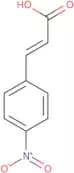
CAS:<p>Trans-4-nitrocinnamic acid is an organic compound that is synthesized from 4-hydroxycinnamic acid by nitration with aqueous or alcoholic nitric acid. Trans-4-Nitrocinnamic acid has been shown to inhibit tyrosinase activity in the presence of metal hydroxides, such as copper, zinc, and iron. The reaction mechanism is unclear but may involve an initial protonation of the phenolic group followed by an electron transfer to the nitro group. This reaction results in an irreversible inhibition of tyrosinase activity. Trans-4-Nitrocinnamic acid also reacts with hydrochloric acid to produce a carboxylate salt that can be used for sample preparation.</p>Formula:C9H7NO4Purity:Min. 95%Color and Shape:PowderMolecular weight:193.16 g/mol4-Nitrobenzeneethanol
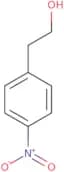
CAS:<p>4-Nitrobenzeneethanol is a primary amine that is synthesized from the amino acid L-glutamic acid and the alcohol 4-nitrobenzyl alcohol. It is activated by reaction with sodium hydroxide solution, which releases hydrogen ions. The conjugates of this compound are isomers. 4-Nitrobenzeneethanol can be used to synthesize compounds that have different functional groups, such as monoclonal antibodies for the treatment of parasitic diseases.</p>Formula:C8H9NO3Purity:Min. 95%Color and Shape:PowderMolecular weight:167.16 g/molp-Naphtholbenzein
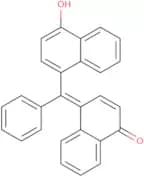
CAS:<p>p-Naphtholbenzein is a fluorescent dye that is used in the diagnosis of human pathogens. It can be used to detect the presence of fatty acids, which are found on the surface of bacteria and in the cell wall. p-Naphtholbenzein elutes from an agar plate at pH 6.0 and can be detected using a spectrophotometer. The fluorescence of p-naphtholbenzein is absorbed by fatty acids, which emit light when excited by ultraviolet light. This makes it useful for detecting fatty acid content in cells, organisms, and surfaces. It is also used as an excipient in subclinical mastitis treatments to help reduce inflammation and improve milk production. In biodiesel reactions, p-naphtholbenzein acts as an optimal reaction catalyst because it stabilizes hydroxybenzoic acid (HBA) with benzalkonium chloride (BZK).</p>Formula:C27H18O2Color and Shape:PowderMolecular weight:374.43 g/mol4-Octylbenzylamine
CAS:<p>4-Octylbenzylamine is a hydrophobic molecule that is soluble in organic solvents. In simulations, it was shown to have affinity for anions and aromatic hydrocarbons, as well as the ability to be immobilized on surfaces. 4-Octylbenzylamine is also a chromatographic stationary phase that can be used to separate solutes with similar properties. This molecule has been oriented so that it binds to the hydrated surface of the column, which improves its affinity for anions and aromatic hydrocarbons. The high-performance liquid chromatography (HPLC) technique utilizes this property to separate molecules of different affinities from one another in a systematic manner.</p>Formula:C15H25NPurity:Min. 95%Color and Shape:PowderMolecular weight:219.37 g/molPyrazolo[1,5-a]pyrimidine-3-carboxylic acid
CAS:<p>Pyrazolo[1,5-a]pyrimidine-3-carboxylic acid is a pyrimidine analog and an electron transfer agent. It is a potent inhibitor of the enzyme dehydrogenase, which catalyzes the conversion of nicotinamide adenine dinucleotide (NAD) to nicotinamide adenine dinucleotide phosphate (NADP). Pyrazolo[1,5-a]pyrimidine-3-carboxylic acid has been shown to have anti-inflammatory properties and also inhibits the production of b-raf protein. This drug has also been shown to be a potent inhibitor of mitochondrial electron transport in cancer cells. Pyrazolo[1,5-a]pyrimidine-3-carboxylic acid binds to the metal centers in mitochondria, thereby inhibiting oxidative phosphorylation and reducing ATP synthesis. This ultimately leads to cell death by apoptosis.</p>Formula:C7H5N3O2Purity:Min. 95%Color and Shape:White PowderMolecular weight:163.13 g/molL-Proline methyl ester hydrochloride
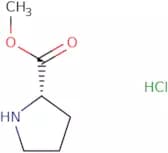
CAS:<p>L-Proline methyl ester hydrochloride is an organic compound that is classified as a trifluoroacetic acid ester. It has significant antiproliferative activity and induces apoptotic cell death in colorectal carcinoma cells. L-Proline methyl ester hydrochloride also inhibits the proliferation of lymphocytes by inhibiting protein synthesis, which may be due to its conformational properties. L-Proline methyl ester hydrochloride is synthesized by reacting L-proline with trifluoroacetic acid and subsequently hydrolyzing the resulting ester with hydrochloric acid. The synthesis can be carried out in two steps: first, a chloride ion is added to the protonated form of the amine; second, the protonated form of the amine reacts with hydrophobic compounds such as dodecyl amines or ethyl acetate to form an alkyl group. This reaction can also be carried out using</p>Formula:C6H12ClNO2Color and Shape:White PowderMolecular weight:165.62 g/molPotassium nonafluoro-1-butanesulfonate
CAS:<p>Potassium nonafluoro-1-butanesulfonate (NBS) is a chemical compound that is used to remove trifluoroacetic acid from wastewater. It can also be used as an analytical reagent to measure cytosolic calcium concentrations in cells. In addition, NBS has been shown to have a high degree of chemical stability, but it may react with hydrogen fluoride and cause toxicity in humans. The pharmacokinetic properties of this drug are not well-known, but it has been shown to accumulate in the liver and fat tissues and pass into the maternal blood stream during pregnancy. NBS also inhibits the synthesis of p-hydroxybenzoic acid, which leads to hepatic steatosis in mice with diet-induced obesity. This drug also affects 3t3-l1 preadipocytes and human serum.</p>Formula:C4F9KO3SColor and Shape:PowderMolecular weight:338.19 g/molPhenyl salicylate
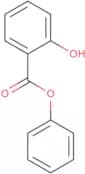
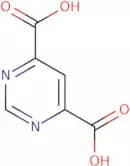
CAS:<p>Phenyl salicylate is a phenolic compound that is used as an antipyretic and analgesic. It has the ability to inhibit prostaglandin synthesis, which can lead to reduced inflammation in the body. Phenyl salicylate has been shown to bind to specific receptors on cells, which leads to inhibition of prostaglandin synthesis. This receptor binding may also be responsible for its anti-inflammatory properties. Phenyl salicylate is metabolized in the liver and excreted through the kidneys.</p>Formula:C13H10O3Purity:Min. 98%Color and Shape:White PowderMolecular weight:214.22 g/mol4,6-Pyrimidinedicarboxylic acid
CAS:<p>4,6-pyrimidinedicarboxylic acid is a synthetic compound that is used as a pharmaceutical preparation. It has been shown to have minimal inhibitory concentrations against many bacterial species, including Enterobacteriaceae, Pseudomonas aeruginosa, and Staphylococcus aureus. 4,6-pyrimidinedicarboxylic acid has shown antibacterial activity in the presence of a halogeno or hydroxyl groups. This compound also has matrix metalloproteinase inhibiting activity and can be used to treat degenerative diseases such as cancer or Alzheimer's disease. 4,6-pyrimidinedicarboxylic acid has been studied for its light emitting properties and protein–protein interactions. The light emission properties are due to the intramolecular hydrogen transfer between two hydroxyl groups on the molecule.</p>Formula:C6H4N2O4Purity:Min. 95 Area-%Color and Shape:White Off-White PowderMolecular weight:168.11 g/mol4-{2-[2-(2-Methoxyethoxy)ethoxy]ethoxy}aniline
CAS:<p>Versatile small molecule scaffold</p>Formula:C13H21NO4Purity:Min. 95%Color and Shape:Clear LiquidMolecular weight:255.31 g/molAP1867-2-(carboxymethoxy)
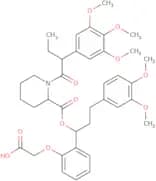
CAS:<p>AP1867-2-(carboxymethoxy) is a high purity research tool for the study of receptor and ligand interactions. It has been shown to be an activator of ion channels and a ligand of G protein-coupled receptors. AP1867-2-(carboxymethoxy) is also used in the study of protein interactions, antibody production, and cell biology.</p>Formula:C38H47NO11Purity:Min. 95%Color and Shape:PowderMolecular weight:693.8 g/molo-Sulfobenzoic acid anhydride
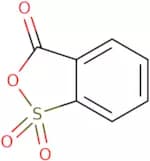
CAS:<p>o-Sulfobenzoic acid anhydride is a chemical that belongs to the class of inorganic acids. It is a white crystalline solid with a melting point of 107°C and can be found in its pure form or as sodium salts. o-Sulfobenzoic acid anhydride is stable when exposed to light and can be used in detergent compositions. It also has pharmacokinetic properties, which are affected by the presence of cationic polymers. This chemical is metabolized by microorganisms through hydrogen bonding interactions and has been shown to have antimicrobial activity against infectious bacteria, such as erythromycin-resistant strains of Staphylococcus aureus and Mycobacterium tuberculosis.</p>Formula:C7H4O4SPurity:Min 98%Color and Shape:Slightly Brown PowderMolecular weight:184.17 g/molStyrene-divinylbenzene sulfonated copolymer
CAS:<p>Styrene-divinylbenzene sulfonated copolymer also called Dowex 50W 8X hydrogen form, strongly acidic resin, is a fine mesh spherical ion exchange resin made from a microporous styrene / divinylbenzene (DVB) co-polymer with a sulfonic acid group. Styrene-divinylbenzene sulfonated copolymers are used in fine chemical and pharmaceutical column separations.</p>Color and Shape:PowderSarcosine methyl ester hydrochloride
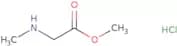
CAS:<p>Sarcosine methyl ester hydrochloride is a pharmaceutical drug that inhibits the production of inosine monophosphate (IMP) and guanosine monophosphate (GMP). It is thought to work by interfering with the synthesis of nucleotides. Sarcosine methyl ester hydrochloride has been shown to inhibit tumour growth in solid tumours. It also has pharmacokinetic properties that include a low volume of distribution, high protein binding, and low clearance rate.</p>Formula:C4H9NO2·HClColor and Shape:White PowderMolecular weight:139.58 g/molSuccinylsulfathiazole
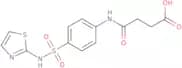
CAS:<p>Succinylsulfathiazole is a sulfa drug that has antimicrobial activity. It is a structural analogue of sulfanilamide, which is an antibiotic used to treat infectious diseases. Sulfa drugs are structurally related to the amino acid pantothenic acid and have been shown to have beneficial effects in animal models for bowel disease, autoimmune diseases, and other conditions. Succinylsulfathiazole has been shown to inhibit the growth of Aerobacter aerogenes and other bacteria by binding to their cell wall and interfering with synthesis of DNA. Succinylsulfathiazole has been shown to inhibit the growth of Aerobacter aerogenes and other bacteria by binding to their cell wall and interfering with synthesis of DNA.</p>Formula:C13H13N3O5S2Purity:Min. 98 Area-%Color and Shape:PowderMolecular weight:355.39 g/mol2,2,2-Trifluoroethanol
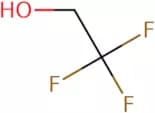
CAS:<p>2,2,2-Trifluoroethanol is a trifluoroacetic acid analogue that has been shown to be an effective antimicrobial agent. It binds to the active site of the enzyme enoyl reductase, inhibiting the synthesis of fatty acids and disrupting cell membrane function. 2,2,2-Trifluoroethanol has also been shown to have anti-inflammatory effects. The drug binds to human serum albumin and inhibits hydrogen peroxide release from neutrophils. This complexation with albumin prevents the release of hydroxyl radicals that are generated in response to oxidative stress. Intramolecular hydrogen bonding between 2,2,2-trifluoroethanol molecules may also contribute to its activity as a natural drug.</p>Formula:C2H3F3OPurity:Min. 95%Color and Shape:Clear LiquidMolecular weight:100.04 g/molTrifluoromethanesulfonic anhydride
CAS:<p>Trifluoromethanesulfonic anhydride is more frequently known as triflic anhydride, since it derives from triflic acid. It is a versatile and strong electrophile used to insert the triflyl group (represented as Tf-) into chemical molecules (Ouyang, 2018). For example, trifluoromethane sulfonic anhydride interacts with some alkylsulfides to form stable salts that are used in the oxidation of alcohols. Moreover, trifluoromethane sulfonic anhydride has successfully shown high activity as a promoter in glycosylation reactions to obtain disaccharides (Tatai, 2007).</p>Formula:C2F6O5S2Purity:Min. 95%Color and Shape:Colorless Slightly Brown Clear LiquidMolecular weight:282.14 g/mol1,1,3,3-Tetramethylbutyl isocyanide
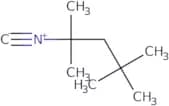
CAS:<p>1,1,3,3-Tetramethylbutyl isocyanide (TMBC) is a palladium complex that has been used in palladium-catalyzed coupling reactions. TMBC is also a ligand for the synthesis of β-amino acid and can be used to form hydrogen bonds with nucleophiles. It has been used in biological studies as well as clinical diagnostics. The solid-phase synthesis of TMBC has been shown to be an efficient method for producing this compound. In addition, TMBC shows stereoselective reactivity with amines and methoxy groups. The nmr spectra of TMBC are characteristic of a carbonyl group at δ 3.20 ppm and two methyl groups at δ 1.36 and 1.37 ppm respectively.</p>Formula:C9H17NPurity:Min. 98%Color and Shape:Clear LiquidMolecular weight:139.24 g/mol4-Toluenesulfonyl chloride
CAS:<p>4-Toluenesulfonyl chloride is a tosylate that reacts with amines and n-oxide groups to form sulfonamides. It is used as an antimicrobial agent and as an irreversible enzyme inhibitor. 4-Toluenesulfonyl chloride inhibits enzymes in the bowel, which may be due to its ability to form a disulfide bond with cysteine residues. This compound has been shown to have anti-cancer properties in vitro, where it inhibited the growth of carcinoma cells by inhibiting DNA synthesis. 4-Toluenesulfonyl chloride also has inhibitory properties against nitrogen atoms, which are found in the active site of many enzymes.</p>Formula:C7H7ClO2SPurity:Min. 95%Color and Shape:White Clear LiquidMolecular weight:190.65 g/mol2-(Trifluoromethoxy)aniline
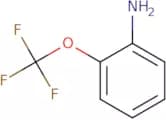
CAS:<p>2-(Trifluoromethoxy)aniline is a heterocyclic aromatic compound that can act as an electrophilic catalyst. It is a strong nucleophile and reacts with various types of nucleophiles. 2-(Trifluoromethoxy)aniline has been used for the synthesis of aliphatic sulfoxides under acidic conditions, including alcohols, phenols, and thiols. The reaction mechanism is often a 1,2-addition of the nucleophile to the carbonyl group of 2-(trifluoromethoxy)aniline. This reaction is catalytic and produces a stable dimerized product. 2-(Trifluoromethoxy)aniline also has mesoporous properties, which allow it to be used in reactions involving alcohols or other polar molecules because they are soluble in the pores.</p>Formula:C7H6F3NOPurity:Min. 95%Color and Shape:Clear LiquidMolecular weight:177.12 g/mol


![Pyrazolo[1,5-a]pyrimidine-3-carboxylic acid](/_next/image/?url=https%3A%2Fstatic.cymitquimica.com%2Fproducts%2F3D%2Fthumb-webp%2FFP16388.webp&w=3840&q=75)

![4-{2-[2-(2-Methoxyethoxy)ethoxy]ethoxy}aniline](/_next/image/?url=https%3A%2Fstatic.cymitquimica.com%2Fproducts%2F3D%2Fthumb-webp%2FFPA11694.webp&w=3840&q=75)