Building Blocks
This section contains fundamental products for the synthesis of organic and biological compounds. Building blocks are the essential starting materials used to construct complex molecules through various chemical reactions. They play a critical role in drug discovery, material science, and chemical research. At CymitQuimica, we offer a diverse range of high-quality building blocks to support your innovative research and industrial projects, ensuring you have the essential components for successful synthesis.
Subcategories of "Building Blocks"
- Boronic Acids & Boronic Acid Derivatives(5,756 products)
- Chiral Building Blocks(1,242 products)
- Hydrocarbon Building Blocks(6,095 products)
- Organic Building Blocks(61,037 products)
Found 196200 products of "Building Blocks"
Sort by
Purity (%)
0
100
|
0
|
50
|
90
|
95
|
100
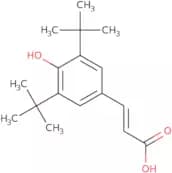
3,5-Di-tert-butyl-4-hydroxycinnamic acid
CAS:<p>3,5-Di-tert-butyl-4-hydroxycinnamic acid is a chemical compound that belongs to the group of antihistaminic drugs. It is used as an antiallergic drug and has shown to be effective in treating hay fever and asthma. 3,5-Di-tert-butyl-4-hydroxycinnamic acid has been shown to be metabolised by rat plasma into dimethylformamide, tetrahydrofuran, reactive amides, chlorides and volatile compounds. These metabolites are then excreted via the kidneys or liver. The synthesis of 3,5-Di-tert-butyl-4-hydroxycinnamic acid can be done through a two step process that starts with the reaction of pivalaldehyde with hydrochloric acid followed by hydrogenation with rhodium on charcoal catalyst.</p>Formula:C17H24O3Purity:Min. 95%Color and Shape:PowderMolecular weight:276.37 g/molDimethylnaphthalene (mixture of isomers)
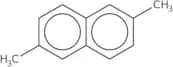
CAS:<p>Dimethylnaphthalene is an aromatic hydrocarbon that is soluble in hydrochloric acid and reacts with zirconium oxide. It has been shown to have specific treatment effects, such as the inhibition of the growth of Staphylococcus aureus and Streptococcus pyogenes. Dimethylnaphthalene is also used to treat acne and psoriasis due to its ability to inhibit bacterial growth on skin. It has been shown to be effective against bacteria that are resistant to erythromycin and tetracycline. The solubility data for dimethylnaphthalene show that it may be more soluble in organic solvents than water. The morphology of dimethylnaphthalene consists of particles or molecules with a range of sizes. Dimethylnaphthalene can exist as either a single isomer or as an isomeric mixture.</p>Formula:C12H12Purity:Min. 80%Color and Shape:Yellow Clear LiquidMolecular weight:156.22 g/molDibutyl Squarate
CAS:<p>Dibutyl squarate is a new experimental drug that has been shown to have potential in the treatment of autoimmune diseases. Dibutyl squarate is also effective for treating infectious diseases, such as HIV and tuberculosis. The drug has been shown to work by blocking the apoptosis pathway, which prevents the release of pro-inflammatory cytokines. This drug also inhibits the synthesis of chemoattractant proteins, which are important for recruiting cells to the site of infection or injury. In addition, dibutyl squarate blocks cancer cell proliferation and can be used in combination therapy groups. Dibutyl squarate has also been shown to reduce alopecia in mice by inhibiting hair loss caused by inflammation.</p>Formula:C12H18O4Purity:Min. 96.0 Area-%Color and Shape:Slightly Yellow Clear LiquidMolecular weight:226.27 g/mol2,4-Dimethylpyrrole
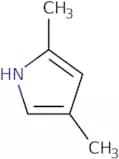
CAS:<p>2,4-dimethylpyrrole (DMP) is a N-heterocycle with two methyl groups. It is used as a dopant in jet fuels to promote oxidative degradation and is converted into a reactive fuel (Kabana, 2011). To a lesser extent, 2,4-dimethylpyrrole has shown antifungal properties and has been used as an active agent against pathogens causing head blight and root rot in some cereals (Sefer, 2017).</p>Formula:C6H9NPurity:Min. 96%Color and Shape:Brown Colorless Clear LiquidMolecular weight:95.14 g/mol2,6-Dimethylbenzoic acid
CAS:<p>2,6-Dimethylbenzoic acid is a colorless solid that has a molecular weight of 162.2 g/mol and an empirical formula of C7H8O2. It has a melting point of about 82 degrees Celsius and a boiling point of about 315 degrees Celsius. 2,6-Dimethylbenzoic acid is soluble in water at 100 degrees Celsius. It has been shown to act as a potent antagonist for the muscarinic acetylcholine receptors. This compound also has basic properties due to its hydrogen bonding interactions with proteins and other molecules. 2,6-Dimethylbenzoic acid has been shown to be efficient in supramolecular chemistry because it is electron deficient and contains thermodynamic functional groups such as carboxylic acids and alcohols.</p>Formula:C9H10O2Purity:Min. 95%Color and Shape:PowderMolecular weight:150.17 g/mol6-tert-Butyl-1,2,3,4-tetrahydroquinoline
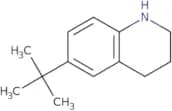
CAS:<p>Versatile small molecule scaffold</p>Formula:C13H19NPurity:Min. 95%Color and Shape:Clear LiquidMolecular weight:189.3 g/mol1,2-Diamino-4,5-methylenedioxybenzene dihydrochloride
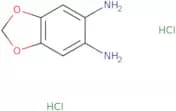
CAS:<p>1,2-Diamino-4,5-methylenedioxybenzene dihydrochloride, also known as DMB dihydrochloride, is a building block used in organic chemistry. DMB dihydrochloride is the bis HCl salt of a 1,3-benzodioxole ring with amino groups in the 4 and 5 positions.</p>Formula:C7H10Cl2N2O2Purity:Min. 90 Area-%Color and Shape:Beige PowderMolecular weight:225.07 g/mol4,5-Diamino-6-hydroxy-2-mercapto pyrimidine
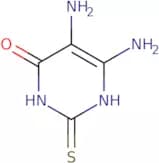
CAS:<p>4,5-Diamino-6-hydroxy-2-mercaptopyrimidine is a primary amino that binds to the sulfur in a molecule. It has potent antibacterial activity and can be used for desulfurization of petroleum products. 4,5-Diamino-6-hydroxy-2-mercaptopyrimidine has been shown to react with some cancer cells in vitro and may be used as an anticancer agent. It can also be used as a catalyst for the oxidation of organic compounds in wastewater treatment or hydrochloric acid production. 4,5-Diamino-6-hydroxy-2-mercaptopyrimidine can be synthesized by reacting 3 mercapto propionic acid with 5 aminopyrimidines. The synthesis was optimized using a kinetic method and coordination chemistry. It has also been shown to inhibit cell growth when used on human erythrocytes using patch clamp experiments and assays.br>br</p>Formula:C4H6N4OSPurity:Min. 95%Color and Shape:Off-White PowderMolecular weight:158.18 g/mol1,4-Diacrylylpiperazine
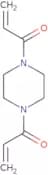
CAS:<p>Used for preparation of acrylamide gels</p>Formula:C10H14N2O2Purity:Min. 98 Area-%Color and Shape:White PowderMolecular weight:194.23 g/molN,N'-Diacetyl-L-cystine
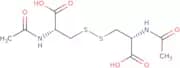
CAS:<p>N,N'-Diacetyl-L-cystine (NAC) is a cysteine derivative that is used in the preparation of samples for analysis by liquid chromatography. It has been shown to have an antiatherogenic effect in chronic bronchitis patients and has been found to be a growth factor, inhibiting apoptosis and stimulating cell proliferation. NAC also increases the activity of aminotransferases in serum samples, which can be used as an indicator of liver health. Its chemical stability and low toxicity make it an ideal candidate for use as a pharmaceutical preparation at doses below those required for its enzyme-stimulating effects.</p>Formula:C10H16N2O6S2Purity:Min. 95%Color and Shape:PowderMolecular weight:324.38 g/mol1,3-Di-(2-pyrenyl)propane
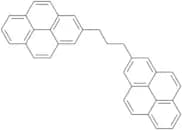
CAS:<p>1,3-Di-(2-pyrenyl)propane is a synthetic molecule that has been used as a model for the phosphatidylethanolamine (PE) component of bacterial membranes. 1,3-Di-(2-pyrenyl)propane has been shown to have a phase transition temperature of -7 degrees Celsius. It is hydrophobic and highly soluble in organic solvents like chloroform, ethanol, ether, and benzene. This molecule is kinetically inert and thermodynamically stable. The monomeric form of 1,3-Di-(2-pyrenyl)propane is not sensitive to ionizing radiation. However, in the bilayer form it is highly sensitive to radiation and can lead to the formation of double bonds that can break down into radicals.</p>Formula:C35H24Purity:Min. 95%Color and Shape:White PowderMolecular weight:444.57 g/mol3-Dimethylaminobenzoic acid - 90%
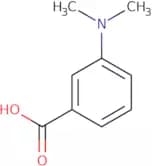
CAS:<p>3-Dimethylaminobenzoic acid is a carboxylate that can be found in plants and animals. It is a precursor to many biologically important molecules, including the amino acid tryptophan. 3-Dimethylaminobenzoic acid has been shown to have a redox potential of -0.38 V, which makes it an excellent candidate for use as an electron acceptor. This compound is also used as an intermediate in the synthesis of cholesterol esters and fatty acids, and has been shown to inhibit the growth of basophilic leukemia cells in mice. 3-Dimethylaminobenzoic acid has also been shown to have a cholesterol esterase activity on human liver cytosol, with an enzyme activity of 0.0015 U/mg protein at pH 7.5 and 37°C, and on human urine samples with an enzyme activity of 0.0027 U/mg protein at pH 6.0 and 37</p>Formula:C9H11NO2Purity:Min. 95%Color and Shape:PowderMolecular weight:165.19 g/mol4-(Dimethylamino)phenol
CAS:<p>4-(Dimethylamino)phenol is a reactive molecule that can react with sodium carbonate to form a fluorescent product. The reaction mechanism has been elucidated by fluorescence spectroscopy and linear calibration curves. 4-DMA(OH)P reacts with sodium carbonate in water at physiological levels, producing p-hydroxybenzoic acid and 4-dimethylaminobenzoic acid. These compounds are also found in the matrix of bacterial cells and may serve as markers for the identification of bacterial metabolism. The reaction between 4DMA(OH)P and sodium carbonate was examined by X-ray crystal structures, which revealed that the reactive site is located on the phenolic hydroxyl group of 4DMA(OH)P. This study showed that the reactive site is localized on the phenolic hydroxy group of 4DMA(OH)P, which makes this molecule useful for identification of bacterial metabolism by means of matrix effect.</p>Formula:C8H11NOPurity:Min. 95%Molecular weight:137.18 g/mol3,5-Diamino-N-carbamothioyl-6-chloropyrazine-2-carboxamide
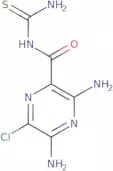
CAS:<p>3,5-Diamino-N-carbamothioyl-6-chloropyrazine-2-carboxamide is a high quality, useful intermediate and reagent for the production of fine chemicals. It is also a speciality chemical that has been used as a reaction component in research. 3,5-Diamino-N-carbamothioyl-6-chloropyrazine-2-carboxamide is an important versatile building block that can be used to produce many other compounds.</p>Formula:C6H7ClN6OSPurity:Min. 95%Color and Shape:White PowderMolecular weight:246.68 g/mol2,6-Dichloro-3,5-dihydroxybenzoic acid
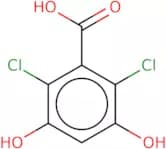
CAS:<p>2,6-Dichloro-3,5-dihydroxybenzoic acid is a reagent with a wide range of applications in the research and development of chemical products. It is also a useful intermediate for the synthesis of other compounds. 2,6-Dichloro-3,5-dihydroxybenzoic acid has been shown to be used as a building block for the synthesis of various complex compounds. It is also an important reaction component that can be used in many different reactions to produce valuable products.</p>Formula:C7H4Cl2O4Purity:Min. 95%Color and Shape:PowderMolecular weight:223.01 g/mol2-Chloro-4-cyclopropyl-1,3-thiazole
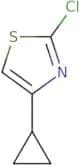
CAS:<p>Versatile small molecule scaffold</p>Formula:C6H6ClNSPurity:Min. 90%Color and Shape:Clear LiquidMolecular weight:159.64 g/mol2,3-Diaminobenzoic acid methyl ester
CAS:<p>2,3-Diaminobenzoic acid methyl ester is a redox potential catalyst that has been shown to have anticancer activity in vitro and in vivo. It is a 5-ht4 receptor agonist, which causes an increase in the intracellular concentration of cAMP. The anticancer effect of this compound may be due to its ability to inhibit the growth of cancer cells by blocking DNA synthesis and cell division. The biological properties of this drug are not well understood, but it has been shown to have antioxidant effects, as well as proton-reducing and electron-accepting properties. This compound has also been studied electrochemically.</p>Formula:C8H10N2O2Purity:95%NmrColor and Shape:PowderMolecular weight:166.18 g/mol4-[(1E)-Prop-1-en-1-yl]phenol
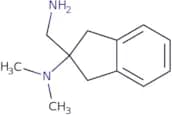
CAS:<p>Eugenol is a phenolic compound and the main active ingredient of clove oil. Eugenol has been shown to have antioxidant, anti-inflammatory, analgesic, and antimicrobial properties. It also inhibits the growth of cancer cells in vitro (mcf-7 cells). The mechanism of eugenol’s activity is not well understood. It may involve activation of adenine nucleotide levels by inhibiting the production of p-hydroxybenzoic acid or by increasing nucleotide levels by inhibiting the conversion to p-hydroxybenzoic acid. Eugenol also inhibits bacterial DNA gyrase and topoisomerase IV, which are enzymes that maintain the integrity of bacterial DNA. This inhibition leads to cell death by inhibiting protein synthesis. Eugenol has been shown to inhibit mineralization in petunia plants and may have a similar effect on human bone tissue.</p>Formula:C9H10OPurity:90%Molecular weight:134.17 g/mol2-(Aminomethyl)-N,N-dimethyl-2,3-dihydro-1H-inden-2-amine
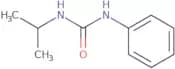
CAS:<p>Versatile small molecule scaffold</p>Formula:C12H18N2Purity:Min. 95%Color and Shape:PowderMolecular weight:190.28 g/mol1-Phenyl-3-(propan-2-yl)urea
CAS:<p>1-Phenyl-3-(propan-2-yl)urea is a chemical compound that is used in the synthesis of organic compounds. It has been shown to be useful as a building block and also has applications in the preparation of complex compounds. 1-Phenyl-3-(propan-2-yl)urea can be used as a reagent for reactions involving esterification, hydrolysis, cyclization, and nitration. The compound is also useful for research purposes and can be used as an intermediate for other chemicals.</p>Formula:C10H14N2OPurity:Min. 95%Color and Shape:PowderMolecular weight:178.23 g/mol





![4-[(1E)-Prop-1-en-1-yl]phenol](/_next/image/?url=https%3A%2Fstatic.cymitquimica.com%2Fproducts%2F3D%2Fthumb-webp%2FVAA64939.webp&w=3840&q=75)