Building Blocks
This section contains fundamental products for the synthesis of organic and biological compounds. Building blocks are the essential starting materials used to construct complex molecules through various chemical reactions. They play a critical role in drug discovery, material science, and chemical research. At CymitQuimica, we offer a diverse range of high-quality building blocks to support your innovative research and industrial projects, ensuring you have the essential components for successful synthesis.
Subcategories of "Building Blocks"
- Boronic Acids & Boronic Acid Derivatives(5,756 products)
- Chiral Building Blocks(1,242 products)
- Hydrocarbon Building Blocks(6,095 products)
- Organic Building Blocks(61,038 products)
Found 196817 products of "Building Blocks"
Sort by
Purity (%)
0
100
|
0
|
50
|
90
|
95
|
100
3-Amino-2,4,6-triiodobenzoic acid
CAS:<p>3-Amino-2,4,6-triiodobenzoic acid (3AIBA) is a chemical compound that is used as a contrast agent for medical imaging. It has been shown to be useful in the diagnosis of bladder cancer, and is used in the embolization of renal artery and ureteral calculi. 3AIBA functions by binding to the antigen binding sites on the tumor cells and allows visualization with X-rays. It has also been shown to be effective in reducing blood flow in tumors by blocking blood vessels with its cationic monomer. 3AIBA binds to the phosphate groups on DNA and causes crosslinking, which prevents DNA polymerase from binding with DNA. This inhibits DNA synthesis and cell division.</p>Formula:C7H4I3NO2Purity:Min. 95%Color and Shape:PowderMolecular weight:514.83 g/mol4-Aminocinnamic acid
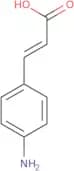
CAS:<p>4-Aminocinnamic acid is a monomer that can be polymerized to form polymers. It is soluble in organic solvents and is resistant to UV light. 4-Aminocinnamic acid has been shown to have photochemical properties and can be used to produce hydrogen bonds with other molecules. This compound has been used as a carbon source for microbial growth and has been shown to be an effective genetic control agent for the bacteria Escherichia coli. 4-Aminocinnamic acid has also been shown to inhibit the growth of butyric acid producing bacteria, such as Clostridium butyricum, while promoting the growth of lactic acid producing bacteria, such as Lactobacillus plantarum.</p>Formula:C9H9NO2Purity:90%Color and Shape:PowderMolecular weight:163.17 g/mol3-Acetoxybenzoic acid
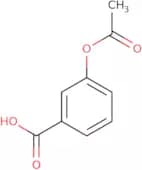
CAS:<p>3-Acetoxybenzoic acid is a metabolite of 3-hydroxybenzoic acid, which is an intermediate in the biosynthesis of salicylic acid. It has been shown to have antibacterial properties and may be used as a topical treatment for skin infections caused by staphylococcus. 3-Acetoxybenzoic acid also has antiviral properties, which may be related to its ability to bind histone H3. 3-Acetoxybenzoic acid inhibits leishmania infantum growth and development by binding to chloride ions and preventing the formation of hydrogen bonds in the cell membrane. This prevents chloride ions from entering the cell and causes water channels to close, leading to dehydration and death.</p>Formula:C9H8O4Purity:Min. 95%Color and Shape:PowderMolecular weight:180.16 g/mol5-Fluoro-2-methylbenzoic acid
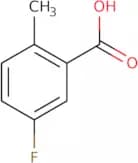
CAS:<p>5-Fluoro-2-methylbenzoic acid is a synthetic compound that has antiviral potency against the influenza A virus. It is the active form of 5-fluoro-2-methylbenzoyl chloride, which is synthesized from a Grignard reagent and an asymmetric synthesis. 5-Fluoro-2-methylbenzoic acid has been shown to have anticancer properties in vitro, which may be due to its ability to inhibit cancer cell growth through interaction with chloride channels. This drug also inhibits the activity of dehydrogenases, which are enzymes that catalyze the oxidation of various substrates by reducing them.</p>Formula:C8H7FO2Purity:Min. 95%Color and Shape:White PowderMolecular weight:154.14 g/mol4-Amino-2-bromobenzonitrile
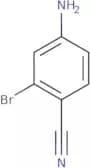
CAS:<p>4-Amino-2-bromobenzonitrile is a crystallized ligand with a molecular formula of C6H7BrN. It belongs to the cationic class of ligands and has been shown to form intermolecular hydrogen bonds with aromatic rings. The crystal has a hexagonal unit cell and space group P-1. 4-Amino-2-bromobenzonitrile has been used as an elemental analysis reagent in the determination of copper, lead, zinc, and cadmium.</p>Formula:C7H5BrN2Purity:Min. 95%Color and Shape:PowderMolecular weight:197.03 g/mol3-Maleimidopropionic acid N-succinimidyl ester
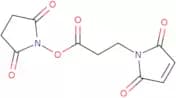
CAS:<p>3-Maleimidopropionic acid N-succinimidyl ester is a potent inducer of the transcriptional regulator NF-κB. It also inhibits the growth of human osteosarcoma cells and mesenchymal cells, which may be due to its activity on integrin receptors. 3-Maleimidopropionic acid N-succinimidyl ester has been shown to inhibit the growth of infectious diseases such as HIV and malaria, as well as leukemia inhibitory factor. This drug also has a chemical effect on iron homeostasis by inhibiting iron uptake in human serum and mouse liver cells.</p>Formula:C11H10N2O6Purity:Min. 98 Area-%Color and Shape:PowderMolecular weight:266.21 g/mol1-Anilinonaphthalene-8-sulphonic acid magnesium
CAS:<p>Trifluoroacetic acid is a hydrophobic molecule that has been used in the synthesis of 1-anilinonaphthalene-8-sulphonic acid magnesium. The magnesium salt of this compound is soluble in water and can be obtained as a white solid. Trifluoroacetic acid has been shown to have anti-inflammatory effects by binding to chloride ions, which are present in high concentrations on the surface of inflamed cells. Trifluoroacetic acid also has a surfactant property, which may be due to its ability to form micelles with fatty acids. This property is important for drug absorption because it helps solubilize lipophilic drugs and improve their bioavailability.</p>Formula:(C16H13NO3S)2•MgPurity:Min. 95%Color and Shape:PowderMolecular weight:623 g/mol4-(1-Adamantyl)aniline
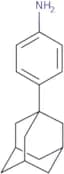
CAS:<p>4-(1-Adamantyl)aniline is a monomer with electron-deficient properties. It can be synthesized from 1-adamantanol and trifluoroacetic acid, followed by hydrolysis to remove the trifluoromethyl group. 4-(1-Adamantyl)aniline has been shown to have high cytotoxicity against tumor cells in vitro. This compound also inhibits the production of necrosis factor, an inflammatory cytokine that plays an important role in many pathological processes, such as septic shock and acute respiratory distress syndrome.</p>Formula:C16H21NPurity:Min. 95%Color and Shape:White PowderMolecular weight:227.34 g/mol2-Amino-4-fluorobenzylamine dihydrochloride
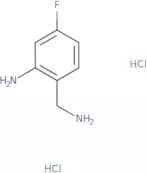
CAS:<p>2-Amino-4-fluorobenzylamine dihydrochloride is a research chemical that is used as a reactant in organic synthesis. 2-Amino-4-fluorobenzylamine dihydrochloride is an intermediate for the preparation of other chemicals and can also be used as a building block for more complex compounds. This chemical has been shown to have good quality and can be used in many different types of research.<br>2-Amino-4-fluorobenzylamine dihydrochloride has CAS number 606139-20-2.</p>Formula:C7H9FN2·2HClPurity:Min. 95 Area-%Color and Shape:PowderMolecular weight:213.08 g/mol4-Dimethylamino-2-methoxybenzaldehyde
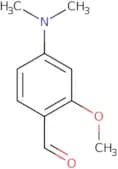
CAS:<p>When used in combination with X-Gal, 4-dimethylamino-2-methoxybenzaldehyde can be used for effective staining under anaerobic conditions. This novel method is termed Indoxyl/Dimethylamino-2-methoxybenzaldehyde aldol staining and can be used as an alternative to indoxyl-substrate indicator systems which depends on molecule oxygen to develop the desired indigo chromogen.</p>Formula:C10H13NO2Purity:Min. 95%Color and Shape:Yellow PowderMolecular weight:179.22 g/mol4-Aminocinnamic acid hydrochloride
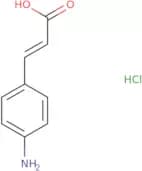
CAS:<p>4-Aminocinnamic acid hydrochloride (4ACA) is a synthetic compound that inhibits the bacterial membrane by binding to the polypeptide chain of the protein. It is a water-soluble polymer that is capable of enhancing the water solubility of other compounds and has been shown to inhibit the growth of typhimurium. 4ACA binds to chalcone, anilines, and styrene, which are all substrates for bacterial enzymes. The interaction between 4ACA and these substrates alters their chemical properties and provides resistance to bacteria.</p>Formula:C9H9NO2·HClPurity:Min. 95%Color and Shape:Off-White PowderMolecular weight:199.63 g/mol5-Amino-2-methoxy-benzoic acid methyl ester
CAS:<p>5-Amino-2-methoxy-benzoic acid methyl ester is a synthetic compound that has been shown to have potential as an antibacterial. It has been found to inhibit the growth of bacteria by binding to DNA and preventing transcription. The selectivity for bacterial cells is due to its ability to penetrate the cell membrane, which does not occur in mammalian cells. 5-Amino-2-methoxy-benzoic acid methyl ester is synthesized from 2-(4′-aminophenyl)acetic acid and methoxymethyl chloride in two steps, with a yield of 60%.</p>Formula:C9H11NO3Purity:Min. 95%Color and Shape:Red PowderMolecular weight:181.19 g/mol1-Amino-2-naphthol-4-sulfonic acid
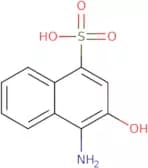
CAS:<p>1-Amino-2-naphthol-4-sulfonic acid is a fluorescent dye that belongs to the class of naphtholsulfonates. It has been shown to react with protonated hydroxyl groups, which are present in the matrix, and form an electrochemical impedance spectrum. The fluorescence of tryptophan can be used as a probe to detect the presence of 1-amino-2-naphthol-4-sulfonic acid in a solution. This reaction mechanism suggests that adsorption is the dominating process for 1-amino-2-naphthol-4-sulfonic acid.</p>Formula:C10H9NO4SColor and Shape:PowderMolecular weight:239.25 g/mol2-Amino-5-iodobenzoic acid
CAS:<p>2-Amino-5-iodobenzoic acid (5-AIBA) is a chemical compound with a molecular weight of 152.14 g/mol. It belongs to the group of anthranilic compounds, and has antiinflammatory activity. 5-AIBA also inhibits cancer cell proliferation in vitro and in vivo by inhibiting the synthesis of DNA, RNA, and proteins. The reaction solution for the palladium-catalyzed coupling of 5-AIBA with 2-(N,N′-dimethylcarbamoyl)phenyl boronic acid was found to be stable at room temperature for 24 hours. The inhibitory activity of 5-AIBA against MCL1 protein was potent, as it inhibited MCL1 protein expression by 90%. Molecular modeling studies showed that 5-AIBA binds to the amide region on the ATP binding site in MCL1 protein (mcf7). Carbonyl groups are present on both sides of the am</p>Formula:C7H6INO2Purity:Min. 98 Area-%Color and Shape:PowderMolecular weight:263.03 g/molO-Methyl-D-threonine
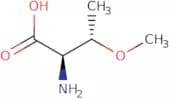
CAS:<p>O-Methyl-D-threonine is an amino acid that is biosynthesized from O-methylserine and D-threonine. It belongs to the class of β-lactam antibiotics and inhibits peptidoglycan synthesis by binding to the catalytic site of the enzyme synthase, which is required for the formation of β-lactam rings in peptidoglycan. The crystal structure of O-methylserine has been determined and analyzed. Mutations in the catalytic tripeptide have been shown to affect its activity, as well as protonation state and carboxylate groups.</p>Formula:C5H11NO3Purity:Min. 98 Area-%Color and Shape:White Off-White PowderMolecular weight:133.15 g/mol2-Aminoethanethiol
CAS:<p>2-Aminoethanethiol is a bitartrate salt of cysteamine. It inhibits the growth of bacteria by inhibiting the synthesis of the bacterial cell wall, which is required for bacterial replication and division. 2-Aminoethanethiol has been shown to be effective in experimental models of cystinosis and cystamine. 2-Aminoethanethiol has also been used as an antidote to cyanide poisoning.</p>Formula:C2H7NSColor and Shape:White Off-White PowderMolecular weight:77.15 g/mol4-Methylmorpholine N-oxide monohydrate
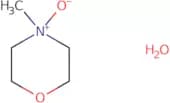
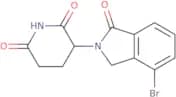
CAS:<p>Intermediate for organic syntheses</p>Formula:C5H13NO3Color and Shape:PowderMolecular weight:135.16 g/mol3-(4-Bromo-1-oxoisoindolin-2-yl)piperidine-2,6-dione
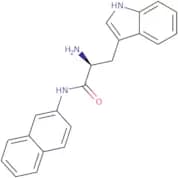
CAS:<p>Lenalidomide is a small molecule that binds to the CD38 receptor on the surface of cells. This binding leads to a cascade of cellular events that result in inhibition of tumor growth, increased apoptosis and decreased proliferation. The linker is used to attach the ligand to a degradable polymer that can be placed inside cells. Lenalidomide-Br has shown anticancer activity in clinical trials and may be useful as an adjuvant therapy for patients with leukemia.</p>Formula:C13H11BrN2O3Purity:Min. 95%Color and Shape:PowderMolecular weight:323.14 g/molL-Tryptophan β-naphthylamide
CAS:<p>L-Tryptophan beta-naphthylamide is a fine chemical that is useful for research purposes. It can be used as a versatile building block in the synthesis of other chemicals and can also be used as a reaction component. L-Tryptophan beta-naphthylamide has been used to synthesize complex compounds such as 5,6-dihydroindolizine, which has been shown to have anti-inflammatory properties. This compound can also be used as a reagent in organic synthesis.</p>Formula:C21H19N3OPurity:Min. 95%Color and Shape:PowderMolecular weight:329.4 g/mol5-Fluoro-dUMP sodium
CAS:<p>Please enquire for more information about 5-Fluoro-dUMP sodium including the price, delivery time and more detailed product information at the technical inquiry form on this page</p>Formula:C9H12FN2O8P•NaxPurity:Min. 95%