Building Blocks
This section contains fundamental products for the synthesis of organic and biological compounds. Building blocks are the essential starting materials used to construct complex molecules through various chemical reactions. They play a critical role in drug discovery, material science, and chemical research. At CymitQuimica, we offer a diverse range of high-quality building blocks to support your innovative research and industrial projects, ensuring you have the essential components for successful synthesis.
Subcategories of "Building Blocks"
- Boronic Acids & Boronic Acid Derivatives(5,756 products)
- Chiral Building Blocks(1,242 products)
- Hydrocarbon Building Blocks(6,093 products)
- Organic Building Blocks(60,519 products)
Found 195533 products of "Building Blocks"
Sort by
Purity (%)
0
100
|
0
|
50
|
90
|
95
|
100
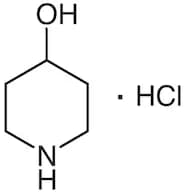
4-Hydroxypiperidine Hydrochloride
CAS:Formula:C5H11NO·HClPurity:>98.0%(T)Color and Shape:White to Orange to Green powder to crystalineMolecular weight:137.612,6-Dibromopyridine
CAS:<p>2,6-Dibromopyridine (2,6-DBP) is a chemical compound that has been used in the synthesis of other organic compounds. It is an aromatic heterocycle with nitrogen atoms at the 2 and 6 positions. 2,6-DBP is a monosubstituted pyridine derivative that undergoes a palladium-catalyzed coupling reaction with an aryl halide to form pyrazoles. This process can be done unsymmetrically by protonating the 2 position of the dibromopyridine molecule. The presence of serine protease has been shown to promote this reaction by increasing the surface area of the substrate.</p>Formula:C5H3Br2NPurity:Min. 98 Area-%Color and Shape:Off-White Yellow PowderMolecular weight:236.89 g/mol5-Nitroquinoline
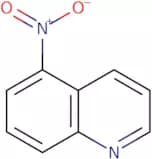
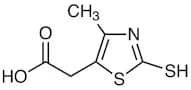
CAS:<p>5-Nitroquinoline is a nitrogen-containing heterocyclic organic compound. It is a white solid that has a melting point of 104 °C and a boiling point of 212 °C. 5-Nitroquinoline can be synthesized by the addition of sodium carbonate to 6-nitroquinoline in hydrochloric acid. The product is then purified by vacuum distillation and recrystallization from nitric acid and acetic acid. 5-Nitroquinoline can be used as an intermediate in the synthesis of other molecules, such as quinolones, which are used in pharmaceuticals. This compound has been shown to cause metastatic colorectal cancer in mice, but not in human liver cells or human lymphocytes.</p>Formula:C9H6N2O2Purity:Min. 95%Color and Shape:Light (Or Pale) Yellow To Dark Yellow SolidMolecular weight:174.16 g/mol(2-Mercapto-4-methyl-5-thiazolyl)acetic Acid
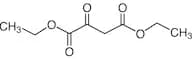
CAS:Formula:C6H7NO2S2Purity:>98.0%(T)(HPLC)Color and Shape:White to Light yellow powder to crystalMolecular weight:189.25Diethyl Oxalacetate
CAS:Formula:C8H12O5Purity:>95.0%(GC)Color and Shape:Colorless to Light yellow clear liquidMolecular weight:188.186-Hydroxy-2-naphtoic acid
CAS:<p>6-Hydroxy-2-naphtoic acid is an amide that is hydrolyzed to 6-hydroxybenzoic acid and formamide. It has been used as a viscosity modifier in the synthesis of polymers. 6-Hydroxy-2-naphtoic acid can be produced by a borane-tetrahydrofuran complex reaction with naphthalene. This reaction also produces p-hydroxybenzoic acid, which can then be converted to hydroxybenzoic acid with hydrochloric acid. The structural analysis of this compound has been performed using fluorescence probes and an inorganic acid.</p>Formula:C11H8O3Purity:Min. 95%Color and Shape:Yellow PowderMolecular weight:188.18 g/molBis(2-bromoethyl) Ether
CAS:Formula:C4H8Br2OPurity:>98.0%(GC)Color and Shape:Colorless to Yellow clear liquidMolecular weight:231.92N-Boc-2-methyl-L-proline
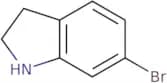
CAS:<p>N-Boc-2-methyl-L-proline is a chemical compound that is used as a building block in the synthesis of other compounds. This substance is also an intermediate in the production of pharmaceuticals and pesticides. The compound has been shown to have high quality, versatility, and complexity. N-Boc-2-methyl-L-proline can be used as a reagent for research or as a speciality chemical. The CAS number for this substance is 103336-06-7.</p>Formula:C11H19NO4Purity:Min. 95%Color and Shape:White To Off-White SolidMolecular weight:229.27 g/mol6-Bromo-2,3-dihydro-1H-indole
CAS:<p>6-Bromo-2,3-dihydro-1H-indole is a natural product that has been shown to inhibit cancer cell growth in vitro. In the presence of 6-bromoindole, cells are unable to proliferate and undergo apoptosis. This compound also shows anti-cancer activity against human leukemia cells. The mechanism of action for this molecule is not yet known but may be related to its ability to activate the caspase enzyme family or its ability to bind to DNA. 6-Bromoindole has been shown to have anti-inflammatory properties through inhibition of prostaglandin synthesis in animal models.</p>Formula:C8H8BrNPurity:Min. 95%Color and Shape:Off-White PowderMolecular weight:198.06 g/mol5-Methyl-1,3-benzenediacetonitrile
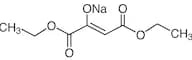
CAS:Formula:C11H10N2Purity:>98.0%(GC)Color and Shape:White to Almost white powder to crystalMolecular weight:170.22Diethyl Oxalacetate Sodium Salt
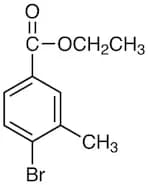
CAS:Formula:C8H11NaO5Purity:>95.0%(T)Color and Shape:White to Light yellow to Light orange powder to crystalMolecular weight:210.16Ethyl 4-Bromo-3-methylbenzoate
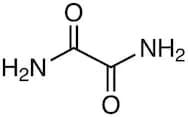
CAS:Formula:C10H11BrO2Purity:>98.0%(GC)Color and Shape:Colorless to Light yellow clear liquidMolecular weight:243.10Oxamide
CAS:Formula:C2H4N2O2Purity:>98.0%(N)Color and Shape:White to Almost white powder to crystalMolecular weight:88.07Benzo[d]isoxazol-3-yl-methanesulfonyl chloride
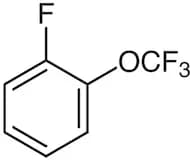
CAS:<p>Benzo[d]isoxazol-3-yl-methanesulfonyl chloride is a synthetic intermediate that is used in the synthesis of zonisamide. This compound has a flow rate of 1.0 mL/min, monitored at 215 nm, and reproducible within 3% or 10%. It is manufactured to pharmaceutical standards and has impurities below 0.1%. Benzo[d]isoxazol-3-yl-methanesulfonyl chloride has been validated for use with liquid chromatography, and the elution time for this compound is 7 minutes. The chromatographic method for this substance consists of an acetonitrile and hydrogen phosphate mobile phase. Disodium hydrogen phosphate (DSP) can be used as an eluent modifier to reduce peak tailing and improve resolution.</p>Formula:C8H6ClNO3SPurity:Min. 95%Color and Shape:Clear LiquidMolecular weight:231.66 g/mol1-Fluoro-2-(trifluoromethoxy)benzene
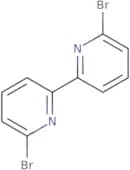
CAS:Formula:C7H4F4OPurity:>98.0%(GC)Color and Shape:Colorless to Almost colorless clear liquidMolecular weight:180.106,6'-Dibromo-2,2'-bipyridine
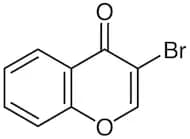
CAS:<p>6,6'-Dibromo-2,2'-bipyridine is a synthetic molecule that is used to produce amines. It can be synthesized in a cross-coupling reaction involving the reaction of an amine with bromine and a palladium catalyst. 6,6'-Dibromo-2,2'-bipyridine reacts with formaldehyde to form 2,4-diaminobiphenyls. This reaction is catalyzed by acid or base. 6,6'-Dibromo-2,2'-bipyridine has been shown to be reactive and photoexcited. Its photophysical properties make it a useful synthetic intermediate for the production of amines.</p>Formula:C10H6Br2N2Purity:Min. 95%Color and Shape:PowderMolecular weight:313.98 g/mol3-Bromochromone
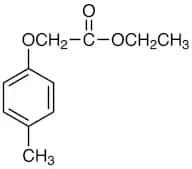
CAS:Formula:C9H5BrO2Purity:>98.0%(GC)Color and Shape:White to Orange to Green powder to crystalMolecular weight:225.04Ethyl (4-Methylphenoxy)acetate
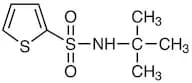
CAS:Formula:C11H14O3Purity:>97.0%(GC)Color and Shape:Colorless to Light yellow clear liquidMolecular weight:194.23N-tert-Butyl-2-thiophenesulfonamide
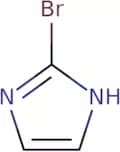
CAS:Formula:C8H13NO2S2Purity:>98.0%(GC)Color and Shape:White to Almost white powder to crystalMolecular weight:219.322-Bromo-1H-imidazole
CAS:<p>2-Bromo-1H-imidazole is an environmental pollutant that has been detected in the atmosphere, water, and soil. It is used as a pesticide and has been found to be an impurity in biphenyl. 2-Bromo-1H-imidazole can be used as a substrate for the Suzuki coupling reaction or as a starting material for the synthesis of imidazole derivatives. The compound spontaneously fragments under acidic conditions to form nitric acid and hydrogen bromide. 2-Bromo-1H-imidazole has been shown to inhibit hepatitis C virus (HCV) replication and induce cancer cell apoptosis in vitro.<br>2-Bromo-1H-imidazole is also known to cause DNA fragmentation in cells through oxidation by reactive oxygen species or through spontaneous decomposition of the molecule into acid, bromine radicals, and ammonia.</p>Formula:C3H3BrN2Purity:Min. 95%Color and Shape:PowderMolecular weight:146.97 g/mol







![Benzo[d]isoxazol-3-yl-methanesulfonyl chloride](/_next/image/?url=https%3A%2Fstatic.cymitquimica.com%2Fproducts%2F3D%2Fthumb-webp%2FFB18205.webp&w=3840&q=75)