Building Blocks
This section contains fundamental products for the synthesis of organic and biological compounds. Building blocks are the essential starting materials used to construct complex molecules through various chemical reactions. They play a critical role in drug discovery, material science, and chemical research. At CymitQuimica, we offer a diverse range of high-quality building blocks to support your innovative research and industrial projects, ensuring you have the essential components for successful synthesis.
Subcategories of "Building Blocks"
- Boronic Acids & Boronic Acid Derivatives(5,756 products)
- Chiral Building Blocks(1,242 products)
- Hydrocarbon Building Blocks(6,095 products)
- Organic Building Blocks(61,038 products)
Found 196817 products of "Building Blocks"
Sort by
Purity (%)
0
100
|
0
|
50
|
90
|
95
|
100
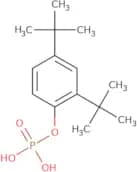
(2,4-Di-tert-butylphenoxy)phosphonic acid
CAS:<p>(2,4-Di-tert-butylphenoxy)phosphonic acid is a fine chemical with CAS No. 18351-37-6. It is an intermediate for the production of other chemicals and can also be used as a reagent or speciality chemical. The compound is a versatile building block that can be used in the production of complex compounds with high quality and versatility. The compound has been shown to react with many functional groups, which makes it useful in research and development. (2,4-Di-tert-butylphenoxy)phosphonic acid is also a useful scaffold for the synthesis of pharmaceuticals.</p>Formula:C14H23O4PPurity:Min. 95%Color and Shape:PowderMolecular weight:286.3 g/mol(2-Chlorophenyl)(4-chlorophenyl)methanol
CAS:<p>2-Chlorophenyl)(4-chlorophenyl)methanol is a chemical intermediate that can be used for the synthesis of complex compounds. This material has been shown to be a useful scaffold for making new molecules and it is also a versatile building block for organic synthesis. It can be used as a reagent in organic reactions and it is also a speciality chemical with high quality. CAS No. 43171-49-9</p>Formula:C13H10Cl2OPurity:Min. 95%Color and Shape:PowderMolecular weight:253.12 g/mol1-(Chloromethyl)-3,5-diiodobenzene
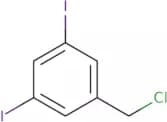
CAS:<p>1-(Chloromethyl)-3,5-diiodobenzene is a versatile and high quality chemical building block that is useful for research purposes. It can be used as a reagent or speciality chemical in the synthesis of other compounds. This compound has been shown to be an intermediate for the synthesis of more complex compounds, such as pharmaceuticals, agrochemicals, and fine chemicals. 1-(Chloromethyl)-3,5-diiodobenzene has many uses in organic chemistry including as a reaction component or scaffold for the construction of complex molecules.</p>Formula:C7H5ClI2Purity:Min. 95%Color and Shape:PowderMolecular weight:378.37 g/mol4-Aminopyridine-2-carboximidamide dihydrochloride
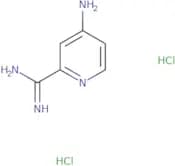
CAS:<p>Versatile small molecule scaffold</p>Formula:C6H10Cl2N4Purity:Min. 95%Color and Shape:PowderMolecular weight:209.07 g/mol2-Bromo-1-(3-methanesulfonylphenyl)ethan-1-one
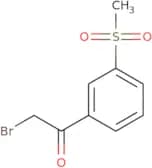
CAS:<p>2-Bromo-1-(3-methanesulfonylphenyl)ethan-1-one is a fine chemical that has been used as a building block for research chemicals, reagents, and speciality chemicals. It is a versatile building block that can be used in multi-step reactions to form complex compounds. This compound is also an intermediate in the synthesis of many pharmaceuticals and agrochemicals.</p>Formula:C9H9BrO3SPurity:Min. 95%Color and Shape:PowderMolecular weight:277.14 g/mol2-Amino-N-[(2-fluorophenyl)methyl]-N-methylbutanamide
CAS:<p>Versatile small molecule scaffold</p>Formula:C12H17FN2OPurity:Min. 95%Color and Shape:PowderMolecular weight:224.27 g/mol4-(Dimethylamino)benzene-1-sulfonyl chloride
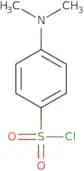
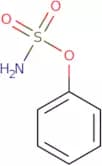
CAS:<p>Versatile small molecule scaffold</p>Formula:C8H10ClNO2SPurity:Min. 95%Color and Shape:PowderMolecular weight:219.69 g/molPhenyl sulfamate
CAS:<p>Phenyl sulfamate is a monosodium salt that has been shown to inhibit the growth of cancer cells in vitro. It has been used as an antimicrobial agent to treat chronic arthritis and atherosclerotic lesions. Phenyl sulfamate inhibits the activity of enzymes that are involved in the synthesis of proteins, such as collagenase, elastase, and proteases. The irreversible inhibition by phenyl sulfamate is due to its ability to react with sulfamoyl chloride (SOC). This reaction leads to the formation of a covalent bond between the enzyme and phenyl sulfamate, which cannot be reversed by any known chemical or enzymatic process.</p>Formula:C6H7NO3SPurity:Min. 95%Color and Shape:PowderMolecular weight:173.19 g/molEthyl 2-{methyl[(pyridin-2-yl)methyl]amino}acetate
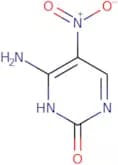
CAS:<p>Versatile small molecule scaffold</p>Formula:C11H16N2O2Purity:Min. 95%Color and Shape:PowderMolecular weight:208.26 g/mol6-Amino-5-nitro-1,2-dihydropyrimidin-2-one
CAS:<p>6-Amino-5-nitro-1,2-dihydropyrimidin-2-one (6ANPD) is a neutral molecule that can form self-assembled monolayers at the air/water interface. 6ANPD adsorbs to the interface by hydrogen bonding and van der Waals interactions. This molecule has been shown to stabilize the monolayer against electrolytes, which are molecules that disrupt the bonding between molecules in a solution. The self-assembled monolayers formed by 6ANPD are two dimensional in nature and have been shown to be stable for more than three months at room temperature.</p>Formula:C4H4N4O3Purity:Min. 95%Color and Shape:PowderMolecular weight:156.1 g/moltert-Butyl 7-oxo-2-azaspiro[4.4]nonane-2-carboxylate
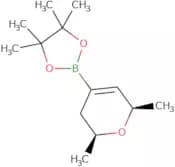
CAS:<p>Versatile small molecule scaffold</p>Formula:C13H21NO3Purity:Min. 95%Molecular weight:239.31 g/mol2-(2,6-dimethyl-3,6-dihydro-2H-pyran-4-yl)-4,4,5,5-tetramethyl-1,3,2-dioxaborolane
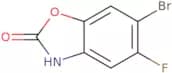
CAS:<p>2-(2,6-dimethyl-3,6-dihydro-2H-pyran-4-yl)-4,4,5,5-tetramethyl-1,3,2-dioxaborolane is a reagent that is used in the synthesis of other compounds. It is a high quality research chemical and useful scaffold for the preparation of fine chemicals. This versatile building block is also used as an intermediate or building block in the synthesis of complex compounds.</p>Formula:C13H23BO3Purity:(%) Min. 95%Color and Shape:Clear Viscous LiquidMolecular weight:238.13 g/mol6-Bromo-5-fluoro-2,3-dihydro-1,3-benzoxazol-2-one
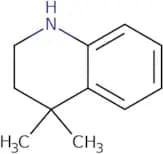
CAS:<p>Versatile small molecule scaffold</p>Formula:C7H3BrFNO2Purity:Min. 95%Color and Shape:PowderMolecular weight:232.01 g/mol4,4-Dimethyl-1,2,3,4-tetrahydroquinoline
CAS:<p>4,4-Dimethyl-1,2,3,4-tetrahydroquinoline (DMTH) is a synthetic compound that has been shown to stimulate pancreatic β-cells. DMTH is a prodrug that is converted into 4,4'-dimethoxy-1,2,3, 4-tetrahydroquinoline (DMT) by esterases in the body. DMT binds to the insulin receptor and increases insulin secretion from pancreatic β-cells. DMTH has been shown to be effective in treating patients with type 2 diabetes mellitus who are resistant to insulin. DMTH also reduces blood glucose levels in animal models of diabetes by stimulating the pancreas to produce more insulin and increasing the number of β cells in the pancreas. This drug may also prevent or reverse tissue damage caused by diabetes by inhibiting inflammatory processes and reducing oxidative stress on tissues.</p>Formula:C11H15NPurity:Min. 95%Color and Shape:Clear LiquidMolecular weight:161.25 g/mol2-(Hydroxymethyl)-3-methylfuran
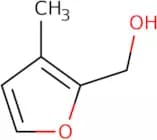
CAS:<p>2-(Hydroxymethyl)-3-methylfuran is a ketone with a ring system that contains one hydroxymethyl group and two methyl groups. It is also an adduct, which means that it is the product of a reaction between two substances. This compound can be used as a binder in pyrotechnics and polymers. 2-(Hydroxymethyl)-3-methylfuran has been proven to be stable under normal conditions, making it an excellent model compound for studying other compounds with similar structures.</p>Formula:C6H8O2Purity:Min. 95 Area-%Color and Shape:Clear LiquidMolecular weight:112.13 g/mol4-[(1E)-Prop-1-en-1-yl]phenol
CAS:<p>Eugenol is a phenolic compound and the main active ingredient of clove oil. Eugenol has been shown to have antioxidant, anti-inflammatory, analgesic, and antimicrobial properties. It also inhibits the growth of cancer cells in vitro (mcf-7 cells). The mechanism of eugenol’s activity is not well understood. It may involve activation of adenine nucleotide levels by inhibiting the production of p-hydroxybenzoic acid or by increasing nucleotide levels by inhibiting the conversion to p-hydroxybenzoic acid. Eugenol also inhibits bacterial DNA gyrase and topoisomerase IV, which are enzymes that maintain the integrity of bacterial DNA. This inhibition leads to cell death by inhibiting protein synthesis. Eugenol has been shown to inhibit mineralization in petunia plants and may have a similar effect on human bone tissue.</p>Formula:C9H10OPurity:90%Molecular weight:134.17 g/mol4-[(1E)-3-Hydroxyprop-1-en-1-yl]phenol
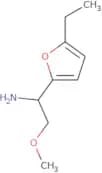
CAS:<p>4-[(1E)-3-Hydroxyprop-1-en-1-yl]phenol (4-HP) is a natural compound that belongs to the group of polyphenols. It is one of the main constituents of the plant extract, which is obtained from leaves of the plant Ferula communis. 4-HP has been shown to have antiinflammatory activity by inhibiting prostaglandin synthesis in 3T3-L1 preadipocytes. The synergic effect can be explained by a combination of its antioxidant and antiinflammatory properties. In an analytical method, 4-HP was found to be present in ferulic acid and p-hydroxybenzoic acid. 4-HP also inhibits dna polymerase activity and rna synthesis at low concentration levels. The mechanism of action may be due to the inhibition of bacterial dna gyrase and topoisomerase I, leading to bacterial cell death.</p>Formula:C9H10O2Purity:Min. 95%Molecular weight:150.17 g/mol1-(5-Ethylfuran-2-yl)-2-methoxyethan-1-amine
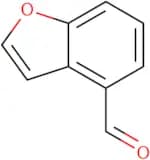
CAS:<p>Versatile small molecule scaffold</p>Formula:C9H15NO2Purity:(%) Min. 85%Color and Shape:Clear LiquidMolecular weight:169.22 g/molBenzofuran-4-carbaldehyde
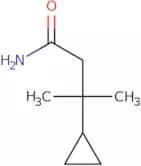
CAS:<p>Benzofuran-4-carbaldehyde is a reactive, low molecular weight compound. It is an oxidative and thermally labile compound that can be used for the preparation of other compounds. Benzofuran-4-carbaldehyde is a colorless liquid with a boiling point of 124°C and a melting point of -27°C. It has a molecular weight of 92.07 g/mol and has a density of 0.91 g/mL at 20°C, which means it will have an octanol:water partition coefficient of 1.2. The molecule has two chiral centers, meaning there are four possible stereoisomers that can be made from it. This compound is primarily broken down into furan, formic acid, and methanol by oxidation mechanisms or by thermal decomposition pathways such as pyrolysis or condensation reactions to produce additional compounds.br>br>Benzofuran-4-carbaldehyde can be oxidized to produce reactive oxygen species</p>Formula:C9H6O2Purity:Min. 95%Molecular weight:146.14 g/mol3-Cyclopropyl-3-methylbutanamide
CAS:<p>Versatile small molecule scaffold</p>Formula:C8H15NOPurity:Min. 95%Color and Shape:PowderMolecular weight:141.21 g/mol


![2-Amino-N-[(2-fluorophenyl)methyl]-N-methylbutanamide](/_next/image/?url=https%3A%2Fstatic.cymitquimica.com%2Fproducts%2F3D%2Fthumb-webp%2FTYB06730.webp&w=3840&q=75)
![Ethyl 2-{methyl[(pyridin-2-yl)methyl]amino}acetate](/_next/image/?url=https%3A%2Fstatic.cymitquimica.com%2Fproducts%2F3D%2Fthumb-webp%2FUBB08344.webp&w=3840&q=75)
![tert-Butyl 7-oxo-2-azaspiro[4.4]nonane-2-carboxylate](/_next/image/?url=https%3A%2Fstatic.cymitquimica.com%2Fproducts%2F3D%2Fthumb-webp%2FUCC71642.webp&w=3840&q=75)
![4-[(1E)-Prop-1-en-1-yl]phenol](/_next/image/?url=https%3A%2Fstatic.cymitquimica.com%2Fproducts%2F3D%2Fthumb-webp%2FVAA64939.webp&w=3840&q=75)
![4-[(1E)-3-Hydroxyprop-1-en-1-yl]phenol](/_next/image/?url=https%3A%2Fstatic.cymitquimica.com%2Fproducts%2F3D%2Fthumb-webp%2FVAA64940.webp&w=3840&q=75)