Building Blocks
This section contains fundamental products for the synthesis of organic and biological compounds. Building blocks are the essential starting materials used to construct complex molecules through various chemical reactions. They play a critical role in drug discovery, material science, and chemical research. At CymitQuimica, we offer a diverse range of high-quality building blocks to support your innovative research and industrial projects, ensuring you have the essential components for successful synthesis.
Subcategories of "Building Blocks"
- Boronic Acids & Boronic Acid Derivatives(5,756 products)
- Chiral Building Blocks(1,242 products)
- Hydrocarbon Building Blocks(6,095 products)
- Organic Building Blocks(61,038 products)
Found 196817 products of "Building Blocks"
Sort by
Purity (%)
0
100
|
0
|
50
|
90
|
95
|
100
4-(Cyclopropylmethyl)-1-oxa-4,9-diazaspiro[5.5]undecan-3-one hydrochloride
<p>Please enquire for more information about 4-(Cyclopropylmethyl)-1-oxa-4,9-diazaspiro[5.5]undecan-3-one hydrochloride including the price, delivery time and more detailed product information at the technical inquiry form on this page</p>Formula:C12H20N2O2•(HCl)xPurity:Min. 95%Color and Shape:PowderCetirizine propanediol ester dihydrochloride, mixture of regioisomers
<p>Please enquire for more information about Cetirizine propanediol ester dihydrochloride, mixture of regioisomers including the price, delivery time and more detailed product information at the technical inquiry form on this page</p>Formula:C24H31ClN2O4•(HCl)2Purity:Min. 95%Color and Shape:PowderMolecular weight:519.89 g/mol4-Cyanopyridine
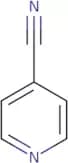
CAS:<p>4-Cyanopyridine is an organic compound with the chemical formula (CN)N. It is a white solid that is soluble in water and polar solvents. When exposed to hydrochloric acid, 4-cyanopyridine undergoes a reaction that converts it to picolinic acid. This reaction proceeds through a mechanism in which the nucleophilic hydroxyl group of 4-cyanopyridine attacks the protonated nitrogen atom of hydrochloric acid. The resulting intermediate then loses a proton and becomes picolinic acid. Kinetic data on this reaction has been obtained from UV-vis spectroscopy, X-ray diffraction, and mass spectrometry experiments. The crystal structures of the bound form of 4-cyanopyridine and its quinoline derivatives have also been determined by x-ray crystallography.</p>Formula:C6H4N2Purity:Min. 95%Color and Shape:PowderMolecular weight:104.11 g/mol4-Chloro-3-nitrocinnamic acid
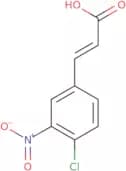
CAS:<p>4-Chloro-3-nitrocinnamic acid is a thionyl chloride derivative of cinnamic acid. It is used as an intermediate in the preparation of pharmaceuticals and dyestuffs. 4-Chloro-3-nitrocinnamic acid inhibits the activity of amides, dimethylformamide, alkaline hydrolysis, xylene, carboxyphenyl, cinnamic, refluxing, nitrophenyl and carboxylic acids. 4-Chloro-3-nitrocinnamic acid reacts with chloride to form the corresponding chloride salt. This compound can also react with formamide to form an amide salt. The ester group of 4-chloro-3-nitrocinnamic acid can be cleaved by nitro compounds to produce nitro derivatives.</p>Formula:C9H6ClNO4Purity:Min. 95%Color and Shape:Off-White PowderMolecular weight:227.6 g/mol2,5-Dihydroxybenzoic acid
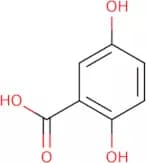
CAS:<p>2,5-Dihydroxybenzoic acid is a natural compound that has been shown to inhibit the matrix metalloproteinase enzyme activity of α1-acid glycoprotein. The 2,5-dihydroxybenzoic acid structure is similar to p-hydroxybenzoic acid and gentisic acid. It is also an inhibitor of xanthine oxidase and caffeic acid oxidase. 2,5-Dihydroxybenzoic acid has a number of potential uses in analytical chemistry as it can be used to measure the concentrations of caffeic acids and other related compounds in biological samples.</p>Formula:C7H6O4Purity:(%) Min. 98%Color and Shape:White PowderMolecular weight:154.12 g/mol4,4'-Dinitro-2,2'-bipyridine
CAS:<p>4,4'-Dinitro-2,2'-bipyridine is a dihedral molecule that is used in biosensors to detect nitro compounds. It is synthesized by the reaction of osmium tetroxide with pyridine. The transfer of electrons from the pyridine ring to the osmium atom results in an oriented molecule with a positive charge on one end and a negative charge on the other end. This orientation can be reversed by oxidation. 4,4'-Dinitro-2,2'-bipyridine has been shown to react with monoalcohols and nucleophiles such as water to form covalent bonds. It also reacts with radiation, which may account for its use in dosimeters for measuring radiation exposure.</p>Formula:C10H6N4O4Purity:Min. 95%Color and Shape:Yellow PowderMolecular weight:246.18 g/mol4,5-Dichloro-1,2-phenylenediamine
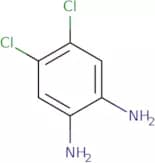
CAS:<p>4,5-Dichloro-1,2-phenylenediamine is a cytotoxic agent that can inhibit the enzymes urea amidolyase and fatty acid synthase in tissue culture. This compound also inhibits the production of urea nitrogen and fatty acids in human serum. 4,5-Dichloro-1,2-phenylenediamine may be useful as a cancer treatment because it has been shown to cause leukemia cell death as well as inhibition of t-cell proliferation. The drug may also induce apoptosis by inhibiting DNA synthesis through its reaction with benzimidazole compounds. The basic structure of 4,5-Dichloro-1,2-phenylenediamine is similar to protocatechuic acid and malignant brain tumor cells.</p>Formula:C6H6Cl2N2Purity:Min. 95%Color and Shape:PowderMolecular weight:177.03 g/mol2,3-Dichloropyridine
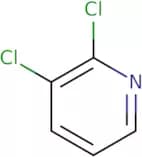
CAS:<p>2,3-Dichloropyridine is an organic compound with the formula P(Cl)Cl. It is a white crystalline solid that reacts violently with water and alcohols. 2,3-Dichloropyridine can be used for the preparation of dichloroacetic acid by reaction with phosphorus pentachloride in the presence of sodium carbonate and water vapor. This compound can also be used to prepare copper chloride by reaction with diazonium salt in hydrochloric acid and chlorine atom in the presence of sodium carbonate at low energy.</p>Formula:C5H3Cl2NPurity:Min. 95%Color and Shape:PowderMolecular weight:147.99 g/mol3,4-Diaminobenzoic acid
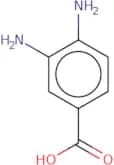
CAS:<p>3,4-Diaminobenzoic acid is a compound that is produced by the condensation of two molecules of hydrochloric acid. 3,4-Diaminobenzoic acid has been used as a reagent in the synthesis of coumarin derivatives. This chemical has been shown to be an effective proton scavenger in an optimum concentration. Benzimidazole compounds are also synthesized from 3,4-diaminobenzoic acid and have been shown to be effective against autoimmune diseases. 3,4-Diaminobenzoic acid can be used for the production of diazonium salts, which are used in the synthesis of anti-inflammatory drugs and other pharmaceuticals. The hydroxyl group on this molecule makes it chemically stable and kinetic data shows that it has high diphenolase activity.</p>Formula:C7H8N2O2Purity:Min. 96 Area-%Color and Shape:PowderMolecular weight:152.15 g/mol1,4-Diaminobutane dihydrochloride
CAS:<p>Ubiquitous polyamine necessary for optimal cell growth</p>Formula:C4H14Cl2N2Purity:Min. 98.0%Color and Shape:PowderMolecular weight:161.07 g/mol2,6-Dichloro-3,5-dihydroxybenzoic acid
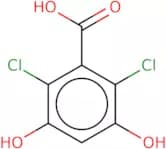
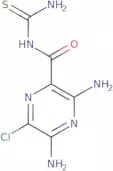
CAS:<p>2,6-Dichloro-3,5-dihydroxybenzoic acid is a reagent with a wide range of applications in the research and development of chemical products. It is also a useful intermediate for the synthesis of other compounds. 2,6-Dichloro-3,5-dihydroxybenzoic acid has been shown to be used as a building block for the synthesis of various complex compounds. It is also an important reaction component that can be used in many different reactions to produce valuable products.</p>Formula:C7H4Cl2O4Purity:Min. 95%Color and Shape:PowderMolecular weight:223.01 g/mol3,5-Diamino-N-carbamothioyl-6-chloropyrazine-2-carboxamide
CAS:<p>3,5-Diamino-N-carbamothioyl-6-chloropyrazine-2-carboxamide is a high quality, useful intermediate and reagent for the production of fine chemicals. It is also a speciality chemical that has been used as a reaction component in research. 3,5-Diamino-N-carbamothioyl-6-chloropyrazine-2-carboxamide is an important versatile building block that can be used to produce many other compounds.</p>Formula:C6H7ClN6OSPurity:Min. 95%Color and Shape:White PowderMolecular weight:246.68 g/mol4-(Dimethylamino)phenol
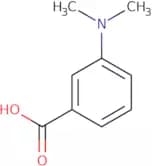
CAS:<p>4-(Dimethylamino)phenol is a reactive molecule that can react with sodium carbonate to form a fluorescent product. The reaction mechanism has been elucidated by fluorescence spectroscopy and linear calibration curves. 4-DMA(OH)P reacts with sodium carbonate in water at physiological levels, producing p-hydroxybenzoic acid and 4-dimethylaminobenzoic acid. These compounds are also found in the matrix of bacterial cells and may serve as markers for the identification of bacterial metabolism. The reaction between 4DMA(OH)P and sodium carbonate was examined by X-ray crystal structures, which revealed that the reactive site is located on the phenolic hydroxyl group of 4DMA(OH)P. This study showed that the reactive site is localized on the phenolic hydroxy group of 4DMA(OH)P, which makes this molecule useful for identification of bacterial metabolism by means of matrix effect.</p>Formula:C8H11NOPurity:Min. 95%Molecular weight:137.18 g/mol3-Dimethylaminobenzoic acid - 90%
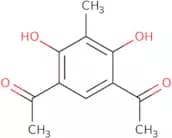
CAS:<p>3-Dimethylaminobenzoic acid is a carboxylate that can be found in plants and animals. It is a precursor to many biologically important molecules, including the amino acid tryptophan. 3-Dimethylaminobenzoic acid has been shown to have a redox potential of -0.38 V, which makes it an excellent candidate for use as an electron acceptor. This compound is also used as an intermediate in the synthesis of cholesterol esters and fatty acids, and has been shown to inhibit the growth of basophilic leukemia cells in mice. 3-Dimethylaminobenzoic acid has also been shown to have a cholesterol esterase activity on human liver cytosol, with an enzyme activity of 0.0015 U/mg protein at pH 7.5 and 37°C, and on human urine samples with an enzyme activity of 0.0027 U/mg protein at pH 6.0 and 37</p>Formula:C9H11NO2Purity:Min. 95%Color and Shape:PowderMolecular weight:165.19 g/mol1,1'-(4,6-Dihydroxy-5-methyl-1,3-phenylene)diethanone
CAS:<p>1,1'-(4,6-Dihydroxy-5-methyl-1,3-phenylene)diethanone is a versatile building block that can be used in the synthesis of complex compounds. This compound is a useful intermediate for research chemicals and reagents. It has been shown to be an effective catalyst for the production of high quality products.</p>Formula:C11H12O4Purity:Min. 95%Color and Shape:Yellow To Brown SolidMolecular weight:208.21 g/mol4,5-Dimethoxy-2-nitrobenzoic acid - Technical
CAS:<p>4,5-Dimethoxy-2-nitrobenzoic acid is a versatile building block and reagent that can be used in research and development as well as for the production of fine chemicals. This compound has been shown to react with amines using the nitration reaction to produce a variety of useful compounds. The synthesis of this compound is not difficult, but requires care and some speciality chemicals. 4,5-Dimethoxy-2-nitrobenzoic acid is also a useful scaffold for complex compounds. It reacts readily with other building blocks to form nitrogen heterocycles and is used in the production of pharmaceuticals and pesticides.</p>Formula:C9H9NO6Purity:Min. 95%Molecular weight:227.17 g/molDde biotin picolyl azide
CAS:<p>Azide-activated cleavable biotin probe</p>Formula:C38H57N9O9SPurity:Min. 95%Color and Shape:Clear LiquidMolecular weight:815.98 g/mol2,4-Diiodo-6-{[methyl(1-methylpiperidin-4-yl)amino]methyl}phenol oxalate
CAS:<p>2,4-Diiodo-6-[(methyl(1-methylpiperidin-4-yl)amino]methyl}phenol oxalate is a high quality chemical reagent. It is a useful intermediate for the preparation of complex compounds and has been used as a fine chemical. 2,4-Diiodo-6-[(methyl(1-methylpiperidin-4-yl)amino]methyl}phenol oxalate can be used as a building block for the synthesis of speciality chemicals. This compound can also be used as a reaction component in the synthesis of versatile chemicals.</p>Formula:C14H20I2N2O•C2H2O4Purity:Min. 95%Color and Shape:PowderMolecular weight:574.16 g/mol2',4'-Dihydroxyacetophenone
CAS:<p>2',4'-Dihydroxyacetophenone is a compound that can be used in wastewater treatment. It has been shown to have an inhibitory effect on the activity of glucose-injection-hydrochloric acid and electrochemical impedance spectroscopy. 2',4'-Dihydroxyacetophenone also has an inhibitory effect on the diazonium salt, enzyme activities, hydroxyl group, and acetylcholinesterase inhibition. In addition, it has been shown to have cytotoxicity against human osteosarcoma cells, as well as fetal bovine and acetate extracts. The histological analysis of 2',4'-dihydroxyacetophenone showed that it also has anti-inflammatory properties.</p>Formula:C8H8O3Purity:Min. 95%Color and Shape:Red PowderMolecular weight:152.15 g/mol2,3-Dihydroxybenzaldehyde
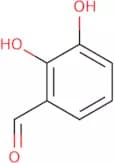
CAS:<p>2,3-Dihydroxybenzaldehyde is a chemical compound that has been shown to have antimicrobial properties. It inhibits bacterial growth by binding to the ribosome and preventing mRNA synthesis. 2,3-Dihydroxybenzaldehyde binds to the 50S ribosomal subunit and prevents protein synthesis by inhibiting the transfer mechanism of tRNA from the A site to the P site on the ribosome. The drug also inhibits mitochondrial superoxide production in V79 cells and human serum.<br>2,3-Dihydroxybenzaldehyde has been shown to be effective against methicillin resistant S. aureus (MRSA) strains but not against Group P2 Staphylococcus aureus (GPA). It is also active against Gram-positive bacteria such as Bacillus subtilis but not against Gram-negative bacteria like Escherichia coli or Pseudomonas aeruginosa.</p>Formula:C7H6O3Purity:Min. 96 Area-%Color and Shape:Slightly Yellow PowderMolecular weight:138.12 g/mol
![4-(Cyclopropylmethyl)-1-oxa-4,9-diazaspiro[5.5]undecan-3-one hydrochloride](/_next/image/?url=https%3A%2Fstatic.cymitquimica.com%2Fproducts%2F3D%2Fthumb-webp%2FFC182982.webp&w=3840&q=75)







![2,4-Diiodo-6-{[methyl(1-methylpiperidin-4-yl)amino]methyl}phenol oxalate](/_next/image/?url=https%3A%2Fstatic.cymitquimica.com%2Fproducts%2F3D%2Fthumb-webp%2FFD181210.webp&w=3840&q=75)