Building Blocks
This section contains fundamental products for the synthesis of organic and biological compounds. Building blocks are the essential starting materials used to construct complex molecules through various chemical reactions. They play a critical role in drug discovery, material science, and chemical research. At CymitQuimica, we offer a diverse range of high-quality building blocks to support your innovative research and industrial projects, ensuring you have the essential components for successful synthesis.
Subcategories of "Building Blocks"
- Boronic Acids & Boronic Acid Derivatives(5,756 products)
- Chiral Building Blocks(1,242 products)
- Hydrocarbon Building Blocks(6,095 products)
- Organic Building Blocks(61,038 products)
Found 196817 products of "Building Blocks"
Sort by
Purity (%)
0
100
|
0
|
50
|
90
|
95
|
100
4-Nitrobenzenesulfonyl chloride
CAS:<p>4-Nitrobenzenesulfonyl chloride is a versatile chemical compound. As a reagent in organic synthesis, it plays a crucial role in the preparation of pharmaceuticals, iminosugars, and oligosaccharides. Its ability to facilitate alpha-glucosylation makes it an essential component in the synthesis of complex carbohydrates. 4-Nitrobenzenesulfonyl chloride is also utilized in the preparation of N-nosyl-alpha-amino acids, which are essential building blocks in peptide synthesis. Additionally, it is widely used in the production of dyes and pigments.</p>Formula:C6H4ClNO4SPurity:Min. 98 Area-%Color and Shape:PowderMolecular weight:221.62 g/mol2-[4-(Aminomethyl)phenyl]acetonitrile
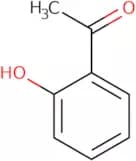
CAS:<p>Versatile small molecule scaffold</p>Formula:C9H10N2Purity:Min. 95%Color and Shape:PowderMolecular weight:146.19 g/mol2'-Hydroxyacetophenone - 95%
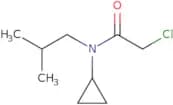
CAS:<p>Purity min. 95%</p>Formula:C8H8O2Purity:Min. 95%Color and Shape:Clear LiquidMolecular weight:136.15 g/mol2-Chloro-N-cyclopropyl-N-(2-methylpropyl)acetamide
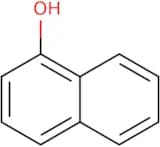
CAS:<p>Versatile small molecule scaffold</p>Formula:C9H16ClNOPurity:(%) Min. 85%Color and Shape:Clear LiquidMolecular weight:189.68 g/mol1-Naphthol
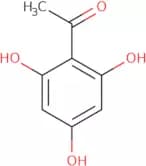
CAS:<p>Derivative of naphthalene; used in the synthesis of various chemicals and as a precursor in the production of dyes, pigments, and pharmaceuticals. It is particularly important in the manufacture of azo dyes, where it serves as a coupling agent in the diazo coupling reaction to produce colored compounds.</p>Formula:C10H7OHPurity:Min. 95%Color and Shape:PowderMolecular weight:144.17 g/mol2',4',6'-Trihydroxyacetophenone monohydrate
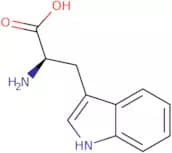
CAS:<p>2',4',6'-Trihydroxyacetophenone monohydrate is a monosodium salt of 2,4,6-trihydroxyacetophenone. It has been shown to inhibit the production of leukemia inhibitory factor (LIF) in vitro. LIF is a cytokine that regulates cell differentiation and proliferation. The matrix effect of 2',4',6'-trihydroxyacetophenone monohydrate on polymerase chain reaction was also studied with the use of a matrix-assisted laser desorption ionization time-of-flight mass spectrometer. This study revealed that the matrix effect is due to the inhibition of cyclase activity by ptelefolia and structural analysis revealed that this inhibition may be due to an interaction with nitrite ion. Preparative high performance liquid chromatography (HPLC) was used for the separation and purification of coumarin derivatives from 2',4',6'-trihydroxyacetophenone monohydrate. The toxicological studies</p>Formula:C8H8O4·H2OColor and Shape:Slightly Yellow PowderMolecular weight:186.15 g/molD-Tryptophan
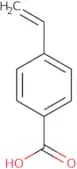
CAS:<p>D-amino acid</p>Formula:C11H12N2O2Purity:Min. 95%Color and Shape:PowderMolecular weight:204.23 g/mol4-Vinylbenzoic acid
CAS:<p>4-Vinylbenzoic acid is a water-insoluble polymer that has been shown to have bacteriostatic and fungistatic properties. 4-Vinylbenzoic acid inhibits bacterial growth by binding to the enzyme diphenolase, which is involved in the synthesis of cell wall precursors. This polymer also binds to cationic surfactants and is soluble in organic solvents such as ethanol and acetone. The mechanism of inhibition of fungal growth is not known, but it may be due to hydrogen bonding interactions with the cell membrane.<br>4-Vinylbenzoic acid has been shown to be effective against human serum, although it does not inhibit bacterial growth in this medium.</p>Formula:C9H8O2Purity:Min. 95%Color and Shape:White PowderMolecular weight:148.16 g/molTrimethyl orthovalerate
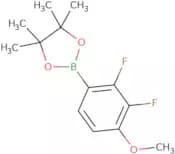
CAS:<p>Used for synthesis of dihydropyran-4-ones</p>Formula:C8H18O3Purity:Min. 97 Area-%Color and Shape:Colorless Clear LiquidMolecular weight:162.23 g/mol2-(2,3-Difluoro-4-methoxyphenyl)-4,4,5,5-tetramethyl-1,3,2-dioxaborolane
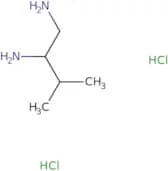
CAS:<p>Versatile small molecule scaffold</p>Formula:C13H17BF2O3Purity:Min. 95%Color and Shape:PowderMolecular weight:270.08 g/mol3-Methylbutane-1,2-diamine dihydrochloride
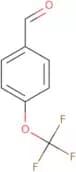
CAS:<p>3-Methylbutane-1,2-diamine dihydrochloride is a reagent that is used as a building block in organic synthesis. It can be used as an intermediate or reactant in the preparation of compounds with other functional groups. 3-Methylbutane-1,2-diamine dihydrochloride is also known to have applications in polymer chemistry and pharmaceuticals. This chemical has been assigned CAS No. 54750-81-1 and is available for purchase through various chemical suppliers.</p>Formula:C5H16Cl2N2Purity:Min. 95 Area-%Color and Shape:PowderMolecular weight:175.1 g/mol4-(Trifluoromethoxy)benzaldehyde
CAS:<p>4-(Trifluoromethoxy)benzaldehyde is a chemical compound that is a substrate for tyrosinase and an inhibitor of the enzyme. It is also an anticancer compound that can be used to inhibit tumor growth by inhibiting protein synthesis. 4-(Trifluoromethoxy)benzaldehyde has been shown to have potent tyrosinase inhibition activity in vitro and in vivo, as well as binding activities with the CB2 receptor. This chemical has also been shown to inhibit virus replication, including HIV-1, and tuberculosis. 4-(Trifluoromethoxy)benzaldehyde can be used in assays to measure the potency of other compounds that are involved in tyrosinase activity or have anti-cancer properties. 4-(Trifluoromethoxy)benzaldehyde specifically binds to residues in the kinase domain of the enzyme tyrosinase, which is responsible for catalysis and regulation of this enzyme.</p>Formula:C8H5F3O2Purity:Min. 95%Color and Shape:Colorless Clear LiquidMolecular weight:190.12 g/mol1,2,4,5-Tetrabromobenzene
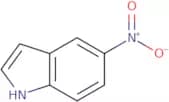
CAS:<p>1,2,4,5-Tetrabromobenzene is a brominated organic compound that forms a palladium complex. It has been studied by chemical ionization with an atmospheric pressure photoionization detector (APPI) and molecular modeling. The debromination reaction of 1,2,4,5-tetrabromobenzene was observed to take place in the liquid phase at room temperature. The detection limit for this reaction was found to be between 0.1 and 5 ppm. The most common form of 1,2,4,5-tetrabromobenzene is the monoclinic polymorph; however it can also exist as a trigonal system or as a hexagonal system when heated above its phase transition temperature. This compound is soluble in water and mercury chloride solutions but insoluble in ethers or chloroform.</p>Formula:C6H2Br4Purity:Min. 95%Color and Shape:White PowderMolecular weight:393.7 g/mol5-Nitroindole
CAS:<p>5-Nitroindole is a chemical used in wastewater treatment. It is an electron acceptor that can be used to reduce the cost of the process. 5-Nitroindole has significant cytotoxicity and polymerase chain activity in human pathogens, such as Escherichia coli, Salmonella enterica, Staphylococcus aureus, and Mycobacterium tuberculosis. The drug is stable under aerobic conditions and has shown no significant cytotoxicity to mammalian cells. 5-Nitroindole has been shown to hybridize with DNA duplexes containing guanine bases and form covalent bonds in a model system. The drug also has been shown to be present in colonies of colony-stimulating factor (CSF) cells that are found in the blood stream of healthy individuals.</p>Formula:C8H6N2O2Purity:Min. 95%Color and Shape:Yellow PowderMolecular weight:162.15 g/mol3-[3-(Methylcarbamoyl)phenyl]propanoic acid
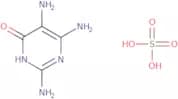
CAS:<p>Versatile small molecule scaffold</p>Formula:C11H13NO3Purity:Min. 95%Color and Shape:PowderMolecular weight:207.23 g/mol2,4,5-Triamino-6-hydroxypyrimidine sulfate
CAS:<p>2,4,5-Triamino-6-hydroxypyrimidine sulfate is a chemical compound that is a metabolite of the amino acid lysine. It is produced when lysine undergoes hydrolysis by enzymes and is converted to 2,4,5-triamino-6-hydroxypyrimidine sulfate by the addition of sulfate ions. This metabolite has been shown to have reactive properties and may play a role in mitochondrial dysfunction. 2,4,5-Triamino-6-hydroxypyrimidine sulfate has been used in binding experiments to measure the strength of protein interactions with other proteins or molecules. For example, it was used in experiments with dimethylformamide (DMF) to study the binding affinity of DMF with proteins such as cytochrome c oxidase. In these experiments, 2,4,5-triamino-6-hydroxypyrimidine sulfate was found to</p>Formula:C4H7N5O•H2SO4Purity:Min. 95%Color and Shape:PowderMolecular weight:239.21 g/mol4-Bromo-1H-pyrrolo[2,3-b]pyridine-3-carboxylic acid
CAS:<p>4-Bromo-1H-pyrrolo[2,3-b]pyridine-3-carboxylic acid is a high quality reagent that is used as an intermediate in the synthesis of other compounds. It has a CAS No. of 1000340-36-2 and can be purchased at a very competitive price. This chemical is useful for the synthesis of complex compounds, such as fine chemicals and speciality chemicals. It can also be used as a building block for versatile chemical reactions, or as a building block for the synthesis of valuable research chemicals.</p>Formula:C8H5BrN2O2Purity:Min. 95%Color and Shape:PowderMolecular weight:241.04 g/mol2-Naphthaldehyde
CAS:<p>2-Naphthaldehyde is an antimicrobial agent that has been shown to inhibit the growth of bacteria in vitro. It has been shown to inhibit the synthesis of DNA, RNA and protein. 2-Naphthaldehyde is an intramolecular hydrogen acceptor and a substrate for coumarin derivatives. The reaction mechanism of 2-napthalaldehyde is not yet fully understood, but it has been proposed that 2-napthalaldehyde reacts with sodium carbonate to form sodium phenolate and acetone. 2-Naphthaldehyde also shows genotoxic activity, as it has been shown to induce structural aberrations in bacterial DNA. This chemical compound also forms coordination geometry complexes with metal ions such as copper and zinc.</p>Formula:C11H8OPurity:Min. 98%Color and Shape:Beige PowderMolecular weight:156.18 g/molMethyl 2,2-Dimethoxypropionate
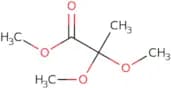
CAS:<p>Methyl 2,2-dimethoxypropionate is an oxidation catalyst that is used to convert terminal alkynes into alcohols. It is also a model system for the study of the biosynthesis of a number of natural products and drugs. In addition, methyl 2,2-dimethoxypropionate has been shown to have anticancer properties, although it has not been studied in humans. It has also been shown to have anti-inflammatory effects in animals and may be a potential treatment for hepatitis and depression in humans. Methyl 2,2-dimethoxypropionate can be synthesized by reacting citric acid with methanol or ethanol in the presence of hydroxyl ions.</p>Formula:C6H12O4Purity:Min. 95%Color and Shape:Clear LiquidMolecular weight:148.16 g/mol6-Hydroxy-2-oxo-1,2-dihydropyridine-3-carboxylic acid
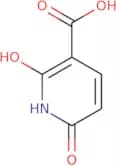
CAS:<p>6-Hydroxy-2-oxo-1,2-dihydropyridine-3-carboxylic acid is a hydroxylate that is found in animals and plants. It is also a flavinoid, meaning it has an aromatic ring with two carbon atoms and a nitrogen atom. 6-Hydroxy-2-oxo-1,2-dihydropyridine 3 carboxylic acid is found in the subunits of flavoproteins, which are enzymes that produce molecular oxygen from hydrogen peroxide. 6HODCA has been shown to be an acceptor for electrons in lipid oxidation reactions and can be used as a precursor for the synthesis of lipids. Hydroxylases also produce 6HODCA by adding water to pyridines.</p>Formula:C6H5NO4Purity:Min. 95%Molecular weight:155.11 g/mol


![2-[4-(Aminomethyl)phenyl]acetonitrile](/_next/image/?url=https%3A%2Fstatic.cymitquimica.com%2Fproducts%2F3D%2Fthumb-webp%2FJWC78525.webp&w=3840&q=75)


![3-[3-(Methylcarbamoyl)phenyl]propanoic acid](/_next/image/?url=https%3A%2Fstatic.cymitquimica.com%2Fproducts%2F3D%2Fthumb-webp%2FJZB49430.webp&w=3840&q=75)
![4-Bromo-1H-pyrrolo[2,3-b]pyridine-3-carboxylic acid](/_next/image/?url=https%3A%2Fstatic.cymitquimica.com%2Fproducts%2F3D%2Fthumb-webp%2FAQB34036.webp&w=3840&q=75)