Building Blocks
This section contains fundamental products for the synthesis of organic and biological compounds. Building blocks are the essential starting materials used to construct complex molecules through various chemical reactions. They play a critical role in drug discovery, material science, and chemical research. At CymitQuimica, we offer a diverse range of high-quality building blocks to support your innovative research and industrial projects, ensuring you have the essential components for successful synthesis.
Subcategories of "Building Blocks"
- Boronic Acids & Boronic Acid Derivatives(5,756 products)
- Chiral Building Blocks(1,242 products)
- Hydrocarbon Building Blocks(6,095 products)
- Organic Building Blocks(61,038 products)
Found 196817 products of "Building Blocks"
Sort by
Purity (%)
0
100
|
0
|
50
|
90
|
95
|
100
4-Aminohippuric acid sodium
CAS:<p>4-Aminohippuric acid sodium (4AHA) is a drug that is used as a diagnostic tool for measuring renal plasma flow and renal function. The drug is administered intravenously and its optical properties are measured. 4AHA is filtered by the kidneys, which causes it to be excreted in urine. A sensor is placed on the patient's arm and measures the concentration of 4AHA in the blood flowing through the arm. This measurement can then be used to calculate renal plasma flow, which indirectly indicates kidney function. 4AHA can also be used to measure sodium levels in blood plasma, as it binds to sodium ions in solution. However, this application of 4AHA has been superseded by newer technologies such as ion-selective electrodes and magnetic resonance imaging, which offer improved accuracy at lower cost.</p>Formula:C9H10N2NaO3Purity:Min. 95%Color and Shape:PowderMolecular weight:217.18 g/mol4-Amino-3,5-diiodobenzoic acid
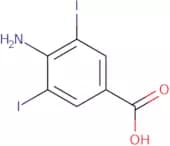
CAS:<p>4-Amino-3,5-diiodobenzoic acid is a conjugate of the amino acid histidine with two iodine atoms. It is used as a radiopaque contrast agent for X-ray imaging and has been shown to be useful in distinguishing between normal tissue and cancerous lesions. The molecule can be modified to contain various functional groups that allow it to bind to other molecules such as proteins or DNA, which can alter its properties. 4-Amino-3,5-diiodobenzoic acid is also known as diaminobenzene diiodide and is soluble in water.</p>Formula:C7H5I2NO2Purity:Min. 95%Color and Shape:PowderMolecular weight:388.93 g/mol4-Acetoxyacetophenone
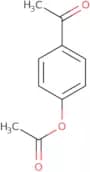
CAS:<p>4-Acetoxyacetophenone is an organic compound that has a functional group with a hydroxyl group. It can undergo dehydration to form acetone and acetic acid, which are the reaction products. The reaction system is activated by a reactive or acid catalyst, and the reaction solution is made up of non-polar solvents. Hydrogenation reduction can be used to synthesize 4-Acetoxyacetophenone from 2-hydroxyacetophenone.</p>Formula:C10H10O3Purity:Min. 95%Color and Shape:PowderMolecular weight:178.18 g/mol3-Amino-2-hydroxybenzoic acid
CAS:<p>3-Amino-2-hydroxybenzoic acid (AAHB) is a nonsteroidal anti-inflammatory drug that belongs to the group of pharmaceutical preparations. It inhibits the enzyme dehydroascorbate reductase, which is involved in the production of hydrogen peroxide and other reactive oxygen species by phagocytes. Hydrogen peroxide and other reactive oxygen species can cause DNA damage and lead to cancer development. AAHB may also have antimicrobial effects, as it has been shown to inhibit bacterial growth and cell adhesion. AAHB interacts with fatty acids in a similar manner as aspirin does, but with a lower potency. It has been shown to inhibit prostaglandin synthesis by inhibiting lipoxygenase activity. The binding of AAHB at these sites prevents the formation of arachidonic acid from linoleic acid and blocks the conversion of arachidonic acid into prostaglandin H2 (PGH2).</p>Formula:C7H7NO3Purity:Min. 98 Area-%Color and Shape:Off-White PowderMolecular weight:153.14 g/mol2-Amino-3-methylbenzoic acid
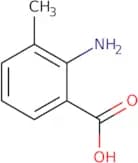
CAS:<p>2-Amino-3-methylbenzoic acid is an organic compound with the formula H2CCH(NH2)(COOH). It is a white solid that is soluble in water. The molecule has a planar geometry, and the copper ion is coordinated by four oxygen atoms and three nitrogen atoms. This coordination geometry can be seen in the crystal structure of the molecule. 2-Amino-3-methylbenzoic acid has been shown to have antifungal activity against Aspergillus niger. It also inhibits 5-nitrosalicyclic acid and sodium carbonate, which are involved in the synthesis of nicotinamide adenine dinucleotide phosphate (NADPH) and ATP respectively. 2-Amino-3-methylbenzoic acid has also been shown to inhibit ryanodine receptor channels, which are important for calcium release from endoplasmic reticulum.</p>Formula:C8H9NO2Purity:Min. 95%Color and Shape:PowderMolecular weight:151.16 g/mol2'-Aminoacetophenone
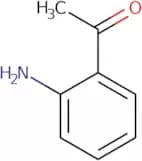
CAS:<p>2'-Aminoacetophenone is a chemical compound that belongs to the class of anthranilate. It is a water-soluble, white solid. 2'-Aminoacetophenone has been shown to have antimicrobial properties against bacteria and fungi. The mechanism of action of this compound is not known, but it may be due to its ability to disrupt mitochondrial function and affect the membrane potential. The stability of 2'-Aminoacetophenone in the presence of water vapor is greater than that observed for other anthranilates.</p>Formula:C8H9NOPurity:Min. 95%Color and Shape:PowderMolecular weight:135.16 g/mol5-Amino-2-chlorobenzoic acid
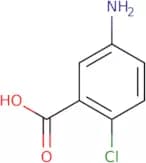
CAS:<p>5-Amino-2-chlorobenzoic acid is a carboxylate that has antiproliferative effects. It is synthesized through the reaction of morpholine and malonic acid. 5-Amino-2-chlorobenzoic acid has been shown to have an optimal reaction with UV light, which may be due to its structure activity relationship with other carboxylates. It also has a high affinity for metal ions such as magnesium and chloride, which are thought to be important in cancer cell proliferation. 5-Amino-2-chlorobenzoic acid can be used in analytical methods because it is soluble in water and can be obtained through gravimetric analysis.</p>Formula:C7H6ClNO2Color and Shape:PowderMolecular weight:171.58 g/mol2-Amino-5-chlorobenzamide
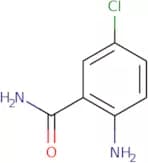
CAS:<p>2-Amino-5-chlorobenzamide is a fluorescence probe that has been shown to react with anthranilic acid, which is a structural component of many active substances. It is used in organic solvents as an indicator for the presence of active oxygen. 2-Amino-5-chlorobenzamide can be used as a linker to connect different molecules and can be activated by dehydrating agents, such as sodium sulfite. This compound has been demonstrated to have a linear response over a wide range of concentrations. The molecular target of 2-amino-5-chlorobenzamide is unknown at this time, but it has been suggested that it may interact with amino acids or proteins. The structural formula for 2-amino-5-chlorobenzamide is C6H4ClN2O2.</p>Formula:C7H7ClN2OPurity:Min. 95%Color and Shape:PowderMolecular weight:170.6 g/mol2-Acetyl-5-bromothiophene
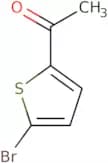
CAS:<p>2-Acetyl-5-bromothiophene is an organosulfur compound that is a reactive intermediate in the Suzuki coupling reaction. It has been used as a substrate for biological studies of toxicity and cancer, and to generate unsymmetrical compounds with multi-walled carbon light emission. 2-Acetyl-5-bromothiophene also has the ability to inhibit glutamate dehydrogenase and hydroxide solution, which are enzymes necessary for the production of energy in cells. 2-Acetyl-5-bromothiophene is toxic to animals and humans because it can cause cancer and other health problems such as neurotoxicity, liver dysfunction, and kidney damage. 2-Acetyl-5-bromothiophene has been shown to cause DNA strand breaks in human breast cancer cells.</p>Formula:C6H5BrOSPurity:Min. 98.5 Area-%Color and Shape:PowderMolecular weight:205.07 g/mol6-Aminoquinolyl-N-hydroxysuccinimidylcarbamate
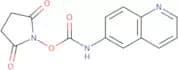
CAS:<p>6-Aminoquinolyl-N-hydroxysuccinimidylcarbamate reacts rapidly with amino acids to form stable urea derivatives. The use of fluorescence detection techniques allows quantification of amines at pmol levels. 6-Aminoquinolyl-N-hydroxysuccinimidylcarbamate was used in a study to derivatize glycated amino acids with the purpose of developing chromatographic assays for their quantification. Glycation of proteins initially gives rise to early glycation adducts, then progresses to advanced glycation end-products, which are markers for conditions such as diabetes, cataracts, uraemia and Alzheimer's disease. <br>We also offer the product FA172347 with a particle size < 0.25 mm.</p>Formula:C14H11N3O4Purity:(Q-1H Nmr) Min 83%Color and Shape:PowderMolecular weight:285.25 g/mol4-Azidobenzoic acid
CAS:Please enquire for more information about 4-Azidobenzoic acid including the price, delivery time and more detailed product information at the technical inquiry form on this pageFormula:C7H5N3O2Purity:Min. 97 Area-%Color and Shape:PowderMolecular weight:163.13 g/molArg-Gly-Asp
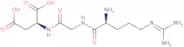
CAS:<p>Arg-Gly-Asp is a peptide with inhibitory properties against tumor growth. It binds to the integrin receptor and blocks the angiogenic process by inhibiting the expression of vascular endothelial growth factor (VEGF) and transforming growth factor beta (TGF-β). Arg-Gly-Asp also inhibits the proliferation of pluripotent cells, which are cells that can differentiate into any type of cell in the body, and prevents the formation of new blood vessels. This peptide has been shown to have inhibitory properties against leukemia inhibitory factor (LIF), which is a cytokine that regulates cell growth.</p>Formula:C12H22N6O6Purity:Min. 98 Area-%Color and Shape:PowderMolecular weight:346.34 g/mol2-Amino-4-isopropylamino-6-chlorotriazine
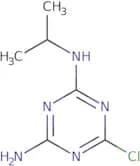
CAS:<p>Atrazine metabolite; herbicide</p>Formula:C6H10ClN5Purity:Min. 95%Color and Shape:White PowderMolecular weight:187.63 g/mol3-Amino-4-chloropyridine
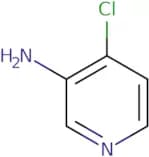
CAS:<p>3-Amino-4-chloropyridine is an organic compound with the molecular formula CHClN. It is a colorless solid that is soluble in organic solvents, such as diethyl ether and chloroform. 3-Amino-4-chloropyridine has been shown to be effective in cancer therapy by inhibiting ion channels, which are proteins that allow ions to pass through the cell membrane. This inhibition results in cell death due to lack of nutrients and oxygen. 3-Amino-4-chloropyridine inhibits the p2 receptor and induces apoptosis in cancer cells, which may be due to its ability to inhibit calcium influx and activate protein kinase C. 3-Amino-4-chloropyridine also has antiinflammatory effects by inhibiting prostaglandin synthesis.</p>Formula:C5H5ClN2Purity:Min. 95%Color and Shape:Yellow PowderMolecular weight:128.56 g/mol2-Amino-4,5-dimethoxybenzoic acid
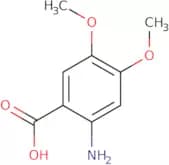
CAS:<p>2-Amino-4,5-dimethoxybenzoic acid is a potent antitumor agent that inhibits the growth of tumor cells. It has been shown to inhibit the production of epidermal growth factor (EGF) and plays a role in the inhibition of tumor cell proliferation in vitro. 2-Amino-4,5-dimethoxybenzoic acid has also been shown to have photochemical properties and can be activated by light. This compound can be used as an indicator for gravimetric analysis because it reacts with diazonium salts and produces a colored product. 2-Amino-4,5-dimethoxybenzoic acid is also reactive and may be used in Suzuki coupling reactions. This chemical compound is chemically related to other inhibitors such as mcf7 and suzuki coupling reactions.</p>Formula:C9H11NO4Purity:Min. 95%Color and Shape:Beige PowderMolecular weight:197.19 g/mol4-Amino-3-nitrobenzonitrile
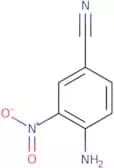
CAS:<p>4-Amino-3-nitrobenzonitrile is an organic compound that is used as a precursor in the synthesis of drugs to treat infectious diseases. 4-Amino-3-nitrobenzonitrile has been shown to have potent activity against Leishmania species, including L. major and L. braziliensis. It binds to sulfoxides by a nitro group and forms a covalent bond with the sulfoxide. This results in the formation of an intramolecular hydrogen bond between the nitro group and the sulfoxide, which prevents it from forming hydrogen bonds with other molecules. Gel permeation chromatography can be used for analytical determination of this drug. 4-Amino-3-nitrobenzonitrile has also been studied using chemosensors and in vivo studies, showing that it can be used to inhibit protozoa such as Giardia lamblia, Entamoeba histolyt</p>Formula:C7H5N3O2Purity:Min. 98%Color and Shape:PowderMolecular weight:163.13 g/mol3,3-Difluorocyclobutanone
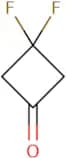
CAS:<p>Versatile small molecule scaffold</p>Formula:C4H4F2OPurity:Min. 95%Color and Shape:Clear LiquidMolecular weight:106.07 g/molN-Acetyl-L-glutamine
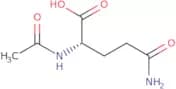
CAS:<p>N-Acetylglutamine is an amino acid that is not synthesized by the human body and must be obtained through diet. It is a precursor to glutamate, which is an important neurotransmitter in the brain. N-Acetyl-L-glutamine has been shown to have neuroprotective effects against various metabolic disorders including diabetes, bowel disease, and microdialysis probes. The effect of N-acetyl-L-glutamine on neuronal death can be observed using a reaction solution containing sodium citrate and glucose injection. N-acetylglutamine has been shown to increase the activity of enzymes such as citrate synthase in this reaction solution.</p>Formula:C7H12N2O4Purity:Min. 95%Color and Shape:White PowderMolecular weight:188.18 g/molN-Acetyl-L-alanine 4-nitroanilide
CAS:<p>N-Acetyl-L-alanine 4-nitroanilide is a drug that belongs to the class of drugs called anticholinergics. It is used to treat various symptoms, such as asthma and other respiratory disorders, chronic obstructive pulmonary disease, emphysema, bronchitis, and other lung diseases. N-Acetyl-L-alanine 4-nitroanilide has been shown to have clinical relevance in the treatment of autoimmune diseases such as rheumatoid arthritis and systemic lupus erythematosus. The drug can also be used to treat clinical studies involving intubation. Drug interactions are possible with cardiac medications and antihistamines. It should not be taken by people who have a body mass index over 30 or those who have a history of cardiac problems or heart disease. The drug also interacts with heparin and nitrates, which can lead to an increased risk of irregular heartbeat or chest pain.</p>Formula:C11H13N3O4Purity:Min. 95%Color and Shape:Off-White PowderMolecular weight:251.24 g/mol2-Amino-4,6-dimethoxybenzoic acid
CAS:<p>2-Amino-4,6-dimethoxybenzoic acid is an organic chemical compound that can be used as a building block for the synthesis of other compounds. 2-Amino-4,6-dimethoxybenzoic acid has a number of uses including being a reagent in organic and inorganic reactions, such as the synthesis of dyes, pharmaceuticals, and pesticides. It is also used as a building block for complex compounds that are difficult to make. This chemical has been classified by the Chemical Abstract Services (CAS) registry with CAS number 21577-57-1.</p>Formula:C9H11NO4Purity:Min. 95%Color and Shape:Yellow SolidMolecular weight:197.19 g/mol