


Building Blocks
This section contains fundamental products for the synthesis of organic and biological compounds. Building blocks are the essential starting materials used to construct complex molecules through various chemical reactions. They play a critical role in drug discovery, material science, and chemical research. At CymitQuimica, we offer a diverse range of high-quality building blocks to support your innovative research and industrial projects, ensuring you have the essential components for successful synthesis.
Subcategories of "Building Blocks"
- Boronic Acids & Boronic Acid Derivatives(5,756 products)
- Chiral Building Blocks(1,242 products)
- Hydrocarbon Building Blocks(6,095 products)
- Organic Building Blocks(61,038 products)
Found 196817 products of "Building Blocks"
Sort by
Purity (%)
0
100
|
0
|
50
|
90
|
95
|
100
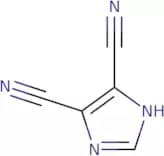
4,5-Dicyanoimidazole
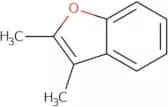
CAS:<p>Please enquire for more information about 4,5-Dicyanoimidazole including the price, delivery time and more detailed product information at the technical inquiry form on this page</p>Formula:C5H2N4Purity:Min. 98 Area-%Color and Shape:White Off-White PowderMolecular weight:118.1 g/mol2,3-Dimethylbenzofuran
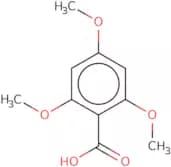
CAS:<p>2,3-Dimethylbenzofuran (2,3-DBF) is a specific interaction that is an inorganic chemical. It has shown genotoxic effects, such as DNA damage and chromosomal aberrations, in hl-60 cells. 2,3-DBF can be acetylated by the activity of acetyltransferases to form 2,3-dimethylbenzoic acid (DMBA). DMBA is oxidized by cytochrome P450 enzymes to form DMBA quinone. DMBA quinone reacts with deuterium isotope to form an ionizable compound which can then be hydrolyzed into benzoic acid and methyl alcohol. The oxidation products of 2,3-DBF have been studied using analytical methods such as gas chromatography and mass spectrometry. These analyses showed the presence of acidic hydrolysis products and ionizable compounds.</p>Formula:C10H10OPurity:Min. 98 Area-%Color and Shape:Clear LiquidMolecular weight:146.19 g/mol2,4,6-Trimethoxybenzoic acid
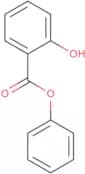
CAS:<p>2,4,6-Trimethoxybenzoic acid (TMB) is a monomer that belongs to the class of organic compounds known as phenols. It can undergo dehydrogenation reactions with nitroethane in the presence of trifluoroacetic acid and catalytic amounts of hydrogen gas. TMB has been shown to interact with an allyl group in other molecules. The reaction system was studied under different flow rates and was found to be best described by an isotherm equation.</p>Formula:C10H12O5Purity:Min. 95%Color and Shape:PowderMolecular weight:212.2 g/molPhenyl salicylate
CAS:<p>Phenyl salicylate is a phenolic compound that is used as an antipyretic and analgesic. It has the ability to inhibit prostaglandin synthesis, which can lead to reduced inflammation in the body. Phenyl salicylate has been shown to bind to specific receptors on cells, which leads to inhibition of prostaglandin synthesis. This receptor binding may also be responsible for its anti-inflammatory properties. Phenyl salicylate is metabolized in the liver and excreted through the kidneys.</p>Formula:C13H10O3Purity:Min. 98%Color and Shape:White PowderMolecular weight:214.22 g/mol4,6-Dimethyl-2-mercaptopyrimidine
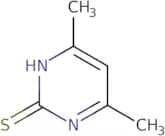
CAS:<p>4,6-Dimethyl-2-mercaptopyrimidine is a protonated form of the compound 4,6-dimethylpyrimidine. It is a member of the group p2 of nitrogenous bases and has a hydrogen bond interaction with its base pair. The reaction mechanism for this molecule is similar to that of other tricyclic antidepressant drugs, as it involves an intermolecular hydrogen bonding reaction where the deprotonated hydroxyl group on one molecule transfers a proton to the adjacent nitrogen atom on another molecule. 4,6-Dimethyl-2-mercaptopyrimidine has been shown to be active in cervical cancer cells and is capable of inhibiting DNA synthesis and protein synthesis. This compound also has antihistamine effects which are likely due to its hydrogen bonding interactions with histamine receptors.</p>Formula:C6H8N2SPurity:Min. 95%Color and Shape:Yellow PowderMolecular weight:140.21 g/mol2,4-Dichloropyrimidine
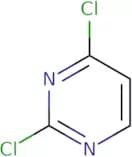
CAS:<p>2,4-Dichloropyrimidine is a compound with an antiproliferation activity that has been shown to inhibit replication of viruses such as HIV. It inhibits the activity of enzymes involved in the replication of viral DNA, including the enzyme human telomerase reverse transcriptase (hTERT), which is essential for viral replication. The effects of 2,4-dichloropyrimidine on wild-type HIV are not clear because it does not have a significant effect on HIV-1 strains that have acquired resistance to erythromycin and tetracycline. However, this drug may be effective against other viruses that have not yet developed resistance. 2,4-Dichloropyrimidine also has antiinflammatory properties due to its ability to inhibit the production of epidermal growth factor and nitrogenous compounds from inflammatory cells.</p>Formula:C4H2N2CI2Purity:Min. 95%Color and Shape:Off-White PowderMolecular weight:148.98 g/mol3,4,5-Trihydroxytoluene
CAS:<p>Substrate for peroxidase</p>Formula:C7H8O3Purity:Min. 95%Color and Shape:PowderMolecular weight:140.14 g/mol(S)-2,5-Dihydro-3,6-dimethoxy-2-isopropylpyrazine
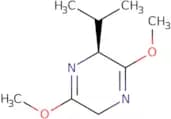
CAS:<p>(S)-2,5-Dihydro-3,6-dimethoxy-2-isopropylpyrazine and its enantiomer, (R)-2,5-Dihydro-3,6-dimethoxy-2-isopropylpyrazine, are also known as Schöllkopf chiral auxiliaries or Schöllkopf reagents, and are used to produce optically pure α-amino acids via asymmetric synthesis. The Schöllkopf reagent can be deprotonated at the prochiral α-carbon, and the resulting enolate is trapped with electrophiles to yield adducts with high (typically > 95% d.e.) diastereoselectivity. The enolate is essentially planar, and the steric bulk of the isopropyl group directs the incoming electrophile to attack from the opposite face, yielding trans adducts. A wide range of electrophiles including alkyl halides, alkyl sulfonates, acyl chlorides, aldehydes, ketones, epoxides, thioketones and enones can be used. Hydrolysis, typically under mild acidic conditions, yields the non-substituted amino acid with high (typically > 95 e.e.) enantiopurity.</p>Formula:C9H16N2O2Purity:Min. 97%Color and Shape:Colorless Clear LiquidMolecular weight:184.24 g/mol2,4,6-Trihydroxytoluene
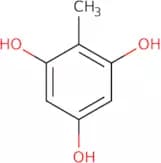
CAS:<p>2,4,6-Trihydroxytoluene is a phenolic compound with an intense yellow color. It is used for the preparation of dryopteris and as a fabric dye. 2,4,6-Trihydroxytoluene is also used in the production of pharmaceuticals and as a chemical intermediate. 2,4,6-Trihydroxytoluene has been shown to inhibit the growth of bacteria by binding to one or more hydroxyl groups on the bacterial cell wall. This binding prevents the formation of an antibiotic-inhibitor complex with the enzyme cell wall synthesis that is required for cell wall biosynthesis, inhibiting protein synthesis and cell division.</p>Formula:C7H8O3Purity:Min. 95%Color and Shape:Red PowderMolecular weight:140.14 g/mol1,3-Dibromoadamantane
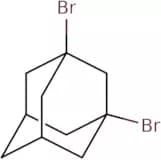
CAS:<p>1,3-Dibromoadamantane is an organic compound that belongs to the group of organobromides. It has a chemical structure with three bromine atoms and one carbon atom, which are bonded to each other in a triangle shape. 1,3-Dibromoadamantane is soluble in solvents such as water and methanol. The reaction yield of 1,3-dibromoadamantane is 100% when it reacts with hydrochloric acid as the catalyst under optimal conditions. The reaction also occurs at a high temperature (100 degrees Celsius) and releases energy efficiently. 1,3-Dibromoadamantane can be used as a substrate molecule for the Suzuki coupling reaction.<br>The coordination chemistry of 1,3-dibromoadamantane involves the formation of a square planar complex with copper ions and ammonia molecules to form copper(I) ammine complexes, which are then able to bind</p>Formula:C10H14Br2Purity:Min. 95%Color and Shape:PowderMolecular weight:294.03 g/mol2,3-Dimethoxybenzeneethanamine
CAS:Controlled Product<p>2,3-Dimethoxybenzeneethanamine is a drug substance that belongs to the class of amines. It has been shown to have proarrhythmic effects in animal studies, and has also shown hypotensive properties. 2,3-Dimethoxybenzeneethanamine inhibits the binding of phenylephrine to adrenoceptors in rat heart tissue. This compound can be used as a chromatographic standard for dimethoxyphenethylamines and isomers due to its spectrometric properties.</p>Formula:C10H15NO2Purity:Min. 98%Color and Shape:Clear LiquidMolecular weight:181.23 g/mol3-Nitro-4-carbomethoxybenzoic acid
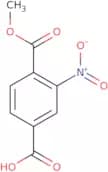
CAS:<p>3-Nitro-4-carbomethoxybenzoic acid is a thiophene that has been found to be an inhibitor of protein tyrosine phosphatase 1B (PTP1B). PTP1B is a key enzyme involved in the regulation of insulin secretion and blood sugar levels. 3-Nitro-4-carbomethoxybenzoic acid has been shown to inhibit PTP1B by mimicking the natural substrate of this enzyme, phosphotyrosine, and thereby preventing its dephosphorylation. It has also been shown to have anti-inflammatory properties.</p>Formula:C9H7NO6Purity:Min. 97 Area-%Color and Shape:PowderMolecular weight:225.16 g/mol1-Ethyl-4-methyl-1H-1,2,3-triazole-5-carboxylic acid
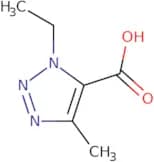
CAS:<p>Versatile small molecule scaffold</p>Formula:C6H9N3O2Purity:Min. 95%Molecular weight:155.15 g/mol2',3',4'-Trihydroxyacetophenone
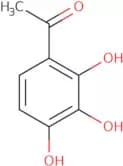
CAS:<p>2',3',4'-Trihydroxyacetophenone is a polycarboxylic acid that has potent inhibitory activity against tyrosinase, an enzyme that catalyzes the conversion of tyrosine to DOPA. This compound can be used as a cross-linking agent for polymerization reactions and has been shown to have optimum inhibitory concentrations in the range of 0.01-1 mM. 2',3',4'-Trihydroxyacetophenone inhibits the production of melanin by inhibiting tyrosinase and can be used as a skin whitening agent. In addition, this compound can be used as a cox-2 inhibitor in food composition and may also be useful in preventing or treating inflammatory conditions such as asthma and arthritis.</p>Formula:C8H8O4Purity:Min. 95%Color and Shape:Off-White PowderMolecular weight:168.15 g/mol5-(Trifluoromethoxy)-1H-indole-2,3-dione
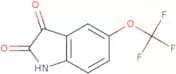
CAS:<p>5-(Trifluoromethoxy)-1H-indole-2,3-dione is a potent anticancer agent that inhibits the growth of cancer cells by inducing apoptosis. It binds to DNA, forming hydrogen bonds with guanine and adenine residues. This binding prevents the formation of hydrogen bonds between DNA bases, which are essential for maintaining the stability of DNA. The disruption of these bonds leads to chromosomal degradation and eventually cell death. 5-(Trifluoromethoxy)-1H-indole-2,3-dione has shown antifungal activity against Cryptococcus neoformans in vitro and in vivo. This drug also has an allosteric modulator effect on HL60 cells.</p>Formula:C9H4F3NO3Purity:Min. 95%Color and Shape:Red PowderMolecular weight:231.13 g/molL-Threonine methyl ester hydrochloride
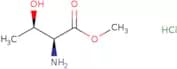
CAS:<p>L-Threonine methyl ester hydrochloride is a synthetic amino acid that has shown efficacy in treating Gram-negative infections. L-Threonine methyl ester hydrochloride is an agonist for the hyaluronic acid receptor and has been demonstrated to be potent in vitro against gram-negative bacteria such as Escherichia coli and Klebsiella pneumoniae. It also exhibits high stereoselectivity, with one enantiomer being more active than the other. L-Threonine methyl ester hydrochloride is currently in clinical development for cancer treatments, as it shows promise for inhibiting tumor growth and inducing apoptosis.</p>Formula:C5H11NO3•HClPurity:Min. 97%Color and Shape:Yellow PowderMolecular weight:169.61 g/mol2,4,6-Triisopropylbenzenesulfonyl chloride
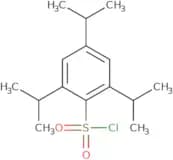
CAS:<p>2,4,6-Triisopropylbenzenesulfonyl chloride is a molecule that belongs to the class of ethylene diamine. It has been shown to inhibit the replication of herpes simplex virus in cell culture. This compound has an intramolecular hydrogen and steric interactions with a hydroxyl group. The analog of this molecule is 2,4,6-triisopropylbenzenesulfonic acid.<br>2,4,6-Triisopropylbenzenesulfonyl chloride can be used as a sulfonation agent and is known for its ability to react with nitrogen nucleophiles such as amines or ammonia.</p>Formula:C15H23SO2ClPurity:Min. 95%Molecular weight:302.86 g/mol2,4-Dimethyl-3-nitropyridine
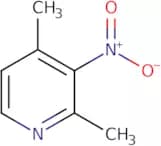
CAS:<p>2,4-Dimethyl-3-nitropyridine is a heterocyclic organic compound. It is an important and versatile building block for the synthesis of complex compounds. 2,4-Dimethyl-3-nitropyridine can be used as a reagent in organic synthesis and other chemical reactions. In addition to its use as a reactant, this compound has been employed as a useful scaffold for the preparation of other heterocycles and fine chemicals. The CAS number for 2,4-dimethyl-3-nitropyridine is 1074-76-6.</p>Formula:C7H8N2O2Purity:Min. 95%Color and Shape:Yellow Clear LiquidMolecular weight:152.15 g/mol2,6-Dichloropyridine
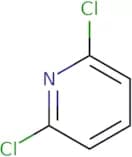
CAS:<p>2,6-Dichloropyridine is an organohalide used as a reagent for asymmetric catalysis. It is use as a precursor for the synthesis of antibacterial agents, for example the synthesis of the antibiotic enoxacin.</p>Formula:C5H3Cl2NPurity:Min. 98%Color and Shape:White To Yellowish To Pink To Grey To Light Brown SolidMolecular weight:147.99 g/molThieno[3,2,-b]thiophene-2-carbaldehyde
CAS:<p>Thieno[3,2,-b]thiophene-2-carbaldehyde is a molecule that can be used in supramolecular chemistry. It has processability and pharmacokinetic properties as well as a good morphology. This molecule has been shown to be an excellent chemosensor. Thieno[3,2,-b]thiophene-2-carbaldehyde has also been shown to enhance the optical properties of semiconducting nanocrystals. The supramolecular chemistry of this molecule will allow for it to be analyzed with simulations and the optical properties will provide for its enhancement.</p>Formula:C7H4OS2Purity:Min. 95%Color and Shape:PowderMolecular weight:168.24 g/mol



![Thieno[3,2,-b]thiophene-2-carbaldehyde](/_next/image/?url=https%3A%2Fstatic.cymitquimica.com%2Fproducts%2F3D%2Fthumb-webp%2FFT33133.webp&w=3840&q=75)