Building Blocks
This section contains fundamental products for the synthesis of organic and biological compounds. Building blocks are the essential starting materials used to construct complex molecules through various chemical reactions. They play a critical role in drug discovery, material science, and chemical research. At CymitQuimica, we offer a diverse range of high-quality building blocks to support your innovative research and industrial projects, ensuring you have the essential components for successful synthesis.
Subcategories of "Building Blocks"
- Boronic Acids & Boronic Acid Derivatives(5,756 products)
- Chiral Building Blocks(1,242 products)
- Hydrocarbon Building Blocks(6,095 products)
- Organic Building Blocks(61,038 products)
Found 196817 products of "Building Blocks"
Sort by
Purity (%)
0
100
|
0
|
50
|
90
|
95
|
100
1-[3-(Piperidine-1-carbonyl)phenyl]methanamine
CAS:<p>Versatile small molecule scaffold</p>Formula:C13H18N2OPurity:Min. 95%Color and Shape:Clear LiquidMolecular weight:218.29 g/mol3-{2,8,9-Trioxa-5-aza-1-silabicyclo[3.3.3]undecan-1-yl}propan-1-amine
CAS:<p>3-{2,8,9-Trioxa-5-aza-1-silabicyclo[3.3.3]undecan-1-yl}propan-1-amine (TPAP) is a reactive molecule. It has been immobilized on silicon and titanium surfaces and has shown photocatalytic activity in the presence of oxygen. TPAP is highly resistant to acidic environments and can be used as an immobilization agent for other molecules. TPAP is also labile to hydrolysis and will react with water, releasing ammonia gas, which can be a problem in some applications. TPAP is not active against bacteria or fungi but does have growth rate inhibiting effects on yeast cells.</p>Formula:C9H20N2O3SiPurity:Min. 95%Color and Shape:PowderMolecular weight:232.35 g/mol(Aminomethyl)dimethylphenylsilane
CAS:<p>Aminomethyl)dimethylphenylsilane is a polarizer that has shown growth inhibitory activity against pancreatic carcinoma cells. It has also been found to have pharmacological properties, including anti-cancer and anti-inflammatory effects. Aminomethyl)dimethylphenylsilane is non-selective and non-steroidal, meaning it can inhibit the synthesis of prostaglandins and other eicosanoids. This drug has been shown to be toxic in humans, with side effects such as cardiovascular disorders, alzheimer 's disease, and cancer cell growth.</p>Formula:C9H15NSiPurity:Min. 95%Molecular weight:165.31 g/mol(2S,5R)-5-Methyl-2-prop-1-en-2-ylcyclohexan-1-one
CAS:<p>(2S,5R)-5-Methyl-2-prop-1-en-2-ylcyclohexan-1-one is a natural product that is structurally similar to the antibiotic piperitone. It has significant antifungal activity and was found to have minimal inhibitory concentration values against bacterial enzymes. The compound has been shown to bind to dinucleotide phosphate and inhibit bacterial enzyme catalysis. This inhibition leads to an accumulation of substrates for the enzyme and a decrease in the production of ATP. (2S,5R)-5-Methyl-2-prop-1-en-2-ylcyclohexanone inhibits the growth of Candida albicans and Cryptococcus neoformans strains but not Trichophyton mentagrophytes. This may be due to its ability to bind with high affinity to rat liver microsomes, but not human microsomes. (2S,5R)-5</p>Formula:C10H16OPurity:Min. 95%Color and Shape:Clear LiquidMolecular weight:152.23 g/mol8-Methoxyquinoline-4-carboxylic acid
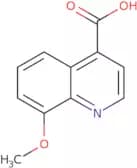
CAS:<p>8-Methoxyquinoline-4-carboxylic acid is a potent inhibitor of phosphodiesterase I, II, IV and V. It has been shown to inhibit the production of inflammatory prostaglandins in asthma patients. 8-Methoxyquinoline-4-carboxylic acid has been used to study the fluorescence properties of acetonitrile and its derivatives. 8-Methoxyquinoline-4-carboxylic acid has been tested as a fluorescent probe for DNA sequencing and has also shown potential as a fluorescent probe for protein sequencing. This molecule is an inhibitor of phosphodiesterases, which are enzymes that break down cyclic nucleotides such as cAMP and cGMP.<br>8-Methoxyquinoline-4-carboxylic acid is a bicyclic heteroaryl compound with an electron donating group at position 4 on the heterocyclic ring. It can be synthesized from ethanol using</p>Formula:C11H9NO3Purity:(¹H-Nmr) Min. 95 Area-%Color and Shape:PowderMolecular weight:203.19 g/mol5-(Bromomethyl)-2-methylpyridine hydrobromide
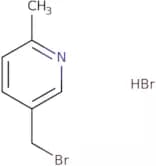
CAS:<p>5-(Bromomethyl)-2-methylpyridine hydrobromide is a brominated reagent that is used as a reaction component in organic synthesis. It has been used to synthesize high quality, versatile building blocks and useful intermediates. 5-(Bromomethyl)-2-methylpyridine hydrobromide is also a fine chemical with CAS No. 718608-10-7.</p>Formula:C7H9Br2NPurity:Min. 95%Molecular weight:266.96 g/mol1-(1,2,3,4-Tetrahydronaphthalen-1-yl)cyclopropan-1-amine
CAS:<p>1-(1,2,3,4-Tetrahydronaphthalen-1-yl)cyclopropan-1-amine is a high quality reagent that can be used as a useful intermediate in the synthesis of complex compounds. It has been shown to be a useful scaffold for the synthesis of various fine chemicals and speciality chemicals. 1-(1,2,3,4-Tetrahydronaphthalen-1-yl)cyclopropan-1-amine is also versatile building block that can be used as a reaction component in many different chemical reactions.</p>Formula:C13H17NPurity:Min. 95%Color and Shape:PowderMolecular weight:187.28 g/mol3-Methyl-5-(trifluoromethyl)isoxazole-4-carboxylic acid
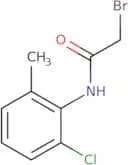
CAS:<p>Versatile small molecule scaffold</p>Formula:C6H4F3NO3Purity:Min. 95%Molecular weight:195.1 g/mol2-Bromo-N-(2-chloro-6-methylphenyl)acetamide
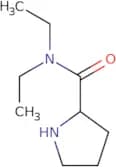
CAS:<p>2-Bromo-N-(2-chloro-6-methylphenyl)acetamide is a fine chemical that can be used as a versatile building block for research and as a reaction component for the synthesis of complex compounds. This compound is also useful for the production of speciality chemicals and other high quality reagents.</p>Formula:C9H9BrClNOPurity:Min. 95%Color and Shape:PowderMolecular weight:262.53 g/molN,N-Diethylpyrrolidine-2-carboxamide
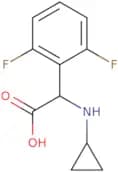
CAS:<p>Versatile small molecule scaffold</p>Formula:C9H18N2OPurity:Min. 90%Color and Shape:PowderMolecular weight:170.25 g/mol2-(Cyclopropylamino)-2-(2,6-difluorophenyl)acetic acid
CAS:<p>Versatile small molecule scaffold</p>Formula:C11H11F2NO2Purity:Min. 95%Color and Shape:PowderMolecular weight:227.21 g/moltert-Butyl 7-oxo-2-azaspiro[4.4]nonane-2-carboxylate
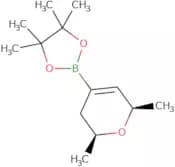
CAS:<p>Versatile small molecule scaffold</p>Formula:C13H21NO3Purity:Min. 95%Molecular weight:239.31 g/mol2-(2,6-dimethyl-3,6-dihydro-2H-pyran-4-yl)-4,4,5,5-tetramethyl-1,3,2-dioxaborolane
CAS:<p>2-(2,6-dimethyl-3,6-dihydro-2H-pyran-4-yl)-4,4,5,5-tetramethyl-1,3,2-dioxaborolane is a reagent that is used in the synthesis of other compounds. It is a high quality research chemical and useful scaffold for the preparation of fine chemicals. This versatile building block is also used as an intermediate or building block in the synthesis of complex compounds.</p>Formula:C13H23BO3Purity:(%) Min. 95%Color and Shape:Clear Viscous LiquidMolecular weight:238.13 g/mol2-(2-Aminoethyl)-2H,3H-[1,2,4]triazolo[4,3-a]pyridin-3-one
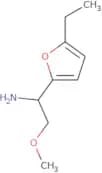
CAS:<p>2-(2-Aminoethyl)-2H,3H-[1,2,4]triazolo[4,3-a]pyridin-3-one is a versatile building block that can be used as a reagent and reaction component in organic synthesis. This compound has been shown to have high quality and is useful in research on speciality chemicals. 2-(2-Aminoethyl)-2H,3H-[1,2,4]triazolo[4,3-a]pyridin-3-one has found use in the preparation of various compounds with diverse therapeutic properties. It is also an excellent building block for complex compounds.</p>Formula:C8H10N4OPurity:Min. 95%Color and Shape:PowderMolecular weight:178.19 g/mol1-(5-Ethylfuran-2-yl)-2-methoxyethan-1-amine
CAS:<p>Versatile small molecule scaffold</p>Formula:C9H15NO2Purity:(%) Min. 85%Color and Shape:Clear LiquidMolecular weight:169.22 g/molAP1867
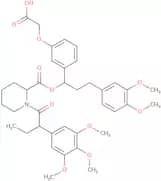
CAS:<p>AP1867 is a small molecule that targets the protein–protein interactions of lipid kinases. It is being developed for the treatment of cancers, including breast, prostate and lung cancer. AP1867 has been shown to inhibit the growth of human cancer cells in tissue culture and animal models, with some effects on cell viability. AP1867 has also demonstrated an ability to induce genetic ablation in cultured cells and to modulate signal detection pathways. Target gene expression profiling has identified a number of potential molecular targets for this drug.</p>Formula:C38H47NO11Purity:Min. 80%Color and Shape:PowderMolecular weight:693.8 g/mol1,2-Phenylenedimethanamine dihydrochloride
CAS:<p>1,2-Phenylenedimethanamine dihydrochloride is a colorless to white crystalline solid that is soluble in diethyl ether, ethyl acetate and methanol. It is insoluble in water and most organic solvents. 1,2-Phenylenedimethanamine dihydrochloride is used as a reagent for the preparation of primary amines from alkyl halides. This chemical has been shown to be stable in air and remains unchanged when heated at 100°C. Synonyms include: 2-Amino-1,2-phenylene dichloride; 2-Amino-1,2-diphenylethane dichloride; 2-[(1,2)-Phenylenebis(amino)]dichloroethene; 2-[(1,2)-Phenylenebis(amino)]dichloroethene; and Phen</p>Formula:C8H14Cl2N2Purity:Min. 95%Color and Shape:PowderMolecular weight:209.12 g/mol5H,6H,7H-Cyclopenta[b]pyridin-2-amine
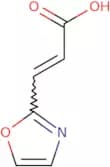
CAS:<p>5H,6H,7H-Cyclopenta[b]pyridin-2-amine is a fine chemical that can be used as a building block in organic synthesis. It is also useful as a reagent and speciality chemical. 5H,6H,7H-Cyclopenta[b]pyridin-2-amine has been shown to be an effective intermediate for the production of complex compounds with versatile scaffolds. This compound is also a useful reactant in organic reactions. 5H,6H,7H-Cyclopenta[b]pyridin-2-amine has a molecular weight of 200.28 g/mol and CAS number 146331-19-3.</p>Formula:C8H10N2Purity:Min. 95%Color and Shape:PowderMolecular weight:134.18 g/mol(2E)-3-(1,3-Oxazol-2-yl)prop-2-enoic acid
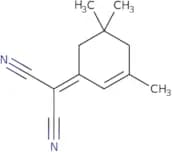
CAS:<p>1,3-Oxazole is an organic compound that belongs to the class of 1,3-diketones. It is a versatile building block that can be used in many different reactions. 1,3-Oxazole has been shown to be a reagent for use in research and as a speciality chemical. It has also been shown to be a useful intermediate for the synthesis of complex compounds. The compound is also a useful scaffold for developing high quality drug candidates with potential applications in medicine or other fields.</p>Formula:C6H5NO3Purity:Min. 95%Molecular weight:139.11 g/mol(3,5,5-Trimethylcyclohex-2-enylidene)malononitrile
CAS:<p>(3,5,5-Trimethylcyclohex-2-enylidene)malononitrile is a versatile compound that has various applications in different fields. It is commonly used as a research chemical and has shown promising results in the development of new medicaments. Its unique structure and properties make it an ideal candidate for further exploration.</p>Formula:C12H14N2Purity:Min. 95%Molecular weight:186.25 g/mol
![1-[3-(Piperidine-1-carbonyl)phenyl]methanamine](/_next/image/?url=https%3A%2Fstatic.cymitquimica.com%2Fproducts%2F3D%2Fthumb-webp%2FRQB68866.webp&w=3840&q=75)

![3-{2,8,9-Trioxa-5-aza-1-silabicyclo[3.3.3]undecan-1-yl}propan-1-amine](/_next/image/?url=https%3A%2Fstatic.cymitquimica.com%2Fproducts%2F3D%2Fthumb-webp%2FSAA86927.webp&w=3840&q=75)




![tert-Butyl 7-oxo-2-azaspiro[4.4]nonane-2-carboxylate](/_next/image/?url=https%3A%2Fstatic.cymitquimica.com%2Fproducts%2F3D%2Fthumb-webp%2FUCC71642.webp&w=3840&q=75)
![2-(2-Aminoethyl)-2H,3H-[1,2,4]triazolo[4,3-a]pyridin-3-one](/_next/image/?url=https%3A%2Fstatic.cymitquimica.com%2Fproducts%2F3D%2Fthumb-webp%2FUQB10876.webp&w=3840&q=75)
![5H,6H,7H-Cyclopenta[b]pyridin-2-amine](/_next/image/?url=https%3A%2Fstatic.cymitquimica.com%2Fproducts%2F3D%2Fthumb-webp%2FWFA33119.webp&w=3840&q=75)